
Is nothing sacred?
Donnie Yen, who can do martial arts AND comedy with the best of them (He stole “Rogue One”) is the big name on the Marquee for this martial arts action farce.
Coming soon? We hope.
Is nothing sacred?
Donnie Yen, who can do martial arts AND comedy with the best of them (He stole “Rogue One”) is the big name on the Marquee for this martial arts action farce.
Coming soon? We hope.

Here’s a poignant romance about two Canadian women who passed themselves off as “cousins” for almost three quarters of a century because they grew up and fell in love at a time when that was called “the love that dare not speak its name.”
“A Secret Love” is in an intimate, chaste romance starring two discrete little old ladies, longtime Chicagoans, who let one of them’s great nephew interview them about their lives and their love affair as those lives were starting to wind down.
Chris Bolan’s film tilts towards his great Aunt Terry Donahue, and captures some of the family friction that comes with end-of-life decisions, a situation only slightly complicated by the fact that they’re gay and kept that a secret from their families for over 60 years.
Family friction about “coming out?” There are dead relatives who wouldn’t have approved, we hear. But that’s not where the drama is here, because there was no drama about that, just one niece who grins as she huffs that they need to get married.
“Well, they can’t keep on living in sin.”
That’s the tone, here. It’s adorable, they’re adorable, and their story — starting in the mid-1940s and taken through to today — has a few surprises, a few bumps in the road, and a lot of warmth.
Terry is the more outgoing one, all but smothered by an adoring niece, Diane, who is heck-bent on getting them to relocate back in Canada — Edmonton, Alberta, not far from the small farm towns Terry and longtime companion Pat Henschel.
“Aunt” Pat is the reticent one, and in her we see the embodiment of Kurt Vonnegut’s description of a loving couple in trying times, “a nation of two.” They moved in together in another country because they knew no same sex couples, had no exposure to this “”underground” gay life that was only underground in places big enough for a subway — cities.
Small towns, where some girls were most comfortable playing baseball or hockey together and found their first stirrings of attraction among teammates? Homosexuality was pretty much invisible. These two met playing girls’ hockey, and felt the spark in an instant.
Pat loves being the sole support to Terry, who has Parkinson’s when we meet her, with Pat on the phone to her doctor, seeking counsel as her “cousin.” Over half a century of being the center of each other’s closeted lives, with a happy close circle of friends, fulfilling interior design careers behind them and a comfy life together — Pat’s not interested in leaving that and frozen Chicago behind for frigid and unfamiliar Edmonton.
“A Secret Love” doesn’t set out to be a history of changing attitudes towards homosexual relationships. But it pays lip service to the politically-motivated police persecution of the past, and samples that same 1967 Mike Wallace CBS documentary “The Homosexuals” that turn up in gay history documentaries to illustrate how far we’ve come.
The sense “A Secret Love” leaves you with is of lives that were more circumspect than circumscribed. They avoided gay bars back when those were being raided by Mayor Daley’s Chicago P.D. “We didn’t want to get sent to Canada, have their Green Cards yanked and themselves deported.
They missed nothing (each enjoys a beer or the occasional highball, even in their ’80s). Their home movies and hundreds of still photographs capture a deep intimacy easily masked by their conservative demeanor. Their dress and home decor is little-old-lady fussy, with lots of brick-a-brack — nothing that gives away their sexuality. The gay couple they’re closest to is male and decorates the same way. We see none of the explicit nudes that have become the gay decorating stereotype.


But as conservative as they are, Bolan sees them as ahead-of-the-curve feminists. And learning of Terry’s first career — as a shortstop for the Peoria nine who were in the All American Girls Baseball League, “A League of Their Own” in the 1940s — makes that case for the filmmaker.
Maybe the “lesbians in sport” stereotype is in play here, but Terry chuckles at recalling how naive and stand-offish she and a roommate/teammate were are “those other girls” who were up to who knows what.
There are stresses in the relationship in “A Secret Love,” but we root for them to be smoothed over. Perhaps Pat, “who never had to share Auntie Terry before” can be placated, Diana will dial down the (mostly polite, they are Canadian, after all) pushiness and “intervention,” and they’ve live as happily ever after as they’ve plainly lived all these years up until now.
Bolan gets a very sweet film out of a story where we never doubt, for a second, a happy ending.

MPAA Rating: TV-MA, alcohol, adult themes
Cast: Terry Donahue, Pat Henschel, Diana Bolan
Credits: Directed by Chris Bolan, written by Chris Bolan and Alexa L. Fogel A Netflix release.
Running time: 1:21
You think you know Jeffrey Wright, character actor extraordinaire.
Yeah, he’s James Bond’s cynical, wry CIA intermediary Felix Leiter. He plays the guy who runs “Westworld” — a real technocrat.
Cops, scientists, government officials, family men, men in suits. Even when he’s a Caribbean money launderer (“The Laundromat”) there’s almost always a polish, an educated intelligence to go along with the sense of “cunning” implied when you cast him.
“AmhertsbMan.”
But if you follow him on twitter (@jfreewright) you get a hint of the other personas he can call on. He’s worth the follow just to read him reading the OG, streetwise riot act to racists, Hollywood haters and their ilk.
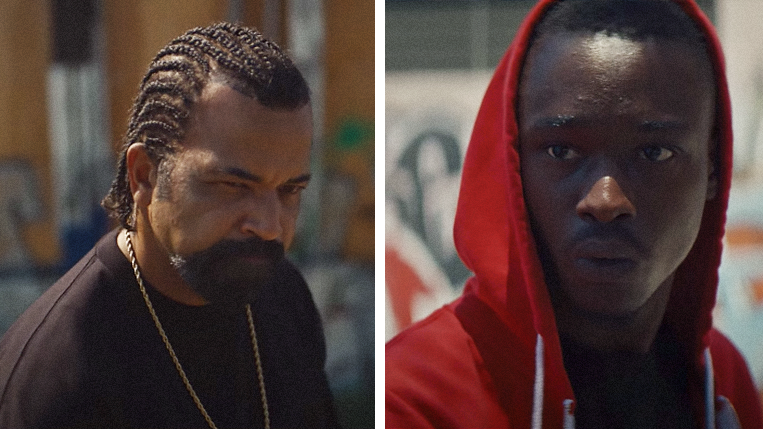
That Jeffrey Wright, on steroids, is who we get in “All Day and a Night,” an Oakland saga about generations passing their fury, grievances, criminal shortcuts, violence and the prison time that comes with that down, father to son to grandson.
The film, starring Ashton Sanders (“Moonlight”) as a rapper wannabe, hustler/mob-soldier in training, doesn’t show us much that we haven’t seen before. Maybe a little more back-story, a few extra pieces in the “motivation/how we got here” puzzle, all set to a sing-along gangsta rap (mostly) soundtrack. It’s depressingly over-familiar, or at least generic.
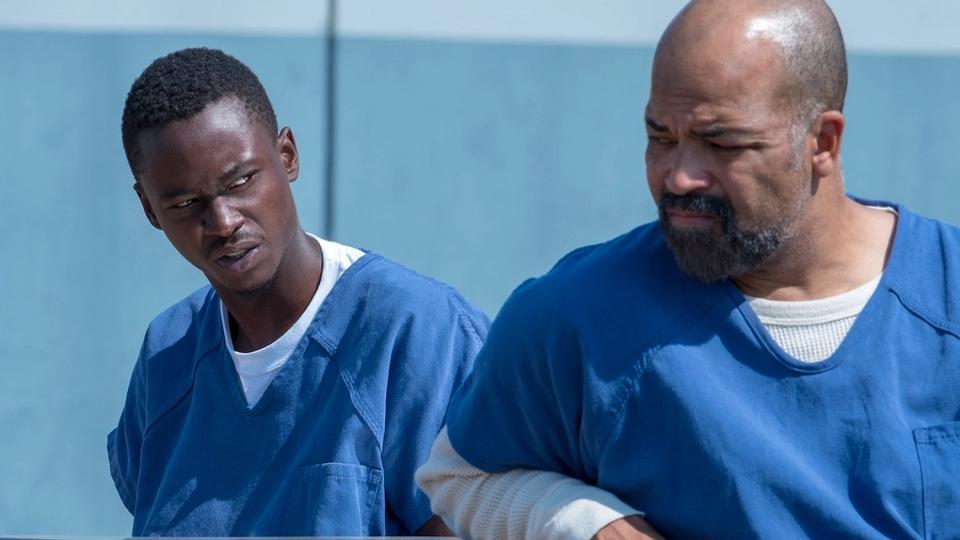
But Jeffrey Wright is scalding hot as the father to the young hood in a hoodie. He is TD, as in OG — a junkie/dealer who thinks beating his boy toughens him up for life as a black man in Oakland.
“It’s dog eat MAN out there,” he growls to his wife (Kelly Jenrette, who goes toe to toe, cheek to nose with him).
“By the time I was six, my Daddy’d been in jail nine times.”
A double-homicide and its consequences (trial and prison) frame this story. Jahkor (Sanders) shows “no remorse at all” in court after killing Malcolm (Stephen Barrington) and his wife in front of their little girl.
This is right after Malcolm thinks he might be able to talk his way out of this.
“We folks, right?”
The grim tale of how they got to that moment starts 13 years earlier, with Jahkor (Jalyn Hall) getting manhandled by an older teen — robbed — and then beaten by his father for letting it happen.
The cycle of revenge begins here. The lessons — that there’s safety in numbers, your “boys” have your back, and to never let any slight, insult or grievous wrong slide — are learned.
Jahkor grows up as a petty thief, disinterested in school, an only child his mother cannot control and his drug-addicted father is rarely around to raise. No, prison visits don’t count.
Jahkor and his “cuddy” (Bay Area “homie”) TQ (Isaiah John from TV’s “Snowfall”) stay thick as thieves, and harbor dreams of hip hop glory. “Jah” is transitioning from singing along to others’ raps with his girlfriend, Shantaye (Shakira Ja’nai Paye) in his Sentra, to cutting tracks. TQ is doing the recording.
Shantaye’s pregnancy has him deciding to straighten up altogether and find a legit job. He has a rap sheet — school suspensions for violence were just the start. But working in a mall athletic shoe store just exposes him to racial profiling by the white customers.
Targeting a mouthy suburban white teenage girl who talks a “gangsta” game, following her home to suburbia rob her and her beau with TQ, just gets them pulled over — “profiling” that uh, works? It prevented a robbery, even if there’s no arguing that her kind of “white people annoy the s— out of me.”
Even if the white cop crosses a line, noting the kid’s father, asking “Is it genetic?”
Writer-director Joe Robert Cole (one of the screenwriters of “Black Panther”) never lets the picture drift into “Hustle & Flow” — all about the hip hop. But the persistence of it on the soundtrack, Jah’s rhymes and the rhymes he, his friends and his girl sing along to, point to an association.
Rappers are passing along destructive rules of behavior from one generation to the next.
Prison is where ALL the generations connect, “whole neighborhoods” of “family” imprisoned together. And that’s where Jah spends the most time with his now-grizzled, longtime convict dad.
Cole gives us undeveloped hints of “another path” Jah might have followed, a relative who goes into the the military, of a grandmother who related more to his throw-up-her-hands teacher than his hotheaded mother (who storms out of a parent-teacher conference).
But what he focuses on is the crime and the gang rift that led to it.
If you’re not accustomed to the slang and patois used here, don’t be proud. Turn on the closed-captioning. That’s where Cole’s script shines, in the dialogue — an argument dismissed with “MISS me that s—!” You take a gang job or take a stance in the prison yard, than means, like a basketball center, you stand your ground — “post up.”
A gang leader, Big Stunna (Yahya Abdul-Mateen II) has a brother he’s been leaning on.
“He upstate (imprisoned). I’m shorthanded. Marinate on that.”
Stunna is a foodie. I s— you not.
There’s a lot going on here, some of it good, some of clutter, too much of it voice-over narration, turning that lazy screenwriting device into annoying background noise.
Which is to say, “All Day and a Night” plays too long at two hours, but this being Netflix, we should be grateful they didn’t mini-series it.
Unless that meant more Jeffrey Wright.
MPAA Rating: R for strong violence, pervasive language, drug use and some sexual content/nudity
Cast: Ashton Sanders, Jeffrey Wright, Isaiah John, Shakira Ja’nai Paye and Kelly Jenrette
Credits: Written and directed by Joe Robert Cole. A Netflix release.
Running time: 1:21

If Helen Mirren was the only choice to play the older, ruthless and legendarily libidinous Catherine the Great, Empress of Russia, for HBO, how bold it is to give us Elle Fanning in a “How she got that way” series, “The Great,” for Hulu.
She’s been on the screen for a decade, is still only 22 and looks younger. And whatever her comic chops coming into the mini-series, she delivers the deadpan, the droll and and the withering put-downs with all the draw-blood style we’d expect of the empress who’d eventually depose her cruel fop of a husband, Peter III.
“”You’re not Great, are you?”
The former Princess Sophie of Anhalt-Zerbst might have felt the need to explain that to the Prussian born and raised Russian Czar. But even Peter III (Nicholas Hoult, wound up, over-the-top and farcically cruel) would get the “Peter the Great’s grandson isn’t all that” inference.
“The Great” compresses time and distorts history to stuff decades of educated, “enlightened” French-speaking Catherine’s too-early marriage, mistreatment by Peter and brutal experience in the Neanderthal Russian court she was hurled into. Her turn from sweet and naive to avenging Mother of all Russia must be preceded by a thousand injuries, insults and abject humiliations. Fanning suffers and schemes just well enough to suggest the not-to-be-trifled-with Czarina to come.
Hoult’s Peter is high-born low comedy personified — an impulsive vulgarian, heartless to the point of savagery, indulged like the despot he is.
“You looked taller in your portrait. Send her back and get me another one!”
It’s very like “The Tudors” in its cruelty, coarse language, vulgarity and sexuality, a bit of “Start the Revolution Without Me” in its royal randiness, funny fops and the like.
The contrast in the newlywed couple makes a grand running gag, her expectation that they’ll be “constant and caring all our lives,” his tactless, “She’s not an inbred, is she?”
The “our love is but an ember, a mere spark” idealism she brings to court may earn eyerolls from the cynically funny archbishop (Adam Godley) and snickers from us.
“I must blow on it until it bursts into passionate flame!”
But Peter’s idea of romance is rape, his notion of fidelity is to, well, keep it in the court, at least — the mistresses. A gift? A Russian bear, which he can just as monstrously take away. Her “literacy” is a failing to Peter’s circle.
“Women are for seeding, not reading!”
Catherine must make allies — the all-knowing maid Mariel (Phoebe Fox, seething and suffering), a demoted and humiliated former lady in waiting, young equally well-read men of court. She must try to escape. And failing that…
“How was your evening?”
“Avoided rape. Yours?”
“Huzzah!”
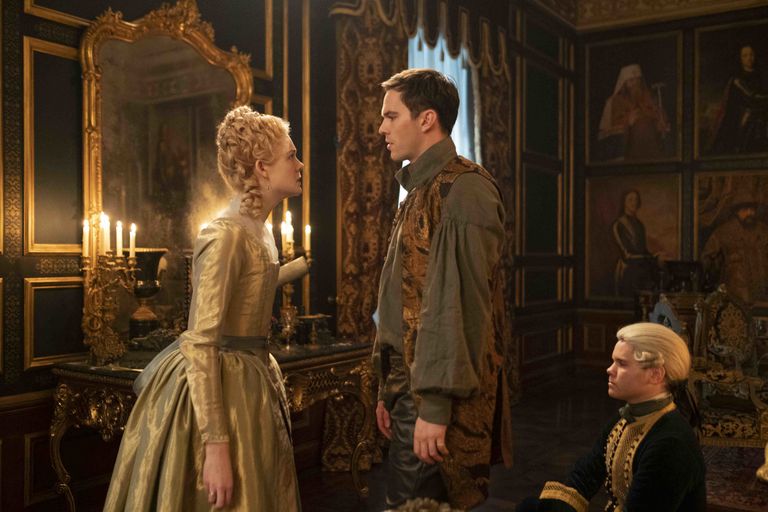
“The Great” spares no expense in its costumes and period detail, and the leads make splendid foils, worthy foes. The series was conceived by Tony McNamara, who scripted the deliciously cruel and comically dark Oscar winner “The Favourite.” This should dazzle and delight.
But I was stunned at how quickly one wearies of the grating tone, the excess, brutal sexual encounters played for laughs. Once we’ve seen it, we get it. But it’s not like they could get right down to the nitty gritty of plotting (failed) escapes and then scheming up revenge.
They’ve got ten hours to fill, after all. That’s a common gripe of the Golden Age of the Limited Series. Once we “get it,” “Ozark,” “Little Fires Everywhere,” “Tales from the Loop,” “Mrs. America,” “Hollywood” just keep going.
Repetition is a pitfall, even in the shows that dazzle (“Mrs. America”). Promising premises (“Hollywood”) are pummeled into submission.
While overlap isn’t an issue in a show that is truly episodic, airing once a week to become “destination TV,” dumped out all at once so you can weekend or quarantine with it just exposes the flab and the weaknesses of the story telling style.
Rare is the series that holds our attention and puts us into, “Well, let’s stop up and watch one more episode” mode. Maintaining that page-turner curiosity is the goal.
After a sparkling start, and despite all-in commitments from the leads, “The Great” turns sour and never really recovers that greatness.

MPAA Rating: TV-MA, violence, sex, profanity
Cast: Elle Fanning, Nicholas Hoult, Phoebe Fox.
Created by Tony McNamara. A Hulu series premiering May 15.
Running time: 10 episodes @1 hour each.
Monsters — racists, and other sorts of monsters — turn up in this ten episode “Green Book” style (horrific) road trip across America in the segregated 1950s.
Courtney B. Vance headlines the cast, listed at the link.
Looks “Watchmen” topical, and scary in all those Lovecraftian ways.

While Hollywood slept, Netflix took over the teen romantic comedy.
“The Kissing Booth,” “Tall Girl,” “To All the Boys I’ve Loved Before,” “Alex Strangelove,” “The Perfect Date” –all have streamed into our homes since the last decent high school romance hit theaters.
And “The Half of It” just adds to the list. It’s another “Cyrano de Bergerac” adapted to a modern school setting (“#Roxy” got there first). Touching and funny, awkward and wistful, it’s also evidence of a Hollywood crime.
It’s only the second feature film writer-director Alice Wu has gotten to make. The lesbian rom-com “Saving Face” was a gay film festival favorite over 16 years ago.
“Half of It” is similarly understated and under-sexualized, despite the sweeping changes in the culture of the past decade. But “understated” and subtle points any screen romance in the right direction.
It’s all about the longing, stupid.
Leah Lewis is Ellie Chu, a 17 year-old whose life in Squahamish, Washington, is solitary and literary, perhaps not by choice. She manages the railroad switchman’s apartment provided to her and her widowed dad (Collin Chou), who has let the loss of his wife and his inability to master English close-off his life.
The bills aren’t getting paid, which has led the smart girl the “cool kids” nickname “Chugga chugga CHU CHU” into writing duller kids’ papers and doing their homework for her — for cash.
But that’s not why “second string tight-end” Paul Munsky (Daniel Diemer) to hassle her for help. He’s crushing on the prettiest girl in school, Aster Flores (Alexxis Lemire). Ellie kind of gets that. Pretty girl is hard to make eye contact with for boys or girls. But being stressed and brittle and maybe a little bitter, she’s not writing love letters — “I thought’d it be romantic!” — for him.
“Get a thesaurus. And spellcheck. Good luck, Romeo!”
It isn’t pity for the monobrow that makes her agree to be his Cyrano, writing sweet nothings to slip into her locker and win her heart. She needs to pay the power bill.
“$50. One letter.”
That’s how it starts, cribbing sentiments from the old film romances (“Casablanca,” “Wings of Desire,” “The Philadelphia Story”) her dad watches, nonstop. But Aster is hip to the plagiarism, and calls “him” on it.
“It’s like a game,” Ellie decides. “She’s challenging us!”
So. Game on.
It happens slowly but totally, this tumble down the rabbit hole of “reconnaissance” — finding out Aster’s into art, old movies and “The Remains of the Day” — book and film.
“Oppo research” means checking out the popular dimpled, dimwitted jock Trig (Wolfgang Novogratz) Aster is linked to.
And keeping this all epistolary means Paul, via Ellie, can court Aster via a shared graffiti project (taking turns adding to a painting, each challenging the other as they do), dishing back and forth by letter as they do.
It also means Ellie’s sullen shell starts to soften. Paul’s not well-read, but he’s sweet. He’s the newest cook in the family sausage business, and figures his future’s “the sausage taco.”
Maybe that’s why his crush on Aster is so very deep — “She’s pretty, smart, never mean. And she smells like fresh ground flour!”
Paul gets past Ellie’s curt description of her mother — “Young. Funny. Dead.” But what he’s not seeing is how she’s forgetting to charge him, how into this she is, how she might be talking to her one reliable confidante in life, that one special teacher (Betty Ann Baker) about “this one person who ‘gets’ me.”
She’s not talking about Paul, or Trig either.


The stage-managing of Aster and Paul’s “dates” via text, the back and forth of the letters and texts, the reluctant prep for the “mandatory” senior “talent show” participation, all give away Ellie’s game.
All this “longing” she’s writing letters, lecturing Paul and narrating interior monologues about? It’s hers.
There are more laugh-out-loud moments in this 100 minute than in that entire high school sitcom that Mindy Kaling did for Netflix. And “Half of It” is, if anything, more inclusive than Kaling’s series “Never Have I Ever.”
The one-liners are smarter and fresher. Agnostic Ellie plays the organ at Aster’s dad’s church. “This whole TOWN fears God,” teacher Mrs. Geselschap (Baker) cracks. “You know who GOD fears? The teacher’s union!”
Ellie whispers her last instructions to Paul before “the big date” in a high school huddle form that he can understand. “Are. You. READY?”
But the standout feature of “The Half of It” is the emotional nature of the script, and emotional accessibility of the performances. No, nobody here is high school age (Lewis has been working as an actress since 2005). But you forget that when you see how Ellie loses herself in Aster’s eyes.
What don’t work are several tropes of the genre. The football story thread is played, the “senior talent show” bit feels phony, but redeems itself via brevity.
And as cute as the quotes from Plato and Satre and Oscar Wilde are that introduce each “chapter” in the story, we’re over them long before they’re over.
But Wu has relaunched her career (hopefully) by managing what many a Netflix teen rom-com filmmaker aims for, not a grand slam, but a solid, uplifting stand-up triple.
Considering the age of cast, she might get a (college years) sequel out of “The Half of It,” if nothing else.

MPAA Rating: PG-13 for brief language and teen drinking.
Cast: Leah Lewis, Daniel Diemer, Alexxis Lemire, Collin Chou, Becky Ann Baker, Wolfgang Novogratz
Credits: Written and directed by Alice Wu. A Netflix release.
Running time: 1:44
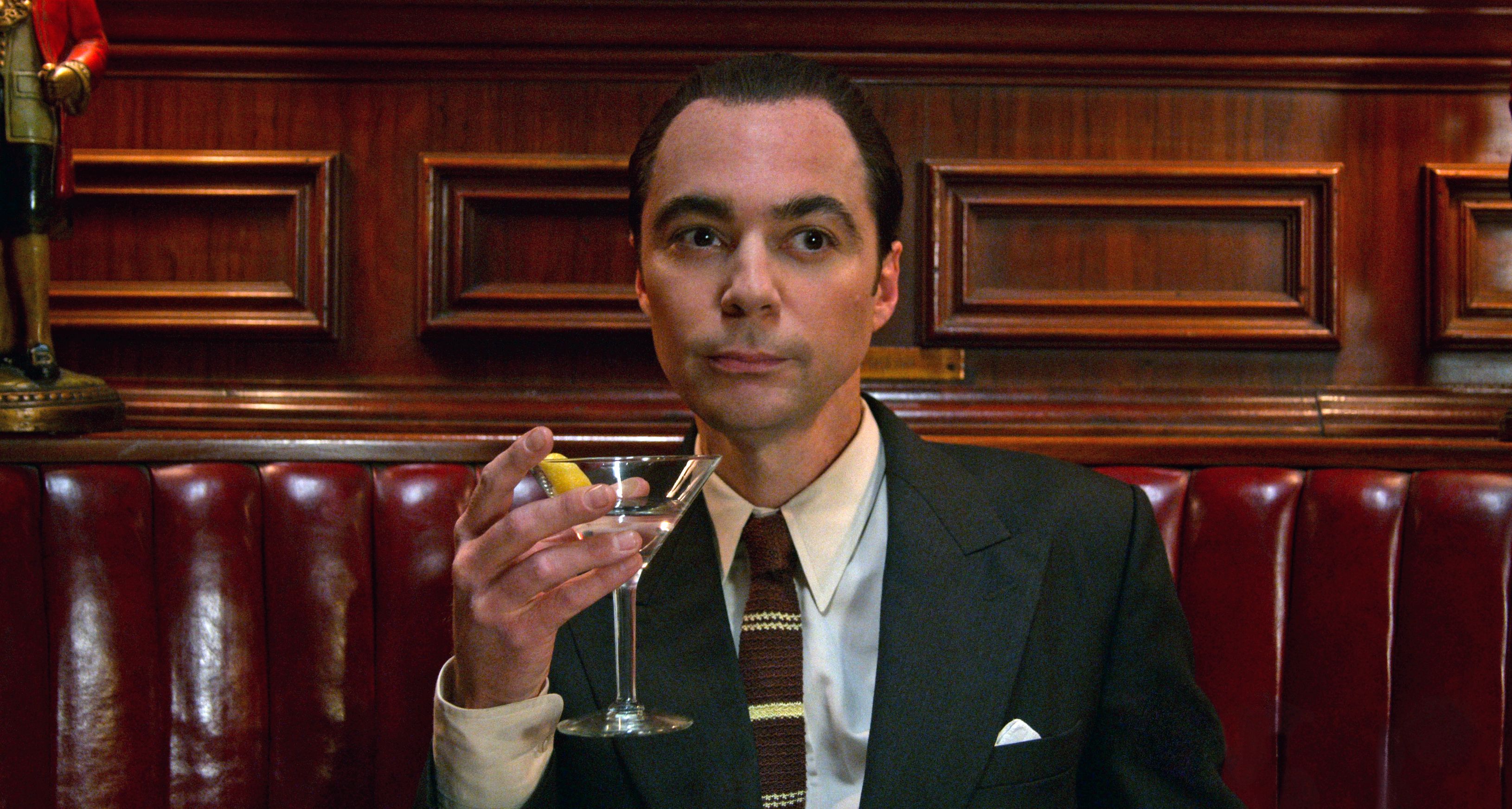
Don’t let the phrase “Jim Parsons almost walks away with Ryan Murphy’s ‘Hollywood‘” scare you off, “Big Bang” haters. Because it’s “almost,” for starters. And Parsons, playing real-life “eye for the beefcake” predator/agent Henry Willson, is villainously vile, and a hoot.
The man who bedded the handsomest Hollywood wannabes of his generation, and made some of them — Rock Hudson, most famously — movie stars, is one of the standout figures in this gay fantasia on Hollywood “as it could have been.”
It’s exactly what you’d expect a limited series from the guys who came up with “Glee” (Murphy and Ian Brennan) and one who went on to take on the Bette Davis/Joan Crawford “Feud” — a soapy, dishy gloss on inclusion, race, sex and sexuality in a history of Hollywood as it never really was.
As the gay black screenwriter Archie Coleman (Jeremy Pope) enthuses, they “take the story of Hollywood,” with its racism, sexism and closet-closing homophobia, “and give it a rewrite.”
The seven episodes aren’t uneven in quality or gloriously-detailed production values, but they vary entirely too much in impact. There are moments — just moments — of giddy fun. Yeah, they could have made this a romp. And then there are a couple of emotional highs, remembering the doors closed and dreams deferred. It could have been a straight melodrama, too.
Its take-off point is “Scotty’s Secret History of Hollywood,”the book and documentary it inspired about a service station run by gigolos, “servicing” the men and women of the film colony. Ernie (Dylan McDermott) runs this version of that real story, a dapper “gigolo” stereotype, right down to the pencil-thin mustache.
Ernie’s greying, and he’s got that “first act cough.” Uh oh.
Ernie “head hunts” broke wannabe Jack Castello (David Corenswet, earnest but merely OK in the part), married and with a baby on the way — too “straight” to be a “full service” employee. But handsome Jack, a freshly-discharged WWII vet, becomes the favorite of regular client Avis (Patti Lupone), an aged starlet who was told she was “too Jewy” (ethnic) to make it as an actress. And Avis is married to the “Ace” (Rob Reiner, a fine vulgarian) “Ace Pictures,” the fictional studio all these fictional (and non-fictional) characters circle around.
Maybe Jack can get that big screen test.
And Jack recruits Archie, a gay cruiser he tracks down in a gay porno theater. Archie’s (Pope) an aspiring screenwriter at a time when the only movies black screenwriters could get paid for were “race” pictures by the Oscar Micheaux of the day.
Archie’s got this script — “Peg” — about Peg Entwistle, a failed-actress who famously jumped off the Hollywoodland sign to her death in the 1930s. EVERYbody wants a piece of “Peg.”
Except Raymond Ainsley, a pal and fellow screenwriter sleeping with Archie’s sister. Ray (“Glee” veteran Darren Criss) has his own script and dream. He has a Chinese story he wants to film that will give Anna May Wong (Michelle Krusiec), a silent star who lost the lead in “The Good Earth” to a non-Chinese actress (Luise Rainer) who won an Oscar playing it.
Anna May, “the first Chinese-American movie star,” is another real person, an actress who crawled into a bottle after being typecast as “exotic Asians” and “dragon ladies.” Look at her credits on IMDb and see what Murphy and Brennan want to “save her from” in this alternative history.
Laura Harrier plays Ray’s “woman of color” girlfriend, Camille, a great beauty condemned to playing maids, unless these crazy, optimistic outsiders can “make our own rules by breaking some of’em!”
Fictional characters like production chief Dick Samuels (stage director/actor Joe Mantello, cynical and when he needs to be, sentimental) and real-life “players” like Willson (Parsons) relate real-life Hollywood anecdotes with the usual “Let me tell you a little story” moments dished to the newcomers.
Legends from John Wayne and Irving Thalberg take it on the chin in the those legendary bits of gossip.
On screen? Rock Hudson is eviscerated. Eleanor Roosevelt (Harriet Sansom Harris, terrific) is nominated for sainthood.
Others are shown at their glossiest, with their human weaknesses included — storied director George Cukor’s (Daniel London) famed gay pool parties, Vivien Leigh’s (Kate McGuiness) fragile “Scarlett O’Hara” vanity, Tallulah Bankhead’s (Paget Brewster) bawdy wit.
Here’s Oscar winner Hattie McDaniel (Queen Latifah) and playwright/wit and gay swain Noël Coward (former hobbit Billy Boyd, not really anybody’s idea of Coward).
Holland Taylor plays a talent scout and acting and locution coach, the one who teaches would-be actors like Jack and Rock Hudson (Jake Picking, so bland he might be the real Rock) and prophesies “There’s a movement, a whole new style of acting, coming. NATURALISM!”
In a cynical story about how Hollywood “hypocrisy,” the way the town has ALWAYS run — the sexual barter system (“screwing your way into the movies”) — Taylor’s Ellen Kincaid is the series’ conscience. An old timer who recognizes that the prejudice in this town colonized by Jewish outsiders is mostly fear of what “they” — Middle American moviegoers — will “accept,” she has the best and campiest line of all, when Ellen meets the screenwriter of “Peg.”
“You’re colored...I LOVE it!”


Hollywood history fans will lose themselves in this vamp of “actual” history. Keep your smart phone IMDb page open and and look up the figures to see who’s real and who isn’t.
Oscar winner Mira Sorvino has a small but sweet and showy role, Samara Weaving plays a cutthroat starlet, and nearly-forgotten names and faces like “Tab” and “Rory” and “Guy” may have you doing homework between episodes.
“Peg” was never a movie, but one called “Peggy” played a big part in making Rock Hudson’s career. Look it up.
It’s the zingers that will keep you watching. Ernie berates Jack for not “servicing” a regular client in the behind-the-station trailer, a client who is anything but “regular.”
“It’s COLE PORTER! Yesterday, I heard you humming, ‘Don’t Fence Me In.’ If I can’t count on you to lend a helping hand to a National Treasure like Cole Porter…”
Yes, it’s a mixed bag, but unlike TOO many streaming series to name (Mindy Kaling are your ears burning?), this one gets right down to business, delivering right from the start of the opening episode. There’s heart in the “Hollywood can change the world, let’s try it” ethos. And there are laughs, none bigger than Jim Parsons, letting his contemptuous, foul-mouthed freak flag fly at every gorgeous “Greek god” who comes to his office for a “meeting,” a signing and a sexual transaction.
“You f—–g hayseed!”
Wait’ll you see him do the Dance of the Seven Veils.

MPAA Rating: TV-MA, sex, nudity, profanity, smoking, alcohol abuse
Cast: David Corenswet, Darren Criss, Laura Harrier, Dylan McDermott, Jeremy Pope, Jake Picking, Holland Taylor, Patti Lupone, Joe Mantello, and Jim Parsons
Credits: Created by Ian Brennan and Ryan Murphy. A Netflix release.
Running time: 7 episodes @:44-60 minutes each.
This one stars Richard Speight and comes from small/edgy distributor Uncork’d.
A cabbie racing the clock with a client. A race against…evil.
June 12.
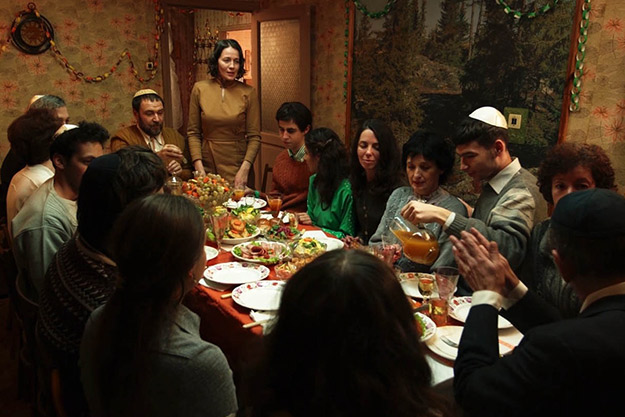
“Closeness” is a drama set in the Kabardino-Balkaria Republic of the Russian North Caucasus. It is depicted as a place of limited options, an uneasy “tribal” ethnic mix of populations and a grim, grey beauty that mirrors the hard people living through hard times there.
Writer-director Kantemir Balagov identifies himself as Kabardian (Muslim) in an opening voice-over, and tells us this story happened in the city of Nalchik, dumpy model of Soviet planning and architecture just north of the Georgian border. The story he tells happens to poor working class Jews living there in 1998.
Ilana, “Ila” (Darya Zhovner) is 24, and works on cars in her dad’s garage. She seems to treasure the connection, but Avi (Atrem Cipin) is OK with it, even if he’s always bringing up folks he knows suggesting other jobs for her.
“Do you want to spend all your life fixing cars?” he grumps (in Russian, with English subtitles).
Her mother (Olga Dragunova) puts up with it, because their lean finances demand it. Besides, their son David (Veniamin Kac) is getting married. He’s younger, doesn’t seem to have a job himself. But he’s their darling, something made clear by the big engagement dinner they throw him.
There’s a guy her parents have in mind for Ilana, but Rafa is a bit of a shrimp. We figure out he’s not “man enough” for her when we see who she steps out with. Zalim (Nazir Zhukov) is a bear-sized truck driver and Kabardian. He’s rough company and she’s down with that.
But returning home after the party, she realizes tragedy has struck. David and his fiance have been kidnapped. “Don’t tell the police,” they’re warned. And the ransom? It’s well beyond their reach.
The family and community’s “Closeness” are tested, as the rabbi rounds everybody up for a meeting to pool resources. Some bristle at pitching in, others are most interested in helping fiance Lea’s widowed mom recover her daughter.
Ilana’s family will lose everything they have getting David back, and even though we’ve seen how close the siblings are, she fumes at this final confirmation that she has less value. They’re even willing to marry her off for the cash to get David back. She’s not going to accept this, Zalim is more her speed.
“He’s not from our tribe.”
“I don’t BELONG to that tribe,” she hisses.
But going to stay with Zalim is more harrowing than she could know. The Chechen wars— Russians attacking Islamic separatists — weren’t some remote “overseas news” in 1998 Nalchik. And sitting with Zalim’s radicalized pals, hearing them bring up ancient grievances (“Remember 1763!”) and watching snuff videos of Chechens torturing and executing Russian prisoners (the real deal) is too horrific even for Zalim to watch.
A friend’s crack that “Jews are good to make soap from” should close the deal for Ila. That it doesn’t speaks volumes about how much she resents the family that’s using her to raise cash for her brother.
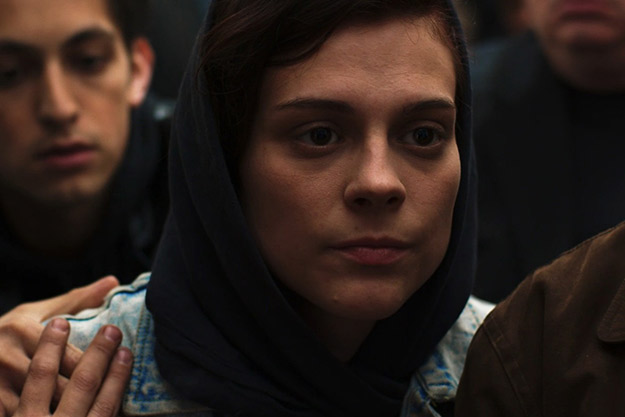
Balagov shoves our faces into the this, tight shots in a 4-3 aspect ratio creating a claustrophobia that isn’t lessened by the natural lighting outdoors and dimly lit interiors.
It’s a very rough and rough-hewn film. He shoves our faces into the ethnic turmoil. But the violence, gratuitous as it seems, serves a purpose. Ila’s connection to this other “tribe” is a non-starter.
“Jews are good to make soap from,” one Muslim cracks.
And if the prisoner-murdering footage (far more than necessary to make the point) wasn’t bad enough, we’re treated to a rape as well. Be warned, there are “triggers” woven into this picture that make it not for everyone.
Balagov has already shown us an ugly vision of Jewish “types” from the region, self-interested, stingy. One elder who offers to “help” just wants to get Avi’s garage at fire-sale (desperation) prices.
“Don’t PREY on us!” Ila shouts, to no avail.
Ila is the heart and soul of “Closeness,” and Zhovner breathes an impulsive fury into her. She’s more at home in overalls than a dress, and her whispered dismissal of a marriage proposal — “It’s not going to happen” — is but a prelude to the film’s third shock, the way she ends that talk, in the middle of a marriage negotiation dinner, will be the one scene from “Closeness” that don’t think I’ll ever forget.
MPAA Rating: unrated, graphic violence depicted in actual terrorist footage, rape, profanity, drinking and smoking
Cast: Darya Zhovner, Atrem Cipin, Olga Dragunova, Nazir Zhukov and Veniamin Kac
Credits: Directed by Kantemir Balagov, script by Kantemir Balagov, Anton Yarush. A Kino Lorber release.
Running time: 1:58
“Dangerous Lies” isn’t the dumbest whodunit to come along. There’s enough here to make you guess, second guess and maybe third-guess who is doing what to whom.
Maybe the situations seem a little prime-time soapy and the acting a little underwhelming, considering the bodies that start piling up around it.
It stars Camila Mendes from TV’s “Riverdale,” so make what you will of that soap-thriller casting.
But it’s mostly undone by its need to explain and over-explain, to have characters speculate (right on the money) about motives, what’s REALLY going on, rather than leave it to us to figure out.
Enough of what’s going on is obvious that we don’t need the remedial help.
But director Michael Scott is most at home making Hallmark-ready Christmas movies (“Hitched for the Holidays,” “Christmas on Holly Lane,” “Christmas Lost and Found” and that holiday classic, “It’s Christmas, Carol!”). So not having a handle on how much to explain or how to build suspense and pace your picture to rope the viewer in is to be expected.
At least he stages a decent shootout.
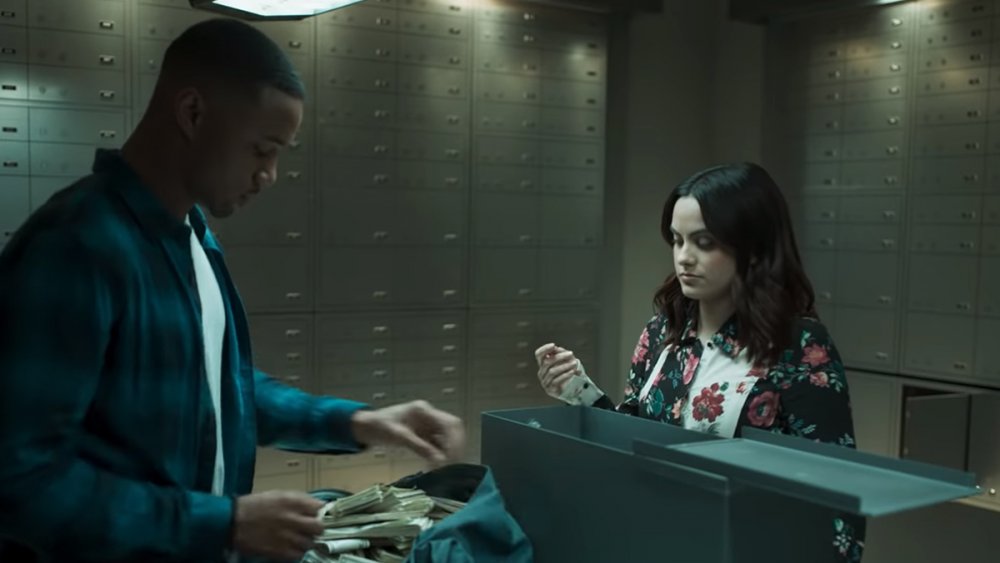
Mendes is Katie, a waitress when when meet her, slipping out of her Chicago diner for a makeout session with her studious student husband Adam (Jessie T. Usher, the littlest “Shaft”). But a robbery begins while they’re outside, and coming back in, Adam intervenes — violently.
That event upends their lives…WE’RE TOLD (not shown). Months later, he’s dropped out of school, cannot find a job and the bills are piling up. She’s become an in-home caregiver to a kindly old gent (Elliott Gould, bless him).
And when Katie lets slip to Leonard how hard times are, he wants to help. He takes on Adam as a gardener, off the books. It’s against the caregiver company’s policy. So is Leonard writing Katie an excessive check for this month’s services.
Adam’s impulses again rub against Katie’s well-intentioned caution. They cash it, and find Leonard dead the very next day.
If they’re worried about “how this looks,” they still don’t promptly call the authorities. Adam picks this very moment to rummage around Leonard’s attic, where the treasure lies.
And if those two actions aren’t suspicious enough, Katie insists to the cops that Leonard wanted to be cremated. That’s got to set off the detective’s (Sasha Alexander) alarm bells.
That’s BEFORE a lawyer (Jamie Chung) shows up with Leonard’s will, leaving everything to Katie. There’s also this creeper real estate agent (Cam Gigandet) insisting on making an offer on the property.
If it looks suspicious, it IS suspicious, right?


When the most basic description of your plot seems to give away the game, it takes style, performances and cleverness to wriggle out of the corner your picture’s painted into. “Dangerous Lies” lacks all three.
Not enough is made of “This Adam husband fella, how WELL do you know him?” doubts. The trauma of surviving a violent robbery, committing violence to stop it, isn’t developed.
There are ways to misdirect us when the second body shows up, more doubts that can be sewn and aren’t.
Mendes’ Katie under-reacts to almost all of this, partly thanks to the script, which has her hearing Adam’s “why don’t we” angles out at each juncture, partly due to her own limited range.
A beloved employer dies and she finds the body? A tear, maybe two. He left me EVERYTHING? Woohoo!
The script has Usher’s character leap into one dunder-headed move after another. The couple has scripted affection, but little chemistry.
Yeah, I know, “millennials.” But still.
This emotional disconnect only grows as the body count rises. Don’t they see how this looks? Don’t they FEEL anything?
The end result is a thriller that doesn’t race towards a climax we figure out (finally) 20 minutes in advance, it limps there.

MPAA Rating: TV-14, violence
Cast: Camila Mendes, Jessie T. Usher, Sasha Alexander, Cam Gigandet, Jamie Chung and Elliott Gould.
Credits: Directed by Michael Scott, script by David Golden. A Netflix release.
Running time: 1:36


