Movie Review: French leftists discover “Wonders in the Suburbs (Merveilles à Montfermeil)”

won3

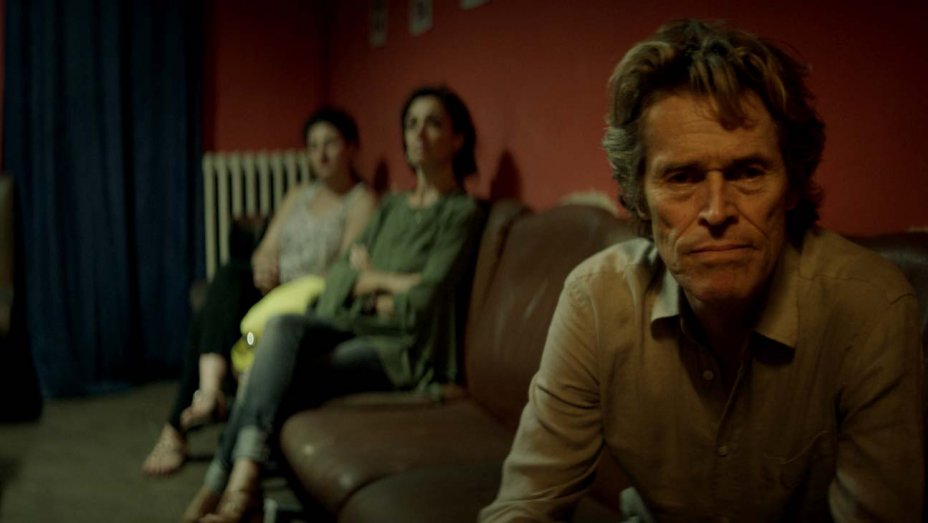
The broad, satiric swipes of the French farce “Wonders in the Suburbs” are the only punches to land — or at least achieve “near miss” — in this flailing comedy of mores, values and leftist idealism put to the test of governing.

It’s nonsensical on several levels, with big subplots left undeveloped or twisting in the wind. And “Suburbs,” titled “Merveilles à Montfermeil” in France, is one of those comedies where seemingly every character has a poem at the ready to quote for any situation, and everybody has committed big passages of the writings of Victor Hugo to memory.

Perhaps that is “normal” in the suburb of the title. Monterfemeil, “an ancient and wonderous” if somewhat depressed, immigrant-rich corner of Greater Paris, plays a key role in Hugo’s masterpiece, “Les Miserables.”

For the first time in over 20 years, the local left has taken control of a place of high unemployment, many languages, many cultures and a long history of repression — official expulsion of immigrants and the like.

New mayor Emmanuelle (Emmanuelle Béart of “Un Coeur en Hiver”) and her administration hold a press conference so they can announce the sweeping reforms, changings and politically-correct updatings that recognize the problems of the place and how they will address them.

There will be not just casual Fridays. She announces “Shorts Day,”” “Kilt Day” and “Harem Pants Day.” A “Kimono Day” seems a given.

“Earth Day” will hereafter be known as “Bio Diversity Day,” and the big summer’s start festival, “Ascension” will be “Women’s Day,” and their annual summer fest transformed into “Brioche Festival.”

Oh, and there’s a “Naps for All” program that means no phone call will be answered during this French version of a siesta.

There are all these ideas about giving everyone foreign languages courses, a make work/create jobs project that will employ native speakers in the many languages present in town to instruct others in their longue.

They will reach out and try to find those immigrants forcibly removed by the previous regime. The city will conduct outreach to Arabs, Africans and Roma, some of whom will not be able to keep a straight face when they’re visited by Benoît (Mathieu Amalric) in whatever get-up is the city’s decreed dress of the day.

But sitting with the mayor on the council are Joelle, played by director and co-writer Jeanne Balibar, and Kamel (Ramzy Bedia of “Lost Bullet”) are going through a testy divorce.

Selim (Mounir Margoum) is a city employee who burns a lot of computer time on the dated online role-playing game on “Second Life,” messing up his sex life with council member Marylin (Marlene Saldana). She’s plus-sized and has to dress in Mexican luchador (wrestling) mask and costume, or as the “Ghostbusters” Stay Puft marshmallow man.

The two oldest members of this “new” council are older men who figure everybody will need their “sex therapy” advice program.

The mayor keeps a bust of Lenin on her desk, and is prone to meltdowns. Those break out in earnest when she starts getting ransom-note-style anonymous letters, warning her of disloyalty in her administration.

Kamel and Joelle bicker, and we pick up on her insecurity and his scent fetish — sniffing newly printed reports, men’s hair, etc.

There are conspiracies hinted at and commandoes sent in (!?), even as these Nanny State ninnies set out to fix a busted city by signing off every letter (in French with English subtitles) as “someone who’s here to help.”

I watch movies for a living, and there are whole swaths of this thing I couldn’t make heads of tales out of.  There’s precious little that plays as actually “funny” in a way a non-French speaker (or France-dweller) will easily pick up on.

Little if anything is resolved, a prolonged festival dance scene does nothing but pad out the running time and the scenes that pay off — telling the laughing, bullying, insulting Roma elder and his advisors what the town will “do for you,” for instance — are as rare actual laughs.

1half-star

MPAA Rating: unrated, adult situations.

Cast:  Jeanne Balibar, Ramzy Bedia, Emmanuelle Béart, Mathieu Amalric, Marlene Saldana and Mounir Margoum

Credits: Directed by Jeanne Balibar, script by Jeanne Balibar and Camille Fontaine. A Kino Lorber release.

Running time: 1:49

Posted in Reviews, previews, profiles and movie news | Comments Off on Movie Review: French leftists discover “Wonders in the Suburbs (Merveilles à Montfermeil)”

Netflixable? “Monty Python: Almost the Truth” docu-series, the definitive history

One of the benefits of the streaming era is that all these content platforms are so starved for something to show us that what might previously have been regarded as “disposable” still has value.

“Monty Python’s Flying Circus” premiered over 50 years ago, and the last movie the British troupe parked in theaters was their “Live in Aspen” old-men-performing-their-greatest-hits video in 2005. The stage hit “Spamalot,” the musical reimagination of “Monty Python and the Holy Grail,” dates from that same year.

Two of the writer/performers — Graham Chapman and more recently, Terry Jones — are dead. Ceased to be. Expired.

But before Jones’ death in January — long before it — there was this 2009 BBC2 series, repeated in the US on IFC. “Monty Python: Almost the Truth” does a wonderful job of telling their story, how Britain’s best and wittiest, alumni of Oxford and Cambridge, and an American animator remade comedy in their absurdist image.

“Almost the Truth,” now on Netflix, is six episodes of droll completism — an amusing gathering of the then five-old men for on-camera interviews to settle, once and for all, who did what and why and when, and who annoyed the living hell out of whom as they did it.

Some sketches are explained, the origins of “I’m a lumberjack and I’m OK. I sleep all night and I work all day” and “This parrot is no more! It has ceased to be! It’s expired and gone to meet its maker! This is a late parrot! It’s a stiff! Bereft of life, it rests in peace!” are a mystery no longer.

And some secrets the old boys will apparently take to their graves — “It’s just gone eight o’clock and time for the penguin on top of your television set to explode.”

Even if you’ve read the many autobiographies that Palin, Cleese and Idle produced, there are admissions, revelations and old grudges bandied about for our viewing pleasure in this five-hours-over-six-episodes dissection.

David Frost, who first thought to put this entire braintrust on the payroll, is given his (mocking) due. But so too are stalwarts like Carol Cleveland, the bombshell who appeared in so many of their shows she’d have been properly named an “official” Python in a more enlightened, less sexist age, even though she isn’t credited with writing the material that made them famous.

Musician, writer and performer Neil Innes similarly earns a nice bit of belated acknowledgement.

Their pre-Python programs “And Now the 1948 Show” and “Do Not Adjust Your Set” are placed in the timeline, as is the show that beat them on the air with the same absurdist framework and style, Spike Milligan’s “The World of Beachcomber.”

The dynamics of the how the group worked — its three-on-three factions, the difficulties of Chapman’s alcoholism as the one “actor” in the lot with real leading man potential, as displayed in “Monty Python and the Holy Grail” and “Monty Python’s Life of Brian.” The “likability” of Palin and Gilliam’s perpetual odd-American-out status are dipped into.

As with the ’70s phenomenon, “The Muppet Show,” I’m not sure if this group, its daft, somewhat dated programs and films, is still generating new fans discovering their shtick. But the legions of fan-testimonials in this series — skewing, like the troupe itself, overwhelmingly white and male — makes clear their imprint on comedy on both sides of the Atlantic.

Eddie Izzard, Russell Brand and Simon Pegg to Lorne Michaels and Jimmy Fallon all marvel at their first encounters with “Oxbridge” humor — surreal, smart, wacky and lowbrow.

If you fondly remember any of them and any of it, from “And now for something completely different” to “a very naughty boy,” “Almost the Truth” is essential viewing.

3stars2

MPAA Rating: TV-MA, nudity, profanity, fake-blood

Cast: Eric Idle, John Cleese, Michael Palin, Graham Chapman, Terry Jones, Terry Gilliam, Connie Cleveland, Neil Innes, Steve Coogan, Simon Pegg, Russell Brand, Olivia Harrison and Jimmy Fallon.

Credits: Directed by Bill Jones and Ben Timlett. An Eagle Rock release, now on Netflix.

Running time: Six episodes @54 minutes each.

Posted in Reviews, previews, profiles and movie news | Comments Off on Netflixable? “Monty Python: Almost the Truth” docu-series, the definitive history

Documentary Review: Another celebrated music store closes its doors, “Other Music”

other1

It’s become a subgenre of documentaries, films capturing the last days of a beloved book store, video emporium, bar, restaurant, porn seller or record shop.

We meet the staff, hear the history, learn just what the place has meant to its customers — if there are some famous “regulars,” more the better.

At some point, some staffer will say something like, “Before the Internet, before iPhones, people trusted other people” when it came to picking out what to listen to, read or watch.

That’s a direct quote from “Other Music,” a documentary about the last days of New York’s East Village hipster hangout “cool” record store that hung around for 21 years.

Set up right across the street from a big Tower Records chain store, it outlasted all the chains by concentrating on the “new” and the “reissued,” the more obscure the better. Run by a staff of “curators” with mythic “High Fidelity” “encyclopedic knowledge” of popular music in general, its many genres and their vast array of choices in particular, it comes off as one of those places that made it into tourists guides in their “Only in New York” section.

The film gives you a feel for what made the place special, its hand-scribbled category name cards — “Kraut Rock,” “Decadanse,” “Out,” “In,” “Then” (reissues of music by musicians no longer performing) — and hand-written note-card “reviews” and passionate testimonials for new music.

In-store shows were another specialty. You could catch TV on the Radio, The National, Yeah Yeah Yeahs or the reclusive Gary Wilson live, on occasion.

A wildly-diverse staff of part-timers ensured the store was known for its catholic tastes — vintage country to new hip hop, every variation and subgenre of reggae known to humanity, punk.

No, you weren’t likely to find Adele and Lady Gaga and Stevie Ray Vaughn’s Greatest Hits. But that’s what the big corporate box store across the street was for.

Blossom Toes? William Basinski’s post-9/11 “Disintegration Loops?” “Italian psyche bands” and Ex Cops? Sure, right over here.

Celebrity fans like Benicio Del Toro and Jason Schwartzman sing the store’s praises, even as Schwartzman raises a humorous eyebrow at “the snobbery factor” associated with many an indie record store, especially present in one in NYC.

other2

The site-specifics separate these documentaries from one another, while what they share — all of them — is sentimentality over the store or type of store that the digital age and Amazon have killed.

Five years ago I reviewed “All Things Must Pass,”about the rise and fall of Tower Records, for instance. Even the big box stores and Blockbuster Video warrant documenting as they disappear from the landscape. A store only around 21 years barely merits — in strict longevity terms — a documentary.

The only thing that “Other Music” does differently from the scores of “last days of a dying business” docs preceding it is showing us the day AFTER the emotional “last day in business” scene. Cleaning up your rented storefront is the least romantic but maybe the saddest part of such a retail “death.” “Ghosts” of records that once hung on the walls, the wear patterns on the floor paint that show where customers gravitated the most are nice details that make this generic doc-about-a-dying-biz at least a little more interesting than the legions of genre docs that preceded it.

stars2

MPAA Rating: unrated, a little profanity

Cast: Chris Vanderloo, Josh Madell, Lydia Vanderloo, Dawn Madell, Tunde Adebimpe, Jason Schwartzman and Benicio Del Toro

Credits: Directed by Puloma BasuRob Hatch-Miller. A Factory 25 release.

Running time: 1:23

Posted in Reviews, previews, profiles and movie news | Comments Off on Documentary Review: Another celebrated music store closes its doors, “Other Music”

Documentary Review — “Love Express: The Disappearance of Walerian Borowczyk” remembers a forgotten filmmaker

I can’t remember where I saw his most famous feature film, but I distinctly remember catching the cut-and-paste/found objects-animated short films of Walerian Borowczyk at a college film society some decades ago.

I remember that because I mentioned to a professor of mine how this Polish French transplant filmmaker seemed to have taken on the style of Terry Gilliam, the animator and lone American in Britain’s Monty Python comic troupe.

“Oh nooo,” said the academic. “It was the other way around.”

As indeed it was. Gilliam is one of the fans and expert witnesses interviewed in “Love Express: The Disappearance of Walerian Borowczyk,” a documentary about the provocative “avant-garde” animator and live action feature director who was on all the (European) critics’ lips in the 1960s and early 1970s.

He turned film festival notoriety into a feature directing career infamous for its censor-testing treatment of sex. Those who remember the man and his work, and those who worked with him, turn up in “Love Express” to bemoan his fate. Becoming famous for “erotic” content, even in animation that had no overt representation of naked humans, meant that he was pigeon-holed in porn.

Borowczyk went from the odd, surreal and absurdist “Goto Island of Love” to the more overtly sexual “Immoral Tales,” and wound up making “Emmanuelle 5.” If you know anything of the history of “mainstream” sex films in the ’70s and 80s, you remember “Emmanuelle” and you can imagine what the fourth sequel to that would be like.

Academics and critics, and Gilliam (“12 Monkeys”) and other filmmakers, from Andrzej Wajda (“Man of Iron”) to Neil Jordan (“The Crying Game”) and Patrice Leconte, who worked for the Pole before directing “Monsieur Hire,” “Ridicule,” etc., try to break down Borowczyk’s vision, what make his films so fascinating.

And we see clips of archival interviews of Borowczyk, who died in 2006, challenged and try to defend himself from charges that he was a “huge pervert.”

“Who isn’t?” he said (in French, with English subtitles). “I only show what everyone is dreaming about.”

He went to art/film school with Wajda right after WWII, and fled Poland to France where he could exercise “complete freedom” in his art. Within a decade, he was a Cannes darling and one of the most critically-acclaimed filmmakers of a revolutionary era in politics, art and cinema.

Here’s one of his breakthrough shorts.

While the filmmaker’s longtime director of photography, Noël Véry, is the most quoted interview subject, it is Gilliam who is the most instructive. He details how “Boro” and “Goto” and his “completely realized world” influenced not just the animation that helped introduce and separate scenes in “Monty Python’s Flying Circus,” but became the absurdist model for how the show’s episodes were conceived.

As Borowczyk’s career was hijacked by his own infamy, documentarian Kuba Mikurda’s “Love Express” camera captures gestures, the waving about of hands by the various interview subjects as they try to rationalize both his path and his ensuing fate.

That is the successful artistic touch Mikurda brings to the subject of his film. Frankly, despite the testimonials and many clips, I don’t think he makes the sale that Borowczyk is a forgotten master. The entire “Love Express” is interesting, in an academic sense, but feels too much “a European thing,”

By the time censorship was beaten into submission, “Boro” had nowhere else to go. The times changed, and his arty, self-conscious and obscurant films weren’t going to be anything anybody wanted to sit through just to see some skin.

Gilliam sums up the fall better than anyone else as well.

“It’s very hard to STAY avant-garde.”

2stars1

MPAA Rating: unrated, nudity, sex

Cast: Andrzej Wajda, Terry Gilliam, Neil Jordan, Lisbeth Hummel, Patrice Leconte, and Noël Véry

Credits: Directed by Kuba Mikurda, script by Marcin Kubawski, Kuba Mikurda  An Altered Innocence/HBO Europe release.

Running time: 1:14

Posted in Reviews, previews, profiles and movie news | Comments Off on Documentary Review — “Love Express: The Disappearance of Walerian Borowczyk” remembers a forgotten filmmaker

Movie Preview: The Robots are fighting our “police action” wars for us — “Monsters of Man”

A Dec. 8 release, looks like a generic sci-fi shoot-em-up, “Clone Wars” without the capes. And space ships.

Posted in Reviews, previews, profiles and movie news | Comments Off on Movie Preview: The Robots are fighting our “police action” wars for us — “Monsters of Man”

Movie Preview: On the road and stalked…”Alone”

Jules Wilcox is the star in this horror tale from our friends at Magnet,the blood-curdling mean sister to Magnolia Pictures.

Travel tip? Stalkers are always in late model Jeep Grand Cherokees. That tool tailgaiting and screaming at any bumper sticker that doesn’t match his Q-Anon worldview? He’s in a pickup.

Sept. 18.

Posted in Reviews, previews, profiles and movie news | Comments Off on Movie Preview: On the road and stalked…”Alone”

Movie Review: David Tennant’s hippy Scots shrink takes on the establishment in “Mad to be Normal”

mad1

“Mad to be Normal” is an “Awakening” or “Patch Adams” Robin Williams never got around to. It’s another sympathetic big screen biography of a doctor with the audacity to listen to his patients and actually care about them.

But R.D. Laing was Scottish, something of a hippy and a scoundrel who ignored his children and wives for the sake of his indulged patients, and a controversial figure to this day. He’s played by David Tennant, whose version of gonzo free spirit is lot darker than Williams’ sentimental take on such characters.

That contributes to the general downer that this highly-fictionalized surface gloss, co-written and directed by Laing expert Robert Mullan, on his life and work turns out to be.

Laing started making waves in the early ’60s and Mullan’s film catches up with him at his peak — a celebrity, best selling author, “acid Marxist” to the LSD using musicians (The Grateful Dead were fans) and generation they came from.

That’s how Angie Wood (Elisabeth Moss) encounters him, at a crowded ego-tripping “lecture.” She’s just finished school and longs to learn at the feet of the master. Of course they end up in bed. It was the ’60s, after all. And yes, she’s a composite character, based on a wife and other women in Laing’s life.

Angie meets another enthusiast at the lecture, Jim (Gabriel Byrne). She mistakes him for a colleague of the good doctor, and he lets her. Damned if he isn’t a patient.

“The madness of our patients is a result of the destruction wreaked on them, by US,” the good doctor lectures. “Tranquilizers prohibit communication…ENGAGE.”

Laing’s radical idea, the one that was shaking up the psychological establishment? He was anti-tranquilizers, preferring to indulge and listen to his patients. He sought more tangible, physical causes for illnesses, described schizophrenia as “a theory” and all this made him a revolutionary in the last years of the “lock them up/drug them up/electroshock them” era in psychotherapy.

If that barbaric age ended, it is suggested, Laing helped bring about the change.

He was resolutely against “asylums” and mental hospitals, and the film focuses on his years running a sort of therapeutic halfway house, Kingsley Hall, in London in the late 1960s. His patients there are a blend of depressives and possibly dangerous characters, with Michael Gambon playing one of the former and the suited, well-spoken Jim (Byrne) quite possibly one of the latter.

mad2

The film is a somewhat flat survey of the tropes in such stories — a film crew following Dr. Laing as he tours America, visits a mental hospital and “reaches” a patient his peers have locked up in a padded cell.

His relationship with Angie turns testy when a child enters the picture. He’s already neglecting the kids from his last marriage, and now he neglects Angie, all for the sake of his Kingsley Hall patients/friends.

“You’ve nooooo idea what these poorrrrrr bastards go true every deeeee,” Tennant burrs.

The performance is cocksure and monomaniacal and seems on the mark, seeing as how Laing, for all his eccentricities and indulgences (He prescribed LSD, because he used it himself.), is still regarded as influential today.

His communal “cure” efforts at Kingsley Hall were very much a mixed bag, and the end of this “experiment” depicted here is wholly fictional. But the sketchy veracity of “Mad to be Normal” isn’t what weighs it down. It’s Mullan’s (“This Weekend Will Change Your Life”) slow paced slog through conventions.

Limiting Moss to a “You have time for everyone but US” caricature is downright criminal.

The period mores, couture, decor and “out with the old” ethos is on the mark. And Tennant makes the man fascinating, if under and then over-explained (Let’s meet his mum, shall we?).

But like Laing’s ideas and experiments, “Mad to be Normal” turns out to be much the mixed bag, with just as much worth tossing out as there is to celebrate.

2stars1

MPAA Rating: unrated, drug use, profanity, sexual situations

Cast: David Tennant, Elisabeth Moss, Gabriel Byrne and Michael Gambon.

Credits: Directed by Robert Mullan, script by Robert Mullan and Tracy Moreton. A Samuel Goldwyn release, on Tubi, Amazon, et al

Running time: 1:49

Posted in Reviews, previews, profiles and movie news | Comments Off on Movie Review: David Tennant’s hippy Scots shrink takes on the establishment in “Mad to be Normal”

So now “Grease 2” has to be reconsidered?


OK. Sure. I mean, when the sequel came out, it played like a no-name anachronism. The songs seemed more 1982 than 1962.

And let’s be absolutely contextual here. America had just been through an “American Graffiti,” “Happy Days” and “Grease” 1950s-early-60s nostalgia thing. We KNEW how “off” “Grease 2” felt when it hit theaters and bombed in 1982. It wasn’t just the critics.

Patricia Birch, the “Grease” choreographer directed it, and the dancing was closer to a disco riff on The Twist than it was period correct. But sure, it was sexier than the original “Grease.”

Michelle Pfeiffer, Adrian Zmed and Maxwell Caulfield, the leads, were new to audiences. Two of them actually had careers.

Christopher McDonald and Pamela Adlon had supporting parts and were years and years away from being “names.”

The songs were racier, and they stick with you better than any bomb I can only remember seeing once has a right to.

But now it’s got some Brit-based online fan revival underway? Who knew?

True story, I was just out of school, working in a big city NPR station when the film came out. Lorna Luft and I think Peter Frechette came by to plug it. I had no idea who Lorna was. I don’t think her “Judy Garland’s daughter” “credit” was mentioned in the press kit. The station manager might have tipped me about that before I interviewed them.

I dismissed the movie, like pretty much everybody else, so the interview was a chore. But maybe I’ll take a second look at it. Just when I hoped “Let’s Do It for our Country” was erased from my memory.

Posted in Reviews, previews, profiles and movie news | Comments Off on So now “Grease 2” has to be reconsidered?

Netflixable? Jamie F and JGL pill pop for “Project Power”

pow1

Here’s the “all in” moment for Netflix’s latest dabble in super-heroism, “Project Power.”

New Orleans rapper/drug dealer and sidekick Robin (Dominique Fishback) has just been told their next impossible task by pill-popping avenger cop Frank.

“There’s like a THOUSAND guys out there,” she whines. “BAD guys” is implied.

And Frank, who takes moments like this to go all “Clint Eastwood,” instead sounds more like the actor playing him — fanboy fave Joseph Gordon Levitt.

“But you know I’m AWEsome, right?”

And there it is, the movie summarized in tone, tenor, temperament and intelligence. Love that line? Maybe you’ll love this.

Netflix teams up JGL and Oscar winner Jamie Foxx with Fishback (TV’s “The Deuce”) for a thriller about pills that give their poppers superpowers.

They threw a bag of money at the talent and another at the teamed auteurs who gave us “Paranormal Activity 3 and 4” and the guy on deck writing “The Batman” for Robert Pattinson. And what they got is another forgettable superheroes-sans-capes thriller in which the formula that various heroes and villains swallow, in the form of a glowing pill, isn’t the ONLY formula here.

The producers lured two intensely likable stars, a rising star and one killer location — a modern freighter — for an almost head-slappingly simple-minded Military Industrial Complex meets Big Pharma story.

It’s all about the brawls, as assorted characters pop these five-minute-power pills and morph into human chameleons, human fireballs or blokes with skulls so dense no mere bullet can penetrate them.

This pill has flooded New Orleans, and the cops and this interloper calling himself “The Major” (Oscar winner Jamie Foxx) are trying to get to “the source” of said drug epidemic. As the cops are outrun or outfought whenever they’re dealing with somebody who has “the power” for five minutes, this isn’t exactly a fair fight.

The script’s story beats are generic in the extreme, strictly cut-and-paste. The “rapper” girl keeps getting asked to “spit.” The villains keep stopping to make speeches. The two biggest characters can’t figure out if they’re on the same side or not.

But there are moments, clever twists and references, in that screenplay. So let’s give Mattson Tomlin his due. The “city flooded with a drug” by some unseen entity is straight out of “The CIA started the crack epidemic” theory. One villain’s lecture is about Henrietta Lacks.

Levitt’s cop complains to his chief (Courtney B. Vance) about the mysterious figures intervening in many of their arrests.

“We know what happened the last time we counted on guys in suits to look out for New Orleans!” That’s a Katrina reminder of when Republicans made the city the Puerto Rico of its day, with their “let the dark people drown” ethos.

Oscar-winner Foxx mentors the young drug dealer Robin about how she should be dealing less and emulating him more.

“The power goes to where it always goes, to the people that already have it…I’ve got to work the system harder than it works me!”

It’s not the worst movie of the “power from a pill” genre, an idea that dates back decades (TV’s “Mr. Terrific” comes to mind). But that’s one overriding problem here. “Project Power” feels powered-out ten minutes in.

I like the stars, but they don’t give us enough to like here. Check out which New Orleans Saints jersey JGL wears (no accent, just a jersey).

The milieu is new, but the fights — dousing this fireball in water, ducking that guy’s steel ship’s hull denting blows there — are pro forma. Been there, seen it.

The odd funny line or pointed history lesson or lecture on politics, drugs and “the little people” aside, this “Project Power” doesn’t add up to anything new.

This is just an overdressed, over-budgeted version of stupid.

1half-star

MPAA Rating: R for violence, bloody images, drug content and some language

Cast: Jamie Foxx, Joseph Gordon Levitt, Dominique Fishback , Rodrigo Santoro, Amy Landecker and Courtney B. Vance.

Credits: Directed by Henry Joost, Ariel Schulman, script by Mattson Tomlin. A Netflix release.

Running time: 1:53

Posted in Reviews, previews, profiles and movie news | Comments Off on Netflixable? Jamie F and JGL pill pop for “Project Power”

Documentary Review: A mission gone wrong remembered, “Desert One”

des3

One of America’s greatest documentary filmmakers adds another exclamation point to her resume with “Desert One,” a thorough and moving remembrance of the failed Special Forces mission to rescue American Embassy hostages being held in Iran.

Barbara Kopple, a two-time Oscar winner and a legend in the field since “Harlan County, USA” (1977), got access to an American president and vice president, and newsman Ted Kopple, perhaps the man Americans most famously associated with “The Iranian Hostage Crisis.” But she gained entry to Iran and spoke to Iranian hostage takers and the site of the disaster as well.

And she interviewed surviving hostages, the military men who helped plan and attempt the doomed mission, which went awry when poor intelligence, equipment failures, weather and a lack of a full dress rehearsal collided on a dry desert lake bed rendezvous point that gives the film its title — “Desert One.”

We hear tape recordings of then-President Jimmy Carter’s conversations with the general in charge of this “full radio silence” special operation, hear his pointed questions and grim acceptance of what was going on and see something that’s become rare in elected leaders in the 40 years since, a public (TV) declaration that “It was my decision to attempt the rescue operation…The responsibility is fully my own.”

As we hear from the surviving veterans who detail the complex mission and how it was planned over the months after the November, 1979 seizing of the American Embassy in Tehran, the film’s purpose comes into focus. Yes, there were “too many moving parts,” as one officer remembers. Yes, losing the embassy and its CIA station members meant they didn’t have fresh intelligence and thus were flying in blind.

But the attempt itself was heroic, no matter how it turned out.

Kopple and her interview subjects give us a quick overview of American-Iranian history, this country’s decades-long Cold War support of the brutal Shah, who was installed in a Churchill and Eisenhower-engineered coup in 1953.

Former hostages and embassy employees John Limbert and Michael Metrinko recall the growing unease that “something bad was going to happen” when the Shah finally abdicated and fled in 1979. But they remained on post.

“How often do you get the chance to watch a tornado coming down your street?” is how Metrinko rationalized it.

It’s fascinating to hear, too, from an Iranian translator and actual former “student revolutionaries” and hostage takers, to give us the inside-Iran perspective.

Kopple uses eyewitness memories and hand-drawn illustrations to detail the specifics of the mission itself, and the assorted equipment failures and miscalculations that began to pile up in the middle of the Iranian night.

There’s even an Iranian survivor of the tour bus that accidentally drove up on the “Desert One” landing site.

“Desert One” is unsparing and unflinching, showing us the ghoulish Iranian display of American corpses on TV and recounting the diplomatic failures, Carter’s big public statement blunder that limited America’s options and candidate Ronald Reagan’s B-movie star bravado and bluster in second guessing the sitting president every step of the way.

The Reagan campaign’s alleged efforts to delay the hostage release is alluded to by some of the military men involved, the so-called “October surprise” effort to undermine official U.S. policy and negotiations.

But Kopple’s main focus remains those who took on the duty, did their jobs and struggled to make an increasingly unworkable situation succeed, “forgotten heroes” of Operation Eagle Claw. Her thorough and thoroughly engrossing film preserves their story and ensures that this is “forgotten history” no more.

3half-star

MPAA Rating: unrated, graphic images of dead bodies

Cast: Lt. Col. Ed Seiffert, John Limbert Jr., Michael Metrinko, Kevin Hermening, Sgt. Richard “Taco” Sanchez, Jimmy Carter ,Ted Koppel and Walter Mondale

Credits: Directed by Barbara Kopple, script by Francisco Bello. A Greenwich Entertainment release.

Running time: 1:47

Posted in Reviews, previews, profiles and movie news | Comments Off on Documentary Review: A mission gone wrong remembered, “Desert One”