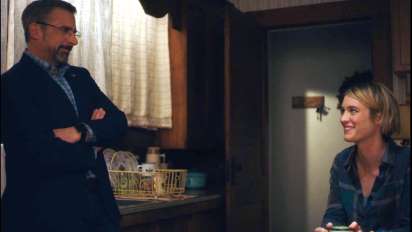
Documentary Review: A mass shooting and its victims are brushed off by the Vegas “Money Machine”

“Money Machine” — a documentary about a mass shooting, money, police cover-ups and political opportunism — has a lot of pithy summations of its setting, “Sin City.”

Las Vegas is “a town that knows how to make things disappear — money, people…”

“The fix has always been in, in Vegas!”

But my favorite has to be this, pronounced without irony in a film that’s a scattered, ad hominen swipe at everything the Oct. 1, 2017 murder of 58 people and wounding of some 800 more exposed about the gambling mecca in Nevada desert.

“Greed is what’s RUINING Las Vegas!” There’s a news flash.

Editor turned director Ramsey Denison’s brisk, neon-lurid film is his second (“What Happened in Vegas”) on Las Vegas’s problematic police force. Here, he gives allegations and accusations equal weight to proven lies and hard evidence of police cowardice and cover-ups and the crushing influence of Big Gambling Money on a rushed investigation into the Oct. 1, 2017 “Route 91 (Harvest Festival) Shooting” or “Mandalay Bay Massacre.”

Denison interviews surviving victims of the tragedy, journalists, local eyewitnesses and activists, a firearms acoustics expert, retired cops and other investigators in telling the story of that night. Some 22,000 fans at an outdoor country music concert were terrorized by a rich, heavily-armed gambler/retiree who’d smuggled over 20 guns into a hotel room at the MGM-owned Mandalay Bay.
Locals give a quick history of Vegas, from its mob beginnings to the “theme park/family friendly” it got in the ’80s. Tourism figures are thrown around, nightly gambling profits sketched in.

And then that horrible night happens. Much of the first act of “Money Machine” is about the slaughter, viewed through cell phone cameras, live-feed video, CCTV security cams and even police body cams as the Las Vegas Metropolitan P.D. responded.

Then, we start to hear about the rush to judgement, the haste with which “terrorism” was ruled out and a “lone wolf” theory pushed front and center. Even the F.B.I., these interview subjects say, was hasty in leaping past all the police calls to other “active shooter” scenes and memories of those who survived, many of whom swear there must have been two or three shooters.

“Vegas is BACK and open for business” seemed to be the governing ethos. Even the finished report of the worst mass shooting in U.S. history is lightweight and perfunctory compared to the exhaustive one prepared after Florida’s Parkland High School shooting.

As the film progresses, we start picking up explanations for that. Sheriff Joe Lombardo was running for re-election. No, he doesn’t want it to get out that he had a cop, then several cops, “cowering” outside the Mandalay Bay hotel room where Stephen Paddock was raining bullets down on concert goers from his “sniper’s nest.” No, he doesn’t want to explain the department-wide rush in orders (heard, and seen here) to “turn your (body) camera off” on that active incident, and later crime scene investigation.

Political opportunists abound, from the sheriff and the mayor to a “grandstanding” candidate for governor (not the actual governor) who got himself on the dais for every press conference in the days after the tragedy.

Lombardo and now-Governor Steve Sisolak even set up the “Vegas Strong” charity, intended to help the victims, in those early hours. The money? Apparently it didn’t get to many victims.

Reporters gripe at the sheriff’s high-handedness, defensiveness and obvious kowtowing to the big companies (MGM and Caesar’s own most Vegas casino-resorts). Victims are seen protesting even as the city is seen “moving on” from the tragedy in record time.

Ugly as that might seem, nothing about any of that behavior feels surprising or out of character.

The Mandalay Bay’s alarmingly slack security? Awful, but not shocking. Likewise, MGM’s decision to sue the victims of the shooting to avoid paying for their incompetence is a terrible thing. It’s just that little about Vegas has the capacity to shock any more.

But with all these interviews, Denison doesn’t land or appear to even try to interview the sheriff (a near-certain turn-down), the governor, the mayor or higher-ups with MGM resorts. He even got Paddock’s laughs-too-quickly brother to talk about how “smart” and “pissed off” at the big gambling resorts the shooter was.

In this case, Eric Paddock is what counts as “a contrary voice.” Because Paddock’s appearance in the opening act foreshadows what’s coming in the third act.

Spoiler alert — the “multiple shooters” theory is knocked down by a parade of faces and voices, which is why “Money Machine” abandons that over-developed thread after the first act.

The documented multiple missteps by the police grow large in the light of the conspiracy-minded. And the unsavory way the city “remembers” the tragedy — by “forgetting” too quickly and moving the “memory garden” memorial to it SEVEN MILES out of town — is awful PR and callous in the extreme.

But what were you expecting?

The town comes off terribly in the film, so much so that the film’s COVID19 coda feels Biblical in its judgement. The mayor (Carolyn Goodman) who earns only passing disdain in the first hour is held up to well-deserved scorn for her tone-deaf response the pandemic shutdown. Everybody who watches cable news got a bellyful of who that heartless harpy really works for.

Yes, money runs a tourist and gambling town. Yes, corporations like to avoid accepting financial blame for blunders. Yes, lawyers “fighting for victims” are in it for the money.

But as damning or at least unsavory as the many new allegations, accusations and (near) admissions of wrongdoing or negligence are, one question hangs over the entire “Money Machine” enterprise.

If we’re not shocked, why is the filmmaker?

2stars1

MPAA Rating: unrated, scenes of violence, profanity

Credits: Written and directed by Ramsey Denison. A Sin City Cinema release.

Running time: 1:25

Posted in Reviews, previews, profiles and movie news | Comments Off on Documentary Review: A mass shooting and its victims are brushed off by the Vegas “Money Machine”

Movie Review: Aliens, Obama and Eisenhower “play through” on “The 11th Green”


If there’s an overarching, blanket reaction that one can toss over the speculate fiction films of Christopher Münch, it might be “Yeah, and?”

His debut feature and still most famous film, “The Hours and the Times,” was a thought-provoking version of what might have happened on a long Spanish holiday John Lennon took with “the fifth Beatle,” gay manager Brian Epstein.

His most recent theatrical feature, “Letters from the Big Man,” is a dramatic treatment of the telepathic “relationship” that develops between a forest scientist and a Sasquatch she discovers and then tries to protect from government exploitation and destruction.

His new film, “The 11th Green,” is about Area 51 and the Biggest Conspiracy of them All, a contemplative take on when we knew there were aliens, what we gained from them and the mania to keep that secret, even as bits and pieces of it slip out, decade after decade.

The larger theme of these three films is upending everything we know or think we know about the Beatles’ sex symbol, nature and our relationship to it, or government, science, saucers and our place in the universe.

But “The 11th Green” is an “X-files” without genuine suspense, a “Close Encounters” without the wonder, “All the President’s Men” with a supernatural twist, but without a compelling “Deep Throat.” It’s dispassionate and intriguing, sure. Yeah, and?

Campbell Scott plays a well-connected independent journalist on this story — about classified government tech making its way into the private sector via nefarious means.

As Jeremy Rudd covers this world and America’s “Big Secret” for a streaming news program in the “Democracy Now!” mold, he keeps his distance from the UFO buffs who are onto the truth, but can’t get facts to back it up. And if he’s paranoid — refusing to fly, punching the “unlock” key on rental cars from an explosion-safe distance, writing his essays and reporting on a typewriter, which can’t be hacked — the man has his reasons.

The death of his semi-estranged father (Monte Markham), a highly-placed Air Force general in the intelligence sector, doesn’t stop the reporting. Dad knew things, knew people and kept notes. His office is decorated with service patches — odd “units” with the face of a “Communion” E.T. embroidered on them.

Jeremy meets the old man’s trusted assistant and organizer (Agnes Bruckner, who played Anna Nicole Smith in a TV movie), deals with his cremated remains and throws a party with his father’s circle of retired and semi-retired military neighbors in the old man’s Mid Century Modern, golf course view desert home, which used to belong to Eisenhower.

Things turn interesting — hints of what he’s suspected, that they KNOW he knows — and testy. By and large, these are reactionary men bent on keeping their secret, hinting at the “cabal” in charge of maintaining that silence at all costs.

And one (David Clennon of TV’s “thirtysomething”) is downright belligerent to the “treasonous” reporter with “The Peking Press,” and about “the colored socialist” in the White House.

That’s where things take their big turn as we settle into three connected timelines. The current moment is “the recent past,” when Obama (never named, but played by Leith M. Burke) is finishing up his term in the White House, weighing what to do about “E.T. Deep State.” There’s Eisenhower’s quite-active late ’60s retirement in Palm Desert, fielding calls from the Johnson White House, advising escalation in Vietnam, rebuffing any involvement with “that dirty business” with “The Visitors” and that whole Aliens are My Co-Pilot thing.

And then there’s the distant past, a timeline that begins with America’s first-ever Secretary of Defense, James Forrestal (Ian Hart, who played John Lennon for Münch and others), presiding over the birth of the Atomic Age and the rise of flying saucer sightings, a man haunted by all this, “11th Green” alleges. That’s the timeline where “The Visitors,” aided by “The Group,” (“Those dastardly men!”) meet presidents (Ike among them) and begin to influence our technology, foreign policy and the planet’s future.

That first reference to “deep state” got an eye-roll out of me, an “Oh no, Münch is going down the QAnon rabbit hole.” And that’s not entirely wrong.

As he puts Obama and Ike in the same room (Via “dreams,” maybe?), debating “How were you planning on dealing with the public” as each faced the choice of telling people “the truth” about Groom Lake, Area 51 and “visitors,” “11th Green” soberly sizes-up how that might be done. Ike’s 1950s complaints that this secret could not be kept because saucers were showing up everywhere, and being filmed, and people “can see them with their own eyes” come into play. If a cabal was conspiring how to “break” this news to us, maybe letting it drip drip drip out over 75 years would “normalize” it.

The “shock” of discovering we’re not alone would disrupt not just human-race-centric religions and our supposed exalted place in the cosmos and create universal paranoia about what “they” might “want” with us. It would shake us at the core of our being, our sense of individualism and self-determination, so those in-the-know in the movie argue.

Scott maintains a stoic presence at the center of all this, a man being followed but somehow sensing that the SUV tracking his every move won’t come right out and kill him. Not in any traceable way, anyway.

Burke’s “Lori Larkspur” character is both obviously a woman with her own secrets, and exactly the sort of “honey trap” a loner journalist might fall into.

It’s unsettling to hear the president (George Gerdes) who warned of a “military-industrial complex” pulling the strings in Washington, fretting as he and Obama discuss an “E.T. Industrial Complex.”

“At least ‘The Enquirer got it right” is a joke no U.F.O. buff needs explained.

But the scenes where an impassive “visitor” (Tom Stokes) in Jesus hair and robe sits in on the Meetings of the Presidents are just laugh-out-loud silly.

Back-engineering Forrestal’s fate via “Visitors” and the secret and “The Cabal” is both labored and ludicrous.

And the story’s urgency, the thing that drove “The X-files” movies, and to a lesser extent, the TV series, is seriously wanting. With a climate in crisis and a planet veering into fascism and military competitions pointing towards a future cataclysm, keeping the secrets to free energy and leaps forward in aviation and space travel (“Flying saucers don’t run on gas!”), Rudd wonders “What’re they WAITING for?”

The viewer of “The 11th Green” can wonder that, too.

With every minute of underwhelming low-budget faked “alien encounter” archival footage, with every shift of scene, with every moment where conversation is chosen over action and undramatic intrigue wins out over drama, “The 11th Green” shows more interest in showing golfers walking the course than in the suspense of what will happen when somebody actually hits the ball.

2stars1

MPAA Rating: unrated, adult situations, profanity, alcohol

Cast: Campbell Scott, Agnes Bruckner, April Grace, Leith M. Burke, Tom Stokes, Ian Hart and David Clennon.

Credits: Written and directed by Christopher Münch. An Antarctic release.

Running time: 1:49

Posted in Reviews, previews, profiles and movie news | 2 Comments

Documentary Review: Early childhood education is “No Small Matter”

A neuroscientist tells the story, captured on film, of interacting with a 42 MINUTE old baby, sticking his tongue out and the infant, eyes barely adjusting to the big wide world, mimics him.

Academics, doctors and teachers talk about how such early “learning” begins with babies, how intense it is in those first days, weeks and years.

“Executive Function” in learning is explained, the socializing and problem-solving that children need to master (“Self Control,” “Working Memory” for instructions, being able to retain and follow them, and “Mental Flexibility,” mastering the ability to shift focus, adapt to a new situation).

Teachers and parents marvel at how much more prepared for life children are who have heard millions, rather than hundreds of thousands, of words before they ever reach the school system.

Retired military officers, members of a lobbying organization called “Mission: Readiness,” talk about an American generation unprepared and unqualified to serve, much less grab great jobs that help make the country competitive. The problem, as they see it — echoing EVERYbody who has appeared on camera before them — is a nation that neglects early childhood education.

And then we meet the energetic young people, teachers at the bottom of the educational ladder — by reputation, clout and pay grade — fighting the fight to rectify this social failing in a career that to them is a calling, but a calling that requires them to live with their parents or take second jobs.

“No Small Matter” is a brisk, smart and entertaining documentary about the importance of early childhood education, the ways investing in it pays dividends in social, economic and civic terms and the costs that failing to take it seriously are imposing on us.

This film was finished long before the phrase “defund the police” hit our political discourse, but this is what a deeper discussion of the divisively-labeled idea is about. Spend on childcare, improve it and make it available to every parent in America, and you won’t need legions of police, tactical gear and tanks to keep order in our cities.

The evidence is there and it’s overwhelming. “No Small Matter” doesn’t need to go abroad and show us other countries that are taking this more seriously and the (good) consequences of such policies. We meet an alumnus of The University of North Carolina’s “The Abecedarian Project,” a nearly half-century-long (and counting) study of children who participated in stimulating, nurturing pre-school care, and those who didn’t.

Race and social class become less important in determining a child’s future when they’re in great day care before kindergarten. They grow up to be better educated, higher earners, less likely to have had any problems with the law.

Filmmakers Jon Siskel, Greg Jacobs and Danny Alpert take us into classrooms and homes and brain research labs and cram a lot of breezily-presented facts, figures and arguments in “No Small Matter’s” brief 72 or so minutes.

Teachers play-act childish arguments and start that “Executive Function” problem-solving ball rolling with their students. Cookie Monster shows up to interrupt over interview and demonstrate impulse control. Advocates earnestly advocate.

The profession of early childhood educators is redefined, once and for all.

“They’re not baby-sitters. They’re brain-builders.”

If everybody were to see this one teacher at her second job, bar-tending, maybe we’d get it. If we all could hear tearful tales of how no one can build a career doing this vitally important work, forced to live with your parents in order to survive on $30,000 a year, after ALL the arguments showing us how vital and very important this, maybe we’d see the need to change our priorities, where we’re spending our tax dollars.

Because if there’s one fact everyone should absorb from this sometimes-cutesy documentary, it’s that this big hope for a better, smarter, fairer and healthier America is “No Small Matter.

3stars2

MPAA Rating: unrated

Cast: Narrated by Alfre Woodard.

Credits: Directed by Danny Alpert, Greg Jacobs and Jon Siskel. An Abramorama release.

Running time: 1:11

Posted in Reviews, previews, profiles and movie news | Comments Off on Documentary Review: Early childhood education is “No Small Matter”

Movie Preview: Scott Eastwood and Caleb Landry Jones are soldiers in Afghanistan, defending “The Outpost”

This one streams July 3.

Posted in Reviews, previews, profiles and movie news | Comments Off on Movie Preview: Scott Eastwood and Caleb Landry Jones are soldiers in Afghanistan, defending “The Outpost”

Movie Review: Big Money politics is lightly lampooned in “Irresistible”


irrestible4

Comic and political satirist Jon Stewart returns to the fray he stepped away from when he gave up “The Daily Show” with “Irresistible,” an airless political comedy almost nostalgic for an America that knew how to compromise.

It’s a send-up of “the process” as it is practiced now, with the scorched earth that dogmatic, big money politics has given us. But in setting us up to settle for less than what we want or think the country needs, in lampooning the coarse language but not the divisive rhetoric, malignant hatred and genuine gulf that separates us, the movie itself feels like a compromise.

“Irresistible” traffics in tropes even as it warns us against stereotyping “the other.” It disguises itself in a “fish out of water” — crude, smart, manic city folk interfering in  “salt of the Earth” “small town Americana” framework. He invites us to rediscover this forgotten America, and realize it’s more sophisticated than we give places we derisively dismiss as “BFE”credit for.

Think “Doc Hollywood,” only not particularly funny and a whole lot less charming.

Steve Carell plays Gary Zimmer, a high-power D.C. Democrat, a consultant who hasn’t recovered from the 2016 election. When a staff member shows him a web video of a retired Marine Col. and Wisconsin farmer’s city council speech in favor of tolerance, empathy and against an ordinance requiring driver’s license and proof of citizenship for local services, Zimmer lights up.

“He’s a Democrat! He just doesn’t know it yet.”

And through him, and the upcoming mayoral election in tiny Deerlaken, Wisconsin, Zimmer sees “our key back into the Forbidden City.” He’ll go and talk this Col. Jack Hastings into it. No sweat.

Zimmer dismissing the offer of a “7 Series” (BMW) rental car with “Might as well write ‘Liberal douche bag across my forehead” is undercut when he knows exactly what luxury package to get on the Ford Explorer that sends the right message. The chartered jet with its gourmet dinner that he takes there? Nobody needs to know that.

The locals “making” him when he shows up at the Hofbrau tavern and inn? The “Budweiser and burger” that fools nobody that he’s not “D.C. Gary?” The eyebrows raised at his unguarded language, even as he’s trying to persuade the Col. to run?

The bigger problem, as Zimmer tries to stage manage cattle by skin color for the TV-friendly campaign announcement press conference, is that none of this stuff is particularly funny. A smirk here, a grin there. Carell could play this guy in his sleep, and Stewart’s idea of sharp observations and funny commentary is…dated.

Finally, Rose Byrne shows up as the ruthless D.C. GOP consultant Faith Brewster, who will spend any amount, tell any lie, because “crushing the last piece of hope in your eyes gets me off.”

Suddenly, this has become a high-stakes/big money “bellwether” election, cable news-friendly, big pocket donors who need to be courted in New York, the works.

The earnest elements in the film work far better than the funny ones, but even they feel out of step with the country’s current temperature. Dying small towns, people “left behind” by the (then) current economy, reactionary policies taken up by people who are “scared” aren’t just in whiter-than-white swing states like Wisconsin.

Byrne doesn’t provide the comic spark the film needs because Stewart shortchanges her character. He pays more attention to the farmer’s daughter (Mackenzie Davis), who goes along with all this, like her Dad, but who has a skepticism he never shows.

She’s not keen on abrasive Gary’s approach, “to flatter them (his backers) you have to condescend to us,” the voters.

Again, earnest, not funny.

Stewart’s treatment of the Bryne (cynical man-eating slicker) and Davis (wholesome farm “girl”) characters is stereotypical enough to make one wonder if he’s “woke” enough to make this movie, which feels very 2017 in most other ways as well.

This doesn’t have the wit or warmth of “Swing Vote” or the mean-spirited political currency of “Veep.”

Stewart is more interested in squishy “messaging” and “remember how to LISTEN” to others’ point of view preaching than it is in being funny. Who’s going to be satisfied with the warm fuzzies when we come looking for satire that makes us laugh at how ridiculous things have gotten?

Yeah, we’ve seen that “warring political consultants” comedy before, recently in “Our Brand is Crisis,” for instance. Avoiding repeating that is understandable. It’s just that “Irresistible” doesn’t come up with anything to replace that Big Joke all the other jokes revolve around — no “Swing Vote” civics lesson in warmth, no nasty “Veep” style political currency, either.

If Carell is more amusing than hilarious, and Bryne doesn’t have enough to work with, where is the big laugh in all of this?

That would be the “rocket man” campaign donor, played as a “still alive via technology” walking robot by the clown Bill Irwin. He has one scene. He gets the one big laugh. And he’s the only “Irresistible” thing in “Irresistible.”

2stars1


MPAA Rating: R for language including sexual references

Cast: Steve Carell, Rose Byrne, Chris Cooper, Mackenzie Davis, Natasha Lyonne, Topher Grace, Bill Irwin and Brent Sexton

Credits: Written and directed by Jon Stewart. A Focus Features release.

Running time: 1:41

Posted in Reviews, previews, profiles and movie news | Comments Off on Movie Review: Big Money politics is lightly lampooned in “Irresistible”

Movie Preview: “The Broken Hearts Gallery”

This is one of the guinea pig releases Hollywood is putting out to see if folks are ready to return to cinemas, and to see what COVID-19 has to say about that.

July 17, it’s a date!

Posted in Reviews, previews, profiles and movie news | Comments Off on Movie Preview: “The Broken Hearts Gallery”

Next Interview: Give me some Questions for Ron Perlman, wouldya?

Yeah, we all think we’re cool. Maybe have the occasional “I can be a badass” moments.

But we will never ever be as cool as Ron Perlman, character heavy extraordinaire who journeyed from “Quest for Fire” and “Beauty and the Beast” to “Hellboy,” “Drive” and “Sons of Anarchy” and — Jesus, LOOK at these credits — and his latest, “Run with the Hunted.”

And yeah, he’s the official Tough Guy of Twitter.

He brings that quiet, profane menace he does so well to “Run with the Hunted,” playing of all things, a Tulsa crime boss whose minions are “Lost Boys (and girls)” taught to work their way from pickpocket to armed robbery.

I’ve been a fan forever, but this is the first time I’ve tried to track him down. Got anything you want me to ask him? I have a few lines of questioning in mind, but I’m open to suggestions. Comment below, and thanks for the help.

Posted in Reviews, previews, profiles and movie news | Comments Off on Next Interview: Give me some Questions for Ron Perlman, wouldya?

Series Preview: Apple brings Asimov to TV — “Foundation”

Posted in Reviews, previews, profiles and movie news | Comments Off on Series Preview: Apple brings Asimov to TV — “Foundation”

Netflixable? Young Turks’ train trip shows them “One-Way to Tomorrow”

way1

That rich Hollywood tradition of throwing two people together in an unusual way earns a Turkish twist in “One-Way to Tomorrow,” a simple romance about two people thrown together on a long train ride.

Director Ozan Açiktan and screenwriter Faruk Ozerten, and the stars of “Yarina Tek Bilet” (its Turkish title) push that convention to its limits when Leyla (Dilan Çiçek Deniz) meets (Ali (Metin Akdülger). My stars, is this fellow annoying.

He’s asking questions the moment he steps into the compartment they’re sharing. He’s making observations. He won’t stop talking. He tells her, “I believe that’s my seat.” Is he checking her out? He eavesdrops on her cell phone conversation, even after she takes the call down the passageway.

Ali literally chases her out of the compartment before he can even get her name. But hell, wouldn’t you know it? The train is booked full. She skulks back.

This is going to be one long overnight ride (14 hours) to Izmir.

But it turns out that WAS his seat. They’re ALL his seats. He booked the entire compartment, but three friends “couldn’t make it.”

“So they DITCHED you,” she cracks (in Turkish, with English subtitles).

Riding facing backward gives her motion sickness. Not a good look, even for someone as good looking as Leyla. Her questions, when she starts firing them off, have an edge.

“Are you a lawyer?” she says, returning his courtesy of looking through her luggage and seeing law books — and a harmonic.

“For now,” he replies, cryptically.

“Are you HITTING on me?”

Well, maybe not. Not yet.

She finds pills. He tells her they’re for his ticker.

“Do you have a broken heart?”

“One-Way to Tomorrow” is a Turkish “Before Sunrise.” It’s a long night of chatter, bickering, drinking, lying to the conductor (Turkey’s “liberal” Muslim policies have limits. No unmarried couples can share a compartment.), missing a stop and having to find their way back on board.

Along the way, each gets a lot off his or her chest. Each will start to peel off the barriers to connection. And some of those connections, by coincidence or subterfuge, are brittle and quite funny.

way2

“One-Way to Tomorrow” is a bit of a jolt to Western expectations about what a Turkish film might be. It’s not a laugh riot, but not reserved, oppressive, not remotely Iranian, Egyptian or Palestinian in its sartorial or sexual mores. Charming and sexy, it’s still not exactly “Western” either.

Yet while there’s much here that we’ve seen before, and the banter isn’t as witty or faux profound as it was in Richard Linklater’s “Before Sunrise,” without a hint of that film’s treatment of the scenery they pass through, it is revealing and rewarding in its own ways.

A winning cast, characters with painful emotional baggage, sad and yet also funny reasons for each making the trip build towards a nice cinematic catharsis.

Whatever Turkey’s politics or cultural bent at the moment (A lot of countries are living through a “Nothing to Boast About” era.), “One-Way to Tomorrow” makes the case that adding a healthy sprinkle of Turkish cinema to its menu is another way Netflix’s “foreign film” selection can make the world seem smaller and more intimate. More please.

2half-star6

MPAA Rating: TV-MA, sex, nudity, alcohol, profanity

Cast: Metin Akdülger, Dilan Çiçek Deniz

Credits: Directed by Ozan Açiktan, script by Faruk Ozerten. A Netflix release.

Running time: 1:30

Posted in Reviews, previews, profiles and movie news | Comments Off on Netflixable? Young Turks’ train trip shows them “One-Way to Tomorrow”

Netflixable? “Lost Bullet” will make you yell “Oh putain, oui!”

bullet1.peg

Even if you don’t speak French, the balls-out French cars-and-criminals thriller “Lost Bullet” will teach you the only three words you need to review it.

“Oh putain oui!” Or as we say in the States, “Aw HELL yeah!”

This gonzo Netflix Original by Guillaume Pierret (his “Matriche” was nothing like this) has visceral, heart-pounding car chases that compare — favorably — with the very best the “Fast and Furious” franchise has ever offered.

It has twists, turns and brawls. The set piece? The most stunning escape from a police station ever staged, endlessly inventive, breathless, two-fisted and action-packed.

Damn.

Stuntman turned actor Alban Lenoir (“15 Minutes of War”), who helped cook up the story that became the script, stars as a French gearhead of a criminal bent. His character, Lino, gets one of most dazzling “introductions” on screen in recent memory.

We see him tuning-up and souping-up a car for a “job.” We see him and his hapless, in-debt-and-needs-cash pal Quentin (Rod Paradot) climb in it and register Quentin’s dismay at Lino’s choice of ride.

“A (Renault) Clio?” For those who don’t know, it’s like a Smart Car without the performance or sex appeal.

Needless to say, the smash-and-grab Lino has in mind doesn’t work out, and doesn’t work out in the most hilarious way.

That’s how Lino ends up in prison. That’s where Charas (Ramzy Bedia, gruff and terrific) grabs him for his anti-drug unit. The bad guys are running drugs in hot rods, which the French effeminately label “go fasts.” Charas needs a mechanic who can turn the cops’ Fords (mostly) into criminal-catching road racers.

“I need a magician,” he tells his boss. “Let me have him!”

But something happens, Lino is framed for it and he’s got almost no chance to get free and no time to clear his name.

Brilliant touches abound in this French (with English subtitles) film, titled “Balle Perdue” where the fondue flows.

Lino is tougher than we think, which is predictable. But he’s something of an engineering whiz — not just good with engines, but with applied-force/mass and resistance calculations. Dude can bust a move and bust a lock and turn a car into a battering ram that can punch WAY above its weight.

Stéfi Celma is the one cop who might (MIGHT) believe Lino’s story.

And you know that somebody’s 1990 Renault 21 turbo (pictured) will have a co-starring role.

Yeah, it’s a genre piece — street chases and fights along the docks and on a farm.

Yeah, the dialogue’s kept to a minimum, nothing much to write home about.

But is it breathless, blow-the-doors-off fun? “Oh putain oui!”

3stars2

MPAA Rating: TV-MA, extreme violence, bloody

Cast: Alban Lenoir, Nicolas Duvauchelle, Ramzy Bedia, Stéfi Celma

Credits: Written and directed by Guillaume Pierret. A Netflix release.

Running time: 1:33

Posted in Reviews, previews, profiles and movie news | 1 Comment