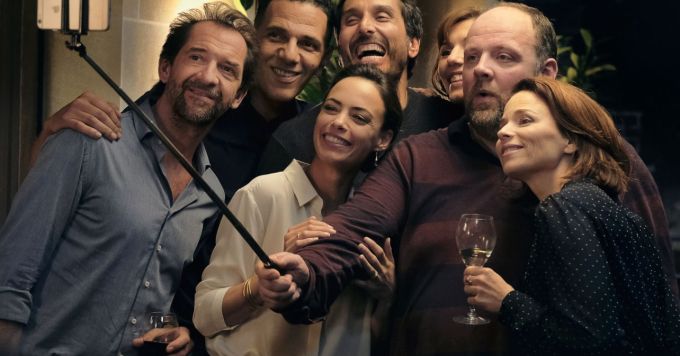
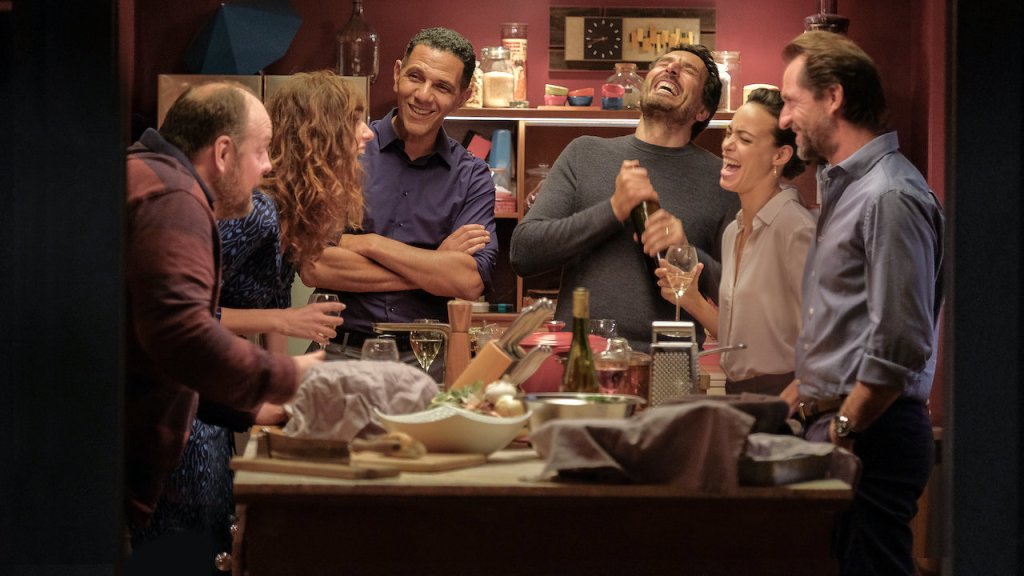
Netflixable? French dinner guests play “Truth or Dare” with each other’s phones — “Nothing to Hide (Le jeu)”

If Netflix had a corporate sense of humor, they’d offer all three versions of this French comedy/melodrama on the service at the same time.

“Nothing to Hide (Le jeu)” is a remake of an Italian film “Perfetti sconosciuti (Perfect Strangers).” I reviewed the Mexican version of this last year — “Perfectos Desconocidos” it is called.

They all use the same set-up, a friendly dinner party that goes awry when they decide to plop their cell phones in the middle of the table and read the next text, share the next emailed photo or put on speaker phone the next call each person gets.

A backhanded slap at global cell-phone obsessions? Sure. But the overt message is “Do you really want to know what your friends/relatives/spouse/children are up to behind your back?”

The French version, adapted by French action specialist Fred Cavayé (“Point Blank,” and he scripted the Russell Crowe thriller “The Next Three Days”) shows its melodramatic touches just as clumsily. But this is probably the funniest of the three versions of this, with pranks thrown in to the night of Life’s Most Embarrassing Moments.

Every one of the seven folks sitting down to dinner at the home of doctors Marie (Bérénice Bejo) and Vincent (Stéphane De Groodt) has something they’re keeping from their significant other their friends.

One guest slips into the bathroom to step out of her panties, more than one is fielding texts that they wouldn’t want anybody to see, one is the confidante of the about-to-turn-sexually active daughter in the family, one is job hunting and freshly divorced, and on down the line.

And on this night of a lunar eclipse, “not for the superstitious” a radio announcer assures us, weird things might be afoot. Mistrust is just the biggest one.

That’s how this cellular “truth or dare” begins. And from this reminder call about a surgery or that persistent series of texts or calls from this boss or that “colleague,” things veer from simply embarrassing to jaw-dropping humiliations.

The occasional prank, tossed into the mix, can either heighten the hilarity or send somebody to their divorce lawyer.

The machinery of this time-tested plot is out in the open, but Cavayé does a decent job distracting us from the gears we can see are about to turn, the nuts and bolts that might come off at any moment.

Lighter running gags include surgeon and would-be chef Vincent’s “with a twist” takes on classic French cuisine. Preparing foie gras with milk? Broccoli puree? “Warm” oysters with squid ink?

The cast splits the workload equally, with Bejo (“The Artist,” “A Knight’s Tale”), Suzanne Clément and Roschdy Zem (“Days of Glory”) making the strongest impressions.

I think I laughed hardest at the very French ways the guests dodged this course of that one, and how to a one they dive into the cheese plate at the end like starvation victims.

The framework here seems a tad clumsier, and the “eclipse” touch sets us up for the most obvious “twist” of all.

But “Nothing to Hide” still manages to amuse and surprise just enough to warrant all those payments to Paolo Genovese, the Italian filmmaker who conceived this easily-translated entertainment in the first place.

MPA Rating: TV-MA, alcohol, profanity, mild violence

Cast: Bérénice Bejo, Suzanne Clément, Stéphane De Groodt, Vincent Elbaz, Grégory Gadebois, Doria Tillier and Roschdy Zem

Credits: Scripted and directed by Fred Cavayé, based on the Italian film “Perfetti sconosciuti Perfect Strangers).” A Netflix release.

Running time: 1:30

Posted in Reviews, previews, profiles and movie news | Comments Off on Netflixable? French dinner guests play “Truth or Dare” with each other’s phones — “Nothing to Hide (Le jeu)”

Movie Review: Wasikowska and Adam Driver make “Tracks” in intimate Aussie epic

I remember looking forward to “Tracks,” a cross-Australia “walkabout” epic, when I saw the trailers back in 2013. But the ever-troubled Weinstein Co. never gave it much of a U.S. release.

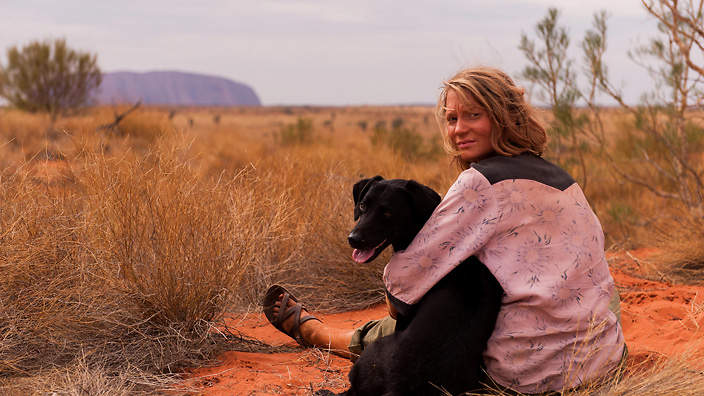
But the story of Robyn Davidson’s cross-Outback trek, accompanied by Aussie camels she’d trained and her dog Diggity, lives on, making the rounds of free-TV streamers now, and a movie well worth your while.

Whatever echoes of “Lawrence of Arabia,” “Rabbit Proof Fence” and the less-known 1971 Aussie desert saga “Walkabout,” it’s a fine early showcase for both Mia Wasikowksa, who had already come into her own, and Adam Driver, who was a couple of years away from that when he gave this charmingly awkward performance.

We meet Robyn Davidson as a 20something, an aimless young woman who is moving on from her hippy friends and setting goals. She wants to cross 1700 miles of Australia, from Alice Springs to the sea, on foot. And the idea she pitches to assorted locals is that she’ll capture and tame some of the country’s non-native camels to use as pack animals for the journey.

She sounds determined but out of her depth, especially to assorted folks who work with camels at local tourist attractions. But she takes on indentured servant duties with one to learn all about camels, and secure a few for her later journey.

And when that “right bastard” cheats her, she finds another more inclined to keep his word.

That’s a running subtext of “Tracks,” the racist, brutish redneck nature of rural Australia in the ’70s. Robyn sees this everywhere she looks as she takes various short-term menial jobs that point her towards her goal.

It’s not totally nuts in her mind. Her father did similar treks in East Africa just before World War II. And Australians imported camels for the very purpose she plans to use for them for before abandoning them and watching the dromedaries thrive in a feral state in the country’s vast, dry open spaces.

It’s only when her friends track her down that the quest becomes feasible, and not because they have the money to finance her. They’ve befriended this chatterbox American photographer Rick who, prattling on to impress her, suggests she get a magazine to underwrite the expedition.

When she pitches “National Geographic” and they say yes, on the condition that she rendezvous with their photographer at several points along the way, she realizes her “do this on my own” project has been given a huge helping hand. Rick Smolan (Driver) will be that photographer, Range Rovering in to capture her and her motley crew on their months-long hike.

For someone whose desire is solitude, a personal test that allows her to eschew the human race, that promises to be a source of periodic irritation.

Director John Curran (“The Painted Veil,” “Stone”) gives us a healthy appreciation of the ordeal this was, and its many risks. As one sage Outbacker warns Robyn, “You don’t have to be unlucky to die out there.”

But screenwriter Marion Nelson is more interested in the interior journey, with flashbacks giving glimpses of a shattering childhood that Davidson stoically shook off, the origins of her intense connection to animals and her preference for her own company.

Wasikowksa lets on her degree of commitment to the part, and with a script that doesn’t have her talking to herself, does some of her finest acting in bringing this Australian icon to life. She lets us feel the determination, and the fear and resignation that sets in as the months pass. Voice-over narration taken from Davidson’s article for the Geographic and her later memoir adds poetry to the already poetic picture.

And Driver, in a quirky supporting role, is at his most impressive being just that — supportive, accepting her arms-length connection to him, admiring. It’s damned funny seeing him this gawky and out-of-his-league (and knowing it) in this intense young woman’s presence.

There’s plenty that’s perfectly conventional here, from the salt of the Earth white ranchers who take in “The Camel Lady” to the righteously-stereotyped Aboriginal people who sympathize with and teach her along the way.

But “Tracks,” available on assorted free streamers and elsewhere, still makes for a splendid adventure carried on the backs of a heroic young woman and one of the finest actresses of her generation who plays her.

MPA Rating: PG-13 for thematic elements, some partial nudity, disturbing images and brief strong language 

Cast: Mia Wasikowska, Adam Driver

Credits: Directed by John Curran, script by Marion Nelson, based on the memoir by Robyn Davidson. A Weinstein Co. release on Tubi, Roku, etc.

Running time: 1:52

Posted in Reviews, previews, profiles and movie news | Comments Off on Movie Review: Wasikowska and Adam Driver make “Tracks” in intimate Aussie epic

Movie Review: Brian Cox bellows and blusters through “The Carer”

Anyone reveling in his patriarchal venality on HBO’s “Succession” should treat yourself to Brian Cox’s “Thespian in Winter…and Depends” turn in “The Carer,” a tirade of bellowing, blustering delights from the Shakespearean who has played many a villain when Hollywood comes calling.

Yes, it’s a thin comedy, practically a knock-off of the stage play turned screen hit “The Dresser,” only with a home health-care nurse as the Great Actor’s Last Audience. But Cox is one hammy hunk of fun, first scene to last.

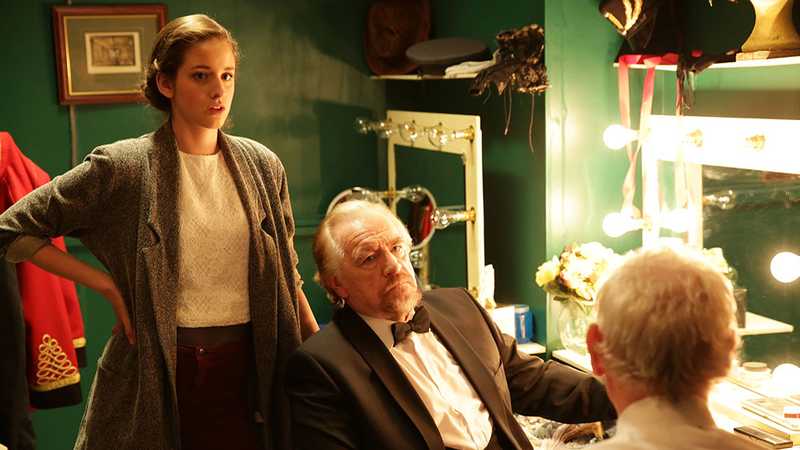
Sir Michael Gifford is another of those tyros curdled into tyrants in their dotage whom the Brits so adore. He’s played everything, spent decades doing Shakespeare and everything else for the Royal This and the BBC that. And now he has Parkinson’s and requires in-home care in his ancient manor “pile.”

Of course, the testy, imperious blowhard wants no such thing. His barely-tolerates-him-daughter (Emilia Fox) is ready to send this new candidate home before she’s even met the brute. But Dorottya (Coco König) of the unpronounceable name and Hungarian acting background charms her just enough to get an overnight “trial.”

As she’s been picked for the job by Sir Michael’s doting driver and former theater “dresser” (veteran character actor Karl Johnson), perhaps she’ll work out after all.

Dorottya has trouble with English and Englishisms. She wants to call him “Sir Gifford,” and she introduces herself as his “career.”

“Just my luck” he grouses, getting the joke in that malapropism.

He wants to say she looks like someone he used to know, which as he’s never worked with Debra Winger means he has to think on it (König is a dead ringer for Winger), and no, she can’t answer him in kind.

“I’m too FAMOUS to look like anyone. Other people look like me, if they’re lucky.”

Being an actress, she knows his work and even saw him on tour on the stage. She’s thrilled to be in a house decorated in photos of his great roles and posters of his most famous productions. As if that isn’t enough, he’s inclined to look at his old performances (generously sampled) on video.

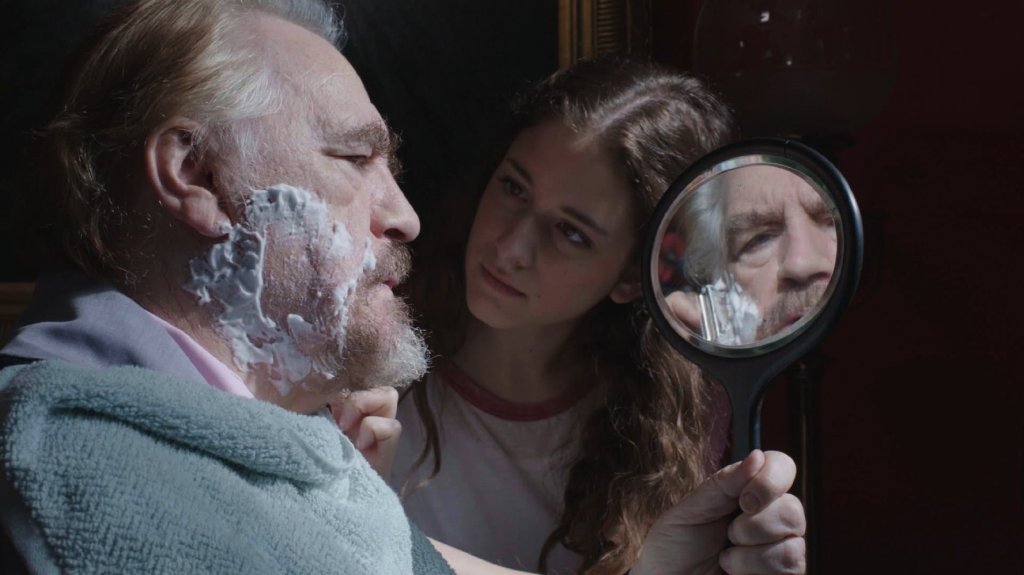
He lets himself be charmed, and she finds herself trying her tentative English out when he insists she play Guildenstern to his Hamlet, or what have you. No, he won’t be her teacher, not when she has to clean his bottom thanks to the progress of his illness.

“You have to RESPECT your teacher,” and that’s out, he figures.

So he introduces her as Romanian or Polish or whatever insult suits his fancy, and she takes it.

She copies his expressions and fields his Bard bantering, “all that Shakespeare bollocks,” with a fan’s knowledge, if not a lot of obvious skill.

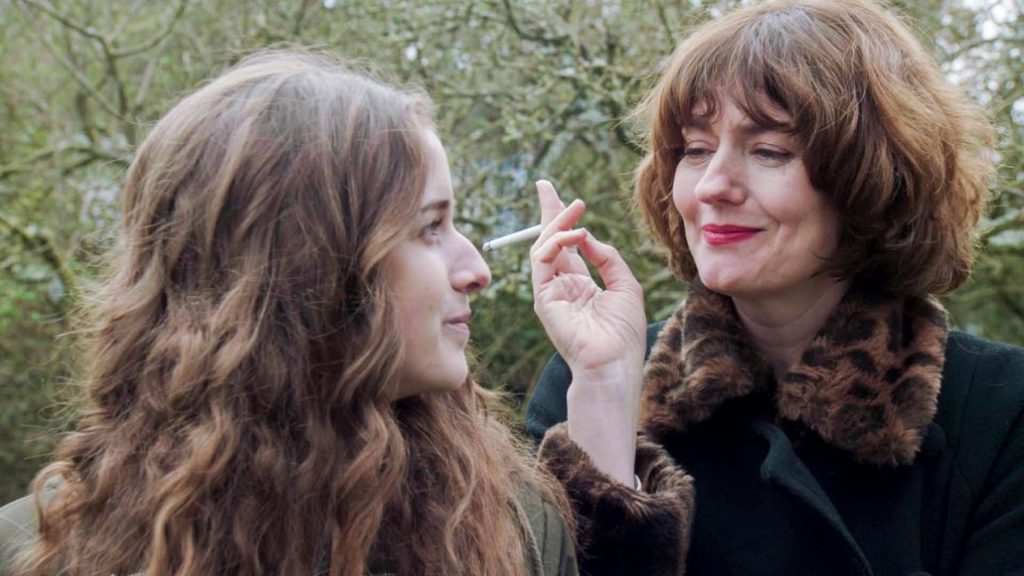
Cox has some warm moments with Anna Chancellor as his long-adoring/long-suffering housekeeper/cook, and Johnson. His turn as Gifford veers between Lear’s fury and Falstaff’s sentimentality.

“Alzheimer’s really should be the province of the young. They have nothing to remember.”

This Hungarian co-production suffers from imbalance between the leads, with Cox so much larger than life that König, who went on to play a no-speaking-lines orderly in the all-star bomb “Assassin’s Creed,” was hopelessly overmatched. But she’s plucky and convincingly under-awed, and that’ll have to do.

But even taking that into account, and the film’s “awards banquet” cliche of a finale, “The Carer” is still good for plenty of laughs thanks to this cuddly-scary and incontinent bear that Cox could play in his sleep, especially since he wouldn’t hear of that because he’s plainly having a lot of fun as he does.

MPA Rating: unrated, profanity, scatological humor, drinking, smoking

Cast: Brian Box, Coco König, Anna Chancellor, Emilia Fox and Karl Johnson

Credits: Directed by János Edelényi, script by Gilbert Adair, János Edelényi. |A Corinth Films release on Film Movement Plus.

Running time: 1:28

Posted in Reviews, previews, profiles and movie news | Comments Off on Movie Review: Brian Cox bellows and blusters through “The Carer”

Movie Review: Trapped in the Hotel from Hell for just “The Night”

Horror fans know the trope well, that moment when everybody in the story of some supernatural threat or another gets on the same page.

One character is seeing things, hearing things, perceiving a threat. And others, or in a simpler tale, the other half of the couple, has her or his doubts.

“Have you gone CRAZY?”

And then they both see the same thing and the doubter is convinced.

That moment provides the best scene in “The Night,” the moody new feature from Kourosh Ahari (“The Yellow Wallpaper”). It takes a long time to get here, and the “haunted hotel” mood Ahari’s setting up isn’t nearly as chilling as ought to be for a horror movie.

But the jolt of something extraordinary convinces the “Am I still drunk?” husband and his “Are you still drunk?” wife they’re in the middle of something together which they can’t explain or escape on their own, and calling 911 isn’t going to help.

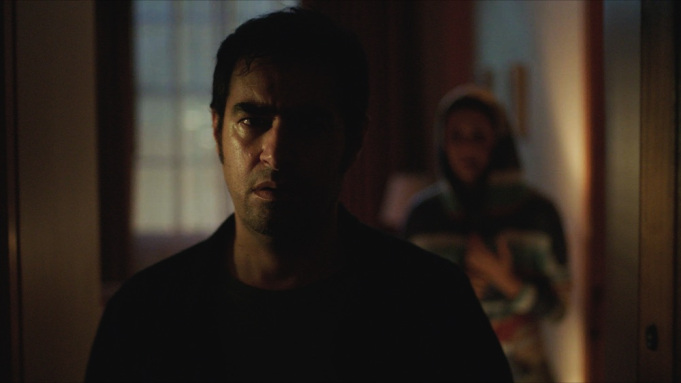
Husband Babak (Shahab Hosseini) had too much to drink, refused to let wife Neda (Niousha Jafarian) and gets them lost on the way home from a Los Angeles dinner party with fellow Iranian expats.

She didn’t see the GPS going wonky. She’s trying to keep their infant asleep, but alarmed at whatever he just ran over. And he’s resigned to just giving up, checking into the hotel they’ve stopped next to and sorting their location and lives out in the morning.

They kept it together at the party, although he was complaining about her to his friends and she expressed her doubts to hers. Now, after years apart (he moved to the US first) they have a baby girl and new lives and the adjustment isn’t the easiest.

The creepy, muttering homeless guy (Elester Latham) sleeping on the old hotel’s stoop should have given them a clue. The night clerk (George Maguire) doesn’t. At first.

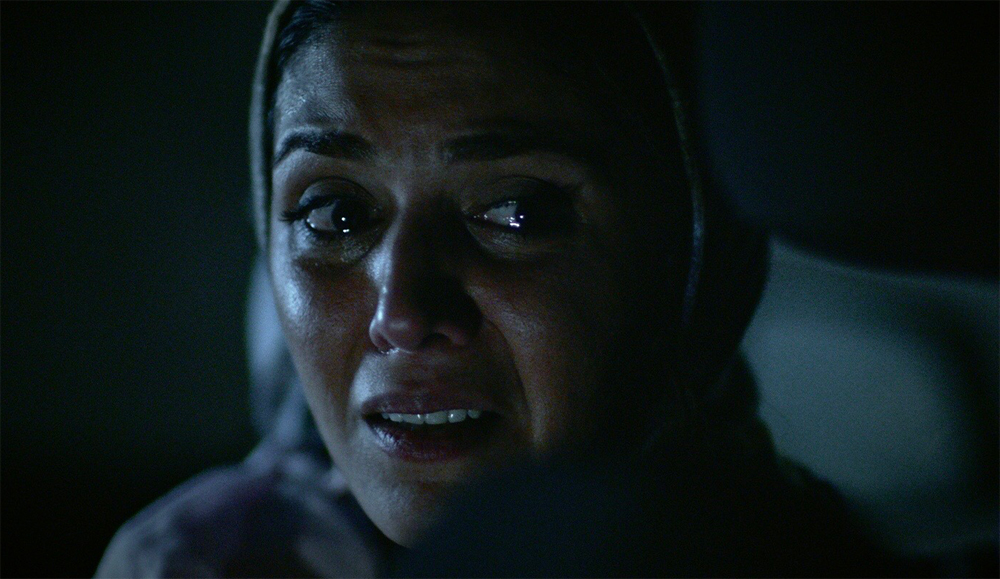
But as the bumps through the ceiling wake each up in turn, as strange children keep knocking on the door, as Neda takes the baby downstairs to quiet her, and then Babak does the same — and neither remembers the other doing this — they fret about “stalkers” and wonder what is going on.

The clues? Their Americanized lives include his-and-hers tattoos, and “secrets.” And that desk clerk starts talking about massacres, Puerto Rican hurricanes, Bobby Kennedy’s assassination and “losing a child” might be something more sinister than merely “tactless.”

And the visions — of those children, of a bloody body in the tub — rattle each in turn and force them and the viewer to wrestle with exactly what’s going on here.

The leads are convincing, if somewhat understated. Neither the performances nor the somewhat sedate editing raise the suspense and get across the panic and paranoia that this situation would engender in most of us.

As cryptic as this tale can be, we need a little something to grab hold of to unravel it. Unfortunately, Ahari withholds that for too long, and then over-explains everything once he lets go of the mystery.

“The Night” is chilly, but frustrating in the unfolding and simplistic spoon-feeding in its resolution. A couple of decent jolts and a lot of mild nerve-rattlings is all this watered down “Shining” can manage.

MPA Rating: unrated, violence, smoking, alcohol

Cast: Shahab Hosseini, Niousha Jafarian and George Maguire

Credits: Directed by Kourosh Ahari, script by  Kourosh Ahari and Milad Jarmooz. An IFC Midnight release.

Running time: 1:42

Posted in Reviews, previews, profiles and movie news | Comments Off on Movie Review: Trapped in the Hotel from Hell for just “The Night”

Netflixable? French, or Algerian? This granddaughter wants to know her “DNA”

The 2008 film “Departures” is a somber drama set against “the Japanese way of death,” the fastidious customs, traditions and taboos dealing with a corpse that society there still clings to.

I couldn’t help but think of that film watching the post-mortem scenes in actress-writer/director Maïwenn’s “DNA,” in which characters weep and bicker, caress and pose for death-bed selfies with their beloved father, grandfather and great grandfather after his peaceful death in a French nursing home.

It’s all kind of comical, and when the arguments descend into storm-off-furious debates over “eco-friendly” coffins and cremation and the religious or secular nature of the funeral to be, it’s almost hilarious.

Because one of the jokes here, in this fairly serious movie about a woman’s search for her heritage and furious feuds with assorted members of her family over that, is we have no damned idea what “tradition” we’re seeing, save for a multi-cultural, multigenerational family making this up on the fly and doing a lot of yelling at each other as they do.

Patriarch Emir (Omar Marwan) suffered from Alzheimer’s, but with a lot of help, produced a book about his history — an Algerian revolutionary who fled to France where he created this family. But his Franco-Algerian/Secular-Islamo-Catholic funeral brings all the fissures within that family to the fore, with people shoving each other away from the pulpit as they impose their vision of what that funeral should be on the deceased, and each other.

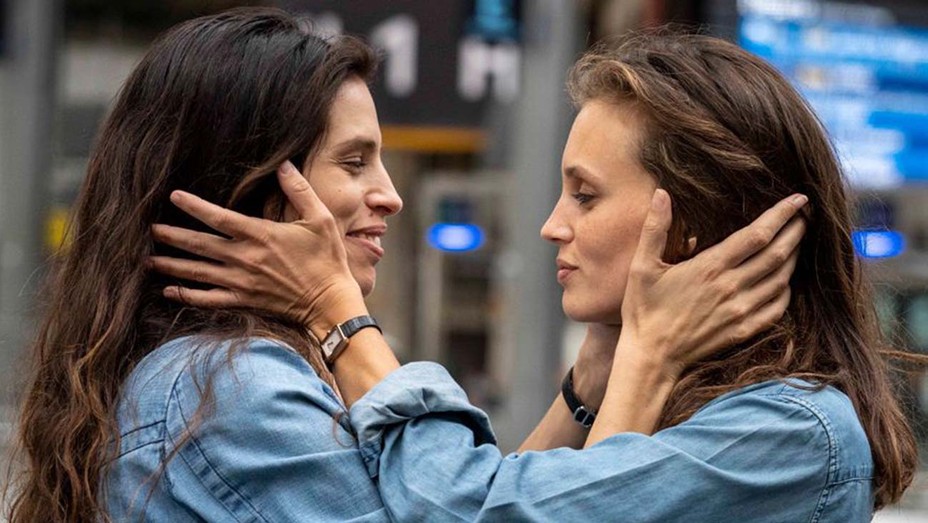
Writer-director Maïwenn, whom I remember from the thriller “High Tension,” plays granddaughter Neige, keenly aware that her name is a Francophonish version of something more overtly “Algerian.” She fights with her younger sister (Marine Vacth) and brother Matteo (Henri-Noël Tabary) about their refusal to change plans so that they can be at the funeral. She fights with her mother (screen legend Fanny Ardant) over the religious nature of the funeral, and pretty much everything else. Flippant brother François (Louis Garrel of “Little Women”) wishes she was more laid-back, less “toxic.” Her estranged father (Alain Françon) catches his share of quiet-voiced abuse for merely showing up.

When we see the fight her mother (Ardant) and aunt (Caroline Chaniolleau) over the fabric that will line their father’s to-be-burned-right-after coffin, we see where Neige got her combative streak from.

There’s “fractious,” and generations argue and mourn and put off the nursing home staff and coroner who wants to remove the body, and there are “factions” as they break into groups, each with agendas.

We don’t see a reading of the will, something which — other things considered — is a blessing.

What we do see are pre-cremation rituals, a funeral service that flirts with getting out of hand and Neige trying to get a handle on her identity, going so far as visiting the Algerian consulate to apply for citizenship and going online for a DNA test to tell her where her heritage lies, and which of her family lines is dominant.

Maïwenn does a wonderful job of creating that “difficult” and “needy” “make-a-scene” relative that no one likes very much by the time the body is in the ground or in the furnace. It takes talent to be this unlikable, a woman given to lectures on propriety, “sticking up for” her secular/religion-hating grandpa by shoving religion into his funeral, and dressing, smoking and drinking as if she’s wishing Islamic tradition on everybody but herself.

Garrel is fiesty and bemused as François, who wants this funeral to be a “profound” (in French with English subtitles) experience and who is sure to roll his eyes as the funeral service slideshow plays out in what looks like a Catholic church as Islamic funeral singing and Celine Dion alternate on the mid-service soundtrack.

I’ve been to some funny funerals, but that takes Ṣalāt al-Janāzah.

It’s a pity the movie couldn’t have ended there, its dramatic climax, or shortly thereafter, as DNA results come in for Neige.

As it is, Maïwenn takes us places the story doesn’t comfortably need to go and loses herself in her character’s journey to the detriment of what has been a darkly funny, touchingly human “family” story right up to the epilogue.

As anybody in Vegas will tell you, everything that comes after Celine Dion is anticlimactic.

MPA Rating: TV-MA, smoking, profanity

Cast: Maïwenn, Fanny Ardant, Louis Garrel, Marine Vacth, Omar Marwan, Alain Françon, Caroline Chaniolleau and Dylan Robert.

Credits: Scripted and directed by Maïwenn. A Netflix release.

Running time: 1:30

Posted in Reviews, previews, profiles and movie news | Comments Off on Netflixable? French, or Algerian? This granddaughter wants to know her “DNA”

Netflixable? Tweens take on Tin-tentacles in “We Can Be Heroes”

Netflix and Austin auteur Robert Rodriguez seem like a streamer/filmmaker match that’s meant to be.

The “Sin City,” “Spy Kids” “Sharkboy/LavaGirl” director-producer, famed for knowing how to do things that look expensive cheaper than Hollywood can imagine should have been the first call Netflix made when it wanted to start making its own movies.

He’s got a Stan Lee-sized imagination, an eye for effects. And as his Netflix superhero comedy “We Can Be Heroes” reminds us, few can lay claim to being better at directing kids.

But taking all that into account, and acknowledging how he treats “underwear on the outside” superhero pics as the childish enterprises they rightly should be, doesn’t make this “Heroes” come off. “Nonsense” is both its strength, and its biggest shortcoming.

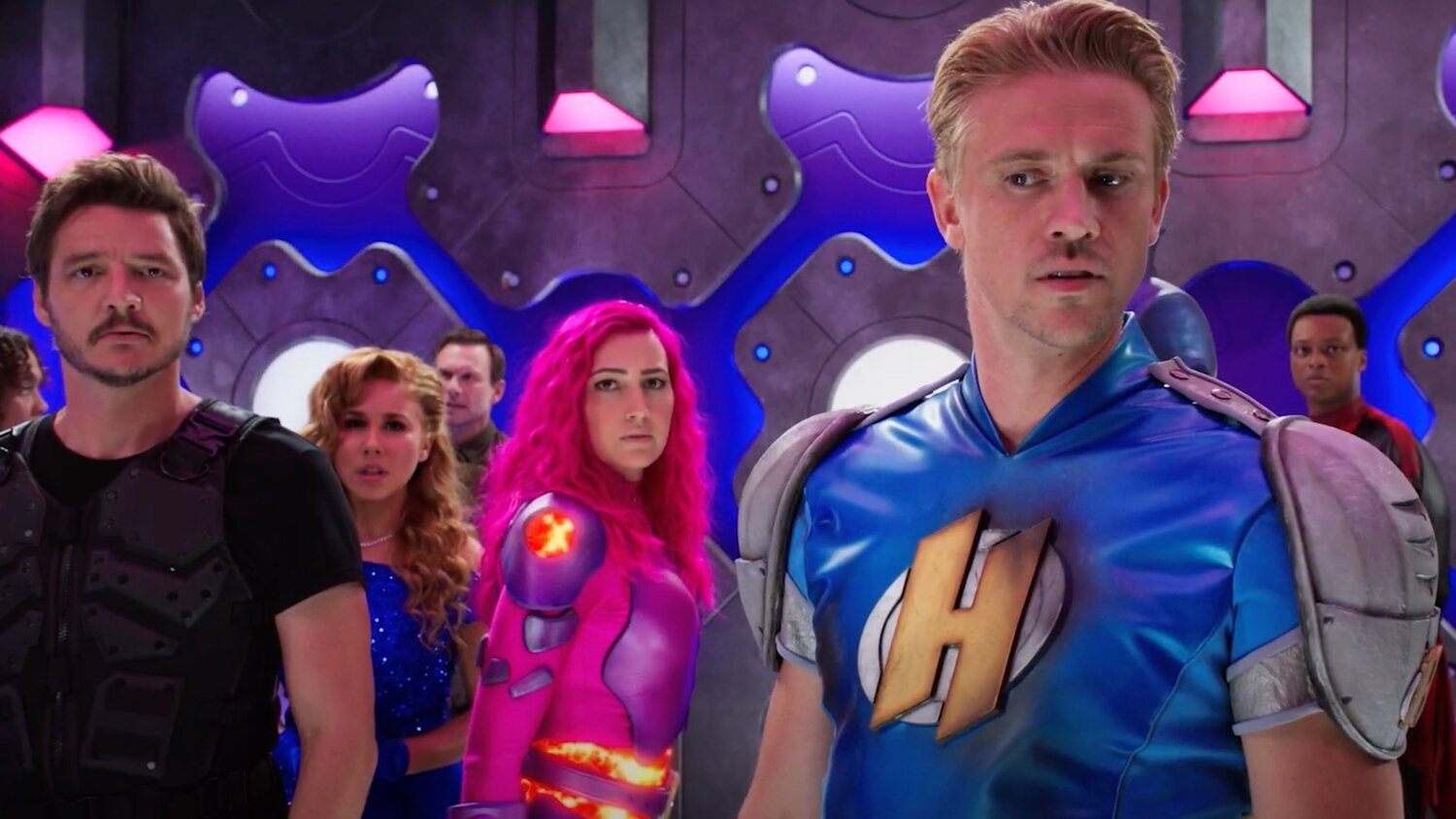
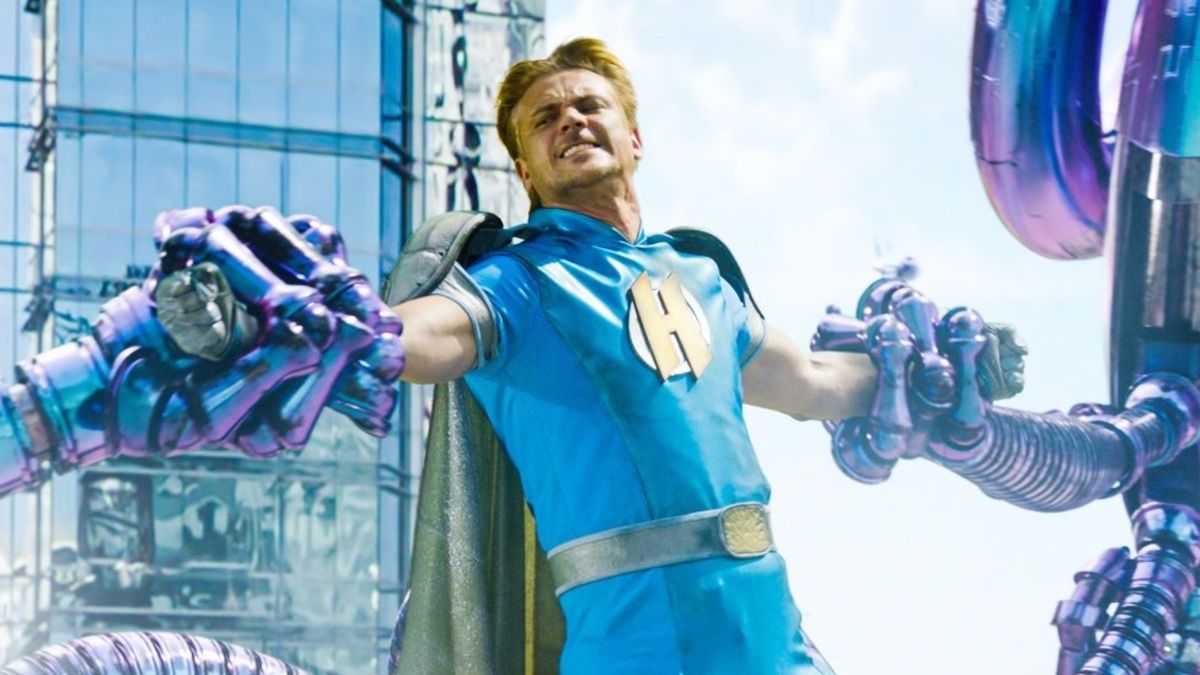
He’s conjured up a “Sharkboy” and “Lavagirl” Incredibles/Avengers universe, where Earth is protected by “Heroics” who operate out of a headquarters with a huge “H” on the roof.

Original.

Tentacled aliens, in fanciful tentacled spaceships come crashing in, defeat Miracle Guy (Boyd Holbrook), Tech-No (Christian Slater), Lavagirl (Taylor Dooley), Blinding Fast (Sung Kang) and the rest.

Even Marcus Moreno (Pedro Pascal), the ex-“heroic” and now exec director of the team is summoned back into service, and captured.

The president (Christopher MacDonald) is an oaf, possibly even a traitor.

Only the children of the super-heroic can save us, because in America, it’s not what you’ve learned and earned, but birth which determines destiny, right?

Never mind.

Moreno’s smart but powers-free daughter Missy (YaYa Gosselin, good) finds herself leading the children of Heroics, kids named Slo-Mo, Noodles (an Elastiboy knockoff), Wheels (a wheelchair warrior), Ojo (she draws future events she “sees”), Fast Forward, Rewind, Facemaker, Wild Card, A Capella (she sings and things happen) and little Guppy (who manipulates water).

Can these ten “work as a team” to defeat the foes their parents couldn’t hold off?

“It’s not about who’s fastest or strongest. It;s about working together!”

Too many scenes devolve into static shots of kids watching their parents captured on live TV (their fights covered “Smackdown” style) or parents watching their “helpless without me” kids fighting back.

Too much dialogue is just layers and layers of exposition, characters explaining their gifts, their situation or the status of the Heroics exec (Priyanka Chopra Jonas) out to catch them and put them back in isolation.

The fights are fine, well put-together. And scattered moments of humor pop up — Wild Card (Nathan Blair) catching himself every time he wants to swear, “Holy…doo doo!” — A Capella (Lotus Blossom, hippy parents are still around) singing the theme to “Chariots of Fire” to get Slo Mo (Dylan Henry Lau) to move a little faster, or summing up their chances with a verse from “The Mary Tyler Moore Show” theme.

But “Heroes,” stealing its title from the Bowie tune, is mostly just a lot of effects and action thrown at a half-finished pitch, a script that needed a lot more work before cameras ever rolled in RR’s state-of-the-art digital studio.

Cast: Pedro Pascal, YaYa Gosselin, Boyd Holbrook, Priyanka Chopra Jonas, Lyon Daniels, Christian Slater, Christopher MacDonald, Akira Akbar, Nathan Blair and Adriana Barraza

Credits: Scripted and directed by Robert Rodriguez. A Netflix release.

Running time:

Posted in Reviews, previews, profiles and movie news | Comments Off on Netflixable? Tweens take on Tin-tentacles in “We Can Be Heroes”

Movie Review: “Some Southern Waters” wash up on a David Lynch shore

A surreal fever-dream shot in shades of David Lynch, “Some Southern Waters” makes for a polished and cryptic if not wholly coherent debut feature from writer-director Julian Baner.

It’s a micro-budget indie with acting and cinematography that punch above their weight. The script? Well, not everybody can pull of that “strange for strange’s sake” thing Lynch used to produce, back before he disappeared into Transcendental Meditation.

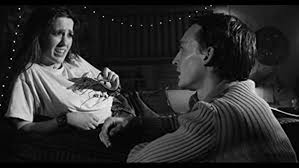
Joe (Bry Reid) is a fellow who has abandoned hipster and moved into the next big thing in the youth culture cycle. He’s a pomade-obsessed greaser. He’s into Connie Francis sound-alike singers, bars with character, Florida mermaids and his girlfriend Mona (Rachel Comeau of TV’s “The Right Stuff”).

Mona? She’s all about her dreams, visions of a sinister opera singer (Diego Baner) and this water-logged old man (Jeff Evans) who rises from the sea like an apparition. Does it mean something?

“Sometimes I tell you things NOT because I want you to fix them!”

One night they drive off into the swamp, Rachel freaks at seeing her nightmare in the soggy flesh and nearly drowns. Joe? He dives in and pulls her out unconscious, pauses to take a leak before driving her to an emergency room (Mona would call that a “deal breaker”) and fumbles for cigarettes down the swampy pig-path they’re driving back on until he sees the old man again, crashes and kills Mona.

But after he shrugs this calamity off, he starts seeing Mona again — he thinks — in a traveling carnival’s mermaid show. What to do? Aside from sharing this with his friend-with-benefits Beth (Mariah Morgenstern)?

There are traces of humor in this, arguments that degenerate into something almost funny, like Joe noting how “old people (all) kind of look similar when they get older.” There’s not enough of that to lift this to the level of “a dark comedy.”

While I’m not a big fan of digital black and white — it’s generally flat, lacks contrast, everything is in a disorienting sharp focus — here it’s been put to good use to tell the story in pools of light in a sea of darkness. It aids in the film’s few recognizable effects, parking a carnival at the ocean’s edge, etc.

“Some Southern Waters” is stylish and strange and could make for some interesting interpretative barstool debates after it’s washed over you. But the slim story’s shortcomings and obscurant bent push this closer to the realm of “student film” than one would like. The consistent style and tone hold the promise that something better could show up down the road.

MPA Rating: Unrated, violence, sex, profanity, smoking

Cast: Bry Reid, Rachel Comeau, Mariah Morgenstern, and Jeff Evans.

Credits: Written and directed by Julian Baner. A Ghostly Visions release.

Running time: 1:17

Posted in Reviews, previews, profiles and movie news | Comments Off on Movie Review: “Some Southern Waters” wash up on a David Lynch shore

Movie Review: Understanding and Redemption in rural Iowa, “Two Ways Home”

“Two Ways Home” is a low-key indie drama about family history, personal failures, mental health and redemption. Beautifully shot, empathetically-acted and reasonably well-written, it benefits from that essential ingredient that makes or breaks many a low-budget independent film — a sense of place.

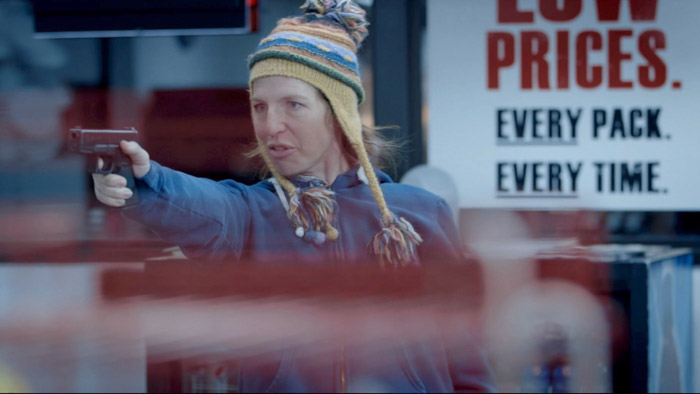
It’s a rural Iowa story from start to finish. We may meet Kathy (Tanna Frederick of “Irene in Time” and “Hollywood Dreams”) in the middle of an urban drama cliche, as one-half of a hold-up team robbing a convenience store. But this gas-and-groceries quick stop sits in the shadow of a grain elevator.

The robbery is played with a hint of comic effect. Her brute of a partner (Pat Frey) may be screaming “Get on your knees and STAY SCARED!” Kathy, waving a gun around, is more laid back, trying to impress the danger of the situation on the customers and clerk by pointing out the “general bravado” she and her partner are displaying, their “recklessness.”

Naturally it goes wrong and of course she’s left holding the bag — and two guns. Jail it is, but we’ve gotten a hint there’s something wrong with her beyond her poor decision making. She was hearing voices mid stickup. And unlike most Americans tossed in jail, she gets help with her “chemical imbalance.”

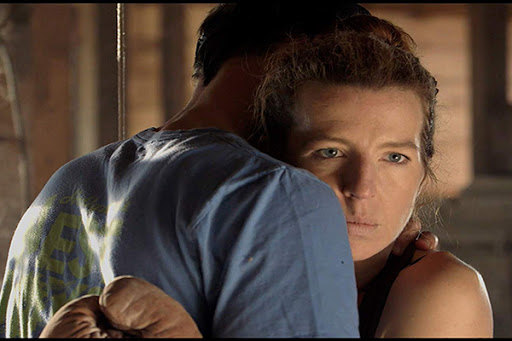
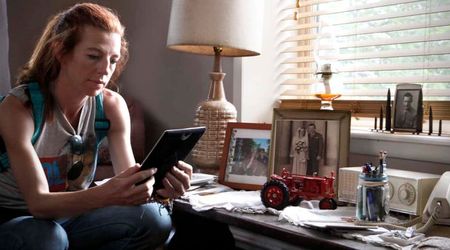
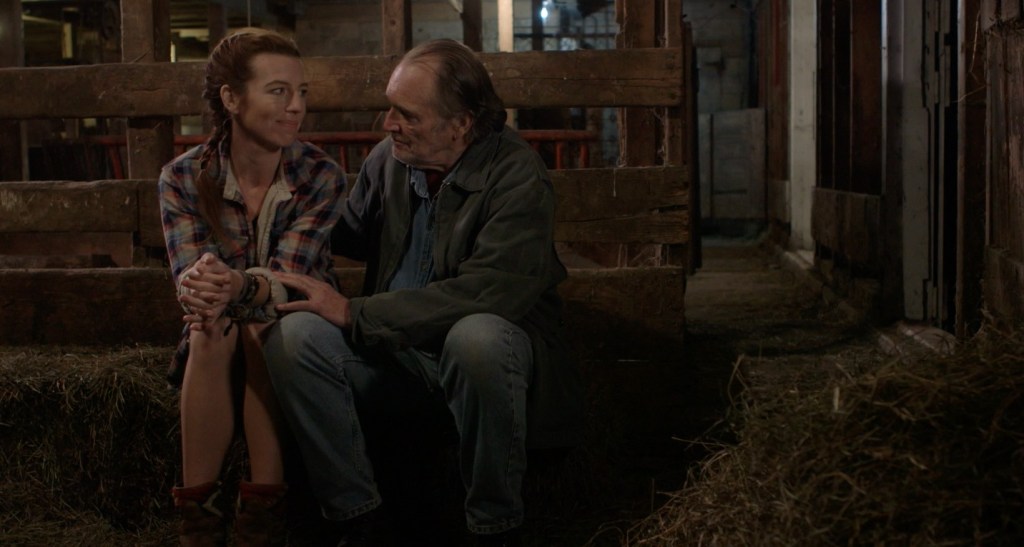
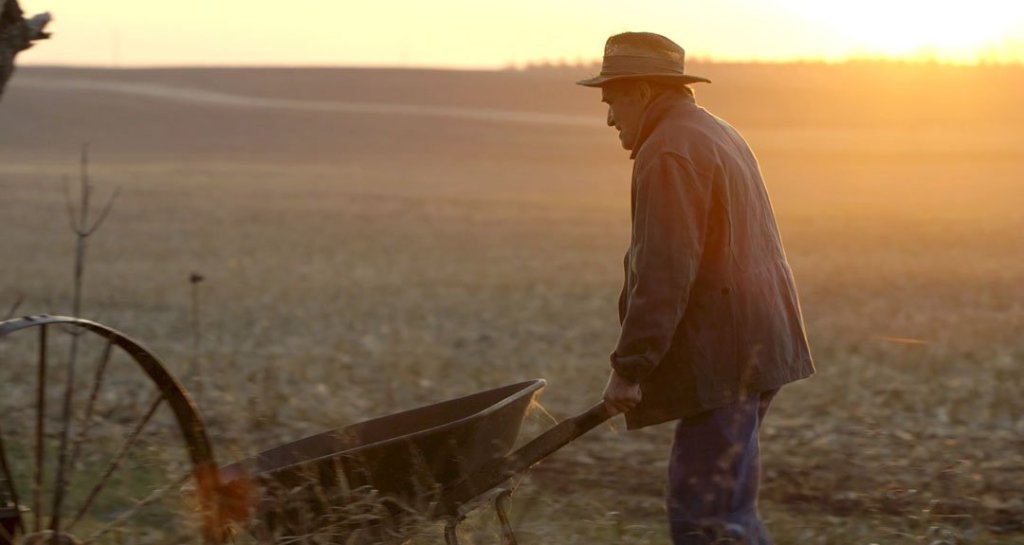
“Two Ways Home” is the story of what happens when she gets out, the old reputation she can’t shake in tiny Garner, Iowa — the tween daughter Cori (Rylie Behr) who wants nothing to do with her, Kathy’s not-wholly-sympathetic parents who’re raising her, the ex Junior (Joel West) who has taken up with a former high school rival, and the grandfather (Tom Bower) who just had a heart attack, all alone out there on the family’s hog farm.

Kathy figures she’ll move in with him as farm-help and caregiver, keep him out of a nursing home and do everybody and herself a favor as she does. It’s just that no relative, bartender or anybody else who knew her back “then” buys into this.

Bower is one of those character actors that is instantly credible in a rural setting — a veritable Pa Joad figure in films such as “Crazy Heart,” going all the way back to TV’s “The Waltons.” He makes this story instantly credible.

Frederick, a regular in the films of her ex, indie director Henry Jaglom, gives Kathy a light, flippant touch. She jokes about prison teaching her how to “fold laundry” so she’s ready to “be a manager at The Gap.”

We can believe the dismissive, unforgiving Cori is her daughter in an instant. Her voice has changed? “It’s call PUBERTY.” To a friend, Kathy is “my biological mother,” which doesn’t count, because what does is “who raised you.”

“Two Ways Home” has some lovely exchanges between mother and daughter, mother and her mother and wife and her ex. But the script shows its engineering far too often for my taste. An argument starts because we need an argument here to get Kathy and Junior to wrestle each other to the ground. Grandpa’s “issues” may not relate directly to Kathy’s, and thus feel shoehorned in.

The cultural references — TV’s “Oz” went off the air in 2003, is The Gap still a thing? — aren’t just rural Iowa out of date, they’re head scratchers.

But this dying little corner of small-town Iowa is vividly-rendered, from hay barns and grain elevators to the roadhouse and diner down on main street, and the community pool, where gossip and judgment take place on sunny days that aren’t Sundays, where that behavior is reserved for church.

A wrong turn here and there notwithstanding, “Two Ways Home” — performed by an Iowa-centric cast — makes for a thoughtful, warm journey back to a place a lot of Americans will recognize, even those of us who moved away.

MPA Rating: unrated, gunplay, alcohol abuse

Cast: Tanna Frederick, Tom Bower, Joel West, Rylie Behr, Shanda Lee Munson and Pat Frey.

Credits: Directed by Ron Vignone, script by Richard Schinnow. A Gravitas Ventures release.

Running time: 1:32

Posted in Reviews, previews, profiles and movie news | Comments Off on Movie Review: Understanding and Redemption in rural Iowa, “Two Ways Home”

Netflixable? Coming of age and coming out in Taiwan — “Your Name Engraved Herein”

“Your Name Engraved Herein” is a coming out romance set in late 1980s Taiwan, where two boarding school classmates take tentative steps to explain their sexuality in a country that was just emerging from decades of martial law, and where same sex relationships were taboo.

It’s a slow-moving piece covering familiar ground, a movie of timeworn dramatic tropes and seeming universal coming out experiences — bullying, harassment, parental shunning — trotted out once more, this time in a late ’80s Taipei setting.

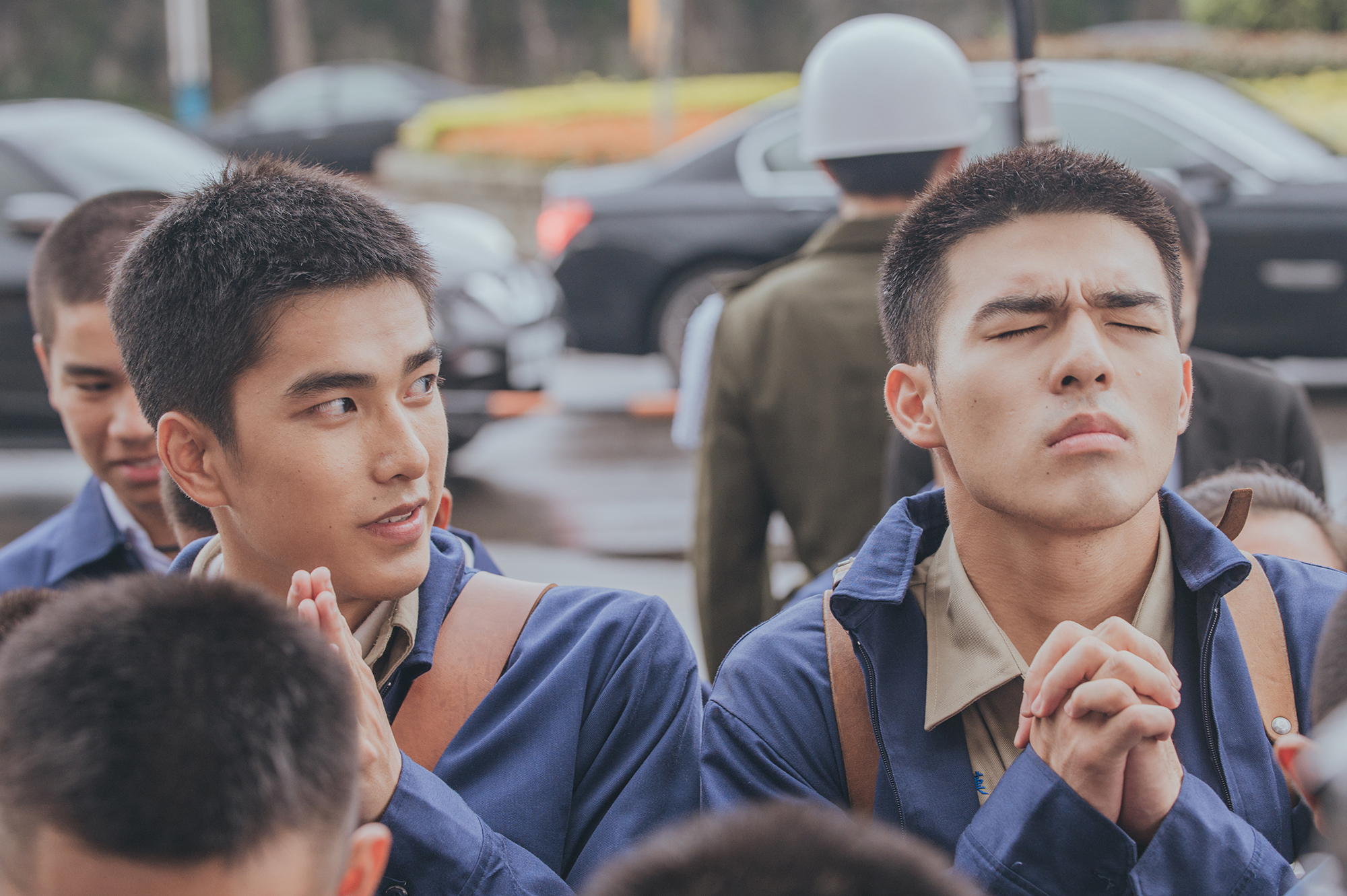
Edward Chen is Jia-han, newly transferred to a school just as the martial law that was a product of Chiang Kai-Shek has ended with the death of his President and son. The first friend he makes in swim class is the free spirit/rebel Wang Po-te, (Jing-Hua Tseng), who encourages one and all to call him “Birdy.”

He’s a film nut and he identifies with the mentally-ill Vietnam Vet title character of that film, played by Matthew Modine. This Birdy isn’t mad, just impulsive, self-assured and to Jia-han’s surprise, brave.

He’s not stupid enough to join with the pack, which thinks of a gay classmate as “a virus…He’ll force us to be gay, too!”

Jia-han picks up a connection between them, and isn’t sure what to make of it. But when the school’s resident bully Horn (Barry Qu) leads his friends in harassing and pummeling an effeminate student, Jia-han’s instinct is to go-along-to-get-along. But can’t hold Birdy back, who instinctively sticks up for the outsider.

Birdy is the guy who talks back to the military supervisor of the school, who insists the sexes be kept separate and the ring-leader in a little ROTC-styled “military songs” competition revolt.

Yu Ning Chu’s script takes us through the moment when Jia-han starts to figure out he’s just not attracted to girls, at an impromptu horn section late night serenade/make-out sessions with schoolgirls in a local cemetery. Everything points to his deepening love for Birdy.

But as close as they get, Birdy is sending mixed signals. Dude’s got Wham! posters on his wall. But when Birdy takes up with a girl (Lenny Li) when the school goes coed, he makes Jia-han question what he’s putting himself through, the information-please sessions with the gay kid Birdy defends, increasingly heated arguments with his father and the rising risks of school shunning and bullying and expulsion.

Director Kuang-Hui Liu and screenwriter Yu Ning Chu frame all this within a late-school career counseling session with the cool Canadian Catholic priest and band teacher (Fabio Grangeon). He engages in a couch-therapy session with the Jia-han after a bloody fight and tries to give the boy solace amid his crisis of faith and sexuality.

It is a cumbersome framework and contributes to the film’s slack pacing and disjointed structure. The priest plays “Danny Boy” on his stereo as they chat, maybe the corniest and most tone-deaf (He’s FRENCH CANADIAN) touch in the movie.

There’s an epilogue that follows the resolution of that framework that would have played far more gracefully without the many interventions of this long session with the Mandarin-speaking priest from Montreal. We learn that the title is taken from a Chinese song lyric there.

Perhaps the more advanced “Western” attitudes Father Oliver grew up around make him easier to talk to. But it’s the ’80s and he’s Catholic and we see little evidence of that.

There are “Call Me By Your Name” touches to Jia-han’s journey of discovery, an acting-out encounter with a much older man because of Birdy’s girlfriend “betrayal,” and a passionately pubescent shower scene.

Chen has the more repressed, understated role to play and gets across the confusion of having those feelings in that culture in that era must have created. Tseng has the showier part and gives Birdy a confidence that nobody in that school, other than the always-with-his-posse bully, carries with him.

The period-piece setting reminds us that what is now regarded as one of the more sexually progressive and tolerant cultures in Asia wasn’t always that way.

But it’s the sensitivity that distinguishes “Your Name Engraved Herein,” a coming-out story that plays as a sentimental first-love-you-never-get-over romance.

MPA Rating: TV-MA, violence, sex

Cast: Edward Chen, Jing-Hua Tseng, Fabio Grangeon, Lenny Li and Barry Qu.

Credits: Directed by Kuang-Hui Liu, script by Yu Ning Chu. A Sony Pictures/Netflix release.

Running time: 1:58

Posted in Reviews, previews, profiles and movie news | 2 Comments

Kevin Spacey Haunts another Christmas Eve

Posted in Reviews, previews, profiles and movie news | Comments Off on Kevin Spacey Haunts another Christmas Eve