Netflixable? Tweens take on Tin-tentacles in “We Can Be Heroes”

Netflix and Austin auteur Robert Rodriguez seem like a streamer/filmmaker match that’s meant to be.

The “Sin City,” “Spy Kids” “Sharkboy/LavaGirl” director-producer, famed for knowing how to do things that look expensive cheaper than Hollywood can imagine should have been the first call Netflix made when it wanted to start making its own movies.

He’s got a Stan Lee-sized imagination, an eye for effects. And as his Netflix superhero comedy “We Can Be Heroes” reminds us, few can lay claim to being better at directing kids.

But taking all that into account, and acknowledging how he treats “underwear on the outside” superhero pics as the childish enterprises they rightly should be, doesn’t make this “Heroes” come off. “Nonsense” is both its strength, and its biggest shortcoming.

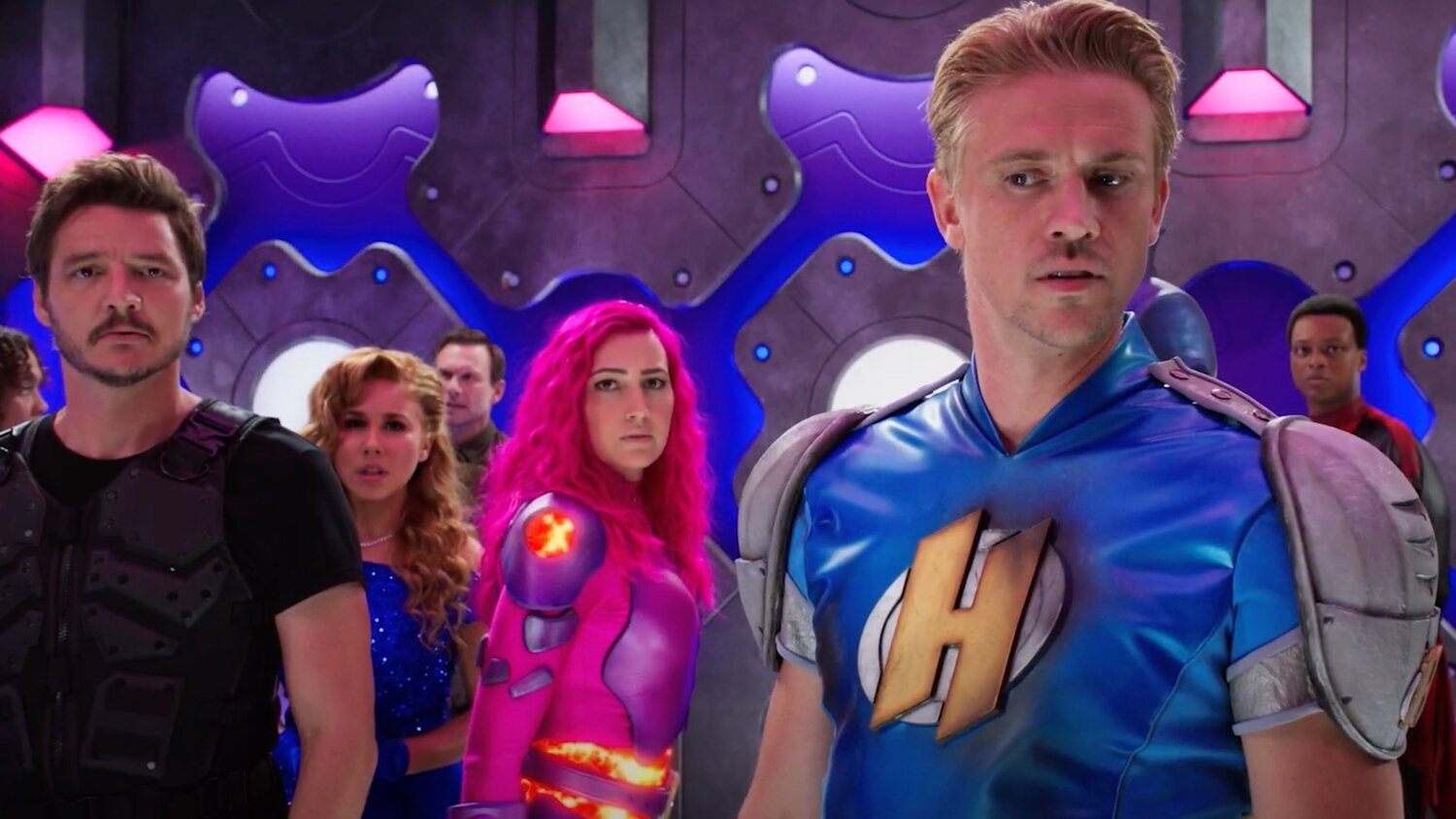
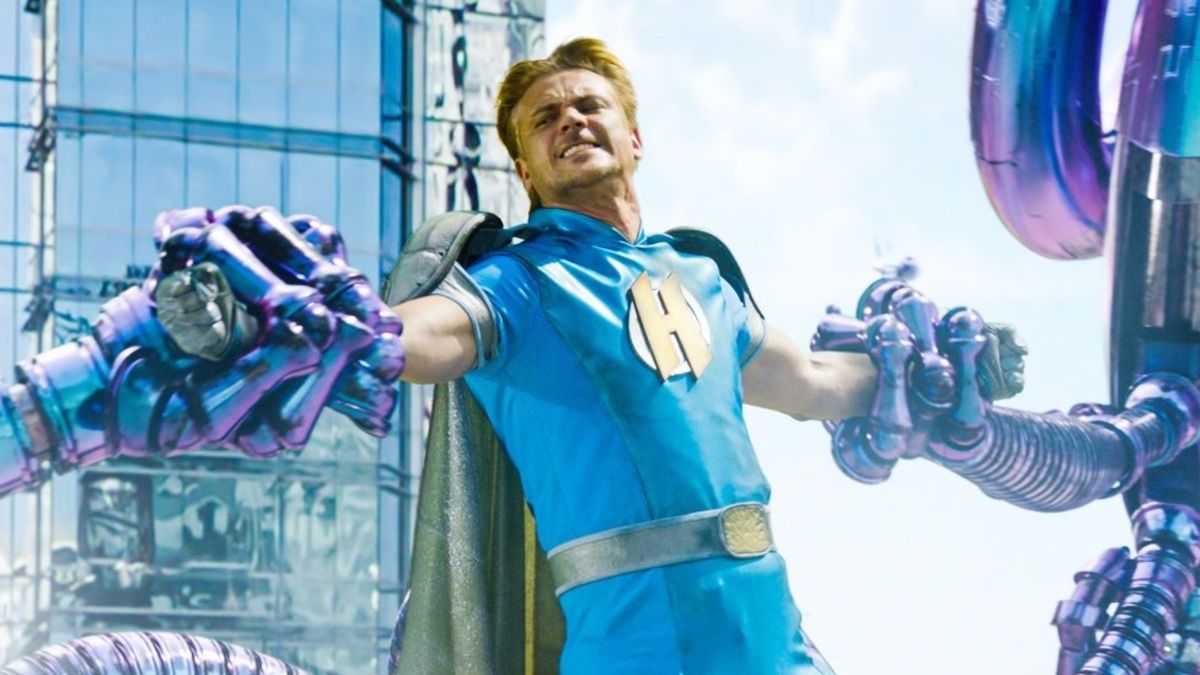
He’s conjured up a “Sharkboy” and “Lavagirl” Incredibles/Avengers universe, where Earth is protected by “Heroics” who operate out of a headquarters with a huge “H” on the roof.

Original.

Tentacled aliens, in fanciful tentacled spaceships come crashing in, defeat Miracle Guy (Boyd Holbrook), Tech-No (Christian Slater), Lavagirl (Taylor Dooley), Blinding Fast (Sung Kang) and the rest.

Even Marcus Moreno (Pedro Pascal), the ex-“heroic” and now exec director of the team is summoned back into service, and captured.

The president (Christopher MacDonald) is an oaf, possibly even a traitor.

Only the children of the super-heroic can save us, because in America, it’s not what you’ve learned and earned, but birth which determines destiny, right?

Never mind.

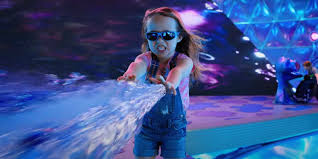
Moreno’s smart but powers-free daughter Missy (YaYa Gosselin, good) finds herself leading the children of Heroics, kids named Slo-Mo, Noodles (an Elastiboy knockoff), Wheels (a wheelchair warrior), Ojo (she draws future events she “sees”), Fast Forward, Rewind, Facemaker, Wild Card, A Capella (she sings and things happen) and little Guppy (who manipulates water).

Can these ten “work as a team” to defeat the foes their parents couldn’t hold off?

“It’s not about who’s fastest or strongest. It;s about working together!”

Too many scenes devolve into static shots of kids watching their parents captured on live TV (their fights covered “Smackdown” style) or parents watching their “helpless without me” kids fighting back.

Too much dialogue is just layers and layers of exposition, characters explaining their gifts, their situation or the status of the Heroics exec (Priyanka Chopra Jonas) out to catch them and put them back in isolation.

The fights are fine, well put-together. And scattered moments of humor pop up — Wild Card (Nathan Blair) catching himself every time he wants to swear, “Holy…doo doo!” — A Capella (Lotus Blossom, hippy parents are still around) singing the theme to “Chariots of Fire” to get Slo Mo (Dylan Henry Lau) to move a little faster, or summing up their chances with a verse from “The Mary Tyler Moore Show” theme.

But “Heroes,” stealing its title from the Bowie tune, is mostly just a lot of effects and action thrown at a half-finished pitch, a script that needed a lot more work before cameras ever rolled in RR’s state-of-the-art digital studio.

Cast: Pedro Pascal, YaYa Gosselin, Boyd Holbrook, Priyanka Chopra Jonas, Lyon Daniels, Christian Slater, Christopher MacDonald, Akira Akbar, Nathan Blair and Adriana Barraza

Credits: Scripted and directed by Robert Rodriguez. A Netflix release.

Running time:
Posted in Reviews, previews, profiles and movie news | Comments Off on Netflixable? Tweens take on Tin-tentacles in “We Can Be Heroes”

Movie Review: “Some Southern Waters” wash up on a David Lynch shore

A surreal fever-dream shot in shades of David Lynch, “Some Southern Waters” makes for a polished and cryptic if not wholly coherent debut feature from writer-director Julian Baner.

It’s a micro-budget indie with acting and cinematography that punch above their weight. The script? Well, not everybody can pull of that “strange for strange’s sake” thing Lynch used to produce, back before he disappeared into Transcendental Meditation.

Joe (Bry Reid) is a fellow who has abandoned hipster and moved into the next big thing in the youth culture cycle. He’s a pomade-obsessed greaser. He’s into Connie Francis sound-alike singers, bars with character, Florida mermaids and his girlfriend Mona (Rachel Comeau of TV’s “The Right Stuff”).

Mona? She’s all about her dreams, visions of a sinister opera singer (Diego Baner) and this water-logged old man (Jeff Evans) who rises from the sea like an apparition. Does it mean something?

“Sometimes I tell you things NOT because I want you to fix them!”

One night they drive off into the swamp, Rachel freaks at seeing her nightmare in the soggy flesh and nearly drowns. Joe? He dives in and pulls her out unconscious, pauses to take a leak before driving her to an emergency room (Mona would call that a “deal breaker”) and fumbles for cigarettes down the swampy pig-path they’re driving back on until he sees the old man again, crashes and kills Mona.

But after he shrugs this calamity off, he starts seeing Mona again — he thinks — in a traveling carnival’s mermaid show. What to do? Aside from sharing this with his friend-with-benefits Beth (Mariah Morgenstern)?

There are traces of humor in this, arguments that degenerate into something almost funny, like Joe noting how “old people (all) kind of look similar when they get older.” There’s not enough of that to lift this to the level of “a dark comedy.”

While I’m not a big fan of digital black and white — it’s generally flat, lacks contrast, everything is in a disorienting sharp focus — here it’s been put to good use to tell the story in pools of light in a sea of darkness. It aids in the film’s few recognizable effects, parking a carnival at the ocean’s edge, etc.

“Some Southern Waters” is stylish and strange and could make for some interesting interpretative barstool debates after it’s washed over you. But the slim story’s shortcomings and obscurant bent push this closer to the realm of “student film” than one would like. The consistent style and tone hold the promise that something better could show up down the road.

MPA Rating: Unrated, violence, sex, profanity, smoking

Cast: Bry Reid, Rachel Comeau, Mariah Morgenstern, and Jeff Evans.

Credits: Written and directed by Julian Baner. A Ghostly Visions release.

Running time: 1:17

Posted in Reviews, previews, profiles and movie news | Comments Off on Movie Review: “Some Southern Waters” wash up on a David Lynch shore

Movie Review: Understanding and Redemption in rural Iowa, “Two Ways Home”

“Two Ways Home” is a low-key indie drama about family history, personal failures, mental health and redemption. Beautifully shot, empathetically-acted and reasonably well-written, it benefits from that essential ingredient that makes or breaks many a low-budget independent film — a sense of place.

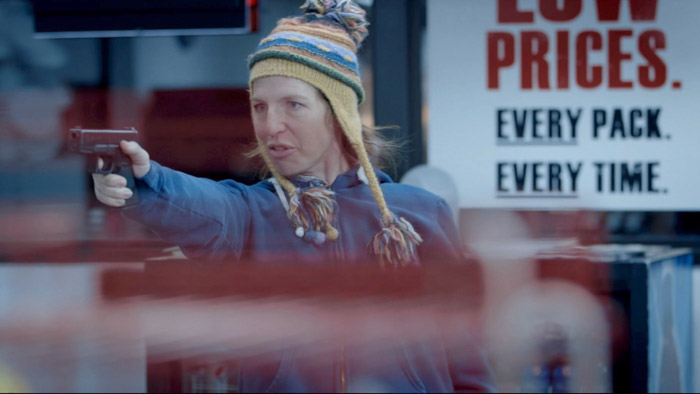
It’s a rural Iowa story from start to finish. We may meet Kathy (Tanna Frederick of “Irene in Time” and “Hollywood Dreams”) in the middle of an urban drama cliche, as one-half of a hold-up team robbing a convenience store. But this gas-and-groceries quick stop sits in the shadow of a grain elevator.

The robbery is played with a hint of comic effect. Her brute of a partner (Pat Frey) may be screaming “Get on your knees and STAY SCARED!” Kathy, waving a gun around, is more laid back, trying to impress the danger of the situation on the customers and clerk by pointing out the “general bravado” she and her partner are displaying, their “recklessness.”

Naturally it goes wrong and of course she’s left holding the bag — and two guns. Jail it is, but we’ve gotten a hint there’s something wrong with her beyond her poor decision making. She was hearing voices mid stickup. And unlike most Americans tossed in jail, she gets help with her “chemical imbalance.”

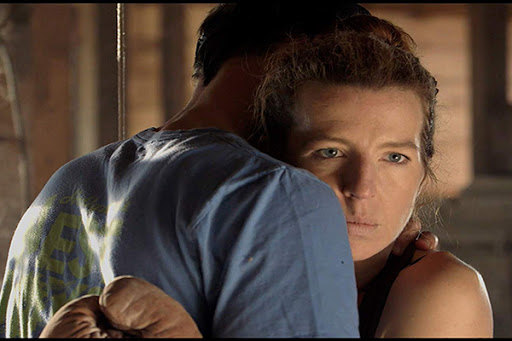
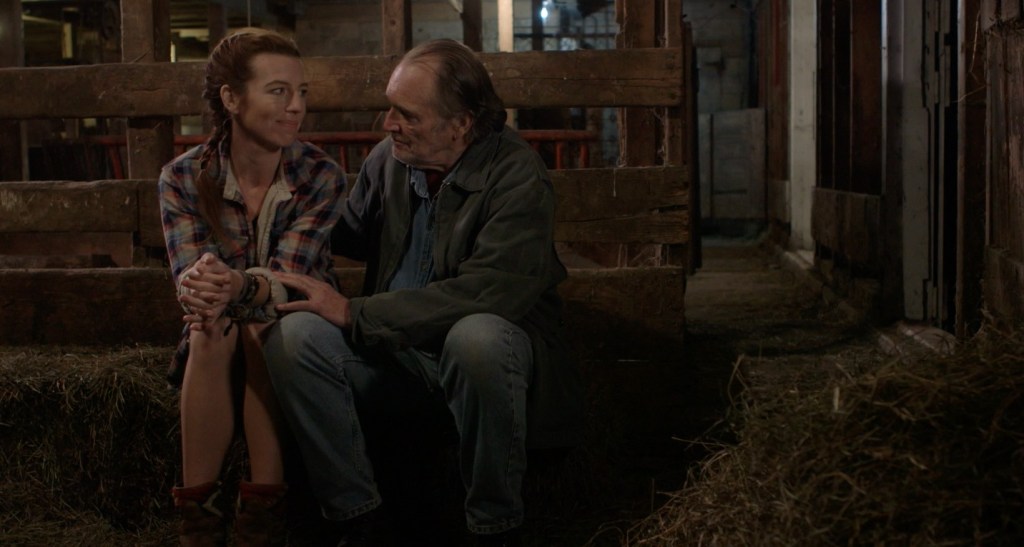
“Two Ways Home” is the story of what happens when she gets out, the old reputation she can’t shake in tiny Garner, Iowa — the tween daughter Cori (Rylie Behr) who wants nothing to do with her, Kathy’s not-wholly-sympathetic parents who’re raising her, the ex Junior (Joel West) who has taken up with a former high school rival, and the grandfather (Tom Bower) who just had a heart attack, all alone out there on the family’s hog farm.

Kathy figures she’ll move in with him as farm-help and caregiver, keep him out of a nursing home and do everybody and herself a favor as she does. It’s just that no relative, bartender or anybody else who knew her back “then” buys into this.

Bower is one of those character actors that is instantly credible in a rural setting — a veritable Pa Joad figure in films such as “Crazy Heart,” going all the way back to TV’s “The Waltons.” He makes this story instantly credible.

Frederick, a regular in the films of her ex, indie director Henry Jaglom, gives Kathy a light, flippant touch. She jokes about prison teaching her how to “fold laundry” so she’s ready to “be a manager at The Gap.”

We can believe the dismissive, unforgiving Cori is her daughter in an instant. Her voice has changed? “It’s call PUBERTY.” To a friend, Kathy is “my biological mother,” which doesn’t count, because what does is “who raised you.”

“Two Ways Home” has some lovely exchanges between mother and daughter, mother and her mother and wife and her ex. But the script shows its engineering far too often for my taste. An argument starts because we need an argument here to get Kathy and Junior to wrestle each other to the ground. Grandpa’s “issues” may not relate directly to Kathy’s, and thus feel shoehorned in.

The cultural references — TV’s “Oz” went off the air in 2003, is The Gap still a thing? — aren’t just rural Iowa out of date, they’re head scratchers.

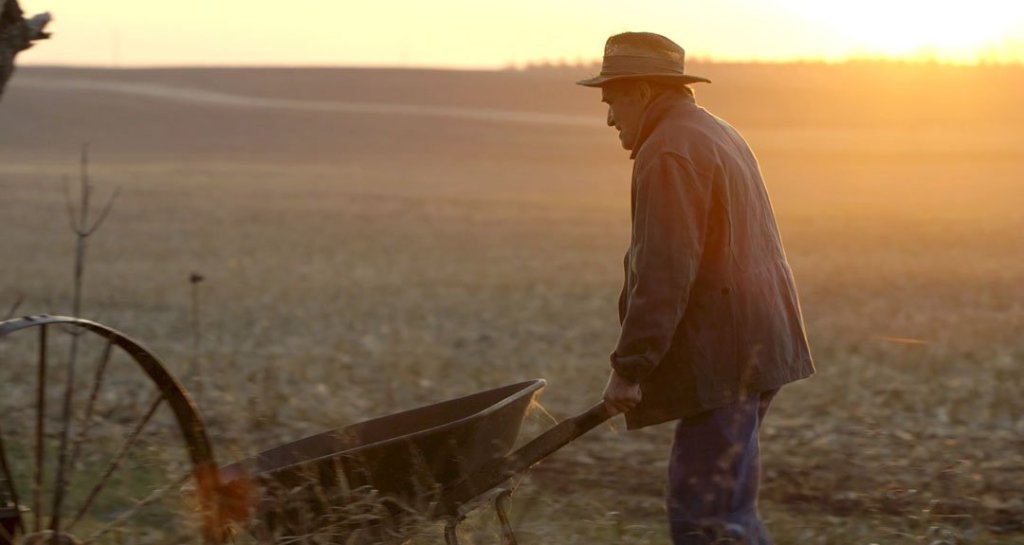
But this dying little corner of small-town Iowa is vividly-rendered, from hay barns and grain elevators to the roadhouse and diner down on main street, and the community pool, where gossip and judgment take place on sunny days that aren’t Sundays, where that behavior is reserved for church.

A wrong turn here and there notwithstanding, “Two Ways Home” — performed by an Iowa-centric cast — makes for a thoughtful, warm journey back to a place a lot of Americans will recognize, even those of us who moved away.

MPA Rating: unrated, gunplay, alcohol abuse

Cast: Tanna Frederick, Tom Bower, Joel West, Rylie Behr, Shanda Lee Munson and Pat Frey.

Credits: Directed by Ron Vignone, script by Richard Schinnow. A Gravitas Ventures release.

Running time: 1:32

Posted in Reviews, previews, profiles and movie news | Comments Off on Movie Review: Understanding and Redemption in rural Iowa, “Two Ways Home”

Netflixable? Coming of age and coming out in Taiwan — “Your Name Engraved Herein”

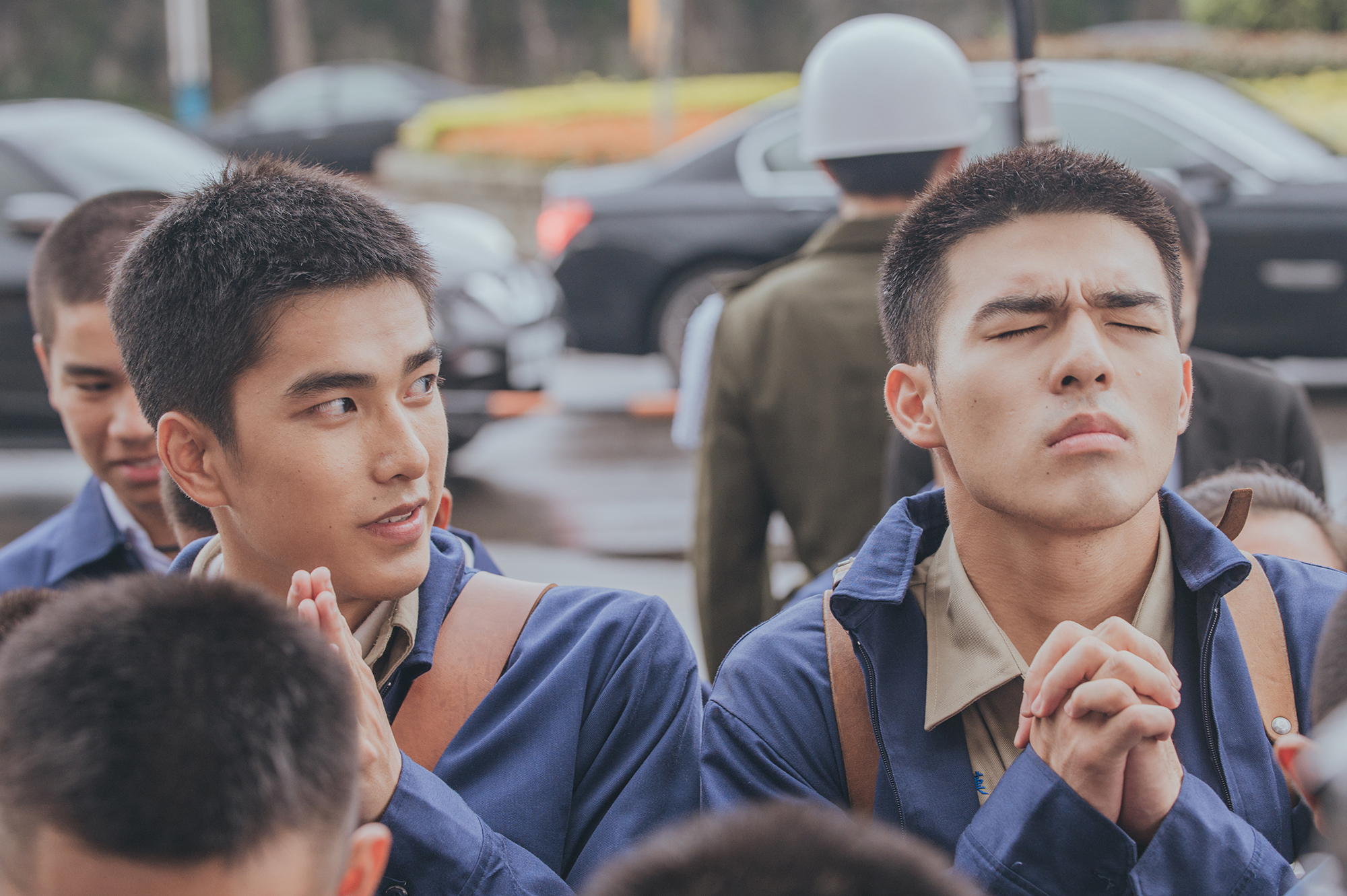
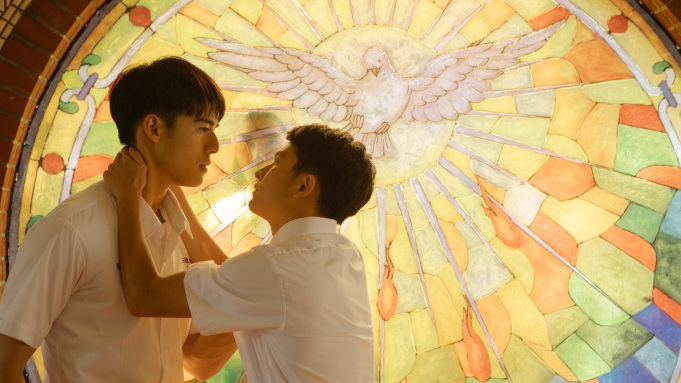
“Your Name Engraved Herein” is a coming out romance set in late 1980s Taiwan, where two boarding school classmates take tentative steps to explain their sexuality in a country that was just emerging from decades of martial law, and where same sex relationships were taboo.

It’s a slow-moving piece covering familiar ground, a movie of timeworn dramatic tropes and seeming universal coming out experiences — bullying, harassment, parental shunning — trotted out once more, this time in a late ’80s Taipei setting.

Edward Chen is Jia-han, newly transferred to a school just as the martial law that was a product of Chiang Kai-Shek has ended with the death of his President and son. The first friend he makes in swim class is the free spirit/rebel Wang Po-te, (Jing-Hua Tseng), who encourages one and all to call him “Birdy.”

He’s a film nut and he identifies with the mentally-ill Vietnam Vet title character of that film, played by Matthew Modine. This Birdy isn’t mad, just impulsive, self-assured and to Jia-han’s surprise, brave.

He’s not stupid enough to join with the pack, which thinks of a gay classmate as “a virus…He’ll force us to be gay, too!”

Jia-han picks up a connection between them, and isn’t sure what to make of it. But when the school’s resident bully Horn (Barry Qu) leads his friends in harassing and pummeling an effeminate student, Jia-han’s instinct is to go-along-to-get-along. But can’t hold Birdy back, who instinctively sticks up for the outsider.

Birdy is the guy who talks back to the military supervisor of the school, who insists the sexes be kept separate and the ring-leader in a little ROTC-styled “military songs” competition revolt.

Yu Ning Chu’s script takes us through the moment when Jia-han starts to figure out he’s just not attracted to girls, at an impromptu horn section late night serenade/make-out sessions with schoolgirls in a local cemetery. Everything points to his deepening love for Birdy.

But as close as they get, Birdy is sending mixed signals. Dude’s got Wham! posters on his wall. But when Birdy takes up with a girl (Lenny Li) when the school goes coed, he makes Jia-han question what he’s putting himself through, the information-please sessions with the gay kid Birdy defends, increasingly heated arguments with his father and the rising risks of school shunning and bullying and expulsion.

Director Kuang-Hui Liu and screenwriter Yu Ning Chu frame all this within a late-school career counseling session with the cool Canadian Catholic priest and band teacher (Fabio Grangeon). He engages in a couch-therapy session with the Jia-han after a bloody fight and tries to give the boy solace amid his crisis of faith and sexuality.

It is a cumbersome framework and contributes to the film’s slack pacing and disjointed structure. The priest plays “Danny Boy” on his stereo as they chat, maybe the corniest and most tone-deaf (He’s FRENCH CANADIAN) touch in the movie.

There’s an epilogue that follows the resolution of that framework that would have played far more gracefully without the many interventions of this long session with the Mandarin-speaking priest from Montreal. We learn that the title is taken from a Chinese song lyric there.

Perhaps the more advanced “Western” attitudes Father Oliver grew up around make him easier to talk to. But it’s the ’80s and he’s Catholic and we see little evidence of that.

There are “Call Me By Your Name” touches to Jia-han’s journey of discovery, an acting-out encounter with a much older man because of Birdy’s girlfriend “betrayal,” and a passionately pubescent shower scene.

Chen has the more repressed, understated role to play and gets across the confusion of having those feelings in that culture in that era must have created. Tseng has the showier part and gives Birdy a confidence that nobody in that school, other than the always-with-his-posse bully, carries with him.

The period-piece setting reminds us that what is now regarded as one of the more sexually progressive and tolerant cultures in Asia wasn’t always that way.

But it’s the sensitivity that distinguishes “Your Name Engraved Herein,” a coming-out story that plays as a sentimental first-love-you-never-get-over romance.

MPA Rating: TV-MA, violence, sex

Cast: Edward Chen, Jing-Hua Tseng, Fabio Grangeon, Lenny Li and Barry Qu.

Credits: Directed by Kuang-Hui Liu, script by Yu Ning Chu. A Sony Pictures/Netflix release.

Running time: 1:58

Posted in Reviews, previews, profiles and movie news | 2 Comments

Kevin Spacey Haunts another Christmas Eve

Posted in Reviews, previews, profiles and movie news | Comments Off on Kevin Spacey Haunts another Christmas Eve

A little Paul McCartney animated holiday bauble — “When Winter Comes”

So it’s Farmer Paul this time around, a guise he adopted way back after the Fab breakup?

Stripped down, spare and basic and not quite folksy, and going the animated route for his “official” music for this times.

Lovely, water-colorish animation from Geoff Dunbar.

Happy holidays.

Posted in Reviews, previews, profiles and movie news | Comments Off on A little Paul McCartney animated holiday bauble — “When Winter Comes”

Movie Preview: Studio Ghibli goes CGI for “Earwig and the Witch”

Kind of takes away what made them special, to be honest. Story looks seriously “meh” too, but we will see.

Posted in Reviews, previews, profiles and movie news | Comments Off on Movie Preview: Studio Ghibli goes CGI for “Earwig and the Witch”

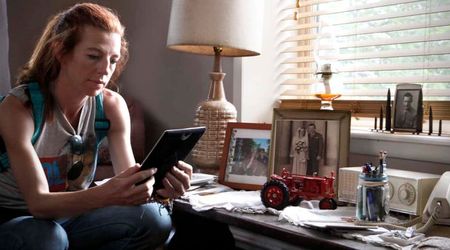
Netflixable? Friction generates teen heat “After We Collided”

The only fair way to approach “After We Collided,” the sexed-up sequel to the romance novel adaptation “After,” is on its own terms with its intended audience in mind.

If you’ve any attention to Netflix’s selection of self-produced or acquired teen romances, you know they’ve got the data to back up what common sense and memories of your own teens tells you.

Teenagers want to watch movies about affluent, beautiful people their age hooking up, running through the Kama Sutra in parties, in the shower, in cars, parks or offices. And maybe these exotic creatures — often with no visible means of support — after all that sweat and coitus, find true love.

Fighting that voyeuristic impulse is like trying to hold back the tide. Not. Gonna. Happen.

So as tempting as it is to recycle my review for “After” (“Much ado about absolutely nothing.”), let’s look in on these lovelies and see where they stand — or sit, lie down or mount — in the running count of that famous Indian book of love I cited above.

Tessa (Josephine Langford) has a paid internship with a publishing house this time, a college freshman/sophomore who is such a perky go-getter that the boss drags her to a meeting/club outing with a Chinese financier who might make Vance Publishing a bigger deal than it is.

She’s still mad at classmate/ex-lover Hardin, the willowy Brit covered in tats played by Hero Fiennes Tiffin. He cheated on her, basically on a dare. And as much as he pines and texts and voice-over narrates “a story you’ve heard before,” she’s not having him back.

This cute metrosexual accountant (Dylan Sprouse) might have her eye, now.

But a drunk dial after too many shots of “Sex on the Beach” reignites the flame. And showing up and trying to collect her things from “our place” gives his visiting Brit-mom (Louise Lombard) the wrong idea, so she pretends they’re still together to spare Hardin’s “long talk” with Mummy about the breakup.

And it’s on like Donkey Kong all over again, no matter how “toxic” the hard-drinking, haunted and stalkery Hardin is, no matter how much Tessa wants to dazzle in this fantasy world internship.

Novelist Anna Todd, who had a hand in the script, knows better than to let reality intrude much here. The libidinous, foul-mouthed and forward coeds (Inanna Sarkis dazzles as their queen, Molly) may mimic the current fashion in that subculture.

But hot-tempered Hardin keeps shoving around others like he’s hard and maybe weighs fifty pounds more than the beanpole he is. Tessa’s every problem is solved with a wave of a magic money wand.

The entire nonsensical plot is cut-and-pasted together just to make her mad again and prompt him to plead for make-up sex again. Having them independent of means takes away the challenge of teen sex — procuring a safe, comfortable and sexy place for it to take place. So director Roger Kumble and the screenwriters compensate by having lots of it, mostly teased, with just a bit of nudity and ever so much bumping and grinding.

Sure, it’s pervy to note this in a review, unless you accept that I’m just talking about the movie’s sole focus.

The moony magic of other romance novels for this YA crowd, the high stakes of starting a revolt against sci-fi fascism or overcoming “He’s a vampire and I’m not” are dispensed with for makeovers, dressing up, hitting the soundstage-sized club and going “commander” (she’s too drunk to remember “commando”).

Tessa’s mother, played by former teen icon Selma Blair, is limited to a single scene this time. That leaves the movie ripe for stealing, which bad girl Sarkis pretty much does. “Molly” is a provocateur, temptress and fly in the ointment — or whatever — of Tessa and Hardin’s happiness.

And she’s the better half of the best scene, the only good scene, in this empty-headed confection of copulation. It’s a cat fight, and of course it’s in the third act.

So, worse than the first? A little bit.

MPA Rating: R for sexual content, language throughout and some drug material

Cast: Josephine Langford, Hero Fiennes Tiffin, Dylan Sprouse, Louise Lombard, Selma Blair

Credits: Directed by Roger Kumble, script by Anna Todd and Maria Celaya, based on the Anna Todd novel. A Netflix release.

Running time: 1:45
Posted in Reviews, previews, profiles and movie news | Comments Off on Netflixable? Friction generates teen heat “After We Collided”

Classic Film Review: “The Great Silence,” a Wintry Spaghetti Western from the director of “Django”

The archetypal camp and iconic macho of Sergio Leone’s 1960s and ’70s classics dominate any discussion of “Spaghetti Westerns.” But leaving out rival Sergio Corbucci’s is not something Quentin Tarantino, for one, takes sitting down.

Corbucci’s “Django” and the downbeat snow-covered slaughter “The Great Silence” were the biggest “influences” Tarantino leaned on for his Westerns, especially “The Hateful Eight.”

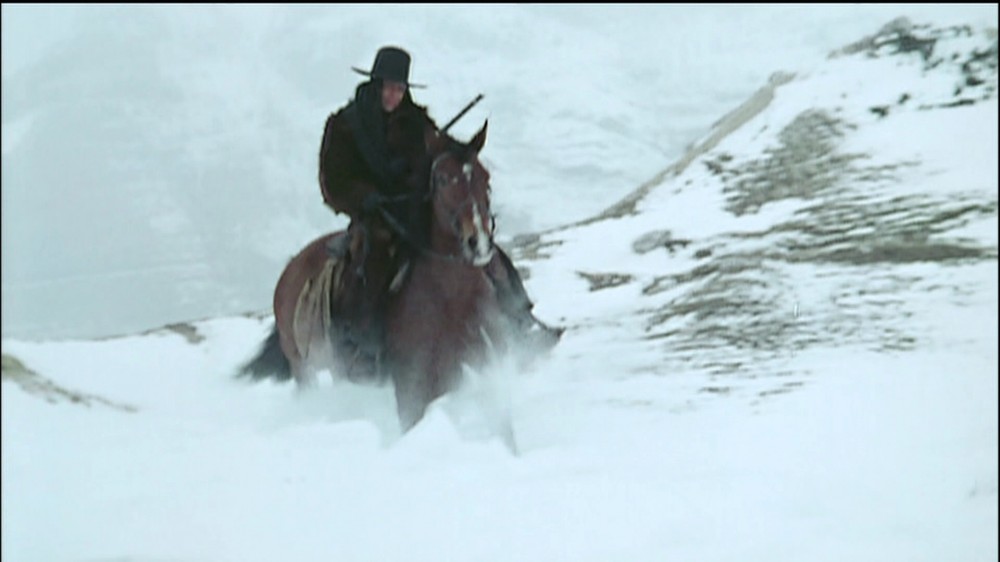
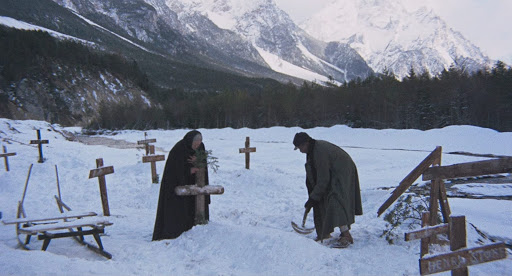
There’s something about hard men bundled up on horses struggling through snow, the visual contrasts and whiter-than-white palette that all that blood will be spilled on that makes films set in that season memorable.

The snowy stagecoach ride opening of “The Hateful Eight,” the battle over mines and the high Sierra town of “The Claim,” “McCabe and Mrs. Miller,” “Day of the Outlaw,” the John Wayne farewell scene in “True Grit,” winter alters the Western landscape, closes the world in around characters and adds to the perils faced by the desperate and desperados alike.

“The Great Silence” is Corbucci’s best film, if not his most famous, a story of a mute hired gunman brought in to defend and avenge a community of accused men and their families from an 1890s Utah onslaught of pitiless bounty hunters.

It’s gorgeous to look at, “Shane” lean in its narrow focus and romance and Peckinpah-bloody in its violence. It’s on Film Movement+ and if you’ve seen every classic American Western too many times and never warmed up to most of the hundreds of Audie Murphy/Randolph Scott filler films that flesh out the lineup of The Western Channel, Grit-TV, etc., it’s a must-see.

Jean-Louis Trintignant, later to star in “Amour” and turn up in films as varied as “Z” and “Stranger than Fiction,” is “Silence,” the tall dark avenger who shows up in Utah’s high country, summoned to defend assorted outlaws and their families, hiding beyond the reach of the law, from the summary justice of “bounty killers.”

Right from the start, Corbucci is flipping the script — a hired killer is hunting hired killers on behalf of wrongdoers.

A wealthy town boss (Luigi Pistilli) is using the bounty hunters as a means to an end. The governor wants it stopped, and has appointed a new sheriff (Frank Wolff) to take over in Snow Hill and curb the violence. Not that the sheriff isn’t capable of handing out rough justice.

“He kept complaining about the cold. I gave him an overcoat…made of wood.”

But he’s too late to save many, as the killer known as “Loco” (the great Herzog muse, Klaus Kinski) has been littering the snow with corpses, ordering locals to “leave him be,” (in Italian with English subtitles). “I’ll be back to collect on him later.”

But widow Pauline, played by African American Euro-star Vonetta McGee of “Blacula,” “The Eiger Sanction,” “Shaft in Africa” and “The Kremlin Letter,” is taking matters into her own hands. She summons Silence personally.

A confrontation is coming thanks to the quiet man who watches, notes and plots his moves and keeps his fancy new semi-automatic Mauser pistol dry.

What’s so striking about the Italian Westerns of this pre-Internet era is how much detail they got right, and how much just looks alien, fresh and in some ways wrong. A later John Wayne Western featured the intrusion of “modern” German pistols like this into the world of six-shooters and Winchesters.

But Corbucci and Leone both went nuts with the ordinance they shoved into “Django” and especially “The Good, The Bad and The Ugly.” Anachronistic European artillery in a Civil War setting just adds to the disorienting Spanish settings of many of these films.

“Silence” was shot in the North of Italy, in the deep snows of an Alpine winter. The hats the men wear, their fondness for scarves, fancy thigh-high riding boots, the types of buildings the settlers live in all feel more Swiss than Salt Lake City.

Check out the Matterhorn pitch of the roof of one barn Silence and his new crush Pauline hide out in. Even the stagecoach looks more at home on the Vienna to Salzburg run than trundling between Salt Lake and Snow Hill.

The violence — Silence is fond of shooting off the fingers of foes he never wants to fear again — is more graphic than in Leone’s films. Instead of humor, he gives us a sex scene more in step with European mores than what Hollywood dared show at the time.

And at the end of all this unnerving break from Western formula, he leaves us with a finale so grim and troubling it sticks with you. No Eastwood one-liners, no Eli Wallach or Lee Van Cleef smirk, just a brutal reality in a fictional Western filmed half a world away from where it’s supposed to take place.

MPA Rating: unrated, graphic violence, sexuality, nudity

Cast: Jean-Louis Trintignant, Klaus Kinski, Frank Wolff, Marisa Merlini, Luigi Pistilli and Vonetta McGee.

Credits: Directed by Sergio Corbucci, script by Sergio Corbucci, Vittoriano Petrilli, Mario Amendola and Bruno Corbucci. A Film Movment+ release.

Running time: 1:45

Posted in Reviews, previews, profiles and movie news | Comments Off on Classic Film Review: “The Great Silence,” a Wintry Spaghetti Western from the director of “Django”

Movie Preview: Denzel, Rami Malek and Jared Leto, a serial killer thriller — “The Little Things”

A serious story, seriously Oscar-studded cast and a serious director (John Lee Hancock of “Blindside”).

This Warner Brothers release probably would play as well on your great home HDTV at home, which is where you will most likely see it.

Posted in Reviews, previews, profiles and movie news | Comments Off on Movie Preview: Denzel, Rami Malek and Jared Leto, a serial killer thriller — “The Little Things”