
Netflixable? Turning tween suicide bombers into cricket kids — “Torbaaz”

Imagine a movie mash-up blending “The Bad News Bears” with “Hurt Locker.”

That’s “Torbaaz,” and Indo-Afghan sports drama/thriller about an Afghan cricket team formed in a refugee camp. And no, that unholy marriage of genres and subject matters doesn’t come off in a picture with hints of cute and a taste of heartache, and a heaping helping of grim, bloody violence.

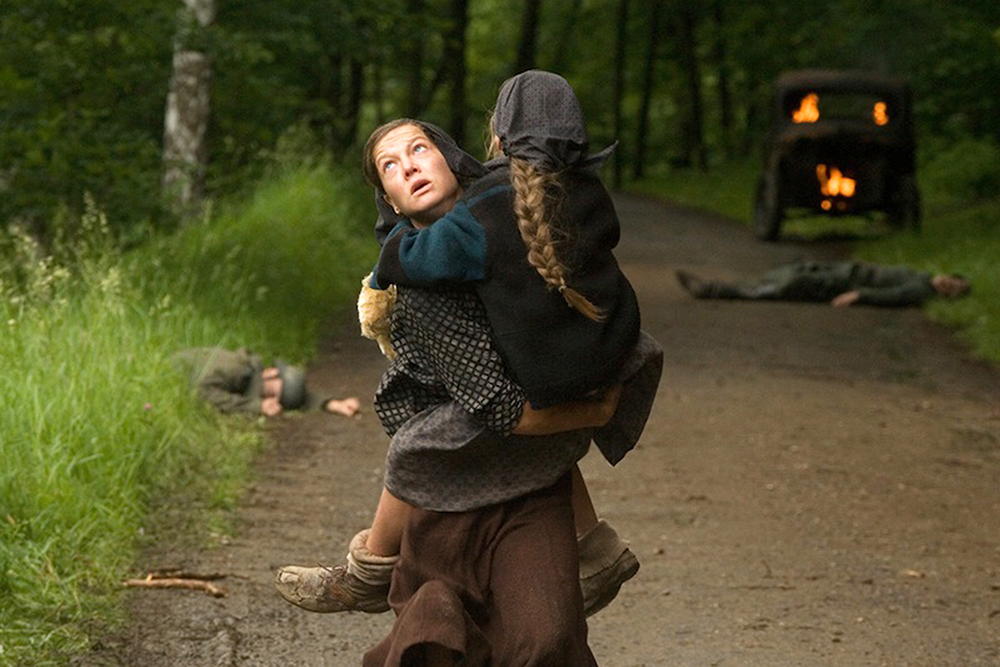
In a bloody corner of the world where Islamic militants coerce children into becoming suicide bombers, a grieving backer of an NGO (non-government organization/charity) figures cricket is the one thing that can bring the many feuding and outright warring tribes together.

The idea doesn’t come naturally to Naseer, a doctor (Sanjay Dutt, a much-honored star of Indian cinema) who practically has to be dragged onto the plane in New Dehli to get him to return to Kabul.

He lost family there. But his late crusading late wife’s NGO’s mission goes on, led by Ayesha (American Bollywood star Nargis Fakhri). Still, Naseer sees a killer in every face, a suicide bomber in every child.

He’s not without concerns. The charismatic Taliban leader Qazar (Rahul Dev, oozing menace) is making online recruiting videos in Tora Bora, rounding up little boys for his secret weapon — child suicide bombers.

But Naseer stumbles across kids on the cricket pitch. And after some sullen moments with these refugee offspring he sees how mad the lads are for the game. Especially when he taunts them by not returning their ball.

“Hey,” the shortest and mouthiest one, Tariq (Rehan Shaikh) bellows (in Hindi mostly, with English subtitles). “It’s a dangerous match! We are ALL in a bad mood!”

They fight, curse, bicker and play — or refuse to play because that kid is Pashtun and I’m Hazara or Tajik. “Tribalism” trumps everything, even among orphan boys in the Tomorrow’s Hope refugee camp.

Naseer will turn them away from the Taliban, away from suicide bombing, and onto the ancient English game with the flat bat, wickets and what-not.

But this won’t work if he can’t get tall and athletic Gulab (Budra Soni) to play with Talib Baaz (Aishan Jawaid Malik). Get Baaz, and other boys of his pro-Taliban bent may change the course of their life as well. Not that it’ll be easy.

“I will grow up to be Taliban and KILL traitors and cowards like you!”

“Should I send you to hell to be with your mother and father?”

Forget your NFL or NBA taunting. THAT is some serious trash talk.

Co-writer/director Girish Malik (“Jal”) gives us four points of view, only two of which should matter — the quarrelsome kids, and the adult trying to give them purpose and focus and polish their games. But in this world, we have to know what’s going on with the murderous Taliban nut, and at NATO, where “reprisals” for attacks include destroying villages.

That threat of violence hangs over “Torbaaz” and in giving so much emphasis to it, Malik derails his movie and drags out the inevitable “Big Game.”

The style and tone are set early on — explosions, shootings, a blur of locations (each identified with a graphic) that really should be our last emphasis on the civil war context. But Malik returns to that again and again even if he seems to realize he’s overdoing that element of the story.

At some point, this actor-turned-filmmaker got drunk on the Paul Greengrass (“Bourne” films, “United 93”) school of shooting and editing.

This simple story is overwhelmed with edits, never letting a single, simple scene play out to its dramatic potential in a single shot when five different angles, a little drone overhead footage, and many many edits can be thrown at it instead. It’s a distraction that drains the emotion out of most scenes and overkills the Big Moments.

He does this right from the start, a blur of images and exposition and context which covers “Alright, get to the bloody point” and then keeps going and going.

In any other film culture on Earth, this story would be 90 clean minutes — a laugh here and there (Tiny tykes mimicking GI profanity –“MOTHERf—-r!” — is always funny.), just enough violence to get the idea of the stakes, Big Game drama and roll credits.

But no. On and on it waddles. Close-ups of Dutt emoting, donning or removing his RayBans, grimacing on the sidelines.

Because you know this contraption will end with an endless cricket match, that universal Big Game movie formula.

True story. The two longest movies I’ve ever sat through in decades of reviewing films — one, “La Belle Noiseuse” is a four hour French insomnia cure about watching a painter sketch, pose and paint a model. Like watching paint dry. The other was “Lagaan: Once Upon a Time in India,” a period piece set during “The Raj,” almost as long, but just as tedious and playing even longer as much of that Bollywood musical drama is consmed by an endless cricket match.

The kids in “Torbaaz” are cute, their stories amusing and potentially full of pathos. The adult intervening is your big star. The NATO scenes, the Afghan Army interludes, the endless examples of the sadism of the villain? Distracting filler that wrecks the flow and loses the thread.

MPA Rating: TV-MA, violence, smoking, profanity.

Cast: Sanjay Dutt, Nargis Fakhri, Rahul Dev, Aishan Jawaid Malik, Budra Soni and Rehan Shaikh

Credits: Directed by Girish Malik, script by Bharti Jakhar, Girish Malik and Mohammad Muneem. A Netflix release.

Running time: 2:13

Posted in Reviews, previews, profiles and movie news | Comments Off on Netflixable? Turning tween suicide bombers into cricket kids — “Torbaaz”

Movie Review: Rachel Brosnahan deadpans “I’m Your Woman”

A couple of quick first impressions re: “I’m Your Woman,” an Amazon star vehicle for its “Marvelous Mrs. Maisel,” Rachel Brosnahan.

One, cowriter/director Julia Hart (“Fast Color”) should remember that the need for pacing doesn’t change just because you’re making something to stream rather than test viewer’s patience in a cinema. Just because Amazon cuts a check and says “up to two hours” is NO reason to drag and mope and slow-walk us toward that as a finish line.

This might have played better at 90 minutes. Just saying.

And two, Ms. Brosnahan, and maybe Ms. Hart if this was a stage direction she gave you — sleep-walking through the first two and a half acts is no way to engage the viewer.

You’re playing a young 1970s housewife lacking much in the way of skills and wit. Your thief-husband (Bill Heck) gets into trouble with the mob and that puts you on the run with a baby he just brought home to you days before.

Sure, you’re supposed to be passive, yanked about by a stranger (Arinzé Kene). You can’t cook, have no clue what to do with a baby, can’t even drive with anything resembling skill. You’re a pre-feminist color-coordinated stereotype. We get it. But 90 minutes of “numb” makes for a seriously dull lead in a movie that doles out its action sparingly, and never grasps for one blessed second the need for “urgency.”

“I’m Your Woman,” set in 1977 (cars date it) in urban and rural Pennsylvania, begins in deadpan “American Beauty” voice-over. Trophy wife Jean (Brosnahan) is married to Eddie (Heck), and “every morning Eddies kisses Jean goodbye (Brosnahan flatly narrates) and then, Jean is alone.”

Until he brings home a infant boy — “It’s all worked out.”

“What’s his name?”

“It’s up to you.”

Jean never asks enough questions, perhaps with cause. But she underreacts to this, setting the tone of Brosnahan’s performance. It takes a couple of acts of shocking violence, or her frustrations at trying to fry a damned egg, to get a rise out of her.

One night Eddie doesn’t come home. An associate shows up and wakes her, throws money and nothing else into a tote bag and orders her to go with this stranger who is showing up at any second.

Cal (Kene, of British TV’s “Flack” ) is just as tight-lipped as everybody else. He puts her and the baby in a car, tucks her into a motel, finds her a safe house.

“No people,” he tells her. Don’t even plug in the phone unless it’s an emergency. And then he’s off.

This limping life-on-the-lam thriller has hints of “Gloria,” the mob moll on the run with a hunted child in its setup and structure. But it’s not remotely as interesting, because our heroine is dull-by-design and she’s not asking for information the average viewer is dying to know.

The baby’s got a fever! Hospital! “No people” he said. But in the merest flash of maternal instincts, she insists.

The friendly little old lady neighbor is a little too friendly, or is Jean just being paranoid?

The suspense is kept to a minimum, and the jolts, when they come, arrive and end in short, semi-shocking bursts of violence. Tension is in short supply here and “twists” in the third act, as Jean pieces some of the puzzle together, are one long shrug.

Shifts in Jean’s agency — her taking charge instead of being a package bundled off, like a babe in swaddling clothes — are abrupt and unmotivated. There is no screen time developing her connection to husband Eddie. We don’t expect her to feel anything about his absence other than curiosity, or fear for his safety because she’s, say it with me, “numb.”

Hart scripted and shot this like the pilot to a series that got away from her. Dramatic incidents that grab us are few and far between, and too-poorly-spaced-out to hold attention.

The journey “I’m Your Woman” takes us on offers no surprises, and Brosnahan — so fun as “Mrs. Maisel” — gives us nothing to connect with and grab hold of here. Klutzy cook, barely-fit mother, “lady driver?” Meh.

Even the tiny moments of temper have a passivity that is just uninteresting to watch. The fact that supporting players Kene, Marsha Stephanie Black and Frankie Faison pitch their performances to match Brosnahan suggest “bad directing choices.”

For Brosnahan, who underwhelmed in the last feature I saw her in (“Change in the Air”) as well, a come-to-Jesus realization is in order. Getting all dolled-up in ’70s (not ’60s, like “Mrs. Maisel”) fashions, styled and made-up for motion picture close-ups doesn’t constitute a performance. She’s just a pretty still-life for too much of “I’m Your Woman” for this to work.

MPA Rating: R for violence and language

Cast: Rachel Brosnahan, Marsha Stephanie Blake, Arinzé Kene, Bill Heck and Frankie Faison

Credits: Directed by Julia Hart, script by Julia Hart, Jordan Horowitz. An Amazon release.

Running time: 1:59

Posted in Reviews, previews, profiles and movie news | Comments Off on Movie Review: Rachel Brosnahan deadpans “I’m Your Woman”

Movie Review: Paul Bettany’s subtlest turn ever is “Uncle Frank”

Willowy thin, reserved, refined and ever-so-English, it’s no great stretch to imagine Paul Bettany as a closeted gay academic, a well-mannered Southerner much-adored by that one member of his family he sees curiosity and potential in — his niece.

That on-the-nose casting anchors “Uncle Frank” in authenticity, even if it’s a period piece trafficking in gay culture nostalgia and Southern Gothic tropes straight out of Faulkner and Tennessee Williams.

Oscar winner Alan Ball (“American Beauty”) wrote and directed this sentimental, soft and sometimes stinging story of family and the open wounds it can leave you with, especially if you were gay and raised in the rural South of the 1950s.

Betty (Sophia Lillis of “It”) is our “To Kill a Mockingbird” narrator here, the niece who looked forward to her uncle’s “rare visits” from New York because “No one else in my family seemed interested in me…He was the only adult I knew who looked me straight in the eye.”

Uncle Frank was quiet at those late ’60s/early’70s family gatherings, listening, smoking and greeted with barely-veiled hostility by his bullying father, Daddy Mac. Stephen Root plays this loud, violent tyrant like the Faulknerian villain he is — king of the working class fiefdom of his family in Creekville, S.C.

Screeching, manic grandkids get a bellowing “I’ll whip you BOTH with my handsaw!” threat.

Betty, who hates that pedestrian name, has little in common with her chipper but fearful mother (Judy Greer, perfect) and beer-swilling lump of a dad (Steve Zahn, spot-on). Grandma (Margo Martindale) makes a show of keeping the peace, and Aunt Butch (Lois Smith) is so old that you have to take her tactless cluelessness and occasional burst of intolerance in stride.

But Uncle Frank? He’s out on the back porch, smoking. He questions Betty’s ambitions, hopes. He encourages a change of name and change of scene, eventually (she’s 14 when we meet her), warning her — even at 14 — about “ruining” her life by becoming pregnant. Getting out of Creekville taught him, and will teach her “not only how small this world is, but how much bigger it could become.”

Betty, as she transforms to Beth, moves to New York to enroll at NYU, where Uncle Frank teaches. She meets a boy, takes a few shots at imposing herself on Uncle Frank and stumbles, in her provincial small-town Southern way, onto his “secret.”

That flamboyant “girlfriend” (Britt Rentschler) he introduced Beth’s family to? Someday, she’ll know to refer to her as a “beard.” That sweet, gushing foreign fellow, Wally (Peter Macdissi), short for Walid? He’s a lot more than a “roommate.”

No sooner has Beth sobered-up from her first-ever gay NYC apartment party in pre-AIDS New York when Daddy Mac dies. Wally and Beth have to nag Frank into attending the funeral, a road trip of comic, soul-searching and discriminatory potential.

Because Frank has his reasons for not wanting to go. Wally is hellbent on “being there” for him, despite their shared secret. It’s not like the Saudi expat Wally could “come out” back home, not without “beheading.” But he’s never taken a road trip Down South.

Frank chainsmokes and quietly fumes about the world he has to go back to just to avoid “breaking your mother’s heart.” And he aches at the wounds the trip will reopen.

Bettany is the quiet sun that all these other planets revolve around. His screen baggage, playing sensitive characters capable of inner steel and the odd burst of fury, makes this role tailor-made for him. And you know how the Brits love to sling Southern accents.

“You look lahk you b’long in a 1950s BAH-bull movie,” he drawls, the perfect come-on to his Middle Eastern lover.

Lillis has a wondrous open-faced innocence about her that makes her the ideal tour guide, the person discovering Frank’s world so that we can discover it, too.

Veteran character actor Macdissi has nothing on his resume (“Six Feet Under,” “True Blood,” “Towelhead” and “Three Kings”) that would suggest the warm, all-embracing force of love and nature that Wally is. He’s playing a gay “type,” to some degree. But playing the hell out of it makes him the film’s burst of light, every time he pops on screen.

Ball’s script has a deadpan awareness of its subject matter– gay “types,” rural Southern archetypes, matriarchs/patriarchs, beer and football, the occasional Southernism not meant to be intolerant, but which most assuredly is.

Frank is “a backward baby” Aunt Butch opines in a sort of country midwife code. And that self-described “dirty Jew” “secret” girlfriend Frank passes off to younger brother Mike, Beth’s dad?

“Hell, I’m just glad you ain’t Black!” It takes a Steve Zahn to let that line work.

I can’t say “Uncle Frank” held much in the way of surprises, because it doesn’t. It’s one of those scripts where you wonder if the writer thinks of the South as frozen in “Streetcar” era New Orleans, where all the smart kids of “Mockingbird” Alabama or William Faulkner’s Yoknapatawpha County, Mississippi gravitated to.

The road trip and its melodramatic conclusion literarily feels like one Faulkner and Williams dreamed up over cocktails in Key West, casting Harper Lee’s Scout to narrate it.

Which is to say, it’s not something that will be to every taste. But if you’re into Sleepy Time Down South cliches, it goes down like that first mint julep of spring — refreshing and redolent of a time thankfully past, but for all its ugliness, formative in ways that only passing years make clear.

MPA Rating: R for language, some sexual references and drug use

Cast: Paul Bettany, Sophia Lillis, Peter Macdissi, Margo Martindale, Judy Greer, Steve Zahn and Steven Root.

Credits: Scripted and directed by Alan Ball. An Amazon release.

Running time: 1:31

Posted in Reviews, previews, profiles and movie news | Comments Off on Movie Review: Paul Bettany’s subtlest turn ever is “Uncle Frank”

Movie Review: Deaf and in denial, “Sound of Metal”

Darius Marder’s “Sound of Metal” takes us on an immersive Elisabeth Kübler-Ross journey into deafness. It’s poignant and harrowing on the most personal level version of what one might go through when one of your most vital senses, hearing, all but vanishes in a flash.

Riz Ahmed‘s performance, as a young thrash metal drummer with past addictions but a lot to live for until that awful day, is subtle in ways you don’t expect, cutting in a manner anyone experiencing this could appreciate. It’s a great turn in a thought-provoking film that rises above what could have been a gimmick at its heart to become something painful and moving.

Ahmed (of “Rogue One” and “Nightcrawler”) is Ruben, drummer for Black Gammon, a duo built around his screaming, guitar-playing girlfriend Lou (Olivia Cooke). We see half of one song from one set and we cringe, not so much at the music but for what we know is coming.

They travel the country, gig to gig, in his vintage Airstream 345 RV, young lovers living a dream and sharing that same dream.

He romantically wakes her to vintage blues and R&B LPs, breakfasts on veggie smoothies and maintains an exercise regimen. He’s healthy and “clean” at the moment, and determined to keep Lou happy and meet their fans expectations, too.

Nothing sadder than a shirtless drummer with “Please Kill Me” among his chest-full of tattoos if the guy’s not been doing his sit-ups.

He gets a warning that something is amiss one night, but he keeps it to himself. Tinnitus is a hazard of the job, after all. But when he wakes up in near silence, and popping his ears accomplishes nothing, Ruben quietly panics.

Why else would you see a pharmacist for sudden hearing loss? A referral to a doctor (Tom Kemp) gives us the first hint of the “denial” to come.

“The hearing you have lost is not coming back,” the specialist tells him. “Your obligation now is to preserve the hearing you have.”

It might have been the din that he’s performed in over the years, or something “auto-immune.” He used to do drugs, which can’t have helped.

We see Ruben’s pestering “How do we fix this?” questions for what he doesn’t. It isn’t sinking in. And as it does, Ahmed lets us see the panic wash over his face. His whole life — his passions, his part and his love are bound to his hearing.

He takes word of cochlear “implants” in ways we know are pie-in-the-sky oversimplifications. Cooke (“Me and Earl and the Dying Girl”) plays Lou getting the news with a blank-faced shock, a much quicker realization than his “It’ll come back, it’s fine” self-prognosis. The fact that the conversation started with shouts (he can’t hear) and degenerates into “Write it DOWN” underscores that.

The call to their unseen/unheard manager suggests he’s run into this before. He gives Ruben a guy to “go see,” and Lou directions on how to get there. It’s not a second opinion, a place where they can look into the pricey “implants” option. It’s a community for the deaf.

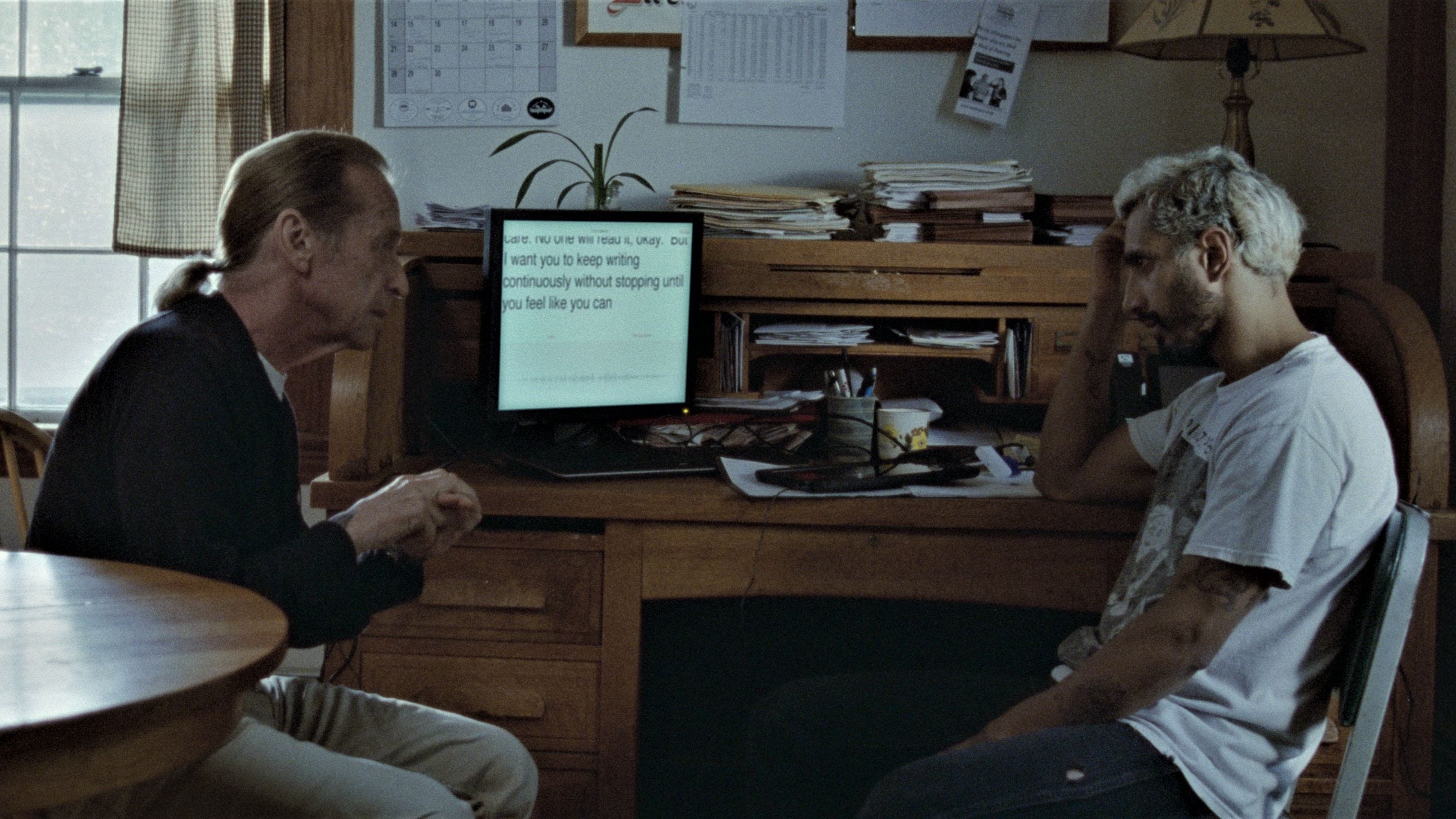
Non-nonsense Joe (Paul Raci, quite good) sits him down, switches on a talk-to-text PC program and sizes him up in an interview, the underlying issues that have him grasping at straws, the demons his new condition will force Ruben to face, even if Ruben is the last one to accept that.

“You need support right now!” Lou pleads.

“I need a f—–g gun in my mouth!”

“Sound of Metal” then documents Ruben’s adjustment, or failure to adjust, via group therapy sessions (a few deaf addicts are in this community), his first encounters with sign language, sullen resignation given new purpose by competing with a befriending deaf school kids and struggling to see how much of what he lost he can “get back.”

Ahmed’s performance is compact and internal, with occasional moments of lashing out given a frightening fury. The “gimmick” here is in the way director Marder uses sound, forcing the viewer to experience the world the way Ruben does — muffled at times, lightly ringing here and there, utterly silent at others.

Although the arc of the story is quite conventional in terms of Ruben’s “stages of death and dying” journey, the script and Ahmed’s affecting, sympathetic performance make us cling to the same hopes that Ruben does, that he can recover some of his hearing, maybe enough to get some of his life back.

That’s the way this very particular story becomes something more universal, overcoming denial and despair, finding purpose, traveling from hopelessness to hope.

MPA Rating: R for language throughout and brief nude images

MPA Rating: Cast: Riz Ahmed, Olivia Cooke, Paul Raci, Lauren Ridloff, Mathieu Amalric and Chelsea Lee.

Credits: Directed by Darius Marder, script by Darius Marder and Abraham Marder. An Amazon release.

Running time: 2:00

Posted in Reviews, previews, profiles and movie news | Comments Off on Movie Review: Deaf and in denial, “Sound of Metal”

Movie Review: Old Fashioned “Sylvie’s Love” parks a ’50s romance in “Mad Men/Mrs. Maisel” era Harlem

A strong producer’s hand has saved many a filmmaker from one’s worst impulses, and that’s what seems to be missing from the promising, well-cast and handsomely mounted romance “Sylvie’s Love.”

This star vehicle for Tessa Thompson has a solid supporting cast, lush settings and a script that made many a 1950s romantic melodrama sing. Remember the films of Douglas Sirk, or “Far from Heaven,” which was Todd Haynes imitating Sirk.

But at some point “promising” turns indulgent. And the longer this “Love” goes on, the more contrived and bloodless the obstacles to the romance become.

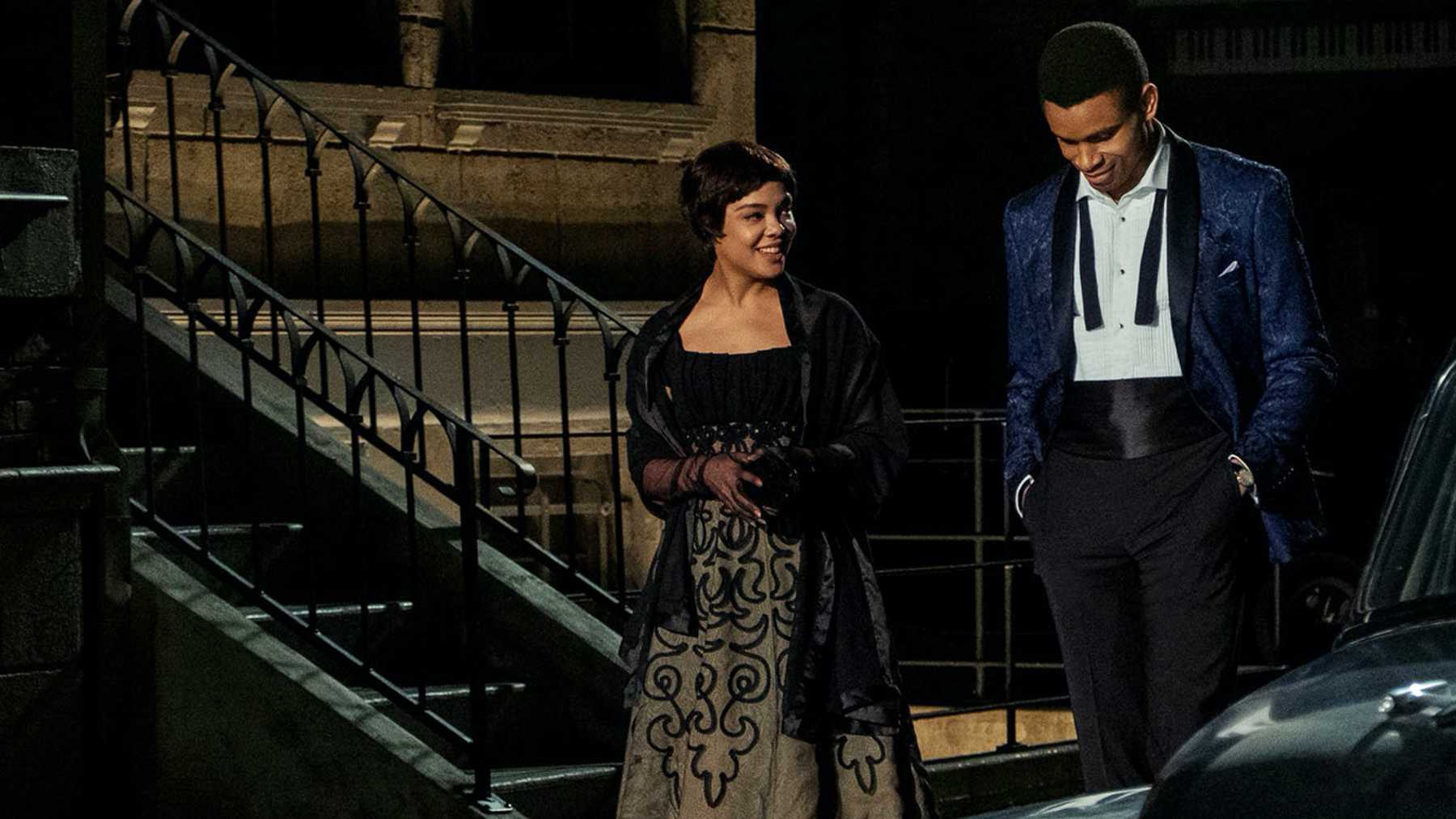
Thompson has the title role, a daughter of the Harlem upper class whom we meet, perfectly-turned-out, waiting for a friend to join her for a 1962 Nancy Wilson concert at New York’s Town Hall. That’s where she runs into Robert (Nnamdi Asomugha), an old flame, a jazzman she fell for in her youth.

A long flashback tells the story of their five-years-past romance, sax player Robert meeting debutante Sylvie at her dad’s (Lance Reddick) record shop. She’s engaged to a doctor’s son in the service, stationed in Korea.

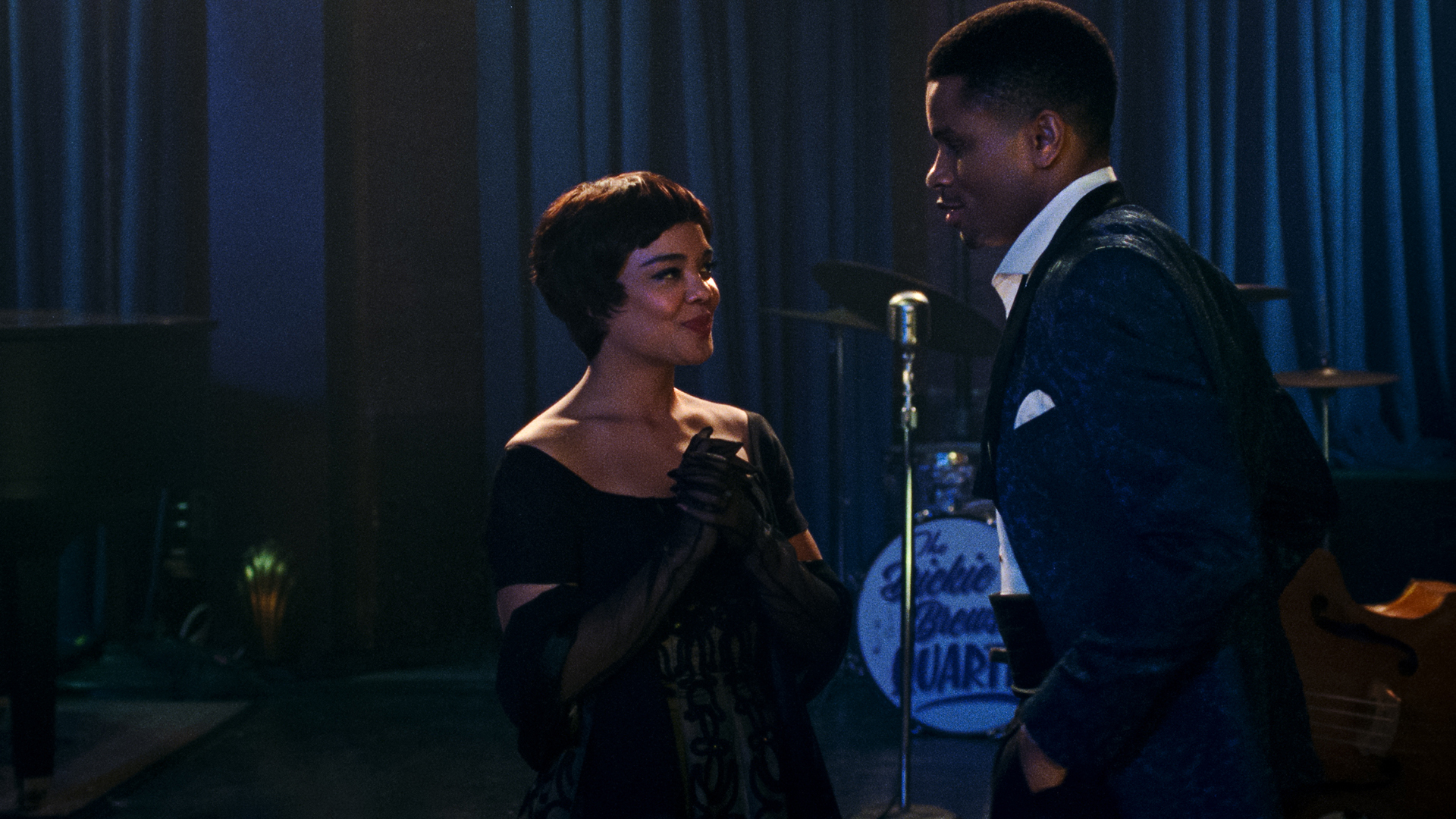
But she flirts by giving him a Thelonious Monk record. He flirts by applying for work at the shop, and putting her on “the guest list” at the club where his combo is playing.

Her pal, Mona (“Mona LISA, like the painting!”) wants to know “Is he cute?”

“I hadn’t really noticed” doesn’t convince Mona (Aja Naomi King) or us.

Thus, the summer of ’57 becomes a tale of how long she can resist this somewhat chivalrous (He knows she’s engaged.) tenor sax player, and how that will play into their futures.

Sylvie is a TV addict who longs to produce television shows. Robert is a member of a quartet just waiting to be discovered at the end of this Golden Age of Bop jazz. Meeting the rich, connected European connoisseur/manager nicknamed “The Countess” (Jemima Kirke, terrific) seems to send Robert on his way. Sylvie? She’ll have some big decisions to make.

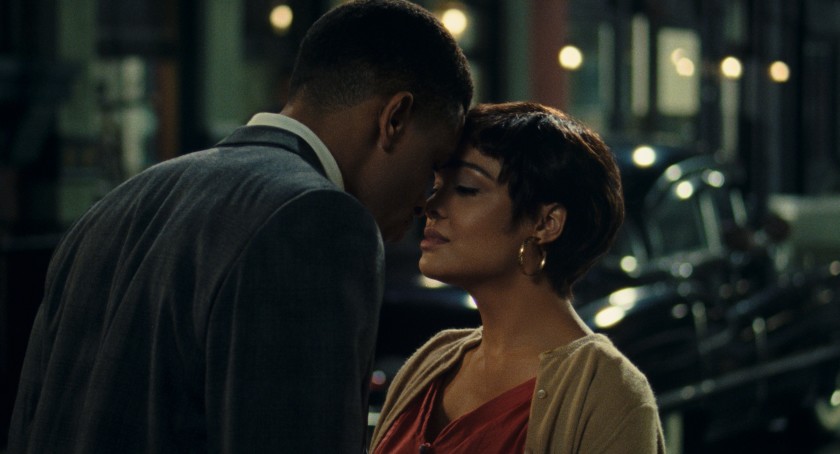
That long flashback ends and the story returns to the soap operatic 1962 present, and the complications that came between them back then have compounded themselves, and multiplied. Can they ever be together?

Musician turned actor turned writer-director Eugene Ashe knows this turf well, and the attention to detail here has a “Mad Men/Mrs. Maisel” sheen, New York at its “Cafe Society” peak.

The musical threads of the story, young Sylvie foreshadowing America’s coming disconnect from jazz and embrace of rock’n roll and soul, the lure of Paris for every jazz musician of the age, are spot-on.

There’s a lot of jazz and over-played period-appropriate pop on the soundtrack,

The film’s debutante milieu (Erica Gimpel plays Sylvie’s prissy, charm-school director mother), the perils of “a young lady” carrying on with “a young man her station” is both old fashioned and accurate. The unspoken class divisions between lighter skinned African Americans (Sylvie, her mother, her fiance and his family) and darker skinned folks is suggested.

And Thompson, of the “Creed” movies and a popular member of the Marvel Universe, dazzles in scenes where Sylvie fights her impulses and yet loses herself in the guy his band nicknames “B-flat” when he plays a sultry sax solo.

But saying “Sylvie’s Love” is slow is an understatement. And Ashe takes that indulgence, which suits the “old fashioned” nature of the romance, and starts shoving every melodramatic device in the book into the meandering proceedings.

Mona’s involvement with the nascent Civil Rights Movement is an interesting garnish that is left undeveloped. Hints of the racism the characters deal with are barely touched-on, as is the sexism that a working woman like Sylvie would have faced in almost any profession at the time, especially TV.

Sylvie’s baby steps into TV production, working on a TV cooking show hosted by Wendy McLendon-Covey (a hoot), hints at a TV series that might have been, which might have been this project’s original plan.

Dramatically, this is so flat that any little hint of wit (like McLendon-Covey, and Kirke) stands out as a reminder of what the story is missing — tension, suspense and pace.

And rare is the conversation or monologue — characters launch into a couple of those — that lives up to the production values or the cast. The pleasant “getting to know you” banalities and brittle moments of insult are generic, not quotable.

“Sylvie’s Love” comes off like a novel idea given every chance to shine, but let down by a maudlin TV movie script that needed polish.

MPA Rating:  PG-13 for some sexual content, and smoking

Cast: Tessa Thompson, Nnamdi Asomugha, Lance Reddick, Aja Naomi King, Jemima Kirke, Eva Longoria, Tone Bell, Erica Gimpel and Wendy McLendon-Covey

Credits: Scripted and directed by Eugene Ashe. An Amazon Prime release.

Running time: 1:56

Posted in Reviews, previews, profiles and movie news | Comments Off on Movie Review: Old Fashioned “Sylvie’s Love” parks a ’50s romance in “Mad Men/Mrs. Maisel” era Harlem

Eddie Izzard’s marathoning so we don’t have to — for charity

If you know Eddie I., you know he’s all about three things — being hilariously biting, cross-dressing and marathoning for charity. He’s practically mental about the last. He’s jogging through a string of marathons this very moment.

Go to the link and check his progress, and see what he’s wearing.

http://www.eddieizzard.com

Posted in Reviews, previews, profiles and movie news | Comments Off on Eddie Izzard’s marathoning so we don’t have to — for charity

Movie Review: Sudetenland Czechs endure occupation, plot revenge in “Habermann”

The problem with mob justice is that reason and rule of law and due process are tossed aside in the heat of the moment.

Mobs are the trapped in the gullibility of groupthink, easily led and just as easily misled.

And when people have suffered under a growing list of grievances, who they lash out against can be innocent, or at least a lot less “guilty” than the collective believes.

“Habermann” is a fictionalized account of mob justice visited upon the “guilty” in the first corner of Europe crushed under Hitler’s boot.

August Habermann was a German mill-owner in the Sudetenland, that corner of Czechoslovakia with so many Germans in that it became the dictator’s first grab in his quest for putting all “German” people under one government, with “Lebensraum” for all…Germans.

The fate of Sudetenland got lost in the carnage and horrors visited upon the continent by the Germans and Russians during the war. But the Czechs never forgot.

“Habermann” begins with a mob riot at war’s end, savage attacks on Germans in the village of Eglau as they’re rounded up for deportation. The movie ponders the notion that maybe all deportees aren’t created equal.

The long flashback that tells the story takes us to the marriage of August (Mark Waschke) to Jana (Hanna Herzsprung) in 1937. It’s a joyous occasion, with only best man Karel (Karel Roden) picking up on the hint of trouble. The ultra-political mayor (Andrej Hryc) has seen Jana’s birth certificate. Sure, she was raised in a convent and baptized there. But her father was Jewish.

“Nuremberg Laws” might be an issue, with the Austrian corporal filling the airwaves with anti-Czech vitriol and threats. Mixed marriages between Germans and Czechs might be common…now. But a German marrying a Jew?

As a happy marriage begins, other signs of trouble are on the horizon. August’s lumber and grist mill, the big local employer, is sure to get attention when the Western allies cave and let Germany swallow the Sudetenland. And August’s younger brother, Hans (Wilson Gonzalez) is blond, plump-faced and pouty. He’s a stereotypical movie Nazi in the making. Give him time.

The occupation, with Germans taking over the local spa as a hospital/retreat for Werhmacht casualties, will force Habermann to deal with the newly-arrived SS Sturmbannführer (Ben Becker). Like all ardent Nazis, he is most concerned with “blood” and bloodlines.

“Auf Deutsch!” he and his subordinates bark whenever some lowly Czech dares to speak her or his mother tongue. All these Czech factory workers, can he trust them? That turbine, Czech made?

“What nationality is electricity?” Habermann jokes. He isn’t really joking, but he can’t imagine early on the trials these Nazis will put him under to prove he’s a loyal German and that the Fatherland comes first, in all considerations.

Co-adapter and director Juraj Herz skips through history with this story, passing over the beginning of the war, popping us in 1940, ’43, ’44 and ’45. In a region that wasn’t bombed and only touched directly by the war in its closing days, that’s understandable.

The Holocaust is introduced directly in a single heart-rending scene, the cries of children overheard in crammed railway cars that pass by.

Waschke’s August tries to placate the Nazis and protect his workers, but his desperation to remain apolitical isn’t going to please anyone. His Czech neighbors are stealing from his lumber mill, building caches of arms and conspiring to interrupt “cooperation” with the Germans. The SS chief is ensuring the locals regard him as “German,” not “Czech.”

Roden’s “Karel” character, August’s best man and best friend, is thinly sketched-in, a somewhat passive if “patriotic” Czech who is aware of what his countrymen are doing, and of the way the Habermann’s are being characterized — perhaps unjustly, and in some cases, with nefarious motives.

Herzsprung’s Jana is the righteous, courageous one in this scenerio, a woman whose instinct is to save lives, even August’s cult-worshipping Wehrmacht volunteer brother.

It’s all rather murky, with the skipping through time, the cartoonish Nazis and the ma many characters who see “the future” and start to plan for who and what they’ll smash or flee from when “The Russians” get there.

“Habermann” is laudable for being that rare film to grapple with the nuances of collaboration. Other films have touched upon it, the women of France getting their heads shaved for fraternizing and falling in love with the occupiers and the like. Here’s a film that points its camera at baser motives, the way some oily opportunists see gain in every shift in political fortunes, every triumph or setback on the battlefield.

Being “neutral” and above it all isn’t an option, hoping people will know and sympathize with the coercion you were under is naive.

But Herz mutes the effect of his bigger messages and themes with all he leaves out. The horrific dilemmas Habermann faces, the accidents and rash behavior of others that he cannot cover for in the eyes of the black-uniformed Germans with machine guns all seems engineered to paper over his moral ambiguity in all this.

Thus does a movie about a fence-sitter become a frustrating exercise in fence-sitting itself.


in German and Czech with English subtitles.

MPA Rating: PG-13, violence, sex, nudity

Cast: Mark Waschke, Karel Roden, Ben Becker, Hannah Herzsprung, Wilson Gonzalez, Radek Holub, Andrej Hryc and Zuzana Krónerová

Credits: Directed by Juraj Herz, script by Wolfgang Limmer, Juraj Herz and Jan Drbohlav, based on the book by Josef Urban. A Corinth Films release on Film Movement Plus.

Running time: 1:44

Posted in Reviews, previews, profiles and movie news | Comments Off on Movie Review: Sudetenland Czechs endure occupation, plot revenge in “Habermann”

Movie preview: Michelle Pfeiffer, Lucas Hedges and Imogen Poots contemplate a “French Exit”

Posted in Reviews, previews, profiles and movie news | Comments Off on Movie preview: Michelle Pfeiffer, Lucas Hedges and Imogen Poots contemplate a “French Exit”

Movie preview: Tilda teams with Almodovar for “The Human Voice”

Oh my. No words. Here anyway.

Posted in Reviews, previews, profiles and movie news | Comments Off on Movie preview: Tilda teams with Almodovar for “The Human Voice”

Movie Review: Before he was “Lovely Ludwig van” he was “Louis van Beethoven”

And now, here’s a musical bio-pic for everybody who wondered what “Amadeus” would have been like had they left it to the Germans.

“Louis van Beethoven” may sound like the title of a John Belushi “Saturday Night Live” sketch. But it’s a serious-minded “early Beethoven” biography about his years of struggles, his alcoholic singer-father, who kept comparing him to Mozart, when Jean van Beethoven was no Leopold Mozart himself.

“Serious minded” like Beethoven himself, and his music — famous for its drama, dynamic range, complexity, epic themes and romance.

So this film, originally a German TV movie, is almost entirely humorless, with precious little joy springing from the music. Writer-director Niki Stein robs us even of the sentimental cliche, always included in Beethoven bio-pics, of the master at the premiere of his grand “Ninth Symphony,” stone deaf so that he never truly heard Schiller’s “Ode to Joy,” which he composed for chorus and set to music.

Stein avoids Beethoven’s most famous pieces, the “war horses” of any symphony orchestra’s repertoire, as if he’s afraid of cliches. In so doing, he robs his film of the magic and majesty of “Eroica,” “Für Elise” Beethoven’s “Fifth,” and “Ninth.”

Any wit and mischief is reserved for that brief period when 20ish Beethoven (Anselm Bresgott) meets and tries to study under Mozart (Manuel Rubey), who was a few years older, impulsive, vulgar and too busy womanizing and partying to mentor the future inventor of the “Romantic Era” in classical music.

We meet the old man (Tobias Moretti of “A Hidden Life”) in a coach AFTER the premiere of the “Ninth Symphony,” accompanied by his swooning, romantic nephew (Peter Lewys Preston) who quotes Rousseau and speaks of “revolution,” but whose head is bandaged from a recent failed suicide attempt.

They are going to stay with Ludwig’s wealthy, landed-gentry brother (Cornelius Orbonya) where Ludwig will polish off a last commissioned work or two and impose on the family’s hospitality and fray its nerves. Everything anyone says to him they pretty much have to write down.

This Beethoven has two settings — grump, and almost comically cranky.

But brother Johann remembers the lad the family called “Louis,” the eight year old prodigy (Colin Pütz) who could sight-read anything, outplay pretty much anybody on the harpsichord and the dominant figure of his age at the newfangled “pianoforte.”

His pretentious father (Ronald Kukulies) showed him off shamelessly around Bonn and the future Germany, desperate to curry favor with the entertainment-starved “elector” and other nobility, more desperate to make sure the Mozart comparisons keep coming. Because someday, this kid is going to Vienna.

The boy? He’s serious about the work, takes up composing because that’s what Mozart did at his age, and struggles to supplement his father’s singing/teaching income with work as page turner for the local orchestra’s kapellmeister (and mentor) Neefe, played with sympathy and patience by Ulrich Noethen.

Writer-director Stein gives us three timelines — aged Beethoven, struggling to get paid for serious work, irritated that the commissions for big pieces are drying up. His dry reaction to the arrival of Johann Strauss, “The Waltz King” on the scene is “people are paying good money” for this piffle? He didn’t live long enough to dive into dance music.

There’s the boy, living in a family marked by genteel poverty, struggle and tragedy — dead siblings, and that inevitable moment when “Mother’s coughing up blood” were enough to drive his father to drink — with little Louis trying to make the connections that would drive his art and make his name. A musician/actor/revolutionary (Sabin Tambrea) fond of quoting Mr. Jefferson’s “Declaration” and railing at the talentless, entitled vultures of the ruling classes is a HUGE influence.

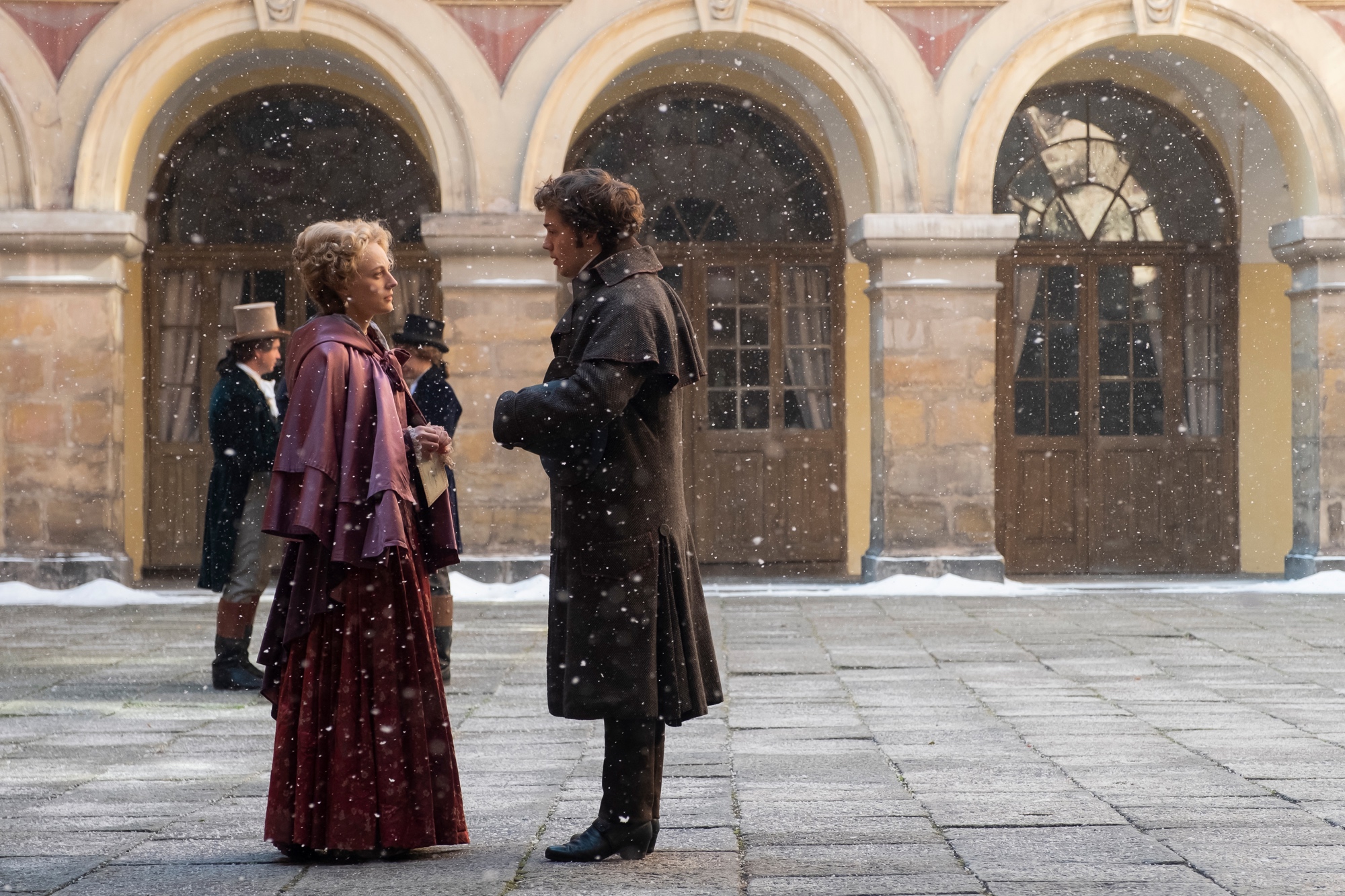
The teen-to-twentysomething Beethoven is among those eagerly awaiting Napoleon’s arrival to upset the inbred applecart of feudal aristocracy, when he isn’t trying to get advice from Mozart and currying favor with Haydn. This Beethoven has, of course, an “Immortal Beloved,” the one woman (Caroline Hellwig) who might have been his true love, but from a family which, while supportive of his talent, reminded him she was “out of your class.”

“Louis van Beethoven” has a jump-about episodic style which betrays its TV origins. Information and relationships are introduced which produce a thorough sketch-portrait of the artist in the making.

And the performers and settings are first rate, across the board, although the cinematography lacks the lush, celluloid amber-tinted hues of big screen period pieces like, again, “Amadeus.”


But Stein rather misses the boat when he limits the performance sections to bits of string quartet here, the boy and his teacher Neefe deconstructing Bach, Mozart and others at the keyboard there — the kid tearing up Tellemann or rattling through Rameau.

The reason we celebrate Beethoven is his passion, the reason he was nicknamed the “Lovely Ludwig van” in “A Clockwork Orange” and elsewhere is the grandeur that emerged from so many pieces, the Great Composer does Great Works part of the story. Just a couple of brief orchestral scenes, creating the motifs of the “Fifth,” the “Ninth” or composing at the keyboard other masterpieces would have added pop star thrills to what is, in the end, a dry and and somewhat dispassionate overview of the life and works of Germany’s greatest composer.

No, he wasn’t “Amadeus.” He didn’t waste time womanizing or drinking, but poured his energies into channeling his romantic ideals of freedom and social equality into his music. That doesn’t mean his life can only be viewed and studied at arm’s length, which is all Stein manages here.

MPA Rating: unrated, adult themes, alcoholism

Cast: Tobias Moretti, Colin Pütz, Anselm Bresgott, Ulrich Noethen, Ronald Kukulies, Peter Lewys Preston and Caroline Hellwig

Credits: Scripted and directed by Niki Stein. A Film Movement Plus release.

Running time: 2:06

Posted in Reviews, previews, profiles and movie news | Comments Off on Movie Review: Before he was “Lovely Ludwig van” he was “Louis van Beethoven”