
“Stand up and FIGHT for your SOUL!”
For those who like their horror kind of nuts and on-the-cheap side.
“Stand up and FIGHT for your SOUL!”
For those who like their horror kind of nuts and on-the-cheap side.

The vast smorgasbord that is the British Museum offers too many riches and distractions to count for the history buff. But if you’re into archeology at all, the temptation is great to give the Elgin Marbles and the like a pass and make your way straight to room 141, to the treasures of Sutton Hoo.
“The Dig” is a warm, stately and beautifully-acted drama about how this Anglo Saxon era burial treasure was unearthed, a tale given weight, poignance and urgency by the events hanging over that dig. World War II was looming, giving this “amateur” unearthing in Suffolk a somber tone and need for speed.
They’re called “salvage digs” these days, a somewhat rushed job because something is coming — usually new construction — threatening whatever you hope to find with the risk of being “lost forever.” I took part in one as a teenager, a Native American village in my hometown that would be destroyed by an expansion of a sewage treatment plant.
Imagine that situation with the added menace of a World War on everybody’s mind.
That’s just one of the ticking clocks Edith Pretty (Carey Mulligan) internalizes when she offers a job to “excavator” Basil Brown (Ralph Fiennes). She and her late husband bought their land with a notion of finding out what’s in these mounds on the property. And after some haggling over wages, Brown agrees.
It’s 1939, and the lady of the house won’t be digging herself. She’s too frail. But she can commission this dig, on the cheap, and figure out what previous digger King Henry VIII never did. What’s under all that dirt? mounds?
Her inquisitive, comic-book fan little boy (Archie Barnes) will be under foot, literally. He offloads his entire brain’s supply of questions on Brown while wearing (literally) a tin foil hat and star-bedecked bedspread he treats as a cape.
Mrs. Pretty might be looking to leave her mark, lamenting an academic life she never had, or might be fulfilling a dead husband’s wishes. Brown is an autodidact — self-trained — and a veteran of such digs. Academia and the local museum toffs regard him as a laborer, someone whose value they don’t appreciate until he leaves them for her.
Both are looking for validation, and she has “a feeling” about this biggest mound, about “the dead and what they leave behind.”
Warplanes roar overhead on training missions, soldiers muster everywhere and the wireless crackles with news of the escalating crisis on the continent. But Brown, following the boss’s hunch, continues to dig in the dirt and mud under overcast skies. His own hunches, flying in the face of the “experts” who figure their Roman villa dig across the county is more important, have the promise of “This changes everything.”
But if it does, you can be sure those with degrees will rush in, led by British Museum archeologist Phillips (blustering Ken Stott) and take over and take the credit while they’re at it.
“You men there, finish up and then don’t move ANOTHER PEBBLE!”
That allows more characters to be introduced, the professorial Piggott (Ben Chaplin) and someone who might well have been his student, his new wife Peggy (Lily James).
Her arrival, summoned by Phillips as well, provides the film’s best sexist joke. As fragile as this long-rotted-away ship is, he needs someone “light” to get down there in it for the fine-work required.

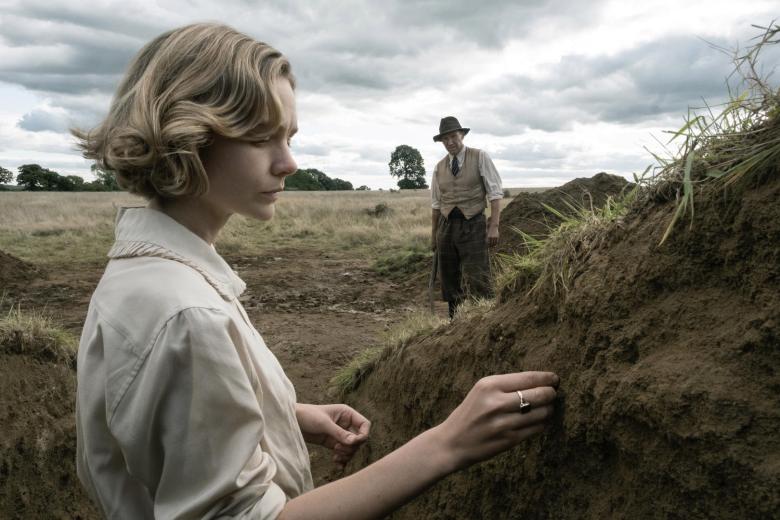

Director Simon Stone (“The Turning”) and screenwriter Moira Buffini (the Mia Wasikowska “Jane Eyre” and “Tamara Drew”) cloak this story in deaths past and deaths sure to come, in class snobbery and curiosity. And then they toss in a hint of romance.
The late second act new characters and incidents associated with them give the film more of a fateful World War II romance touch. They also slow it down.
“Stately” implies the pacing is slow, and “The Dig” generates a feeling that it’s taken on a few too many issues and messages for its own good. “Class” and “credentials” snobbery are the heart of the story, and with all this added-on stuff, there’s barely time for our heroine to stand up for our hero against the snobs of academe.
But Mulligan — drawn, wan and yet steely here — and Fiennes’ lightly-laid-on sturdy working class polymath turn make “The Dig” touching and richly rewarding, as entertaining as any movie about archeology could be without a bullwhip.

MPA Rating: PG-13 for brief sensuality and partial nudity
Cast: Carey Mulligan, Ralph Fiennes, Lily James, and Ben Chaplin
Credits: Directed by Simon Stone, script by Moira Buffini, based on a book by John Preston. A Netflix release (Jan. 29)
Running time: 1:53
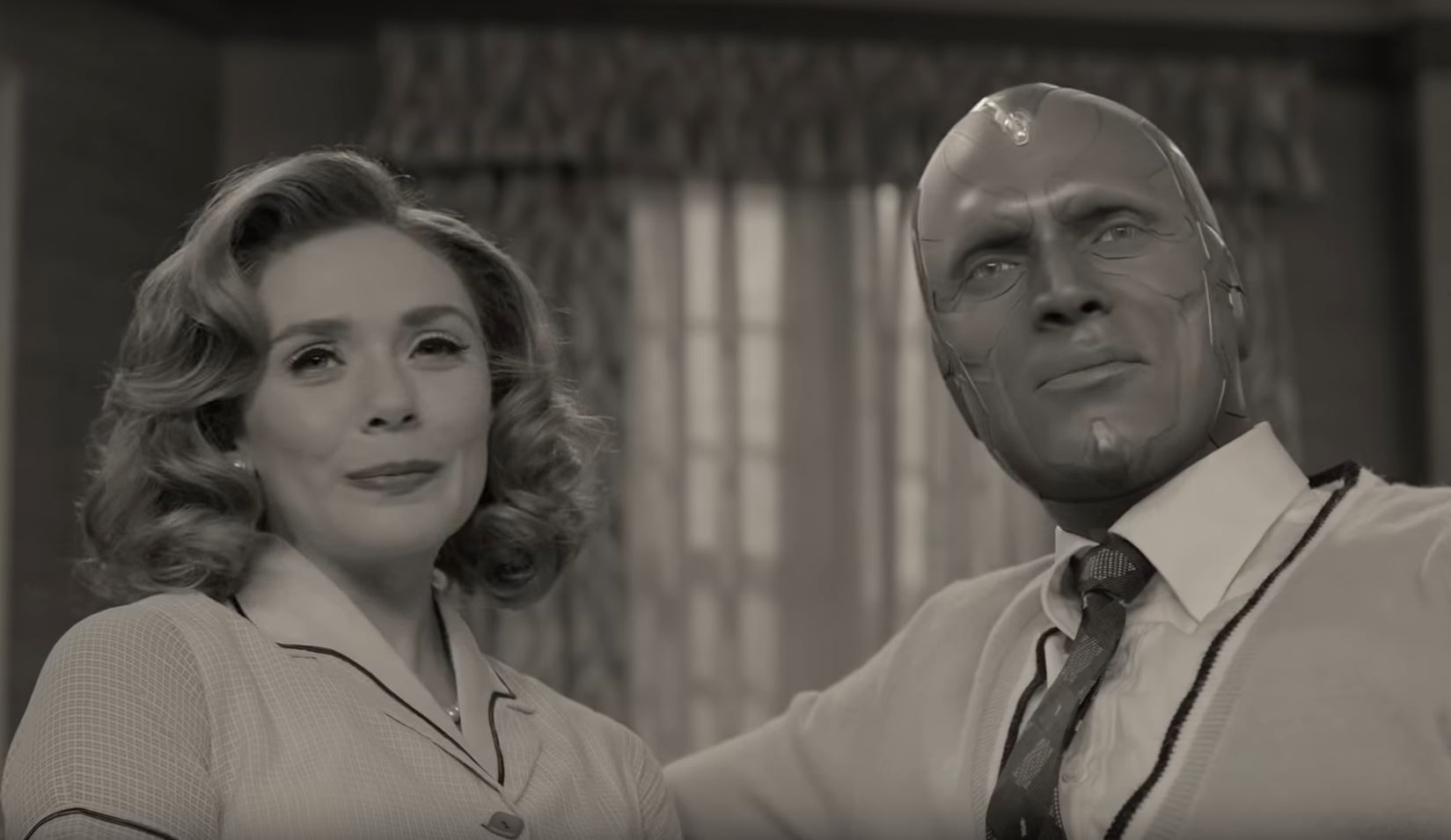
“WandaVision” arrives on your SmartTV as a singular bit of whimsy mined from the intellectual property that is the comic book publisher turned studio, Marvel.
It’s a spoof of sitcoms from various periods, with Marvel characters shoved into say, something inspired by “Bewitched” or “The Brady Bunch” or what have you.
There are inside Marvel Universe jokes and parody TV commercials — in period style — advertising assorted products — toasters, toys — with a hint of Hydra about them.
Because underneath the sunny silliness that American TV has served up in sitcom form, there was always something sinister or at least a lot more real left unexamined and unspoken of — by Samantha and Darren or Rob and Laura or Carol and Tom Brady.
Disney provided three episodes for review, so the suggestions of something Stepford or Patrick McGoohanesque is just hinted at. The first three episodes don’t give us Kat Dennings or Randall Park. So I can’t speak much about where the “darkness” will go, other than repeating my usual gripes about the glacial pace of streaming series storytelling.
“WandaVision” is built around the happy and sitcom-ditzy relationship (“No wedding ring?”) of Wanda Maximoff aka “Scarlet Witch” and AI in the flesh Vision, a mating that…shouldn’t work. Well, in the era of no sex, separate twin beds and Mid Century Modern furniture, it just might.
Elizabeth Olsen and Paul Bettany unleash their collective considerable charms on Wanda and Vision in a very black and white, very “Bewitched” opening episode, changing eras and TV sitcom styles as they (in later episodes) add a baby, experience life in suburban Westview and hide their identities from their nosey/funny sitcom neighbors.
Comic actress Kathryn Hahn was born too late to be Mary Tyler Moore’s “best friend next door” in “The Dick Van Dyke Show,” but she knocks her helpful/welcoming Agnes right out of the park. She’s sorry, for instance, that she didn’t “pop by” earlier.
“My mother-in-law was in town. So I wasn’t.“
Fred Melamed of “A Serious Man” and “In a World…” plays the obligatory tyrannical boss where Vision (masking his robotic looks) works, setting up many a “What do we actually PRODUCE here?” satiric jibes, and deflected probing questions about Vision’s background.
“You don’t have any skeletons in your closet, do you?”
“I don’t HAVE A skeleton, sir!”
This frothy tone and style is cute, and wears thin quickly enough. So does the whole “supernatural” housekeeping, cooking and child-gestation line of gags. Watch the long closing credits to see how much effort it took to get those dishes to float in the air and what-not.
The charity talent show where Vision and Wanda put on a magic act, with a drunken Vision showing off their supernatural powers as sober assistant Wanda has to think fast to “explain” the tricks to their Westview neighbors makes great use of comic talents neither actor got to demonstrate before their indentured servitude with Marvel, much less after.
Bettany’s Vision, playing the ukulele to “entertain” houseguests while commenting on the “nonsensical nature of the lyrics” of current Hit Parade products such as “Yakkety Yak” is just adorable.
But even with the Stepford organization of the charity wives, even with all the Hydra pro-consumerism parody ads (What you buy could control your life, or kill you…like an iPhone?), the pickings are pretty slim in the early episodes. And the series is only six installments long.

As each and every one of the six starts with a :55 second Marvel logo credit, and ends with “Mandalorian” length closing credits in the five-to-six minute range, there isn’t a whole lot of “content” in these sitcomish installments.
Throw in credits for whatever “WandaVision” series (time frame) they’re in this time out, and you’re looking at 20 minutes, with (weak, I have to say) parody commercials mixed in.
If you’re deep into this universe and have been keeping up on all the creator and staff commentary “explaining” what they’re aiming for, you’ll get more out of “WandaVision” than any casual viewer.
The end product is comedically wan, the double-takes broad and all the Olsen/Bettany/Hahn charm squeezed into tiny dabs of screen time and doesn’t add up to enough to make the whole worth the investment in time, even if you switch shows as the endless closing credits start.
And unlike with Marvel movies, that’s allowed.

MPA Rating: TV-PG
Cast: Elizabeth Olsen, Paul Bettany, Kathryn Hahn, Kat Dennings, Randall Park
Credits: Created by Jac Schaeffer, directed by Matt Shakman. A Marvel Studios release on Disney+.
Running time: 6 episodes @25-30 minutes each

A mother, dying of cancer, starts tweeting her thoughts and limited plans for her limited future in the Argentina drama “Notes for My Son,” a dry-eyed weeper that’s not nearly as sad as you might expect.
And that’s a problem, because “sad” is what they were going for here. Not comically brave, not hopeful.
Carlos Sorin’s film, inspired by a true story, has Maria Vazquez (Valeria Bertuccelli, good) musing about “my biggest wish” (in Spanish with English subtitles), to see her “son finish primary school.”
Little Tomy is kindergarten age, and that’s just not going to happen.
As the spreading-beyond-treatable ovarian cancer shifts doctor’s (Mauricio Dayub) from hope to alleviating “pain” and “suffering,” her committed but numbed husband (Esteban Lamothe) tries to take it in, to think beyond the here-and-now.
He lies about what sort of day it is outside, because there’s no sense adding to her sadness. He fulfills her requests, even the most difficult ones.
That’s something “Notes” does very well, showing us the weight and the burden that spreads from a key member of the family’s illness. Getting someone to care for the boy (Julian Sorin), figuring out how to get him to see his mother and when (not too often) as Dad spends his nights with her in hospital, the simple logistics of meeting your obligations to a dying woman aren’t large scale problems — unless you’re facing them alone.
We also get the distinct impression that this wasn’t the happiest of marriages, but that he’s determined to do one last thing for her and do it right. And some of that involves talking to physicians and dealing with lawyers, because one thing that comforts Maria is the assurance that “once the pain gets too bad, you’ll just put me to sleep, right?”
That’s a big ask in much of the world. “Euthanasia” has dangerous legal issues tied up in it, and even “terminal sedation” (a slower, family-assisted sedated death of dehydration) would break the average person asked to carry it out in permanent ways.
Is Fede up to it?
Her family and friends gather, resolving as a group to not cry in front of Maria. She genuinely looks sick and never tries to laugh all this off. But she refuses to be morbid with them or Fede. She hugs her little boy, who is too young to understand all this and takes this unusual routine in stride. She writes in the notebook she’s leaving behind for him.
“I feel jealous and envious of the people who get to watch you grow up.”
And she tweets.
“Everything is more vivid and real when you’re dying.”
Her “notes” and tweets are typed or handwritten in English for this version.
Writer-director Sorin has a built-in weeper here, but at every turn he pulls his punches, stops just short of the paroxysms of grief — tears — that feel called for and yet avoided at all costs. We see Maria get “famous” for her tweets. And?
It’s not like she’s the only person ever to go through this, and her musings about her last days are a common Internet phenomenon these days. She’s not a poet, and her profundities aren’t unique. Without the sadness, without her and those around her letting us see what she is reluctantly leaving behind, “Notes for My Son” feels empty, something of a cheat, a film stuck in “acceptance” when we long for something leading up to that terminal resignation.
None of this takes anything away from the real victim’s life and experience. I’m just saying if somebody’s telling the story of my last days, I hope they have the guts to let somebody (other than one character) cry.

MPA Rating: TV-MA, adult subject matter
Cast: Valeria Bertuccelli, Esteban Lamothe, Julian Sorin
Credits: Scripted and directed by Carlos Sorin. A Netflix release.
Running time: 1:24
This Lionsgate thriller about drug money and the guy it’s owed to comes our way on a variety of platforms March 9.
Looks generic, but you never know.

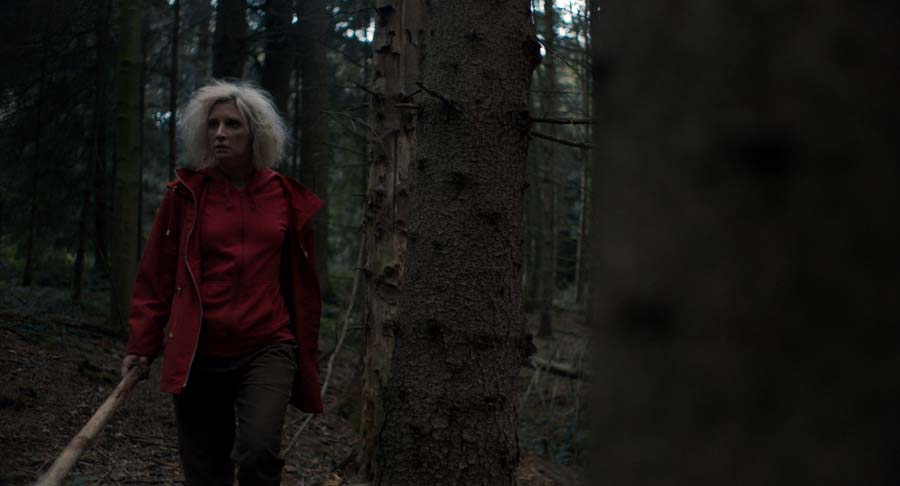
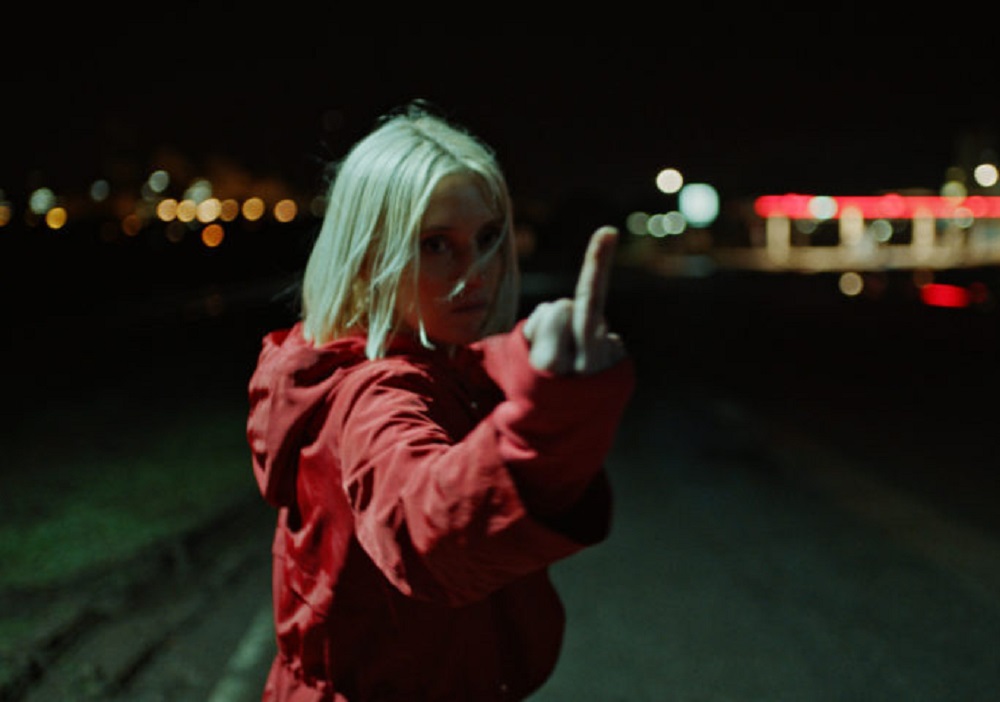
Amy Adams became a movie star playing a princess living in a land out of a fairytale, someone so “Enchanted” she could summon her forest creature friends to help her get through her day.
The English-language French thriller “Hunted?” Basically the same movie, with kidnapping, torture, bloody wounds and plot twists nuttier than anything in “The Disney Version.”
It’s a very violent woodlands parable from the co-director and screenwriter of “Persepolis,” Vincent Paronnaud. It’s a little bit “High Tension” and a lot “Alone,” with pieces of pretty much any woman-on-the-run from kidnappers movie tucked in.
Except that it’s a lot nuttier than that. It’s an escape-and-avenge fantasy that never quite settles on a tone, and never quite matches the over-the-top third act laughs to the eye-rolling opening acts, all of it bathed in bloody violence.
When wild boars, a snake, an elk, a crow and others conspire to help our damsel in distress, on the run from guys with duct tape, a camcorder, Viagra, a taser and box cutters, you have to appreciate the novelty, even if removing the animal touches would make it utterly conventional and very grim going.
“Hunted” begins with a woman telling a story (animated, with live action human silhouettes) of “the wolf girl” and “the song of the forest.” Sometimes, the forest and its creatures rise up to defend the innocent is the moral of that story.
Eve, played by Lucie Debay (“Melody”) is a Belgian English-speaking construction supervisor out in the countryside on a job. A simple drink in a bar, rebuffing one pick-up, charmed into another, turns deadly serious when the hunk who “rescued” her (Arieh Worthalter of Neflix’s “The Take”) turns their back-seat sexcapade into a kidnapping, complete with a weakest-link accomplice (Ciaran O’Brien).
“What’s happening here? Where are we going?”
Her protests seem to have talked her out of a jam, but no. Next thing we know, she’s in the old BMW’s trunk, taped and tied. As I said, they’ve come equipped for murder.
But on the drive into the woods, nature grasps her plight and she finds herself with a fighting chance.
“Hunted” flirts with torture porn, and the run of the mill elements to the script — the accomplice, cell phones aren’t your salvation, they’re what give your position away — are a drag on it for entirely too long.
The whole Helped by Nature gimmick isn’t as interesting as it sounds, but it does underscore Eve’s sylvan transformation from bullied office worker to feral fury of the forest. And the more feral Eve gets, the more fun “Hunted” becomes.
Debay is fierce in this, the villains are venal and the framing device — animated — is stylish and smart.
But the half-hearted lean into “jokey” means that “Hunted” never gets under your skin and transitions into a visceral experience. “Alone,” which came out this fall, was better at that, and even more savage.
“Hunted” is far too “enchanted” to ever manage that.

MPA Rating: unrated, graphic violence
Cast: Lucie Debay, Arieh Worthalter, Ciaran O’Brien
Credits: Directed by Vincent Paronnaud, script by Vincent Paronnaud, Léa Pernollet. A Shudder release.
Running time: 1:27
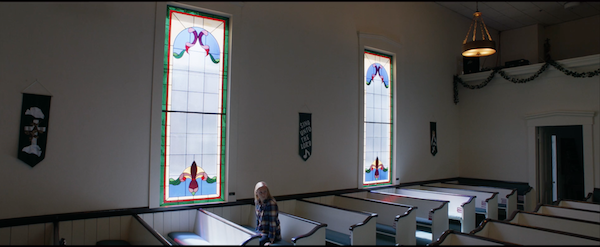
“The Wake of Light” is a dreamy, reflective movie, something of an interior monologue delivered by a stoic loner living out her limited life in a small town in the Southwest.
It’s built on lots of solitary (mostly) walks through the scenery of Sutter Creek, California by our rather colorless, closed-off heroine. For all that walking and (again mostly) interior talking, the tale is a relatively short journey, from insulated and trapped to a little bit less so. Which is a roundabout way of calling it “dull.”
Filmmaker Renji Philip returns to his longtime muse, Rome Brooks (“Cheesecake Caserole”) for this forlorn tale of loss that’s led to a life of limited risks.
Mary tends to her stroke-victim father (William Lige Morton), visits the well pump behind the family homestead and fills bottles with the crisp water that comes out. She puts a candy cane colored straw in each, loads up a tray and makes her rounds through town, selling the bottles, picking up the empties from supportive stores along the way.
She doesn’t chat with anyone much, save for the special needs kid Russell (Tyler Steelman). Even after she meets the needy/pushy traveling stranger (Matt Bush of “The Goldbergs”) she’s hard-pressed to keep a conversation going.
He talks and talks, imposes his company on her, ignoring her social signals, her “I can’t” and “I need to go now” and later “You should leave.”
Cole goes on and on, and we pick up that he’s from Danville, Va. (“Mostly rednecks and hillbillies.”) and on his way to Grand Flats, Utah, that his Honda Civic broke down on the edge of town, that he’s staying in it as he criss-crosses the country, seeing the sites.
He follows her as she makes her rounds and finally figures out a way to ingratiate himself into her world. One little repair job at her house, and he’s joining her and her silent-dad for dinner. And eventually, this woman who’s never been anywhere takes his reaching-out seriously enough to want to show him her “favorite place.”
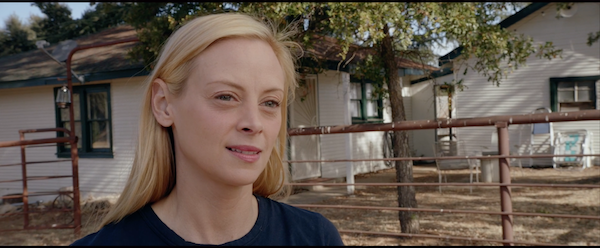

There’s little chemistry between the leads, which is somewhat by design. He’s interested, and she’s more into the solitude.
And there’s very little that happens here, just Mary narrating prayers in this place where nature can give you a sensitivity to the spiritual.
“If you’re real, show me how to find you.”
“Wake” isn’t entirely plotless, but what plot points there are don’t reach out and grab you, and don’t really reward you for meeting the movie more than halfway. What few incidents there are play as predictable and drab.
But if you’re into musing about the ethereal with an immaculately put together but uninteresting character as she sits in the sun, runs her fingers over tree bark or walks in the surf, have at it.
MPA Rating: unrated
Cast: Rome Brooks, Matt Bush, William Lige Morton, Tyler Steelman and Sandra Seeling.
Credits: Scripted and directed by Renji Philip. An Axis Pacific Filmworks release.
Running time: 1:19

Oh the horrors of a horror film that’s not the least bit horrifying.
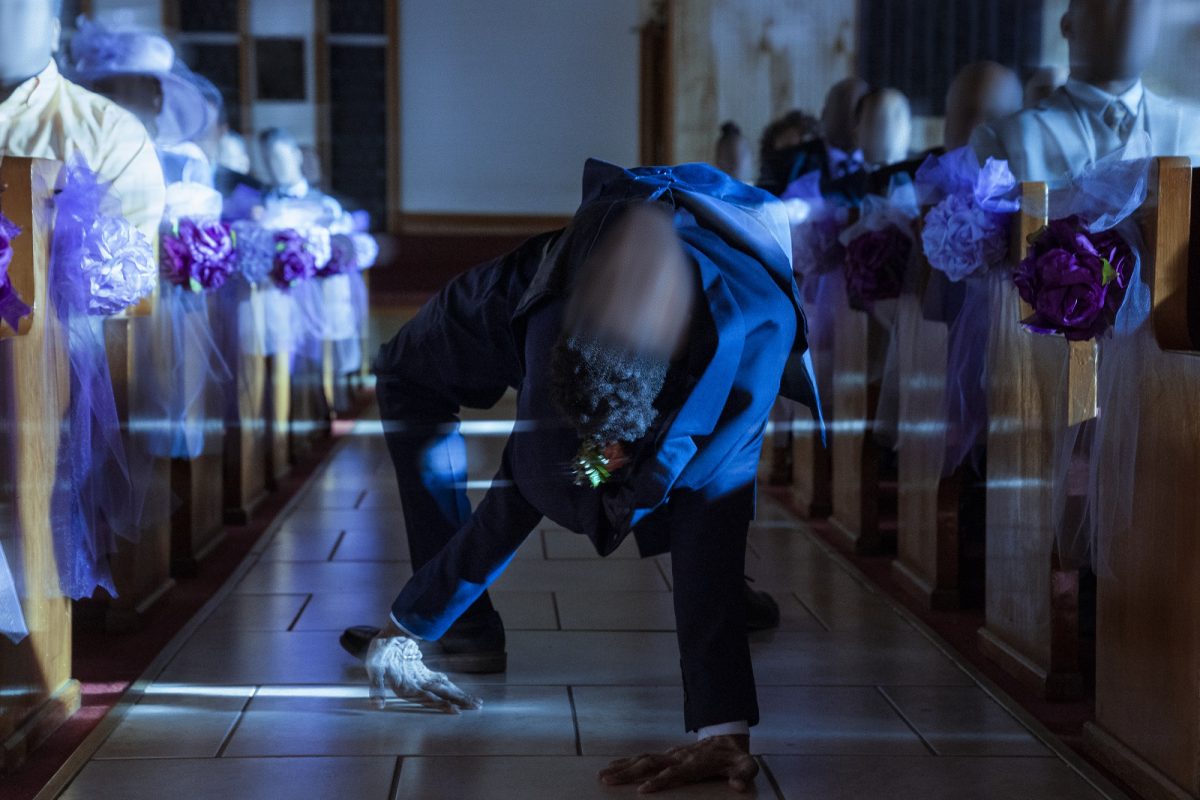
“Black Box” is pitched as a paranoid thriller, a sort of supernatural twist “Get Out” built on that over-used horror effect, the inverted human crab (seen above).
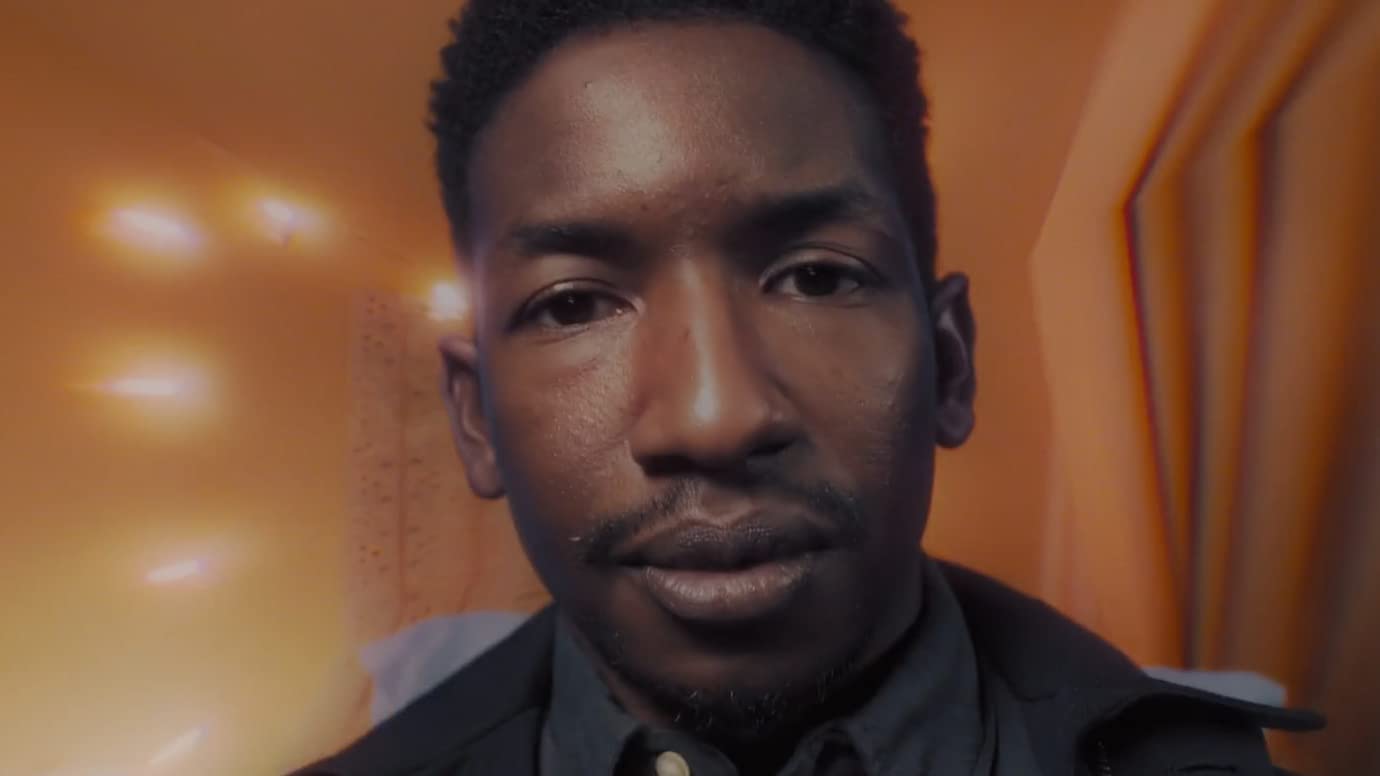
Hanging on an uneven (he gets better) lead performance by Mamoudou Athie (“Underwater,” “The Circle”), it gives away its secrets early and fails utterly at several thriller basics — “suspense” being paramount on that list for this Blumhouse (Amazon) bomb.
Athie stars as Nolan, a man we meet as he and wife (Najah Bradley) are cooing over their newborn.
Then he wakes up, sensing that he’s being choked out of his dream. And his little girl (Amanda Christine) is nagging him to eat his breakfast and get a move on.
His hand is bandaged, and in a moment or two, we see the hole in the wall of their Houston house. He has to be reminded of everything he has to do today — get Ava to school, job interview, “smile” when has that interview, pick Ava up, etc.
Nolan has suffered trauma. He’s being pitched “cognitive research” studies by phone. His doctor friend (Tosin Morohunfola) can give him a little help. But Nolan is lost.
He’s had a car wreck. His wife was killed. He’s lost his memories.
And he keeps having these nightmares, faceless forms attacking, choking, menacing him.
It’s only when he relents to these “studies” by a specialist (Phylicia Rashad) and her new gadget, which for purposes of the title and whatever double meaning you want to add, is called a “Black Box.”
“It’ll feel real,” she assures him. Just remember your mantra, “I run my mind, it doesn’t run me.”
Houston filmmaker Emmanuel Osei-Kuffour gives us a generic VR vision of Nolan and his dreams, which Dr. Brooks (Rashad) says she can insert memory-jarring prompts into, “bringing you back.” Worth a try.
Or…IS it? Yes, this is where he gets the faceless “crabs.”
Athie is a competent leading man, registering confusion and frustration (lashing out), but failing to make much of an impression as he does. In his character’s passive guise, he practically fades into the background, even in scenes where he’s the only human present. Underreacting to the extraordinary, taking the “confused” thing to such a degree that we wonder how much longer this eight year old’s going to be able to take care of him.
And yes, the kid upstages him.
The lack of suspense lowers the stakes, even as we figure out the mystery and shrug off the jeopardy facing all involved.
Rashad is believable, but her performance just isn’t big enough to raise the stakes and generate urgency.
And the pathos of this lost soul asserting himself and reclaiming his identity, the larger point here, is as emotional as an actor having his first read through of an appliance manual.
The tone and intent are here, but the execution of what goes on in and is caused by this “Black Box” is so lacking that it doesn’t deliver on any of its promises.
MPA Rating: unrated, violence, profanity
Cast: Mamoudou Athie, Phylicia Rashad, Amanda Christine, Tosin Morohunfola
Credits: Directed by Emmanuel Osei-Kuffour, script by Emmanuel Osei-Kuffour and Stephen Herman. A Blumhouse film, an Amazon release.
Running time: 1:40

Old movie reviewing trick, comparing a movie to a mash-up of two earlier movies. It’s a shortcut, sure. But hey, I’m not too proud to lean on it.
The Romanian documentary “Acasă, My Home” is “Beasts of the Southern Wild” meets “The Wolfpack.” It’s about a family –a BIG Roma family — living off-the-grid in an undeveloped wetland pretty much in the middle of Bucharest, and what happens when these “natural” people and their feral kids are forced to join “civilization.”
Patriarch Gica and wife Niculina have been living a dry spot in the marshy Bucharest Delta for 18 years, making a life in an improvised piecemeal shack that looks like a ghetto yurt. They have nine children who raise themselves, more or less.
Dad doesn’t have any job other than ordering his two oldest sons, Vali and Rica, to do something with their siblings or go catch the fish that will feed them for dinner.
Mom bathes the ones too young to swim in the river, cooks the fish and when warned (“The social services are coming!”) sends Rica and Vali and the brood off into the reeds to hide out until the threat of government intervention has passed. Both parents have a temper (Gica drinks), but Mom is the one whose threats curdle the blood.
“If they come (to take her children), I will KILL them!”
The kids roam and swim, catch and torment wildlife (geese), fish and scavenge. They cough a lot, are ill-clad and probably ill-fed, if their missing-teeth parents are any indication.
But as Vali gets older, we can see him tiring of the burden these two louts have laid on him. And a brushfire, which they didn’t start, is just the latest way attention is cast on them and their primitive way of life.
The city wants to turn the wetlands into Văcărești Urban Park. And every time officials (police, school system employees, park planners) come through, the end to their way of life moves a step closer.
Gica is sure they’ll make him the ranger there, because “Nobody knows this place like I do.” But all he knows is what they can scavenge out of it, and even that he doesn’t know that well. His kids do that work for him.
Prince Charles comes for the groundbreaking (the kids dress up in their best track suits), and next thing you know, the entire family is moved — under vehement protest — and put “in the system.”


Radu Ciorniciuc has made a lovely looking film about a quite marginal — dirty and primal — way of living. Many Roma live in trailers and on society’s margins. This family seems less of a social burden than typical “Gypsy neighborhoods” have typically been regarded.
The endless fishing and hustling Vila has to do, the family’s decision to trap and slaughter one of their semi-feral pet pigs, the soundtrack of mewling infants and crying kids, it’s not something one instantly regards as “natural” and worth emulating.
And then they’re moved into housing, which they can’t keep clean, and children who’ve been romping through the water in summer and snow in winter are in school and learning, and in trouble when they’re out of school.
Fishing where fishing isn’t allowed, swimming beneath an underpass’s “No swimming allowed” signs, bickering with neighbors when their street play makes a racket or scratches parked cars — with their parents just sitting back and laughing at most of this — we look at the kids as a sociological experiment going wrong.
The adults? Poster parents for “sloth.”
They don’t want to hear that “You’re endangering the children’s lives” (in Romanian with English subtitles). They want the traditional freedom to do with them what they will.
Like the two films this resembles, it has its cringe-worthy moments. We wait on a child to drown, or get a barefoot cut that’s infected in the polluted water. But the one trip to the hospital feels anti-climactic.
Ciorniciuc may get his camera close, but you really do get the feeling that he’s taking in all this and looking it over at arm’s length. The “natural is better” message built into such stories doesn’t hold water as the government assistance barely tames them at all.
Still, it’s a fascinating peek into another way of living, urban Roma (“Gypsies”) who refuse to assimilate or accommodate, to look backward even as they’re steadfastly refusing to plan ahead.
MPA Rating: unrated, some profanity
Cast: Gica Enache, Vali Enache, Rica Enache, Niculina Nedelcu
Credits: Directed by Radu Ciorniciuc. A Zeitgeist/Kino Lorber release.
Running time: 1:25

 Movie Nation