The Ghost of Chadwick Boseman dominates SAG nominations, “Minari” and “5 Bloods” save Oscar chances

“Minari,” a solid Troubles on the Farm American immigrants saga breathlessly praised in some quarters, got a bit of love from the Screen Actors’ Guild, love denied it by the Golden Globes nomination announcement. So it’s back on the Oscar radar.

As is Spike Lee’s limp but “Let’s honor him for ‘BlackKklansman’ a year late” summer Netflix release “Da 5 Bloods.” Shut out in Globes nominations, this gave a shot in the arm with SAG recognition.

Films like “Promising Young Woman” and “Pieces of a Woman” got a further boost, the wretched “Hillbilly Elegy” got more Amy Adams endorsement.

“Ma Rainey” ensured that Chadwick Boseman is not forgotten. Acting and ensemble nominations for that and his work in “5 Bloods ”

https://variety.com/2021/film/news/sag-awards-nominations-chadwick-boseman-1234900584/amp/

Posted in Reviews, previews, profiles and movie news | Comments Off on The Ghost of Chadwick Boseman dominates SAG nominations, “Minari” and “5 Bloods” save Oscar chances

Movie Review: “PVT CHAT” is exactly what you think it is, only weirder

True confession here. When pressed for time, the only criteria I use to decide whether to review something pitched to me is that it comes from a distributor (and/or publicist) I know, and that the title is listed on Rotten Tomatoes (and certainly on Metacritic, too).

That’s a great way to stumble into something not suitable for every audience, something you might not want to watch in mixed company, screen on a notebook in a public space or what have you.

I mean, the title’s “PVT CHAT” and we ALL know what that implies. But when you don’t make a habit of reviewing porn, well #WhoKnew?

This little NYC indie has a limited cast, a pervy hook and a lot more clever touches and twists than I would expect. Given that I didn’t really have expectations, I mean.

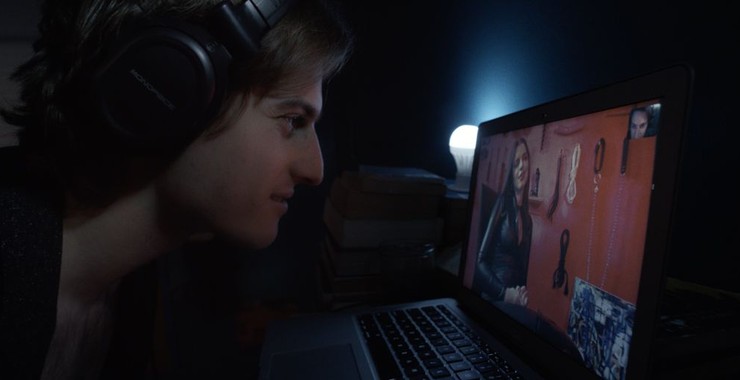
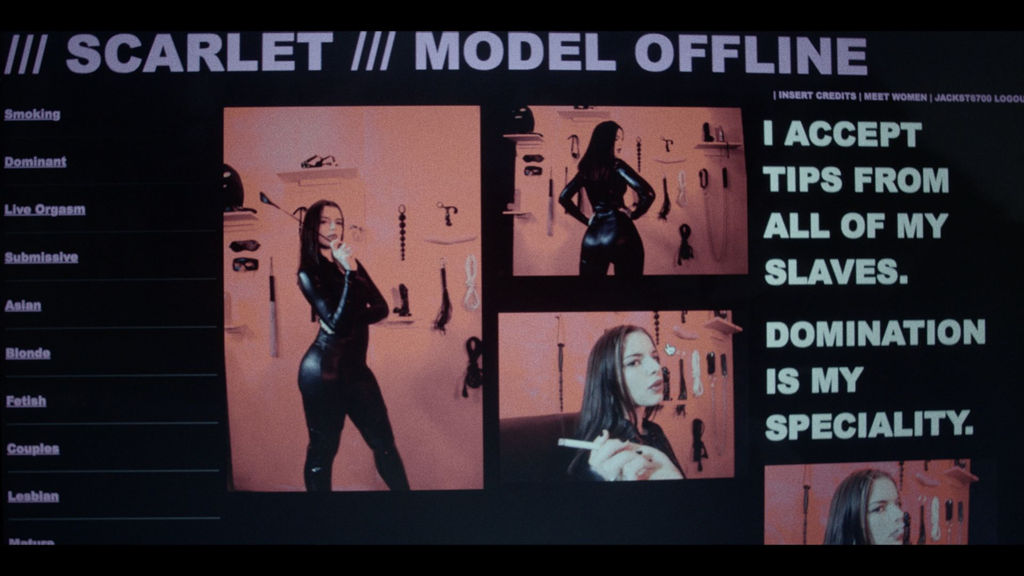
The characters begin as “types” — the lonely, hapless Incel who gambles online and burns his earnings on sex chat websites, and the voluptuous 20something dominatrix who may be smarter than her kittenish, Kardashian vocal fry lets on, but probably not.

Even the basic set-up, guy becomes obsessed with his favorite “dom girl” chat contractor, seems porn lazy and simplistic.

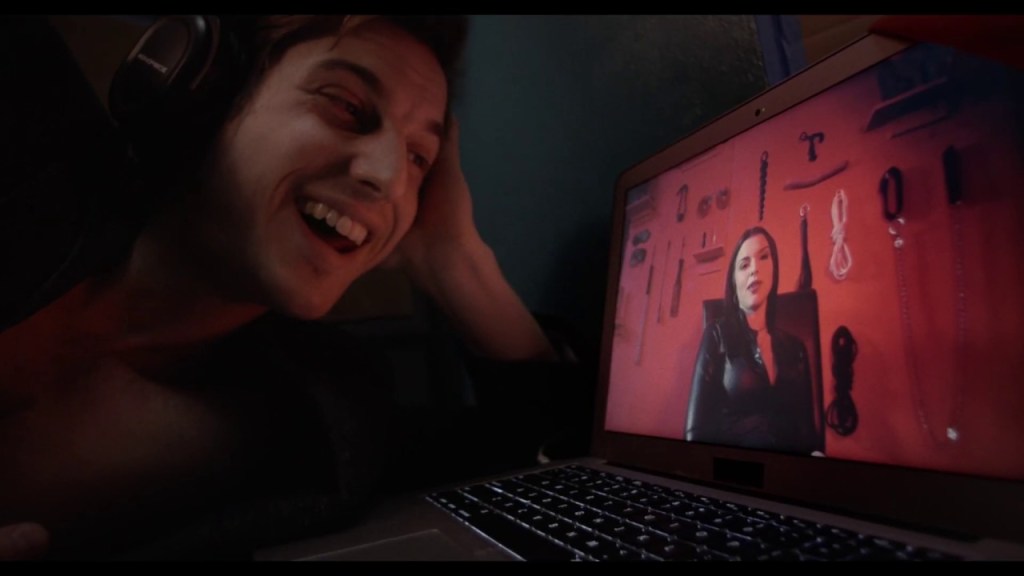
But over the course of 80some minutes, we get a taste of Jack’s exterior life and interior one. And the lady Scarlet? There’s more to her than zippers, dominatrix commands to “my slave” and blowing cigarette smoke at the screen to tease, torment and taunt Jack with.

“Lick it,” she commands him, meaning his computer screen. “LICK it!”

Jack (Peter Vack of TV’s “Love Life”) is a hipster-aged habitue’ of Manhattan’s Chinatown/Bowery corridor. In between video blackjack sessions, he walks the mean, wintry streets of the naked city in search of another ATM.

When he wins at blackjack, he starts burning through chat sessions. He’ll take whoever he can get online for a session, but Scarlet (Julia Fox of “Uncut Gems”) is his favorite. She drives him wild with desire, something the film goes to graphic lengths to underscore.

Things turn weird when lonely, needy, clingy and trying-too-hard Jack hits her with a question.

“What have you been doing since we last talked?” He’s insistent. “How much do I have to tip you to get you to drop the act and just talk?”

What are your hobbies, what are you thinking, he wants to know?

“You know what I’m thinking right now? I’m thinking you should tip me another $200!”

But they start to chat. Jack’s obsession grows as he gushes, entirely too much, about Scarlet’s art — her “real” passion, apparently.

Jack’s online addictions are thrown into sharper relief when we see that he wasn’t always like this and that he used to have a girlfriend, a video performance artist (Nikki Belfiglio) who does comically pretentious audience participation “happenings” and is still into Jack, apparently.

Scarlet has an offline life, too, one she lies about to maintain the illusion that she lives in San Francisco. Jack? He’s seen her in his local bodega, where he stocks up on the ramen noodles he subsists on.

The players make the characters just intriguing enough to hook us. But the story drifts away from these two when we learn of Scarlet’s private life “complications” — a would-be playwright boyfriend (Keith Poulson) — and Jack’s random encounter with a house painter (Kevin Moccia) whom he meets when he wakes up and the guy’s in his tiny apartment, painting it.

Painter Will and his even less interesting goombah pal (Buddy Duress) becomes fans of “Blackjack Jack,” as Jack claims other people call him. Jack’s made two new friends!

It’s just that Jack lies — a lot. Scarlet does, too. The fact that neither reveals her or his suspicions about the other suggests a genuine mystery might be unfolding here, some sort of cat-and-mouse game.

That element of the story is left under-developed. There are coherence problems as the story lurches into position to start its final act.

The explicit spanking-the-monkey/petting-the-cat nature of the “relationship” is what our writer-director is more interested in, in graphic detail. So if you’re into that…

The film was written and directed by Ben Hozie, and if it wasn’t for his IMDb page, I’d have zero confidence that is his real name.

He’s made an unconventionally conventional movie about connecting in the sexual Facetime era, one that’s more intriguing than it has any right to be, but less surprising than it needs to be, considering the down-and-dirty online sex hook Hozie wants to hang it on.

MPAA Rating: unrated, explicit sex, nudity

Cast: Julia Fox, Peter Vack 

Credits: Scripted by directed by Ben Hozie. A Dark Star release.

Running time: 1:26

Posted in Reviews, previews, profiles and movie news | Comments Off on Movie Review: “PVT CHAT” is exactly what you think it is, only weirder

Golden Globes takes heat for turning a blind eye to an epic year for African American Film and TV

Reading Twitter’s reaction to the Golden Globe nominations announced yesterday, a few takes stood out — things beyond the usual “What do those foreign-accented liquor distributors and diner-owners know about good film/TV?” criticism.

“I May Destroy You” was Twittered up as a singularly grievous omission from the TV nominations. “Racism” was the answer I saw fans and film folk involved in the show coming up with. That seems entirely within the realm of possibility.

But as cluttered as the TV/streaming scene is now, I’d almost cut them slack for that. Too many choices, a widely split voting bloc, it could slip through the cracks.

The best things I saw on TV last year included “Mrs. America,” “The Good Lord Bird,” and a couple of others I saw omitted or mostly-passed-over. And yet they went for Hulu’s gaudy, stumbling and drawn-out “The Great.” “Queen’s Gambit” was good, and certainly has the hype to warrant being nominated. Anya Taylor-Joy’s status as new Brit “IT girl” is secured.

“Ted Lasso?” Come now.

When you look at the head-scratching field for movies — best picture (drama and “musical or comedy” categories) — making the case that “racism” maybe did play a role in which members got around to watching and endorsing which films and shows gets even trickier.

A couple of acting nominations for “Ma Rainey’s Black Bottom” for Viola Davis and Chadwick Boseman, a Regina King “best director” nomination for “One Night in Miami…” a deserved Daniel Kaluuya nod for actor in “Judas and the Black Messiah,” an out-of-the-blue nomination for Andra Day in “The United States vs. Billie Holiday” all point to an electorate that at least got to all the pertinent African American films of last year.

Spike Lee’s “Da 5 Bloods,” pushed by critics’ groups and the American Film Institute, was left out and I thought deservedly so. It’s like the fifth best African American-directed feature of the year and a huge “Treasure of Sierra Madre” sized fall-off from the heights of “BlackKklansman.”

But I would have surely thought “Ma Rainey” would earn a best picture nod, and maybe one for “Judas and the Black Messiah.” George Wolfe’s directing expertise was a great boost to “Ma Rainey.” Ms. King’s directing debut (“Miami”) struck me as pedestrian in comparison.

Looking at the playing field, unsettled with the collapse of theatrical exhibition during the pandemic, the Hollywood Foreign Press was facing a daunting task, getting to hundreds of streaming film titles and hundreds more new series.

Netflix’s “Mank” got more than its share of attention — FAR more than it deserved, in my opinion.

But when you remember “Emma.,” got around to considering the formidable “Pieces of a Woman” (Vanessa Kirby got an actress nomination), gave “Nomadland” its due and singled out Carey Mulligan and her movie, “Promising Young Woman,” you’re skating on the creme de la creme. Defensible choices, selected by allegedly secret ballot, all up and down the line.

Lee’s movie and its cast were passed over. But Hulu’s “U.S. vs. Billie Holiday” seemed an awards season outlier, until now. The Globes giveth and taketh…

Also, while I would’ve leaned more heavily into “Ma Rainey” than “Mank,” the “snubs” seem a lot less egregious when you consider how scattered the hype and “momentum” of this year’s “awards season” contenders was going to be, with a global pandemic altering everything from release schedules and buzz, and muzzling the over-ballyhooed pre-Oscars awards buzz.

AFI’s list, the deservedly-lost in the shuffle NY critics and National Board of Review and Gotham hype, little of that seems to be having its usual impact. Maybe we’re headed towards a more surprising Oscar field and Oscar night than usual.

Posted in Reviews, previews, profiles and movie news | Comments Off on Golden Globes takes heat for turning a blind eye to an epic year for African American Film and TV

Movie Preview: A Spielberg gets mixed up in horror — “Honeydew”

Sawyer Spielberg co-stars, with Malin Barr, in this mid-March horror tale from Dark Star. Yes, Sawyer is son of Steven and Kate Capshaw, an actor with not a lot of credits…yet.

A young couple seeks shelter with the WRONG farmer in this one.

Posted in Reviews, previews, profiles and movie news | Comments Off on Movie Preview: A Spielberg gets mixed up in horror — “Honeydew”

Movie Review: “Son of the South” tries hard not to whitewash the Civil Rights Movement, and fails

It’s nigh on impossible to make a film that tells the story of the Civil Rights Movement through a white character’s eyes any more. We’re a very long way from the days of a “Mississippi Burning” treatment of this subject.

The very best you could hope for in telling this story through white “eyes on the prize” is dismissal, or well-earned accusations of “cultural appropriation” from the culture at large. Even if Spike Lee’s listed as a such a film’s producer.

That’s a barrier the folks who made “Son of the South” never cleared. This well-intentioned but often patronizing biography is about an Alabama white man who was one of the early organizers of the Students Non-violent Coordinating Committee, the young people who started the Freedom Riders project and were in the front ranks of the later Freedom Summer.

Bob Zellner was a real hero of the movement, the grandson of a top man in the Alabama Ku Klux Klan and son of a former Klansman turned liberal Methodist preacher who found his life’s work and passion in the idealism of people struggling for racial equality.

But in telling his story and the larger saga he was a part of, “Son of the South” goes for “cute” and keeps the most important figures in this grassroots effort to break the stranglehold white supremacy had on America on the periphery.

There’s good stuff here, and Zellner is worth remembering. But the movie’s virtues are lost in too many cringe-worthy moments.

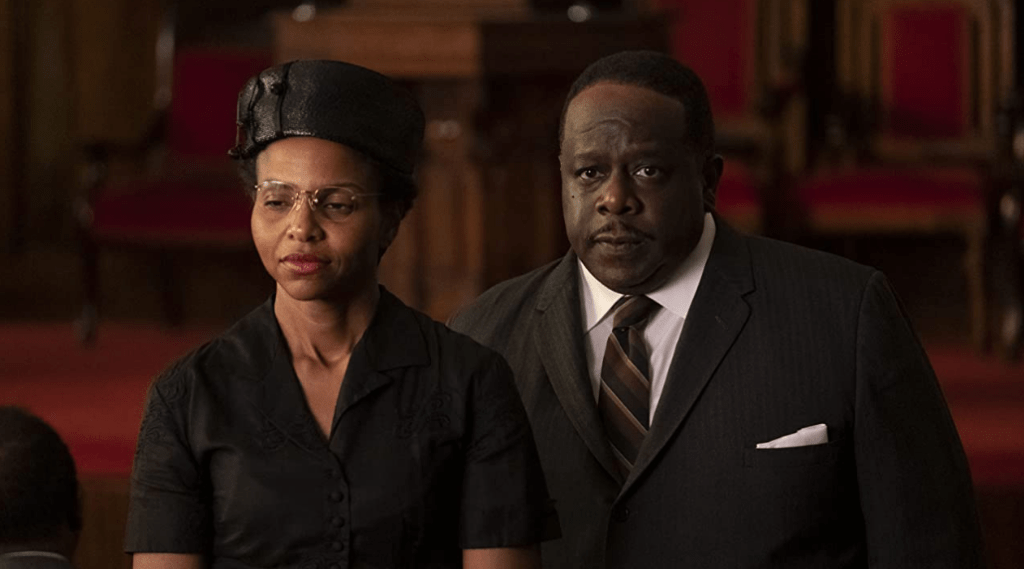
In 1960 Montgomery, Zellner (Lucas Till, the new “MacGuyver”) first gains notice for upsetting the powers that be at local Huntingdon College by leading his class assigned to write about “the race problem” into sermons and rallies led by the Rev. Ralph Abernathy (Cedric the Entertainer, quite good) and Civil Rights icon Rosa Parks (Sharonne Lanier).

Early scenes featuring those two are the best things about “Sons of the South.” Writer-director Barry Alexander Brown, Spike Lee’s longtime editor, ensures that Abernathy has both a stoicism for the long road ahead and an open-minded compassion about what it will take to walk it. And Lanier’s Parks is a woman of agency, not the passive “She was just tired and didn’t want to give up her seat” reluctant heroine of myth. Parks, like John Lewis (Dexter Darden), was looking for some “good trouble” when she made a protest that launched the Montgomery Bus Boycott and changed America.

Seeing Lanier’s turn in this role reminds us that Rosa Parks should get her own biopic.

Zellner is depicted as a blend of curious and contrary. He takes an interest in the cause, even if he’s willing to leave it at just “an interest,” largely at the insistence of his “our-lives-are-all-planned-out” fiance (Lucy Hale). But the contrarian in him bristles at the threats from the college and the KKK.

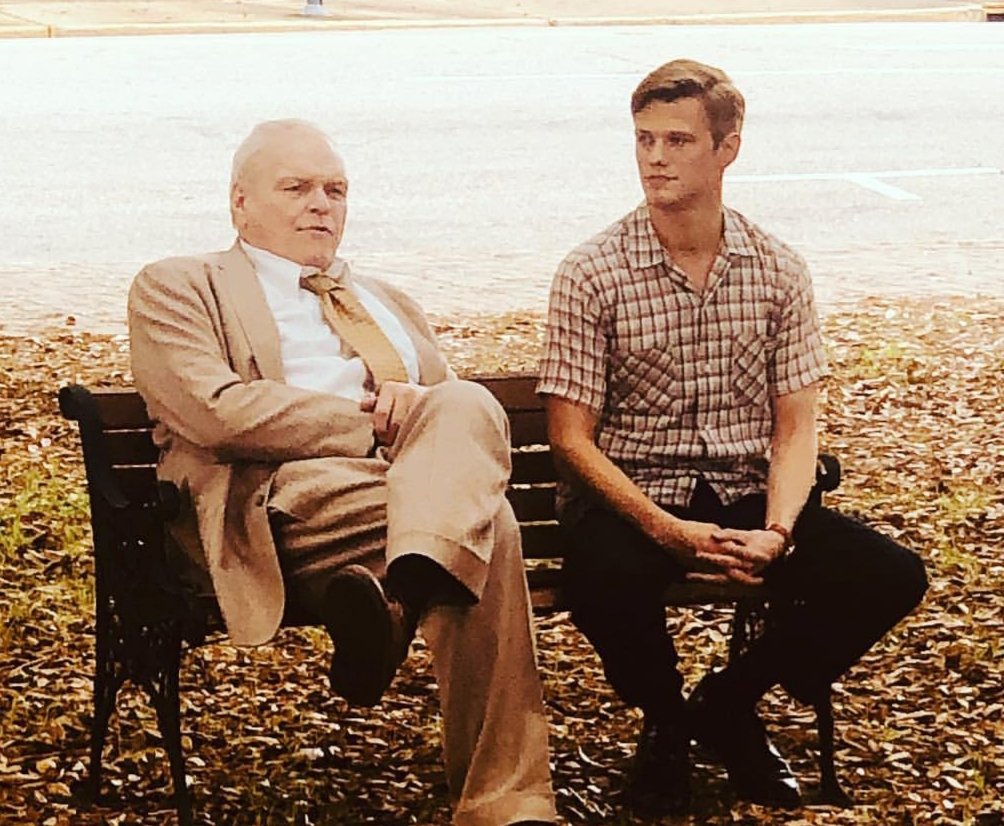
And when his Birmingham bigot Grand Dragon Grandpa (Brian Dennehy) shows up, all the cross-burnings in the world aren’t changing the kid’s mind.

Parks warning him that “taking no side is taking a side” in this struggle is something Zellner takes to heart. Eventually. First he’s got to maintain his “get along to get along” stance with his racist peers, hear out Grandpa’s “call a spade a spade” lectures and see for himself the mob violence when the Freedom Riders, integrating interstate bus travel, arrive in Montgomery.

Brown makes this scene as savage and bloody as the real thing. And it’s a crying shame that this is where “Son of the South” starts to go seriously wrong. Till’s Zellner arrying a beautiful, injured Black college professor (Lex Scott Davis) to safety, even if it really happened, makes for cringe-worthy optics.

Building a romance out of that (even if true), this accomplished, five-language speaking Paris-educated Fisk University professor taken by the pretty, blondish Alabama undergrad? Come on.

Everything that follows, including Bob’s near murder by “traitor to your race” types, staggers under that (afterthought) romance and other cutesy touches. Bob, answering the phones for SNCC in Atlanta, learns about this culture he’s intent on helping through “Jet” and “Ebony,” and has to unlearn “Nigra” and learn to pronounce “Negro.” And he gets more direct threats from his own grandfather, all moments that make you wince as they unfold.

It’s not that the performances are incompetent. The script is alarmingly tone-deaf.

Producer Spike Lee couldn’t warn Brown away from the mines in this minefield of a movie about a “white savior” saving the huddled Black masses in the Deep South?

Even the real Zellner, depicted as recognizing his “white privilege” long before that term entered public use, must have seen how clumsily this plays.

And yet for all that, the entire enterprise might have come off had they played up the African American mentors who took the man on and not rendered them — to a one — bit players in an American saga they authored.

MPAA Rating: PG-13 for strong racial slurs and violence throughout, and thematic elements

Cast: Lucas Till, Lex Scott Davis, Lucy Hale, Sharonne Lanier, Dexter Darden, Chaka Foreman, Brian Dennehy, Julia Ormond and Cedric the Entertainer.

Credits: Scripted and directed by Barry Alexander Brown, based on the memoir by Bob Zellner. A Vertical release.

Running time: 1:45

Posted in Reviews, previews, profiles and movie news | 2 Comments

Is Christopher Nolan’s divorce from Warners final?

The rift that started when Warner Brothers had to rethink distribution last year thanks to the pandemic seems terminal, to some. A “divorce” is in the works. Or is it?

Christopher Nolan can’t really blame “Tenet” bombing on Warners can he?

The studio, famous for much of its history for giving filmmakers a nearly free hand to create, from Kubrick to Nolan, got a thorough chewing-out from Nolan after “Tenet” came out and WB had to rethink things. He seems to have expected he’d be consulted before his home studio moved its release slate to HBO Max.

The theatrical release of “Tenet” seemed to make Warners’ point for it.

But Nolan wasn’t hearing it. I am mystified that he hasn’t cooled off since. All the talk now is where he’ll land.

Netflix gives filmmakers free rein and big budgets. Disney is a bigger player than ever thanks to Disney Plus.

But neither of those offers the prestige of Warners. Does he want his movies to be uh, Netflix “events?”

I, for one, cannot imagine the larger-than-life experience of his best films — “Dunkirk,” “Inception” — as TV-sized cinema.

This seems a shame.

Posted in Reviews, previews, profiles and movie news | 3 Comments

Documentary Review: “Mayor” finds Irony and Hope in the heart of Occupied Palestine

The mayor walks the few blocks from his home to work, stopped several times along the way by constituents at the start of his day.

“What can I do for you?” he asks, pressing the flesh and reinforcing what Tip O’Neill always said — “All politics is local.”

Those who shout out from shops, car windows or stop him on the street just want to say “Hi,” and seem thrilled just to meet The Mayor.

At his spacious office with a view from a sleek new City Hall, “Mayor Musa” (Habib) sits through meetings about “our city’s brand” and what they should name the fancy new city-center fountain. A tour of a restored school is where he listens to gripes about doors that don’t quite fit, and promises to see to it. As he walks neighborhoods like Old Town, he micromanages the managers running renovation projects, lecturing them on property rights and picking spots he’d like to see a bench or two placed.

It doesn’t matter if he’s running late. He’s sure to be arm-twisted into staying in the neighborhood for a community luncheon.

But as we watch David Osit’s documentary “Mayor,” we see a public figure who is sweating the little things because the big things are all but off limits to him. This is Ramallah, a mostly-Christian city in the Israeli-occupied Palestinian West Bank, capital of the Palestinian Authority.

Mayor Musa is an international figure, locally popular and when we meet him, freshly-reelected. But as he has to remind a helpful German “fact finding” delegation that’s shown up to counsel unending patience to a city, a people and a region chafing under over 50 years of occupation, “I could be stripped, in front of everyone, by a 16 year-old Israeli soldier” just because the soldier demands it.

Habib, the embodiment of cool, friendly “dignity” is, like every citizen of his city, subject to the whims of an invading army that shows up at any provocation, surrounded on hills in every direction by fortified Jewish “settlements” aimed at making permanent Israel’s claim to the West Bank.

“Mayor” follows Mayor Musa through days of diplomacy, planning, and tidying up a busy city which can boast of alluring shopping districts, enterprising cafe and shop owners and a Popeye’s Chicken franchise, one of many Western businesses that have planted roots there.

He keeps his cool under the deluge of petty details — City Hall’s cable hasn’t been hooked up, no newspapers have been delivered, and his repeated pleas for “a radio, so I can hear the news,” are buck-passed and ignored.

And then “that clown Trump” declares Jerusalem the capital of Israel and that he’s moving the U.S. Embassy to that multi-religion/multi-state and iconic West Bank city. All hell breaks look.

Mayor Musa must try to keep the peace, or at least bear witness to massive shows of force from the Israeli Defense Forces. He and his various subordinates remind each other and foreign dignitaries that they have no control over their borders or even their own sewage treatment and trash disposal. Israel closes off such cities whenever the Netanyahu government feels the need to flex its muscles. Sewage backs up, trash piles up and unruly citizens set fires in protest.

The suit-and-tie imperturbable Habib zips from hot spot to hot spot, literally putting out fires and chewing on those who might have set them, listening to complaints of Israeli “settlers” burning olive groves and polluting drinking water, taking his case to countries where he’s invited to speak and showing a face of reasonable defiance to Israel and the world when the need arises.

Osit (“Building Babel,” “Thank You for Playing”) has an eye for the ironic in this portrait of a polished modern politician trapped in an untenable situation. The picayune things that Mayor Musa throws himself into earn eye rolls from the mayor itself.

“Naming a fountain” is fine. But how can we get a sewage treatment plant if it took 15 years to get Israeli permission to open a new cemetery?

That slick new city hall? The international community had to build it after a 2002 Israeli incursion demolished much of the city.

Osit’s film never bogs itself down with details, such as “Is there a tax base paying for these improvements, or are international handouts Ramallah’s bottom line?

Ramallah’s resemblance to Beirut in a cosmopolitan sense, “WeRamallah” branded as “the gateway to Palestine” (“Too political,” the Mayor warns.) can make the viewer fret over Musa Habib’s future, mayor of a Christian city trapped within a Muslim-majority “state” unified only in its opposition to Israeli apartheid. That’s “fragile” in the extreme.

David, “do the people of America know what happens here?” Habib asks the off-camera filmmaker at one point. Probably not.

As the post-“Jerusalem is Israel’s capital” fallout reaches its apex, we see Israeli soldiers chasing rock-throwing protestors to the city’s center, with the soldiers pausing to take selfies in front of the city’s spectacularly-lit Christmas tree. Mayor Musa can only join those videoing the troopers doing this and shake his head.

As he’s the sort of personable, passionate politician a lot of people can identity with, “Mayor” leaves us with the hope that his plans don’t come to nothing, and that with “that clown” out of Washington, maybe he’ll find a more sympathetic ear here. Maybe journalists will “discover” Ramallah in between Israeli raids and “the gateway to Palestine” can be showcased to its best advantage.

After all, Americans who see a city decorated with KFCs and Starbucks might find there’s more than one point of view about what is and should happen in this corner of the Middle East.

MPAA Rating: unrated, violence, profanity

Cast: Mayor Musa Habib, Prince William, others

Credits: Directed by David Ostit. A Film Movement release.

Running time: 1:29

Posted in Reviews, previews, profiles and movie news | Comments Off on Documentary Review: “Mayor” finds Irony and Hope in the heart of Occupied Palestine

Apple, NBC, HBO, Hulu and Amazon spend and spend “chasing Netflix

Every now and then, a series or movie breaks through on one of the non Netflix streamers and we remember, “Oh yeah, we have that choice, too.”

Last weekend it was a Justin Timber drama, “Palmer” that pointed the spotlight on Apple TV and drew a record number of eyeballs. A “Palm Springs” here, “Ted Lasso” or “Handmaid’s Tale” or Warner film premiering on Hulu or HBO or Amazon there doesn’t really dent the dominant streamer.

Disney + is making inroads, but is anybody else getting competitive without emptying their bank accounts?

Why didn’t Hulu or Amazon buy the new James Bond film before it goes stale on the shelf?

The Hollywood Reporter takes a look at the numbers and dollar signs involved in gaining parity.

https://www.hollywoodreporter.com/news/the-high-cost-of-chasing-netflix

Posted in Reviews, previews, profiles and movie news | Comments Off on Apple, NBC, HBO, Hulu and Amazon spend and spend “chasing Netflix

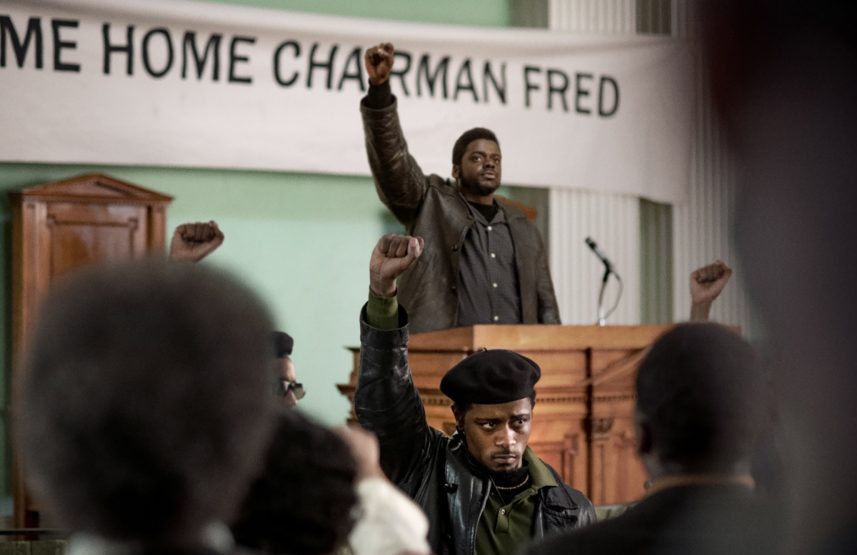
Movie Review: A gripping story of the Real Black Panthers — “Judas and the Black Messiah”

“Get Out” was Daniel Kaluuya‘s breakout film, a satiric, suspenseful horror blockbuster that generated a lot more discussion of its intensity, gimmick and twists than of its good performances.

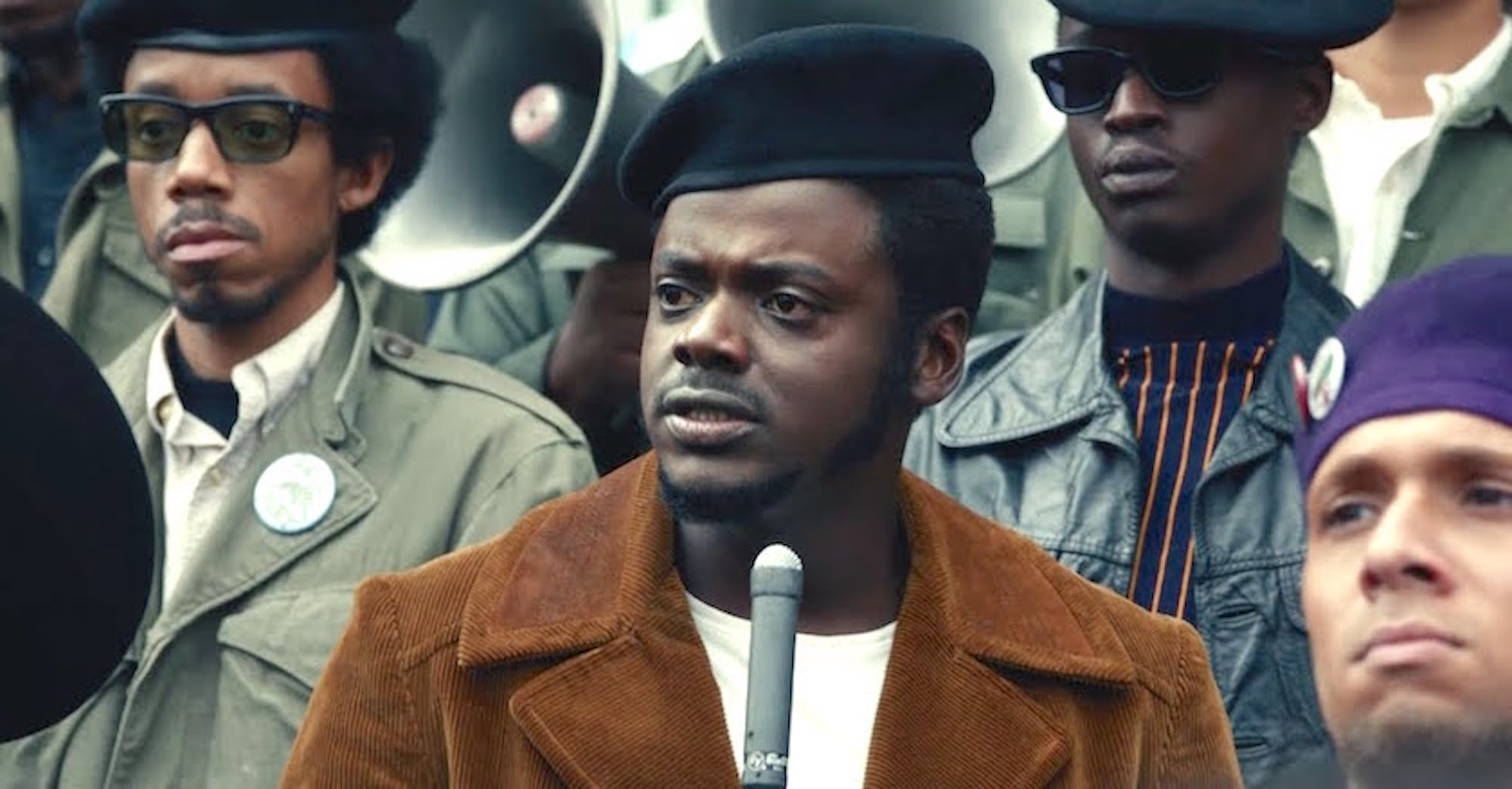
But taking on charismatic Black Panther recruiter, leader and born-politician Fred Hampton, the “Messiah” of “Judas and the Black Messiah” is a next level performance. The English-born Kaluuya scorches the screen with an undiluted blast of star power, a thrilling, moving portrayal of human dimensions in a larger-than-life scale.

He gives this account of Hampton’s life in the Black Panthers and that of the “Judas” FBI informant who betrayed him a magnetic presence at its center, an electrifying star turn that brings to vivid life a major figure in civil rights/civil disobedience history, something sorely-missed in the Malcolm X of “One Night in Miami.”

Director and co-writer Shaka King (TV’s “Shrill” and “People of Earth” episodes) seeks to turn this tale of civil rights martyrdom into a suspenseful story of out-of-control government paranoia and a cunning pawn who figures in FBI efforts to prevent J. Edgar Hoover’s late-life nightmare, that African America would produce “a
Black Messiah” who would unify the country behind an effort to redress racial, social, economic and judicial injustices visited upon his people.

That’s how Hoover (Martin Sheen, superbly sinister) put it in directing his subordinates, the (white) men in charge of watching Dr. Martin Luther King, Jr., Malcolm X and — once they were gone — Fred Hampton, party chairman of the Black Panther Party of Chicago.

Young, a charismatic off-the-cuff speaker and canny strategist, Hampton ran the Panthers’ chapter in what he called “the most segregated city in America,” Chicago, preaching “Rebellion is our only solution” and “Political power flows from the barrel of a gun.”

Militant? You bet. But the fact that he was presiding over a supplemental education system and pre-school breakfast program for Chicago’s underprivileged, his bravery and ability to meet with street gangs like The Crowns, the Puerto Rican Young Lords and even KKK-like white underclass Young Patriots in creating the first “rainbow coalition” made him all the more dangerous to the always-paranoid Hoover.

So when a bold car thief named Bill O’Neal, who used a fedora, trenchcoat and fake FBI badge to con Black men out of their Cutlasses, tumbles into the legal system, Agent Roy Mitchell (Jesse Plemons) is tasked with “turning” him, with a little leverage.

Car theft is a decent stretch in prison, but impersonating a Federal officer? Uh oh.

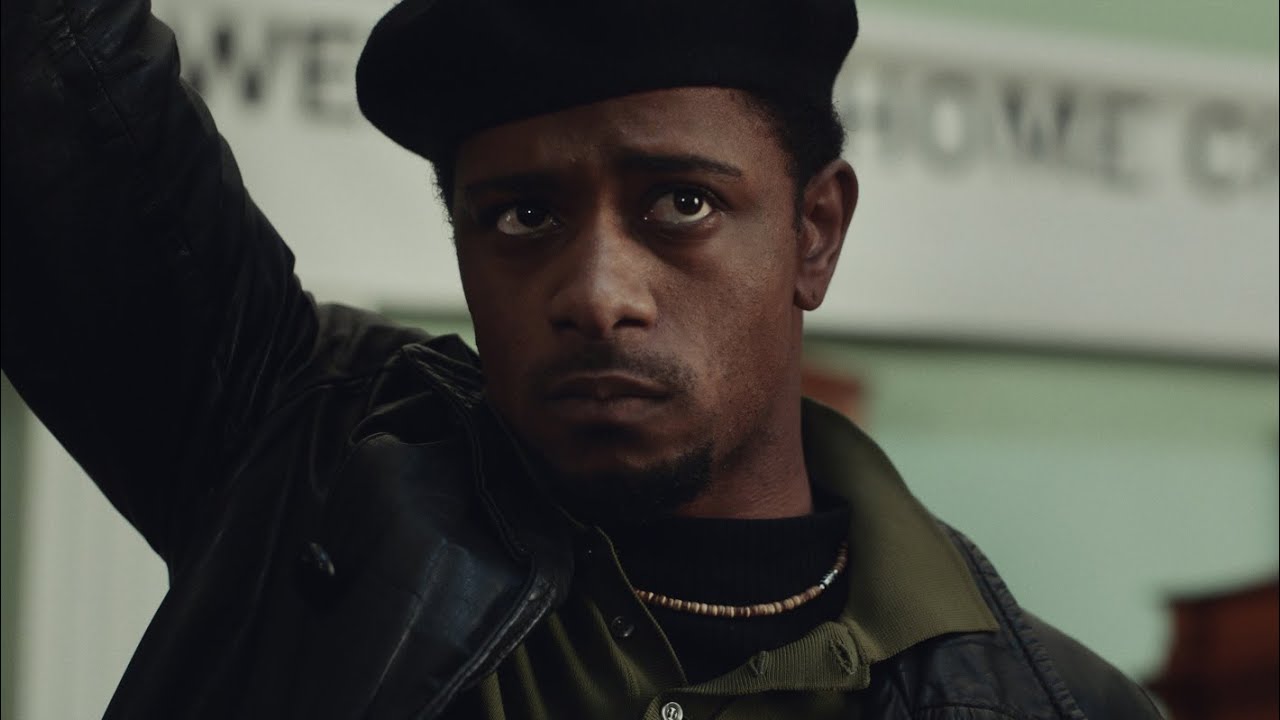
That’s how O’Neal, played by the simmering LaKeith Stanfield of “Knives Out!” and “Sorry to Bother You,” is arm-twisted into joining the Panthers in the late ’60s, ordered to make himself useful to the Party and ingratiate himself to Hampton.

“The Panthers and the Klan are one and the same,” Agent Mitchell purrs. Maybe O’Neal buys it, but it’s not like he had a choice. “Find out what they need,” he’s ordered.

“A car,” is his answer, so the Bureau gives him a Buick Wildcat. But as Bill, who has a reputation on the streets and fear of that catching up with him, tells them after the first tests Panther security puts him through, “They ain’t no terrorists. They’re terrorizing ME.”

“Judas and the Black Messiah” follows the two on their separate but destined-to-collide trajectories, Hampton organizing, drawing crowds and falling for a fan (Dominique Fishback), O’Neal trying to avoid discovery, to get paid for his tips and information, maybe even hoping to steer the Party clear of trouble with the Feds and the racist-by-right Chicago PD.

King stages tense meetings set up by Hampton and assorted groups which he wanted to ally with, or at least keep clear of Panther political activities. Kaluuya makes Hampton human by letting him show little flashes of nerves that the 20-21 year-old hides under swagger and “million dollar words,” and by letting him look like a man of his time.

No, almost nobody hit the gym back then — cops, Panthers or car thieves.

Stanfield plays O’Neal as a nervous opportunist whose constant side-eyes let us see his terror of being found out. He’s shifty and, at first, willing to follow orders. But he starts to question directives even if his middle man (Plemons’ Mitchell) dares not act on any flash of conscience.

King paints even the more dubious Panthers in a heroic light, which makes the explosions of violence — harassing, threatening and murdering cops met with counter-intimidation and firefights — more jarring. It’s hard to believe this really went on, with compliant news organizations sticking with the official law enforcement “version” of every flashpoint, arrest and shootout.

Event of the past year lend even more credence to the film’s point of view, that rhetoric was hurled at above-the-law police and Feds until it was obvious that wasn’t slowing town the targeting, arrests and worse.

If there’s a fault to the direction and screenplay, it’s the film’s frittering away too many suspenseful “Will they figure O’Neal out?” and “Will he cross the Feds and aide the Party?” moments, “leaving money on the table” as poker players put it. This is a good film that thanks to the impressive cast, flirts with greatness.

But in a banner year for African American representation in front of and behind the camera, King looks like a filmmaker who will get more trips to the plate, more chances to touch’em all. Stanfield is already a rising star and in-demand talent.

And after his Messianic turn here, Kaluuya’s star is in the ascent and his phone — if there’s any justice in Hollywood — has to be ringing off the hook. He lets us see what his contemporaries saw in Hampton, and he makes us wonder just who he might have become.

MPAA Rating: R for violence and pervasive language 

Cast: Laeith Stanfield, Daniel Kaluuya, Jesse Plemons, Dominique Fishback and Martin Sheen.

Credits: Directed by Shaka King, script by Will Berson and Shaka King. A Warner Brothers/HBO Max release.

Running time: 2:05

Posted in Reviews, previews, profiles and movie news | Comments Off on Movie Review: A gripping story of the Real Black Panthers — “Judas and the Black Messiah”

Movie Preview: Thomas Ian Nicholas has to deal with Mickey Rourke, Penelope Anne Miller, Sean Astin and Lou Diamond Phillips in “Adverse”

Feb. 12 in theaters, March VOD. Man, Mickey Rourke just looks less and less of this world, right?

Posted in Reviews, previews, profiles and movie news | Comments Off on Movie Preview: Thomas Ian Nicholas has to deal with Mickey Rourke, Penelope Anne Miller, Sean Astin and Lou Diamond Phillips in “Adverse”