Movie Review: A French prison break that involves “Hunting with Tigers (Tigres et Hyenes)”

“Hunting with Tigers” is a heist picture with two heists — one involving cars and motorcycles, the other a boat. The second heist is a prison break from a heavily-guarded courthouse.

The script checks-off the requisite boxes of the genre — “assembling the team,” “casing the joint,” procuring the vehicles and puzzling over possible double-crosses as “the kid” trains with firearms.

“If you keep up the Dalai Lama act, we’ll never get anywhere!”

Our anti-hero is troubled by flashbacks to the afternoon his life was saved as the man he owes a debt to mowed down mobsters to do that saving.

And “Tigers” is French, so we expect the action beats to pop, the editing and the acting to pull us into the plot and the sizzling chases and whatnot.

But it’s a bust. The build-up is desultory, the payoff laughably French. There’s nothing funnier than a shoot-out involving hundreds of rounds punctuated by a screenwritten cop shouting “Don’t shoot, they’re unarmed!” (in French, or dubbed) when the murderous villains run out of bullets and options.

The occasional flashy shot or trunk-lid cam race through Paris doesn’t make this thriller make more sense or even engage the viewer.

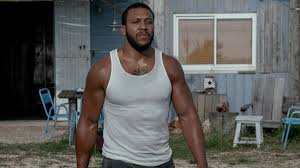
The handsome Waël Sersoub (“MILF”) stars as Malik, who dashes home from Spain in his BMW convertible to be by his mother’s side for his stepfather’s trial. Serge (Vincent Perez) was in a gang that attempted a heist that went wrong and turned deadly. Malik, we learn, is also working the illegal side of the tracks.

A more famous armed robber, Chérif (Omar Salim) is implicated in Serge’s plot. But his lawyer insists he’s being railroaded. That lawyer (Géraldine Nakache) summons Malik to her office witn an offer and a taunt.

He can “help” his stepdad by delivering a message, in Spain, to another gangster. That made man might be able to bust Serge and Chérif out. If Malik had his dad’s bravery and genes, she implies, he’d do it.

Besides, she knows what’s in those flashbacks Malik is having. He was a kid, got into a deadly jam and Serge got him out of it.

Malik meets Avi (Sofiane Zermani), who owes Chérif, and Avi adds older hardcase Ange (Olivier Martinez, whose credits go back to “The Horseman on the Roof” and “Unfaithful”) and reformed-crook turned sofa-salesman Azzedine (Samir Guesmi) to their gang.

Because Malik is now a lot more than an errand boy.

Their “payment” and financing for this will come after they pull off the robbery of an armed convoy delivering a mountain of kickback-cash to a soccer star’s agent. Once they do that, it’s on to court, where the trial of the several suspects is underway.

The first gambit makes (a little) more sense and has more action to it — hiding within an upscale Arab wedding party car convoy, then shutting down a busy tunnel. The second seems somewhat suicidal, only because it is. We can tell that even the screenwriters throw up their hands and shout “WhatEVER, they GET AWAY!” at several points.

There’s nobody to truly empathize with and fear for, as Malik is too passive to care about and other characters are even more thinly drawn. Still, he’s pretty enough to have a gorgeous girlfriend (Cassandra Cano) willing to stick with him through thick and thin. And maybe a cut of the cash.

French thrillers are generally closer to the cutting edge than whatever comes out of Hollywood. The coolest stuff we see in heist pictures from major American studios is often cadged from a recent French film, or directed by a Hollywood-hired French director.

Director and co-writer Jérémie Guez shows more flashes of competence than inspiration here. His film is slow and clunky, beginning with promise, ending with the last of a string of third act let-downs. Hollywood may wait a bit before luring him West, because he’s got to show us more than this.

Rating: TV-16, violence

Cast: Waël Sersoub, Géraldine Nakache, Sofiane Zermani, Samir Guesmi,Vincent Perez, Omar Salim, Cassandra Cano and Olivier Martinez

Credits: Directed by Jérémie Guez, scripted by
Jérémie Guez and Louis Lagayette. An MGM release on Amazon Prime.

Running time: 1:49

Posted in Reviews, previews, profiles and movie news | Tagged , , , , | Comments Off on Movie Review: A French prison break that involves “Hunting with Tigers (Tigres et Hyenes)”

Classic Film Review: Chaplin’s ode to a Dying Corner of Comedy — “Limelight”

Memory is a merciful thing when it comes movies. We remember the grand moments in films, the signature bits, and much of what’s less moving, entertaining or important just drifts away.

Charlie Chaplin had become Charles Chaplin long before “Limelight,” a grand old man (he was over 60) of silent and sound comedy, of vaudeville before that and of the English music halls which gave him his start and first taste of fame that was to grow until his was the most recognizable face and mustache in the world.

But he’d followed his father, a somewhat famous British singer and mimic, into those music halls. And he’d seen what changing tastes, declining status and obscurity did to show people. Crushed pride was the least of it, and alchoholism was often a consequence.

“Limelight” is a somber, sentimental and seriously old-fashioned melodrama, a lumbering, under-edited meander through the English music hall life of the early 20th century, when cinema first showed up to announce its eventual death.

But what we remember about it is the magic of the two greatest silent film comedians, Chaplin and Buster Keaton, sharing a few scenes late in the film, recreating a little of the earlier slapstick and mimed magic from their days treading the boards, living out of a trunk before the movies and Hollywood lured them West.

Chaplin’s movie is a literal relic, a far less edgy, dynamic and cinematic experience than “The Entertainer,” a blast of the new “kitchen sink realism” that scorched some of the same ground less than a decade later, and more sentimental and far less amusing than “Stan & Ollie,” the most recent film to reach back into that world.

The camera is anchored and static, with pristine, lifeless Hollywood backlots doubling for London streets, and mostly spare sets (and painted backdrops) for scenes often allowed to play out in a single long take.

That was a remarkable trait of Chaplin’s silent classics, as we see the clockwork comedy of a genius of the pratfall and near-pratfall dodge blows, gigantic machinery and automobiles and show off just how completely he’d mastered roller skates. But editing is what animates cinema, and “Limelight” only allows it when the star needed another take on that last bit, or decided a close-up is necessary.

He’d mercifully turn away from the hokey suicidal-dancer-who-won’t-dance plot to deliver entire music hall routines, corny songs, understated dances and dated monologues that preserve the institution he was celebrating — in amber.

But as the melodrama progresses and ballet-with-slapstick moves center stage, as the faded “star” Calvero’s “comeback” begins, “Limelight” livens up. By the time Keaton shows up we get why this picture, which earned plenty of indifferent reviews upon release, has come to be celebrated as Chaplin’s last “great” (almost) movie.

Calvero used to be a top-of-the-marquee “tramp act” in the music halls. We meet him drunk, having whiled away a night in his cups with his fellow unemployed old timers in 1914 London.

He smells gas upon finally making his way past the lock on his apartment house’s front door. And after elaborately checking his shoes to ensure he hasn’t stepped in something, spies a downstairs flat with towels stuffed under the door.

The gamine (Claire Bloom) has tried to kill herself — drinking poison, turning on the gas. Calvero rescues her, fetches a doctor and even talks the unsympathetic landlady (Marjorie Bennett) into letting her stay with him to recuperate, something the doctor ordered.

Thereza or “Terry” is broke, a dancer who can’t dance thanks to a bout of rheumatic fever. The doctor sets Calvero straight. She probably didn’t have rheumatic fever. This “can’t use my legs” thing is all in her head.

“Are you in pain?” Calvero asks. If not, “the rest is fantasy.”

It’s hopeless, she insists.

“Then live without hope. Live for the moment. There are still…wonderful moments!

He dreams of a stage collaboration between them, but once awake he has accept the honesty in her “No one would ever think you’re a comedian.” He’s not funny, not while sober, anyway.

His agent (Barry Bernard) insists his name is “poison” to theater bookers. But as Calvero reaches his low ebb, at least he’s encouraged Terry to begin anew. She joins a dance company, and her director (Hitchcock favorite Norman Lloyd) and the producer (Nigel Bruce, Watson to Basil Rathbone’s Sherlock Holmes) have a ballet in mind, a “harlequinade,” that requires clowns.

Maybe Terry knows someone? And if she freezes up before dancing onto the stage, he’ll be right there to slap her back into reality. (Ouch)

Chaplin’s direction seemed more and more old-fashioned and lackluster the longer he directed and the more the cinema “grew up” and grew more visually sophisticated around him. The best images are in his real-time treatment of the ballet, as he uses crane shots to show the silent, efficient bustle of scene-changes in a theater.

Chaplin won his only competitive Oscar as a very old man, as “Limelight” wasn’t properly released in the U.S. under Academy rules, and the Best Original Score Academy Award (1973) came to the film after its “official” L.A. release in 1972. “Terry’s Theme,” also known as “Eternally,” is one of the most recognizable melodies in screen score history.

His acting was always presentational, closer to mime than “Method.” But the performances surrounding him here are pretty good, with Bruce, Lloyd and other veterans in top form and relative-newcomer Bloom holding her own and Chaplin’s son Sydney Chaplin not bad as the composer/love-interest who might turn Terry’s head away from the elderly savior she’s “fallen in love” with (Um, ok).

The real magic here is where it always was, putting two legendary troupers together in a dressing room, on a music hall stage, performing shtick (not exactly hilarious). They remind us of the nerve and craft that it takes to do it and that while tastes in comedy change, old tramp comics never die. Not while there’s a film camera around to catch them at their peak.

Rating: “approved” (G)

Cast: Charles Chaplin, Claire Bloom, Nigel Bruce, Sydney Chaplin, Norman Lloyd and Buster Keaton

Credits: Scripted and directed by Charles Chaplin. A United Artists release on Tubi and other streamers.

Running time: 2:17

Posted in Reviews, previews, profiles and movie news | Tagged , , , , | Comments Off on Classic Film Review: Chaplin’s ode to a Dying Corner of Comedy — “Limelight”

Movie Review: When the End Comes, Survivalists rally around “Homestead”

By turns paranoid and pollyanna-ish, “Homestead” is a conservative Christian survivalist wish fulfillment fantasy about living through “The End.”

The studio that brought us the controversial “Sound of Freedom” serves up an almost bipolar picture packed with MAGA virtue signaling — gun fetishizing, “authority” defying, law-ignoring, a might-makes-right mindset fueled by Black Rifle Coffee, the unofficial brew of Jan. 6.

This theatrical-release pilot to an Angel Studios series covers the same ground that many a post-apocalyptic thriller before it does, leaning more into a “Trigger Effect” and “The Day After” debacle than anything brought on by zombies.

But I was reminded of “The Walking Dead” in the drab, soap operatic way this extraordinary situation — a “bomb” that exploded off California — leads to a normalizing of societal breakdown and bunker mentality. Just hole up in a compound with family and ex-military folks and the rich oligarch who “hired” them until the dust clears, FEMA shows up or, wettest wingnut dream of all, civilization has to be rebuilt along their ways of thinking and on their blood-lines.

No, it’s not helpful that this wingnut agitprop comes out mere weeks after the non-fiction thriller “The Order,” where an earlier generation of cultish “preppers” tried to trigger the sort of social collapse that “Homestead” whitewashes.

The Christian messaging that Angel Studios is famous for is almost an afterthought — a furtive blurt of prayer as a mother (Susan Misner) and her kids fleeing the West Coast abandon their car and steal a van at a mobbed gas station, “Why did we buy a Tesla?”

When the message becomes more overt later in the film — Christian compassion, “loaves and fishes” for the hungry, “Are we building an ark or a fortress?” By that time it’s as if the screenplay is trying to paint a TV preacher’s optimistic grin on the grimness that “preppers” figure they alone deserve to survive. As if anybody could “prep” their way out of this.

The Big Bang explodes off of Los Angeles, sending assorted families fleeing East, towards this “Homestead” mansion/compound in the heart of The Rockies. Billionaire (we assume) Ian Ross, played by veteran movie heavy Neal McDonough, bought and built and stocked it. There are vineyards and orchards and a garden and a granery.

Part of Ian’s prep was to hire a cadre of combat vets who convoy in via SUVs and military-decorated pick-ups. Bailey Chase hit the gym and grew the requisite stubble to play Jeff Erickson, tactically-trained leader and “realist.” Jeff’s brusque to the point of bullying, a guy who sees their weaknessness and envisons a stronghold that their arsenal and training others there, including his almost-rebellious son (Tyler Lofton), can defend.

Ian’s compassionate conservative wife (Dawn Oliveri) figures they can feed the starving masses outside their razor wire fences. Jeff’s combat-zone veteran wife (Army logistics?), Tara (Kearran Giovanni) is a pragmatist and a problem solver.

Not that Ian hasn’t thought of “everything.” Even his ecologically-minded daughter Claire (Olivia Sanabia) is wholly on board. They’re raising peaches for peach wine, as in olden times that was the safest, surest path to “preserving calories” — turn your harvest into alcoholic drinks.

But as matters quickly settle into an uneasy routine — hunkering down, keeping the gates closed and identifying possible threats (local authority) and rumors of FEMA salvation — “Homestead” grinds pretty much to a halt.

Screenwriters Jason Ross, Joseph Snyder, Leah Bateman and Philip Abraham don’t such much “build” this universe as “cast” this “ark.” They fall straight into the fallacy of men and women with “particular skills,” geared-up soldiers who are in less danger and are inherently less interesting in this scenario than ordinary souls hurled into chaos.

The Baumgartner clan (Jarret LeMaster and Ivey Lloyd Mitchell play the parents, Summer Sadie Mitchell is their teen daughter) are hurled into this nightmare under-“prepped,” “camping” at home, going on the run towards Homestead, connected by charity work they did with the Rosses at some point in the past.

That sort of story, fleeing and surviving on the run, has been covered in scores of earlier films for a reason. It’s just more dramatic and a lot more interesting.

The coup coffee caps and T-shirts aren’t the only identity politics flags flying around here. There’s California bashing, Utah-praising, ridiculous assertions about “militia” defeating National Guard units, a supernatural premonition, the conspiracy nut podcaster who takes to short wave radio to advise everybody to put their cash in “bullets and beans” and um, “crypto.”

Not sure how that will work when the POWER GRID that’s been strained by the electronic, digital Ponzi scheme is down with no prospect of coming back up. But that’s the Neverland we’re visiting here. Crypto will almost certainly cause the next Great Depression, and gun nuttiness is already killing thousands while cultists pray for the day when the social order is upended and they can live out some lawless modern Old West fantasy with themselves on top.

The acting isn’t awful and the production values are passable. McDonough makes a much better villain than anybody shoved into that sort of role here.

This is an origin story that lacks anything in the way of a “hook” to whet the viewer ‘s appetite for a series. Even the “Christianity” angle is soft-peddled.

We may be closer to WWIII or some other calamity that knocks American society off its feet, judging by the past incompetence of those about to take power. But you’ve got to shove more entertainment value in The End than this.

Because the “You were right to fill your bomb shelter with canned beans” crowd is a much smaller audience than the “child traffickers are EVERYwhere” fanbase on Angel Studios’ lone blockbuster.

Rating: PG-13, violence

Cast: Bailey Chase, Dawn Oliveri, Kearran Giovanni, Tyler Lofton, Susan Misner, Emmanuel McCord and Neal McDonough

Credits: Directed by Ben Smallbone, scripted by Jason Ross, Joseph Snyder, Leah Bateman and Philip Abraham, based on the TV series created by Jason Ross and Ben Kasica. An Angel Studios release.

Running time: 1:52

Posted in Reviews, previews, profiles and movie news | Tagged , , , , , , , , | Comments Off on Movie Review: When the End Comes, Survivalists rally around “Homestead”

Netflixable? Megan Fox, robotic in her “Subservience”

Saying Megan Fox is well cast as a robotic household “helper” in “Subservience” seems kind of mean. And one really should avoid using the phrase “human sex doll” in describing her role here, or her screen career in general.

“Subservience” is another attempt at a cringey, cautionary and harrowing account of the Future that Awaits Us, if we let AI run our lives.

The trouble with a century of such films, from “Metropolis” to the endless “Terminator” franchise to “Her” to “M3GAN,” is that we never listen. The AI singularity is upon us and we keep acting as if we’ve never “seen this movie before.”

Michael Morrone of the even cringier “365 Days” stars in “Subservience,” portraying a Colorado contractor facing mass robotic replacement of his high-rise building workforce, but who really needs help around the house and two kids after his wife (Madeline Zima) has a heart attack.

A “SIM” might be just the ticket.

Fox plays the short-skirted, fake-skin bombshell SIM who wins the job when she tracks down and cares for Nick’s wandering daughter (Matilda Firth) when she gets lost at the SIM shopping fare they visit to check out their replace-mommy-for-a-while options.

“Daddy, can we GET her? Pleeeeaaase!”

“Alice” they name their SIM, after “Alice in Wonderland.”

She is “strong, obedient, and I have no desires outside of fulfilling yours.”

Is she still talking about “cooking, cleaning and childcare,” though?

As wife Maggie awaits a heart transplant, Alice with the simulated heartbeat finds way to “look after” Nick, every day and in every way, in case “the worst happens,” something Maggie foolishly tasks her with doing. Looking like Megan Fox and as programmed to be as compliant as a sex worker, we know where that’s going.

The Will Honley/April Maguire script does zero intellectual heavy lifting as it touches on common fears of machine “replacement” of wait staff and other blue collar workers, and of caregivers and homemakers.

I’d no sooner muttered “Why are their AI in-home housekeeping robots but none in construction, etc.?” when that coming transformation hits Nick’s worksite. The “world building” here isn’t complete enough to recognize there’d be no need to make these welding, wiring, pipe-fitting, concrete-pouring and I-beam bolting machines look like humans, or give wy you’d give such machines nights off.

That’s for the series spun out of this, I guess.

SIM bartenders, nurse’s assistants and the like need the deluxe human covering “package,” sure. But who would dare make a home-use robot line that looks like Megan Fox, “anatomically correct,” and given to wearing lingerie — functional or otherwise?

Fox is OK as the lead and the villain, and we forget that she’s rarely worse than “adequate.” But the movie isn’t all that.

The latter acts of “Subservience” play out like assorted “Terminators” and “M3GAN,” as if there’s only one way to end a cautionary thriller like this. There’s nothing witty about the dialogue, and the plot is just as perfunctory, functional and here’s that word again, and it’s not a compliment — “robotic.”

Rating: R, violence, sex, nudity, profanity

Cast: Megan Fox, Michele Morrone, Madeline Zima and Andrew Whipp.

Credits: Directed by S. K. Dale, scripted by Will Honley and April Maguire. An XYZ/Millennium release on Netflix.

Running time: 1:45

Posted in Reviews, previews, profiles and movie news | Tagged , , , , , , | Comments Off on Netflixable? Megan Fox, robotic in her “Subservience”

Documentary Preview: Phil Collins, a pop star in winter, “Drummer First”

OK, not your normal platform — Drumeo, a drum-centric site selling lessons, etc. is offering this. Not sure why that is (probably not a feature length doc).

But in the ’80s and ’90s, Collins was as omnipresent as any balding Brit pop star has ever been. At his peak, he was doing music videos, cranking out hits and even doing movie songs and film scores.

His first one for Disney was the animated picture “Brother Bear,” which brought him to Orlando where I interviewed him. He joked about how “Even I got sick of me” being all over the radio, and how Sting and Disney didn’t get along when The Police singer/songwriter was commissioned to do the tunes to a Disney animated film.

Great that Phil’s still around, kind of hard to see him infirm like this.

Posted in Reviews, previews, profiles and movie news | Comments Off on Documentary Preview: Phil Collins, a pop star in winter, “Drummer First”

Documentary Preview: You remember Led Zeppelin, but “Dread Zeppelin: A Song of Hope?”

Tortelvis leading a reggae Led Zep “cover band.” Good musicians. Good comedians.

You hear’em, you can’t UNhear their way with a classic rock tune. You see’em, you never forget’em. I interviewed Tortelvis once upon a time.

If Led Zepellin has a “Becoming Led Zepellin” doc coming out, you had to know short Tortelvis and the gang would be soon follow.

Funny band. Hope this doc does this shtick justice.

Posted in Reviews, previews, profiles and movie news | Comments Off on Documentary Preview: You remember Led Zeppelin, but “Dread Zeppelin: A Song of Hope?”

Movie Review: A Spanish feminist fights sexism and fascism — “The Red Virgin (La virgen roja)”

Groomed for greatness, a writing, philosophizing prodigy by her teens and a young woman nearly 100 years ahead of her time, Hildegart Rodríguez Carballeira was long a forgotten heroine of the Spanish Civil War.

That’s how “history” is erased by the reactionary and the fascist, and their unholy accomplices.

But this revolutionary teen comes back to life in “The Red Virgin,” an ambitious Spanish Civil War era biopic from director Paula Ortiz (“Teresa” was hers).

The film details how Hildegart’s dogmatic, domineering mother Aurora (Najwa Nimri of “Money Heist”) plotted and planned her own immaculate conception, a baby who would be “all mine,” with no father ever entering the picture. Aurora got pregnant by a hand-picked priest, because she knew he would never go public with his paternity.

Aurora voice-over narrates (in Spanish or dubbed into English) the story’s long prologue, how she would create “the woman of the future.” A true believer in eugenics, she “selected” her baby daddy based on intelligence. She would groom a child to become a feminist icon and bring Spain out of the Dark Ages its mostly illiterate female population had been sentenced to.

A woman of means, Aurora tutored young Hildegart personally so that she was speaking by eight months, reading by two and a “certified typist” by four.

The child was in college years early and a lawyer by 17. That’s when Hildegart — played by Alba Planas — set out to make her mark in essays, many of them book-length, about women’s plight, women’s role in society and the traditions, laws and Catholic practices of Spain and elsewhere that enslaved them.

Hildegart arrived as a published author, by coincidence, at the very moment Spain threw off the shackles of its creaky monarchy and the church that ruled through it.

“Spain is not Catholic any more!” read the placards in the streets as Hildegart and her mother make their way through the mobs to and from a publisher (Pepe Viyuela) who has to be browbeaten into accepting that Hildegart writes and thinks for herself.

But is Spain ready for “The Sexual Problem, as Explained by a Spanish Woman?”

Hildegart has been kept from the clutches of boys and men, and Mom’s gynecological lectures insist that they don’t “need” men.” But Hildegart’s publications gain her instant notoriety. “Bruja” (witch) is painted on the walls of their house, along with threats about what Spain has done to witches in the past.

Britain’s famous pioneering sexologist, Havelock Ellis, wants to meet her, as does sci-fi writer, “free love” advocate and proto-feminist H.G. Wells.

A young Spanish socialist (Patrick Criado) is inspired by her writing and begs her to speak at a party gathering. The film’s best scene has young Hildegart lecturing the all-male political party on its role in the continued repression of half the country’s population.

Her all-controlling mother only reluctantly relented to this, as she sees Hildegart as “a scholar, not a politician. We are above provocation.” But Hildegart uses her platform to plead for womens’ suffrage, legal abortion and equal financial rights. Her publisher can’t even write a check for her royalties to her mother because “no bank would cash” a check for a woman.

All of this is little-known history, and Ortiz, working from a script by Eduard Sola and Clara Roquet, does a good job of suggesting the heady days between the Spanish abdication and the Civil War, which began with fascists backed by an embattled, entrenched and reactionary Catholic Church attacking a Republic hastily remaking society and attacking the church as the biggest part of the problem.

Hildegart’s timing seems perfect. You’re remaking your whole society, why not have a neglected half of it represented in the new Spain?

Planas lets us see both manipulated attitudes and the intelligence and spine to state her own mind as Hildegart, a woman who stood up to men before she could stand up to her overbearing mother.

Nimri, a screen veteran whose Spanish cinema credits go back to “Sex and Lucia” and the global hit, “Open Your Eyes (Abre los ojos),” is fearsomely callous as mother Aurora, unapologetic in matters of dogma and ruthless in the ways she directs her daughter’s opinions, career and life.

“The Red Virgin” is a smart and timely tragedy, coming out as cultures around the world are either embracing equality or trying to roll back the clock on women’s rights.

Hildegart — her Wikipedia bio is here, but do yourself a favor and don’t read it until you’ve seen the film — makes a fascinating icon-you-never-knew to learn about and a blunt reminder of how long the inevitable march of progress can be delayed by sitting out the fight, or letting your mother decide whether or not you get to join the battle.

Rating: R, violence, sexual situations and discussion

Cast: Najwa Nimri, Alba Planas, Patrick Criado, Pepe Viyuela and
Aixa Villagrán

Credits: Directed by Paula Ortiz, scripted by Eduard Sola and Clara Roquet. An MGM release on Amazon Prime.

Running time: 1:55

Posted in Reviews, previews, profiles and movie news | Tagged , , , , , , , , | Comments Off on Movie Review: A Spanish feminist fights sexism and fascism — “The Red Virgin (La virgen roja)”

Classic Film Review: Reckless Pilot Peck makes a WWII Trek across “The Purple Plain” (1954)

By the time he made “The Purple Plain,” Gregory Peck had already made a film that touched on the fear and emotional toll of air combat in World War II — 1949’s “Twelve O’Clock High.” But the text of that Henry King classic buried subtexts like those under patriotism, mission and “morale.”

“The Purple Plain,” coming out five years later and featuring the star of Hitchcock’s Freudian “Spellbound,” is a little more psychologically “evolved. The mental cost of combat wasn’t a subject the movies easily embraced, but by the ’60s, when Steve McQueen starred in “The War Lover” and “Lawrence of Arabia” swept the Oscars. Filmmakers and viewers had enough distance from the WWII to consider wrestle with more sophisticated dramas than the avalanche of action films set in combat zones.

Child actor turned Oscar-winning-editor (“Body and Soul”) turned-journeyman director Robert Parrish took cast and crew to Ceylon (Sri Lanka) for one of his best films, a study in post traumatic stress and an old fashioned “behind enemy lines” survival trek through Burma.

Peck stars as Bill Forrester, a Canadian-born Battle of Britain veteran now flying a Mosquito fighter-bomber heedless of the extra risks he’s taking. When we meet him, he gets his navigator wounded by recklessly breaking formation to strafe and pound Japanese anti-aircraft batteries.

It’s 1945, and while the slow slog through Burma might not give those doing the fighting this sense, much of the world could see World War II was nearly over. Forrester doesn’t care. He’s driven to fly by day, given to night terrors, awakening to imaginary air raids when he sleeps.

“Gone round the bend,” the Brits around him say. A flashback tells us he never got over losing his wife in a London air raid during The Blitz.

“I didn’t want to go on living. You’d think that would be easy enough in war but it didn’t work. I wanted to die but I got medals instead.”

Future James Bond boss Bernard Lee plays the unit doctor charged with doing a “medical evaluation” that doesn’t look like one. His non-flying tent-mate (Maurice Denham) thinks the lack of something or someone to look forward to is driving Forrester’s behavior. The doc figures dragging Forrester to the Christian mission for Burmese refugees will teach him a thing or two.

Victims of the war, uprooted by the Japanese, the natives are resilient. They have trauma, too, as evidenced by their panic that an air raid means the Japanese are advancing back over this reconquered ground. But a pretty young woman (Win Min Than) simplifies the human need to persevere after tragedy for Forrester.

“Here we bury the dead in the earth not in our hearts.” 

Forrester allows himself to feel something, even if he can’t shake the bullying cynicism that has him lashing out at subordinates who get to “ship out” when he’s manic to keep taking deadly risks, flying and fighting.

It’s a “milk run” mission, flying to break-in his new navigator (Lyndon Brook) while delivering tentmate Blore to a new assignment that leads to a crash and their fight to survive in an arid corner of the country, far from water, food and friendly forces.

Forrester keeps making impulsive command decisions about two of the survivors dragging their wounded comrade for days and days to safety. Their quest will give him cause to reflect on that decision, what motivates him now, and whether or not he’s made the sane, rational, survivable choice.

Peck’s performances often have a stoic reserve to them that was not to every taste. But he rarely played “dumb” for a reason. We see wheels turning in most every performance, even when he’s playing characters out of their depth or outside of his persona’s comfort zone.

He’s giving us a lower-rank variation of the same testy bomber group leader he played in “Twelve O’Clock High,” a character of vulnerabilities and easy-to-read psychosis.

Peck made this movie to dodge U.S. taxes. But his vulnerably heroic turn here is empathetic and layered, making it worthwhile as he plunged into his peak decade a screen star.

There’s a hint of the patronizing side of racism in the “Onward Christian Soldiers” singing refugees mission director (Brenda de Banzie), tempered by Scottish good intentions and charity. The enemy here is unseen, and Forrester’s “courtship” of a native woman is understated to an almost timidly genteel degree.

Parrish’s direction is spare and unfussy, making the most of the exotic location and the combat setting (real Mosquitoes do most of the flying). Geoffrey Unsworth’s cinematography is pretty enough, but only giving the barest hint of the Oscar-winning giant of his field he would be become. “Becket” to “2001” to “Cabaret” to “Superman” to a final Oscar for Polanski’s lavish ’81 period piece “Tess,” he was one of the best ever.

“The Purple Plain” was a decent hit in the U.K., and somewhat forgotten stateside. But producer J. Arthur Rank went to school on this Ceylonese shoot. He was encouraged enough by the striking location and Ceylon’s film-friendliness that he’d send David Lean there to film a WWII masterpiece, “The Bridge on the River Kwai.”

As with his ambitious all-star Caribbean drama, “Fire Down Below,” Parrish found himself filming a test run in a challenging place for a producer (James Bond-backer “Cubby” Broccoli on “Fire”) who would make his real mark with better pictures in that same now-proven location in the future.

At least “The Purple Plain” holds up well, a solid genre picture with a more enlightened take on the cost of combat for those who fought it than most WWII films could manage back then.

Rating: approved, TV-PG, combat violence

Cast: Gregory Peck, Win Min Than, Brenda de Banzie, Maurice Denham, Lyndon Brook and Bernard Lee.

Credits: Directed by Robert Parrish, scripted by Eric Ambler, based on an H.E. Bates novel. A J. Arthur Rank Org. release on Tubi, other streamers

Running time: 1:40

Posted in Reviews, previews, profiles and movie news | Tagged , , , , , , | 1 Comment

Movie Review: Once more to Middle Earth, before “The Lord of the Rings,” “The War of the Rohirrim”

“The Lord of the Rings: The War of the Rohirrim” is a dull placeholder pic rolled out by Warner Animation to keep the company’s intellectual property rights to J.R.R. Tolkien’s Middle Earth current in the public’s mind.

Streaming series aside, it’s been years since Peter Jackson turned over his entire career to Gollum, Gandalf, Galadriel and the gang. So why not a fresh animated addition to the canon, a prequel to the books and films built out of asides, references and footnotes from Tolkien’s fertile efforts to flesh out this simulated ancient history of an ever-so-English fantasy?

Kenji Kamiyama, a veteran of Japanimation — Japanese animated TV series such as “Ghost in the Shell,” “Ultraman” and “Blade Runner: Black Lotus” — was commissioned to turn in a modest-budgeted ($30 million?), colorful and striking but somewhat under-animated visit to this universe.

The ancient lands of Gondor and Rohan have long struggled to get along, and to force themselves to come to each other’s aid in crisis. The alliance has been tested since even more ancient times, Tolkien wrote. Here’s an earlier clash.

A few familiar voices from the Jackson films — Miranda Otto, the late Christopher Lee (wizards really are immortal), Billy Boyd and Dominic Monaghan — turn up, sometimes as the long-lived characters they played in the many “Rings” and “Hobbit” films.

The action starts out brisk.

But I have to say, the sizzle has gone out of this series of projects. As someone who used to drive cross-country listening to CDs of BBC/NPR series based on Tolkien, who recorded for broadcast a friend’s symphonic poem based on “The Silmarillion” and who is old enough to have seen the beautiful but abortive Ralph Bakshi attempt to animate “The Lord of the Rings” for the big screen, most of what’s come along of late has left me cold.

And a deritive, character-cluttered (in the Old Testament Tolkien style), exposition-heavy and voice-over narrated to death anime (ish) treatment of events ever-so-similar to all that transpired in “The Lord of the Rings” trilogy seems more cynical than inspired, more exhausted than fresh.

A couple of hundred years before a hobbit came upon “the one ring,” King Helm (Brian Cox) of the Rohirrim finds himself pressured to marry his princess daughter Hera (Gaia Wise) off to a prince of Gondor to ensure the security of his realm (Rohan).

But an opportunist at court, Lord Freca (Shaun Dooley) of the West Marches wants his lad Wulf (Luca Pasqualino) considered as a suitor, angling the family’s way to the throne. Princess Hera and Wulf used to play together as children. Maybe even “play house.”

That disagreement leads to a trial by combat that is the film’s first monumental let down. One combatant kills the other with a single punch.

Alliances crumble, schemes erupt and Rohan — its wooden palisaded strongholds and ancient stone fortresses — is threatened. The headstrong king won’t listen to nephews who beg him to “light the beacons, call for aid from Gondor.” And disasters strike.

There are kidnappings and cavalry charges, betrayals and battles, and giant sentient eagles, giant four-tusked war elephants and an even larger tentacled swamp monster figure in the proceedings.

None of it moved me, or moved the needle.

Once you get used to the anime style and color palette, beautifully rendering the ruins of ancient Gondor’s Isengard, scaling the icy peaks of winter in Middle Earth and the like, there’s little to grab hold of and embrace as visually “new” or “expanding the canon” or for that matter moving or entertaining. Comic relief characters aren’t funny, potential romances aren’t romantic and the action beats are jumpy and jerkily animated and not immersive at all.

“The Lord of the Rings” is classic fantasy literature, and there’s a richness to the detail and emotional connection with the characters that leaps from the page to whatever other medium this saga moves to.

But “The War of the Rohirrim” is narrated to death because it has to be, otherwise it would be impossible to follow. And it’s dull and simplistic as narrative, more of a “comic book” take on Tolkien than an actual adaptation of anything Tolkien would have allowed to be published.

Rating: PG-13, violence

Cast: The voices of Brian Cox, Gaia Wise, Lorraine Ashbourne, Benjamin Wainright, Bilal Hasna, Miranda Otto many others

Credits: Directed by Kenji Kamiyama, scripted by Jeffrey Addiss, Will Matthews, Phoebe Gittins and Arty Papageorgiou, based on the writings of J.R.R. Tolkien. A New Line/Warner Bros. release.

Running time: 2:14

Posted in Reviews, previews, profiles and movie news | Tagged , , , , , , | Comments Off on Movie Review: Once more to Middle Earth, before “The Lord of the Rings,” “The War of the Rohirrim”

Movie Review: Krap on a kracker? “Kraven the Hunter”

Aaron Taylor-Johnson gets gym-jacked one more time, Russell Crowe auditions for a future Ernest Hemingway at his burliest bio-pic and Alessadro Nivolla trots out the silliest supervillain voice since John Malkovich in “Rounders” for “Kraven the Hunter,” a misguided mess of a comic book adaptation.

As long as “Jonah Hex” is streaming somewhere, the phrase “Worst comic book movie ever” is retired. But this lifeless, perfunctory piffle, with some admittedly grand stuntwork and a whole lot of digital characters and critters, earns a piece of that label.

Worst. Origin story. Ever.

It’s about how an American-educated teen (Levi Miller), son of a shady, predatory Russian oligarch (Crowe, slingink a Stolichnaya vodka-ad accent, comrades) pays the price for daddy’s big game hunting obsession and ethos.

“Man ees ze only animal who should be dreaded!”

Learning “the joys of stalking” with the old man as they hunt a man-killing lion in Ghana, young Sergei is chewed up, and how, by the lion as he tries to protect his weak and meek brother Dmitri (Billy Barratt).

A tourist teen named Calypso (Diaana Babnicova) visiting her Ghanese conjure-woman relative intervenes with a Tarot (ish) card and a little magic potion to save the lad.

Sergei lives, and as he grows up to be a killer of killers, and poachers, he will be Kraven and Calypso will be a London lawyer fighting evil-doers through the courts and Dimi (Fred Hechinger) will be the same sniveling baby brother he always was, because he stayed behind with their cruel dad while Sergei Kravinoff went off the grid on family lands in Siberia, traveling hither and yon to foil foul play in progress.

We don’t see this “travel,” just a momentary hint of it. It’s one of the ways this J.C. Chandor (“All is Lost,” “Triple Frontier”) film seems downright half-assed. We don’t see anybody go from Turkey to Iceland to Wales or wherever else they filmed this. This makes the picture feel static.

Yes, once Johnson shows up the stunts turn spectacular and digitally-assisted as he heedlessly leaps, plunges and thrashes his way in a fresh effort to rescue his now-kidnapped brother. But the kid’s always been “good” at mocking Dad’s menacing voice. How do they manage that? They just dub Crowe’s growl into Hechinger’s mouth.

DeBose is not quite a bystander to the “plot,” such as it is, which involves a spurned partnership suitor (Nivola) who turns into an arch enemy and surgically-chemically enhanced monster, “Rhino” whose minions must be foiled and whose infallibility must be matched against the seemingly-indestructable Kraven.

Kraven tracks his quarry down. We don’t see this. We just hear variations of this exchange.

“How’d you find me?”

“I’m a hunter.

As if that’s enough. Well, he sniffs occasionally. Great nose for…perfume.

There’s little in the way of humor, although threatening Kraven with a taser is lame enough to be insulting.

“Not enough volts!

But the sniggering shades-of-Malkovich-in-“Rounders”voice veteran character player Nivola comes up with has to be my favorite light touch.

None of the above adds up to anything like a satisfying night out at the movies, with the “story” kind of jumping along between sequences that don’t really connect and the violence going so far as to have Kraven yank out a guy’s heart to throw and knock another bad guy down with.

“Kraven the Hunter’s” the empty hole where a real movie’s beating heart should have been.

Rating: R, bloody violence, profanity

Cast: Aaron Taylor-Johnson, Ariana DeBose, Fred Hechinger, Alessandro Nivola, Christopher Abbott and Russell Crowe

Credits: Directed by J.C. Chandor, scripted by Richard Wenk, Art Marcum and Matt Holloway, based on the Marvel comics. A Columbia Pictures release, in association with Marvel Entertainment.

Running time: 2:07

Posted in Reviews, previews, profiles and movie news | Tagged , , , , , , | Comments Off on Movie Review: Krap on a kracker? “Kraven the Hunter”