

Documentary Review: Deconstructing the “old” Disney Way — “The Sweatbox” and the making of “Emperor’s New Groove”

A friend posted a Facebook link to a New York mag Vulture column, “An Oral History of Disney’s ‘The Emperor’s New Groove'” the other day, and that got me feeling nostalgic, remembering when Disney had a Feature Animation Florida division in Orlando, where “Mulan,” “John Henry,” “Lilo & Stitch” and “Brother Bear” were largely animated.

And I remembered Disney’s downbeat and little-seen documentary about how a planned animated musical epic “Kingdom of the Sun” became a rush-romp do over, “The Emperor’s New Groove.”

“The Sweatbox” showed at a couple of film festivals, including the hometown Florida Film Festival. It’s largely the basis for the Vulture piece, with a healthy dose of post-mortem embellishment from a few of those who lived through what was the tail end of a glorious era for Disney Animation.

The deal was that Disney’s “Lion King” director Roger Allers was offered the chance to make a film built on ancient South American culture, and settled on the Incas and a “Prince & the Pauper” story starring the voices of David Spade, Owen Wilson and Eartha Kitt. Sting was carefully courted to create the music for this epic, sort of his chance to do “what Elton John had done with ‘The Lion King.'”

And a part of that deal included Sting’s wife Trudi Styler, who would get to film a “making of” documentary about the process– with her natural access to her husband’s process, his collaboration, and unprecedented access to Disney Animation’s process and creators.

Disney learned with “Beauty and the Beast,” which they showed as a rough cut to critics and audiences at the New York Film Festival a few years prior, that people LOVED seeing how the magic was made in the hand-drawn (with digital assistance) animation style.

So just as “Kingdom” could be seen as a natural progression coming from a studio that mined Native American culture for “Pocahontas” and Chinese legend for “Mulan,” giving Styler & Co. access wasn’t so terribly out of the ordinary.

But as “The Sweatbox” makes clear and the Vulture article makes even clearer, “Kingdom” lost its way and went wrong in ways Disney cartoons almost never do. They all but started from scratch and rebuilt the damned thing in a rushed year and a half (not one year, as in the Vulture article) to try and meet their release date.

And the film, with Happy Meal tie-ins, evolved into a light and light-on-its-feet comedy, “The Emperor’s New Groove,” released to decent-enough box office in 2000, but a picture that grew fans exponentially once it hit DVD. It’s OK, but far from the studio’s best in that “Little Mermaid/Brother Bear” run of “traditional” animation hits.

Still, I rewatched “The Sweatbox,” a film Disney has never released to theaters or on video, but which is on and off Youtube in various states of polish.

As fascinating as it is to see the bruised egos in mid-bruising, it’s also a nostalgia trip for anybody deep into Disney animation of that era.

Sting smiles wistfully at “Kingdom,” which was “destroyed in ten minutes” at a meeting after a screening in the “sweatbox” (animation dept. theater) “by the very entertaining deconstructionist(s) who run the place.”

We see that meeting, and remember the role Disney’s team of Peter Schneider and Thomas Schumacher played at the studio during those glory years. They were witty, almost-interchangeable musical theater folk who oversaw a glorious run of cartoons that revived the movie musical. And they’re the ones who said of “Kingdom,” “It’s not working.”

These guys were the best in the business, the real geniuses behind that run, and having both of them in a room with the creative staff telling them to start over must have been a gut punch for the ages.

“The Sweatbox” doesn’t have the clarity of the Vulture piece in breaking down just how much had to change, how quickly and at what emotional cost — although each of those topics is addressed.

There’s a lot of Sting’s lost (in the vault) music, either in rough form with him doing the vocals in his home studio, or with the fabulous Eartha Kitt belting through this and (in the final cut) Tom Jones belting through that. Seeing and hearing the former bassist for The Police self-consciously ripping off Lerner and Lowe’s “Why Can’t the English?” from “My Fair Lady” for a “Why can’t humans be more like rocks?” is just precious.

And here’s animator Andreas Deja, smiling and suffering through what Disney was doing with his creation, Yzma — Kitt’s character — as she grew and shrank in importance as the film was retooled and remade into a buddy comedy with Spade and co-star John Goodman (replacing Owen Wilson). Deja lived in Orlando for a while, working at the Disney World studio, turning the state’s omnipresent geckos into “Stitch” among his other inspired creations.

There are story flow and coherence issues that may have given Disney pause about releasing “The Sweatbox.” But there’s also the “We messed up and don’t want to remember that” element to it. Still, it’s not a “banned” film as such. At this point, it’s just that the only people who’d want to see it or own it (Disney “completists”) have already seen it online. “Sweatbox” makes more sense watching it after reading the Vulture “oral history.”

The Vulture piece just adds to the number of theories about why this film went wrong, and gives no clue about why “Emperor’s New Groove” enjoys cult status — “Generational thing?” Disney had a talent drain, led by Jeffrey Katzenberg’s defection to start Dreamworks, etc. Allers got lost in all the elements he kept adding to the picture, everybody got too wedded to the idea that they’d be working with Sting, Sting got started on the music before the story was locked my and burned-out, etc.

Here’s my contribution to that discussion. A couple of years later, when “Brother Bear” came out, I got to talk with Phil Collins. He did the music for that and had earlier done a masterful re-invent-the-animated musical turn with his songs (which he sang) in “Tarzan,” which came out in 1999.

Collins related to me how Sting had called him, curious about what working with the Mouse was like, maybe getting an early vibe that this wasn’t going to be as much fun as he hoped.

Phil gave him the lowdown on composing and recomposing songs for Disney to get them to work within the movie. Years of that, sometimes. And then, Collins says, there was this pause on the phone, and Sting says “Well, F—K that. I finish a song, it’s finished!” And Phil says to himself, “Uh-oh, Mate…”

MPAA Rating:  PG-13 for brief strong language

Cast: Sting, David Spade, Eartha Kitt, Roger Allers, Andreas Deja, Thomas Schumacher and Peter Schneider.

Credits: Directed by Trudie Styler and John-Paul Davidson. A Disney (not quite) release.

Running time: 1:35

Posted in Reviews, previews, profiles and movie news | Comments Off on Documentary Review: Deconstructing the “old” Disney Way — “The Sweatbox” and the making of “Emperor’s New Groove”

Movie Preview: “Crisis” — An opioid conspiracy thriller with Michelle Rodriguez, Lily-Rose Depp, Luke Evans, Gary Oldman and…Armie Hammer?

This one has the male stars given second tier status in the ads — which is A) only fair and B) because SOMEbody has been in the news for his alleged cannibalistic tastes of late.

And we’re not talking about Luke, Lily, Oscar winner Oldman or Divine M. Rodriguez, are we?

Posted in Reviews, previews, profiles and movie news | Comments Off on Movie Preview: “Crisis” — An opioid conspiracy thriller with Michelle Rodriguez, Lily-Rose Depp, Luke Evans, Gary Oldman and…Armie Hammer?

Movie Review: Craig Ferguson directs Charlotte Church — “I’ll Be There”

Of all the self-inflicted indignities Scottish comic, actor and TV host Craig Ferguson has subjected himself to through his decades in the public eye, none can compare to co-writing, directing and starring in a movie where supporting player Joss Ackland, in a tiny role, utterly upstages him.

This is worse than trying to cobble together a rom-com with pal Kathie Lee Gifford, worse than surrendering his very-funny chat show to a witty robot, worse than taking sixth banana status behind Drew Carrey on a sitcom.

Because “I’ll Be There,” meant to make a screen star out of cherubic English songbird Charlotte Church, hasn’t a bloody laugh in it.

Veteran screen heavy Ackland (“Lethal Weapon II,” etc.) letting his hair grow long to play a geezer named “Evil Edmonds” fronting a has-been band, the Boolzebops, is almost funny in a head-snapping casting sort of way. But he doesn’t do his own singing, so that’s as far as that goes.

Ferguson plays a late New Wave/early hair-metal rocker named Paul Kerr who, back in the day fathered a child with future single-mom Rebecca (Gemma Redgrave). That baby has grown up to be always-smiling, always Vespaing 16-year-old Olivia (Church), who finally learns who her dad is when the dissolute, reclusive Kerr (Curr?) makes the news.

Perhaps if he’d known, Paul’s latest bender wouldn’t have happened and he’d have never driven that motorcycle off the balcony of his Welsh manor house, put himself in hospital and been “sectioned” by helpful shrink Imelda Stanton.

Perhaps.

Just as Olivia is introduced into his life, an old bandmate (Ralph Brown) shows up to sober him up and get a reluctant Paul into AA.

Can he get clean, get into fatherhood and set this world to right, keeping the worried villagers where he lives (Ian McNeice among them) gainfully employed, even if he isn’t there to run a big tab down’t’pub?

If you didn’t notice his “directed by” in the credits, you still could figure that out by the way the star of this tale — named for the soul hit that Church ruins without even trying — slow-walks through every scene.

Pace problems in a comedy can be fixed in post-production, provided there are gags, one-liners and cute close-ups enough in the can to speed things up. Apparently not, in this case.

Long-sober alcoholic Ferguson is almost cute as a drunk, but barely, and merely thinly-charming sober in this case. And he’s nothing funny to say or play — just nothing.

The retro rock thing — he wrote and sang his CBS chat show’s theme — was promising in concept, but delivers little in the way of lighter moments.

And Church, pasted-on smile in close-up after close-up, has no spark, zero connection with the viewer via the camera. She had Ferguson and Warner Bros. (and shlock merchants Morgan Creek) behind her and she drives this star vehicle right into the ditch.

Or would, if Ferguson hadn’t already steered it in that direction.

All concerned would have been better served building a movie around cast-against-type Ackland and his codger-rockers. Only they’re never given a chance to be funny, either.

Want to see something funny with Our Lad Craig in it? Hit Youtube, look for the “Late Late Show” bits with his assorted sock puppets (not a euphemism) or him laughing at the robot sidekick. That stuff still leaves me in stitches.

MPAA Rating: PG-13 for drug references, some sexual humor/nudity and brief language 

Cast: Craig Ferguson, Charlotte Church, Joss Ackland, Jemma Redgrave, Imelda Stanton, Ralph Brown and Ian McNeice

Credits: Directed by Craig Ferguson, script by Craig Ferguson and Philip McGrade. A Warner Bros. release on Tubi, Amazon, etc.

Running time: 1:45

Posted in Reviews, previews, profiles and movie news | 1 Comment

Movie Review: Another tale of “Payback,” lamer than all the rest

The story is as old as the movies — or at least as as old as the John Boorman/Lee Marvin vengeance thriller “Point Blank (1967).”

Mob-connected guy is set up and either shot and left for dead, made the fall guy and sent to prison, or both.

“Payback” such variations on a theme inevitably-called (Mel Gibson was in the most famous one, a remake of “Point Blank.”), although most abandon that title as its become common as dirt.

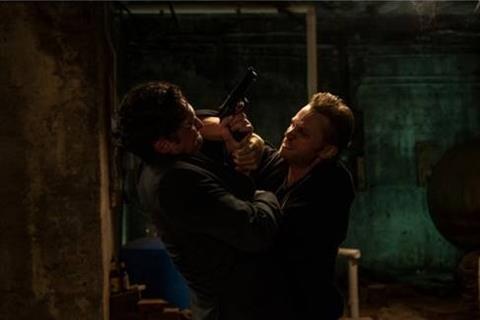
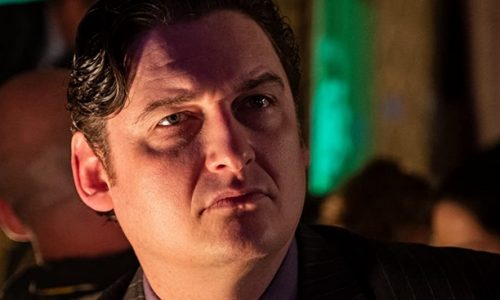
The director/co-writer Joseph Mensch version of this “Payback” is about a hustling boiler-room broker with a Russian mob-backed New York brokerage who stumbles into something he shouldn’t know, gets sent to Los Angeles, set up for a mob hit and sent to jail thanks to his mob-provided lawyer.

Naturally, Mike Markovich (Australian Matt Levett, not yet the Next Mel Gibson) has had a lot of time — six years in prison — to figure out what happened and who did this to him.

He gets out, and even though he has no experience with this kind of dirty work, cozies up with his old bosses and plots his revenge.

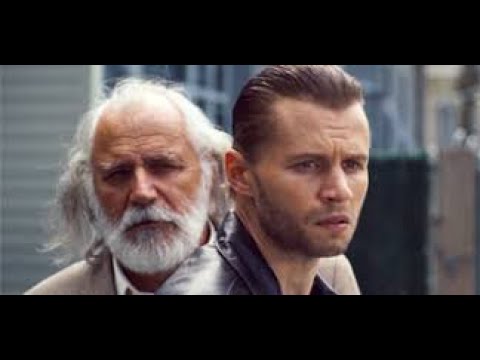
There’s not enough novelty to this story to make it feel fresh. The heavies in the cast make slightly more of an impression than the bland, forgettable leads. There’s a Baryshnikov daughter in it playing Mike’s wife, and veteran character actor Rade Serbedzija plays another version of everybody’s favorite Slavic grandpa.

The tacky, thuggishly dim and gauche Russian/Ukrainian/Georgian milieu — very “Eastern Promises” — is a nice touch. No wonder Trump identifies with them.

But there’s nothing here — not the modes of revenge, not the learn-as-you-go novelty of Mike getting in over his head (poorly exploited in the script) and especially not the dull, colorless acting — to recommend this latest “Payback.”‘

MPAA Rating: unrated, violence, some sexual situations, profanity

Cast: Matt Levett, Toby Leonard Moore, Anna Baryshnikov, Lev Gorn, Elena Satine and Rade Serbedzija.

Credits: Directed by Joseph Mensch, script by Metin Aksoy and Joseph Mensch. A Vertical release.

Running time: 1:31

Posted in Reviews, previews, profiles and movie news | Comments Off on Movie Review: Another tale of “Payback,” lamer than all the rest

Movie Review: Sailing solo into a refugee crisis — “Styx”

The global refugee crisis becomes personal for a solo sailor off the coast of West Africa in “Styx,” a detailed, perfectly realistic minimalist parable from Germany.

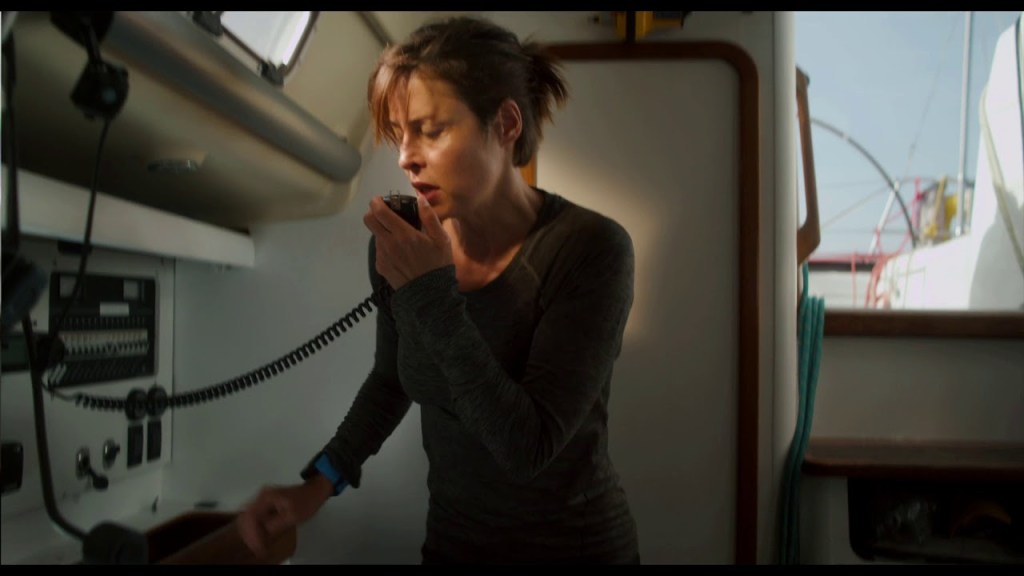
German character actress Suzanne Wolff (“Three Musketeers,” “Return to Montauk”) makes the most of a rare leading lady turn as almost the only character in this, one of the most accurate sailing solo dramas and one that wrestles with an existential crisis of our time.

Rike is an emergency services doctor in Germany, a physician on the scene with EMTs at car accidents and the like — stressful, life-and-death-decision work. It’s no wonder that her way to unwind is getting in a boat with no one else around.

But her get-away sail from Gibraltar to remote Ascension Island in the middle of the Southern Atlantic, days of silently working the boat, taking precautions, riding out storms and checking the charts, are upended when she comes across a disabled trawler overloaded with African refugees far out to sea north of the Cape Verde Islands.

She can hear screams and wailing across the water, as they’ve seen her. She can raise a coast guard with her “Pan Pan” (SOS) calls, and communicate with a South African-accented coast guard.

She understands, perfectly, the orders that she “not intervene,” that her mere presence will add to “the chaos” of this situation. She hears (in English) the “Back away, back away.”

But she’s a doctor. And the voice on the other end of the radio’s reassurances that “help is on the way” give her doubts.

Director and co-writer Wolfgang Fisher doesn’t have a lot of credits (“What You Don’t See” is his other feature), but he hews as close to the reality of this story as possible. Rike’s meticulous planning — she lays out everything she is packing on her 12 meter (39 foot) yacht, gears up by-the-book — and experienced sail-handling make her seem at home in this world, and stereotypically German.

There’s one eyebrow raising moment, becalmed, skinny-dipping over the side — i happens, but its insanely risky. But even that has a grinning “Yeah, she’s German all right” feel.

She doesn’t talk to herself, doesn’t make an effort to stay in touch with anybody by radio, which suits her personality and intended destination. Ascension is where Darwin set up his own experimental unspoiled test forest. Rike’s boat is named “Asa Gray,” America’s most famous 19th century botanist. When Rike isn’t saving lives, she unwinds immersed in flora.

The encounter-at-sea has hints of melodrama to it, but presents as a moral dilemma. Will the First World respond to a climate-population-and conflict (often religious) induced humanitarian crisis in the Third World?

It’s a solid, troubling story, acted with compassion mixed with pragmatism, where every decision made by everyone we can see is defensible and rational, no matter how irrational it can seem from the comfort of the viewer’s distant remove.

Here, on a small sailboat in the middle of the ocean, is the world wrestling with this global crisis, from South Asia and Australia to Mediterranean and Atlantic Coast Europe to the Americas, and not finding any easy answer.

MPAA Rating: unrated, some nudity

Cast: Susanne Wolff, Gedion Oduor Wekesa

Credits: Directed by Wolfgang Fisher, script by Ika Künzel and Wolfgang Fischer. A Film Movement Plus streaming release.

Running time: 1:34

Posted in Reviews, previews, profiles and movie news | Comments Off on Movie Review: Sailing solo into a refugee crisis — “Styx”

Cicely Tyson, Emmy, Tony-winning actress known for ‘Sounder,’ dies at 96

Another great one is gone. Good in “Sounder,” legendary in “The Pride of Miss Jane Pittman,” colorful in every character role she ever took. I’m remembering her in “Because of Winn Dixie” right now.

Cicely Tyson just released a memoir. She was 96

e

https://abc13.com/cicely-tyson-actress-dies-at-96/10105726

Posted in Reviews, previews, profiles and movie news | Comments Off on Cicely Tyson, Emmy, Tony-winning actress known for ‘Sounder,’ dies at 96

Movie Preview: Benedict Cumberbatch is “the last man” you’d send to rout the Russians — “The Courier”

This Cuban Missile Crisis tale looks tense, tight and period perfect.

Cumberbatch, Benedict Cumberbatch, plays a “salesman” recruited to snoop around Moscow in the early 60s.

I am so there for this one.

Posted in Reviews, previews, profiles and movie news | Comments Off on Movie Preview: Benedict Cumberbatch is “the last man” you’d send to rout the Russians — “The Courier”

Movie Review: Kiwi Bikers rumble and ride to prove how “Savage” they are

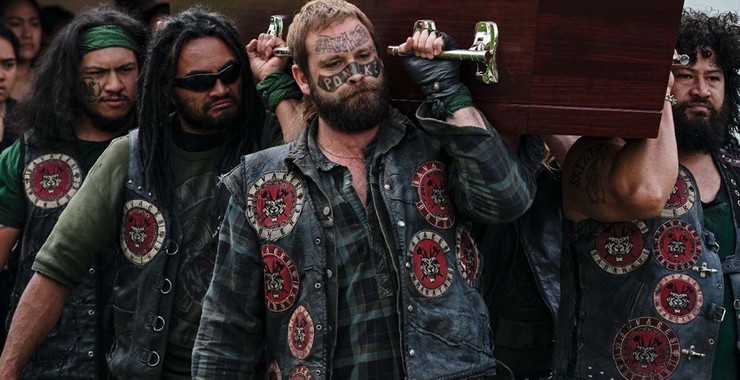
“Savage” sums up a gang member’s life in three key episodes, pivotal moments where young Liam might have had a choice in the way his life turned out. The catch to that is, he had a lot fewer choices than we’d like to think.

The film’s novelty is its New Zealand setting and the biker gang that our hero (Aussie actor Jake Ryan) helped found, the “Savages,” is a Maori-Anglo mob. The tattoos, haka chants and the bonding of warriors are borrowed from Maori culture — they even ID their hometown as “Poneke,” the Maori slang for “Port Nichols,” aka Wellington, on their “colors” (jackets) or as they call them, “patches” — and their profanity-laced language donated by the Brits.

It’s a brutal blur of a movie, rendering its themes and actions in broad, violent strokes. That’s a help, as they mumbled accents are a bloody jumble to get through without subtitles.

We meet gang “Sergeant” (enforcer) “Damage” in 1989, bonded for life with his best friend and chief, Moses (John Tui), his faced covered in tattoos, including “Poneke.”

“Why d’you wear that mask?” gang moll/female gang leader/pimp (not sure) Flo (Chelsie Preston Crayford) wants to know.

“So you can see who I am.”

Damage and Moses maintain their gang through intimidation, protection money and recruitment. Young Red (Poroaki Merritt-McDonald) is their latest “prospect” (initiate).

But with Damage reaching what amounts to dotage in biker gang years, he’s half-heartedly wondering how much longer he’ll be able to manage the violence, physically or morally.

Real tough guys don’t need guns.

We see young Danny, as the future “Damage” was known, back in 1965, rugby roughhousing with his brother, stealing from the corner grocer’s, too hard for his homophobic hardcase Dad and indulgent Mum to handle. He is torn from brother Liam and sent to a brutal reform school where he is anything but reformed.

That’s where he meets Moses.

And we drop in on 1972 teen Danny and Moses (James Matamua and Haanz Fa’avae-Jackson), who have graduated from petty theft and into car thievery and the like. There’s violent potential in them. All it takes is a moment at the train station when they see the denim-clad thugs from a gang stomp through the crowd of civilians, intimidated as if they’re being menaced by the Yakuza.

The charismatic Moses comes up with a name and the denim vests for his five mates. “Savages” they’ll be henceforth. The shifting loyalties of brothers are dramatically tested in the 1972 segment. Danny’s brother Liam (Jack William Parker), left behind at home, has joined a rival gang. Sooner or later that will have to be worked out.

Ryan and Tui have kicked around Down Under films and TV for a couple of decades, with the occasional minor role in a Hollywood film as well. The conjure up riveting presences at the heart of “Savage,” magnetic characters who don’t give much away but still draw us in.

I was intrigued by Damage’s “trigger word” since childhood — a homosexual slur — and where writer-director Sam Kelly might go with that in his debut feature.

The dense accents make this a film that washes over you and makes sense thanks to the familiar tropes it builds on and scenes — some of them quite violent — which require no verbal explanation.

After all, what’s the point of calling yourself “Savage” if you’ve listened to Mommy’s plea that you “use your words” to settle anything?

MPAA Rating: unrated, violence, profanity

Cast: Jake Ryan, John Tui, Chelsie Preston Crayford,  Haanz Fa’avae-Jackson, Jack William Parker, Eden Flynn and James Matamua

Credits: Scripted and directed by Sam Kelly. A Quiver release.

Running time: 1:40

Posted in Reviews, previews, profiles and movie news | Comments Off on Movie Review: Kiwi Bikers rumble and ride to prove how “Savage” they are

Movie Preview: A First full trailer for Kristen Wiig’s “Barb & Star Go to Vista del Mar”

Wiig and Annie Mumulo from “Bridesmaids” and “This is 40” and “Bad Moms” are in Florida, going “Floridian.”

If you’ve ever lived here, you know what I mean. And if you haven’t, you probably still get it. Florida, amIright?

Lots of SNL and “Office” alumni in this one, which I believe has been delayed like many other pictures in the pandemic pipeline.

We’ve only had teasers for this up to now. It opens Feb. 12, which means they’re not sweating the limited filmgoing audience our current stage of the pandemic decrees.

Posted in Reviews, previews, profiles and movie news | Comments Off on Movie Preview: A First full trailer for Kristen Wiig’s “Barb & Star Go to Vista del Mar”

Movie Review: “Haymaker” TKOs itself

“Haymaker” is an intriguing movie mashup, if nothing else. It’s “The Bodyguard” with a transgender twist, served on a beefcake MMA (Muay Thai) boxing platter.

The picture isn’t quite this or even remotely that, but it still might have come off had its leading man possessed something beyond an impassive A-B range of imparted emotions.

As its star is also its writer-director, well that wasn’t a problem that was going to fix itself.

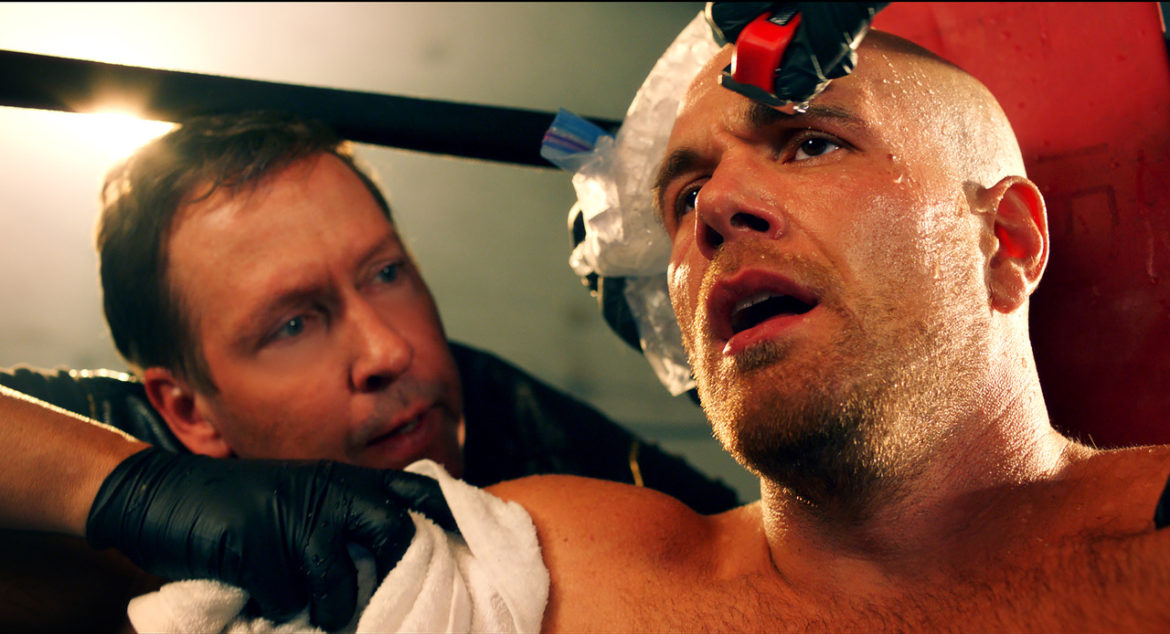
Nick Sasso wrote, directed and stars as Nick Malloy, a defeated and humbled fighter reduced to doing bouncing work for his brother (D.B. Sweeney), who much preferred their previous life. Mack was Nick’s cornerman. These clubgoers?

“They pay the bills, so let’s be polite.”

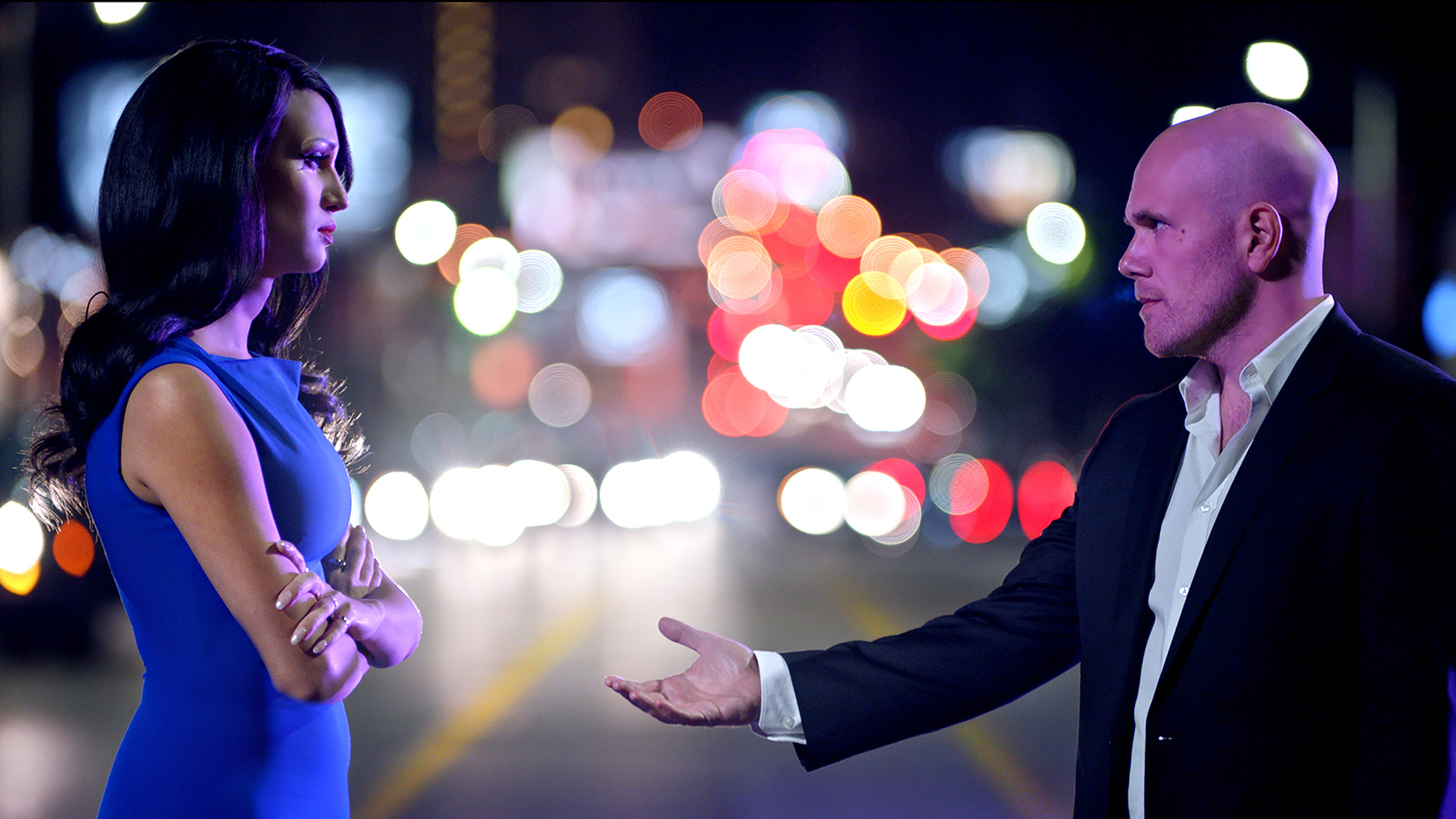
But Nick loses the bouncing gig when he interrupts a backstage beating/rape of a star performer at a club. Still, that singer (Nomi Ruiz) is grateful, flirtatious and generous. And she’s got a job for him.

“What kind of job?” “A fun one…protect ME.”

It’s an odd relationship from the start. Transexual Nomi is vivacious, popular, a rising star and something of a drama queen. Trouble seems to travel with her, seeing as how she’s a bit of a mouthy provocateur.

Nick can’t keep her from every unpleasantness, because she’s got history and ongoing feuds — with a recording studio rival, with an LA sugar daddy (Ugo Kier) who resents her moving on “in this new life that I made for you.”

Nomi can’t even be bothered to tell Nick where they’re off to — by car or jet — half the time.

“Can’t you just adjust to your surroundings or whatever, like a ninja?“

The movie’s only important question is “Will they or won’t they?” And Sasso, the writer-director, is more interested in getting our guy back in the ring — doing a pilgrimage to Thailand, taking on onetime trainer (actress/stunt-goddess Zoë Bell) — than in answering that.

The story would be more interesting if the script — with its “I’ve got nothing to prove.” “I know that. Do you?” message — more overtly tied this need to fight again to Nick questioning his masculinity after falling for this transgender siren.

Sasso gives us a little of that, and a lot more concert drops and training montage.

Ruiz is an interesting if limited performer, confined here to playing a “type” — overtly sexual, over-compensating as female, with only the odd line here and there suggesting there’s more going on.

Sasso’s performance feels like a pulled-punch, and not just in the half-speed fight scenes. Are you in for this romance or not? Go big or go home.

The film’s style points for having the gender issue never come between Nomi and Nick (others have a “problem” with her) are squandered if Nick’s journey never seems that great and Sasso is too poker-faced to make it compelling.

Avoiding the conventional one man’s journey “from prejudiced to lovesick” leaves “Haymaker” with a vacuum where its heart should be. The picture was never destined to be a knockout, but settling for a draw seems a waste.

MPAA Rating: unrated, violence, sexual situations

Cast: Nikck Sasso, Nomi Ruiz, D.B. Sweeney and Zoë Bell

Credits: Scripted and directed by Nick Sasso. A Gravitas Ventures release.

Running time: 1:23

Posted in Reviews, previews, profiles and movie news | Comments Off on Movie Review: “Haymaker” TKOs itself