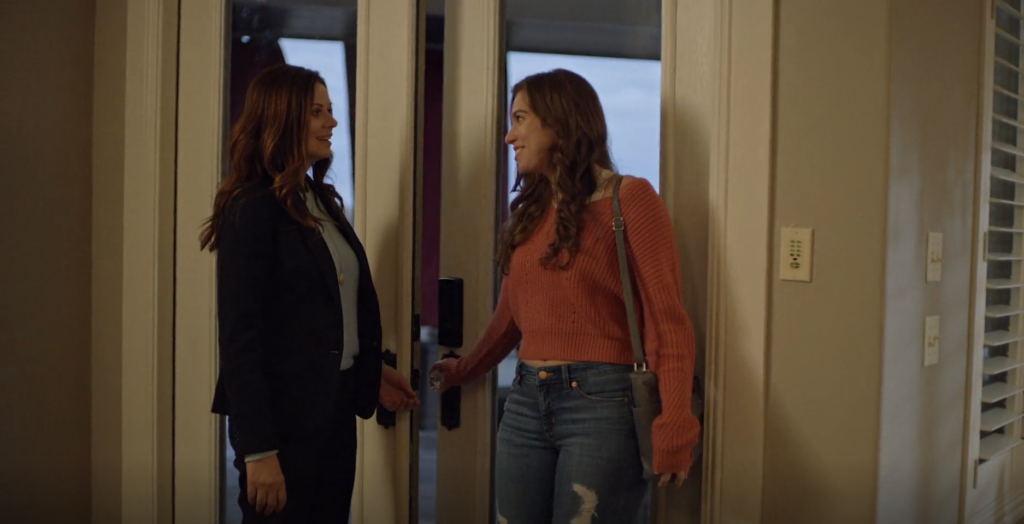
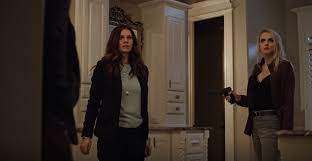
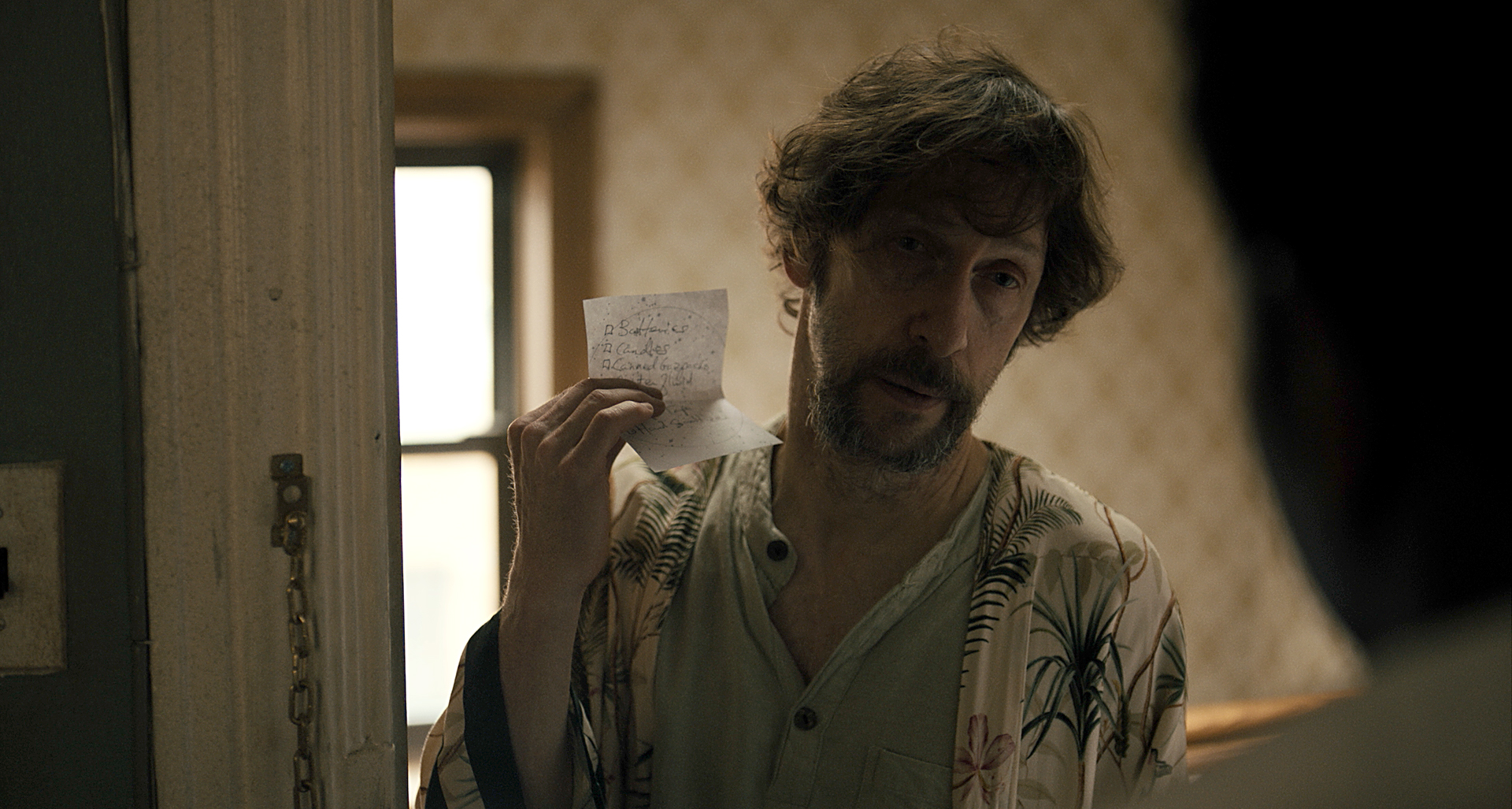
Movie Review: “Broken Darkness” isn’t helped by the light

Yes, “Last Darkness” almost came out in 2017. Or was it 2018, 2019 or 2020?

And it used to be titled “Last Broken Darkness.” But let’s weigh in on it because I never tire of putting that broken record I love to dance to, “urgency,” on my hi-fi.

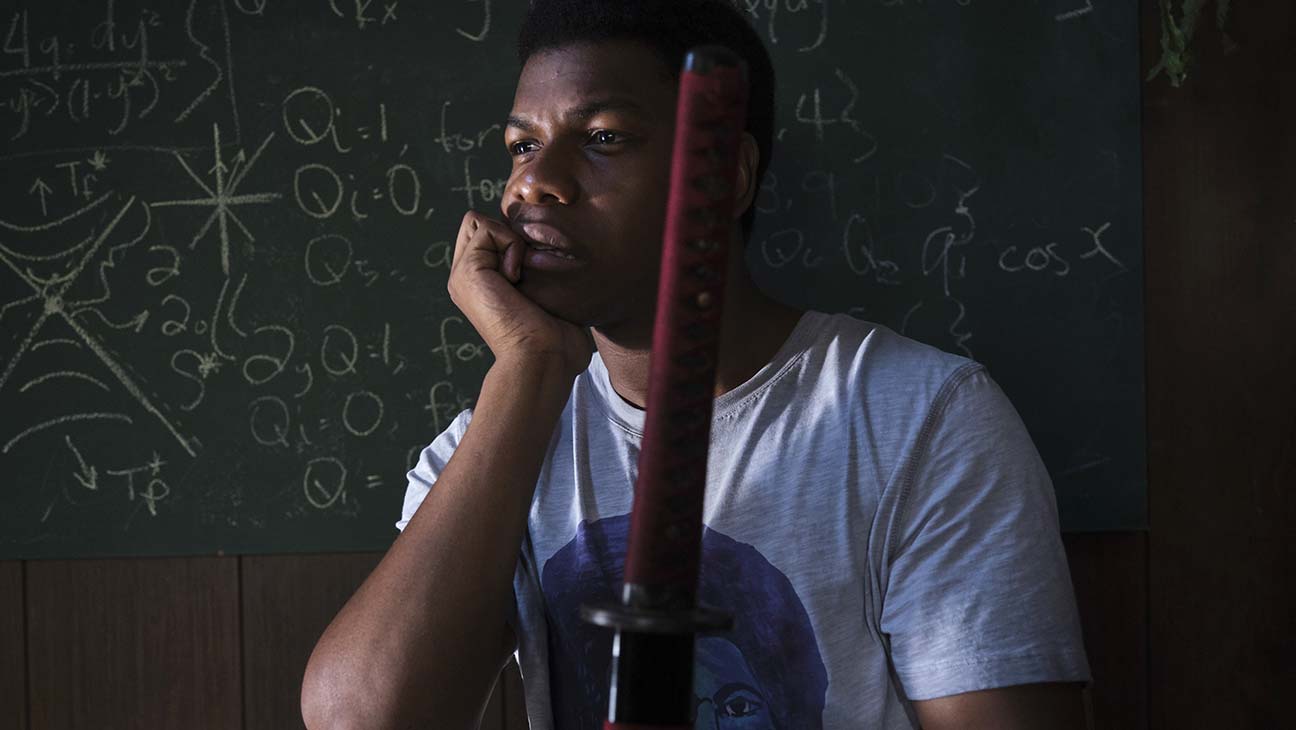
The apocalypse comes and goes in the first couple of scenes of this sci-fi boogeyman bomb. After that, there is no “ticking clock,” nothing in it to drive the narrative, nothing to inject caffeine into our cast of characters and quicken the pace of writer-director Christopher-Lee do Santos.

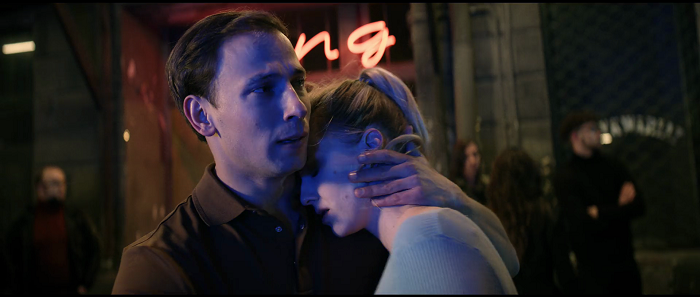
A comet leaves the end of civilization behind in its wake, a father (Sean Cameron Michael of TV’s “Black Sails”) is left alone within moments of him telling his teenaged son “I won’t let anything happen to you.”

The kid promptly gets shot.

And the survivors of this mass extinction event, tucked away in a vast underground power plant complex (nice South African location) that must somehow tie into a mine complex, which is where a lot of people fled when The End was Nigh, discover they must contend with Morlock cave dwellers straight out of H.G. Wells.

The movie opens with a great effect — meteors smoking through the night sky. It promises a certain paranoia and claustrophobia, which stuffing the characters underground in the (well lit, alas) dark never succeeds in delivering.

So an hour in, they come into the daylight, and everything gets slower and worse.

The more we see of the creatures, the less “special” this special effects seems.

The beasts are revealed too early, the “gotcha” moments are kind of botched. Even the can’t-miss “victim yanked-out-of-camera-frame” bit is blown by wrongheaded lighting and picking the wrong camera angle.

South African filmmaker dos Santos (2015’s “Bond of Blood”) hasn’t finished another project since. Go figure.

Anything I’m leaving out? Oh, there’s “a girl” because as Omar Shariff once lectured David Lean (re “Lawrence of Arabia”), “There HAS to be a GIRL.” Suraya Santos has that role, the young woman of pluck, mystery and inner resources.

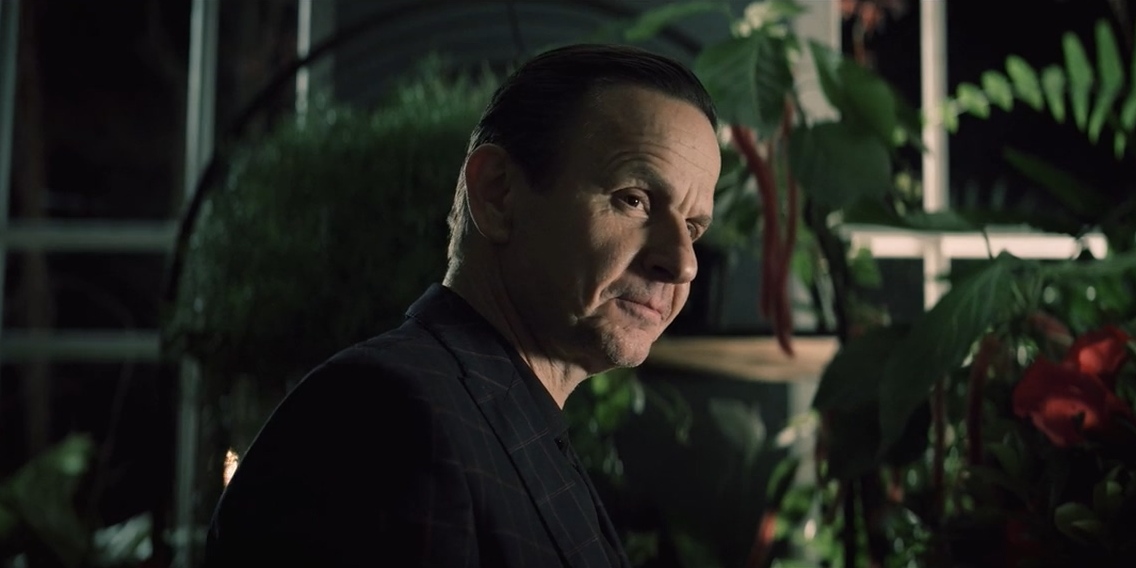
There isn’t a lot to recommend this. Pity it wasn’t better, or at least good enough to warrant an earlier, more prestigious release. Heaven knows Sean Cameron Michael needed the career bounce coming out of “Black Sails.”

Rating: unrated, violence

Cast: Sean Cameron Michael, Suraya Santos, Brandon Auret

Credits: Scripted and directed by Christopher-Lee dos Santos. A Vertical release.

Running time: 1:58

Posted in Reviews, previews, profiles and movie news | Comments Off on Movie Review: “Broken Darkness” isn’t helped by the light

Netflixable? Indonesian sci-fi “A World Without” satirizes a restrictive, oppressed and sexist culture…its own

I’ve never visited Indonesia, but traveling “Around the World with Netflix” I’ve developed a picture of what life might be like in the conservative, Islamic Asian nation.

It might not be an accurate portrait, but the Netflix films, chaste romances about a marriage-obsessed youth points to cultural norms, or government-sanctioned “ideals” that generally make for insipid cinema.

And then “A World Without” comes along and seems to be sending up the way things are.

It’s a science fiction thriller set “just after the pandemic (2030), and it’s about a cult that’s taking hold among a teen generation that sees a despoiled planet, decimated population and diminished marriage prospects as the crises of their age.

Nia di Nata’s film begins in the moony “find my perfect husband” world of too many Indonesian romances, and gradually veers into the dark corners of arranged matches, controlled lives where “we take care of everything” and a “guarantee” of “happily ever after.”

It’s heavy-handed and obvious, but I like what she’s going for here, a sort of “This is the way things are or are going, and f-that” take.

And yes, there’s a lot more profanity in this film than much of the Indonesian fare I’ve sampled.

Three girlfriends — Salina, Ulfah and Tara — chatter away on the luxury coach ride into the forests with The Light. That’s the group that’s admitted or “selected” these 16-ear-olds for a year’s commitment to work, study and be studied before an “algorithm” surprises them with their “perfect” mate.

Salina, played by Amanda Rawles, is smart (because, she wears glasses), from a wealthy family and enthusiastic. She will narrate our tale.

Ulfah (Maizura) is something of a wallflower and eager to have her “meet someone” problem solved for her.

And Tara (Asmara Abigail) is the sassy beauty and flirt of the trio, the one who admits “I’ve been dating since the sixth grade.” Why does she need help finding a mate? She’s the one who customized holographic greeting by the “Esteemed Leader” when they arrive at the jungle campus reassures her “We don’t judge based on your past.”

Tara’s gotten around, and even though she wonders “How MUCH do they know about us?” she lets us know she’s gotten used to the shaming and has joined The Light to leave all that behind.

Esteemed Leader is actually a computer guru named Ali Khan (Chicco Jerikho), and he and his wife Sofia (Ayushita) preside over this Utopia with the serene confidence of Jim and Tammy Fay.

Their offer is for a year of preparation and work commitment, a “surprise” wedding (the mates find out who their selected spouse will be at the ceremony) and a lifetime of living and working in The Light.

Tara, being a makeup maniac, is assigned to help Sofia with her makeup line. Media savvy Salina is selected for online video work and helping with “the major documentary project” on The Light that the organization is piecing together.

That’s how she’s thrown together with “nerd” and editing whiz Hafiz (Jerome Kurnia). And as she shoots intimate, behind the scenes footage of how Ali and Sofia interact, the workings of The Light, learning how it’s financed and stumbling into “I got OUT of The Light” survivors in the city while she’s filming, Salina begins to see the you-know-what.

The direction this story will take may be obvious, but di Nata throws in surprises that are conventionally melodramatic by Hollywood standards, and almost shocking by Indonesian cinema standards — violence, attempted rape, sham marriages, shady financing and cultural taboos.

Daring? Somewhat.

Our young leads are a tad dull in roles that almost let them down. The characters are interesting only in that cardboard “types” way. Salina is the most fully fleshed out, and seeing her following the “no dating or mixing with the opposite sex” rules, then starting to bend them as she hangs out, away from CCTV cameras, with Hafiz, is the most interesting story thread.

The villains are almost subtle, the stakes almost high and the climax almost believable in this pro forma cult expose with a social satire subtext.

“Almost” ends up being the byword for “A World Without,” as in this “almost” comes off.

But director and co-writer Di Nata comes close enough to sticking the landing that it’ll be fascinating to see where she goes from here, and if she’ll have to move somewhere else to make uncensored, more overt commentary on her homeland.

Rating: TV-MA, violence, profanity, sexual situations

Cast: Amanda Rawles, Maizura, Asmara Abigail, Chicco Jerikho, Ayushita and Jerome Kurnia

Credits: Directed by Nia di Nata, scripted by Nia di Nata and Lucky Kuswandi. A Netflix release.

Running time: 1:47

Posted in Reviews, previews, profiles and movie news | Comments Off on Netflixable? Indonesian sci-fi “A World Without” satirizes a restrictive, oppressed and sexist culture…its own

Documentary Preview: Showtime’s “The Real Charlie Chaplin”

Vintage footage, archival recordings and “dramatic recreations” aim to give us an intimate and revealing portrait of the Cinema’s First True Superstar.

This gets a limited theatrical release and pops up on Showtime Dec. 11.

Posted in Reviews, previews, profiles and movie news | Comments Off on Documentary Preview: Showtime’s “The Real Charlie Chaplin”

Movie Preview: Paul Verhoeven’s titillating, “blasphemous” and period-perfect account of the “miracle” of “Benedetta”

This looks dazzling.

Virginie Efira has the title role, an Italian nun who sees Jesus in the 17th century, and sees love in the eyes of another woman.

Dec. 3, we find out if it measures up.

Posted in Reviews, previews, profiles and movie news | Comments Off on Movie Preview: Paul Verhoeven’s titillating, “blasphemous” and period-perfect account of the “miracle” of “Benedetta”

Netflixable? French Apartment Building’s Tenants Look for Laughs “Stuck Together” During Pandemic

Stuck Together (Huit Rue de l’Humanite)” is a hit-and-miss French farce about a Paris apartment building’s efforts to cope with the COVID lockdown.

Packed with characters and co-scripted by its co-stars, director and comedian Danny Boon and his life partner, Laurence Arné, it’s not nearly funny enough to sustain its patience-testing two-hours+ run time. But the scattered laughs will ring true to many a lockdown survivor, and the moments of sentiment are so poignant that they could bring you to tears.

Arné and Boon play Claire and Martin, a married couple with a tweenage girl, Louna (Rose de Kervenoaël) bracing for the worst as COVID-19 shuts down France. Well, he is.

Martin’s an illustrator for a medical journal, and something of a paranoid hypochondriac.

While attorney Claire is maintaining her sanity as she adjusts to lawyering on Zoom and home schooling their kid, Martin is flipping out — over the masks shortage, over having to go out and walk their dog, over other people’s seeming carelessness in the face of this pandemic with possible terminal consequences.

His “We CAN’T walk the dog now! (in French with subtitles, or dubbed into English)” is scaring their little girl. Doesn’t matter. Martin cleans and cleans, takes DEEP whiffs of disinfectant as he does (hilarious touch) and like everybody else, badgers their apartment building’s super, Diego (Jose Calvo).

Martin’s only concern on hearing Diego’s wife is in hospital with the virus is “You’re asymptomatic?”

“No, I’m Catholic. But religion isn’t for everyone.”

Tony (François Damiens) is a boorish, gauche bakery entrepreneur who, our narrator (his tween son, played by Milo Machado Graner) assures us, “is ROOTING for COVID!” Tony likes the idea of “old people” dying off, and has his eye on elderly Louise (Liliane Rovère), or more specifically, on the bar she owns downstairs. He’d love to get his hands on that if the old lady kicks it.

It’s no wonder that Tony’s wife fled to the country with no interest in ever returning. Let him raise their son, who crushes on Louna across the way, and their bratty teen daughter.


Agathe (Alison Wheeler) is a singer-songwriter whom nobody remembers from “the 2016 season of (the French version of) ‘The Voice.'” She’s constantly picking at a pandemic song so she can load it up on the Internet and return to (limited) fame. Her hunky, popular online exercise guru husband Samuel (Tom Lee) could help. But he’s busy keeping his pregnant wife out of his streaming shots of his exercise routines. Got to keep his female followers/exercisers in the dark and on the hook, after all.

There’s a mysterious tenant nobody knows, and a wild-haired medical testing lab scientist Gabriel (Yvan Attal) whose urine-test business is downstairs. He sets out to develop his own vaccine, looking for lab animals (pets included) as test subjects. His neighbors all look to him for masks, COVID tests (with a nasal swab the length of a semi-truck’s dipstick) and answers.

“We don’t know…We don’t know…We don’t know” he repeats, taking us back to the earliest, most paranoid days of the illness.

None of them knew one another before the lockdown. Well, young Basile knew who Louna was, even if she barely knew he existed. He shares the same name as her dog, which lands exactly one laugh.

“She’s my girlfriend. But don’t TELL her that!”

The laughs chiefly come from Boon (“Micmacs,””Joyeux Noel,” “Welcome to the Sticks”) and his hyper-ventilating Martin, and Damiens, who is blessed with sight gags and boorish COVID denying lines aplenty as Tony runs roughshod over Diego — worried sick about his wife and forced to cope with more and more odd jobs from the apartment dwellers — and his fellow tenants.

“So, two idiots in China eat a penguin and this stairwell becomes your pantry?” he quips to Martin, who pushes his cleaning to an extreme.

“It’s a PANGOLIN, Dad!”

Martin gets so carried away he locks his “I have to go to prison to visit my client” wife out of their apartment. He’s so clueless that when the gorgeous Claire comes on to him, his first worry is “You’re HOT!”

“I AM!”

No. Better break out the thermometer pistol.

Physical comedy translates easiest when you’re looking to make an “international” hit, but there’s precious little of that. Some of the one-liners and running gags (the French find the name “Basil” funnier than much of the rest of the world) may play better on French Netflix.

But there’s no getting around that this somewhat claustrophobic comedy — the “one big set” is reminiscent of Hitchcock’s “Rear Window”) — is awfully thin on good jokes for a movie this long.

The dollops of heart — remembering the worry, facing loss and those nightly open window pan-banging celebrations of heroic front-line pandemic medical and service sector workers — play better. And there aren’t enough of those to put this movie over.

Rating: TV-MA, profanity, adult situations

Cast: Danny Boon, Laurence Arné, François Damiens, Alison Wheeler, Milo Machado Graner,
Rose de Kervenoaël, Yvan Atal, Tom Lee, Jose Carvo and Liliane Rovère

Credits: Directed by Dany Boon, scripted by Laurence Arné and Dany Boon, A Netflix release.

Running time: 2:05

Posted in Reviews, previews, profiles and movie news | Comments Off on Netflixable? French Apartment Building’s Tenants Look for Laughs “Stuck Together” During Pandemic

Documentary Review: Bobcat and Dana Gould, a couple of stand-ups on a “Joy Ride”

The edgiest stuff in “Joy Ride,” the comic and filmmaker Bobcat Goldthwait‘s new doc about the mid-election year, front-end-of-the pandemic stand-up tour that old friends Bobcat and “Simpsons” writer and stand-up Dana Gould undertook, might be Bobcat remembering his feud with Jerry Seinfeld.

He owns how he started it, generously samples the chat show appearances where Goldthwait baited THE StandUp of His Generation, and plays Seinfeld’s entire out-of-character flip-out response on his streaming show “Comedians in Cars Getting Coffee.”

On stage, Goldthwait pokes the bear again, bragging about going on the write and direct movies while “Jerry makes videos in old cars with a GoPro,” while Goldthwait-the-filmmaker cuts to shots of him and Gould riffing in a rental car in between venues, filmed by a…GoPro?

And then The Old Bobcat lands the punchline.

“Jerry Seinfeld FINALLY has an opinion…and it’s about ME.”

The new wrinkle in this otherwise standard-issue stand-up doc is the pairing of these two on the stage, their reminiscences about being “discovered” by Bob Hope (Gould) and mocking how uncomfortable that was, their near death experiences — including a car crash that sent them both to the hospital on this very tour — and making the anecdotes of their separate but dysfunctional childhoods, phobias, manias and career trajectories (not exactly meteoric, as Seinfeld would be quick to point out) hilarious.

Comparing this to Dave Chapelle’s far more controversial and ofwidely seen Netflix specials, especially the latest, one can safely say that Dave lands bigger laughs. But Dana and oh-my-God-even nutjob-persona Bobcat both lean into warmth and nostalgia and carry themselves like humbled, generous-hearted and sensitive-but-not-shy-about-“going there” comics almost as daring as Chapelle.

There’s no “punching down,” as the many objects of scorn are powerful, numerous and somehow worthy of social sanction — hypocritical Christian conservatives, “Police Academy” Trump voter fans, and thin-skinned/easily-offended audience members (just like Dave) — and not an outspoken but still-persecuted minority group.

The title is something of a pun. These two click together, share the stage time well (Goldthwait has had bigger fame, and far more well-documented meltdowns, stumbles, etc.) and land jokes about stuff that should not be funny, yet can be.

Gould poking into Goldthwait’s Robin Williams eulogy/riff on the Lewy Body Disease that might have led to his suicide? Let’s just say it involves Louis C.K. and the onanistic reason he got “canceled.”

Goldthwait remembering his accidentally confronting a famous LA TV used car pitchman who sold him a lemon and showed up for one of his shows, and sheepishly recalling how that whole roundelay came back to give Ernie Boch Jr. the punchline — hilarious — and a huge, embarrassing laugh (accidental sexting) at Bobcat’s expense.

“Still...still can’t look out at the audience when I tell that story,” Goldthwait blushes.

Hitting snowy tour dates in Asheville, NC and Atlanta, cracking jokes at all the Confederate flags they pass by, bringing that up on the stage and noting how they might discover, as “Police Academy” veteran Goldthwait did, that their “fan groups” might overlap with America’s Redneckouisie, has more truth-to-power potential than going after “the alphabets.”

Gould on gun-hoarding “liberty” “defending” right wingers’ delusions of actually “defending” liberty, or starting another Civil War — “You have to always be prepared for something that has NO chance of ever happening!”

Goldthwait shows clips of the night he trashed the set of Arsenio Hall’s show, went mental on “Live with Regis and Kathie Lee,” recalling how he was just booked for such shows as a (pre-viral video era) stunt, and that he “couldn’t take being famous for being famous.” He topped himself the night he lit “The Tonight Show with Jay Leno” set on fire. Yeah, he got arrested, had to do PSAs, and “the fire marshal” made him redo-those TV spots.

In LA, even the fire marshal will “give you notes.”

One of the most encouraging things about this film is the self-awareness of its subjects. From their frank and funny discussions of their “difficult” families — Bobcat’s dad took a stab at being a disastrous stage magician, Gould showed his conservative, highly-strung and on-edge father “Clint Eastwood’s ‘Gran Torino,’ which is like showing ‘King Kong’ to a gorilla” — to their recognition of their failings and failures and of this being “a discordant time in our culture,” they bring a little joy into their “Joy Ride,” and share it with us.

Neither will ever be Seinfeld or Chapelle “culture-shifting” successful. This is kind of the anti-Chapelle stand-up doc, in a lot of ways. There’s a humility and generosity of spirit in their work here — testy as it sometimes is — that plays like a breath of fresh air in an era of “cancel culture” and those hellbent on testing it.

And by the way, Bobcat? Thanks for the video store visit where you note how “everyone” misspells your counter-intuitive last name. Too late to use as an excuse to every editor who ever chewed me out for that, but thanks anyway.

And Jerry Seinfeld? Bobcat is funny, an entertaining and self-effacing performer at this stage of his career. But let’s just say you’re both funny and successful and leave it at that.

Rating: unrated, lots of profanity, adult subject matter

Cast: Bobcat Goldthwait, Dana Gould

Credits: Directed by Bobcat Goldthwait. A Gravitas Adventures release.

Running time: 1:10

Posted in Reviews, previews, profiles and movie news | Comments Off on Documentary Review: Bobcat and Dana Gould, a couple of stand-ups on a “Joy Ride”

Movie Preview: Married agent accepts an indecent proposal and turns paranoid after “The Beta Test”

A dark “midlife crisis” satire starring Jim Cummings, “The Beta Test” spoofs “the current climate (post #MeToo), an anonymous solicitation to a married man, and all that unleashes.

It pops out Nov. 5.

Posted in Reviews, previews, profiles and movie news | Comments Off on Movie Preview: Married agent accepts an indecent proposal and turns paranoid after “The Beta Test”

Movie Review: Beware that myth in the woods, especially if it has “Antlers”

Hand it to “Antlers” director and co-screenwriter Scott Cooper. The guy who finally landed Jeff Bridges his Oscar (“Crazy Heart”) and tried to win Johnny Depp one (“Black Mass”) delivers the goriest horror movie to make it to theaters this Halloween.

Sorry, Jamie Leigh.

“Antlers” is another of those “ancient curse awakened” thrillers, this time an Earth Mother demon known to Native Americans who avengers him/herself on meth cookers and miners, cops and schoolkids, all for the crime of despoiling the land.

And it’s got a hint of “The Babadook” about it, as this spirit is chiefly targeting a 12 year-old boy.

I don’t know if the short story it’s based on (by Nick Antosca) has a child abuse subtext. But that makes this grisly slaughter of the just and the unjust a genre thriller that’s about something, and that something gives it a tone as sad and gloomy as the dead, rainy and overcast Oregon mining town that is its setting.

Cooper casts a spell in the film’s slow first acts, then breaks it by over-explaining the threat, and shows little flair for the suspense-building element of the horror film equation.

There are few things more unsettling in a thriller than a child (Jeremy T. Thomas) haunted by the supernatural, and coping, all-alone, with the horrors of living with a meth cooking widowed dad (Scott Haze) and a little brother he can’t protect from the tidal wave of threats, loss and misery that has washed over their lives.

That’s Lucas, a skinny, grimy, wide-eyed urchin in soiled, tattered clothes who shows up in Julia Meadows’ (Keri Russell) class every day at Cispus Falls Elementary. He sits in the back and draws as she tries to teach the kids about myths and legends and how they relate to storytelling.

Lucas knows a little something about that. We saw him ride with Dad to the abandoned mining operation that his meth-mouthed father and a colleague have turned into a meth cooking factory. Lucas heard the unnatural growls. He saw something, and sees what that something did to his still-living/crab-walking cadaver of a father.

That’s what he draws, and when Ms. Meadows coaxes him into telling his idea of a folkloric tale of myth, he “reads” those nightmarish drawings to his class.

He’s laying out the hell his young life has become, describing it in ways more personal than the books teacher finds in his desk (on animal trapping and legendary monsters) possibly could.

But Julia, who recently returned to town after decades in LA, sees something else, “textbook” child abuse. And she’s “an expert.” We realize she lived through something similar, something that drove her away and only her brother (Jesse Plemons), now sheriff, could lure her back.

Ms. Meadows takes an overly-keen interest in Lucas and his home life. She sees his family’s ruined shack with no power, mysterious growls and thumps coming from inside, a long abandoned Trans Am among the debris surrounding it. She alerts the principal (Amy Madigan).

But Lucas has more immediate problems. He’s tiny and bone-thin, and one wonders if young Master Thomas was perhaps cast for his resemblance to the blind banjo player in “Deliverance.” Lucas is a magnet for bullies.

And something that lives in his house needs to be fed — animal meat, bones and entrails (graphically depicted). That’s why Lucas is out trapping and killing wildlife.

But his secret is a secret only until the first body turns up. As Sheriff Paul and his tiny department slow-walk to this or that crime scene, it’s clear that something is eating local, and eating locals. And the only guy who might know who or what is doing it is a former police chief (Graham Greene) of Native American descent.

One piece of evidence is dropped in front of him with an, “Is that from a buck?”

“Nope.” He knows exactly what these “Antlers” come from.

That’s a pivotal scene in the film, the moment where it breaks away from the gathering gloom and has Chief Stokes (Greene) “explain” this creature/demon/phenomenon to the incredulous Paul and the skeptical Julia. It’s a badly-written exposition-packed speech and from the looks of it, Cooper only gave the wonderful character actor Greene one rapid, monotoned recital of it.

All the little lapses into “horror movie illogic” that preceded it we might let slide, the way locals take in on themselves to “investigate” this on their own — not calling the sheriff, or if there’s a deputy or sheriff involved, them not calling for back up.

I can’t remember a horror movie that had this many “DON’T go IN THERE!” prompts from the audience clumsily hard-wired into it.

And here’s a petty gripe. What does everybody in America know about cooking methamphetamine? We know where the raw materials are sourced, and learn about labs usually after this EXTREMELY FLAMABLE process run by people not nearly “Breaking Bad” smart or careful, burns their “lab” to the ground.

How does meth-cooker Frank Weaver make his way down a (coal) mining tunnel to his and his partner’s lab? He lights a FLARE and wanders through coal-dust saturated (and gaseous) air, leaving cinders left and right, until he gets to the lab.

Well, stupid as that is at least it looks good on camera. At least Cooper has a flair for flares.

The cast, playing varying degrees of morose or in mourning, is fine, save for that clunky speech that Greene can’t finesse. The funereal, wet and decaying tone is terrific.

But the “explanations” set up a long, gory and eye-rolling third act in which we finally get a good look at this beastie, which is convincing enough, but presented wrong and photographed worse.

The child abuse subtext is introduced as a motivation for Julia taking extra interest in little Lucas, but it’s never confronted as an issue, leaving her character’s protection instincts somewhat under-motivated.

Plemons plays Paul as a reluctant sheriff with some notion of duty, but almost dimwitted in the ways he faces this existential threat. No thought of calling in the state police?

“Antlers” left me with the feeling of being the work of a top drawer craftsman who never quite reconciles himself to the job, who forgets the “nature’s revenge” theme and leaves he child abuse subtext under-explored, never builds suspense or any sense of rising panic in the town, the school or the sheriff’s department, and yet still manages to deliver a gruesomely good looking film despite all that.

Rating: R for violence, gruesome images and some language (profanity)

Cast: Keri Russell, Jesse Plemons, Jeremy T. Thomas, Amy Madigan, Scott Haze, Rory Cochrane and Graham Greene.

Credits: Directed by Scott Cooper, scripted by Henry Chaisson and Scott Cooper, based on a short story by Nick Antosca. A Searchlight release.

Running time: 1:39

Posted in Reviews, previews, profiles and movie news | Comments Off on Movie Review: Beware that myth in the woods, especially if it has “Antlers”

Movie Review: Rowing towards “teamwork” to develop the “Heart of Champions”

“Heart of Champions” is a “big game” sports drama, a formula picture peopled with character “types,” many with “secrets” that are obstacles that the hero/heroes must overcome to triumph.

It’s set in the world of college rowing, “crew,” the province of clean-cut preppies —“Winklevii”— Ivy Leaguers living in a world of privilege, with or without the “ivy.”

That setting serves up the slang and jargon of the sport, which hasn’t been the focus of nearly as many films as football, hoops or, well, college debate.

You may know the lightweight teammate who sits in the back, steering and calling out cadences as he/she cajoles “the eight” to victory is called the coxswain. But you probably don’t know who the “stroke” is, or the “seven,” or what summoning up the guts for a “power 10” is about.

“Catching a crab” and “swing” as defined in rowing will be new concepts for most.

But the almost-saving grace of this pre-fabricated sports drama is that a lot of those concepts are barked by the great Michael Shannon. He plays the new no-nonsense coach of fictional Belleston U. through the races, ups, downs and “power 10s” of its fictional 1999 season.

Why 1999? Because when you need to pass your 40something coach off as a Vietnam vet, you’ve got to be better at math than Spike Lee and his “Da Five Bloods Too Damned Young to Have Served.”

Alexander Ludwig of “Vikings” is the rich rower whose father (David James Elliott) is ensuring will make the 2000 U.S. Olympic rowing team. Dad is a piece of work. “Alex?” He’s a bullying, finger-pointing brat, “captain” in name only.

“Riverdale” and “The Sun is Also a Star” alumnus Charles Melton is Chris, “the transfer” from U. Wisconsin, the guy with the “secret” burden of grief. He’s a loner who “hates f—–g rowing,” and just catnip to Anglo-Indian coed Nish (Ash Santos). But not at first.

She’s got to get from “Alcoholic dumb jock misogynist pig!” to “What was his name again?”

And Alex MacNicoll is John, the guy with better rapport with his teammates, the “natural leader” old alumnus/new coach Travis (Shannon) has to put in charge for these lads to punch out assorted Ivys to get to a national championship. His “secret” is the most obvious of all.

Screenwriter Vojin Gjaja, who has some connection to the film’s star (he was a producer of the Shannon-starring “The Quarry”) works in a lot of rowing “lore” and college life cliches into the script to lend it some authority.

The business of a defeated rowing team surrendering its jerseys to the victors, the notion of “the ghost in the boat,” assorted Belleston U. “old (fake) college traditions” such as “appeasing the river gods” the old river locks and the “nude Olympics” played out with every “first snow” pad out a movie that billboards its third act with just a few clumsy “Foreshadowing 101” touches in the first.

The “training exercises” scenes and montages of scenes involve “team building,” and just enough novelty to stave off utter boredom.

But Shannon fans should show up for the barking. The man has “No Nonsense” stamped on the bottom of his Hollywood head shots. He’s a natural at this sort of role.

“Why are you here?” he demands of a team he just saw blow the national title race, after taking a lead. “No man is an island,” he intones, never letting on how corny that line was on the page, much less performed aloud. Even in 1999.

Still, “Leadership is measured in the hearts of those who follow” is a good line, especially the way Shannon delivers it.

As film subjects, college romances and the trials and tribulations of college life may be mundane in the extreme, even set against the Sport of Winklevii. But Shannon is always so good you tend to lose track of all that when he’s on screen. He’s just not on it enough to save the movie.

Rating: PG-13 for some violence, suggestive material, partial nudity and brief strong language (profanity)

Cast: Michael Shannon, Alexander Ludwig, Charles Melton, Ash Santos, Alex MacNicoll

Credits: Directed by Michael Mailer, script by Vojin Gjaja. A Vertical release.

Running time: 1:59

Posted in Reviews, previews, profiles and movie news | Comments Off on Movie Review: Rowing towards “teamwork” to develop the “Heart of Champions”

Movie Review: In modernizing 1920s Japan, a Ferryman learns the truth behind “They Say Nothing Stays the Same”

“They Say Nothing Stays the Same” is a melodramatic, stately and beautiful Japanese period piece.

A sedate and painterly parable about “progress,” it unfolds as a dreamy fantasy about a ferryman rowing villagers back and forth across a river in a place that hasn’t yet met the automobile, but where a bridge is under construction to make life more “convenient” to everyone but Toichi, the solitary boatman.

Akira Emoto plays the stoic 70ish Toichi, an old man who remembers (in Japanese with English subtitles) it took “three days to learn the oar, but three years” to master the oar-pole that he uses to work his tiny flat-bottom boat back and forth across the river.

Some trips he overhears gossip, others he indulges passengers who want to make small talk. But many of the folks he rows from the riverside near the village to the rocky shore where his pauper’s shack lies on the way to “town” are old acquaintances, or even friends.

His antic, chatterbox younger pal Genzo (Nijirô Murakami) brings him potatoes, shares his simple meals of fish and vegetables and frets over his friend’s fate with this bridge being built just downstream.

“That bridge will be bad for you,” he tells Toichi, who already knows the obvious. “Let’s destroy the bridge before it’s done!”

In darker moments, when he’s been taunted by loutish bridge-building workers who still need his boat to get to town, Toichi fantasizes taking Genzo up on his offer and joining him for a little destruction and wanton slaughter.

Other friends are more philosophical in their worry for the very old man who doesn’t have any other means of support in what looks to be 1910s-early 20s Japan.

Toichi contemplates the water-striders, tries to ignore the “noise” of the distant construction and carries on — rowing a hunter friend, an inquisitive old woman, a local doctor, men trying to get their prized bull to market and a band and acting troupe on tour.

“A bridge will be more convenient” even the most tactful say. “Useless things disappear” the workmen joke.

And then Toichi finds a girl’s body floating in the dark and “They Say Nothing Stays the Same” (“Aru Sendo No Hanashi”) takes a turn towards melodrama and fantasy.

The melodrama comes from the fact that this injured teen isn’t dead, and Toichi nurses her back to life, with only Genzo in on their secret. And fantasy enters the story in a ghostly apparition Toichi starts seeing, a child in white rags haunting his thoughts and making him fret even more about his life, his past and his and the girl’s uncertain futures.

Actor-turned-director Joe Odagiri (“Adrift in Tokyo”) keeps the pace slow, serene and meditative. He finds his movie in the details of such a man’s life — the ritualistic way Toichi splashes water on the old wooden boat each morning to keep the planks from drying out, warping and leaking, the twig he picks up to brush his teeth in the river, the simple stick-down-the-throat manner he roasts his fish.

Each boat ride is an idyll, the conversations one-sided and spare, the suggestions of what brought Toichi here and what keeps him here oblique.

The impatient “town” folk and bridge builders might bark at him as they fling coins into the boat as payment, but we never see him spending any of that. The film limits its story to life by and on the water, to brides or children crossing with him and an old friend making one last journey to fulfill a post-mortem wish.

Odagari, an actor and musician who made his writing/directing debut with this feature, goes for a mournful mood here and somewhat undercuts that with a more violent and melodramatic third act. But even then, Christopher Doyle’s camera lingers on the snow of winter and Armenian jazz pianist Tigran Hamasyan’s plaintive score underlines the tone that even the most jarring incidents can’t disturb.

They make “They Say Nothing Stays the Same” much more than a “stop and smell the chrysanthemums” homily, an immersive movie with a timelessness that makes up for any diversions the director dreams up for this ferryman on his last journeys.

Rating: unrated, bloody violence

Cast: Akira Emoto, Nijirô Murakami and Ririka Kawashima

Credits: Scripted and directed by Joe Odagiri. A Film Movement release.

Running time: 2:17

Posted in Reviews, previews, profiles and movie news | Comments Off on Movie Review: In modernizing 1920s Japan, a Ferryman learns the truth behind “They Say Nothing Stays the Same”