

Movie Review: A tragedy, a child “abandoned,” a dancer — “Ema”

“Ema,” the latest film from Chilean director Pablo Larraín, is about interpretative modern dance, so naturally it’s “open to interpretation.”

The director of “Jackie” and “Neruda” has conjured up a fever dream of tragedy, the “monster” who feels responsible for it, egos and fire. And if I can’t say it comes off in any simple, fulfilling way, it’s quite the lovely, sexy show and leaves you with a lot to chew on.

Chilean actress Mariana Di Girólamo turns dancer for this film, the bleached blonde gamine at the center of a company run by her choreographer husband, Gaston (Gael García Bernal). And when we meet them, they’re coming apart.

They had a child, a boy. But Ema, twelve years his junior, flatly notes that “You’ll never give me a son, a real one,” (in Spanish with English subtitles). And Gaston’s response to this cruelest of accusations about their briefly-adopted boy Polo, gets at the nature of their rift.

“I gave you a son, a REAL one. And you threw him away.”

This self-described “bad mother” turned their child back over to family services after an act of violence, a fire. The victim was her sister, and it’s just like this movie to ignore discussing “motivations” for the boy or any sense that he was responsible for awful this thing he did.

It’s just “He’s sick” and “Polo’s parents don’t love him any more” and the dance that Gaston choreographed, inspired by this gutting set of circumstances.


The company performs it despite “hating” Ema, she is convinced. “I’m evil.” Plenty of others chime in on her rash act. A social worker who screams “f—–g psycho” might be on the money.

And with her marriage ending, she does what characters do in movies about the gaping hole guilt leaves in their hearts. She has sex with anything on two legs — female or male, her lawyer or a virile firefighter, fellow dancers, whoever. She accepts the blame, but her self-punishment involves acting out, orgasming her way to a solution to this empty, guilty space in her heart.

That’s “punishment,” “atonement?” Hey, I said “open to interpretation.”

She toys with a flame thrower as part of this interpretive dance, but only loses herself when she and her corps are cutting loose to reggaeton, which is sexy and well within our star’s dancing skill set even if her soon-to-be-ex dismisses it as “prison music.”

The big emotional moments in this come from supporting characters, as our leads are emotionally-stunted (her) or shocked and dismayed (him).

The film has no conventional heroine/hero whom we can “root for,” as even the boy — barely glimpsed until the third act — plainly needs “help” and not unconditional forgiveness (we see the victim’s burns).

The dance is pulsating and fun, well-staged and beautifully shot. The sex is dancer-athletic, titillating and mostly packaged in a montage sure to be a widely-shared Reddit clip any day now.

But the whole is rather an empty experience, something I confess it shares with other Larraín films. “Ema” is pretty, provocative and surprising in ways that are more interesting to chew on than satisfying to experience.

MPA Rating: R for strong sexual content, nudity and language

Cast: Mariana Di Girólamo, Gael García Bernal, Santiago Cabrera, Giannina Fruttero and
Paola Giannini

Credits: Directed by Pablo Larraín script by Guillermo Calderón, Pablo Larraín and Alejandro Moreno. A Music Box release.

Running time: 1:47

Posted in Reviews, previews, profiles and movie news | Comments Off on Movie Review: A tragedy, a child “abandoned,” a dancer — “Ema”

Documentary Review: Ady Barkan reminds politicians what “Not Going Quietly” looks like

Ady Barkan first gained national notoriety during the 2018 midterm elections, campaigning cross country in Republican-held Congressional districts, going to war over a single issue — health care, and the GOP’s efforts to “destabilize the entire health care system” to finance tax breaks for the wealthy.

His #BeAHero” campaign was very personal. He was just a couple of years into his ALS diagnosis, a lawyer and lifetime activist (Fed Up) watching his body and then his voice fail, while unaccountable “bought and paid for” Republicans busied themselves with gutting Obamacare and stacking the courts with judges just as beholden to their super rich sponsors.

After helping flip the House and turn the tide against Trumpism, Barkan vowed to “give my last breath to save democracy,” badgering Democratic presidential candidates into online interviews with him about the issue that for him and millions of others, was literally about “saving my life.”

“Not Going Quietly” captures Barkan’s “Mr. Smith Goes to Washington” moment, when he met campaign consultant and advisor Liz Jaff just as they were about to board an Arizona-bound flight that just happened to also carry then-GOP Senator Jeff Flake. Flake’s grudging and damning “meeting” with Barkan, filmed on board that flight, went viral. And a political star was born.

“Not Going Quietly” lets us see a fierce, and dying, advocate for health care show us what John Lewis meant by “Good trouble.”

Barkan’s messaging about health care rights was simple. His image — that of a dying man first on a cane, then in a wheelchair, first speaking publicly, eventually requiring a voice-synthesizer to testify to Congress — instantly burned into the national conscience.

The film is both a moving and intimate portrait of a passionate political animal in decline, the mundane struggle to just stay communicative enough to carry on, and a fascinating study of what “grass roots” organizing, attention-grabbing and issue-galvanizing can look like in an era of paid GOP “crisis actors,” dark money “Astro turf” politics and assaults on voting rights aimed at securing permanent minority rule by the rich.

Spokespeople with debilitating illnesses or sick family members are coached in the civil way to respond to attempts to keep them from speaking up (politely, firmly, when it’s their turn) at town hall meetings.

Fearful Congressional staffers call the cops when protestors show up, with TV cameras, to confront the unconfrontable and unaccountable. And Congressional careers go down in flames.

The film gives “the other side” its say, but exposes Supreme Court-stacking, tax-cutting for the rich and Republican health care callousness as it does. Even Barkan’s foes — some of them, anyway — express admiration for his zeal and compassion.

All that’s missing from this jeremiad is a visit to another Arizona senator, the one who isn’t giving her “last breath” to save democracy, or even one day of her vacation.

Through it all, Barkan and we see his little boy Carl grow from infant to toddler, his wife Rachel bravely soldier on and his cause resonate with voters similarly trapped in an embattled health care system and a seriously corrupted political one.

MPA Rating: unrated, some profanity

Cast: Ady Barkan, Rachel Barkan, Liz Jaff, former Senator Jeff Flake

Credits: Directed by Nicholas Bruckman, script by Nicholas Bruckman and Amanda Roddy. A Greenwich Entertainment release.

Running time: 1:36

Posted in Reviews, previews, profiles and movie news | Comments Off on Documentary Review: Ady Barkan reminds politicians what “Not Going Quietly” looks like

Movie Preview: Wall Street as a “Mosquito State”

Creepy looking head-games horror, this festival darling comes our way from Shudder on August 26.

https://mail.google.com/mail/u/0/#search/Mosquito/CqMvqmWTjKtDqMkHFSLVfNMdVMGbNKZFzgFSMnjrtRwNzSFZGxGsJdjbDksnHZVWGdfjcBcNxRL?projector=1

Posted in Reviews, previews, profiles and movie news | Comments Off on Movie Preview: Wall Street as a “Mosquito State”

Movie Review: Around the World With Netflix, “Geez & Ann” show us Indonesian “puppy love”

“Geez & Ann” is a high school to college romance among young Indonesian Muslims, a movie whose sharp production values can’t compensate for the woefully incomplete love affair it tries to capture.

To Western eyes, at least, this kiss-less, years-long courtship of rich Geez (Junior Roberts) and working class honor student Ann (Hanggini) can seem chilly, almost bloodless. Giving it a quasi-tragic undertones feels pointless. There’s little obvious (again, to a Western outsider) “spark,” much less “heat” to this romance.

Ann organizes and runs the school talent show, where Geez and his band play (Nickelodeon lip-synching, circa 1997) and where the handsome, bespectacled Geez first sets his cap for Ann.

He leans in. He tries to man-splain/dismiss her competence at getting the power back on when they trip a breaker.

The fact that she falls off a chair into his arms reinforces the patriarchal culture’s take on “romance.”

There’s a proposal later in the film where a young man proffers a ring and offers to “be the one who leads you in life.”

Feel free to bristle at that, but remember, that’s why we travel “Around the World with Netflix.” To see other cultures, their mores etc.

Ann’s posse includes girls in hijabs, but they’re all super-enthusiastic about the attentions of the “most famous alumnus” of their school. He’s just dreamy, as he pursues Ann, stalking her on the bus, etc.

Amusingly, she’s not having it. She puts down his band and his music. But as he follows her to the park where she volunteers as an English lessons tutor for less&advantaged kids, he starts the whole “bowl her own with gifts and attention” thing.

Buying all the kids ice cream gets her on his scooter for a romantic ride.

But Geez has a secret. His controlling, demanding divorced mother (Dewi Rezer) is prepping him to go to school in Berlin, where she studied. He will live out HER dream, make HER “investment” pay off. He will NOT “waste time with music,” like his (implied) no-good father.

He can’t let Mom know about his new “distraction” too soon, can’t introduce Ann to her, even after he’s met and charmed Ann’s parents.

And this goes on for over an hour of the film’s 105 minutes.

The little slices of life are more interesting than the tepid puppy love at the heart of “Geez & Ann.” Teen and college age kids attempt stand-up comedy, and by the time they’re in college, it gets racy enough to include bits about catching your girlfriend “red handed,” etc. And when Geez heads to Berlin, he leaves a friend behind as “periscope,” to keep an eye on Ann, look to her needs and it is implied, spy on her.

Geez has to meet Ann’s parents to show his seriousness and somehow state his intentions. But he’s too gutless to confront mean old Mom, and Ann is too smitten and invested to bail, no matter how obvious it is that she should.

I found the leads cute but bland, with at least some of that attributable to cultural differences. Geez’s “emotional” range is restricted. Maybe “real men don’t get emotional” over there.

Nobody in the supporting cast is fleshed out, save for the mother character. Five screenwriters adapting a Rintik Sedu novel, 105 minutes of screen time, and this “Pretty in Pink” basically boils down to two and a half characters.

That makes “Geez & Ann” nothing more than a cultural curio, an artifact illustrating the wide gulf in Eastern and Western populaces and religions and mores and mores that can’t possibly be closing nearly as slowly as this movie makes out.

MPA Rating: TV-14

Cast: Hanggini, Junior Roberts, Dewi Rezer

Credits: Directed by Rizki Balki, script by Bonky, Amit Jethani, Cassandra Massardi, Muthia Khairunissa and Adi Nugroho, based on the novel by Rintik Sedu. A Netflix release.

Running time: 1:45, ,

Posted in Reviews, previews, profiles and movie news | Comments Off on Movie Review: Around the World With Netflix, “Geez & Ann” show us Indonesian “puppy love”

Movie Preview: Another tunnel beneath the trenches, “The War Below”

This September release, about miners ordered to tunnel beneath German trenches to blow them up covers similar ground to “Tunnel Rats” and “Beneath Hill 60.”

Grim business, good ground for a war drama, with class etc. playing a role.

Posted in Reviews, previews, profiles and movie news | Comments Off on Movie Preview: Another tunnel beneath the trenches, “The War Below”

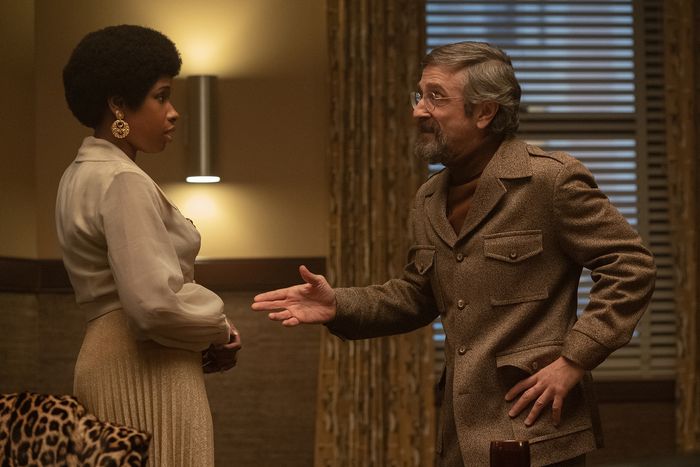
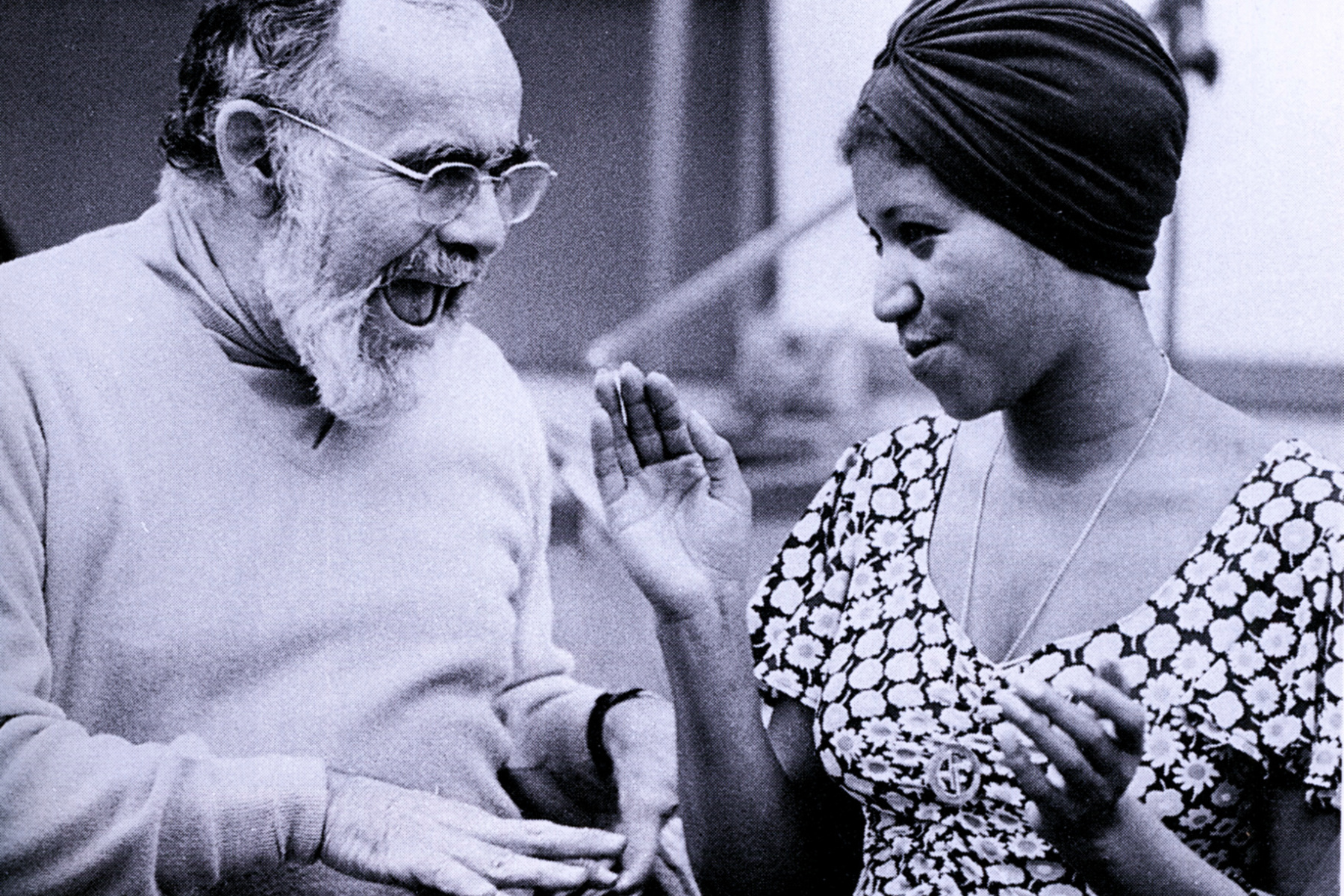
Jerry Wexler, and Marc Maron as Jerry Wexler in “Respect”

Richard Schiff made a good Jerry Wexler in “Ray,” playing the R&B fanatic record producer and Atlantic Records co-founder earlier in his career.

But Marc Maron’s take on him — the voice, the look (skinnier, yes), the “Do what the artist wants” deference, the flashes of temper — is something approaching definitive.

SOMEbody did his homework. Uncanny.

Granted, this is an arcane corner of music history, a pivotal figure R&B fans know of and few others do. But having interviewed Wexler a few times during his Siesta Key retirement, I felt I was watching the man in his prime in “Respect.”

So much “Respect” Marc Maron. Well done.

Posted in Reviews, previews, profiles and movie news | Comments Off on Jerry Wexler, and Marc Maron as Jerry Wexler in “Respect”

Movie Review: City kid has a “Buckley’s Chance” of making a Dingo his pet in this Outback drama

A piece of Aussie lore that evolved into slang becomes the title of “Buckley’s Chance,” a lad-lost-in-the-Outback drama that takes a bloody long time to get that lad lost in the Outback.

It’s about Ridley (Milan Burch), a New York city kid whose mother (Victoria Hill) drags him to Australia after his Oz-born firefighter dad dies in the line of duty. This son of a hero has become a discipline problem, so maybe a little visit with the grumpy grandad he’s never met will set him straight.

Bill Nighy plays Spencer, a grouse “trying to run a sheep station” who “doesn’t need a grieving widow” and her “pain in the arse son” around, complicating life.

But guilt over his estranged son forces old Spencer to make an effort, teach the kid a little Outback survival and outback lore — and explain why he pulls out his .30-06 and points it at dingoes every time he spies one, out mending fences and such.

“You’re gonna shoot a DOG?”

“They may look like a dog, Ridley, but they’re more wolf than dog.”

The kid isn’t convinced. So when the chance comes to rescue a fine specimen of the breed trapped in a fence, he makes a new friend. He names it after grandpa’s ranch, “Buckley’s Chance.” Buckley might come in handy when the going gets tough. Which it does, sort of, after a very long set-up.

Repeating the phrase “There’s no strength without struggle” has got to pay off eventually, right?

We sample some lovely and exotic Outback scenery — OK, dry, dusty and forbidding locations, including an abandoned open pit mine — a boy and his dog and Nighy to recommend “Buckley’s Chance.”

But the meandering story, abrupt shifts in tone and character, absurd incidents and plot twists, pauses for flashbacks and criminals who would only “play” here if they were funny let much of the air out of this.

Nighy doesn’t do much of an accent, so it’s up to Kelton Pell and other supporting players to provide the “local color.”

Still, it’s sentimental and kid-friendly, with a couple of decent grace notes. If your kids are at the undemanding age, have at it. Just try not to notice when the plot and incidents in it turn eye-rolling.

MPA Rating: unrated, animals in peril

Cast: Bill Nighy, Milan Burch, Victoria Hill, Kelton Pell

Credits: Directed by Tim Brown, script by Tim Brown and Willem Wennekers. A Vertical release.

Running time: 1:36

Posted in Reviews, previews, profiles and movie news | Comments Off on Movie Review: City kid has a “Buckley’s Chance” of making a Dingo his pet in this Outback drama

Movie Review: Hong Kong cop Donnie Yen plunges into the “Raging Fire”

“Raging Fire” is a Hong Kong cops go rogue thriller, par for the formula course for writer-director Benny Chan, whose resume is filled with its close kin — “New Police Story,” “Heroic Duo,” “Gen-X Cops” and “Gen-Y Cops.”

But it pairs up the great Donnie Yen (“Rogue One,” “Ip Man” and “Mulan”) and Nicholas Tse (“Undercover vs. Undercover”) which leads to just the sort of brawling, chasing, face-off fireworks one hopes for in a Hong Kong thriller.

Yen plays a veteran detective, married with a baby on the way, whose life and career and waylaid by the mass slaughter of several colleagues at a drug raid that went wrong.

Tse plays the leader of the masked quintet that shot up rival gangs and lots of cops in that debacle. Turns out, Inspector Cheung Shung-bong and curly-haired Ngo have history. Once upon a time in Hong Kong, they were partners. But one rainy night on the amber-lit docs, it all went wrong.

Can the ex-cop outfight, outwit, outrun and outshoot the “ethical” cop who let him go to prison, way back when?

The story is a bit of a dawdle, but here’s what we came for — a couple of grand chases, including an epic one involving a motorbike and a car, and a handful of serious, mythic shootouts and brawls.

And those deliver in a big way. Chan, who died tragically young (58) after “Raging Fire” was completed, was no John Woo. But he pays homage to the master in a few scenes (a climatic duel in a church, alas, without white doves) and otherwise lets Yen and Tse and their stunt doubles (Yen is a well-preserved 57, but we all have our limits) and occasional sped-up motion do the rest.

The novel tortures, theatrical gunplay and desperate-intimate fights that are blurs of kicking, punching, shooting and writhing take you back to a time when Hong Kong action pics were all the rage because of their original, operatic take on archetypes and violence at its most personal.

MPA Rating: unrated, lots of bloody action violence

Cast: Donnie Yen, Nicholas Tse

Credits: Scripted and directed by Benny Chan. A Well Go USA release.

Running time: 2:06

Posted in Reviews, previews, profiles and movie news | Comments Off on Movie Review: Hong Kong cop Donnie Yen plunges into the “Raging Fire”

Documentary Review: Uncovering “The Meaning of Hitler,” then and now

In this age of Charlottesvilles, here and abroad, of “Jo Jo Rabbit,” “The Hitler Channel” and Trumpism, the world is “beyond the point where people have lost the meaning of (Adolf) Hitler,” one of the chorus of experts in the new documentary “The Meaning of Hitler” laments.

He’s a mythic slur applied far and wide to racists, authoritarians and to pretty much any “leader” interviewed by Tucker Carlson.

So perhaps its time for experts, from historians and archeologists to psychologists and those versed in propaganda aesthetics and rhetorical, even microphone technique to weigh in. They can give us an accurate picture and point out the ways we’ve let Hitler be distorted into the Internet darling of anyone seeking to use imagery, words or political stance to “shock,” get attention, and tap into the “hidden under a rock” corners of Greater Deplorabilistan.

Oh no, “not another ‘archival’ (WWII/Nazi/Hitler) documentary,” narrator and co-director Petra Epperlein laments. But she and her “Gunner Palace,” “How to Fold a Flag” and “11/8/16” co-director Michael Tucker do their utmost to find “Meaning” and make this Hitler documentary stand out from the fascist fetishizing that covers whole cable and streaming channels dedicated to the subject.

We see the German Epperlein reading from all the cautionary books that describe “where we are now” on a cable car, including “1984” and finishing with Sebastian Haffner’s definitive study, which provides the film with its direction and its title, “The Meaning of Hitler.” Haffner was a German contemporary of Hitler who saw the rise of Nazism and dissected its techniques, appeal and “meaning” pretty much in real time, once he escaped to Great Britain.

We meet psychologists who tick off the wide range of “diagnoses” of Hitler, post-mortem, from “bipolar” and “Oedipus complex” to “hysteria” and “megalomania,” and then argue, with great credibility, that such “explanations” are excuses. “Millions” have these delusions, only one committed mass genocide. 

We are “rationalizing” this “normal” man, elevating him into a “monster,” letting him off the hook for his all-too-human failings, the film maintains.

And we see and hear novelist Martin Amis, one of the great men of letters of our time, cut straight to the chase, right in the film’s opening interview.

“You might as well get on with his similarities to Trump.”

That list is ticked off all the way through “Meaning of Hitler,” from “fanatical cleanliness” to delusions of “genius” to “ignorant” and only comfortable around lackeys scared to tell either Hitler or Trump how intellectually limited, cruel and stupid they are.

The most telling of these is an aside tossed out by one Hitler expert relatively late in the film. “Hitler had no friends,” and if that isn’t Trump in a sentence, no sentence can make that claim.

I was struck by the microphone historian consulted on how the “Hitler Bottle” microphone of the era became something the public speaker Hitler mastered like a great song stylist, by the discussion of “Triumph of the Will” as “pure (Nazi) kitsch” that became “the most imitated film of all time” (“Star Wars,” etc. are sampled) and yet, viewed as it is, “makes your flesh creep.”

As clips of the many screen interpretations of Hitler flicker by, we’re reminded that a big part of “the myth” is the way no filmmaker has shown us the ugly, gruesome way he and Eva Braun met their deaths, always cutting away, as if we have no right to gaze upon The Prophet at his feeblest.

The world’s most infamous Holocaust denier and anti-Semite David Irving agrees to meet with the filmmakers, but only at Mazury, Poland (home of Hitler’s “Wolf’s Lair” bunker), only after he’s ascertained that Petra isn’t “Jewish.” He physically bristles as a tour guide jokingly sings a song about German leaders’ genitals that was popular in the British Army during WWII. And afterwards, Irving repeats his usual dismissals of what Hitler knew about the Holocaust, the totality of that genocide and his own virulent anti-Semitism.

Then, still miked-up, he walks ahead and chats with a young fan, and everything he just said on camera unravels. What a creep.

Anti-Semitism is described as the ultimate “conspiracy theory,” and debunked, point by painstaking point.

All of which sets “The Meaning of Hitler” apart from any other “Hitler” or “Nazism” documentary you’ve ever seen. This film doesn’t just ask “How it happened” and show the regimented rallies, the rabid fans, the pageantry, discipline and fascist fashion sense. It breaks down how Hitler manipulated the way the audience was organized so that they’d have to stand or how he appealed to “imagined victimhood,” and how the Koch Brothers, McConnells, Zuckerbergs (who appears here at his most disingenuous) and “elites” of the day embraced him for all that they personally stood to gain from his actions.

If you see just one “Hitler” film this year, make it this one.

MPA Rating: unrated

Cast: Martin Amis, Yehuda Baeur, Richard Evans, Francine Pose, David Irving, Matilda Tucker, Saul Friedländer, Deborah Lipstadt, many others

Credits: Directed by Petra Epperlein and Michael Tucker, narrated by Epperlein, scripted by Tucker, based on the book by Sebastian Haffner. An IFC release.

Running time: 1:32

Posted in Reviews, previews, profiles and movie news | Comments Off on Documentary Review: Uncovering “The Meaning of Hitler,” then and now

Movie Review: Crowd-pleasing “Respect” demands that you sing along

We all knew Aretha Franklin’s story would make an entertaining bio-musical, and “Respect” doesn’t disappoint. It’s as uplifting and ready-made for sing-alongs as any recent bio-pic, mostly because it’s just like them.

Tracey Scott Wilson (“Fosse/Verdon” ) is the credited screenwriter, but Oscar winner Callie Khouri (“Thelma & Louise”) came up with the story arc, and one of those two should confess to cribbing the structure and style of “Bohemian Rhapsody” before the ridicule steps in.

It’s a film that peaks with the recording of the title number and climaxes with a defining, emotional concert performance. And it scrubs its subject if not squeaky clean, at least sanitized enough for us to notice. Very “Bohemian.”

But “not surprising” also goes for the lead performances. You knew Oscar winning belter Jennifer Hudson was going to render the Queen of Soul as regally as the story demands. Oscar winner Forest Whitaker was never going to disappoint as her domineering, womanizing and abusive father, Pastor C.L. Franklin.

Broadway songbird Audra McDonald as Aretha’s singing, gospel pianist mom, Barbara? Another no-brainer in that she’s effortlessly imposing in the part.

It’s the players orbiting around this impressive leading trio who deliver unexpected delights in a film that leans on “Bohemian,” but has just enough “Ray,” “Get on Up” and “Walk the Line” sizzle to deliver.

Titus Burgess, flamboyant in “Unbreakable Kimmy Schmidt,” is sympathetically soulful (and musical) as the church choir director who impresses on tiny, abused Aretha (Skye Dakota Turner, dazzling) “Don’t let nothing come between you and your music…Music can save your life.”

And comic, podcaster and sometime actor Marc Maron gives a dead-on impersonation of Jerry Wexler, the Atlantic Records producer who rescued Franklin’s career by pointing her to the songs and the sound that would make her famous, who learned to be deferential to the “Queen” and entered American pop legend with her as the “producer behind Aretha.” Maron is so uncanny in the part that he plainly based his performance on Wexler’s memoirs and TV decades of interviews discussing his “handling” of the “difficult” star.

That’s a running thread through “Respect,” Franklin’s frequent succumbing to “the Demon” that made her temperamental, mercurial and unreliable for much of her career. The script lays this at the feet of the rape that made her a mother in her tweens, and on alcohol, and suggests she found a way through it.

But she was blowing off concerts and personal appearances up to the day she died, one of the ways this script scrubs her image out of “Respect.”

The hair-raising, electrical musical moments in “Respect” come from the friction-filled trip to Muscle Shoals, Alabama, where Wexler was sure he could spring Franklin from the mundane “jazz singer” trap her former record company, Columbia, spent five years and nine (flop) LPs building.

A Black gospel singer managed by an insecure, abusive husband (Marlon Wayans, quite good) shoved into a studio with a bunch of 1960s Alabama white boys, engineered by drawling Rick Hall (Myk Hall)? Yes, it came to blows. And yes, the session that preceded that abrupt exit produced  “I Never Loved A Man (The Way I Love You),” which announced her stardom.

And scatting with her backup singing sisters (Saycon Sengbloh, Hailey Kilgore) in the wee hours, at home to produce the “Just a little bit” and “Re Re Re” (Franklin’s family nickname) that turned Otis Redding’s “R-E-S-P-E-C-T” into the feminist soul anthem for the ages is a jewel of a scene.

If you aren’t moved by that, you should check your pulse.

Director Liesl Tommy graduates from her “Jessica Jones” and “Dolly Parton” TV movie background to features with a film that hits the waypoints of a legendary career just hard enough to remind us that they’re Aretha Lore, confirmed by myth and sometimes by fact.

And Hudson knocks the songs and the rising sense of empowerment that the Queen of Soul rode into a life as a diva’s diva out of the park. Her Aretha is sexual and soft, even at her most difficult. The intensely relatable Hudson makes Franklin likable, something the “Queen” spent decades defying.

The great novelty here is the depiction of Franklin’s middle class connected-to-the-arts0-and civil rights childhood. It’s easy to forget that Martin Luther King Jr. was “Uncle Martin” to her, that she sang and spoke out on civil rights issues, and that even as a child she was rubbing shoulders with Dinah Washington, Ella Fitzgerald and “Uncle Duke” Ellington, thanks to her father’s prominence in Detroit.

Stately as it is, “Respect” never quite becomes a “great film,” but Hudson, Whitaker, McDonald, Burgess and Maron ensure it’s never less than an entertaining one, a musical biography that gives the Queen of Soul her royal due.

MPA Rating: PG-13 for mature thematic content, strong language including racial epithets, violence, suggestive material, and smoking

Cast: Jennifer Hudson, Forest Whitaker, Marlon Wayons, Marc Maron, Audra McDonald, Titus Burgess, Kimberly Scott, Hailey Kilgore and Saycon Sengbloh

Credits: Directed by Liesl Tommy, script by Tracey Scott Wilson. An MGM release.

Running time: 2:22

Posted in Reviews, previews, profiles and movie news | Comments Off on Movie Review: Crowd-pleasing “Respect” demands that you sing along