Movie Preview: Who’s ready for “The Rumperbutts?”

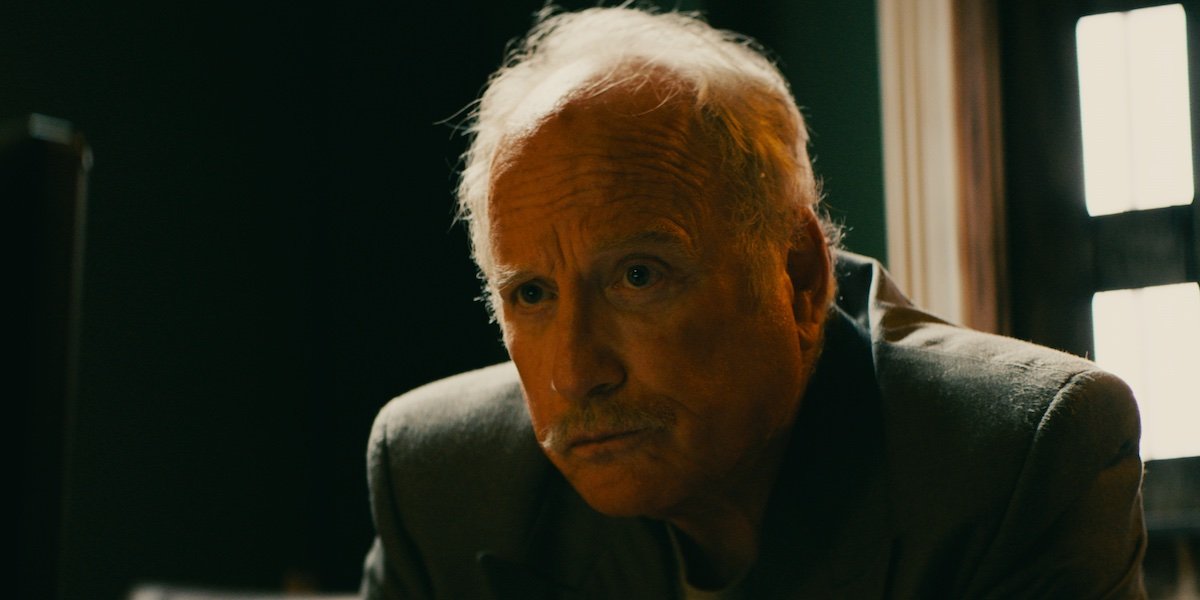
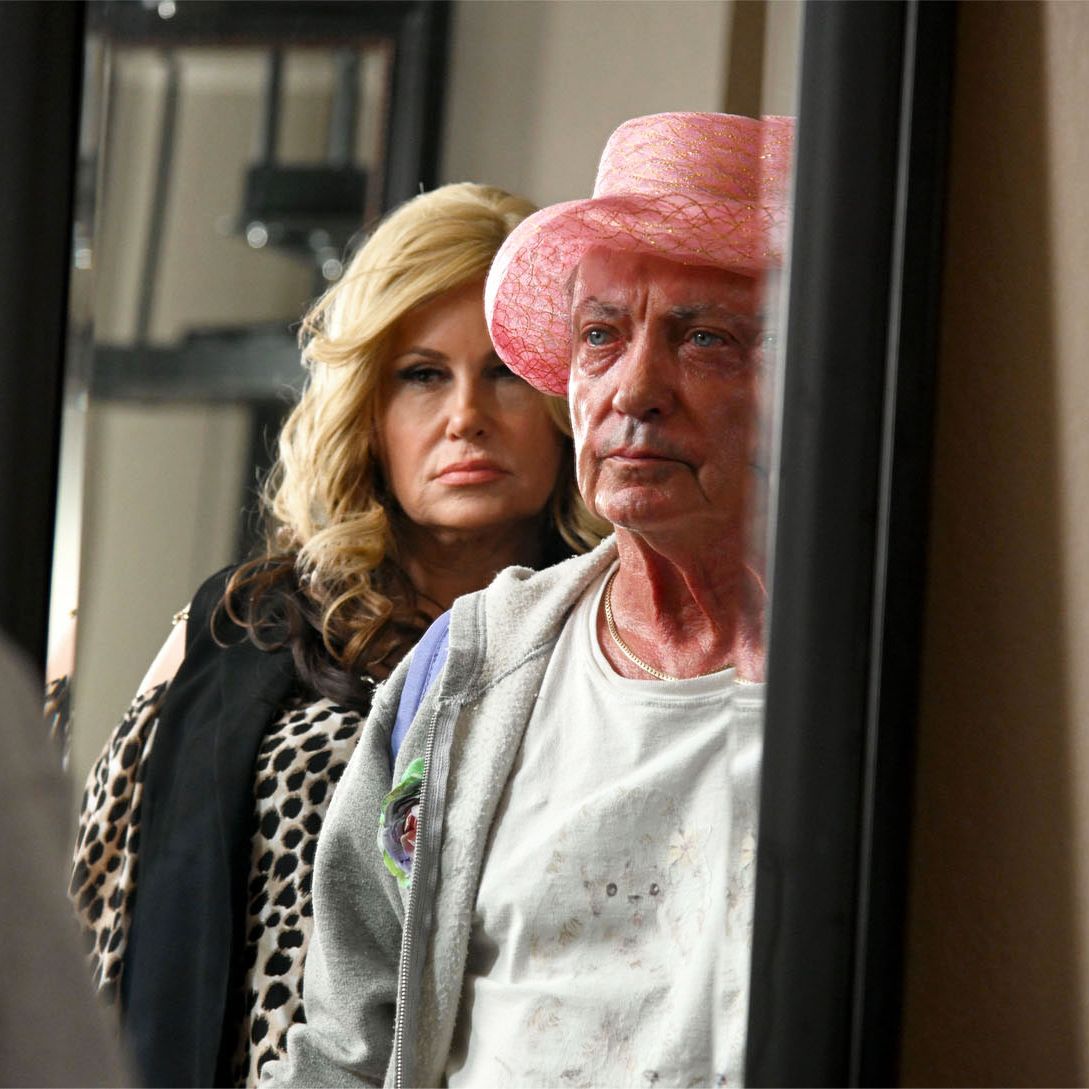
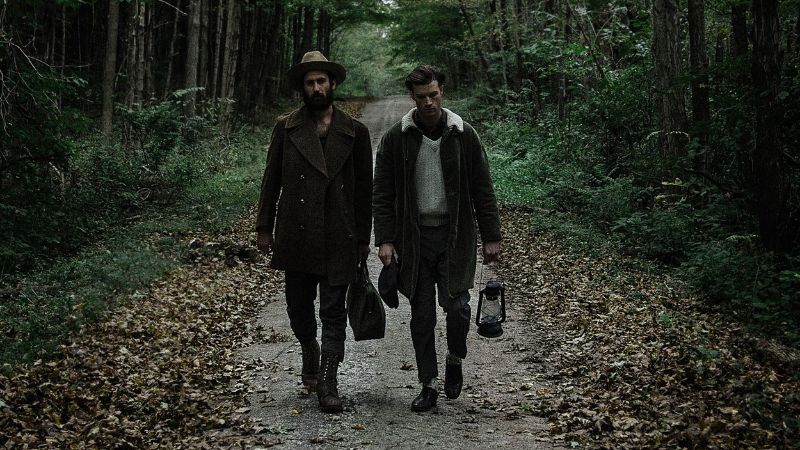
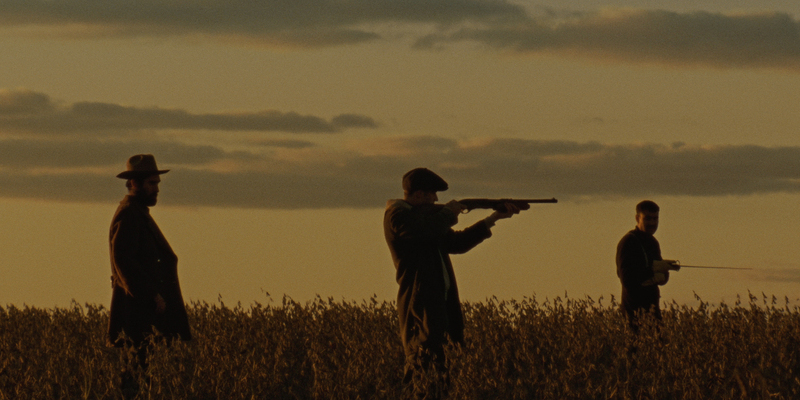
This dysfunctional couple comedy is about children’s entertainers — singers in fluffy suits — who are over it and over each other. Until a little “magical” intervention from a would be manager changes things.

Finished in 2015, not sure if it ever got any sort of distribution. Not a marketable name in the cast. Vanessa Ray and Josh Brener, Jason Edward Hammel? Nov. 19 it starts streaming.

Posted in Reviews, previews, profiles and movie news | Comments Off on Movie Preview: Who’s ready for “The Rumperbutts?”

Movie Review: Kristen Stewart resurrects Diana — “Spencer”

“Spencer” is nothing less than the reinvention of Kristen Stewart. Her portrayal of a troubled, mercurial, vain and bitter Diana, Princess of Wales is that startling, that much of a career-reset.

Her performance starts with an uncanny impersonation — the way Diana held her head, the whisper she always seemed to speak in, her carriage, stride and simple “ready for my closeup” beauty. We forget that this is actually the actress-turned-celebrity nicknamed “K-Stew” in a heartbeat. We even see flashes where she looks not just like Diana, but Naomi Watts, who played the princess in “Diana” some years back.

And almost as quickly as we lose the actress in that impersonation, she and the film transcend mimicry and plunge into the psyche of a woman wronged — a rich, powerful and unconcerned family that circled the wagons around the “outsider” to protect the feckless fop and heir to the throne, Prince Charles (Jack Farthing).

If I’ve seen a better performance in recent years than Stewart’s in this “fable from a true tragedy,” I can’t remember it. She’s stunning.

Pablo Larraín — he made “Jackie” with Natalie Portman a few years back — works from a detailed, minimalist screenplay by Steven Knight (“Locke,” “Dirty Pretty Things,” “Eastern Promises”) to produce an up-close-and-personal profile of Diana in her time of trial, the Christmas she reached her limit and ditch Charles and the Windsors, if not her fame.

Like “Jackie” and “Judy” and for that matter this month’s “King Richard,” this is biography as fantasia, a “what should have happened” story with a hint of fact and a whiff of fantasy.

It’s flattering, but nothing like a hagiography. There’s no image polishing, with just the barest mention of Diana’s “ban landmines” activism. She is vain, constantly asking “How do I look?” never venturing out less than stunningly turned out.

Diana is impulsive, lashing out within the strictures of her “duties” as she makes statements with what she wears and gives away what she “knows” about Charles and the old flame he never shook off, and carried on an affair with while both were married, simply by donning a pearl necklace.

Her most passive aggressive act of all is making the smug Corgi-fancier with “HRH” attached to her name, and her untidy family, wait. Stella Gonet has just a few scenes to suggest an Elizabeth that Helen Mirren won an Oscar portraying — emotionally-stunted, rigid and adamant about “tradition” and protocol, the older and more ludicrously out of date, the better.

When we meet Diana, she’s motoring about the countryside in her Porsche convertible, looking for Sandringham House, a drafty royal estate that is, coincidentally, next door to the great house gone to ruin that Diana grew up in, back when she was Diana Spencer.

Diana is so lost she has to ask directions from the gobsmacked inhabitants of a local pub. And failing there, she stumbles into the proud, dutiful and sympathetic royal head chef, Darren (Sean Harris, superb), who points her the right way.

Darren’s big staff prepares one ostentatiously sumptuous feast after another over the 1992 holidays, with him egging them on with a challenge borne of genuine affection and concern.

“I want our Princess of Wales to WANT something.”

Everybody in the Royal household knows of Diana’s eating disorder, and some even see it as a product of the ugly stresses of paparazzi, tabloid journalists, a husband straying with another woman, and his family’s indifference to Diana’s plight.

A sign in that kitchen orders one and all to “Keep the Noise to a Minimum. They Can Hear You.” And they do. For all the “security” surrounding this lot, the dressers, cooks and functionaries are — it is implied — their own gossiping/”reporting” social network.

Another sign is just as telling. The carefully-organized designer wardrobe Diana is to wear to every meal, outing, ceremony and the like carries a tag — “P.O.W.” You can think that stands for “Princess of Wales” if you like. But as we’ve already met the new Master of the Household, a retired Black Watch officer based on an RAF officer who had such duties, we can leap to a more ironic acronym conclusion.

Major Alastair Gregory (Timothy Spall, chilling) can seem sympathetic, but his sternness points to trouble on the horizon. He is there to keep the tabloids at bay, and it is implied, a tight rein on Diana.

“I watch so that others may not see,” he says, trying to curb Diana’s tendency to let the public and the press see more of her — candidly or otherwise — than the royal family would like, another way she fights her treatment and the restraints put upon her by her role, her fame and keeping her “place.”

Gregory cannot abide tardiness, and the admittedly paranoid Diana perceives cruelty and conspiracy in his actions.

Diana’s one confidante in the entire “holiday” travel party is her dresser, played by Oscar-winner Sally Hawkins. Her unguarded and improper bit of advice?

“They can’t change. YOU be the change.”

Over the course of three days, Diana’s “ridiculousness” — “silliness” is how she tells her oldest son William to describe it — rubs the mostly-offstage Royals the wrong way, time and again. We mostly see her, alone in her room or striding down cavernous empty halls, and see and hear servants of varying ranks knocking, calling out “Dessert, madam” or “The Family is waiting to open presents, madam.”

And Diana, finding a conspicuously-played book about the wife King Henry VIII murdered, Anne Boleyn, starts seeing Anne (Amy Manson) in her dreams and visions. Her paranoia and despair grow and grow.

Stewart’s portrayal is so vulnerable and alluring that if you’re so inclined, she could make you fall in love with “The People’s Princess” all over again. And it’s worth noting that the pretty actress has never been filmed in more flattering light. Kids who grew up on “Twilight” are thus encouraged to fall in love with Kristen Stewart again, too.

The movie around her is the damnedest thing, a script that ventures from cracker-jack to kind of crackers in the directions it takes Diana’s psyche and the lifeline it invents for her to grab.

“Spencer” owes a debt to “Jackie,” and to “Great Expectations” (a ruined family mansion, lost connections) and even “Citizen Kane.” Diana has her own “Rosebud,” and you’ll recognize it the moment she dons it.

Sure, it’s a one-sided portrait, although a more complex picture of Charles emerges despite the fact that Farthing (of TV’s latest “Poldark”) has few scenes to make an impression.

And no, it’s not the truth, or even The Gospel According to Diana.

But “Spencer” is still one of the best-written, best-acted pictures of the year. And if there’s any justice, Stewart will get the chance to smile her trademark coy grin and play with her hair, this time for a global TV audience. Oscar night could very well be her night.

Rating: R, for some language (partial nudity)

Cast: Kristen Stewart, Timothy Spall, Jack Farthing, Stella Gonet, Sean Harris and Sally Hawkins

Credits: Directed by Pablo Larraín, scripted by Steven Knight. A Topic Studios film, a Neon release.

Running time: 1:57

Posted in Reviews, previews, profiles and movie news | Comments Off on Movie Review: Kristen Stewart resurrects Diana — “Spencer”

Classic Film Review: Eisenstein’s “Alexander Nevsky” (1938)

Medieval combat, “The Battle on the Ice,” music by Prokofiev and the Soviet master of montage (editing) makes a spectacle out of mise en scene (production design, epic shot compositions) — that’s what cinephiles summon up when revering Serge Eisenstein’s 1938 classic “Alexander Nevsky.”

A filmmaker famed for telling his stories and making his (often propagandistic) points with masterful flurries of edits in “Battleship Potemkin” and “October” turns stately and almost grandiose with a large-scale patriotic epic taken from the pages of Russian history.

What sticks in the memory — and it’s been decades since I first saw it — is that famous set-piece, “The Battle on the Ice,” a sweeping scrum of cavalry and infantry set on a frozen lake, action-packed but seen largely through the eyes of a handful of stock character “types” caught up in it.

Watching “Nevsky” again, I can’t help but be struck by how Western it looks, as in The Old West as it was filmed by John Ford. “Stage Coach,” which Ford released a year later, has traces of “Nevsky” that must have been most obvious when seeing them new, in cinemas just a year apart.

They’re totally different movies, but their story structure, character tropes and set pieces are shot and timed in similar enough ways that Ford — acclaimed but not yet “Directed by John Ford” iconic — might have absorbed “Nevsky” in the process of making his Ur Western.

In the divided and conquered Russia of the 13th century, the lands the Mongol Horde wasn’t still holding were fought over by invading Swedes and others. The Rus aren’t quite enslaved, but they must be deferential to their masters.

Not Prince Alexander Nevksy (Nikolay Cherkasov). A broad-shouldered man’s man, we meet him when he stops tending his fishing nets to break up a passing Mongol raiding party’s stop-and-humiliate-the-locals pause in their ongoing marauding.

“Fight not more!” He does this merely with his commanding presence.

“Was it you who defeated the Swedes?” the Mongol leader wants to know. Yes, Nevsky admits, squaring his shoulders to the camera like a Victorian stage hero. “A person of importance” like you should join the Horde, then.

My people have a saying, Nevsky intones, his eyes cast upon the distant horizon. “Better to die in your own land than to leave it!”

When word later comes of Teutonic invaders rolling up cities on their march to the East, Nevsky ignores calls to be the one who rids Mother Russia of the Mongol menace. He will deal with them later (or leave them to Ivan the Terrible). First, I will smite the Germans.

The conflict is thus set in motion — unruly, brawny and brave Russian nobles and peasants battle disciplined, better-armed and better trained Teutonic knights, invaders who aim to conquer their land and divide it among themselves.

The propaganda value of the film, with Nazi Germany re-arming to their West, was undeniable, so much so that when Stalin gullibly took a Nazi peace pact at face value, he ordered “Nevsky” pulled from distribution.

Because the iconography of the Hated Invader who would knock down their door three years after its 1938 release is undeniable.

Killing two Enemies of the People with one stone, Eisenstein (who co-directed and co-wrote “Nevsky”) locks the monolithic German aggressor arm in arm with the Holy Church, hated by the Bolsheviks and feared by their leaders.

The Germans are clothed in crosses, have cross-shaped slits in their helmets, and are guided, guarded and egged on by Catholic priests.

“All who refuse to bow to Rome must be destroyed,” the sinister archbishop (Lev Fenin) growls.

Look at the symbol on his miter and see Eisenstein’s welding of Church and (Nazi) State in the decoration. See the hated Huns literally toss Russian babies into a bonfire.

Nevsky himself slips into the background once he’s rallied the troops and set his trap. The battle itself, haphazard and not the least bit bloody by historical and modern cinema standards, is broken into set pieces of its own.

The grizzled, whimsical Maste Armorer (Dmitriy Orlov) is full of patriotic promises and amusing aphorisms.

“Every bird pecks with its own beak,” he chuckles (in Russian with English subtitles) about his constant salesmanship.

Two nobles — Vasili and Gavrilo (Nikolai Okhlopkov, Andrei Abrikosov) battle to prove who is the most valiant in the eyes of the noblewoman (Valentina Ivashova) they’re competing for. That’s echoed in the battle scenes of Peter Jackson’s “Lord of the Rings” and scores of Westerns and combat films.

A woman warrior (Aleksandra Danilova) dons chain mail and is welcomed, another Comrade wielding Arms in the Struggle.

Only the “monied men” of pre-united Russia’s Novgorod beg for appeasement, not a “patriot” among the bourgeois lot.

The style of acting isn’t aging well. You’d never know Russia is also the birthplace of The Method from most of Eisenstein’s films. He liked casting amateurs who looked the part a bit too much for his own good.

And the great battle scene, despite the stirring (and oft-borrowed) music by Serge Prokofiev, seems more the inspiration for all that came after it than anything that stands the test of time. The silent “Napoleon” was more impressive, and Eisenenstein’s “Ivan the Terrible” bested “Nevsky” in this regard a few years later.

But I’d still place this 1938 classic as one of the two great films of the Russian cinema pioneer, second only to “Potemkin” in its art, cohesion and lasting impact and import.

If you want to call yourself a cinephile, “Alexander Nevsky” remains a must-see film in your cinematic experience.

Rating: unrated, violence

Cast: Nikolay Cherkasov, Nikolai Okhlopkov, Andrei Abrikosov, Valentina Ivashova, Aleksandra Danilova, Dmitriy Orlov, Lev Fenin and Vladimir Yershov

Credits: Directed by Sergei M. Eisenstein and Dmitriy Vasilev, scripted by Sergei M. Eisenstein and Pyotr Pavlenko. A MosFilm production, a Corinth release.

Running time: 1:48

Posted in Reviews, previews, profiles and movie news | Comments Off on Classic Film Review: Eisenstein’s “Alexander Nevsky” (1938)

Next Screening? “Clifford the Big Red Dog”

A rare Sunday AM Preview showing will let kids, their parents and critics see this adaptation of the books and PBS TV show.

The dog doesn’t talk in this rendition, which opens early this week.

Posted in Reviews, previews, profiles and movie news | Comments Off on Next Screening? “Clifford the Big Red Dog”

Netflixable? “Red Notice” throws Big Bucks and Fun Players at a Cut-and-Paste/Cut-Rate Plot

Red Notice” doesn’t go to hell straight away. Oh no.

The first act is “Thomas Crown Affair,” witty and caperish and fun. The second act is “National Treasure” warmed over — a treasure hunt with lots of Big Budget action derring-do. Meh.

The third act? “Indiana Jones’ Greatest Hits.”

Zzzzzzzz… No. Literally.

You start with FBI profiler Hartley (Dwayne Johnson) chasing “the world’s second best” art thief (Ryan Reynolds) through capers and quips.

“That was a fun foot chase, right? Lots of twists and turns. Who knew it’d end like this?”

“I did.”

It forces these two to team up against The Bishop, the world’s greatest art thief (Gal Gadot), hunting down “Cleopatra’s Eggs” (invented, no such thing) from Spain to Argentina.

And it climaxes with Ed Sheeran as a punchline.

Let down? Yeah, a bit.

The first act’s gags had me giggling — a Reynolds riff or three, Johnson commandeering a Product Placement Porsche for a chase — and wrecking it three seconds later.

The second act grinds to a halt, the third takes on delusions of theme park rides and a franchise.

Nope and nope.

Just spitballing here, but I’m guessing his “Skyscraper” and “Central Intelligence” director talked Johnson into taking Netflix Bitcoin for this, and DJ hustled up DC queen Gadot and Every Action Comedy’s Best Friend, Canada’s second sweetest export, Reynolds.

And if they don’t regret it, maybe The Wrestler Formerly Known as The Rock can drop all the “MCU and DC Universe” crossover talk. Because this bust pretty much stops payment on that check.

Reynolds’ Nolan Booth isn’t just a master thief, he’s an escape artist — “six for six…One more, and I get a ‘Shawshank’ jacket.”

Johnson’s profiler seems to get the drop on him almost as often as the Italian Interpol cop (Ritu Arya) who busts in on most every heist and locale they wind up in, and the movie winds up in a lot — Rome, Bali, etc.

When she packs BOTH of them off to Interpol prison in snowy Siberia, the viewer is given pause.

“Forget Guantanamo! INTERPOL has RUSSIAN prisons?”

Gadot glams up the joint as the fly in the ointment, and is most impressive not in mimicking her Wonder Woman moves in “trophy room” fights. The twinkle in her eye in a few moments of sadism is some of the best acting we’ve ever seen her do. We hope it’s acting, anyway.

Johnson has evolved into a first-rate straight man and bulk-rate punchline. And Reynolds makes everything, even middling pix like “Red Notice” — the title is Interpol’s “highest” warrant, the script claims — bubbly enough to endure.

There’s no sense pummeling a popcorn picture whose greatest sins are running out of new ideas, running out of gas and running through Reynolds’ repertoire of riffs as it does.

But this is by far the worst Rawson Marshall Thurber outing to star Dwayne Johnson, and even though it’s made for Netflix (briefly in theaters as I type this), the Big Guy always with a Big Plan for What’s Next has got to be thinking maybe it’s time to change phone numbers.

Because when you hit that wall in the third act, it’s not just ginger pop Ed Sheeran staring back at you. It’s what a certain Canadian wit would call “resting failure face.”

Rating: PG-13 for violence and action, some sexual references, and strong language

Cast: Dwayne Johnson, Ryan Reynolds, Gal Gadot, Ritu Arya and Chris Diamantopoulos

Credits: Scripted and directed by Rawson Marshall Thurber. A Netflix release.

Running time: 1:57

Posted in Reviews, previews, profiles and movie news | Comments Off on Netflixable? “Red Notice” throws Big Bucks and Fun Players at a Cut-and-Paste/Cut-Rate Plot

BOX OFFICE: Is “Eternals,” the “Worst Reviewed MCU movie ever,” headed for a Box Office bust?

Chloe Zhao’s “Eternals” isn’t headed down the box office toilet, by any means.

It did a brisk just-under-$10 million Thursday night — below the pandemic era peaks for Marvel movies — and was over $30 million by Friday night.

But as Deadline.com points out, the reviews have been indifferent to bad and Cinemascore polling from folks leaving the theater is telling Marvel and our “Nomadland” Oscar winning filmmaker that they weren’t a good match.

So a $70 million weekend may be what we see, or something in the $60s if Saturday doesn’t pan out. Those are “Ant Man” numbers, nowhere near “Black Widow” or “Venom/Carnage.”

Netflix isn’t reporting the box office take of its soon-to-be-streamed Red Notice.” I will be reviewing that in a few minutes, and the fact that it cost $200 million should make them hope for at least a little cash from the brick and mortar cinemas before it has to pay the rent with the streaming service.

They haven’t had the best of luck with big budget action films, so fingers crossed.

“Dune” is sliding down the charts, and won’t clear $7 million this weekend.

The Kristen Stewart “Spencer” movie about Princess Diana is bombing. I will see that Sunday. Neon’s marketing department is out to lunch (no pitch, no response to queries), which may explain why this Oscar bait with good reviews isn’t doing diddly.

Posted in Reviews, previews, profiles and movie news | Comments Off on BOX OFFICE: Is “Eternals,” the “Worst Reviewed MCU movie ever,” headed for a Box Office bust?

Netflixable? Gender-switch comedy from Colombia — “Lokillo (Mi Otra Yo)”

“Lokillo,” aka “Lokillo en: Mi Otra Yo” is a Colombian comedy about a sexist TV chat show host forced to dress as a woman and hide out in prison after he crosses a Colombian drug lord.

This “Around the World with Netflix” offering is seriously malnourished as comedy. There’s barely a chuckle in it, at least for anyone who’s been enjoying cross-dressing comedies since “Some Like It Hot.”

What it has going for it is its messaging. An unrepentant misogynist bonds with the other inmates in a women’s prison, hears their stories and wonders if maybe his “punching down” at women isn’t satire, but just bullying.

Does Dave Chapelle watch movies with subtitles?

Yedison Flores is a Colombian comic whose name seems to be a goof on a famous Peruvian soccer star, Edison Flores. The comic nicknamed “Lokillo” (a little loco/crazy) also got a Netflix standup special that the streamer just added to its lineup.

Here he plays Jimmy Barón, host of the popular “L Hora Menos Pensada” (The Least Expected Hour) where he danced with the band, interviews guest and jokes around about women. Constantly.

“Jesus Christ should have been a woman,” he riffs (in Spanish with English subtitles). “‘Rise up Lazarus! Make your bed!'” Stuff like that.

His fans eat that up, but not professional women. A female presidential candidate doesn’t take his whole “Women should be in every high office…sweeping up” joke well. Neither does a woman in his studio audience (Jessica Cediel) who’d love to get him to visit her little sister, a big fan dying of cancer in a hospital.

But there’s this drug dealer, “The Boss,” who would love for him to come and give a command performance. Jimmy shrugs these entreaties off until the moment he’s kidnapped by two-fisted Sizu (Shirley Gómez) and her minions, who pile out of their Dodge Ram, knock Jimmy out and present him to the kingpin.

For some reason boss Agustin (Javier Gardeazábal) wants one of the most famous comics in the country to perform in drag. But just as Jimmy’s about to launch into his traumatized act, there’s shooting, Agustin flees and Jimmy is the only outside witness to his crime.

Guess who the prosecutor is who has to keep him alive to testify? That would be Lili, the woman with the sick sister, brushed off by Jimmy just the day before.

Her idea? Summon some Hollywood makeover experts, doll Jimmy up as a gender he hates and “hide” him in a women’s prison. While he’s in there, maybe he can let them know about an attempted jailbreak that’s coming soon.

Jimmy finds himself getting slapped around by the “Naranja es las nueva Negra” crowd, and bonding with them. He hears their “stories,” why they’re incarcerated. To a one, they’ve been victimized or even abused by men.

Four credited screenwriters couldn’t find a laugh in that odd set up, not a giggle in the simple logistics of shaving, showering etc and keeping Paola’s — as the female Jimmy is named — secret from the prison population.

The sentimental stuff here kind of plays, and there’s a cute Paolo-leads-dancercise class in “The Yard” bit.

But the script meanders through the lamest set-ups, from the guard (John Jairo Rodriguez) who develops a crush on ultra-feminine Paola to the snazzy, hand-held-camera prison break.The makeover and “act like a woman” lessons are handled in an unfunny montage.

And Jimmy’s act, his stage bits, aren’t the least bit funny. That’s not political correctness talking, that’s comedy savvy weighing in. Surely our star could come up with wittier bits than these.

If you want to see Flores funny, the stand-up special might be your better bet. The only characters to register as amusing here are a couple of brawling inmates, and Gomez’s punchy mob “fixer,” a tough broad in a murderously male milieu.

There’s nothing else loco or “Lokillo” about it.

Rating: TV-MA, profanity

Cast: Yedison Flores, Jessica Cediel, Javier Gardeazábal, Carla Giraldo, Shirley Gómez and John Jairo Rodríguez

Credits: Directed by Julian Gaviria, scripted by César Betancur, Yedison Flores, Dago García and Juan Pablo Martínez. A Netflix release.

Running time: 1:29

Posted in Reviews, previews, profiles and movie news | Comments Off on Netflixable? Gender-switch comedy from Colombia — “Lokillo (Mi Otra Yo)”

Movie Preview: A24’s “The Beach (Infinite)” trailer

This is pitched as a “continuous streaming event,” streaming Thanksgiving week.

Looks alternative-lifestyle intriguing, I must say.

Check it out.

Posted in Reviews, previews, profiles and movie news | Comments Off on Movie Preview: A24’s “The Beach (Infinite)” trailer

Movie Review: Horror’s the main course in the Welsh thriller “The Feast”

“Tone” is the triumph of the Welsh thriller “The Feast.” Tone — in its lonely, remote setting, its chilly, unsettling characters and the deeply unpleasant things that transpire — is everything.

The Welsh language (with subtitles) tale may take some getting used to, and the finale go absurdly overboard in “explaining” it all. Mystery is far spookier, after all. “Motives” don’t have to be underlined or punched out in bold type.

But veteran British TV director Lee Haven Jones does a swell job of knocking us off balance, and keeping us there in this disturbing story of dinner party horror in an Architectural Digest showplace home in the Welsh countryside.

Cadi, a poker-faced and largely silent pub waitress brought in as replacement kitchen/serving help by the lady of the house (Nia Roberts), stands out in an instant, even in this house full of characters on the creeper spectrum. Cadi is given a gawky, ungainly and faintly sinister air by Annes Elwy, and long before we see proof, we know something about that girl isn’t right.

Nervous, highly-strung and put-out wife and mother Glenda (Roberts) is almost normal by the standards of the family surrounding her.

Businessman/hunter Gwyn (Julian Lewis Jones) likes to keep up the illusion that he’s a man’s man, providing hares for the evening’s repast. But he didn’t shoot them. He found them strung up like an offering. Not that he tells anybody this.

Wrapped-too-tight son Guto (Steffan Cennydd) is an almost antic fidget, given to practicing his electric guitar on the lawn, plainly stir crazy about his surroundings. Whatever he uses to take the edge off is not available to him here.

“You can return to London when you’ve shown us you’ve grown up.”

And it’s too-apt that sometime med-student taking a break to be a triathlete Gweirydd (Sion Alun Davies) has a name that sounds like a Welsh version of “weirdo.” He loves his unitard and his body so much he can’t look away from the mirror or keep his hands off himself. He has one look, and it’s a leer.

Cadi? She freaks out at the sound of the hunter’s shotgun, is revolted by the sight of bloody carcasses and starts spit-cleaning the glassware for the night’s “make a good impression” dinner.

Something — many things — tell us she’s not up to the job. But the guests — business manager Euros (Rhodri Meilir) and neighboring farmer Mair (Lisa Palfrey) soon show up. Let the frazzled festivities begin.

Let’s just say nobody wants to take too hard a look at what’s going down in the kitchen.

Screenwriter Roger Williams, who has many Welsh and English-speaking TV credits, serves up sibling rivalry and accidents, ancient lore in collision with modern, money-grubbing short-sightedness — all stirred into a sometimes revolting stew of conflict cooked up by the off-center and off-putting Cadi.

We can see, in a larger sense, where this is going. But the waypoints and jolts in the many titled chapters (“I Want to Make a Good Impression,” “There’s a feast awaiting us,” etc.) that play out here are largely unexpected.

The gore of the third act has been mysteriously foreshadowed in the opening image. And yet Williams and director Jones feel the need to lay it all out there in subtitled explanation, dispelling what mystery there is about the film.

The “surprise twist” is a little surprising, but it tends to break the “What the hell is she on about?” mood of the piece.

And as mood encompasses tone, the behind-the-camera folks thus almost let down the confused, endangered and overmatched characters and the actors who play them in front of it. Almost.

Rating: unrated, graphic violence, sex

Cast: Annes Elwy, Nia Roberts, Julian Lewis Jones, Steffan Cennydd, Sion Alun Davies, Lisa Palfrey and Rhodri Meilir

Credits: Directed by Lee Haven Jones, scripted by Roger Williams. An IFC Midnight release.

Running time: 1:33

Posted in Reviews, previews, profiles and movie news | Comments Off on Movie Review: Horror’s the main course in the Welsh thriller “The Feast”

Netflixable? Two old friends collide, Black and “Passing” in 1920s New York

“Passing” is something of an understated tease.

Actress Rebecca Hall, just seen in “The Night House,” makes her writing/directing debut a melodrama about race that hints that it might be about something more than fair-skinned Black women — one “passing” for white, the other appalled by it. It isn’t.

Filmed in the washed-out monotone of digital black and white (over-lit, with limited contrasts compared with celluloid black and white), this staid, not-quite-still-life adaptation of Nella Larsen’s novel is an unflashy recreation of “Renaissance” era Harlem that comes to life thanks to its leads, who bury the spark of their connection beneath the Middle Class manners of the aspirational New York of the 1920s.

The best scene in the film is the first. An upper middle class woman (Tessa Thompson) shops and copes with a city heat wave on her own. She confers with sales clerks, hails a taxi and settles into a seat in the cool (pre-air conditioning) tea room of a swank hotel. But her stylish hat is pulled down low, covering her eyes and hair. She makes little eye contact. That’s something furtive and tentative about her demeanor.

Irene is Black, but so fair skinned she might “pass,” and we get the notion she might be doing it right now.

That’s when she makes eye contact across the tea room. The blonde looking her up and down? That’s an old friend. That’s Clare, who knew Irene as “Reenie” back when they were in school together, back before Clare (Ruth Negga of “Loving”) changed her hair, moved away and married a white man in Chicago.

And even though Irene thinks better of it, Clare insists she join her in her hotel room to catch up, have a little (illegal) nip of liquor.

Reenie has…questions. “Does he…know?”

Oh no. The businessman Clare married has no idea. And when Reenie and we meet John (Alexander Skarsgård) we can see he doesn’t have a clue. He’s even given his wife a clueless nickname, noting how she’s “grown darker and darker” over time.

“Nig,” he calls her.

Guarded but repelled, Reenie tries to avoid deeper reconnection with Clare when she and her husband move back to New York. But there’s no resisting her, and soon she’s “passing” in Reenie’s social circles, at the jazz clubs whites like to frequent in Harlem, joining the liberal writer Hugh Wentworth (Bill Camp) for high balls and bon mots, spending lots of time with Reenie and her overworked physician husband Brian (André Holland).

Reenie may smile and accept this, but Thompson (“Creed,” “Selma,” “Sylvie’s Love”) never lets go of the character’s unease, the “risks” she sees her old friend taking and what those risks say about Clare and her intrusion into Reenie’s life.

There’s a high-mindedness here that elevates a movie that on closer inspection isn’t particularly daring or revelatory.

Thompson keeps Reenie’s middle class reserve and sense of place in our minds as she avoids confrontations with Clare over her behavior and her husband over Brian’s eagerness to leave the United States.

She may protest his reading accounts of a lynching to their little boys. But Brian is blunt about why such things happen and why he thinks they should leave.

“Because they hate us, son.”

The Oscar nominated Negga makes Clare cagey enough to keep the viewer in the dark about what’s really going on — guilt because she’s denying her race, some other “history” with Reenie or a danger-loving personality that could hint at other transgressions she might consider.

Camp makes his fictional author larger than life, but the film left me confused about his presence in Reenie’s Negro League (NAACPish) functions and true connection to this world.

Hall directs with a light hand, focusing on characters and performances, and that serves her leads well. But the film lacks much in the way of heat, drama and “danger.” The “life” this movie looks in on — Harlem in its most glorious epoch — feels pristine, preserved under glass, not “lived” by flash and blood characters.

Casting Skarsgård, best known for his villainous turn in “Big Little Lies,” seems a tad on the nose.

“Passing” almost passes muster by virtue of its two winning leads. If only Hall had given them fireworks to play and a world that feels more vibrant than a faded black and white photograph.

Rating: PG-13 for thematic material, some racial slurs and smoking

Cast: Tessa Thompson, Ruth Negga, André Holland, Alexander Skarsgård and Bill Camp.

Credits: Scripted and directed by Rebecca Hall, based on the novel by Nella Larsen. A Netflix release.

Running time: 1:39

Posted in Reviews, previews, profiles and movie news | Comments Off on Netflixable? Two old friends collide, Black and “Passing” in 1920s New York