
Why do I keep wanting to title this “Cry Havoc,” is it the Shakespeare connection to that alternate?
Or is it fear for another sign that aged, impatient One Take Grandpa needs to surrender his keys? We all get there, eventually.
Why do I keep wanting to title this “Cry Havoc,” is it the Shakespeare connection to that alternate?
Or is it fear for another sign that aged, impatient One Take Grandpa needs to surrender his keys? We all get there, eventually.
This one played at Sundance and makes its way to theaters and streaming Oct.8.
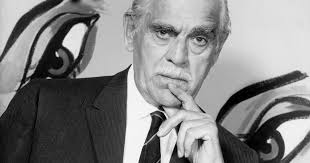

The British born son of a diplomat, a Kings College dropout of Anglo-Indian heritage, William Henry Pratt was probably the most unusual looking and almost certainly the best educated lumberjack in all of British Columbia when he lied his way into a touring North American theater company and invented a more exotic stage name to go with his dark looks and sinister gaze.
Boris Karloff was born, albeit in the small time of touring theater. And if not for a fortuitous moment of unemployment as he passed through Hollywood at the end of World War I, theater is where he might have remained. Fifty years, 205 screen credits, a mid-career Broadway smash and late career revival as TV host and much-employed, beloved guest star later, he died at a ripe old age, a man feared in his youth, utterly beloved in his dotage.
“Boris Karloff: The Man Behind the Monster” is an adoring appreciation of a screen icon, one of the founding figures in the birth of The Horror Movie, a cultured man who made his good name scaring generations half to death.
Filmmakers Thomas Hamilton (director) and Ron MacCloskey (screenwriter) can’t have had much trouble rounding up scores of interview subjects to talk about Karloff and sing his praises. From directors Guillermo del Toro and Joe Dante and actors Ron Perlman and Christopher Plummer to film historians, critics and the great man’s daughter all sat down to wax rhapsodic about Karloff and his life’s work.
When “How the Grinch Stole Christmas” came along in the mid-1960s, Karloff was already that over-used word, “a legend,” the definitive Frankenstein’s monster, an icon in a genre he preferred to label “thriller” rather than the one that stuck — “horror.” But every Christmas, from now until Kingdom Come, there he is, plummy-voiced and menacing, warm and ruthless, a cartoon character with but one mission.
“I must stop Christmas from coming!”
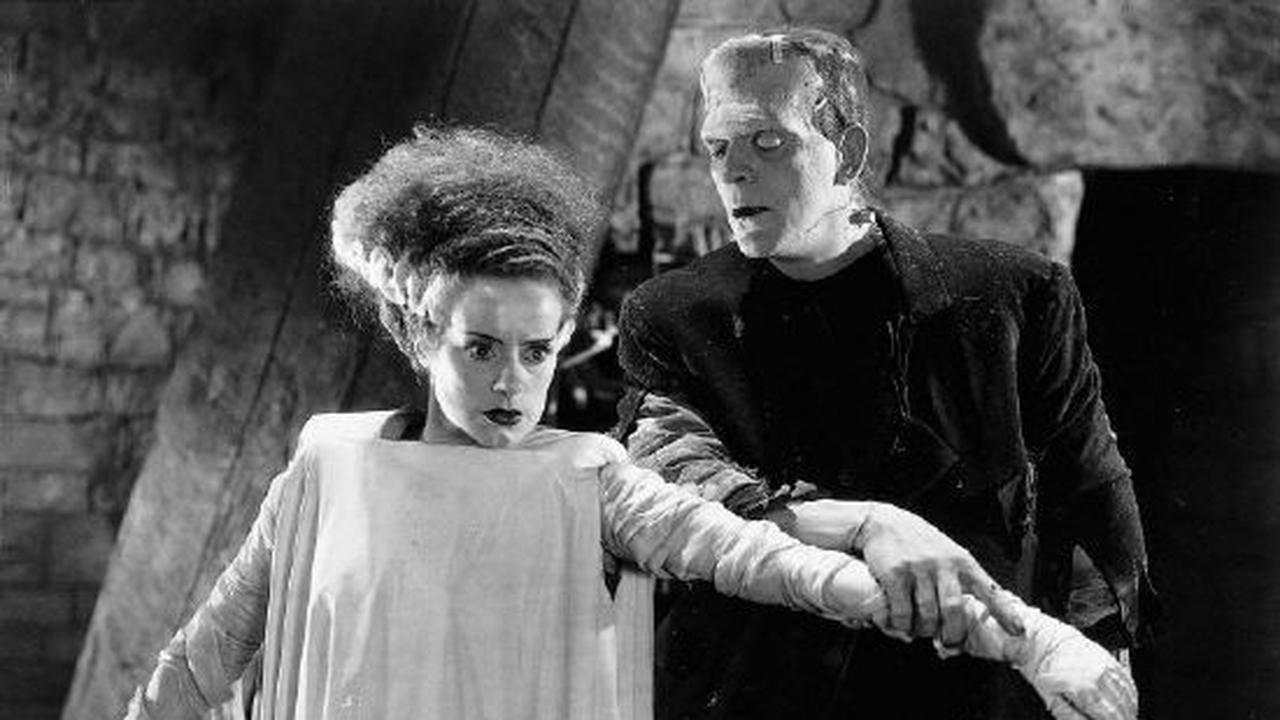
The longest portion of “The Man Behind the Monster” is devoted, as one might expect, to his work on James Whale’s “Frankenstein,”: the 1931 masterpiece that most refer to as his “big break.” Karloff, who’d been an extra and day player in silent films for over a decade, preferred to think of 1930’s “The Criminal Code” as providing that.
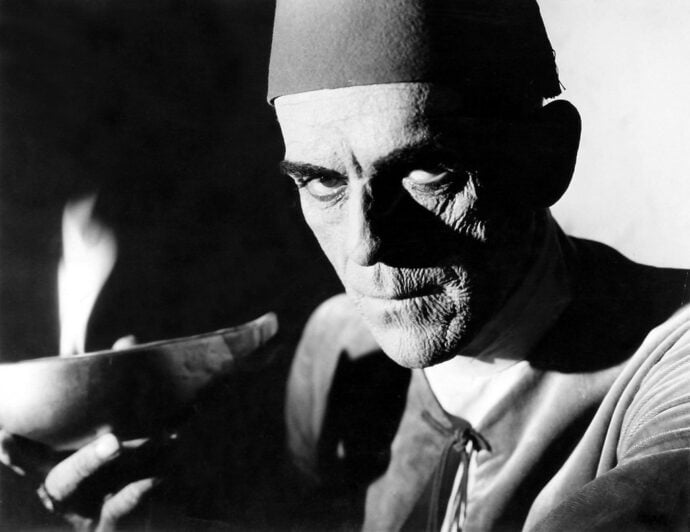
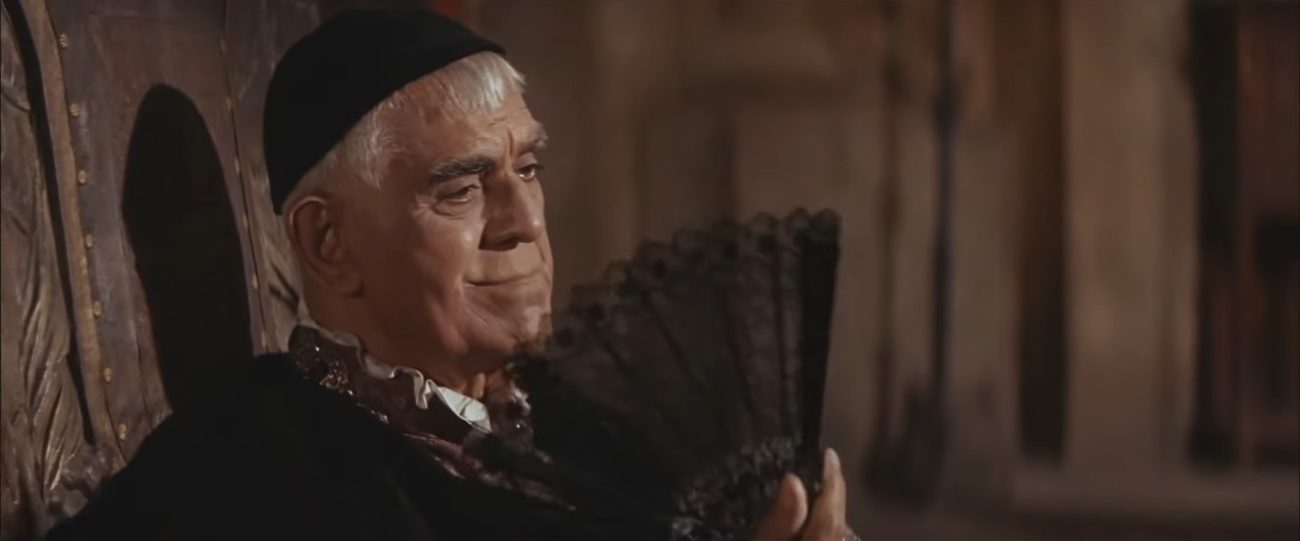
“Monster” does a great job setting the table for Karloff’s sudden stardom, when he was so famous, overnight, that movie posters used just his last name as he won top billing in classics from “The Old House” and “The Black Cat” to “The Mummy,” “The Body Snatcher” and “Bedlam,” with “Black Sabbath,” “The Raven” and “Targets” as glorious 1960s curtain calls.
He had a stammer that he shook off and a lisp that he never did, and a deep, resonant voice that could be professorial and avuncular, or menace in its purest form.
We hear of the battle over the long-deleted murder of a child scene from “Frankenstein,” and how hard it was to convince the star that he was good enough for Broadway, playing a criminal whose plastic surgery made him “look like Boris Karloff” in “Arsenic & Old Lace.”
His checkered family history, and a hint of how he might have remained something of a disapproved-of outsider even after finding great wealth and fame, within a family of diplomats, is touched on.
His fragility in his later years is noted, underscored by the trooper he was even in his last appearances.
And academics and biographers renew our appreciation for the less-known classics on his resume, such as “West of Shanghai” and “the most racist mainstream film that Hollywood made in the ’30s,” “The Mask of Fu Manchu.”
His extensive TV work is given a going over too, hosting and sometimes starring in the anthology series “Thriller,” and this gem, a guest-bit on Dinah Shore’s Show which let him show off his singing chops.
I was tickled by the TV guest shots and most intrigued by the way historians describe the way “Frankenstein” and its makeup maestro, Jack Pierce, augmented Karloff’s chiseled, gaunt face into the way Frankenstein is thought of to this day.
Roger Corman and Peter Bogdanovich, who worked with Karloff, sing his praises as an actor and gentleman to work with. But it is fanboy and Oscar-winning filmmaker Del Toro (“Pan’s Labyrinth,” “The Shape of Water”) who sings the loudest.
“I had a religious conversion” on seeing the various “Frankenstein” movies Karloff made, “a Paul on the Road to Damascus moment…I saw my Messiah!”
Watching Del Toro’s films, we can believe it. Watching “The Man Behind the Monster,” we get it. “Horror” may predate Karloff, and even his contemporaries Lon Chaney Sr. and Bela Lugosi (who became a good friend). But if there’s a face that launched a genre, it was Karloff’s. Something to remember the next time you hear “Maybe Christmas (he thought) doesn’t come from a store. Maybe Christmas perhaps means a little bit more.”

Cast: Boris Karloff, Guillermo del Toro, Sara Karloff, Joe Dante, Ron Perlman, Leonard Maltin, Roger Corman, Peter Bogdanovich, Christopher Pummer and Kevin Brownlow.
Credits: Directed by Thomas Hamilton, scripted by Thomas Hamilton and Ron MacCloskey. A Shout! Factory/Abramorama release.
Running time: 1:39

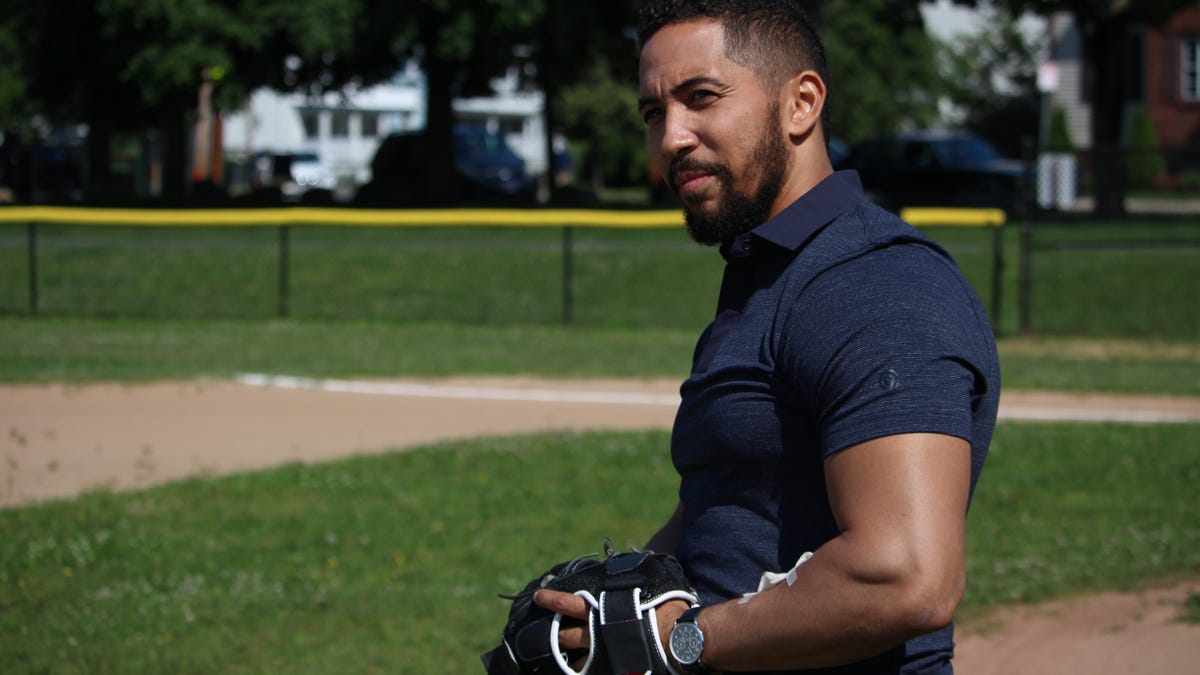
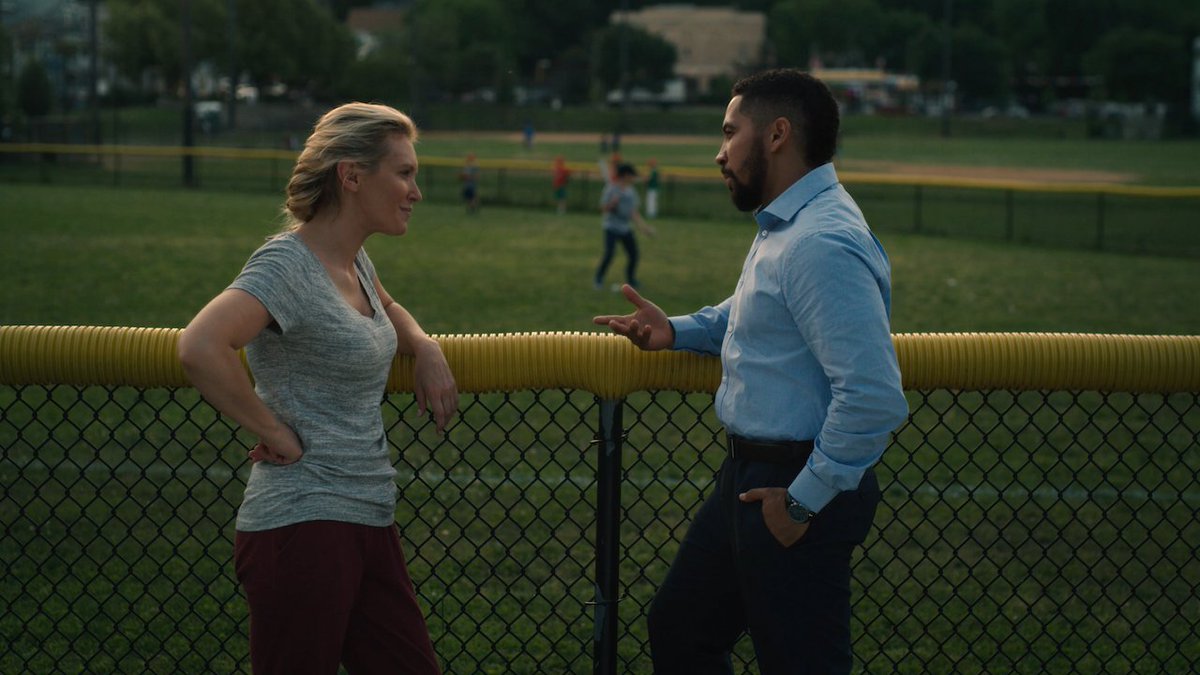
“Last Night in Rozzie” is a “scars and crimes of childhood” revisited drama, a “Sleepers” or “Mystic River” without cops or an investigation, then or now.
Take away those elements and this Boston (Roslindale) tale is reduced to its most basic — guilt, what you “owe” somebody. And in this case, those “basics” are pedestrian and dull.
Neil Brown, Jr. of TV’s “Insecure” and “Seal Team” stars as Ronnie Russo, a New York corporate attorney who gets the call from the last guy he expected to hear from. He never kept in touch with Joey Donovan. And now the guy on the other end of the phone — coughing, joking and busting his balls — is dying.
Something about their past let’s Donovan guilt Russo into ditching a pressing piece of work, hopping into his Tesla and dashing north. Flashbacks point to a childhood trauma, Russo’s last day in Roslindale — “Rozzie” — that last Little League game, before he moved away.
Donavan (Jeremy Sisto, currently on TV’s “F.B.I.”) smiles a lot for a guy ending his life in a hospital, cracks jokes between tubercular coughs and fills his old friend in. Yeah, I was married. Yes, I’m a father. And the payoff, the reason he’s summoned him to Boston?
“She won’t let me see my son.” Attorney Ronnie Russo needs to fix that. Donovan seals the deal with a suggestion of their history, an implied “You owe me” and maybe the movie’s best line.
“You were my last call.”
The cunning, work-stressed attorney decides the best way to go about this isn’t getting to the real reason his former crush, Donovan’s former wife, keeps Donovan from their son. No “direct approach” for Russo. He’d rather stake her (Nicky Whelan) out, “accidentally” meet her at the old ballfield, ask for dates, etc. He needs coaching on that from the dying man.
“We don’t have a lotta time.”
“No. That’s true.”
What’s implied is that that old crush never died. That’s why Russo lies to Patti about the “chance meeting,” why he tries too hard to make a great impression (stupidly-expensive Green Monster tickets to a Red Sox game), why a grown-ass New York lawyer takes leave of his senses and goes about this “I just wanna see my son” request in the most time-consuming, doomed-to-backfire way.
As with most films on this sort of subject, the flashbacks have most of the pathos and action. Young Donovan (Ryan Canale) was a promising pitcher, and a bit of a bully, with the scars on his arms that remind us “bullies are made” by bad parenting, as often as not. Young Ronnie Russo was in his thrall.
But there’s not much suspense to what happened then or what will happen in the present. The slack pacing and generally flat performances rob “Last Night” of any urgency and lower the stakes.
The leads range from charismatic to merely adequate, which doesn’t help.
Director Sean Gannet and screenwriter Ryan McDonaugh expanded their short film of the same title (recasting it, etc.) in adapting this. All they managed to do was water it down and add filler, lose any local color (none of the adult leads do anything like a Boston accent) and turn this “Last Night” into nothing the least bit memorable.

Rating: unrated, violence, profanity
Cast: Neil Brown Jr., Nicky Whelan, Ryan Canale, Greyson Cage and Jeremy Sisto.
Credits: Directed by Sean Gannet, scripted by Ryan McDonaugh. A Gravitas Ventures release.
Running time: 1:20




You just knew that some actress would see the scandalized televangelist and latter day gay icon Tammy Faye Bakker in 2001’s acclaimed documentary “The Eyes of Tammy Faye” and lick her lips at the thought of playing her on the big screen.
And maybe you remembered that when it was announced Jessica Chastain would take her on and thought, “Yup. She’s got the lips for it.”
But friends, that understates how perfect she is for the part. This is what a “tour de force” performance looks like.
Chastain and an equally well-cast Andrew Garfield bring the upbeat, avaricious Evangelicals to thrilling life in this new “The Eyes of Tammy Faye,” a film that documents their fervor and ambition, their greedy rise to glory followed by an epic public fall.
Director Michael Showalter (“The Big Sick”) and screenwriter Abe Sylvia (he wrote several episodes of “Nurse Jackie”) struggle not just to wrestle this classic American saga into shape, but to make up their own minds about the anti-heroes at the heart of it.
The charismatic Bakkers are presented as bystanders in the corrupting spread of Evangelical Conservatism, led by the power-mad homophobe Jerry Falwell (Vincent D’Onofrio) and outed white supremacist Pat Robertson (Gabriel Olds). And Tammy Faye’s status as a gay icon was secured forevermore when she introduced her mostly-rural, wholly Fundamentalist TV audience to the idea that homosexuality should be tolerated, that AIDS couldn’t be the Old Testament “gay plague” political kingmakers like Falwell and Robertson preached that it was.
“We’re all just people, made out of the same old dirt,” the film has her bubbling to Falwell. And later, she more pointedly tells her wavering, Reagan-loving husband, “I’m NOT going to tell people who’s going to Hell, Jim.”
But the film and the filmmakers can’t quite pull off that warm embrace. “Eyes of Tammy Faye” keeps this publicly messy, kind of icky marriage of hustlers at an understandable arm’s length.
The film begins with fire and brimstone, giddily captures the Minnesota Bible college connection that Jim and Tammy Faye make and amusingly takes us on their traveling preachers with a puppet show to TV stars fast track to fame.
The great Cherry Jones plays Tammy Faye’s International Falls church pianist mother with a True Believer’s fury, a woman who embraces the idea of being shunned by her tiny Fundamentalist congregation as “a harlot” for divorcing and remarrying, and keeps little Tammy Faye (Chandler Head) away from services there because of that.
But the mouthy, headstrong child won’t be denied this experience. And when she sneaks in, she steals the spotlight — speaking in tongues, falling down and wetting herself as her mother barks at her to “Stop performing.”
She never did.
The Bible college meeting with Bakker comes when Tammy Faye’s a fellow student, listening to his practice sermon to a class and disapproving teacher, formulating from the pulpit Jim’s version of the “prosperity Gospel” that would make them rich and infamous.
“Here and now, in this very world, GOD does not want us to be be poor!”
“Hallelujah!”
The script races to get them off the road and onto Pat Robertson’s CBN TV network, where Tammy’s Christian life lessons puppets are the big draw and Jim invents the “talk show for Christians,” “The 700 Club.” “Eyes” skips through their move to Charlotte, N.C. and the formation of “The PTL (Praise the Lord) Club.” And the picture bogs down as the free spending, empire building and open misuse of charitable funds gets the Pulitzer Prize-winning attention of The Charlotte Observer.
If you remember anything about their fall, it’s in the sordid details trotted out here, which are foreshadowed, hinted at and delivered in a sometimes ironically amusing, sometimes unjustly unsatisfying way.
Through it all, Chastain and Garfield shimmer in their roles. Tammy Faye’s smiling, singing and relentlessly positive Minnesota spin on Fundamentalism perfectly complemented Bakker’s upbeat “GIVE for the Glory of God” fund-raising pitches. She is a free spender, but he’s the one whose big dreams put them forever under water. He’s the one who took short-cuts in building his TV network, vast land holdings and Christian Theme Park, Heritage USA.
Garfield strikes just the right note with Bakker, smiling and somewhat sissy-voiced and catnip to his fans, who never got over the news that Liberace was gay. But Chastain is perfect. Forget the prosthetics and the “clown makeup” mimicry. She gets under the character’s skin, sings in her own voice and never lets an insincere moment flicker by on the screen. This is one of those performances of the “La Vie En Rose/Judy” caliber, a larger-than-life turn that more than compensates for a movie that doesn’t quite measure up.
D’Onofrio captures Falwell’s humorless arrogance and the homophobia just with his imposing size. We glimpse the power-coveting that drove him to back Reagan and turn Evangelicals forever away from the Godly Baptist lay preacher then in the White House — Jimmy Carter. But an actor this good should have nailed the self-righteous Falwell smirk, the man’s trademark.
And none of the actors playing other Evangelicals — Robertson, Swaggart et al — resemble their characters or register at all.
So this “Eyes of Tammy Faye” doesn’t replace the original documentary even as it finishes the job of turning its heroine into a “misunderstood” gay icon and martyr. Rather, what Chastain, Garfield, Showalter and Sylvia have managed is a movie that traces America’s precipitous fall for even bigger con artists with fascist impulses to its source, the “entertainers” who talk people out of money and convince them they’re hearing supernatural voices when all they really want is riches and power.

Rating: PG-13 for sexual content and drug abuse
Cast: Jessica Chastain, Andrew Garfield, Cherry Jones, Vincent D’Onofrio, Gabriel Olds, Chandler Head and Sam Jaeger.
Credits: Directed by Michael Showalter, script by Abe Sylvia, based on the documentary by Randy Barbato and Fenton Bailey. A Searchlight release.
Running time: 2:06
Andrew Garfield is Jim Bakker, the preacher/con-artist who, with singing (yeah, she sounded like that), sermonizing and upbeat hustling wife Tammy Faye Bakker, created a Christian media empire and theme park in Billy Graham’s Charlotte, NC stomping grounds.
Vincent D’Onofrio as Jerry Falwell? I cannot WAIT To see that.
This one opens Friday.

If there’s an actor working today with more of a born “poker face” than Oscar Isaac, I’d be terrified playing cards against him. The sleepy, hooded eyes give him a resting blank-face – serious, impassive and never giving anything away.
So he’s well-cast as “The Card Counter,” a dour and guilt-ridden on-the-road-with-a-gambler tale from Paul Schrader. Schrader (“Affliction,” “Auto Focus” and the recent “First Reformed”) is the cinema’s poster boy for the expression, “An artist is someone who pounds the same nail, over and over again.” Here, his favorite themes of guilt, penance and possible redemption play out not at the card tables, but in who our hero chooses to take on the road with him.
No, it’s not about “card counting,” a trick to help a player even the odds in blackjack. It’s not even about the card game that ate America, Texas Hold’em, which dominates the card playing scenes. It’s about how the gambler who goes by William Tell found the time to master card counting, and the psychic cost of the crime that put him in jail, learning to memorize and properly value the cards remaining in a dealer’s shoe at the blackjack table.
Schrader turns this ex-con’s odyssey through his past with “the kid” (Tye Sheridan) who may have “awakened” his shot at redemption into an ungainly parable with abrupt, impulsive decisions and twists, banal, repetitive dialogue and lots of beautifully hard-boiled voice-over narration.
Tell got out of prison and hit the road, playing to win “with modest goals,” card-counting but never so that he takes big pots from any of the scores of casinos he passes through. He’s doing something they frown on, but never takes them to the cleaners. They let it slide.
He explains card-counting in some detail, breaks down the house advantage (odds) that he’s battling against, preaches his ethos of “bet small, win small” and reveals that “the safest bet for the novice gambler” is betting red or black in roulette.
He dresses simply, keeps his socializing to a minimum — “I’ve met enough people.” — and doesn’t give up his secrets to anybody, especially the vivacious fellow gambler LaLinda (Tiffany Haddish) who wants to get friendly. Card counter?
“I’m not that smart.”
But what happens at casinos attached to resorts? Conventions. That’s where Will ducks into a law enforcement convention’s presentation by an interrogation software huckster (Willem Dafoe). That’s where he meets the kid, who recognizes him. That’s where we figure out how the card counter ended up in prison with years of spare time to master his trade.
He was at Abu Ghraib, the infamous Iraqi prison where soldiers like him posed for photos while torturing Arab prisoners. He ended up in a military prison, while the “civilian contractors” (Dafoe) in charge went on to their next “enhanced interrogation” hustle.
“The Card Counter” finds himself compelled to accept the standing offer of having investors, arranged by LaLinda, “stake” him. He feels the need to give some guidance to the kid, who was collateral damage in what happened over there. Maybe it’s time he took his shot at “celebrity gambling,” with The World Series of Poker Tour as his goal.

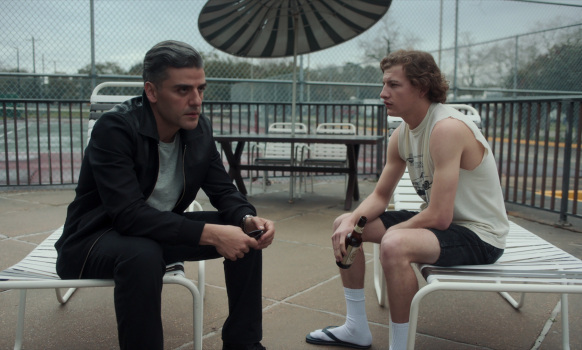
Schrader dispenses with a lot of niceties to zero in on his major themes here. Script requirements trump realism — characters making decisions in character — time and again.
While Isaac and Haddish have decent, flirty rapport, there’s little between Sheridan and Isaac that feels real or organic. The Big Fat Metaphor — the player has taken the poker name “William Tell” and this kid could be the son whose head William Tell’s to shoot an apple off of — is supposed to account for that, I suppose.
The voice-over narration does the heavy lifting here. “There’s a weight a man can accrue. The weight created by his past actions. It’s a weight which can never be removed.”
But as Schrader wrestles with that weight and ponders “Is there an end to punishment?” the viewer can wonder if he had the answer before rolling camera, and if not, that might explain the clumsy third act.
“The Card Counter” is a drama in which you can appreciate the ambition and effort — tying the purgatory of gambling to past crimes against humanity — without ignoring the fact that it doesn’t come off.
There’s one great detail — Tell’s ritual uncluttering and cloth-wrapping his cheap motel rooms. And we can’t help but notice he brings two suitcases with him everywhere.
But the other characters are barely so much as sketched in, and Sheridan’s flat performance has only the faintest hint of “rescue me, Mr. Gambler” in it.
The clever deployment of distorting fish-eye lens effects to take us into Will’s nightmares is the flashiest effect Schrader has used since “Cat People.”
Schrader’s made a long meditation on something that’s right up his alley, and it still feels incomplete while it’s in progress, and even in the final reckoning.
Rating: R for some disturbing violence, graphic nudity, language and brief sexuality.
Cast: Oscar Isaac, Tiffany Haddish, Tye Sheridan and Willem Dafoe.
Credits: Scripted and directed by Paul Schrader. A Focus Features release.
Running time: 1:51
This Texas tale of honky tonks, pool halls, the love of a good woman and a great song or two is based on a Todd Snider country tune (“Just Like Old Times”) and stars Michael Dorman of “For All Mankind,” and Sophia Bush, Dermot Mulroney, RZA and Eric Roberts.
“Hard Luck Love Song” opens Oct. 15. I’ve got a tear in my beer already.


All it takes is one good, melting look. That’s the way it works in the movies anyway, especially teen romances. Hollywood or Bollywood, Seoul or Sweden, the locale doesn’t matter that much. It’s all about the eyeballs.
“JJ+E,” titled “Vinterviken (Winter Cove)” in Swedish, is a scattered, not particularly focused melodrama from Stockholm. It’s on its surest footing when it zeroes in on our young couple. Everything that gets in the way of their love is strictly Swedish cinematic cheese.
JJ is short for John-John, a child of immigrant single mom (Loreen) growing up in Stockholm’s version of “The Projects.” That’s the one true novelty about this Around the World with Netflix outing — its depiction of Sweden’s multicultural underclass.
JJ (Mustapha Aarab) looks Arabic, and hangs with kids from Africa, the Middle East and Eastern Europe. His best bud lives just downstairs and goes by Sluggo (Jonay Pineda Skallak), for obvious reasons.
They’re a mixed crowd, but Sluggo’s corner of it is generally up to no good. JJ’s mother may not say so, but her security guard beau (Albin Grenholm) lays it out for the kid.
“They’ll all end up behind bars,” he warns (in Swedish with English subtitles, or dubbed).
JJ? He’s a good kid. Sort of. The day we meet him he and Sluggo steal a boat for a joyride, and JJ becomes a hero when he rescues a tween who almost drowns. Her dad, Frank (Magnus Krepper) is grateful. Her older sister (Elsa Öhrn) almost gasps when she casts her eyes on him. On seeing her, JJ’s jaw just drops.
Nothing will ever come of it, of course. He’s from The Projects, she’s living in a seaside villa with a pool.
But JJ has this notion of changing his life. He gets into Stockholm’s answer to the School of Performing Arts. He wants to be an actor. Shockingly, “E,” short for Elisabeth, is accepted there as well.
The best scenes in this Alexis Almström (“Top Dog”) film, adopted from a YA novel by Mats Wahl, are of the slow-motion, low-heat courtship that sets up this romance. A little checking each other out on social media, ask a mutual acquaintance about “her story.” She is withdrawn, sarcastic and sad. He is young and tactless, and also living his life in a minefield, a kid facing limited expectations and options and patronizing racism even from those whoseem sympathetic.
He tries to fit in with some of her people, and she joins him for a night of hanging out with his extensive entourage of multi-cultural friends.
The melodrama swirling around these two increasingly lovesick kids is a grab bag of cliches. Sluggo’s various criminal activities include breaking into E’s house. JJ+E can’t even go to luridly-lit mid-forest rave without getting mugged on the way home.
The leads generate enough heat to seem plausible as a couple, but her daddy’s disapproval and the boy’s pleading in the rain scene aren’t played with enough pathos to come off.
But the worst thing about “JJ+E” might be acting school. This isn’t “Fame,” in any way, shape or form. Not only do the characters seem indifferent to the “call to perform,” the actors playing them don’t show much that would get them admitted into a competitive acting conservatory.
A crying-on-cue demonstration from E for JJ’s skeptical friends is a lovely moment, but there aren’t many of those.
It’s not another “Romeo & Juliet” variation, even if the title suggests that. The stakes are low, the tropes too familiar and while the leads may get across the intensity of their crush with just their eyes, they don’t bring much else to this formulaic, tepid teen romance.

Rating: TV-MA, violence, sexual situations, smoking, profanity
Cast: Elsa Öhrn, Mustapha Aarab, Magnus Krepper, Loreen and Jonay Pineda Skallak
Credits: Directed by Alexis Almström, scripted by Dunja Vujovic, based on the book by Mats Wahl. A Netflix release.
Running time: 1:31


