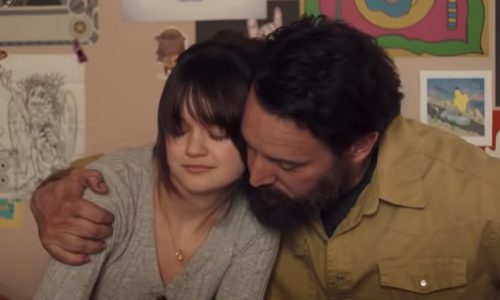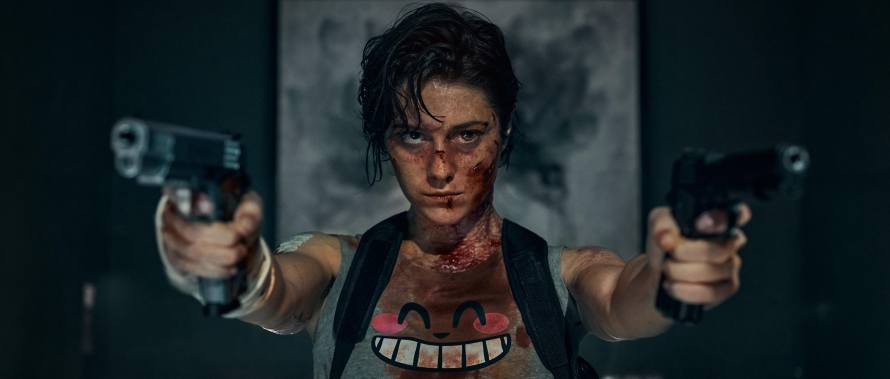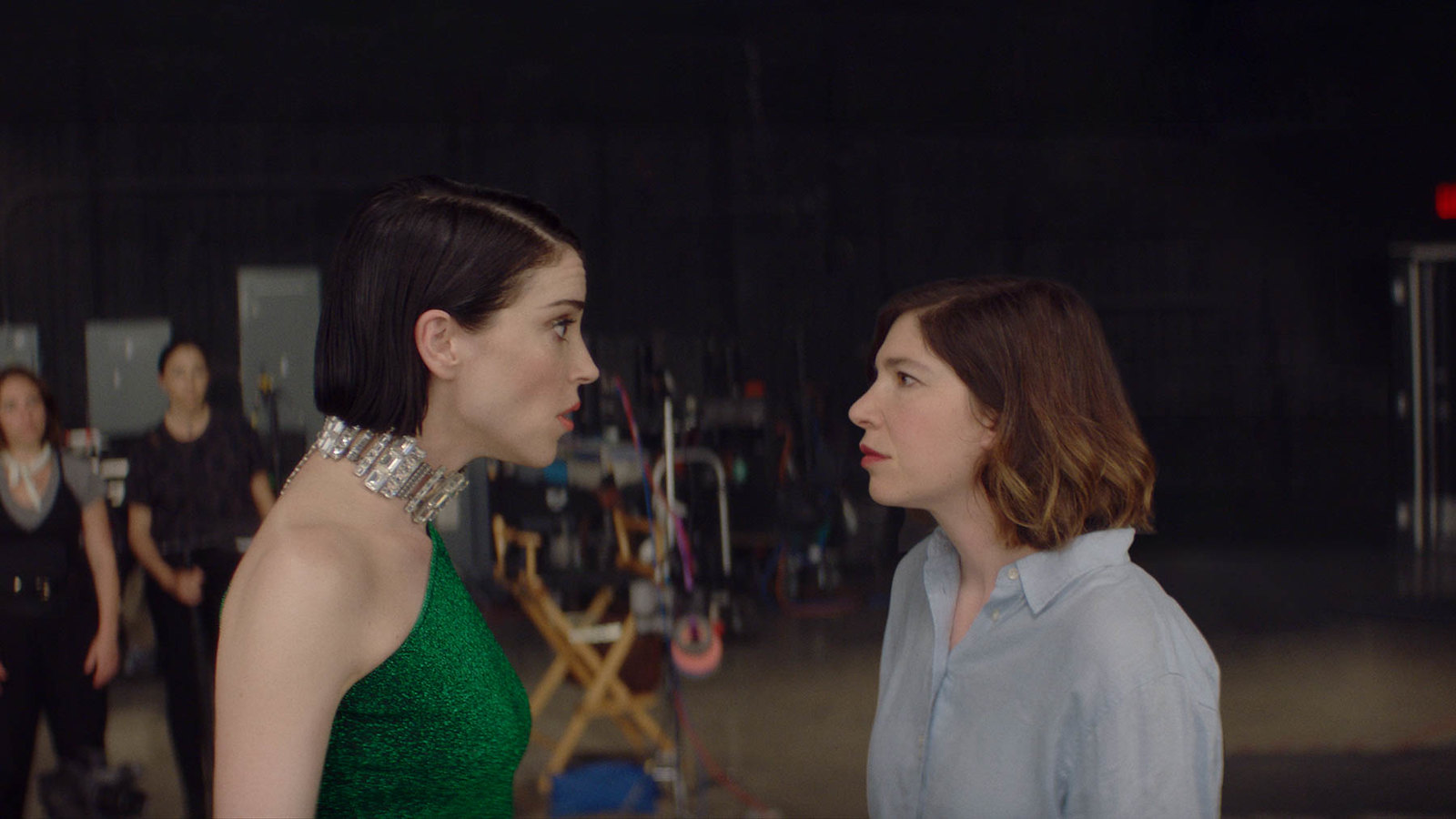
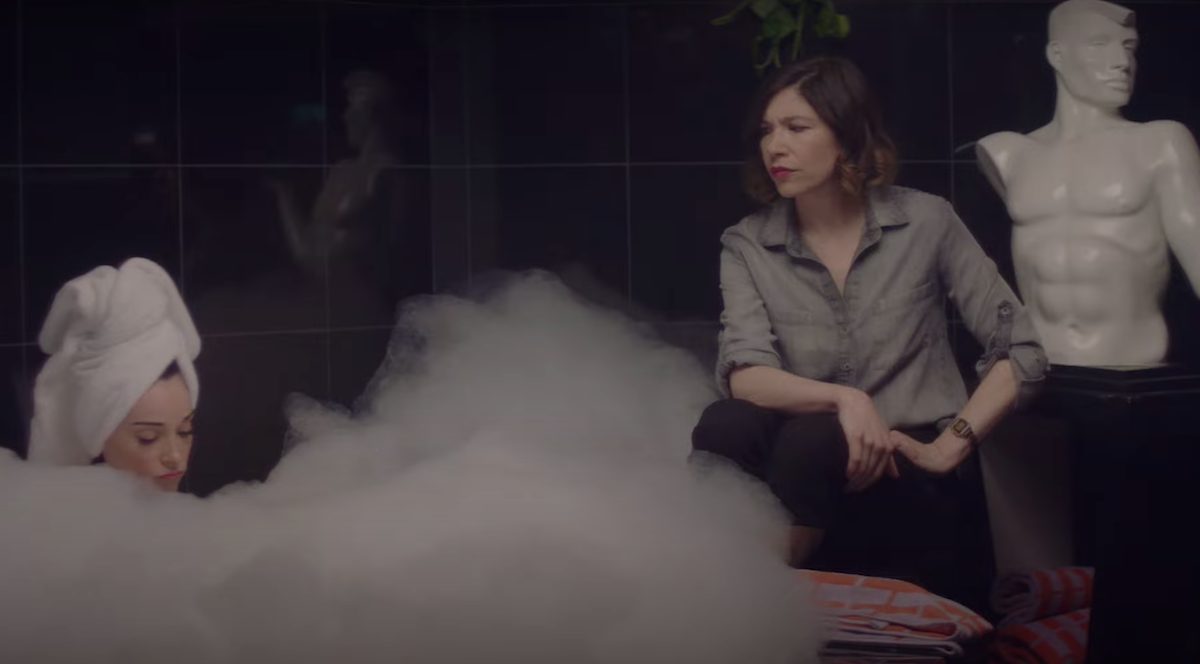
A Cape Cod rom com starring Tate Donovan, Danielle Savre, Josh Peck, Susan Anspach, James B. Sikking.
Donovan pretends to be a Brit and Dash pretends she never worked for and supported a traitor.
Dec. 17.
A Cape Cod rom com starring Tate Donovan, Danielle Savre, Josh Peck, Susan Anspach, James B. Sikking.
Donovan pretends to be a Brit and Dash pretends she never worked for and supported a traitor.
Dec. 17.

I distinctly remember cringing a bit and scrunching down in my seat during the opening scenes of “Nothing Sacred” the first time I saw it, in a university film society.
The William Wellman/Ben Hecht classic opens with some tomfoolery about a fake “sultan” who bamboozles a New York newspaper and others into thinking he’ll finance some development scheme in the middle of the Great Depression.
It’s remarkable to see prominent African American representation in most mainstream movies from that era, and there’s more of that in this David O. Selznick production than in virtually anything contemporaneous. The imposing, bug-eyed Troy Brown is in a few scenes. Here’s Hattie McDaniel, who’d win an Oscar just a couple of years later in Selznick’s “Gone With the Wind,” playing the charlatan/hustler’s wife.
Brown is playing a stereotype, but a character with some agency. And wide-eyed double takes or not, he’s funny. The cringing comes in after his “Walker” character is exposed. The headlines about the “bootblack” who fooled a “star reporter” (Fredric March) include so many “shine” jokes than you’d think even 1930s white America would have winced.
But when your movie’s titled “Nothing Sacred,” when it’s built on corruption in government, medicine and newspapering and centered on a young woman feigning “radium poisoning” that gives her just days to live, well I suppose a little racism just adds edge.
This high gloss Technicolor production, with gorgeous art deco sets and Carole Lombard in the lead, is the film that sealed her screen immortality. She’d already made “Twentieth Century” and “My Man Godfrey,” and she’d marry The King of Hollywood, Clark Gable, complete “Mr. & Mrs. Smith” for Hitchcock and “To Be or Not to Be” for Lubitsch before dying in a plane crash at the end of a “Buy War Bonds” public service tour.
But the 77 minutes of “Nothing Sacred” had given the Queen of Screwball Comedies her crown.
She’s Hazel Flagg, a Vermont woman mistakenly diagnosed by her small town doc (Charles Winninger) as dying of the magic ingredient that scores of young women died from hand painting on watch numbers to make them glow in the dark.
Man. That is one BLEAK subject for comedy.
Hazel’s gotten just enough notoriety to merit media attention and a planned “dying girl’s trip to New York” when the same “star reporter” who bought into the bogus sultan storms into town intent on redemption by turning her into a New York celebrity in her final weeks. Or months. However long it takes.
Fredric March, who’d age into many a distinguished role after WWII, was a decent substitute for the assorted Kings of Screwball (Cary Grant, William Powell– Lombard’s ex, others). All his Wally Cook needs is a break from his editor.
That would be Oliver Stone. Well, an “Oliver Stone,” harrumphing and threatening and played by Walter Connolly.
Ex-newspaperman Hecht and a whole Scout Troop of gag writers tarted up the dialogue surrounding Hazel’s Toast of New York trip in which she knows the awful truth, and drags her compliant tipsy doctor along for cover.
“I’ll tell you briefly what I think of newspaper men,” the about-to-commit-fraud doctor lectures. “The hand of God, reaching down into the mire, couldn’t elevate one of them to the depths of degradation!”
A Vermont joke — “You lived here all your life?” “TWICE that long.”
And there’s lots of offhanded dark humor about the situation at hand.
“For good clean fun, there’s nothing like a wake!” “Oh please, let’s NOT talk shop!”


Reconsidered today, the picture feels like a dry and dry-eyed run at Frank Capra’s later and more highly-regarded “Meet John Doe,” a sentimental romantic comedy about a homeless hobo set up for a Voice of the Common Man newspaper hustle, only to be co-opted by the oligarchs of his day.
“Meet John Doe” is funnier as well, and has a timeless quality “Sacred” seems to have lost.
Lombard and March click. There’s virtually no screen time wasted as the picture sprints along. And after that early racial insensitivity, a children’s choir comes along to serenade the “dying” Hazel, and you can’t help but notice it is integrated.
Even Walker the hustler makes a more amusing second entrance, running a “deliver flowers/steal flowers” scam in Hazel’s swank hotel.
Then we hit the scene in which Wally “has to” punch out Hazel and the grimaces return. Part of Lombard’s rep as “one of the boys” able to take a joke is seriously tested in this sequence, which begins with Hazel standing up and being repeatedly knocked down by a desperate, scheming and smitten Wally.
Watch where his hands land every time he shoves her. I’d like to think Lombard slapped his face between takes of that.
The “knock out” bit is something movies and TV shows toyed with — male violence against women played for laughs, with a lot of “Why I ougghtas” all the way through “I Love Lucy” and “The Honeymooners” and even “The Flintstones.”
Whatever audiences thought of that at the time, it’s not funny now. Not in the least. And one of the defenses of the racism/sexism in such films is how “that was the norm” and how “prevalent” it was. Then you see “Casablanca” and are reminded of how few films of the era went as far as “Nothing Sacred,” how “It was the norm” but plenty of Hollywood people knew it was wrong and managed to avoid putting caricatures in their films, or somehow managed to avoid “She needs a good spanking” as comedy.
Not Selznick.
Accept a movie as representative of its time, appreciate how times have changed and take all that into account when you watch it. Let your jaw drop at the “I cannot believe they WENT there…in 1937!” But there’s no getting around the story elements that make “Nothing Sacred” problematic, that take you out of the picture and won’t let it age well.
Some of the comedy is so seriously “not funny any more” that the luster is fading on this “classic” too fast for the shine to last.

Rating: “approved”
Cast: Carole Lombard, Fredric March, Charles Winninger, Walter Connolly, Margaret Hamilton, Sig Ruman, Troy Brown, Hattie McDaniel and Charles Lane.
Credits: Directed by William Wellman, scripted by Ben Hecht, with bits added by Moss Hart, Budd Schulberg, Davod O. Selznick, Ring Lardner Jr., Sidney Howard, Goerge S. Kaufman, George Oppenheimer, Ben Carson and William Wellman. A Selznick International production released through United Artists.
Running time: 1:17
The audacity, the nerve, remaking a “classic” and all that. And in the Golden Age of Lin-Manuel Miranda, too!
But this Christmas, we’re all going to get a load of Mr. Spielberg’s take on the
Robert Wise film, Tony winner Tony Kushner’s updating of the Arthur Laurents book, a revival of Leonard Bernstein’s songs, many of which permanently entered The American Songbook.
Justin Peck of the New York City ballet gets the unenviable job of replacing Jerome Robbins’ iconic choreographer.
There’s no obvious EGOT-goat in this cast. But who knew Rita Moreno would win the Oscar, as well as take home Tony, Grammy and Emmy glories over her storied “triple threat” career?
Yes, Rita’s in this version, a lovely nod to its history.
Aside from her, the best-known members of the cast are Ansel Elgort, a baby driver singing and starring as Tony, with Ariana DeBose, Corey Stoll, David Alvarez and Brian D’Arcy James.
There’ll be no Natalie Wood, white and singer-doubled, as Maria. A Colombian American, Rachel Zegler has that life-changing role.
The latest Disney cartoon opened with a pandemic dampened way under $30 million weekend, clearing just over $40 since Thursday.
Those aren’t typical Disney toon numbers, and give away what a hard sell this script by committee, Lin Manuel Miranda musical misfire is
“Ghostbusters” cleared $35 over five days on its second weekend.

“House of Gucci” opened with a robust $21.83. Gaga over Gucci?
The “Resident Evil” reboot “Welcome to Raccoon City” did $8 8 over five days.
“Eternals” added another $7.9 Andis now the seventh place movie in total North American box office take of 2021.
Both “Eternal” and “Dune” are wrapping up their theatrical runs, with the latter clearing $100 mill
“King Richard” added another $3.5 million
Figures provided by Box Office Pro.
R

Oh come on, not THIS crap again!
You’d figure six “Resident Evil” movies would have been enough, a seriously-lowbrow but seriously successful video-game film franchise that helped Milla Jovovich put her kids through college and what not.
But her character, an avenging Lara Croft-type with sex appeal and a violent streak, is gone. This new reboot, “Resident Evil: Welcome to Raccoon City” is a back-to-the-game, back-to-basics bore.
The world’s biggest pharmaceutical company, Umbrella Corp, is closing down its gigantic plant in Raccoon City, a company town given that name by English-as-a-Fourth-Language Japanese video game designers.
There are rumors about what’s “in the water” there, and what they’ve been experimenting on “below” the factory, rumors that were prevalent when siblings Claire and Chris were orphans in the Raccoon City Orphanage way back in “The Golden Girls” ’80s.
Claire, in particular, saw things — scary things. She ran away as a teen, and now (1998) that the plant is closing and the town is dying with it, she (“Maze Runner” alumnus Kaya Scodelario) is back to check up on cop-brother Chris (Rob Amell of TVs’ “Upload”).
But Claire can’t even hitch a ride from a pervy trucker without all hell breaking loose. They hit a woman in a hospital gown, standing in the middle of the roadin the rain and gloom. While arguing about what to do about this, the woman staggers off.
I know what you’re thinking. “Zombies.” Granted, that’s not what Umbrella Corp. was setting out to create (the game’s name is “Biohazard” in Japan). But as they look like rotting, bleeding corpses and crave brains — or flesh — “zombies” will have to do, as it always has.
Claire and a rookie cop (Avan Jogia) without any discernable policing skills and a Johnny Depp haircut team up to survive in the police station, while Chris and a team of Raccoon City’s Finest, including Hannah John-Kamen and Tom Hopper, are prowling the halls of the old, spooky manor house of Umbrella’s founder (“Umbrella is your shelter in a storm!”), looking for clues left on a Palm Pilot and fighting off zombies.
And then there’s the police chief (Donal Logue), whose first reaction to the Umbrella civil defense sirens going off is to flee, as does the scientist who used to “care for the orphans,” who grabs his wife and daughter and floors it. They just know…
The scientist is played by veteran heavy Neal McDonagh, so expect the worst, right?

There’s a hint here and there that writer-director Johannes Roberts (“46 Meters Down”) gave a thought or two to making this a darkly funny splatter-the-zombies thriller, or a darkly thrilling splatter-the-zombies comedy. A few deaths are treated as jokes, and the sight gags are by default amusing period references.
It’s 1998, and pagers, Palm Pilots, Blockbuster and Journey were still going concerns.
The lines are never cleverer than “I think there’s something seriously wrong with this place,” and “Lock the gates. There might be others.” “Other WHAT?”
The most interesting scenes are the origin story bits, with Claire consulting a conspiracy buff on this newfangled thing, “The Internet” to figure out what’s been happening in this mysterious “company town” in the middle of the woody mountains.
The first local to start bleeding from her eyes — “I’m sure it’s nothing!” — the first bloody writing on a window — “Itchy Tasty” — gets our attention.
But damned if I didn’t miss Milla in this. Say what you will about the onetime Joan of Arc/”Return to the Blue Lagoon” siren as an actress. She’s got screen charisma, and her total investment in her character made her a compelling surrogate for the B-movie audience.
We rooted for her, and dare I say it, suffered with her. Nothing of that sort happens here. Nobody is developed in enough depth the viewer to identify with.
If Scodelario is signed up for a franchise, and saving something for the next film in it, she gives us zilch to cling to here. Claire’s background is glossed-over in ways that don’t explain her motorcycle savvy and firearm skills.
Nobody in this picture seems the least bit horrified at what they’re experiencing. It’s like they’re — I don’t know — video game characters just girding for that next lock-and-load moment.
If indeed this is a full on franchise reboot, this “origin story” is no “Welcome to Raccoon City” at all. It’s a warning to avoid ever coming back.
Rating: R for strong violence and gore, and language throughout.
Cast: Kaya Scodelario, Robbie Amell, Avan Jogia, Donal Logue and Neal McDonagh
Credits: Scripted and directed by Johannes Roberts. A Sony/Screen Gems release.
Running time: 1:47

All that a cast filled with music personalities adds to the dull, trashy money-laundering melodrama “For the Love of Money” is the occasional pause for a song. And the last thing this movie should do is pause.
It’s just as well that so much of the acting is handled by non-actors, as it’d be a shame to burn through the Screen Actors’ Guild’s finest trying to wring something out of this sloppy, cliche-ridden script.
Keri Hilson of “Think Like a Man” and “Almost Christmas” moves from singer and bit-player to leading lady as Gigi, a single mom trying to keep her Atlanta house, her daughter in private school and herself stylishly dressed on two part time job salaries.
Well, we’re told she works in a gym where we see her working out, but that side-hustle is forgotten by the second or third scene. A lot of characters, background details and story threads get lost in this shuffle-the-deck screenplay, or Leslie Small’s direction of it.
Gigi’s main gig is waiting on well-heeled customers at the tony Symphoni Champagne Bar run by Chris (Keith Sweat). As great as the tips are, that’s not enough to cover tuition for aspiring singer-songwriter teen daughter Ashley (Jazzy Jade) at her private academy.
Ex husband Greg (Jason Mitchell) refuses to ante up more, and gives her an odd directive when it comes to supporting their daughter.
“It’s time for you to decide, are you gonna be a boss-ass b—c or a beggin’-ass b—h?”
As we’ve just seen Mom help Ashley compose a love song for Jesus that she’s performed in church, we are shocked SHOCKED at the vulgarity of the man, who implies his ex knows something of “the street.”
Not sure what he means by that. But mortal men’s eyes pop out of their heads at the gym, on the street and in the bar at the mere sight of Gigi in cleavage and stilettos. So, maybe…
Little Angel Ashley gets in a brawl with a bully after a school basketball game. The other girl winds up “in a coma” and Ashley is badly manhandled by a cop who lets “your black a–” slip as he’s cuffing, roughing up and arresting her.
Add legal bills to the bottom line Gigi isn’t able to cover. Maybe it’s about time to take up the flirty co-workers at the bar (D.C. Young Fly, Cedric Pendleton) on some sort of standing-offer she has to join their side-hustle, moving drug money hither and yon.
At this point, feel free to put down the popcorn, rest your head in your hands and wrack your brain for memories of that “standing-offer.” Because Gigi somehow has a master plan for “fixing” their money laundering for handsy-pushy dealer Trey (Rotimi) all worked out, and they let her implement it and all but take over.
I didn’t hear the offer. But then, I was trying to figure out how the darling little church singer nearly beats another child to death and A) doesn’t get expelled from that private school and B) somehow gets a plea deal that spares her jail because of the cop’s racist over-zealousness.
No, “SHE started it!” never holds up in court.


“For the Love of Money” has a lot of lapses like that — story threads and characters forgotten, details skipped-over because nobody gave them any thought.
What the film is really about is giving Hilson a showcase for her curves and voice, and the audience a ridiculous taste of “wish fulfillment fantasy” as Gigi negotiates a stupidly lucrative deal with a potentially violent drug dealer that allows her to buy a Jag, and the champagne bar.
But before handing Symphoni over, Chris and Gigi do a little duet for the paying customers.
There’s also a nothing-to-the-imagination sex number by Latto, and a couple of musical trips to church, for those who their movies to give them whiplash.
The soundtrack is more R-rated than most of what’s on the screen, and all of it, including the half-assed crime and waiting for Gigi’s profligate, criminal “boss-ass b—h” behavior to catch up with her is pure trash.
Add to that actors who don’t know how to show desperation, rage, greed, lust or much of anything else, and a story that moves so slowly you notice every flaw –thanks, director Smalls (“Hair Show”) — and you’ve got yourself a dud.
I was grateful for a cameo by comic Katt Williams, playing Gigi’s corrupt, money-laundering pastor with a poker-faced stillness and seriously silly fey voice. Give that man top billing, as he’s the only person on the payroll who seems to know what he’s doing, and why.
Rating: R for language, some sexual content/nudity and violence
Cast: Keri Hilson, Rotimi, D.C. Young Fly, Jazzy Jade, Jason Mitchell, Latto, Keith Sweat and Katt Williams
Credits: Directed by Leslie Small, scripted by Timothy Allen Smith, Zadia Ife and Leslie Small. A Freestyle release.
Running time: 1:38

One of the blessings of Netflix is that movies that get lost in the shuffle have a second chance to find a wide audience on the streaming service, a much better chance that ad hoc sales to cable or broadcast TV ever afforded.
Some are critically-acclaimed “gems,” some critically-dismissed, like “Te Ata,” a plucky, upbeat and corny biography of a famous Chickasaw Nation storyteller. Like “The Chickasaw Rancher,” it was produced by Oklahoma’s Chickasaw Nation, and like that film, it was sold in a package to Netflix and made available for streaming this fall. And like that film, it’s worth a look.
It certainly deserved better than the outright dismissal some critics hurled its way.
It’s an indie period piece about real history, with decent production values and a pretty good cast headed by Q’orianka Kilcher (“A New World”), Gil Birmingham and Graham Greene (co-stars of “Wind River”). If the direction is low key and the screenplay lacks much in the way of edge, at least it tells a mostly-forgotten story about an inspiring figure, and hits a lot of the right buttons.
Kilcher has the title role, that of a daughter of the tribe’s treasurer (Birmingham) with the pluck to go off to an Oklahoma women’s college, “the first Indian we’ve ever had here,” and the dream of reaching Broadway as an actress.
Mary Frances Thompson, as she was born, grew up in the early 20th century, with Oklahoma becoming a state, the Chickasaw losing much of their autonomy and an “Assimilate or Die” edict from Washington delivered directly to the tribal governor (Greene). Officials there wants to ban native traditions and practices, “pagan dances” and “tribal mumbo jumbo,” and even Native crafts.
Mary Frances started to change that by performing tribal legends and myths as a spell-binding storyteller, first in shadow plays at school and then — in Chickasaw garb — for a traveling Chautauqua Show run by an impresario (Tom Nowicki of “The Blind Side”) and fan who desperately wants a costumed “Indian act.”
The storyteller goes to acting school at Carnegie, despite being rejected for admission at first. She moves to New York to try her hand at Broadway. But meeting a smitten scientist (Mackenzie Astin) has a hand in pointing her to her first, best destiny — bringing her culture and tales from it to the masses.
Her fame grows just as the country is hit by the Great Depression (not mentioned here) and changes direction, economically, culturally and socially under Franklin Roosevelt’s administration.


Kilcher, portraying a woman who took on a stage name from her childhood, “Te Ata” (“bearer of the morning”), makes a mesmerizing and old school “theatrical” storyteller. As she and Te Ata’s evolution into a thrilling one-woman-show performer are the best things about “Te Ata,” perhaps that how-she-became-so-polished journey should have take up more of the film.
We get mere glimpses of the racism and violence faced by the Chickasaw at home, and the ugly stereotyping of Native Americans in general that only began to unravel in the 1960s. When your scientist beau takes you to the movies circa 1932, even the cartoons can be “triggering.”
Esther Luttrell’s script is almost of the “faith-based film” persuasion. It “makes nice” and rubs too many of the rough edges off to give us the unvarnished truth.
Director Frankowski, who also did “Chickasaw Rancher” and the little seen but worthwhile indie “To Write Love on Her Arms,” gets good use Kilcher and his players, even if the wigs they’re sometimes saddled with look like community theater cast-offs.
Aside from that, the sense of place is firmed-up with good locations, a period-correct train and train station footage and convincing recreations of the Oklahoma, Philadelphia and New York of the day (all filmed in Oklahoma).
Like “Chickasaw Rancher,” “Te Ata” has an educational agenda, reminding the rest of the country of some history that might figure prominently in Oklahoma curricula, but is little known elsewhere. As with that film, adding it to Netflix proves it can hold its own outside of the classroom.
With every two-bit slasher and spatter thriller finding its way into theaters and onto streaming, it’s encouraging that something with heart, ambition and substance earns the same access. “Te Ata” may not be an Oscar contender, but it is well-acted, touching and certainly good enough to deserve this Netflix curtain call.
Rating: PG for some thematic elements including a brief violent image
Cast: Q’orianka Kilcher, Gil Birmingham, Brigid Brannagh, Mackenzie Astin, Tom Nowicki and Graham Greene
Credits: Directed by Nathan Frankowski, scripted by Esther Luttrell. A Chickasaw Nation production, a Netflix release.
Running time: 1:45
This Dec. 21 release is set in the Asian-American community of “the world’s most expensive city.”
That would be San Fran. Seriously creepy looking, very “Ring” and “Parasite” in tone.

Here’s one of those “upend your expectations, pardner” Westerns of the modern mold, a movie about a “sidekick” forced to take over the story when the hero gets bushwhacked.
“The Ballad of Lefty Brown” isn’t about a famous gunslinger, lawman, desperado or rancher who “tamed the West.” Lefty (Bill Pullman) isn’t the sort who’d provide fodder for the dime novels favored by the young sidekick (Diego Josef) he takes on for his “revenge quest,” the sort of thing a man’s gotta do when a man’s pardner is killed right before his eyes.
Writer-director Jared Moshe’s genre “oater” didn’t merit much of a theatrical release (if any) when it turned up on DirecTV, thanks to production studio A24’s shortcomings when it comes to distribution and promotion. But as it’s on Netflix, let’s see if it’s worth hunting down.
Pullman’s character is a limping, slow-talking geezer with mutton chops and a funny, high-mileage hat. Lefty Brown isn’t bad at tracking, but he was never much with a six-gun. Even a rifle isn’t going to get him close to the target with his “old man” eyesight. Given a choice, he’s packing a shotgun.
He isn’t all that tough, and when it comes to chasing rustlers, he’s better at tracking than he is about sneaking up on anybody. The bad hombres are always getting the drop on him.
As he nearly botches an arrest in the opening scene, he’s asked the question that’s implied throughout this somber, violent sagebrush saga.
“Lefty, aren’t you a little gray to be making these mistakes?”
But Lefty’s never had to be the lead, the go-to-guy. He’s always been content to be in the shadows of legendary Montana rancher Edward Johnson (Peter Fonda, in one of his last roles). Lefty is “loyal.” And with Johnson bound for the Senate, Lefty might be just the guy to leave in charge of the ranch. Or not, if Mrs. Johnson (Kathy Baker, fierce) has any say in the matter.
“‘Loyal’ is not the same thing as ‘capable.'”
But somebody’s got to run the place, and most of the other hands are tinhorns, or close to it. None of them are seasoned enough to go after the rustlers who grab a few horses, Edward reasons. That’s why he and Lefty are all alone, tracking and reminiscing, when a horse thief with a rifle (Joe Anderson) unloads on them from a safe distance.
Edward is dead, and if Lefty hadn’t played dead, he’d never have gotten the body back to the ranch. The new widow isn’t impressed with him, or his promise.
“I’m’o GIT that sumbitch, or die tryin’!”
He takes off on his own, with nobody’s blessing, stumbles into a trigger-happy tinderfoot (Josef), who’s armed, loaded with dime novels, and horseless. And they’re off on their quixotic quest to bring bad men to some sort of justice — formal or “rough” justice.
That’s a running thread through “The Ballad,” Lefty’s reluctance to rush a hanging, killing the accused without a trial. Others are content to mete out their cowboy posse form of law enforcement. But not Lefty, and not his old friend Marshal Tom Harrah (Tommy Flanagan of “Gladiator” and TV’s “Sons of Anarchy” and Westworld”).
As obstacles traditional and new cross their path, one would hope they’d all listen to the governor (Jim Caviezel) and “let the Army handle it,” seeing as how somebody murdered a Senator-elect. But that’s not the Way of the West, is it?


Moshe, who hasn’t gotten a movie or TV project up and in the public eye in the years since “Lefty” was finished in 2017, stages a decent shootout and his DP captures stunning vistas around Bannack, Montana, the setting and the filming location.
The plainly-right-handed Pullman makes “Lefty” just the sort of simple old cuss you underestimate, a fellow who “couldn’t find his ass with both hands,” Marshal Harrah grouses.
The story drifts off into “that never happened” territory, and the waypoints and characters start to resemble a collection of cliches — this one crawled into a bottle, then a “spittoon” to collect coins to buy the bottle, that one’s armed to the teeth but wholly unprepared for that first shoot-out.
But the cast is a game lot, with Pullman, Baker, Flanagan and Caviezel standing out. And there’s only so many times one can watch and re-watch the classics of the genre without craving a fresh take on the comfort food-familiar themes.
“Lefty,” while not nearly as good as “The Sisters Brothers” or “Old Henry,” to name two recent exemplars of the genre, is a perfectly passable “horse opera” and a fine vehicle for the ever-underappreciated Mr. Pullman — who rides well, wears the hat and not the other way’round, and carries off a limp and a squint with the best of them.
Rating: R for violence and some language
Cast: Bill Pullman, Tommy Flanagan, Kathy Baker, Diego Josef, Peter Fonda and Jim Caviezel
Credits: Scripted and directed by Jared Moshe. A Dish Networks film on Netflix.
Running time: 1:51
Here’s yesterday’s tally, which will probably be reflected by the entire holiday weekend, in terms of “standings.”
Figures via Exhibitor Relations

1. ENCANTO ($5.8M) 2. GHOSTBUSTERS: AFTERLIFE ($5.3M) 3. HOUSE OF GUCCI ($3.4M) 4. ETERNALS ($1.6M) 5. RESIDENT EVIL ($1M)