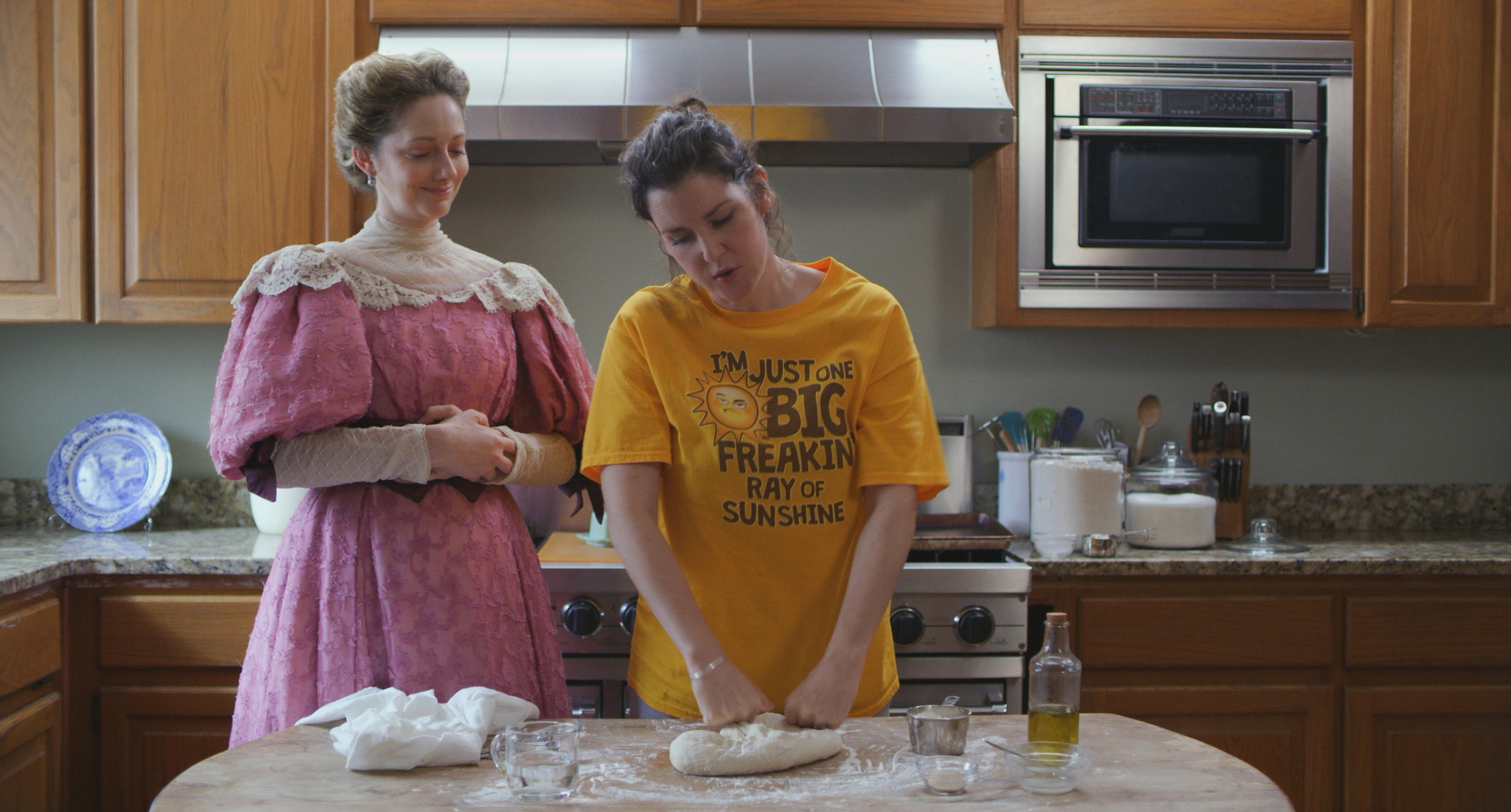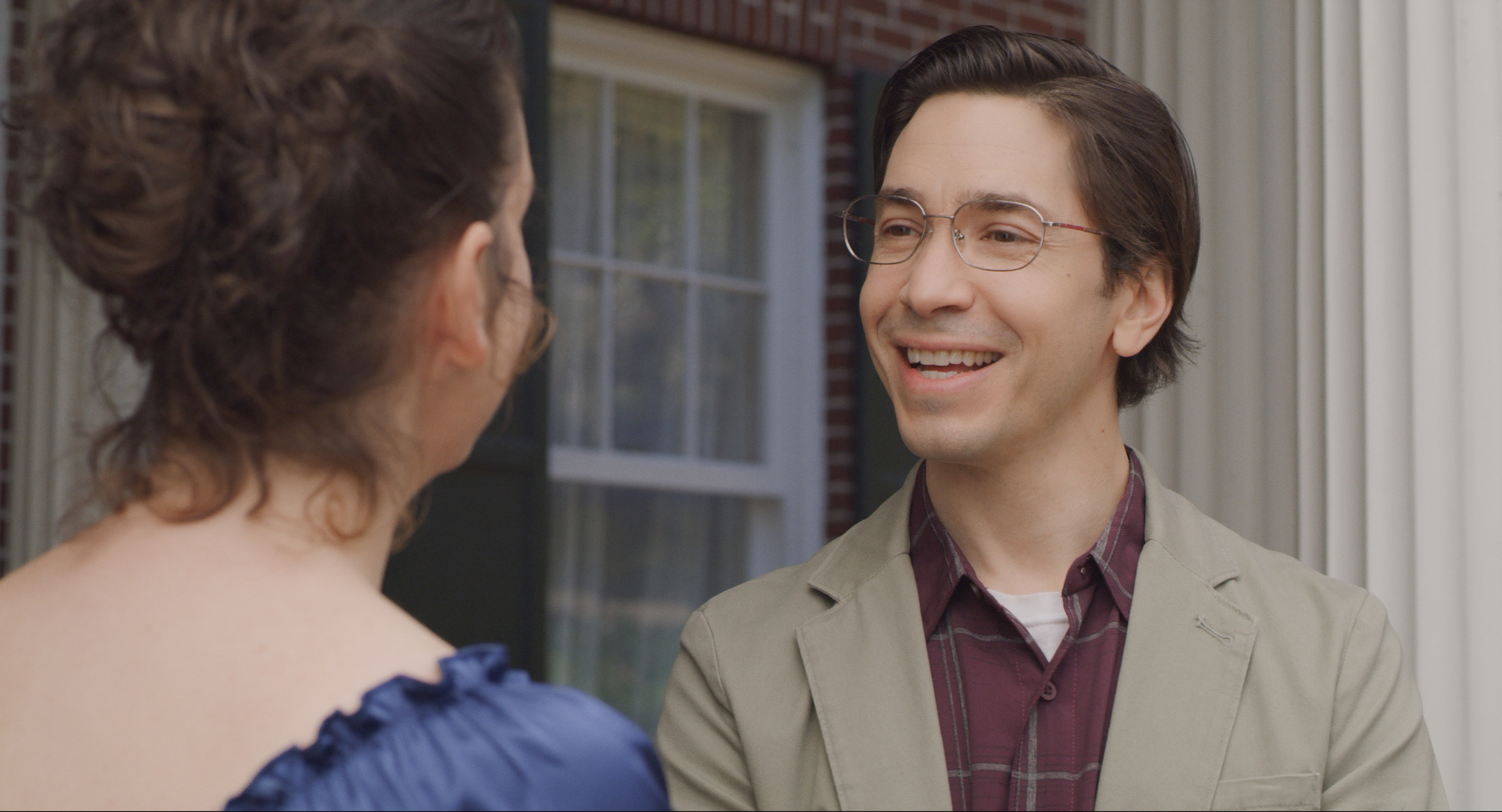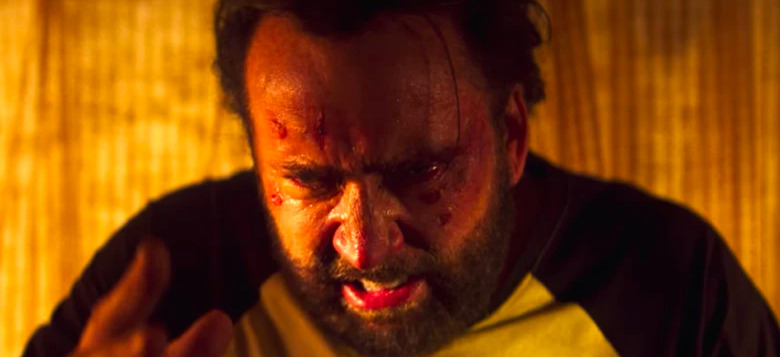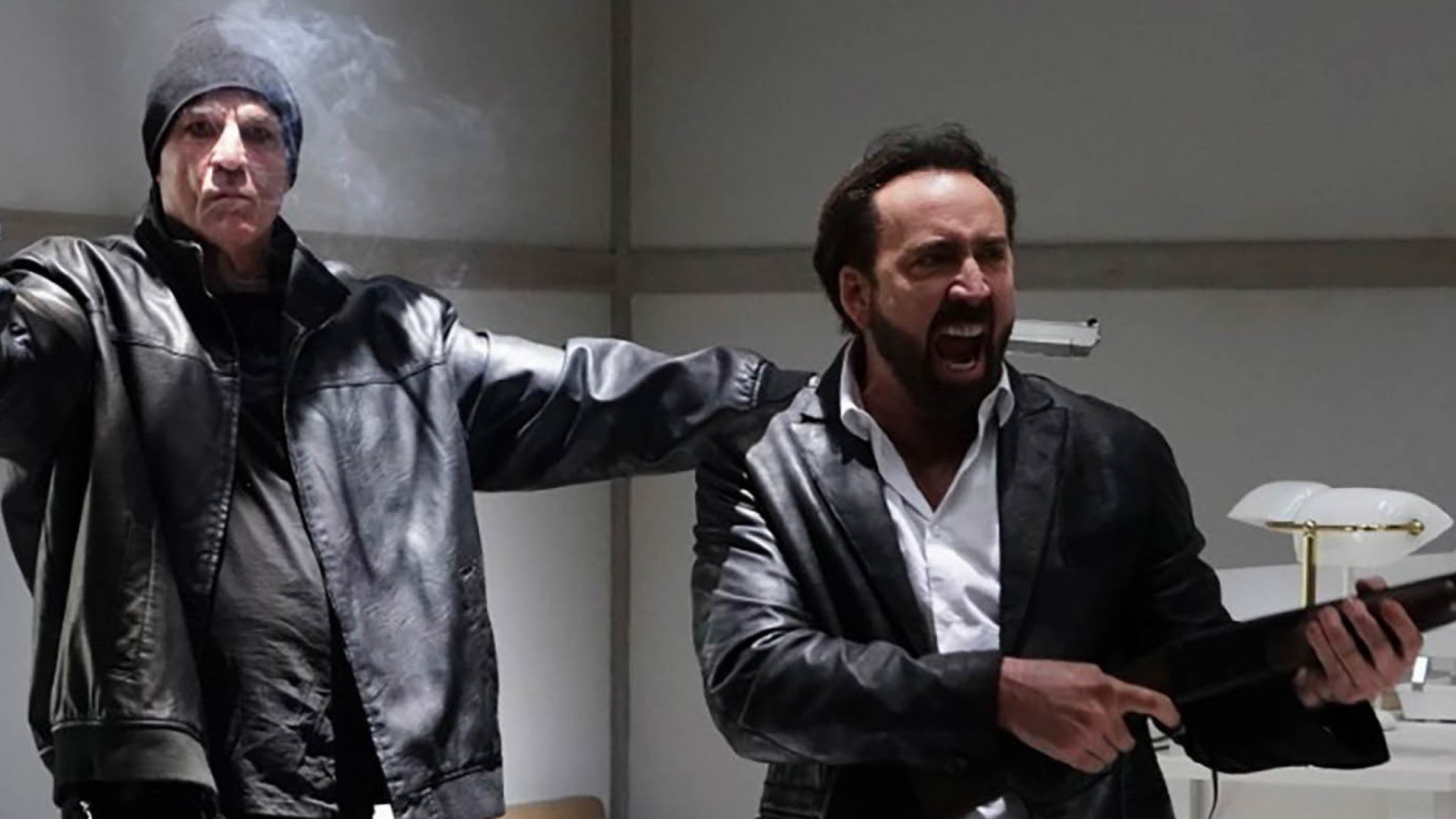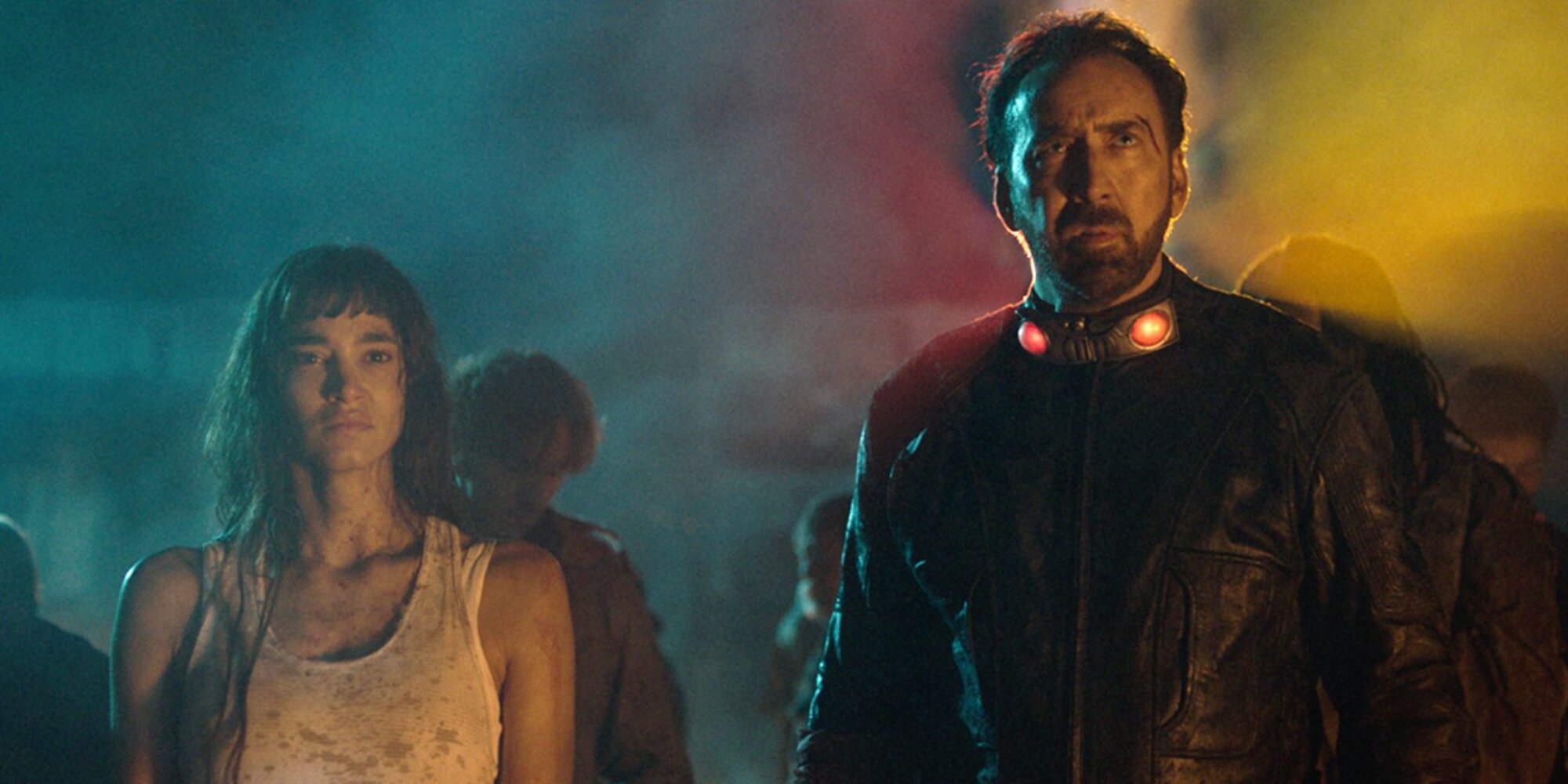
Movie Preview: Horror on a budget? “Monsters in the Closet” a Red Band trailer

Nastiness coming our way Jan.4.

Beware.

Posted in Reviews, previews, profiles and movie news | Comments Off on Movie Preview: Horror on a budget? “Monsters in the Closet” a Red Band trailer

Movie Review: Verhoeven’s moving — and of course titillating — “Benedetta”

Gorgeous lesbians stripping down and working up a sweat, enterprisingly making their own sex toys because Amazon didn’t exist then, threats and scheming and intrigues.

Let’s just say whoever told that cinematic sinner Paul Verhoeven to “Get thee to a nunnery,” quoting Shakespeare, did us all a favor. Because he did.

“Benedetta” is a gripping, graphic and shockingly moving film biography of Benedetta Carlini, a 17th century Italian nun who claimed to have visions, spoke in what sounded like an otherworldly voice during trances, displayed stigmata and even took over the Theatine convent where she lived, driving the Catholic Church a bit mad with her hijinks but beloved by the good people of Pescia.

Because this woman said she was a literal “bride of Christ,” and that was good enough for them. Carrying on a torrid affair with a fellow nun? Well, nobody’s perfect, not even somebody some 17th century Italians were sure was a living saint.

What an odd subject for the director of “Showgirls,” “Black Book” and “Basic Instinct” to take on. But the whole enterprise is odd.

It has a Belgian actress actress (Virginie Efira) in the title role, another Belgian (Daphne Patakia) as Bartolomea, her “sister” and lover, and the Great Brit Charlotte Rampling as the Abbess at their convent.

It’s an Italian story, acted in French and directed by a Dutch blasphemer.

Verhoeven veers between low comedy camp and religious ecstasy in this often entertaining period piece about someone who really lived and apparently really believed, although there were plenty of “sisters” who were sure she was just faking it, even back then.

The movie’s first “miracle” comes when she’s 12, her wealthy family is on the way to the convent and robbers steal her mother’s jewels. Little Miss Holier Than Thou — literally — isn’t having it.

“The Blessed Virgin will PUNISH you,” Benedetta (Elena Plonka) threatens. And sure enough, the leaves in the tree above them bustle, and a bird poops right in the eye of the offending robber. The jewels are returned. Even brigands know an Act of God when they see it.

Taking residence with the Theatines, the child prays to a statue of the Blessed Virgin, which falls on her, pressing a bare wooden breast in her face.

Another miracle? It supposedly really happened, but Verhoeven has fun with it.

Years later, Benedetta’s eccentricities come to the fore when she intervenes and gets an abused local girl, Bartolomea, admitted to their order. In an instant, the pious and pretty nun is tested and tempted by the uninhibited, unfiltered and uncouth farmgirl.

“I’m beautiful,” the newcomer wants to know? “We had no mirrors.”

Come “see your reflection in my eyes,” Benedetta tells her. “Closer. CLOSER.”

For a movie that plays reasonably straight and fair with this true story, Verhoeven can’t resist having a laugh, here and there.

But in between the japes and some “Showgirls in a 17th century convent” sex scenes, the picture is as serious as “Saint Joan.” Benedetta’s visions can be beatific — summoned by Jesus (hunky Jonathan Couzini) as a flock of sheep parts to invite her in where he gives her the Good Word.

And then there’s the time he’s nailed to the cross and he asks his “bridge” to come close and get, well, intimate.

Yes, there have been protests.

Efira, probably best-known abroad for the French-speaking version of the middle-aged men’s synchronized swimming comedy “Sink or Swim,” ably gets across the fanaticism, the clear-eyed true believer in Benedetta. At times, she might be playing cagey over her “miracles,” at others an innocent, lured into sex with this wild-thing that’s been moved into her cell at the convent.

Both Efira and Patakia seriously sell the heat of attraction, with Efira playing passive, at first, and oh so “thirsty” later.

Rampling’s Abbess, Sister Felicita, is the most nuanced character in this — patient and compassionate, but seriously skeptical about all this supernaturalism ruling her world.

“Miracles sprout like mushrooms,” she coos, in French with English subtitles. Best not be too hasty striking those silver “Saint Benedetta” medals, sisters.

The well-traveled Lambert Wilson (“DeGaulle,” the early “Matrix” movies) makes a fine villain of the piece, the papal nuncio sent to investigate this possibly heretical charismatic.

Whatever playful touches Verhoeven indulges in, the entertainment value in “Benedetta” is seeing his mixed feelings about her unfold over the course of the film. He’s lightly mocking, then seriously considering her “condition,” going for crowd-pleasing lesbian love scenes and pondering the dangers of “coming out” in that age, and the power and influence Benedetta was able to accumulate between what seems to have become an open secret.

And there’s something unutterably moving about someone facing death at the stake.

Sitting on the fence about the character makes this a more measured movie than a younger Verhoeven might have given us, less of a lampoon. As that’s what he does best — well, that and sex scenes — his ambivalence holds “Benedetta” back. He hasn’t lost his touch, although in sports terms, we can see he’s lost something off his fastball.

But it’s still a fascinating story, told with enough period detail, humor, compassion and nudity to hold our attention for two hours. Paul Verhoeven never bores.

Rating: unrated, graphic violence, explicit sex, nudity

Cast: Virginie Efira, Charlotte Rampling, Daphne Patakia and Lambert Wilson.

Credits: Directed by Paul Verhoeven, scripted by Davie Birke and Paul Verhoeven, based on a book by Judith C. Brown. IFC release.

Running time: 2:11

Posted in Reviews, previews, profiles and movie news | Comments Off on Movie Review: Verhoeven’s moving — and of course titillating — “Benedetta”

Next Screening? Almodovar’s Mommy Issues continue, “Parallel Mother”

Love that Almodovar. Don’t you “Vote for Pedro?”

https://youtu.be/cL6JDYkRa2g

Posted in Reviews, previews, profiles and movie news | Comments Off on Next Screening? Almodovar’s Mommy Issues continue, “Parallel Mother”

Netflixable? “Swingers” in Spain? “More the Merrier (Donde Caben Dos)”

A sophisticated Spanish comedy about “swingers” and “swinging,” wrestling with the emptiness of such pursuits, the dehumanizing nature of orgies among the anonymous and the coarsening of the culture that results from such pursuits?

Nah. “More the Merrier (Donde Caben Dos)” is just about the sex, the skin, the exchange of…fake names.

It was directed by “Paco Cabellero.” Tell me that’s not a porn pseudonym, and no, I’m not looking up his “credits.” That would spoil the joke.

“More the Merrier” is pitched as a sex farce, and it sort of delivers on that labeling. Well, not the “farce” part. The script — which never quite crosses the line into “piggish,” even though all the screenwriters were guys (A Netflix Miracle!) — follows five different trips through the swinger experience, ranging from too predictable to be funny, to “real romance” (yeah, that happens in swinger clubs) and AWKward.

And that’s not even counting the one that celebrates copulating cousins.

Here’s what works and has the most promise. Alba and Liana (María León, Aixa Villagrán) wake up so hung over they don’t remember the night before. Mid-binge, Liana dragged her about-to-marry pal to Club Paradiso, where the “Leave your ‘feelings outside,'” and “the sexual revolution begins here and now” owner/hostess (Ana Milán) presides.

Alba lost her engagement ring on the eve of her wedding and they have to sober up (and clean up) enough to go back and find it.

The hostess doesn’t want to re-admit them, and they have no idea why. What on Earth could they have done to get “banned?” What were they on? And where did she lose the ring — in the pool, the pick-up-your-partner bar, in the “labyrinth,” a BDSM Room, some other “private” and consensual corner, by the “Glory Hole?”

The mind reels.

Their odyssey through a night-long search includes stumbling into a guy they left nearly naked, bound and gagged the night before, encountering smirking strangers who plainly “knew” them in the Biblical sense, and so on.

As conventional as that “Hangover” in a swinger’s club storyline might feel, that at least worked.

The couple (Raúl Arévalo, Melina Matthews) dragged there at “her” insistence, only to hook up with a couple that secretly includes his ex (Verónica Echegui) doesn’t amount to much.

The two long-married couples (Pilar Castro, Ernesto Alterio, María Morales, Luis Callejo) who start an evening in which the guys are conspiring to turn into a wife-swap begins with “truth or dare” and goes downhill from there.

The two gay guys (Álvaro Cervantes, Ricardo Gómez) who hook up in “The Glory Hole” and find themselves chatting and connecting on opposite sides of that wall with holes in it has promise, as a sketch maybe.

But this business of a woman (Anna Castillo) who drags her formerly-close, buttoned-down businessman/cousin (Miki Esparbé) to the club, where she works, to loosen him up, only to…never mind.

Spain, amIright?

The only scenes that produce chuckles are the ones with our intrepid bride-to-be and her mouthy, brash pal Liana — stirring up bad memories, bad behavior and bad feelings about an impending marriage as they hunt for a lost ring.

The rest are an explicit skin-on-skin wash, too talky to be all that titillating, too shallow to say anything important about such places, modern love and what not.

But if you want to know what your kids are sneaking behind your back and watching on Netflix, there you go.

Rating: TV-MA, explicit sex, nudity

Cast: María León, Aixa Villagrán, Raúl Arévalo, Melina Matthews, Álvaro Cervantes, Ricardo Gómez, Pilar Castro, Ernesto Alterio, María Morales, Luis Callejo, Anna Castillo, Miki Esparbé, Ana Milán and Verónica Echegui.

Credits: Directed by Paco Caballero, scripted by Daniel González, Eric Navarro, Eduard Sola and
Paco Caballero. A Netflix release.

Running time: 1:52

Posted in Reviews, previews, profiles and movie news | Comments Off on Netflixable? “Swingers” in Spain? “More the Merrier (Donde Caben Dos)”

Can’t hear movie dialogue? It’s not just you.

The video director of the last newspaper I worked for was the first person who admitted to me he and his wife were watching evey movie they viewed at home with the subtitles on.

That was probably a dozen years ago. And I recall thinking “We’re all getting older, soooo… “

But that made me notice how many movies were burying the dialogue in the sound mix, not forcing retakes from mumbling actors, not allowing screenwriters on the set to defend the idea that their words matter.

Then we started hearing what Christopher Nolan was doing with his sound mixes.

I didn’t feel so bad for turning on the subtitles for everything I watch. It helps if I’m quoting dialogue on the review. That’s my excuse, anyway.

I stream three or four movies a day, and I have to stop and rewind more and more of them if I want to get the quoted dialogue right. Watch enough classic films and you notice the difference.

Are directors, often listening to a take through headphones on the set, that clueless about the mumbling and whispering?

Are they too timid to ask for “One more take, LOUDER and more ARTICUCULATED?”

Here’s a good piece from Slashfilm about the state of the problem and the wide range of reasons for it. And no, it’s not because Hollywood is hiring deaf or incompetent sound mixers.

Posted in Reviews, previews, profiles and movie news | Comments Off on Can’t hear movie dialogue? It’s not just you.

Movie Review: Spielberg or not, it’s still Sondheim and Bernstein’s “West Side Story”

Steven Spielberg opens his take on “West Side Story” on a construction site where New York’s famed West Side landmark, Lincoln Center, is under construction. It’s the mid-1950s, and he’s reminding us that the musical was capturing a moment in time, as Manhattan wasn’t just transforming ethnically. The neighborhood where this “Romeo & Juliet with Songs” is set was literally being torn down.

America’s most successful filmmaker brings back Emmy, Grammy, Oscar and Tony winning (EGOT) triple threat Rita Moreno, the breakout star of the 1961 film of “West Side Story.” Tony Kushner (“Angels in America,” “Munich,””Lincoln), adapting and modernizing “West Side Story,” created a new character for her and Spielberg gave this new character one of the signature songs from the iconic musical.

And what emerges from this “modern audiences” version, this recasting and resetting, is a “story” that brings us closer to Shakespeare’s tragedy of young love, the inspiration for the original show. If anything the new film, with its mostly-little-known cast singing the classic songs, packs even more of an emotional punch.

Whatever we’ve always taken from “West Side Story,” Spielberg makes damned sure we remember it’s heartbreaking. He’s always been good at stories with “heart” and movies that deliver tears.

But Spielberg doesn’t reinvent or even improve on the great Robert Wise film of 1961. It’s still a show that hangs on the lyrics of just-passed legend Stephen Sondheim. How do you improve on this?

“Maria! Say it loud and there’s music playing,
Say it soft and it’s almost like praying.”

The new “West Side Story” gives us a dazzling new Anita, the role Moreno immortalized on screen. Ariana DeBose (“Hamilton”) sizzles in the part and pops off screen and takes over the movie.

Just. Like. Rita. If you’re casting a film with song or dance in it and DeBose is not your first call, get in another line of work.

Ansel “Baby Driver” Elgort doesn’t embarrass himself as Tony, the “white boy” who falls for Maria, even if he’s not looking at a record deal after this. Newcomer Rachel Zegler makes our winsome heroine Maria a convincing heartbreaker and showcases a lovely, light soprano singing voice.

Their lock-eyes-across-a-crowded gym dance floor moment lets us buy into their romance.

David Alvarez, as Bernardo, leader for the Puerto Rican gang The Sharks, has the build and machismo to be instantly credible as a tough guy with a little boxing in his background. But the Sharks/Jets gangs look even more like corps de ballet than the dancers from back in ’61 — lithe, athletic and fey.

That’s fine, as we remember even the climactic gang “rumble” always leans more on choreography than being credibly violent-looking. If you’re going for “reality,” casting real dancers as gang bangers is always going to trip you up.

An interesting wrinkle — I didn’t hear anyone refer to the character “Anybodys” by name. Iris Menas plays the character as more obviously transgender than the mere “tomboy” that came across in 1961. Kushner serves up fresh and frank gay-bashing abuse for Anybodys from the Jets, whom the police lieutenant (Corey Stoll) scathingly labels “the last of the can’t-make-it Caucasians.”

The “Dance at the Gym” dance-off is the first number that lets Justin Peck’s updating of Jerome Robbins’ original choreography truly shine.

“America,” Anita’s sassy, sarcastic ode to Puerto Rican reasons for moving from the island to the mainland, is still a show stopper and just as hilarious and politically pointed as ever.

“Immigrant goes to America,
Many hellos in America;
Nobody knows in America
Puerto Rico’s in America!

Be it 1961 or 2021, “West Side Story” still works.

The new “Story” is a little more visually razzle-dazzle oriented, as you’d expect. Extreme closeups, arresting camera angles, swooping shots that “open up” the big production numbers, using real streets to amp up authenticity.

If you’ve never seen the original “West Side Story,” you must’ve been living under a rock with the rest of Musical Haters Anonymous. And updated or not, I’m not sure Spielberg will reach a new audience with this. It isn’t “Hamilton.”

What Spielberg does for fans of the show and the film is create a new appreciation for what a towering, enduring achievement this musical is. I also came away with a new sense of awe at what Robert Wise was able to accomplish with giant, unwieldy film cameras on soundstages and a few perfectly-chosen locations sixty years ago.

Spielberg finds more grit and reality, even if there’s no improving on the show’s topicality or untoppable tunes. It’s a good film. Will families gather round whatever video streaming device extant to watch it 60 years from now, the way we have with the 1961 film? No. This “West Side” is good, not great.

But the joyous, moving and racially-charged show “West Side Story” has always been still makes this a must-see movie for the holidays and a worthy successor to a classic.

Rating: PG-13 for some strong violence, strong language, thematic content, suggestive material and brief smoking.

Cast: Ansel Elgort, Rachel Zegler, Ariana DeBose, David Alvarez, Mike Faist, Josh Andrés Rivera, Iris Menas, Corey Stoll and Rita Moreno

Credits: Directed by Steven Spielberg, adapted by Tony Kushner from the musical by Arthur Laurents, Stephen Sondheim and Leonard Bernstein. A 20th Century release.

Running time: 2:36

Posted in Reviews, previews, profiles and movie news | Comments Off on Movie Review: Spielberg or not, it’s still Sondheim and Bernstein’s “West Side Story”

Movie Review: Young rom-com couple wrestles with the big question, “Are You Happy Now?”

It’s not uncommon for first time writer-directors to make movies about a “hero” they identify with — at least a little — and a situation seen from the point of view of someone like them.

That’s not necessarily a good thing.

Editor turned first-time writer-director David Beinstein’s “Are You Happy Now” is built around somebody with mental health “issues” and a relationship that makes no sense on paper, but somehow is supposed to work. The characters are young, urban and Jewish and have a big (ish) Jewish wedding, only to figure out that “makes no sense on paper” thing afterwards.

Without knowing him, one cannot know how much Beinstein “identifies” with his aimless, impulse-control slacker hero, Adam. But he must. Because that’s who his film follows, who he gives most of the scenes and attention to. Beinstein pretty much forgets his leading lady Gina for over half the movie.

That makes for a film with a few scattered laughs in a story that’s so myopic as to be dull, with whatever “heart” it might have had left wherever Beinstein parks Gina for most of the movie.

We don’t expect that, as Gina (Ismenia Mendes) is the voice-over narrator of the opening scenes.

“He was broken,” she says of Adam (Josh Ruben). She doesn’t have to say “I thought I could fix him.” It’s implied.

They’re cute together, but the moment she says “I need intimacy, REAL intimacy,” the “intimacy issues” come to the fore. Gina is constantly bucking Adam up, even though he has no purpose, no aim in life beyond being with her. Her go-to “fix” for him is acupuncture, which she’s “learning.” He goes along with it because “You LIKE it when I’m bossy.”

Adam is an inept waiter/food delivery guy for this too-tolerant chef/cafe-owner (Blake DeLong) who turns out to be his brother. Brother Leo stops chiding Adam about “f—–g up” his relationship, about how “She’s GOOD for you” and the like to finally kick his brother to the curb.

Adam leaves the job he’s just been fired from by stealing a cake and hurtling out the door.

During his deliveries, Adam had stumbled across this acting class whose teacher (Danny Johnson) seems like a nice enough fellow. That leads to Adam calling himself “an actor” when asked, for a bit. Job hunting only plops him in an even worse restaurant situation, a fast food dump called “Just Chicken.”

Because basically Gina is all he’s got. He’s been planning to propose, and failing, one of the reasons Leo says he’s “f—–g up.” But one of their arguments ends the way we know it must. He pops the question. Gina, Ms. “Matrimony is a LIE,” isn’t having it. At first. But Adam can be persuasive.

“I don’t want to OWN you. I want to DIE with you. Or be there when you die.”‘

That’s kind of funny, and that’s about as funny as any of the dialogue gets.

Gina? She slips into the background and then out of the scene altogether as Adam spends more and more time with new, needy sibling-issues “Just Chicken” boss Walt (David Ebert).

What does hapless Adam have in common with downtrodden Walt? They lack confidence, perhaps induced by older, more successful siblings. What can they do about that, aside from bonding over Walt’s pet chickens? Maybe they both could use an acting class.

Ebert’s the funniest player in this, with Ruben — playing a scatterbrained character who spent a few weeks in a “mental health facility” — reduced to being a disheveled reactor to everything that’s going on around him in their scenes.

That doesn’t make for much of a movie. “Are You Happy Now” feels random, with sequences and situations sort of slapped together in a less than wholly logical order. Not exactly what you’d expect in a feature film made by a film editor.

There’s a funny bit here and there. The father-in-law (Ed Jewett) gives Adam a check at the wedding, post-dating it twenty years. “It’s a wedding gift…from the FUTURE.”

But there’s little to grab hold of and embrace in this comedy. Ebert may be the funniest actor on set but Mendes is the most interesting.

And who does Beinstein make the movie about? Adam, another “cute” mentally ill person, played with an aimless, abortive mania by Ruben. Looking at the wrongheaded-from-inception finished film, we can only wonder “Why?”

Which brings me back to my opening point. If we’re destined to see movies about characters filmmakers see themselves in, “Are You Happy Now” is a poster-child film for diversity. That mediocrity like this gets made, financed and distributed is a great argument for “Let’s see what that Latinx, Asian, African American woman or young man has to pitch.” It has to be better than this.

Rating: unrated, sexual situations

Cast: Josh Ruben, Ismenia Mendes, David Ebert, Blake DeLong and Danny Johnson.

Credits: Scripted and directed by David Beinstein. A Gravitas Ventures release.

Running time: 1:35

Posted in Reviews, previews, profiles and movie news | Comments Off on Movie Review: Young rom-com couple wrestles with the big question, “Are You Happy Now?”

Movie Review: Del Toro remakes a dark classic,”Nightmare Alley”

Oscar winner Guillermo del Toro’s take on “Nightmare Alley,” a noirish carny novel first adapted for a Tyrone Power film in 1947, is a pitiless vision of an underworld of grifters and tent-show hustlers.

Stunningly-detailed, with an A-list cast up and down the line, it’s a gorgeous and gloomy dip into the dark side, immersive and bleak from start to finish.

It’s an impressive star vehicle for Bradley Cooper, who dabbles on the amoral end of the leading man spectrum as a soulless con artist whose motives are never as clear as his methods. Surrounding him with the likes of Cate Blanchett and Rooney Mara, David Strathairn, Willem Dafoe, Toni Collette and del Toro darlings Richard Jenkins and Ron Perlman just adds luster to a film that practically glimmers with “prestige.”

We meet our anti-hero in a remote prairie farmhouse, piling stuff into a hole in the floor and torching the place, as if he’s an old hand at covering his tracks. His wordless odyssey into oblivion takes him to a strange city, where he follows a dwarf from the bus station to the midway and tents set up on the edge of town.

Skulking about wins him the attention of Clem (Dafoe), who runs the outfit and MCs the “freak” (geek) show. That’s how “Stan,” as we discover he’s called, gets taken in by his fellow outsiders.

He isn’t sure it’s compassion on anybody’s part that’s led to his employment. But before long he’s thrown in with the mentalist Zeena (Collette) and her aged, alcoholic ex magician lover, “Professor” Pete (Strathairn).

Stan watches and listens, and offers suggestions to Molly (Mara) for her “Electra” electrical-shock act. And he studies at the feet of Pete, learning to “read people” and “work the crowd,” running Zeena’s elaborate mind-reading hustle.

“People are desperate to tell you who they are, desperate to be ‘seen,” he learns.

That’s the game he excels at, and that’s where he’ll make his mark, luring Molly away with him in pursuit of riches and fame by telling people things they want to hear, reciting tips passed on by his “assistant” (Molly) that reveal someone’s secrets, the dead relative they want to speak to on “the other side,” amazing and enriching himself as they do.

But as they work their way into upscale clubs with a white tie and tails act, they get the attention of an unscrupulous Buffalo psychotherapist (Blanchett). That’s where Stan smells big money, tapping her clients’ list, revealing their secrets and turning that into influence, big paydays and danger.

As Stan ponders the depths he’s sinking to, he muses that “Sometimes you don’t see the line until you’ve crossed it.”

Director and co-writer del Toro brings his “Pan’s Labyrinth/Shape of Water” and “Devil’s Backbone” eye for period detail and a big check along to build the sets, costumes and snowy streets of 1939-41 America for this film.

The Great Depression hasn’t ended, and dirty, broke Stan has little trouble blending in with the other “men of the road,” hobos and drifters of the day.

The carny milieu is convincingly rendered, as is its “family” of dog-faced boy, bearded lady, “geeks,” dwarves and a strong man (Perlman, of course) barely one step ahead of the law, thanks to the merciless exploitation of animals and people and the sexually prurient “kootch show” among the assorted tents aimed at separating “marks” from their money.

The director goes to great pains to show the code and info-passing tricks of this “mentalist” shtick, and Cooper’s Stan lets us know, the moment he’s warned against taking his “talents” seriously, that this is what he will almost certainly do. He’ll put on “a spook show,” pretending and even thinking it’s as “real” as the gullible rubes he’s conning.

Cooper makes Stan an inscrutable figure, letting us see what he sees but rarely letting on what he’s thinking. Stan’s a man of grime and corruption, guilt and ambition, and Cooper ensures he’s unknowable. He looks good in a battered fedora, never lets us or whoever he’s dealing with see his hand and leans on the cigarette as prop entirely too much for someone who’s not the most convincing smoker.

Collette and Blanchett make the deepest impressions among the supporting cast, women who know what they want and flatter Mr. “easy on the eyes” to try and get it.

Mara has the tricky job of playing the jaded innocent, and pulls it off.

The film’s spell is broken, somewhat, as it lurches towards its grim, foreshadowed end. Characters curse in a modern modern vernacular and story elements don’t so much unravel as abruptly blow-up in violence.

But del Toro has followed his Oscar-winning sci-fi with one of the best films of 2021. He’s created a lurid film noir that dazzles in its ambition and startles in its seductive ability to draw you in and make you invest in a story littered with a succession of unsavory characters, none more so than our amoral, “easy on the eyes” leading man, our tour guide into “Nightmare Alley.”

Rating: R, Some Sexual Content|Nudity|Language|Strong/Bloody Violence

Cast: Bradley Cooper, Cate Blanchett, Rooney Mara, Willem Dafoe, Mary Steenburgen, Tim Blake Nelson, Richard Jenkins, Toni Collette, David Straithairn and Ron Perlman.

Credits: Directed by Guillermo del Toro, scripted by Guillermo del Toro and Kin Morgan, based on a novel by William Lindsay Gresham. A Searchlight release.

Running time: 2:30

Posted in Reviews, previews, profiles and movie news | Comments Off on Movie Review: Del Toro remakes a dark classic,”Nightmare Alley”

Movie Review: A movie from a play, a family Thanksgiving slice-of-life, “The Humans”

There’s one obvious metaphor that I dare say playwright turned filmmaker Stephen Karam couldn’t make nearly as obvious in his play, “The Humans,” when it was on the stage. But it stands out like a scarlet letter in his intimate, warm and mournful film of the piece.

Everywhere we look in this “new” apartment daughter Brigid has moved into, evidence of its pre-World War II Chinatown provenance stands out.

He shows us closeups of plaster that has aged, moistened and blistered. The doorways show decades of wear. The windows haven’t been caulked since the Eisenhower Administration. The antiquated light fixtures are popping bulbs, left and right.

And everything, from the ancient radiator to the leaky, rust-stained pipes, has been painted over, time and again, layer upon layer of surface added to something that needs to be addressed, fixed or at least talked about in the open.

“The Humans” is a moody, talky family-get-together melodrama that surfs a sea of banter as the parents, grandmother and sister of Brigid (Beanie Feldstein) come to eat, drink and house-warm the two-story flat that she and student-boyfriend Richard (Steven Yuen) have just taken on. Will they get at what’s going on beneath the surface?

It’s a film of overheard snatches of conversations. Dreams and problems and issues discussed and listened in on, sometimes barely made-out two muffled rooms away. Conversations are often interrupted by the hustle and prep of a big meal in a place with little furniture, noisy thunking pipes and a noisier thumping neighbor.

The hallway is almost too narrow for Erik (Richard Jenkins) to get his mother, “Momo” (June Squibb) in the door. In an instant, we can see how overwhelmed he and wife Deirdre (Jayne Houdyshell) are dealing with a 90ish woman mumbling from dementia. And that’s before we hear some of that mumbling, or how expensive it is to keep them with her.

The Catholic parents are here to hang out with the unmarried couple and with their daughter Aimee (Amy Schumer), have a little fellowship, celebrate the new home and catch up.

Erik is Mister Gloom and Doom about the “flood zone” they’ve moved into, advising Richard to “save now,” before he and Brigid get married, before they face the expenses that accumulate AFTER the college loans come due. Erik is practical and handy, checking the fuse box, eyeballing the plumbing, suggesting “hard work” as a solution to most problems. He’s worked at a pricey Catholic school forever, in maintenance and cleaning.

“You don’t pick up after other people’s kids for 28 years unless you really love your own,” he says, mostly for Richard’s benefit. His daughters got free tuition there, and a head start in life. Aimee’s a lawyer living in Philly. Brigid’s a New York composer hoping to make her mark in orchestral music.

Deirdre is just as working class, marveling at Richard’s frank discussion of his mental health, something Erik insists “nobody in our family” has problems with.

Nooo, Deirdre says. “We just have a lot of stoic sadness.”

A lot of what’s said over the course of this evening is translated, explained for Richard’s benefit — family “traditions,” the status of a long-planned “lake house” Erik and Deirdre hope to retire to, what Momo was like before her final break with reality and the various elements of sibling bonding/rivalry that the sisters have acted out.

The word “judgement” gets tossed about. Faith is preached as “a natural anti-depressant,” and lightly mocked. The merits of being “unhappy alone or unhappy with someone else” are debated. Richard struggles to manage sports small talk and not give away every “issue” he’s dealing with, and not have Brigid give those away for him.

Health problems, jobs lost or soon-to-be-lost, financial strains, the frustration of this or that career that isn’t taking off any time soon, all come up, almost buried in the banter.

And Aimee? She’s in the noisy, ancient toilet, not just for her ulcerative colitis. She’s on her cell with the longtime-love that she just broke up with. Something’s bound to break, something beyond the wiring and the plumbing.

The great character actor Jenkins has perfected his blue collar guise, adding to the collection of professionals, authority figures and scientists he’s played over the years. Erik’s fatalism has come from age, a lifetime of caution and fear about the future.

Eventually, “everything you have, goes.”

The other stand-out in this cast is Schumer, whose character’s many problems make us wonder how she is keeping it all together. Aimee’s physical issues cannot help but make us fret over what Schumer’s been telling us about her own health in recent years. Aimee the character and Amy the character actress aren’t shy about flippantly sharing medical problems with those who love her. But one look at Aimee makes us wonder what she’s not telling us.

Whatever everybody else has going on, none of the characters save for hers made me feel anything about their plight.

Karam’s film doesn’t “open up” the play so much as absorb us into its claustrophobia. But “The Humans” feels so unsubtle and “theatrical” that when the story makes its third-act turn towards BIGGER REVELATIONS, it feels abrupt and melodramatic, like a script outline that dictates “Third Act Surprise comes here.” It’s as obvious as “granny’s one sentient moment,” which we know is coming and can only hope won’t be cloying. It isn’t.

There’s so much messiness in these lives that the film feels universal, thanks to the viewer’s experience of the world and the realization that “everybody’s going through something.” The cast is skilled and accomplished, but some characters and their problems are barely sketched in, while others are magnified by the old “blurt my problems out in the third act” trick.

The only “issues” that feel lived-in are the ones literally everybody faces — health, aging parents and grandparents — mortality. It’s the players most wrapped up in those who stand out. The rest is just colorful, sometimes flippant, background noise.

Rating: R, language (profanity)

Cast: Richard Jenkins, Amy Schumer, Beanie Feldstein, Steven Yuen, Jayne Houdyshell and June Squibb.

Credits: Scripted and directed by Stephen Karam, based on his play. An A24 release.

Running time: 1:48

Posted in Reviews, previews, profiles and movie news | Comments Off on Movie Review: A movie from a play, a family Thanksgiving slice-of-life, “The Humans”

Netflixable? “The Power of the Dog” gives Campion a great cast and a grand canvas to paint upon

Stately, austere and somewhat soap operatic, “The Power of the Dog” is an intimate story in a Cinemascope setting, and marks a welcome return to feature films for New Zealand’s Jane Campion, director of “The Piano” and most recently (in 2009) “Bright Star.”

Netflix has given her a big canvas and great cast for another tale of repressed desire, emotions and sexuality, her specialty.

Based on a Thomas Savage nove, “Dog” is a 1920s saga set in Montana, the story of two brothers, the widow one marries and the son that comes with that marriage. And even if it doesn’t manage many surprises, it’s still an acting showcase for Benedict Cumberbatch, going larger-than-life, and Kirsten Dunst, quietly underplaying against that.

Cumberbatch and Jesse Plemons play brother ranchers, the Burbanks. The oldest, Phil (Cumberbatch), is a grizzled cowman who throws his weight around, hangs with the ranch hands and avoids bathing at all costs. And with his first words he gives away much of his character, just interacting with his more subdued, genteel sibling, George.

“Hey, Fatso!”

Phil is a bully. And George lets him be one. He accepts second-banana status to the cattle-savvy, more macho Phil. He takes Phil’s abuse about being “a chubby know-nothing too dumb to get through college.” Because to some degree, it’s true. Phil gives hints of his superior intellect, referring to themselves as “the Romulus and Remus and the wolf who raised us” when talking about the cattleman, the fabled “Bronco Henry,” who taught them how to run a ranch.

George dresses more like his class, even when they’re taking their herd to town to sell. George is soft-spoken. George bathes.

And when Phil’s bullying makes the widow Rose (Dunst) who runs a boarding house and restaurant, weep, when Phil insults her thin, artistic son Peter (Kodi Smit-McPhee), George is the one to makes amends.

George is also the one who sets his cap for Rose, and we see the brothers — who shared a room in their big, two-servant house on the plains — drift apart.

The split is deftly-captured in just a couple of scenes and the chill between them comes out in a single sentence, a piece of news Phil wasn’t privy to.

“We were married Sunday.”

Thus does “The Power of the Dog” set us up for a cruel war of wills, with smart and condescending Phil never missing a chance to humiliate the “cheap schemer” new bride to her face, even encouraging the ranch hands to pick on the fey and delicate med student, Peter, aka “Little Lord Fauntleroy.”

Cumberbatch’s bluff and blustery bully seems studied, measured and calculated. On purpose.

Plemons gives us a another performance of soft tones and quiet kindnesses. He’s equally invested in making George a non-confrontational figure, somebody who’s used to “handling” his arrogant, banjo-picking alpha male brother.

Dunst gives us quiet suffering, a woman who accepts her lot and the improved prospects for her boy that a marriage provides, but who swallows her misery from a bottle — beaten down by a brother-in-law who not only knows how to spell “misogyny,” he lives it.

Smit-McPhee, a child star since “Let Me In,” gets across all we need to know just with his physicality. Everything about Peter screams “delicate.”

That points to the shortcomings in Campion’s slow-moving melodrama. “Netflix editing” is what we call it when films or series are padded, layered with onscreen fat that prevents the picture from developing anything like the necessary pace to pull us into the story.

And that’s important in “The Power of the Dog” because of the tropes it trots out that give away its “secrets” at first glance. When we know much of what’s coming, dawdling along the way makes characters and incidents play as pre-ordained, dulling their impact.

Cumberbatch’s portrayal becomes classic “over-compensating,” the way Hollywood has long depicted characters with a serious “He Man Woman Hater’s Club” streak.

Smit-McPhee’s Peter is more stereotype than archetype.

Even if some of the second and third act twists upend some expectations, even if the Big Sky setting (it was filmed in New Zealand) promises “epic,” the melodramatic characters and touches give it a predictable familiarity.

It’s great to see Campion making movies again, and if Netflix writes blank checks to cinema grand masters like her, Scorsese, Cuaron and others, that’s money well-spent and a service to the arts far beyond what cable services like HBO ever offered.

But given their heads, every single established director who has worked for Netflix has been flattered into making big, flaccid epics that viewers can leave on while they take bathroom breaks or make a dash to the kitchen. “Streaming” and “slow” shouldn’t be synonymous.

Rating: R, for brief sexual content and full nudity

Cast: Benedict Cumberbatch, Kirsten Dunst, Jesse Plemons, Kodi Smit-McPhee and Keith Carradine.

Credits: Scripted and directed by Jane Campion, adapted from the novel by Thomas Savage. A Netflix release.

Running time: 2:06

Posted in Reviews, previews, profiles and movie news | Comments Off on Netflixable? “The Power of the Dog” gives Campion a great cast and a grand canvas to paint upon