
I am reading that right,. Child actor studying to be a director falls in love, crosses paths with Bradley Cooper who appears to be then-Streisand squueze, hairdresser/producer Jon Peters?
Quite the cast. Nov 26.
I am reading that right,. Child actor studying to be a director falls in love, crosses paths with Bradley Cooper who appears to be then-Streisand squueze, hairdresser/producer Jon Peters?
Quite the cast. Nov 26.
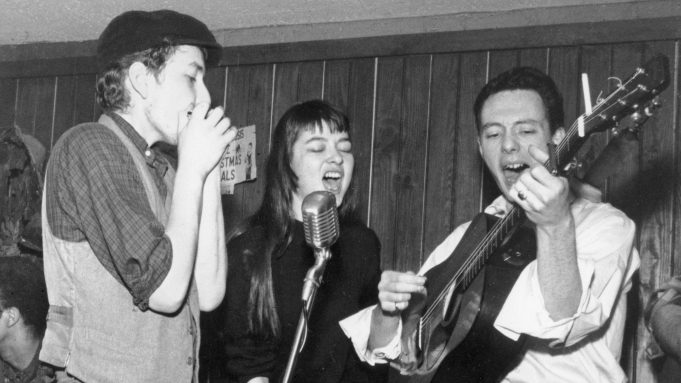
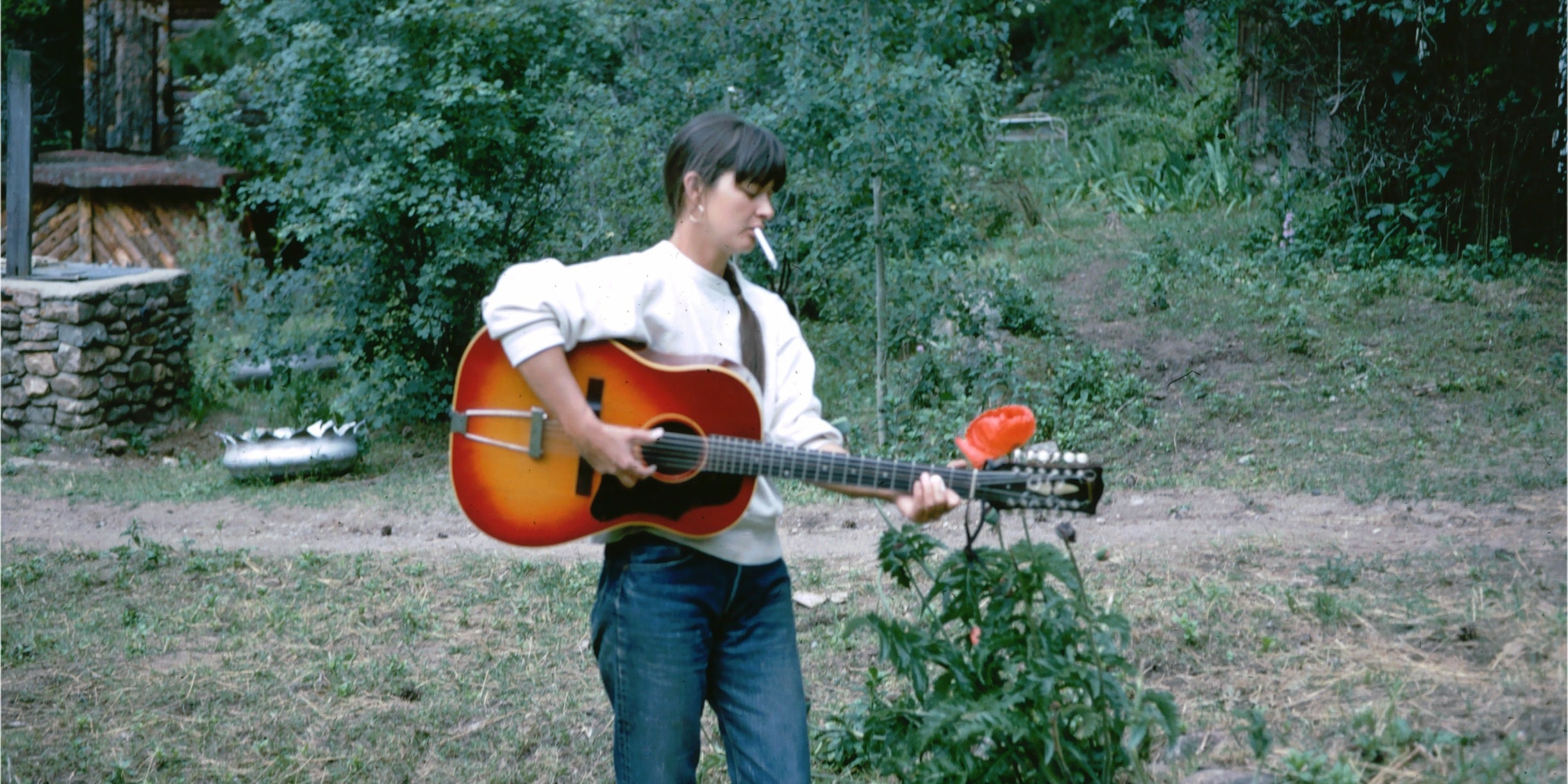
The voice is fractured, fragile and intimate — “plaintive, earthy and insinuating” an early Village Voice critic called it.
Bob Dylan got even closer to the mark by stating the obvious about Karen Dalton and who she was plainly imitating with her pitch, her halting, emotive delivery. “She sings like Billie Holiday and plays (guitar, among other instruments) like Jimmy Reed.”
“Karen Dalton: In My Own Time” is a documentary remembrance of a folk star who never quite was. Texas born, Oklahoma-raised, Greenwich Village-adored Karen Dalton showed up in New York at almost the same time as Dylan, already married twice and just 21, eventually towing her toddler Abbe around to the folk clubs where she played — Cafe Wha? was the most famous — letting her audience be her babysitter.
She didn’t write much of her own music, which held her back, and didn’t get a record deal until Woodstock producer Michael Lang was offered his own record label by Paramount and he signed her, years too late for a folk singer to break out, even if the records — one of which was titled “In My Own Time” — had captured her magic.
Listen to this Tim Hardin song that Rod Stewart, among others, made famous. No, this version didn’t come out on LP during her lifetime. Like many, Dalton was only truly “discovered” posthumously.
Friends, colleagues and others remember her as the “only authentic” working class/dirt farm folkie to haunt the Greenwich Village of that era. She grew up poor, married at 15, never finished high school and rarely prettied herself up for her shows.
She had two missing teeth from getting into the middle of a fight between two boyfriends (one of them interviewed here), shunned makeup, “a Bohemian” who put her daughter through a childhood of no-real-home hardship sleeping on the floors of friend’s apartments as she covered songs by Woody Guthrie, George Jones, Tim Hardin and others and made a name for herself during the glory days of New York folk.
She couldn’t get along with John Phillips long enough for them to build a folk act with two other friends. He rounded up others and started The Mamas and the Papas.
Her career was marked by almosts and “If she’d only shown up” for shows whose rehearsals so exhausted her she almost never did, or for tour dates (Lang had her opening for Santana).
Nick Cave was among those who discovered her, long after Dalton had flamed out. But some of those interviewed in this Richard Peete and Robert Yapkowitz hasten to say that we shouldn’t judge what “she might have been” because her career is so incomplete.
A couple of records, a little performance and rehearsal footage, and a public radio interview from the era are almost all this “somewhat depressive individual” managed to produce that survives.
But the filmmakers tease us with the diary entries, with the poetry she rarely set to music, using animation to tell her story when testimonials or that long radio chat won’t do.
“Wait’ll I get my gold tooth,” she boasts to Bob Fass, her Pacifica radio interviewer (who recently died). But she never did. Poverty and impulsiveness and a roaming, impatient personality probably cast her fate before drugs ever entered the picture.
But of course they did.
Still, “In My Own Time” gives us a taste of what might have been much more than a soulful novelty act, an American Original who might have been too “authentic” for her time, if not for ours.

Rating: unrated, discussions of drug abuse
Cast: Karen Dalton (radio interviews), Nick Cave, Lacy J. Dalton, Abbe Baird, Richard Tucker, Becky Baird, Vanessa Carlton, Peter Walker, Hunt Middleton, Peter Stamfel, Rick Moody and Michael Lang
Credits: Directed by Richard Peete and Robert Yapkowitz. A Greenwich Entertainment release.
Running time: 1:26
Joachin Trier’s dramedy is about a young woman’s confused, indecision love life and how she mismanages it and her planned over four years. Will she get it together, or will she be shamed by the label that is this Norwegian film’s cutesie title?

A Cornelia Funke (“Inkheart”) novel allowed a German/Dutch animation operation and Netflix to elbow their way into “lads who ride dragons” stories with “Firedrake the Silver Dragon,” a movie that goofs on “How to Train Your Dragon” and makes itself “How to Train Your Dragon” adjacent at all times, and in many ways.
But this decently-animated, exposition-heavy, laugh-starved adventure farce never comes close to even the weakest “Train Your Dragon” film and TV moments. There’s little heart and little else to recommend it, even if your wee ones never quite got their fill of dragons, flying on them and the like.
There’s barely even any Scots accents in this story of dragons, humans, pixies, a basilisk, dwarves and their ilk.
A shadow cutout animation opening tells us another version of the myth that there was a day when “humans and dragons lived in perfect harmony.” But that was long ago. In the present, dragons live in a secluded colony, hiding from humans, listening to tales of long ago from the grizzled, toothless Slatebeard (voiced by Peter Marinker).
But human encroachment — strip mining, environmental degradation, basically Kentucky without the horses — is closing in. The dragons have to do something.
Young Firedrake (Thomas Brodie-Sangster) and his brownie (pixie) pal Sorrel (Felicity Jones) sneak out to seek help, to find this mythic place called “The Rim of Heaven.” But first, they stop off in the city.
That’s where they crash a “How to Train Your Dragon” premiere, and fetch a gap-toothed teen fan (Freddie Highmore). Firedrake takes the caped cosplayer at his word when he, shocked at meeting a real dragon, describes himself as a “dragon rider.”
The liar/hustler joins them on their quest, which has them meet an Australian scientist (David Brooks) who “saves” rare mythic creatures and keeps them on a preserve, a “mighty djinn (Nonso Anozie) who is more trouble than he’s worth and an Indian researcher (Meera Syal) who knows all about dragons and dragon lore.
Along the way, we learn the dragon rider’s “secret” and Firedrake’s hidden shame. Let’s just say they call him “Lame Flame” back home.
And then there’s the steampunk “draconoid” Nettlebrand (Patrick Stewart) created long ago for the express purpose of killing off dragons, now on their trail because he’d love to refresh his taste for fiery, flying flesh.


The jokes are of the cell-phone “How will I communicate with you?” “SKYPE me!” and consulting “the all know oracle…the Internet” variety.
The “How to Train Your Dragon” riff is cute, but just reminds you of the earlier, better film and its inferior sequels and TV series. The German writer Ms. Funke published her “Dragon Writer” book 13 years before “How to Train Your Dragon” hit theaters, so the time to litigate who was stealing whose ideas is long past.
The only times I laughed were at the Indian scenes which had a playful quality the rest of the film lacked.
“Dragon Rider” as was this film’s working title (perhaps until Universal’s lawyers showed up) starts out dizzy, stumbles into boring as the exposition — all these new lands and new creatures are introduced — keeps going on and on, with little character development, no laughs and generic action beats.
Unless your kids need a digital babysitting session, I’d skip this.

Rating: TV-Y7
Cast: The voices of Thomas Brodie-Sangster, Felicity Jones, Freddie Highmore, Nonso Anozie, Meera Syal and Patrick Stewart
Credits: Directed by Tomer Eshed, scripted by Johnny Smith, based on the novel by Cornelia Funke. A Netflix release.
Running time: 1:33
Fantasy with a Gaiman edge, delivered in an 11 episode series.
Looks glossy and smart, worth a peek


The early sequences of “The Jesus Music,” a history of CCM — “contemporary Christian music” — depict the social ferment that “the movement” was born in — the late 1960s. And the interview subjects popping up on screen and the film’s co-directors narrow their focus to overdose death icons Jim Morrison, Janis Joplin and Jimi Hendrix, and lean on the “end of the flower child movement/end of the ’60s” concert at Altamonte while brushing past Woodstock.
A critical viewer might wonder, just for a moment, if Newt Gingrich is a producer in this new skirmish in the Culture Wars.
There’s a lot of edges-rubbed-off, artists-avoiding “difficult” questions, ever so politely, that follows as we’re taken from the music’s California birth, to it’s Nashville-takeover and the Christian pop breakthrough of Amy Grant in the ’80s on towards the faith-based pop of today.
But stick with it and the warts are acknowledged — some of them, anyway. Substance abuse issues, broken marriages, that stuff made headlines so there was no avoiding it in the film even if you can’t call how “The Jesus Music” addresses such issues “confronting” them.
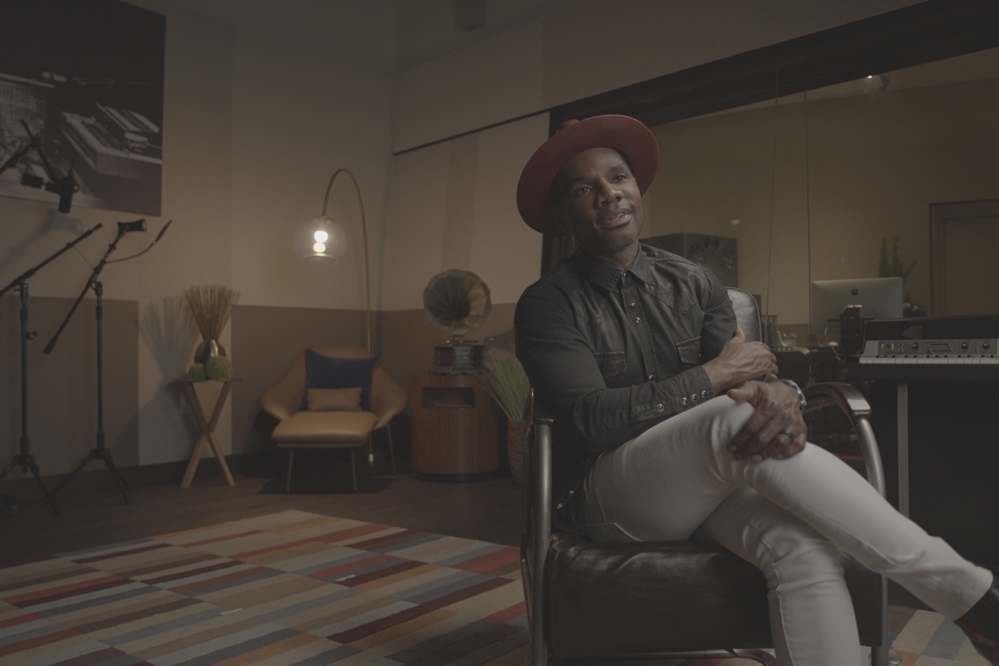
And watch assorted figures in and around the music talk about how “segregated” it’s become, the grudging acceptance of Gospel music legend Andre Crouch, the racism artists like Kirk Franklin and Michael Tait faced and continue to face and the blowback they get for even suggesting “Black lives matter” in the most contrite way imaginable, from a stage.
So this film charting the rise of a “movement” that morphed into an “industry” is a mixed bag — upbeat and celebratory, contorting itself into a pretzel to avoid dealing with anything that might ruffle the potential audience.
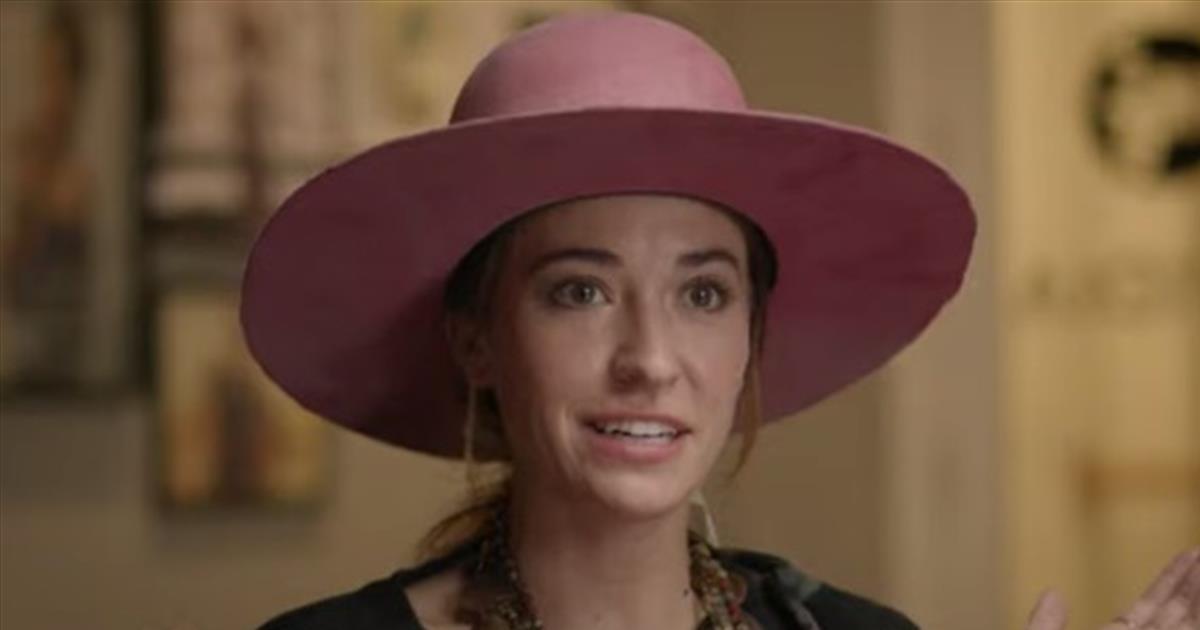
“Music” does a decent job in the “history” regard, taking us back to Costa Mesa’s Cavalry Chapel, which reached out to West Coast hippies, and with a congregation in long hair and jeans, allowed in musicians who changed worship music forever. Here’s Amy Grant in Nashville’s Belmont Church and Koinonia Coffee remembering the way this “Southern religious town” was shaken by the contemporizing of worship music in ways that went beyond country music’s white Gospel roots. Lauren Daigle speaks of her desire “to see the richness of hope land upon someone’s spirit and (they) embrace the embrace of God,” and her seeing “His presence…via rhythm, rhyme and melody.”
We hear the “pioneers,” Love Song,” Californians with Beach Boys harmonies who recorded on Marantha! Music, the first Christian record label, an outgrowth of that Cavalry Chapel’s ministry.
The film gives Billy Graham center stage as an early “mainstream” acceptor of “youth music,” and Jimmy Swaggart as a dogmatic foe of it, inveighing against specific singers and bands (Stryper) from his TV pulpit.
This gets labeled “so underground” and that’s “the most punk thing I’ve ever seen” (bands performing for the benefit of ministries), when who and what’s being discussed is “edgy” only within this insular world.
As we make our mostly triumphant way past Grant and Michael W. Smith to DC Talk and Stryper, Talk-alumnus Tait’s Newsboys success to “Stomp,” a breakout, crossover club hit for Kirk Franklin on into into Hillsong country, you wonder about not just the elephant in the room, but the elephants.
The “racism” and “segregation” spoken of points to Christian white supremacy’s rise and Christianity’s decline in North America, subjects the film bends over backwards to avoid. As the two coincided, that’s kind of a big thing to skip by.
You have to Google “Hillsong scandals” to get any hint of what a pockmarked enterprise that behemoth is.
When an editor of “Contemporary Christian Music” magazine talks of fans being “forgiving” of artists who have personal scandals, great and small, you can’t help but notice he’s leaving out the phrase “of our own kind.”
I kept thinking back to the many “history of hip hop” documentaries (“Rhyme & Reason” and “Freestyle: The Art of Rhyme” etc.) and wishing the Erwin Brothers had the ambition to burrow into that history and make THAT movie — strictly historic — instead of an illusory “this is where we’ve been, and the future’s never been brighter” fluffing. The historical material, with some of those who “were there,” is fascinating, even if the context is short-changed (No mention of “Jesus Christ Superstar?”).
Amy Grant had a lot of things going for her, and never mentioning her gorgeous girl-next-door sex appeal is laughable. She started her career as a college coed and was polished, primed and ready for a breakout crossover hit, if not the silly blowback from Christian conservatives that followed.
That goes for virtually everybody that came after her, especially the younger acts. Ignoring hormones is strictly a Southern Baptist thing, or so one had believed.
And resurrecting decades of accounts of rising dollar amounts in sales is putting an emphasis on that sort of success — a 9/11 tribute where “everybody showed up in their private jet” — and noting a rough figure for listenership of contemporary Christian pop radio — isn’t really addressing why this movie needs to be made to get any attention, outside of again “that insular world,” for this music and the beliefs it’s espousing.

Rating: PG-13, suggestions of drug abuse, addiction
Cast: Amy Grant, Michael W. Smith, Kirk Franklin, Lauren Daigle, Michael Tait, Lecrae,
Toby McKeehan, Mandisa, Michael Sweet.
Credits: Directed by Andrew Erwin and Jon Erwin, scripted by Jon Erwin. A Lionsgate release.
Running time: 1:49
This one looks out there.
Udo Kier and Dermot Mulroney are the most recognized faces in the cast of “The Blazing World.”
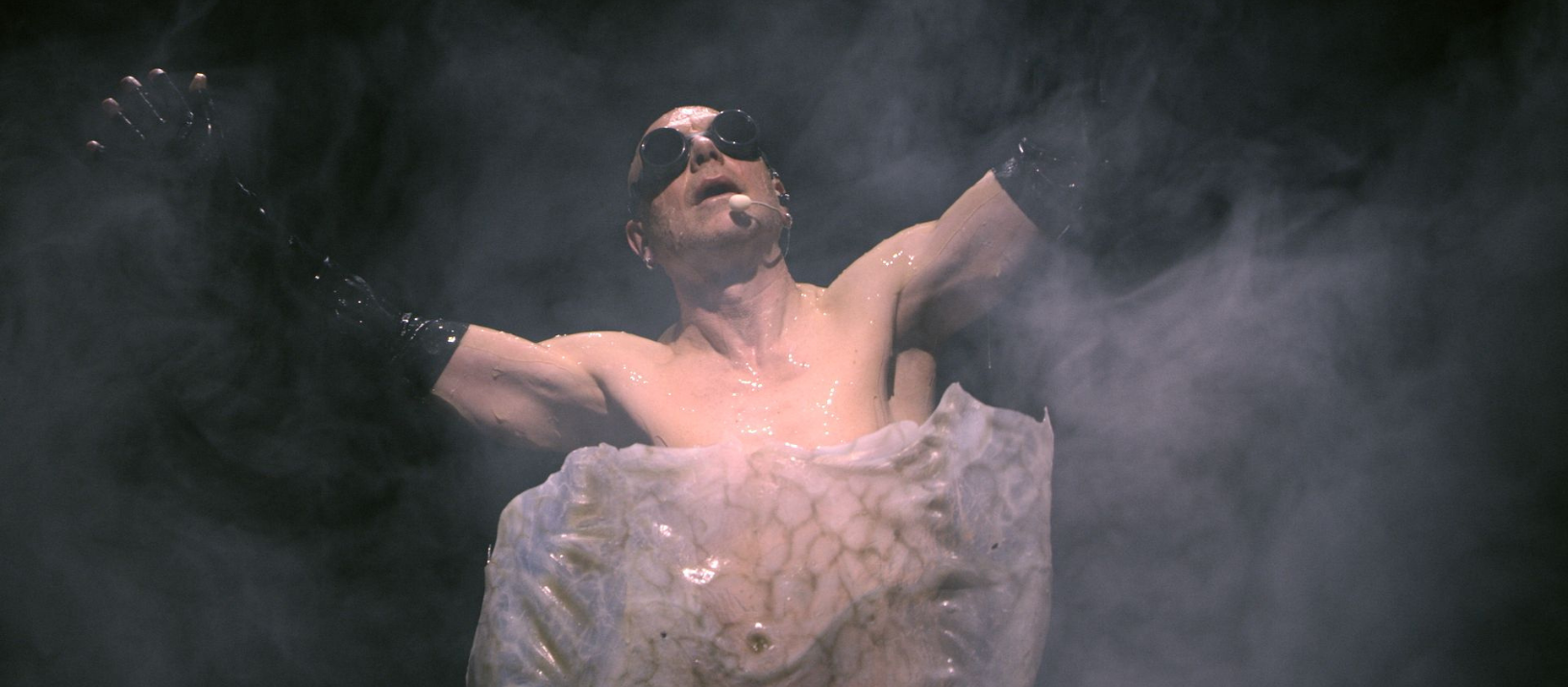
A 60 year-old accountant from New York (state) wants to be a pop star, some sort of conceptual/multi-media pop performer of the Michael Jackson/Grace Jones/Talking Heads in “Stop Making Sense” mold.
So he blows a wad of cash on a music video “transformation” that he’ll introduce at his retirement party. Backup dancers, professional recording/singing to a track, the works.
And then he gets a tip about a Filipino drag queen academy and leaves behind his mentally troubled wife to pursue his bliss and some sort of fantasy dream concert, with perhaps the fame that could be attendant to that.
An ineffectual, irritating blend of documentary and dully-scripted “trippy,” “I’m an Electric Lampshade” is camp without the fun, music video fever-dream nonsensical and incoherent in ways that limit even its camp entertainment value.
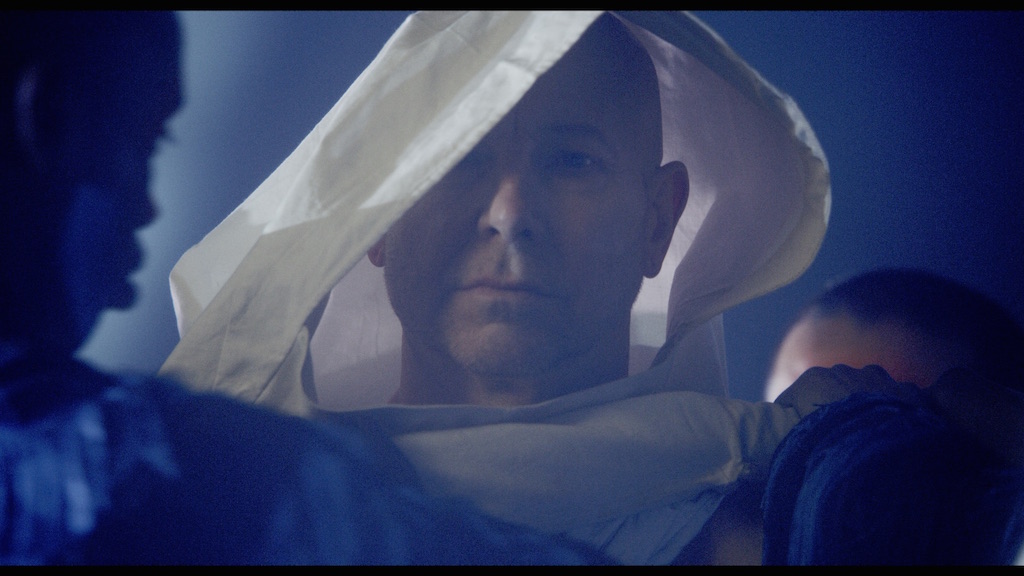
Doug McCorkle is an accountant/comptroller facing retirement with a big dream. He’s going to shave off the rest of his hair, train and take voice and dance lessons and do a “Stop Making Sense” concert extravaganza of semi-ironic of EMD synth-pop of his own creation.
That’s what sends him away from wife Regina and to Sin Andre’s Finishing School for Performers. It’s somewhere in the Philippines. He joins with assorted “real people” who are aspiring actors (ugh), singers or drag queens.
Fandango (Isra-Jeron Ysmae) is a transgender sweat shop worker with dreams of undefined showbiz glory and leaves house and family for the Big City (Manilla? Maybe. Maybe not).
Writer-director John Clayton Doyle keeps the “story” needlessly vague about what people’s actual goals are, even as they address the “fantasy” that has them there in the first place.
Cesar Valentino vamps it up as Sin Andre, their teacher in “Dramatics” and “Professional Realness,” how to move, stage presence, etc. We don’t see a “transformation in progress” as most of the actual “instruction” is left unseen.
Fandango gives Doug a tab of acid, advising him to “find yourself inside, first.” That’s what passes for “profound” here. Doug winds up in fishnets and a bustier, because of course he does.
But that’s just his “break through” before his big finish, his “Stop Making Sense” quasi tribute show (Filmed/staged in Mexico, maybe?).
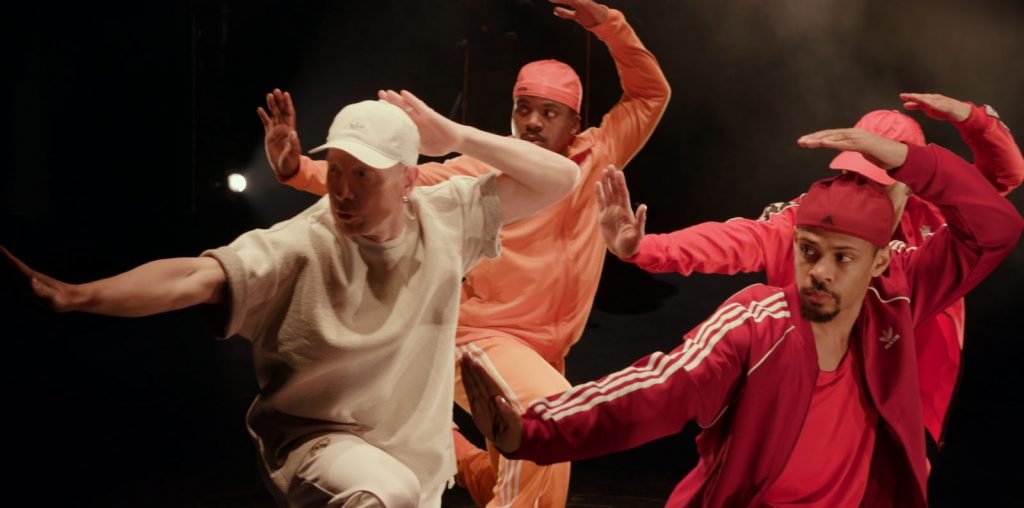
So what we’ve got here is a reasonably well-off childless retiree blowing through cash for an elaborate rock and roll fantasy camp, with EMD and a multi-media stage show the goal rather than shredding alongside your favorite guitar god or legendary lead singer.
As a concept, that’s thin. And all the dance and cheesy, amateurish videos (a Filipino TV commercial that looks like a short student film with no punchline), stage effects etc. can’t hide that.
The title comes from the song Doug improvises to a track. By the end of the film, he’s at least fumbling for more interesting and coherent lyrics.
Doug has a colorless, back-row of a smalltown church choir baritone. Think Right Said Fred that isn’t “Too sexy for” anything.
Doug has the stage presence to match. His dancing is stiff and mechanical, even after he gets down the choreography and the costume changes. Are we meant to celebrate that he got good enough to not fool anybody?
It’s like the difference between Steve Carell’s delusional dolt in “The Office,” and Ed Helms’ musically-adept flipside of the same clueless coin. Wanting to perform isn’t the same thing as having a talent for it.
Gina back home has taken on some drag queen (Darnell Bernard) presence who could be her conscience as she calls and calls Doug, wondering why he won’t come home.
What do we make of all this, avoiding the easy (“I don’t get it.'”) way out?
The premise may have had promise, but not much. Even the “rich old white guy’s indulgence” factor is left unexplored.
The visuals are all over the place — drably-choreographed bits and pieces, street scenes and streetwalking scenes — all of it looking seriously DIY, and not in a fun way.
Dramatically, the entire enterprise is a non-starter. It’s colorful, but if the lead is this charisma-impaired and the filmmaker fictionalizing all this abandons reality the moment Doug leaves his office, where do we plant our feet as a vantage point? With Doug? With Gina? With Fandango (the more interesting story)?
A movie that leaves you this unmoored (Would it kill a director to tell is where we ARE? Ever?) is that much harder to get something — anything — out of.
I see this got some film festival attention and a few timid endorsement reviews.
Sorry kids. The emperor? He hath no clothes.

Rating: unrated, drug abuse, near nudity, profanity
Cast: Doug McCorkle, Regina McCorkle, Cesar Valentino, Isra-Jeron Ysmae, Darnell Bernard
Credits: Scripted and directed by John Clayton Doyle. A Holy Moly release
Running time:
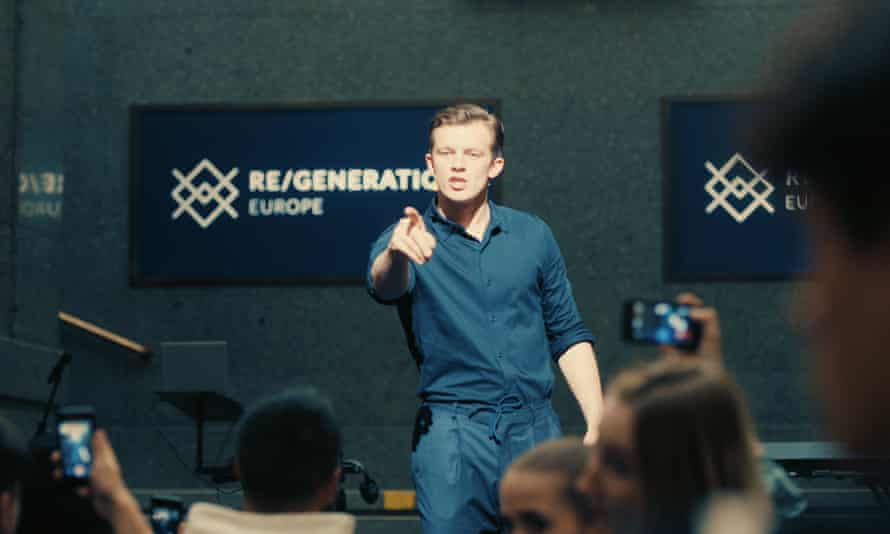
The “rallies” are “academies,” basically bubbly conventions where smiling young like-minded faces gather, live-stream vlogs with their selfie sticks, buy t-shirts, sample gins and hear presentations.
And those speeches? They’re Tony Robbins-affirmative, TED Talk slick and Promise Keepers creepy.
The “Re/Generation” messaging announces “We are the future,” “We will save Europe by being Europe!”
But don’t you dare yell “Sieg HEIL!” in the middle of all this good, clean fun.
“That was YESTERDAY! Get over it!”
No, today’s Nazis are social media savvy, with ISIS like online testimonials, slightly-sanitized messaging delivering by “leaders” — speakers, pop starlets and racist rappers — delivering telegenic sex appeal.
That’s the gripping setting of “Je suis Karl,” a German thriller about pan European nationalism, the fascism/white supremacism that has gained a foothold in much of the Western World. It’s a somewhat cumbersome, drifting drama that feels misassembled, somehow. Good elements are here. They’re just arranged in the wrong order.
An almost giddy, 40ish couple (Mélanie Fouché, Milan Peshel) vlog their way from Berlin into Budapest. They’re there to smuggle a refugee (Aziz Diab) they met in Greece into Germany. Whatever the law, they have made their own moral choice.
And Yusuf gets in.
Sometime later, Alex (Peshel) picks up his oldest daughter Maxi (Luna Wedler of “The Most Beautiful Girl in the World”), gets home and signs for a package that will blow up their entire apartment.
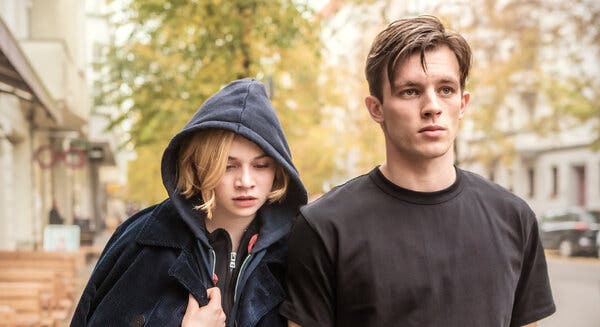
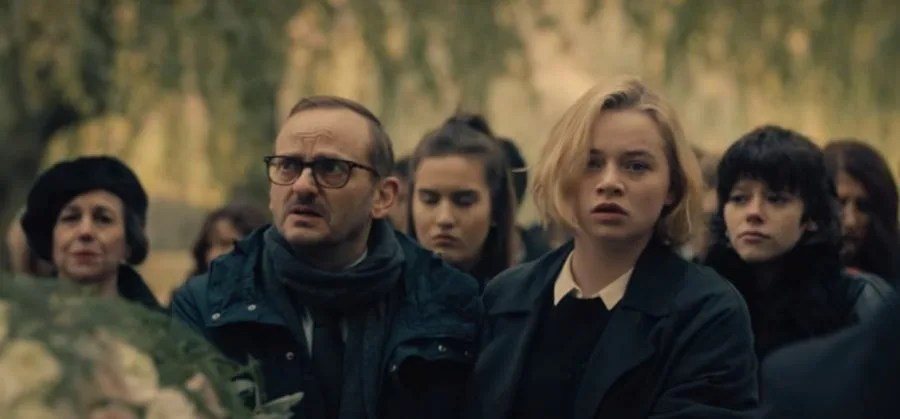
Only shocked Alex and confused, enraged Maxi survive. “ISLAMIC TERRORISTS!” the headlines scream. Alex is thrown completely adrift, seeing dead crows, like the one he picked up after the blast, everywhere. Maxi, hounded by the media, finds herself shielded by a handsome stranger.
But when Karl (Jannis Niewöhner of “Godless Youth”) pulls out a brochure, Maxi hears warning bells.
“What ARE you,”(in German with English subtitles) she wants to know. Some Christian cult recruiter?
No. “Re/Generation” is what the organization is called. And he sugar coats the hell out of what they actually are — Proud Boys (and Girls) with better wardrobes and slimmer waistlines. Maxi isn’t put off. She’s read the headlines. And she is attracted to the perfect-haired hunk making the pitch.
Unlike her, we’ve seen the flashback that came with Karl’s introduction to the story. We saw him dye his beard, saw him pick up the bomb and deliver it. As we saw in much of the “riot” footage in America, it’s the violent racists who are enflaming the country by pretending it’s “the other” who are carrying out terrorist acts.
Director Christian Schwochow (“The German Lesson”) has trouble juggling the two points of view of Thomas Wendrich’s script. We see all the plotting, the German-history-repeats-itself strategizing to create martyrs, “wave the bloody shirt” because “We need the final straw.”
We see the scheming, the lying “testimonials” about white victimhood, the pitiless plotting and planning.
Maxi is clueless, seduced by the seducer, traveling with him as her father struggles to regain his mental moorings and get her to come home.
Giving away too soon Karl’s role in the event that upended Maxi’s life is a classic thriller blunder. Taking away Maxi’s agency in figuring out his/their “REAL game” is another. There’s zero suspense to this. We never fear for Maxi’s safety because she’s among her fellow Master Race.
And “Je suis Karl,” which is performed in German, French and English, waits entirely too long to clue the father in about the deep end his daughter’s plunged into.
There might be a better film in what’s here, something that judicious trimming and re-arranging of scenes could bring out. But you know what they say about movies made for Netflix. “Re-edit? Why bother?”
Rating: TV-MA, violence, racism, sex
Cast: Luna Wedler, Jannis Niewöhner, Milan Peschel, Anna Fialova, Fleur Geffrier and Aziz Diab.
Credits: Directed by Christian Schwochow, scripted by Thomas Wendrich. A Netflix release.
Running time: 2:06

The plea, suggestion and threat is all in a single line and one delivered on screen long after the viewer has thought it or even muttered it aloud.
“Get some help, mate.”
“Surge” is one man’s experiment in going full Travis Bickle in “Taxi Driver,” a lean, reached-his-breaking-point thriller of the “Falling Down” order. It’s a tour de force for its star, Ben Whishaw, and a bracing, minimalist feature film debut for Aneil Karia, who has made some noise with short films and British TV before now.
The buzzcut and hint of an attempted mustache set Joseph instantly apart from another other Whishaw (“Q” in the recent Bond films) performance. He is a working class loner with no hint of an interior life, a misanthropist with a job that forces him to deal with people, up close and personal, every working day.
Joseph does the “step over here, please sir” searches at Stansted Airport. He can be officious and professional as we see with a wide array of passengers — the careless, the frightened, the sketchy and the downright crazy.
Maybe it’s the crazy one who sets him off. But shortly after Joseph a joyless birthday celebration with his hair-trigger-temper dad (Ian Gelder) and another scolding from his martyred mum (Ellie Haddington), Joseph starts to simmer.
Karia tracks Joseph with a nerve-fraying hand-held camera, following him through his routines — the annoyances at work, the obnoxious neighbor who figures blocking the sidewalk into the block of flats they both live in, revving the engine of his motorcycle, is his Make Enga-lund Great Again right.
And the viewer can only wait for the bomb to go off inside this wrapped-too-tight protagonist’s skull.
Our first “Here it comes” clue is the pace of Joseph’s stride through the city, the manic look that crosses his eyes. He acts out in a quick series of “What’s wrong with that guy?” flourishes at work, and gets sent home. He rushes into the apartment of an on-again/off-again flame (Jasmine Jobson). He’s there to “fix your TV,” and he’s agitated. And when he can’t make a quick fix, he dashes to the shops.
But his ATM card won’t work there. Down to the bank, the card gets eaten. He doesn’t have a driver’s license and gets zero help from the teller, marches out, and after a muttering stomp down the street, turns back around, goes back inside, writes a note and robs the place.
A bank robber, on-foot, who just lost the card that can ID him in that very bank, pulls off an impulse heist in the middle of the CCTV capital of the Free World.

“Surge” is a penny plain concept executed with skill and acted with real verve.
The Kafkaesque/Catch-22 trigger moment may be relatable, and the loner’s life of quiet, potentially violent desperation is downright common as a cinematic trope. But the film’s leanness ratchets up the suspense and tension with every hurried step Joseph takes.
There’s no interior monologue, no De Niro standing in front of the mirror play-acting revenge fantasies. There’s just Whishaw, sometimes wearing a deranged Joker smile, increasingly worked-up as he stalks down a tumbling line of dominoes chased by an increasingly impatient camera. The natural sound — street noise — heighten the sense of a violent reckoning to come.

Rating: unrated, violence, sex, nudity
Cast: Ben Whisaw, Jasmime Jobson, Ian Gelder and Ellie Haddington
Credits: Directed by Aniel Karia, scripted by Rupert Jones, Rita Kalnejais and Aneil Karia A FilmRise release.
Running time: 1:39


