Sometime around 1990, Dave Stewart of Eurythmics contacted Robert Palmer — the shambolic music journalist, not the dapper rock star — and got him to be his tour guide through America’s blues country for a short stretch between legs of a Eurythmics’ tour.
Palmer rounded up veteran music documentarian Robert Mugge and a crew and they headed to Memphis, Northern Mississippi and into the Mississippi Delta to meet the surviving, still-playing second generation of African American bluesmen and women.
“Deep Blues” had been the title of Palmer’s 1982 appreciation/history of The Blues in book form, and he revived it for the film that came out of that trip, a movie with a little history, some informal interviews and a lot of glorious live performances — at parties, in juke points, barber shops and radio stations in the heartland of the blues.
The music and performers animate this 1991 documentary, now restored and earning a re-release. It’s a time capsule, capturing a lot of places and more importantly a lot of musicians no longer with us.
Heck, even Palmer, long a New York Times music critic, died at 52 not long after the film came out.
Palmer passes on the etymology of “juke joint,” the history of the “diddley bow,” a wire attached to a pole that some kids learned to “play” before ever picking up a guitar and playing it with a bottle-neck slide. He declares, as he sings a lyrical hotel note about the place’s brown drinking water from a Greenville, Mississippi hotel room, “that there must be something in the water” that made this place the font of one of America’s most important musical art forms.
Here’s Lonnie Pitchford covering Robert Johnson, Junior Kimbrough playing with his band in his juke joint in Chulahoma, Mississippi, Wade Walton, the bluesman barber of Clarksdale, along with such practitioners as Jessie Mae Hemphill, Booker T. Lowry and R.L. Burnside— many of them legends without ever having a record deal.
Many of the places they performed in are gone, but a few survive. And that tiny corner of the public that maintains a passion for the blues ebbs and flows, and seems to be on the wane, now.
But Mugge and Palmer (Stewart went back on tour long before the filming finished) captured many of the lesser known but most authentic keepers of the faith on film and in pristine stereo for “Deep Blues.”
This interviews aren’t the sharpest, the voice-over isn’t book length. But this documentary from when the blues mattered most, when the old women and men who played it were in the process of passing on what they knew to a younger generation on the off-chance that the largely-unchanged places that gave birth to it would hold onto the music a while longer, is not just a relic of a time passed. “Deep Blues” is an invaluable artifact of an authentic American music form, and well worth tracking down for aficionados.
Rating: unrated
Cast: Robert Palmer, Junior Kimbrough, Jessie Mae Hemphill, Wade Walton, Booba Barnes and Dave Stewart
Credits: Directed by Robert Mugge, voice-over written and delivered by Robert Palmer, based on his book. A Film Movement+ release.
Lifelong friends and comic colleagues Whitney Call and Mallory Everton pair up again for “Stop and Go,” the most infectiously funny COVID road comedy ever.
They co-wrote and co-star in a manic but never frantic tale of sisters dashing from New Mexico to Washington state to rescue their Nana (Anne Sward Hansen) from her nursing home, which is having a Corona virus outbreak.
Along the way, they have to contend with cellular miscommunications between Blake (Everton) and this guy she had one date with before the pandemic lockdown began.
“I seriously met him at the WORST moment in history! ‘Best Tinder date of your life? NOVEL Corona Virus!”
Jamie is fending off calls from an obsessive, Ritalin-juiced nine year-old whose obsession isn’t with the classroom mice Jamie (a fourth grade teacher) left in his and his mother’s care. Little Jacob is mad into “Miss Jamie!”
“He’s ALWAYS calling, asking how the mice are doing, asking how I’M doing!”
“How’d he get your number?”
“From a bathroom stall!”
That’s worth a mid-roadtrip high five between the sisters. Thanks to the chattering, sparkling rapport between these two, we’d expect no less.
They swap “deal breaker” jokes about Scott, the guy Blake is infatuated with, have sing-alongs to the radio, freak-outs at infected-looking gas pumps and Facetime with Nana, watching her push furniture against her door, barricading it from the amorous infected senior who might be her regular “booty call.”
The film gives us a brief peek at their pre-pandemic lives together, Jamie’s 30th birthday party where she prophesies “I’ve just got a good feeling about everything.” “Stop and Go” progresses into their lockdown protocols and hits the road when they realize their “This pandemic is no big deal” older sister (Julia Jolley) is not just irresponsible and on a cruise with her husband — “The tickets were SO cheap!” — and thus not in the same town as Nana’s nursing home. Idiot Erin is the LAST person Nana wants to be with and entirely too careless to keep their grandmother safe.
Even though they drive off with the motto “Never interact with strangers,” they do — with an irate biker, with the squirrely boondocks oddball (co-director Stephen Meek) their ditz of a sister got to dog sit Nana’s Bernese Mountain Dog. Both of those go as badly as you’d imagine.
“That can’t be creepy, right?”
“Right. Cuz creepy guys never wear masks.”
“Stop and Go” gives the impression that the script is just here to provide a point-A to point Z itinerary, and mainly for the benefit of everybody else. Call and Everton? Those broads are riffing like it’s not their first improv (they were on the sketch comedy series “Freelancers” and “Studio C” together).
After watching the siblings’ free form dance to “let off steam” on the Bonneville salt flats, hearing them banter away at a speed that only a long relationship can produce and then harmonize as they sing in their RAV4, you might wonder how these two manage it.
Stick around through the closing credits. There’s little Mallory and tween Whitney, carrying on in home movies, improvising comedy and giggling their heads off as they do.
That’s right. If you REALLY want your COVID road trip comedy to sing, you have to pair up your co-stars in childhood, start’em early. Apparently.
Because that’s what works here, there and everywhere these two “Stop and Go.”
Rating: unrated, adult subject matter
Cast: Whitney Call, Mallory Everton, Julia Jolley and Anne Sward Hansen.
Credits: Directed by Mallory Everton and Stephen Meek, scripted by Whitney Call and Mallory Everton. A Decal release.
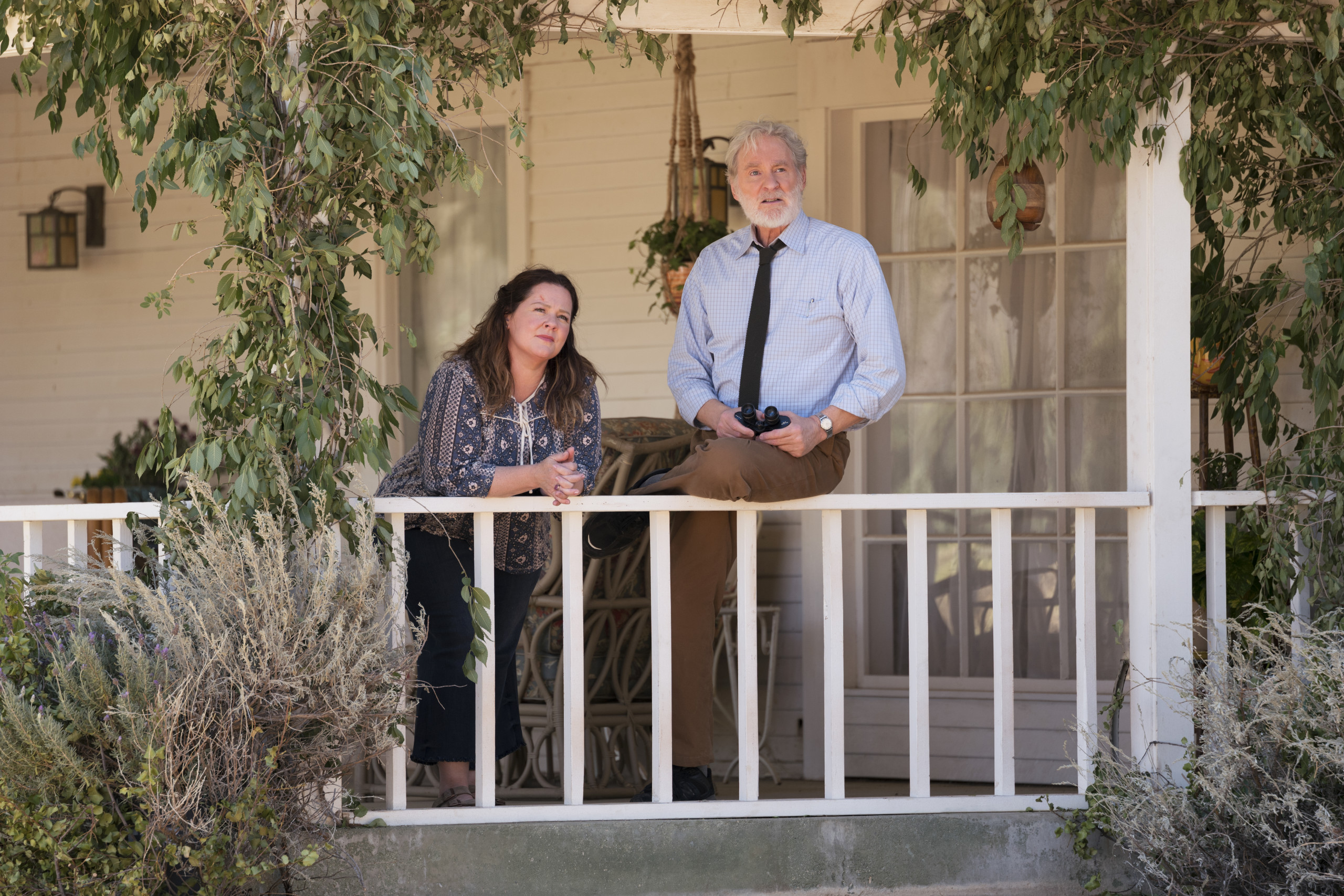
“The Starling” is a forlorn parable about crippling grief and the tragedies in life that are beyond our control. It has an expertly comic cast and is based on a former “black list” script — one deemed a hot Hollywood property, years ago.
And it just lies there, like a bird that’s flown into a window — sad but not quite achieving tears, deadpan but never quite comic.
Melissa McCarthy and Chris O’Dowd are a happy couple when we meet them, a pair of well-matched smart alecks riffing away at each other as they paint a forest scene in their baby daughter’s nursery.
A year later, Lilly is “distracted” and empty back at work, wearing out the patience of her supermarket boss (Timothy Olyphant) with her weekly “I need to leave early” needs. She has to drive to group therapy sessions at a mental health facility.
Their daughter died. Neither is handling it well, and the hospital is where Jack is. He’s medicated, but not taking his pills, drowning in morose, impatient with attempts to make him feel better and help them both “move on.” His therapist (Kimberly Quinn) sees their mutual contempt for these group get togethers. She can pass on all the warnings about “emotional triggers” she wants, but Jack isn’t getting better and Lilly seems pretty pissed.
“Have you done anything with Katie’s things?” No, she hasn’t. Nobody’s doing anything. Nobody’s getting better.
So the therapist suggests a name, a Dr. Larry Fine.
“Like from ‘The Three Stooges?'”
“You know, it’ll be nice to see someone before you have to see someone.”
But Regina the therapist must’ve made a mistake. “Dr. Larry” runs the Best Friends Clinic. He’s a veterinarian.
Still, he’s lightly played by Kevin Kline, and he’s willing to give her a listen as he neuters a Boston Terrier. Turns out, he used to be a mental health professional. And he might be rusty, there might be a good reason why he gave up therapy. He’s still a good listener, still remembers the Kubler-Ross “stages of grief” list.
“You familiar with stage three of the grieving process? ‘Bargaining’ and ‘anger?'”
“What comes after that?”
“Depression.”
“Great. I can’t wait.”
At least it turns out that she has “an animal problem” as well. There’s this damned starling that attacks her every time she tries to rehabilitate the yard and the garden they once planted with the little girl that they lost.
Director Theodore Melfi (“Hidden Figures,””St. Vincent”) does what he can with this material. But reaching for laughs with Loretta Devine, as a raging fellow patient at the mental hospital, with the sarcasm of the leads lost in a sea of gloom set to “sensy” pop by The Lumineers, Brandi Carlile and others, “The Starling” never finds the sweet spot that would make it come off.
The film gets across the idea of how gutting grief can be. But every attempt at a humorous moment in the mental hospital, every “quirky-cute” pet owner Dr. Larry deals with in the clinic feels halfhearted. I mean, what’s funnier than a little boy, dumped at the clinic with the family’s beloved, aged dog, because his mother “doesn’t handle” end-of-life decisions well?
Pretty much anything you can think of is, that’s what’s funnier than that.
And the actors play their parts accordingly. The performances are as deflated as the subject matter, which, considering the caliber of the players and the track record of the director, points back to the script.
In teen rom-coms, the “ugly duckling” is never, ever ugly. The “unpopular” kid is never repellent. And Mr. Right is always right under your nose. All you have to do is wax off the mustache to see him.
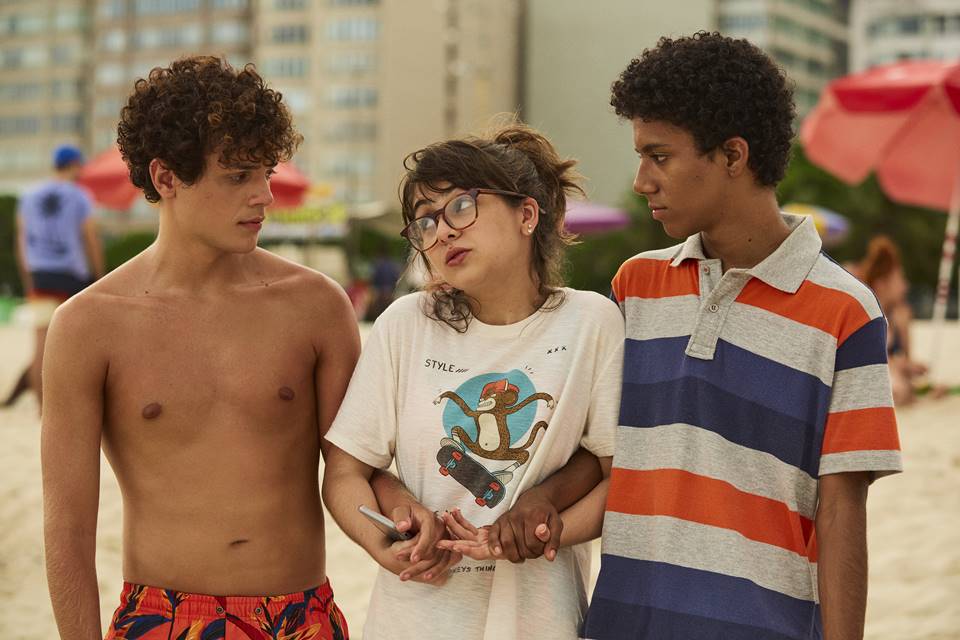
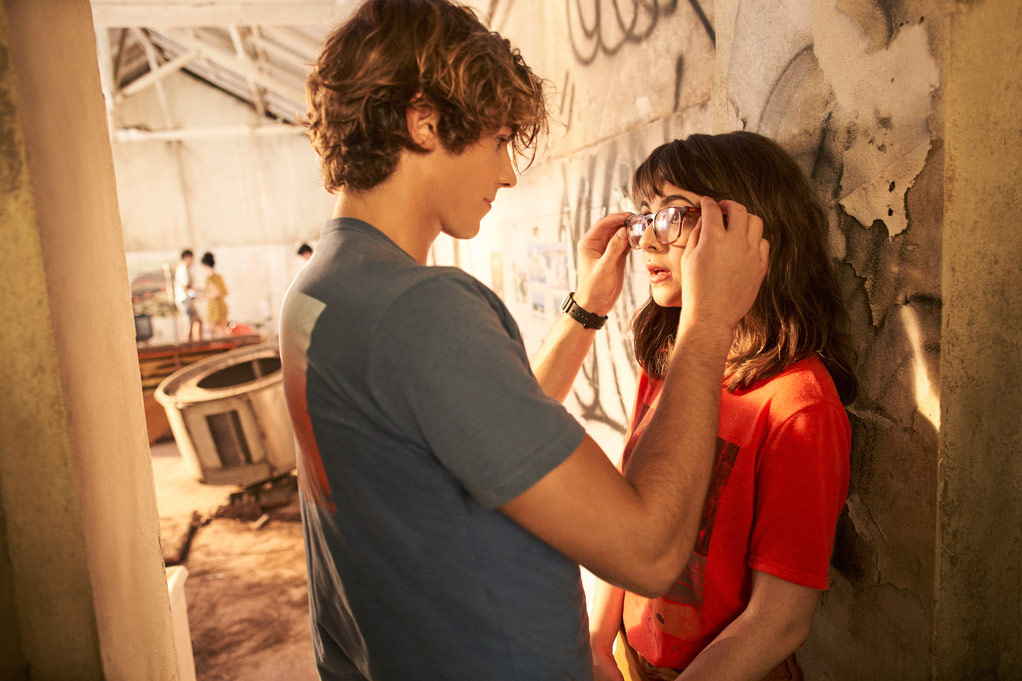
“Confessions of an Invisible Girl” is a tepidly sweet teen comedy, an “Around the World With Netflix” tale from Brazil. Even that “Confessions” title thing is a cliche. It’s got a bubbly star, good looking co-stars, a party and beaches. And tepid or not, I’ll say this for the script. They certainly give our heroine some unusual “problems” to overcome.
Friendless Tete (Klara Castanho) is smart but shy, 15 and never-been-kissed. But when her dad loses his job, the family moves to Copacabana and she starts going to a private school there. Maybe things’ll be different this time.
I mean, nobody here knows her nickname was “Death Pits Tete” at her last school. She sweats. A lot. It only happens when she’s stressed. Which is almost always.
She hasn’t figured out the “bring a second shirt to school” thing. And wears lots of perfume to hide the stink that her hyperhidrosis brings on.
Being a bit of a klutz doesn’t help. She meets nerdy Davi (Gabriel Lima) and gay Zeca (Marcus Bessa), and they introduce her to surfer-hunk Erik (Lucca Picon). But she barely has a chance to fantasize herself with him when she runs into the mean girls.
Valentina (Júlia Gomes) is Erik’s just-as-blonde girlfriend. And wherever Valentina goes, Lais (Fernanda Concon) follows.
To survive this school year, Tete will need a little makeover from grandma, a bigger one — including brow and mustache waxing, from new gay BFF Zeca. She’ll have to navigate mean girls jealousy, and the cruel judgement of her peers. But again she’s got Davi to lean on. And Zeca.
“‘Ashamed’ is just a cute word people like to use for ‘fear.'”
All of which sounds like a hundred other teen comedies, including a bit of business with a neighbor girl (Kiria Malheiros) with “issues” hired to be Tete’s “friend” at her new schoo.
I think I laughed once at this comedy (in Portuguese with subtitles, or dubbed into English). The line that the pretty surfer himbo mutters in his defense for taking (kissing) liberties is a classic “not my fault” plea, with a twist. It’s SOCIETY and the way it objectifies!
“Imagine being called ‘handsome’ every day of your life!”
The poor dear.
Some of the cracks about Tete’s alleged appearance issues could have been funny, her “Chewbacca” armpits and the like, could have been funny.
The “big party” is a must in such movies, and a bust here. Even the beach scenes, cute actors in swimwear, never come to life.
Director and co-writer Bruno Garotti is eating up a lot of Netflix’s Brazilian content cash, with this and “Rich in Love” and “DJ Cinderella.” Is Netflix actually vetting what he turns in? The unoriginal, unromantic and unfunny movies, perky and cute actresses and actors aside, pretty much all suck.
Rating: TV-PG
Cast: Klara Castanho, Gabriel Lima, Marcus Bessa, Júlia Gomes, Fernanda Concon, Caio Cabral, Lucca Picon
Credits: Directed by Bruno Garotti, script by Thalita Rebouças, Flavia Lins and Bruno Garotti. A Netflix release.
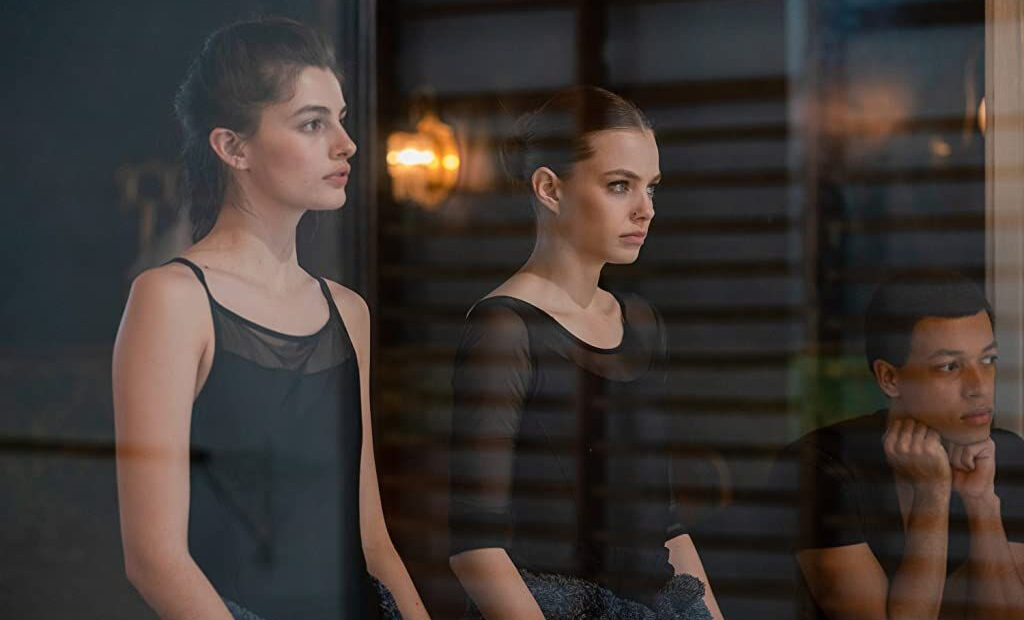
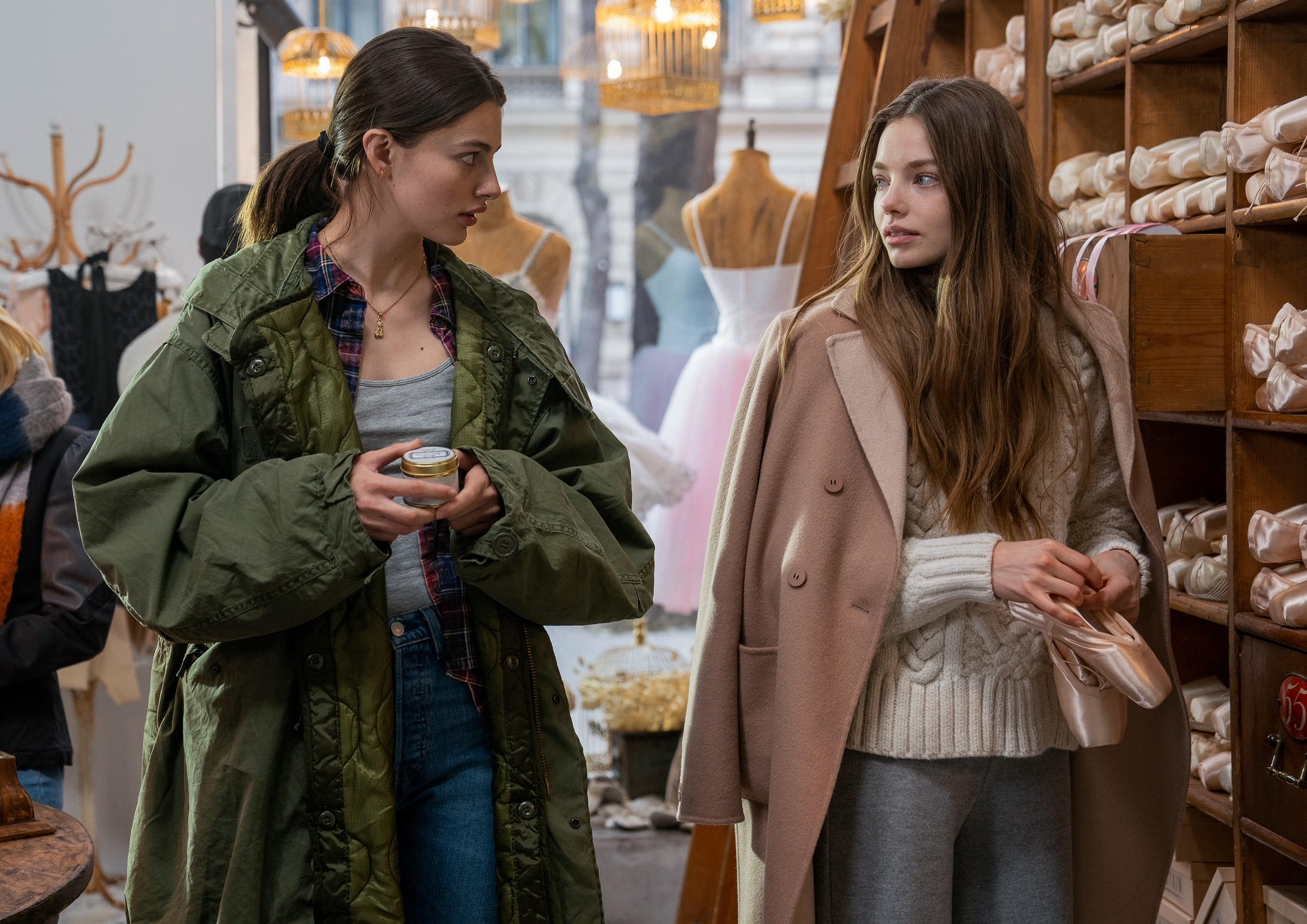
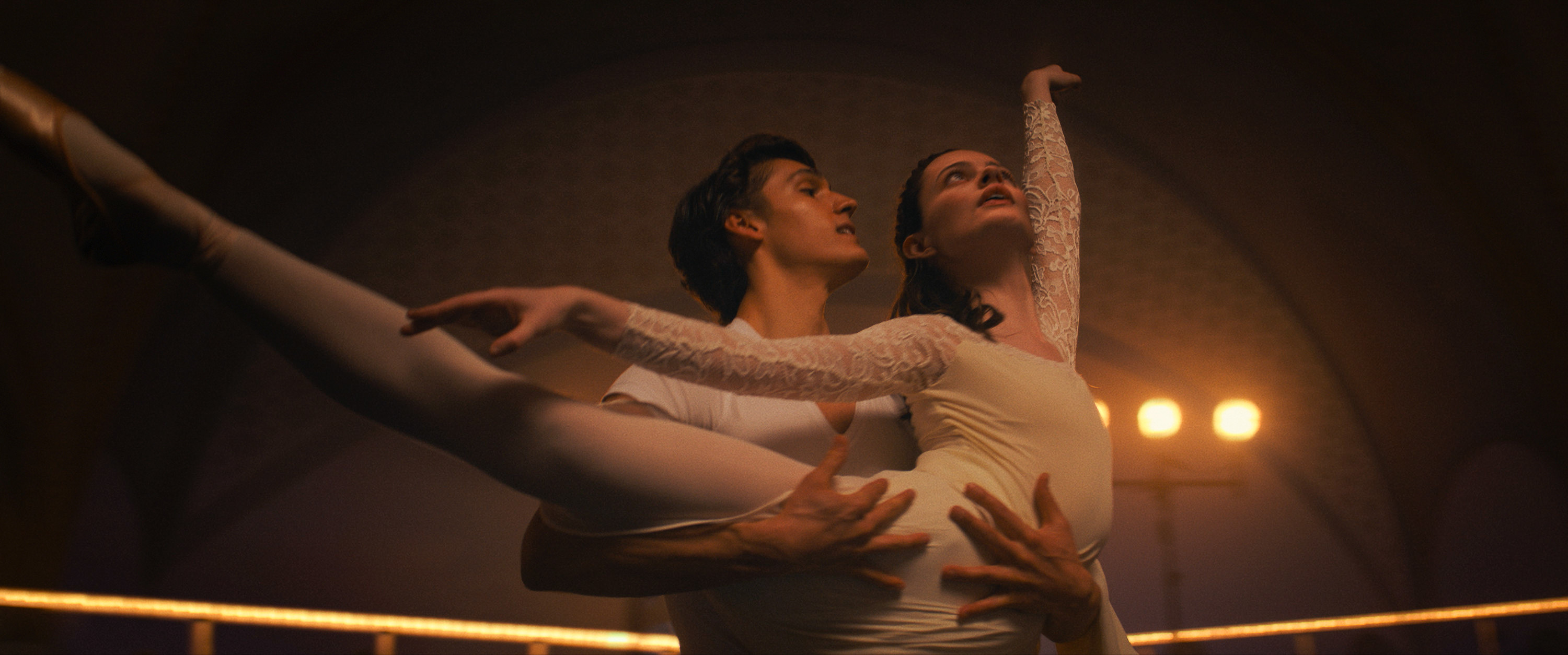
“Birds of Paradise” is a dance film that begins with a jete and rises into an arabesque before collapsing in a heap, a parade of ballet drama cliches that winds up stuck at the barre.
The set up — ballerinas competing for “the prize,” a contract with the prestigious Paris Opera Ballet — may be conventional in the extreme. Poor plucky American girl is gambling everything on her grab at the big brass ring, in ballet battle with the spoiled rich girl.
But for much of the first act, writer-director Sarah Adina Smith, adapting a novel by A.K. Small, keeps us guessing about what she’ll do with this tinder box of tropes. Will things turn murderous, homoerotic, or something even more daring?
Our “heroine” Kate (Diana Silvers) could be capable of anything in her pursuit of glory. Her roommate and antagonist Marine (Kristine Froseth) is disturbed and starts a serious slapfight with the girl the others disdain as “Virginia,” because that’s where she’s from, not bothering to learn the “gawky” one is named Kate.
Things could go “Black Swan” in a hurry, or so one might hope.
There’s a rapprochement that includes a hallucinatory trip to the exotic/erotic dance club “Jungle,” where your cover charge alone won’t get you in. You’ve got to eat a psychedelics-laced worm as well.
There are sexual complications aplenty in this erotically-charged atmosphere. With a transgender stage manager and lithe, thin and gorgeous dancers of every gender preference in the corps, the possibilities make one dizzy with anticipation.
“Hetero dancers are such sluts!”
And the head of the corps, the one who drills them and will help decide their fate, is Madame Brunelle, the one they call “Le diable (the devil), played with cold authority Jacqueline Bisset. She barks orders in French, which she barks in French, which “Virginia” doesn’t speak.
“Show me you have what it takes to win the prize,” she purrs to tall, athletic (she quit basketball to take up ballet) Kate, testing her least-likely winner with a cruel stunt.
Alas, Smith (“Buster’s Mal Heart”) tosses the wheat up in the air, and only takes care of the chaff. The most interesting directions she teases are abandoned for the merely conventional, time and again.
The dance sequences, what few there are, have more daring to them than the plot of the picture. The back-stabbing and bonding and breaking down are all so tame that you wonder why they bothered.
It’s all pretty enough, with a couple of striking settings, one of them the lovely belle epoch academy where the gamines give their all.
Silvers gives away a little ruthlessness behind her doe eyes, and Froseth manages to throw a little vulnerability into her aloof entitlement. They do what they can, but if there were sharp edges to Small’s novel, Smith rubs them right off.
Le Diable’s catty remarks about “clumsy” and “weight you gained over Christmas” dancers are cruel, but we’ve seen crueler. Drama runs on conflict, and Smith seems hellbent on rendering everybody “nice,” or at least justifiable in their machinations and intrigues.
The usual “distractions” of male attention yields little, aside from top male dancer Felipe’s (DanielCamargo) glorious instruction/seduction of “the new girl.”
“Nobody pays to see perfection,” he purrs, sizing up, with his hands, the woman he will have to life in their duets. “They pay to see romance…desire…dominance, bodies touching bodies.”
The most real moment of the entire enterprise comes when last year’s prima (Eva Lomby), who is Black, admits to vomiting to lose weight because of how she stands out, how she’s singled out for criticism because she has to compete “with all these skinny white girls.”
The rest? Rich girl “rebels,” poor girl “schemes,” other dancers are sabotaged, all for the chance to dance, and always in the most tried-and-true ways of every ballet picture that came before.
Rating R for drug use, sexual content, language and brief nudity
Cast: Diana Silvers, Kristine Froseth, Eva Lomby, Nassim Lyes, Daniel Camargo and Jacqueline Bisset
Credits: Scripted and directed by Sarah Adina Smith, based on a novel by A.K. Small. An Amazon Studios release.
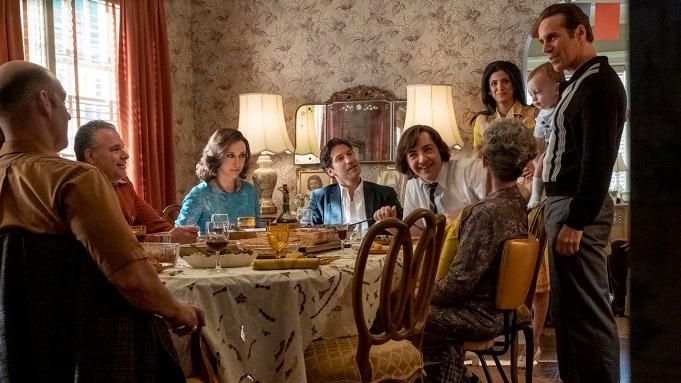
“The Many Saints of Newark” could be the pilot to a new Sopranos TV series.
It’s built that way, back-engineering stories, giving us the pre-mob don Tony Soprano and the family that made him a made man. It has a season’s worth of plot threads and an open-ended quality that allows some characters to be introduced and leaves others to enter the life of young, supposedly reluctant, supposedly “smart” mobster-to-be.
But the “origin story” that is the film’s chief appeal takes a back seat to “series pilot” requirements. The film’s biggest asset becomes a handicap. “Saints” never feels thorough, thought-through or complete, merely introductory.
Casting Vera Farmiga as Tony’s bitter-from-birth mother, the role played by Nancy Marchand, is the film’s master stroke. She is fierce and combative, and in her one moment of real reflection, resigned to the “idiot” “lazy” son who can do no right in her eyes, and almost accepting of her role in making him that way. It’s one of her finest performances.
Starting the story on the cusp of The Newark Race Riots of 1967? That’s the cleverest conceit of all, a moment of schisms coming to a head, a penny ante “numbers running” franchise of Five Families reckoning that the mugs and goombahs are clever enough to exploit, idiotic enough to misjudge and misunderstand.
The film opens with a cute “If these tombstones could talk” drift through a cemetery, with this or that character in voice-over remembering relationships, and who killed them and how.
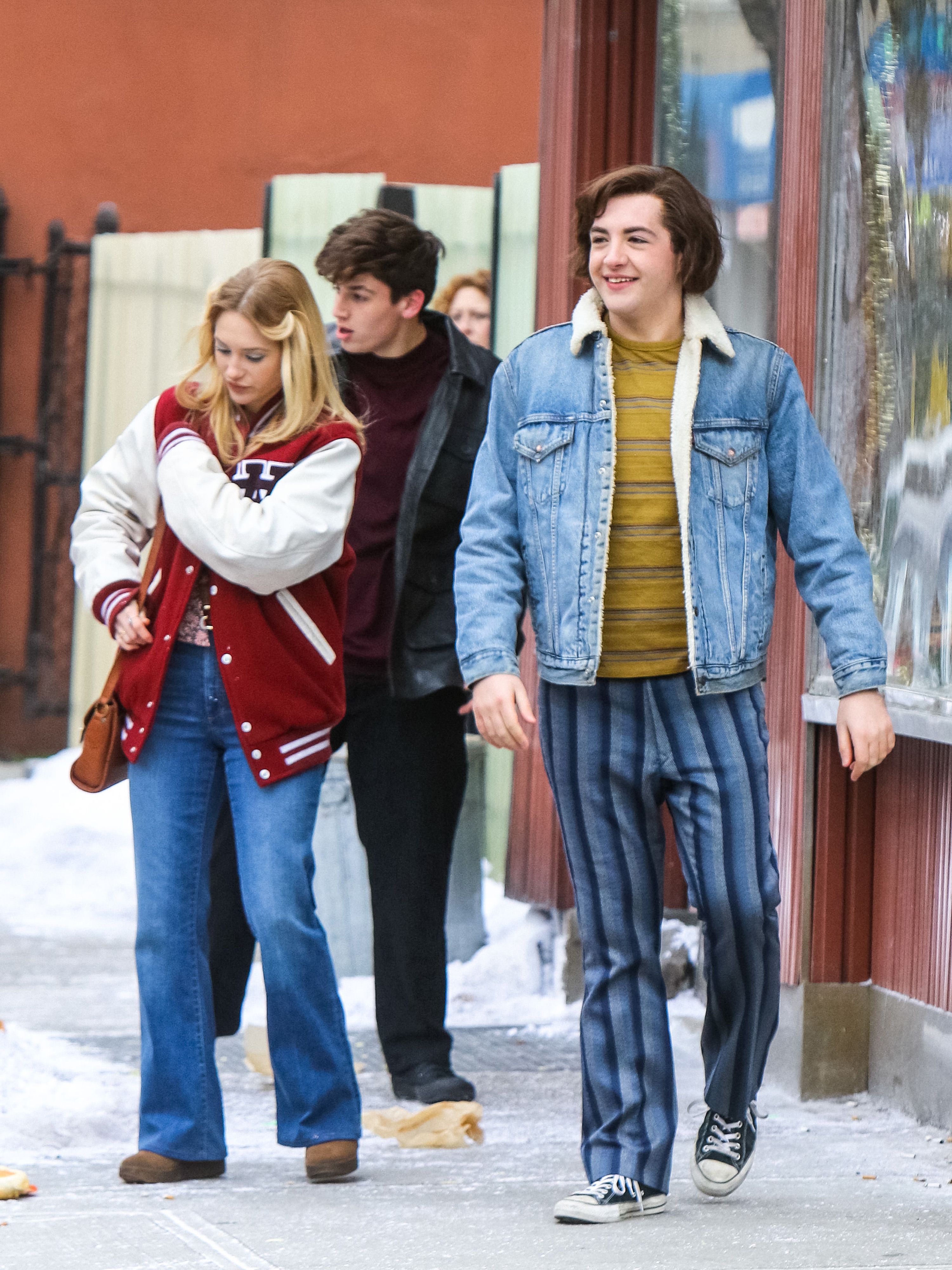
“Saints” is basically the story of Dickie Moltisanti (Alessandro Nivola), young Tony Soprano’s handsome uncle, a big influence on the kid, played by William Ludwig as a tween and Michael Gandolfini, the late James Gandolfini’s son, as an older teen. A running theme of the story is that young Anthony is always watching, often over-hearing what’s going on in the world of the adults who surround him.
The day his dad, Johnny Boy Soprano (JonBernthal, in a too-small role), is arrested at a card game is when little Tony sees his first shooting. Growing up with his dad in prison, he flees parental punishment and seeks Uncle Dickie as a surrogate father.
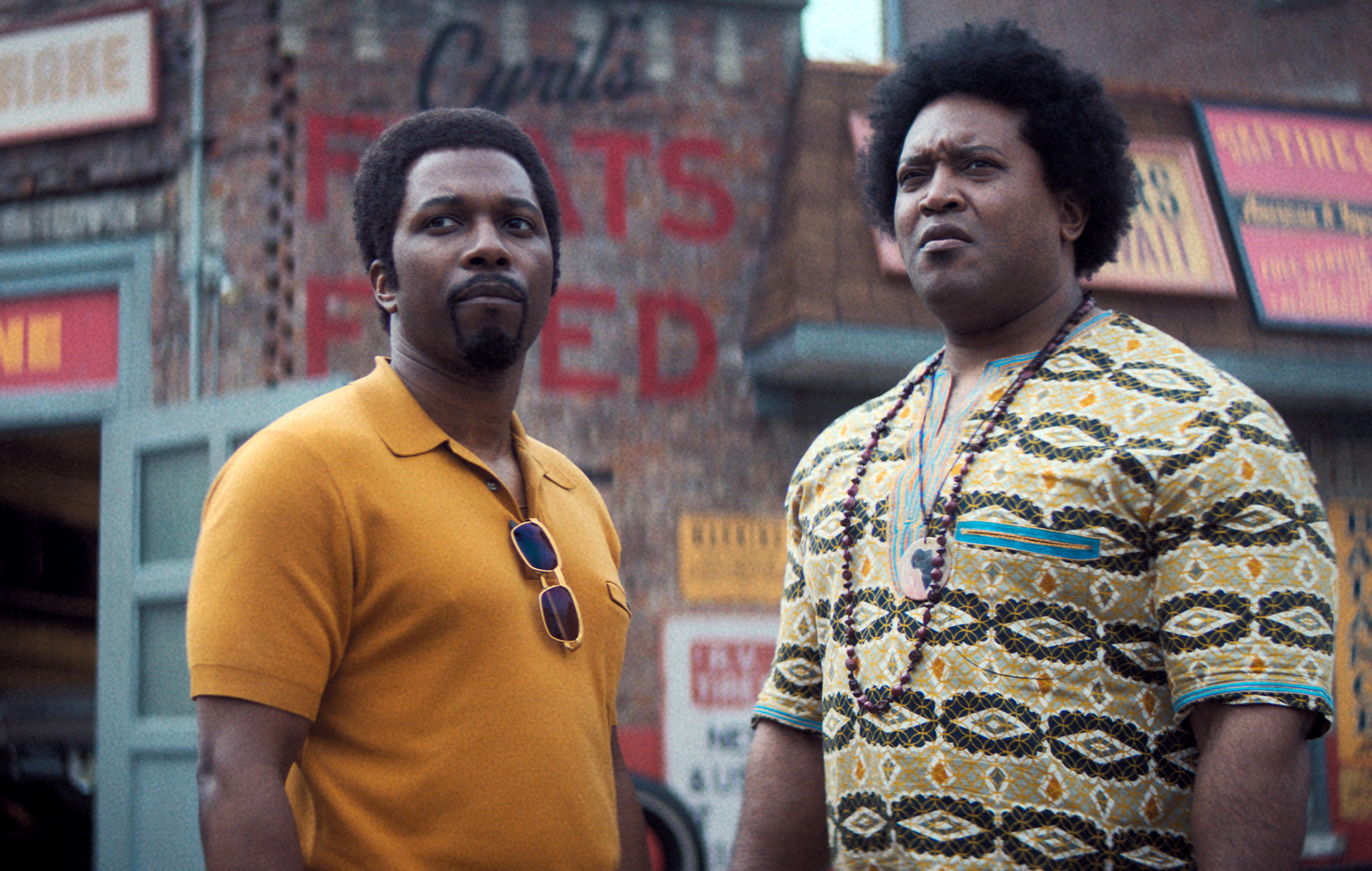
Dickie has come off like a stand-up guy, married (GabriellaPiazza plays Joanne), a little less racist than his family as he deals with numbers runners like Harold (Leslie Odom Jr.), mentoring little Tony, sympathetic to young Giuseppina, his father’s new bride. The first moment “Saints” feels like “Sopranos” to me is when we see one of those whiplash explosions of savage violence the show was famous for, and Dickie reminds us what sociopaths are like.
Dickie and Junior (Corey Stoll)are under the thumb of “Hollywood Dick” Moltisanti, their father, given a delusional, sociopathic edge by RayLiotta. He’s the one who brings a much younger Italian bride Giuseppina (Michela DeRossi) home, a beauty who doesn’t speak English whom he can “groom” and push around and eventually push down the stairs.
But Dickie confronts his wife-beating father and beats him to death in his Cadillac. And then he cunningly covers it up to let us know this isn’t his first rodeo.
Over the course of “Saints,” Dickie will seek atonement through good deeds and generosity. He will strike up a relationship with his dad’s twin brother (Liotta again), imprisoned and something of a cultured sage. Dickie finds passion and tries to keep the peace in the face of a changing underworld, threats and disagreements within the family, especially with brother Junior. He will let us see the pasta-addicted pig in himself, and the savagery he can summon up when provoked.
And Tony? He watches, takes it all in, makes it known “I want no part of this” even though we know that commitment won’t last.
Odom’s screen presence makes Harold’s transformation from lackey to a Man on his Own easy to buy into. The character may be a thug, but there’s personal growth and “The Revolution will Not Be Televised” radicalization as he steps away from the “not in my neighborhood” and “white flight” joking Italian mobsters.
Nivola has a bit of a struggle, holding down the center as the story keeps jumping around, doing what pilots for series always do, throwing more characters into the mix — Big Pussy, Silvio (John Magaro impersonating stoop-shouldered, toupeed Little Steven Van Zandt from the series), Carmela, Paulie, “the usual suspects.”
The movie can’t hide its most obvious machinations, the “work arounds” built into using the son of the series star instead of a more polished actor in the part. Young Gandolfini may look right, but he gives the camera little more than the occasional dead-ringer-for-his-dad pose. Yes, here’s where Tony started to sense his size and ability to intimidate, and that’s where his love of what become “classic rock” (listening to Mountain, part of an “Original Hits, Original Stars” packed soundtrack) came from.
Immersing the viewer in that era, and in the early ’70s in the latter acts, gives the film both a hint of fading nostalgia — ice cream parlors and ice cream trucks, Mom and Pop stores — and period-appropriate grit, with barely more than a glimpse of the corrupt cops who largely let the Mafia slide and never hesitated to shake down a Black person who fell into their field of vision.
But the script? It’s scattered and never really comes together into something cohesive. It’s all “back story,” so the Greco/Roman tragedy of the saga is lost in “period detail” and “color” as it jumps around constantly, never settling in and getting under the skin of anyone.
There’s a joke, here and there, a laugh when this character is introduced or we’re shown how Littlest Tony sets up a numbers racket in his Catholic school. But the dialogue has been run through a Sicilian Slang Generator, with virtually every line from an adult peppered with “pazzo” this and “goomar” or “stronzate” that — insults, challenges or come-ons.
You can get away with depicting birth of the gold chain years and the Golden Age of the Sharkskin suit. But all this eating. It’s not just a stereotype anymore, no longer a “leave the gun, take the cannoli” punch line. It’s a cliche, although granted, an outsider who comes into this world (De Rossi’s Giuseppina) notices it and complains and mocks the men for it.
These gripes take me back to the TV series that conquered the culture back in the early 2000s. It’s just as plain now as it was then that it was embraced by an America that had stopped going to the movies, and hadn’t seen the scores of mob films that made everything about the show seem recycled from earlier bigger screen tales.
For me, the biggest boon if HBO is tempted into rebooting their greatest hit and Hollywood’s best Italian American actor make-work project might be they’ll finally make the case that Tony is as “smart” and “sensitive” as the character is described. I never shook that “Donnie Brasco” sense, backed by plenty of journalism about the “real” mob, that the only thing special about any of these mugs is how sociopathic and stupid they are, to a one.
Still, devotees of the series will get more out of these tainted “Saints” than the casual mob movie fan, and that’s enough.
Rating: R for strong violence, pervasive language, sexual content and some nudity
Cast: Alessandro Nivola, Leslie Odom, Jr., Vera Farmiga, Ray Liotta, Corey Stoll, Michela De Rossi, Jon Bernthal, John Magaro and Michael Gandolfini.
Credits: Directed by Alan Taylor, scripted by David Chase and Lawrence Konner, based on Chase’s TV series. A Warner Brothers release.
This Christmas, a pretty good cast that includes Oscar winner Anna Paquin and Dennis Quaid, with Zachary Levi in the title role, will bring “American Underdog,” the story of Kurt Warner’s late life football stardom, to the screen.
It’s the sort of story the NFL loves, like “Invincible.” Not like Concussion Gate or Colin Kaepernick.
Will fans out down the remote, stop updating their fantasy league and check it out?
How do we love Tim Blake Nelson? Let me pontificate the ways.
It’s the folksy demeanor, the disarming smile with just a pinch of menace, the Oklahoma drawl that makes you underestimate whoever he portrays on the silver screen, a drawl oft-deployed to best effect when he’s curling his lips around 40 word soliloquies when a mere two will do.
“Don’t let my white duds and pleasant demeanor fool ya. I, too, have been known to violate the statutes of man… and not a few of the laws of the Almighty!”
That’s the one and only Buster Scruggs. The Coen Brothers (“O Brother Where At Thou?” and “The Ballad of Buster Scruggs”) unleashed Nelson’s magic, his special gift. Many a movie maker since has had the good sense to serve up him performing that sort of florid, arcane speech in all manner of motion pictures.
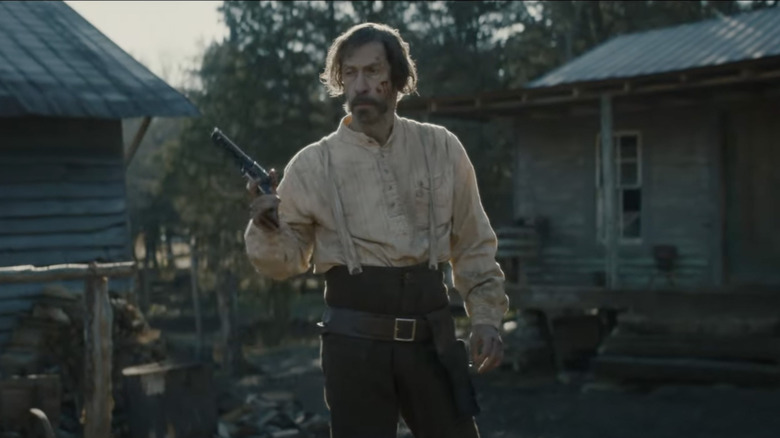
In “Old Henry,” a Western by a fellow who goes by Potsy Ponciroli, Nelson has his best role since “Buster.” It’s a tale of bad hombres who underestimate “some shaky old farmer” in the Middle of Nowhere, Oklahoma, and do so at their own peril.
Henry (Nelson) has been a Sooner since “before the guns went off,” meaning before the “Sooners” joined him there. His boy Wyatt (Gavin Lewis of TV’s “Little Fires Everywhere”) may bridle at being stuck where they are at the start of a new century (it’s 1906). But the old man growls “You’ll discover there’s worse arrangements.”
Wyatt’s been sheltered as much as the son of a ten-years-widowed pig farmer can be. Henry won’t even let the boy go hunting. Guns are too dangerous. Just how dangerous becomes obvious when a riderless horse with blood on the saddle shows up.
Henry rides out to find the missing man and discovers him passed out from a bloody chest wound. Henry spies the saddlebag full of cash. And he does the math.
“Nope.”
But he reconsiders as he’s about to ride off, covers his tracks like he’s done it before, and when he gets home he and Wyatt take responsibility for the stranger’s welfare even as Henry hides the man’s gun and loot.
Of course he’s got to ride off and fetch the doc. Of course he ties the unconscious man down. Of course Wyatt ignores most everything the old man warns him about before leaving.
And when Henry returns, chased back after getting a look at the dangerous hombres with badges hunting for their “guest,” there’s trouble to deal with right now, and bigger trouble on its way over the hill.
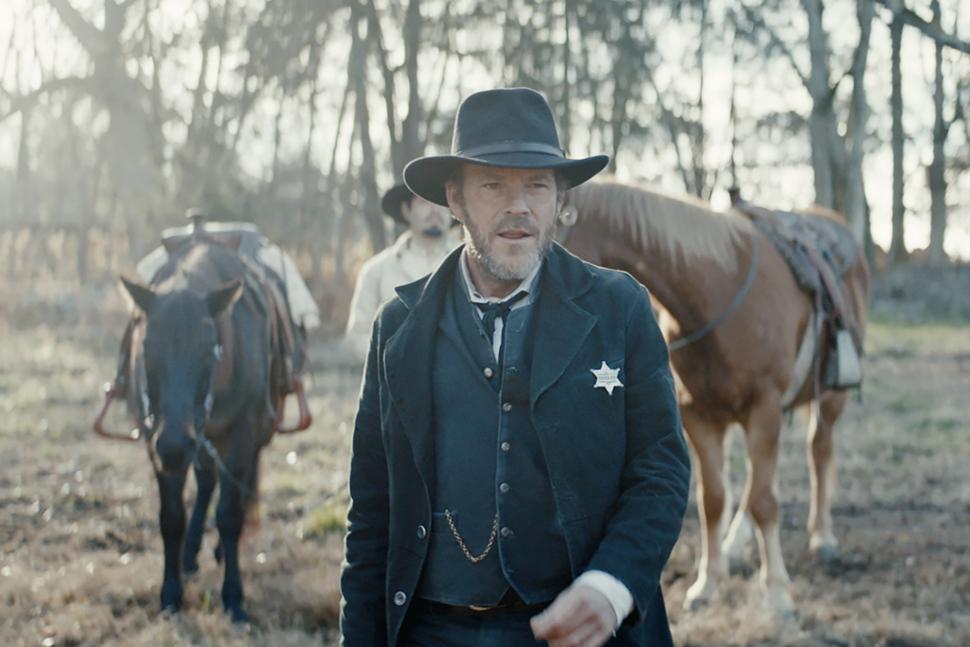
Stephen Dorff is Ketchum, the “long-winded” leader of the posse, a guy we’ve already seen torture and hang a man in pursuit of information, a violent man given to no hasty action when a lot of talking and strategizing can be indulged in first. And Ketchum recognizes that this “shaky old farmer” “didn’t hold that pistol like any farmer I’ve ever seen.”
Writer-director Ponciroli, one of the creators of the Billy Ray Cyrus TV comedy “Still the King,” gives us three “You ask a lotta questions, mister” interrogations, nicely written and chewed on by those who play them.
“You’re not fixin’ to shoot any of us with that pistol, are ya?”
“So far, I got no reason to.”
Nelson and Dorff are nicely-matched. Scott Haze does a fine job of making the wounded stranger untrustworthy, sentimental and yet almost sympathetic at times.
Lewis never shakes the “modern, genteel,” almost “delicate” vibe as the boy and seems a trifle miscast. Trace Adkins has a much smaller and just-demanding-enough part, as Henry’s brother-in-law, and doesn’t embarrass himself.
This is Nelson’s show, trotting out lazy-eyed, slow-talking threats, evasions and folksy fatherly wisdom to a kid who doesn’t respect him — yet.
“I seen the scars on your body.”
“Cuz I ain’t hid’em from ya. Now maybe you’ll understand your raisin’.”
The plot covers a seriously overfamiliar, over-filmed piece of Western lore and legend. But Ponciroli stages a mean opening chase on foot and a gimlet-eyed shootout that holds its own with many a Western, pretty much any one not filmed by Walter Hill or Clint Eastwood.
But it’s the title character and the great character actor playing him that turns this otherwise decent indie Western into something special. And Nelson pulls that off every time he squints or opens his mouth.