Classic Film Review: Powell, Pressburger and Lean — “One of Our Aircraft is Missing (1942)”

“One of Our Aircraft is Missing” has plenty that labels it as dated, a combat film of simple set-ups, primitive effects, plucky characters and attitudes easily seen as morale-boosting propaganda today.

But what’s striking about this early production of The Archers, as the productions of co-writers/directors Michael Powell and Emeric Pressburger were branded, is its stark modernity, a lean story told with artful touches and unfussy performances, all in a film that was produced at the tail end of “The Darkest Hours” of World War II.

That mid-war (1942) pedigree, the lack of a musical soundtrack, un-subtitled conversations in Dutch and German and workmanlike “keep calm and carry on” professionalism of those playing a trained and drilled bomber crew make this one of the most striking combat films made in the thick of the last World War.

The story the filmmakers, years away from their “Red Shoes/Black Narcissus” technicolor glories, cooked-up was another variation of that classic “behind enemy lines” quest first served up in ancient Greece by Xenophon in “Anabasis.” It’s the Allied airmen flipside of Archers’ German sub crew quest of the more action-packed, more entertaining and timeless, “The 49th Parallel,” their previous film. An RAF bomber crew bails out over Holland, and has to find its way to the coast and possible Royal Navy rescue. In “Parallel,” the fleeing submariners must threaten, coerce and shoot their way to neutral America. In “Aircraft,” the British aircrew must depend on the enterprise of the defiant, friendly, “Let’s have some wine, first” Dutch.

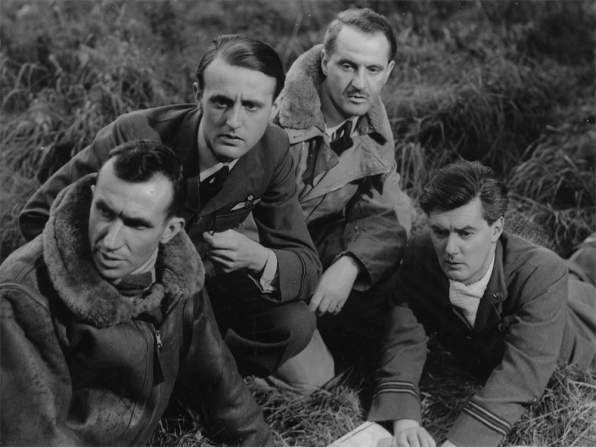
Godfrey Tearle, Eric Portman, Bernard Miles, Hugh Burden, Hugh Williams and Emrys Jones are identified, right in the opening credits, as the various specialists in the aircrew — from pilots and navigator to “observer” and radioman.

There’s an old soldier/rear-gunner (Tearle), a “diplomat” turned pilot (Burden) who speaks a little Dutch, a footballer/radio operator (Jones), a working class front gunner (the great character actor Miles), the officious co-pilot (Portman of “49th Parallel”) and an actor-turned-navigator (Williams).

They get their twin-engined Wellington off the ground, make a little small talk about what Stuttgart, their target this night, is like, note the topography passing underneath them, cope with flak, futilely shoot at German spotlights and dip down low to hit their target.

But they don’t clear the city without getting hit, and eventually limping along on even one engine won’t work.

“Stand by to abandon aircraft! Stand by to abandon aircraft!”

We see the process of bailing out, through gun emplacement hatches or bomb bay doors, and hear the ironic sounds of the sputtering single engine sputtering back to life and continuing on, crewless, back to England.

On the ground, one member of the crew is separated from the rest. Dutch children inexplicably chasing all the family livestock (cattle, big and sheep) through the woods find them.

Thus does their escape odyssey begin.

A huge gathering of women led by the English-speaking schoolteacher Els (Pamela Brown) debate what to do and how to do it. There’s a testy interrogation of the “prove, beyond a reasonable doubt, that you are who you say you are variety.”

They’re disguised and led off, en masse, with the women (the “actor” dresses in drag for “my finest performance”) bicycling along with them as cover. The Brits portray their Dutch as still allies, worthy of liberation.

” Do you think that we Hollanders who threw the sea out of our country will let the Germans have it? Better the sea.”

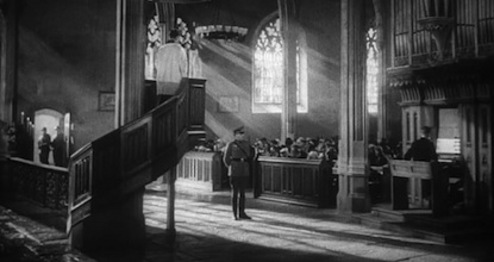
They’re hidden in plain sight in a Catholic church service, something a couple of the Protestant Brits bicker about. They cope with a Dutch “Quisling,” a traitor (Robert Helpmann) who advocates collaborating with the Germans, and see a judgmental priest (future star Peter Ustinov) point to the error of his ways.

And they end up in the hands of another defiant Dutchwoman (Joyce Redman), who passes a mid-war assessment of Nazi era Germans that stings and rings true even today.

“They’re an unhappy people. I would rather be a Dutchman in Holland than any German soldier. They want to believe that somebody’s their friend, and that’s the whole trick.”

Thanks to a brisk script and the masterful editing of future director David Lean, “Aircraft” clips along, serving up genuine suspense, dashes of wit and limited bravado as the combatants put themselves in the hands of people who risk their lives to save them.
There are better prints of it than I saw, which impacts the airborne scenes more than those on the ground. The soundtrack is the first thing to go on older, unrestored copies of films of that era, and even in the inaccurate “quiet” of the notoriously noisy bombers, the dialogue is murky.

The film has entirely too much day-for-night footage to pass modern muster. That serves the film’s propaganda purposes. The crew can plainly see where they are, and bomb targets with pinpoint accuracy in the dark. The RAF bombed at night to avoid German fighters, and bombed cities because they were easier to find and hit that specific factories, railyards and the like. Even if they missed, they destroyed Germans and German infrastructure.

The footage of the “crippled” Wellington plainly shows both engines operating, and the optical effects — mimicking anti-aircraft fire, flak and tracers — is if anything slightly more primitive than in “The Dam Busters,” which came out over a decade later.

But Powell and Pressburger get fine, buttoned-down performances from one and all, and make great use of East Anglia locations — windmills, a Cathedral, rivers and woods — to create a convincing Holland.

And their scriptural problem solving, how to get these lads from A to B, is endlessly inventive, maintaining suspense and making the Dutch the true heroes of the piece.

That’s perhaps the most optimistic thing about this early 1942 production (it was released that July). Before Stalingrad, before El Alamein, before America’s impact could be felt and the tide truly turned, this film is shot through with the sense that “there’ll be blue birds over, the white cliffs of Dover” and that Europe will be liberated, even though the only one pushing that line as inevitable was Churchill.

As corny as it can seem, and the film generally avoids that sentiment on an overt level, this upbeat-in-the-face-of-adversity is kind of astonishing to take in now, given the speed at which gloom and doom about resurgent fascism spreads through Western Civilization these days.

As with “The 49th Parallel,” Powell and Pressburger show us that dated, “old fashioned” World War II movies can and sometimes do have a lot to say to later generations beyond a simple history lesson.

Rating: approved, some violence

Cast: Godfrey Tearle, Eric Portman, Pamela Brown, Bernard Miles, Hugh Burden, Joyce Redman, Hugh Williams, Emrys Jones, Robert Helpmann and Peter Ustinov

Credits: Scripted and directed by Michael Powell and Emeric Pressburger. Produced by The Archers for British National, available on Tubi, Amazon, etc.

Running time: 1:22
Posted in Reviews, previews, profiles and movie news | Comments Off on Classic Film Review: Powell, Pressburger and Lean — “One of Our Aircraft is Missing (1942)”

Gregory Peck’s finest two hours and nine minutes premiered 59 years ago today

Posted in Reviews, previews, profiles and movie news | Comments Off on Gregory Peck’s finest two hours and nine minutes premiered 59 years ago today

Classic Film Review: Billy Wilder’s “Kiss Me, Stupid (1964)” reconsidered

There’ve been a few attempts, over the decades, to rewrite the history of Billy Wilder’s 1964 clunker “Kiss Me, Stupid.”

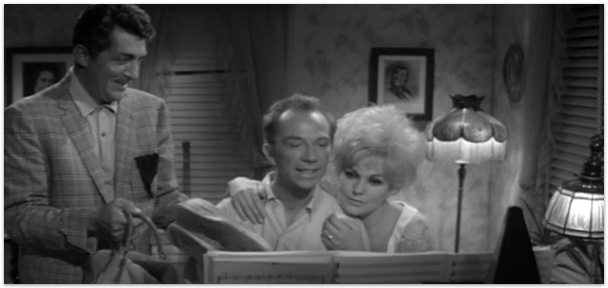
It’s “underrated” thanks to a winning Dean Martin as “Dino” kperformance, worth re-assessing because of a risque late scene Wilder was forced to edit out, somehow worthy of elevation because of its satiric intent.

I’d always missed it, and it’s safe to say that the reason it never fell into “classic” TV reruns rotation is that it’s a serious stumble, and not nearly as entertaining as the run of Wilder/I.A.L. Diamond hits — “Some Like It Hot,” “The Apartment,” “One, Two Three” and “Irma la Douce”– that preceded it.

Let me say two things at the outset of this “reconsideration.” First, my favorite Wilder film, one that grows in stature and delirium with each re-viewing, is “One, Two, Three,” a Cold War spoof that was cute when it came out, with its satire and broad lampooning of capitalism and totalitarian socialism (communism) stinging more, the laughs landing harder with every passing year.

A manic, screwball farce with James Cagney’s staccato bark paced by Aram Khachaturyan’s “Sabre Dance?” Film comedy doesn’t get any funnier than that.

And secondly, I had to chase “Kiss Me, Stupid” with a Christmas Eve re-watching of “The Apartment” just to get the foul taste of the flop out of my mouth.

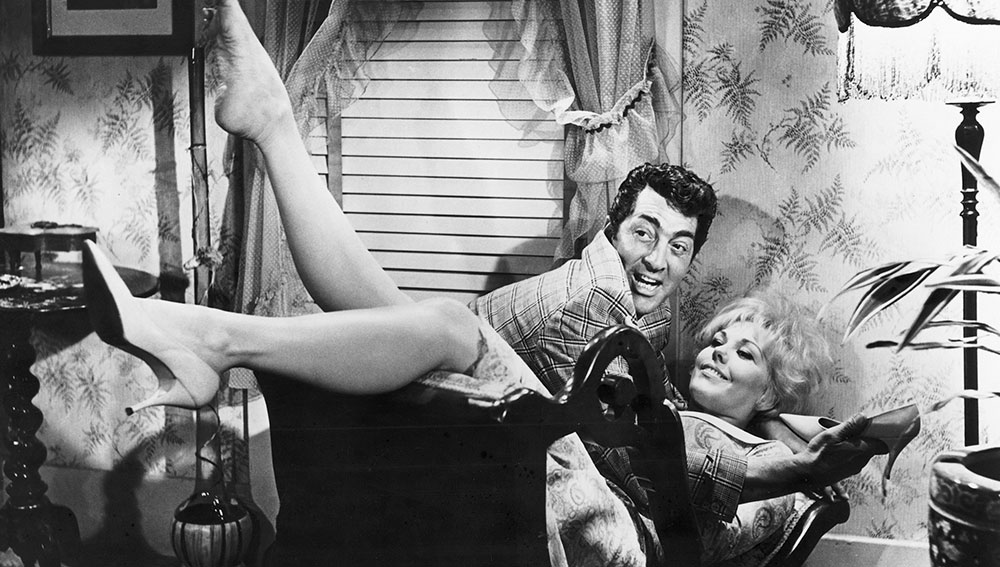
The most ingenious thing in “Kiss Me, Stupid,” is Wilder’s assistance in helping Martin perfect the most comically popular version of himself, the persona that would give his late career TV host years their bounce. Playing “Dino,” a “pop star,” Vegas mainstay and actor on his way to do a movie “with me, Frank Sinatra, Sammy Davis, Jr., and Joey Bishop – it’s called “Little Women”.” When he adds Bing Crosby, we know that’s a “Robin and the Seven Hoods” riff.

Martin is a stumble-on-stage-for laughs drinker with drunk jokes and leering womanizer gags at the ready.

“I have an amazing mother, you know. She’s 85 years old and she don’t need no glasses…she drinks right out of the bottle.

Rim-shot.

Dino’s act, interrupting his crooning rendition of Gershwin’s “‘S’Wonderful” in front of a leggy Vegas chorus-line, would be repeated by Dean Martin, ad nauseum, for most of the late 60s through the ’70s. It’s funny and “new” here, the peak moment of “Kiss Me, Stupid,” and it’s over just as the opening credits end.

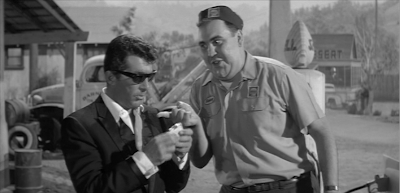
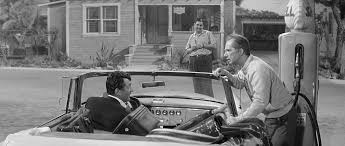
The plot had cobwebs all over it long before Wilder and collaborator I.A.L. Diamond, adapting an Italian play, started typing it. Dino leaves Vegas in his Dual Ghia convertible, bound for LA and the start of filming. But he gets detoured into tiny dirt-road Climax, Nevada.

That’s where a wily mechanic (Cliff Osmond) conspires with his songwriting partner, the local piano teacher and church organist (Ray Walston) to waylay him so that they can pitch their mostly-inane/wholly-derivative songbook to a captive (a sabotaged car) audience.

The “wrinkle” in all this is that for their scheme to work, they have to satiate the incurable womanizer with “some action.” As Dino is put up in piano teacher Orville’s house, he’s sure to put the moves on Orville’s wife Zelda (Felicia Farr). And as Orville’s already insanely jealous and suspicious of her, that’ll never do.

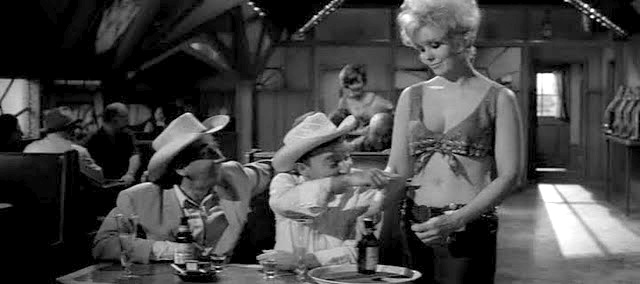
Mechanic Barney recruits cocktail waitress Polly the Pistol (Kim Novak, slatternly slinging an amusing gum-snapping accent) to pretend to be Zelda, and Orville picks a marriage-threatening fight with his wife to send her “home to mother.”

The way’ll be clear for Dino to make his move, and for the song-pitchers to make theirs. So they think.

The sexuality in this movie was fairly daring for the time, even considering Wilder’s previous film (“Irma la Douce”) was about hookers in Paris. It’s implied that Polly puts out for a price, although she makes it clear she ain’t “easy.”

The comedy is pitched broad and low for a Wilder farce — lots of leering from guys (Osmond, Walston and Martin) who know how to mug. It’s as if they know the zingers need some help to land.

 “I need another Italian song like a giraffe needs a strep throat… If it weren’t for Venetian blinds, it’d be curtains for us!”

The best joke in it sounds like one Martin made up on the spot, at a police roadblock.

“What’sa matter? That Sinatra kid missing again?”

Although there’s a chuckle here and there, everything about “Stupid” seems hoary and moldy and dated before a camera ever rolled. It’s self-aware enough to recognize that tumbleweed Tin Pan Alley wannabe songsmiths were a thing of the past in a post-Beatles-and-Dylan young singer-songwriter age. But the transition was so rapid that “Kiss Me, Stupid” had no hope of a shelf life, even back then.

The partner-swapping stuff may have seemed “daring,” but the way it’s played here is tacky, not titillating.

It’s not until you reach into the film’s history and realize there were casting issues which contribute to its clunkiness that all becomes clearer.

Peter Sellers had the Walston role, and had a heart attack a few weeks into filming. Walston was a funny man, at home in musicals on stage and screen. But the singing wasn’t what made the character, and Wilder stupidly had him dubbed with another singer’s voice in any event. Walston was never in Sellers’ class as a comic. How would Martin have played off Sellers? It might not have worked at all, but we’ll never know.

Novak is game, and aside from Martin, the best player in the picture. But it’s a superficial turn in a role that demanded more Shirley MacLaine vulnerability. Marilyn Monroe and Jayne Mansfield were both set to play the part which delays, death and a pregnancy prevented. MacLaine was pitched the “Zelda” role, initially. Mrs. Jack Lemon, aka Farr, got the role.

All the detailed, contrast-rich black and white cinematography guaranteed was that future HDTV generations would notice how poorly the makeup hides how bad everybody’s skin was.

The Catholic Legion of Decency condemned the film, everybody kvetched about the “bad taste” of it all. But the satiric target — American mores — is broad and the laughs just don’t land.

The thing that’s obvious watching “Kiss Me, Stupid” now is that the passage of time and shifting of societal mores aside, “restored” scene or not, the damned thing just doesn’t play. It’s two hours and five minutes of compromised comedy that never finds a rhythm or a reason it needed to be filmed.

Rating: approved, quite racy and sexual for its time

Cast: Dean Martin, Kim Novak, Ray Walston, Felicia Farr and Cliff Osmond, with Barbara Pepper, Mel Blanc, John Fiedler and Howard McNear.

Credits: Directed by Billy Wilder, scripted by Billy Wilder and I.A.L. Diamond, based on a play by Anna Bonacci.

Running time: 2:05

Posted in Reviews, previews, profiles and movie news | Comments Off on Classic Film Review: Billy Wilder’s “Kiss Me, Stupid (1964)” reconsidered

Netflixable? A charming story of a French girl and her wolf — “Vicky and Her Mystery (Mystère)”

Let Hollywood plunge headlong into the CGI animals who hear the “Call of the Wild,” the easier to manage computer-generated bears and wolves, Persians and Chihuahuas they’re shoving into more and more films.

In France, they still do things the old-fashioned and proper way. They know there is no substitute for actors interacting with and audiences marveling at a living, breathing, not-wholly-predictable animal.

Vicky and her Mystery” is a “true story” of a child and her adopted wolf, talkier and more melodramatically conventional than the minor classic “The Fox & the Child (2007),” but similar in setting, themes and living, breathing canis vulpes or canis lupus.

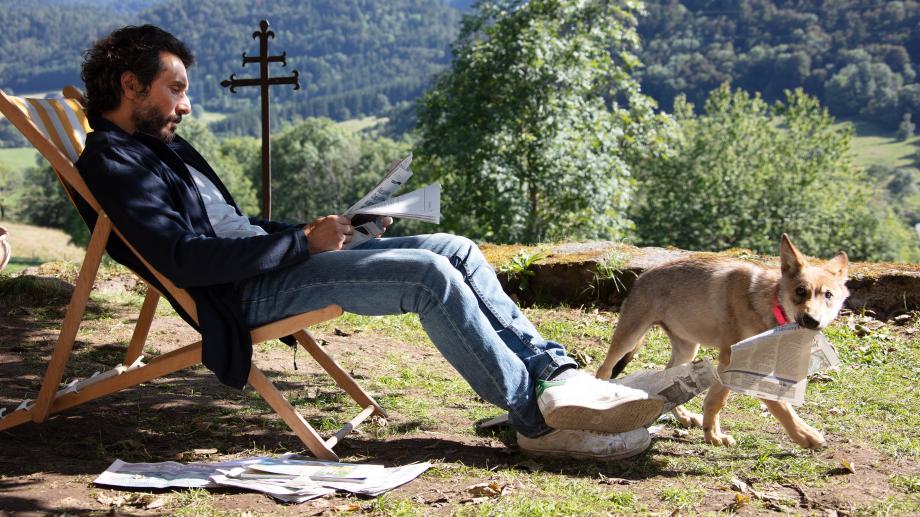
A doctor (Vincent Albez) has taken a leave of absence and retreated to his family’s country modest country house in the foothills of the Alps. He lost his wife, and his little girl, Victoria (Shanna Keil) hasn’t spoken since her mother died. Maybe a little Alpine sojourn will help her recover.

But we’ve seen local shepherds taking to the nearby forests where father and daughter hike. The shepherds are zealous about wolf “culling,” killing the last predators in the region so keep the wolves from attacking their sheep. Plainly, Dad getting lost isn’t their biggest concern.

A friendly farmer (the great Tchéky Karyo) takes them in and offers to take them home after one misdirected hike. But Victoria spies what she takes to be just a cute puppy, orphaned and curled up in a basket in the farmer’s barn. Her silence comes to an end in an instant.

“Does he have a name?”

“Mystère,” the old man says. Take him home, he suggests. Old Men of the Mountains know exactly what little kids need.

And so, in the film’s most far-fetched plot point, Vicky tucks the pup into her backpack, sneaks him home and lets him stay in her room. All of this is done with father Stephane somehow being none the wiser.

He doesn’t discover her “dog…maybe a Husky?” until after he’s marveled at the fact that she’s speaking again and coming out of her grief and shock.

As we’ve not seen the 8 year-old feed or walk little Mystère, we wonder how keeping this rambunctious “secret” is remotely possible.

But that’s not as important as what the wolf inside their door represents. The shepherds are downright militant in their demands to exterminate the wolves, to change policy so that what they do is legal. A secret wolf pet isn’t something these guys are going to stomach.

And as cute as little Mystère is, snuggling with Vicky, shredding her shoes and howling, her keeping him is sure to run her afoul of the single mom (Marie Gillain) who has been flirting with Dad at school pick-ups and drop-offs. She’s a veterinarian, and has ties to local wildlife management.

Mystère should be wild, living in a preserve. It’s just that Vicky and her father, who has seen what the wolf means to his daughter, aren’t letting that happen.

Mystère,” as the film is titled in France, has a simple plot, gorgeous scenery and adorable trained wolves of various ages depicting the titular pup as he grows up, faces his wildness and tries to reconcile this with his love for a little girl.

I cannot overstate how that living, breathing animal grabs the camera and holds our attention in scene after scene. Like his co-stars in the film, I was transfixed by everything he did, the intelligence in the eyes that no computer-generated canine has ever been able to mimic.

As someone who regularly bashes Hollywood for taking the digital shortcut, from Big Red Dogs to simple housecats, I naturally think it’s great when somebody takes the trouble to make a movie that backs up my point.

If you’re telling a story about a child and her dog, wolf or what have you, and you don’t have the patience to cast, train and work with a trained animal, don’t bother.

“Vicky and her Mystery” may just be a children’s genre picture, with a couple of disturbing, heart-tearing moments to challenge its youngest viewers. But thanks to a winning cast and a darned good dog wolf, it’s irresistible. It works.

Rating: TV-PG, some violence

Cast: Vincent Albez, Shanna Keil, Marie Gillain, Eric Elmosnino and Tchéky Karyo.

Credits: Directed by Denis Imbert, scripted by Deni Imbert, Mathieu Oullion, Rémi Sappe and Stéphanie Vasseur. A Netflix release.

Running time: 1:23

Posted in Reviews, previews, profiles and movie news | Comments Off on Netflixable? A charming story of a French girl and her wolf — “Vicky and Her Mystery (Mystère)”

Movie Review: Epstein-inspired horror-titillation — “The Scary of Sixty-first”

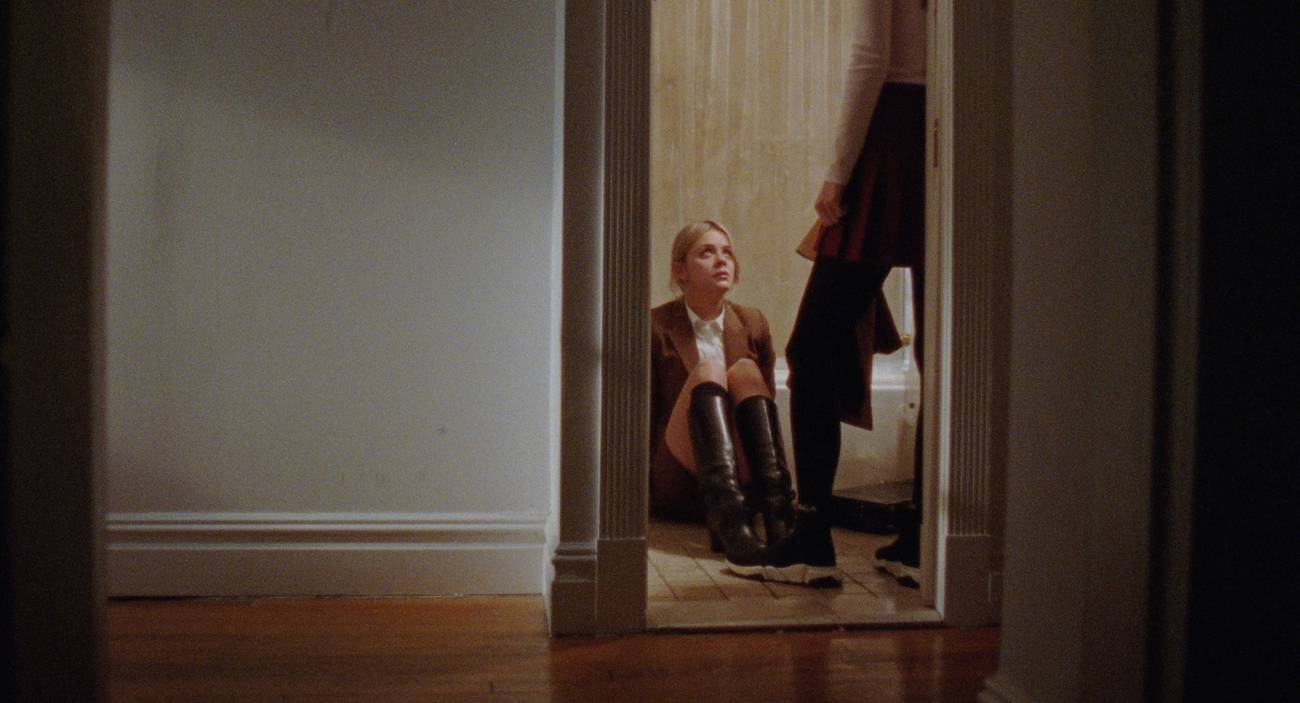
“The Scary of Sixty-First” is a lurid, bloody and somewhat misguided exploration of the crimes and mysterious death of well-connected human trafficker Jeffrey Epstein in horror film form.

But it’s hard to effectively comment on and condemn a notorious sex criminal with a movie this invested in shock and titillation.

Put a pair of gorgeous, snarky 20somethings as new renters in one of Epstein’s “pedophile sex slave” apartments, one not even properly cleaned out after his hasty exit. Introduce a mysterious, unnamed and equally sexy “investigator” to describe the crimes there and have or two of the young women possessed by whatever evil resided there.

Yes, that’s a promising premise. But its so mishandled as to be icky and repellent, as if the last people to exploit those “handled” by Epstein and the likes of Prince Andrew are the folks who made and starred in their sordid little movie.

Two of the stars of “Scary” — Madeline Quinn and Dasha Nekrasova — co-wrote it, and Nekrasova, who plays the mysterious “investigator,” directed it, mixing simulated news coverage of Epstein and his “pedo island” in with a mad jumble of conspiracy theories, explicit sex, gruesome murder and mystery.

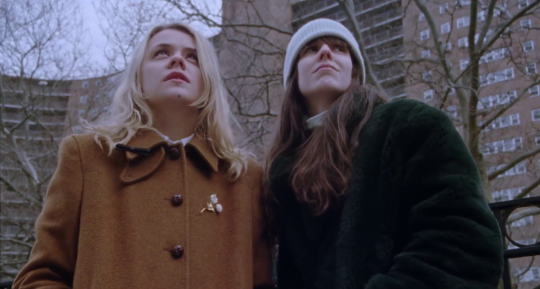
Noelle and Addie (Quinn and Betsey Brown) are former college friends who somehow are able to afford to rent a tony townhouse on 61st St. Addie’s an aspiring actress, and Noelle? Either her invisible means of support is left out, or I missed it.

They puzzle over the “strange” layout of the place, bedrooms that can only be entered or exited through another bedroom, the fact that it’s “kinda dirty” and a lot of furniture was left behind, and rent it anyway.

Their saucy banter suggests a little “drunken” intimacy back in college, something they’ve outgrown…at 25. But their first night there brings nightmares and bickering.

Then this stranger (Nekrasova) barges in and Noelle becomes obsessed with her investigations into what happened — “Maybe he kept his sex slaves here!” — and what happened to Epstein in Trump/Barr administration custody.

As they do, poor Addie is sliding into a dark place, one that animates her sex life with boyfriend Greg (Mark H. Rapaport) to a kinky degree and pushes the other two further down the rabbit hole, from visiting the place where Epstein died to various crystal and witchcraft (apothecary) shops as they stagger towards their own sexual possession.

The story’s a hash of widespread (and widely accepted) conspiracies and excuses to show a little skin and a lot of coitus and a downward spiral into depravity and disgusting decay.

There’s the germ of something promising here, and the performances and dialogue are up to par. But the whole is kind of a mess that becomes the very thing it’s meant to be satirizing.

Rating: unrated, graphic violence, explicit sex, nudity, profanity

Cast: Madeline Quinn, Betsey Brown, Mark H. Rapaport and Dasha Nekrasova

Credits: Directed by Dasha Nekrasova, scripted by Dasha Nekrasova and Madeline Quinn. A Utopia/Shudder release.

Running time: 1:21

Posted in Reviews, previews, profiles and movie news | Comments Off on Movie Review: Epstein-inspired horror-titillation — “The Scary of Sixty-first”

Netflixable? Staten Islanders brace for “Rocky III” because “This is the Night”

It’s hard to recall any movie that rings as hollow and false as “This is the Night.” But then, my memory isn’t what it once was.

That’s not to say that this growing up Italian on Staten Island, “Coming of Age as ‘Rocky III’ comes out” tale couldn’t be based on some sort of reality. I attended an opening night showing of “Goodfellas” in Manhattan, so there’s plenty of evidence the paisanos turn out to see some version of themselves on the screen. I’ve seen how worked up they get. Fuggedaboutit.

But this eye-roller of a “comedy” from the fellow who gave us “The Purge” franchise just reeks of contrivance and corniness. If there’s truth to it, writer-director James DeMonaco is too clumsy to let that truth feel true.

It’s closing in on Memorial Day on “The Island” in 1982. But all Anthony Dedea (Lucius Hoyos) and anybody he knows or is related to cares about is that’s right before opening night of “Rocky III,” the “end of the trilogy,” “the last ‘Rocky’ movie evuh!” As if.

His older brother Christian (Jonah Hauer-King) is busting what Italian guys bust on their brothers about it, “Everybody’s goin’ wantin’ to see who DIES.” But Anthony is a true believer.

He and his 16 year-old pals (River Alexander, Chase Vacnin) have a mantra about the revered franchise and the threat of what a future generation would call “spoilers.”

“Respect the film!”

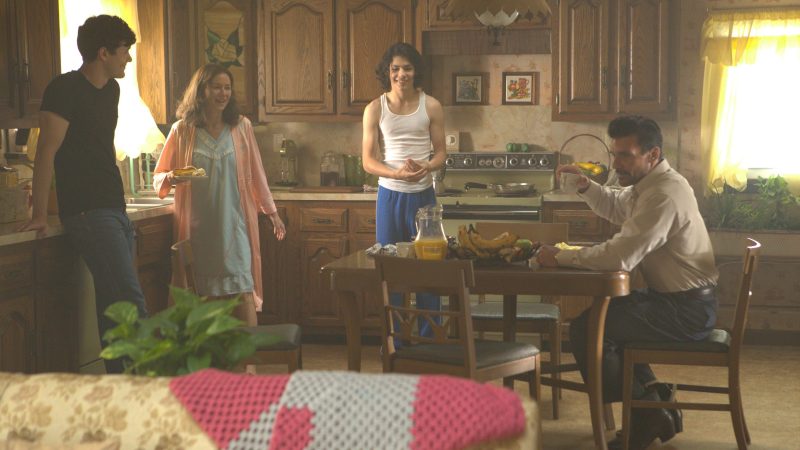
“This is the Night” isn’t just about getting matinee tickets to their local two screen cineplex. It’s about all sorts of things that happen afterward — to Anthony, who crushes on Sophia (Madelyn Cline) but is incompetently bullied by her boyfriend, to Anthony’s Dad (Frank Grillo), desperate to keep the family catering business/rental hall open and needing money from Sophia’s Made Man Dad (Bobby Cannavale). And it’s about Christian’s not-remotely-secret “secret” and what their Mom (Naomi Watts) does about it.

The three amigos with be threatened and chased, tempted by tube-topped tarts in a Trans Am and face a Rocky-like reckoning, as will most everybody else.

All the while, one and all — the Italian Americans, anyway — will bellow and backslap, threaten and talk, talk, talk with their hands as they do.

“I KNOW you’re excited, but shaddup when you talk, awright?”

The grown up performers are OK, the kids pretty much all soon-to-be-ex-child-actor pretty boys, and more uninteresting than unskilled, forced to play mere sketches of characters.

The bully wouldn’t scare a six year-old girl.

The situations are stock — “our first time in a bar,” “tell her how I really feel” — and worse.

The picture wears its contrivances like gold stars affixed to a first-time screenwriter’s “memoir” movie attempt in film school. DeMonaco has experience and skill, if not in this genre. What the hell happened?

Watching “This is the Night” is like sitting through replays of a moment The Big Game goes all wrong. We see the mistakes and missteps in real “reel” time, and are helpless to shout suggestions.

Rating: R for language, some drug use and teen drinking

Cast: Lucius Hoyos, Chase Vacnin, Madelyn Cline, River Alexander, Frank Grillo, Bobby Cannavale and Naomi Watts

Credits: Scripted and directed by James DeMonaco. A Universal release on Netflix.

Running time: 1:47

Posted in Reviews, previews, profiles and movie news | Comments Off on Netflixable? Staten Islanders brace for “Rocky III” because “This is the Night”

Movie Review: Vamping on Vampires in the “Red Snow” of Tahoe

A tip of the hat and a hearty “Nice try” to writer-director Sean Nichols Lynch for his vampire comedy, “Red Snow.”

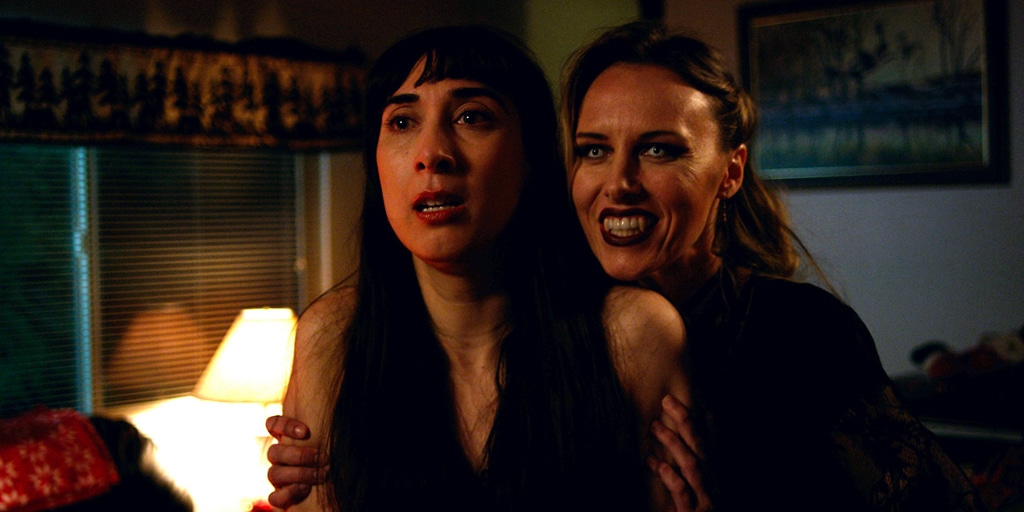
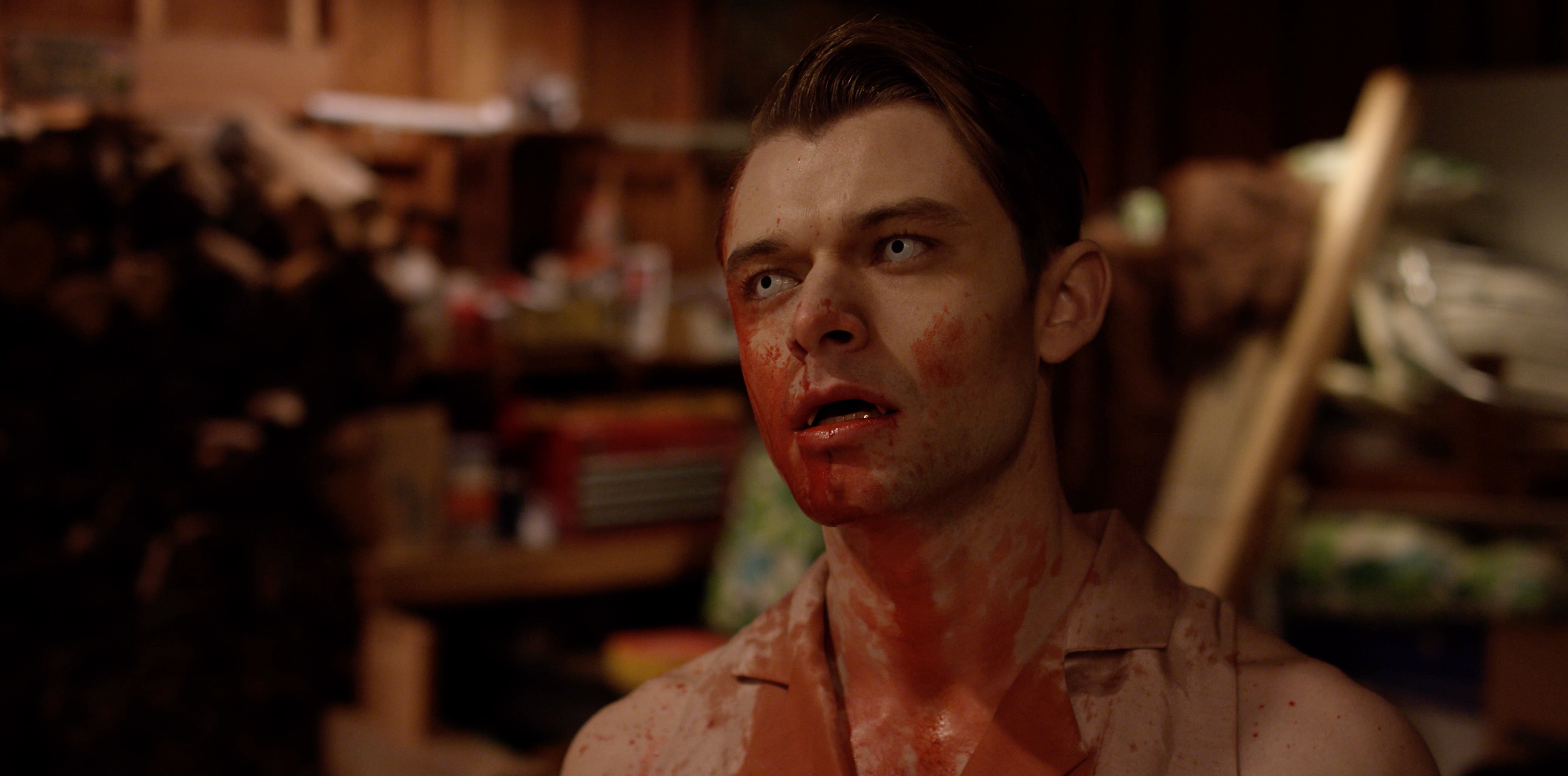
It’s a straight-up B-movie all the way, with decent makeup and blood-sucker contact lenses and a few cute holidays-and-vampires jokes — “Season’s BLEEDings!”

No, the acting is more competent than compelling, and the plot and action sequences leave a lot to be desired.

But the tone is spot-on, and once it’s flipped into “vampire comedy” and camp, it passes the time in sometimes amusing ways.

Olivia (Dennice Crispola) is a solitary writer, tucked away in a Lake Tahoe cabin, typing away at vampire novels nobody wants to publish. But one night a bat bashes into her window. She tucks it into a shoebox, gives it a bottle capful of water and administers a teeny-tiny bandaid.

Next thing she knows, a naked vampire (Nico Bellamy) awakens in her garage.

She has little time to process this, as this mysterious “private investigator” (Vernon Wells) knocks at her door, drinks her tea and, noticing the books she has lying about, and the vampire Christmas decorations, turns snappish.

“Oh sure,” he gripes. “You think they’re COOL. Dracula, Nosferatu…TWILIGHT…Sooooo sexy.”

Well, they’re not, he insists as she’s showing him the door.

Vampire Luke just might be heaven sent, as far as Olivia’s concerned. He’s “sooooo sexy,” even when she dresses him in her late mother’s coat and whatnot. He starts to set her straight about vampires and vampire movies.

“‘Nosferatu?’ That’s like our ‘Birth of a Nation!'”

And he critiques her novel, helping her “punch it up a little.” Romania as a setting? Romania SUCKS. And naming her vamp-hero “Vladimir?”

“No self-respecting vampire would call himself ‘Vladimir.’ Y’might as well named him ‘Dildo!'”

But he needs blood, and not the pig’s blood she fetches from the butcher. Not to worry, “I drink people’s blood, I don’t kill them.”

Sure. Why not?

The flippant tone of it all works, and there’s a decent “hunt” when other vampires show up to rescue their blood brother. Calling a vampire hunting “agency” doesn’t help. They’re a bit overwhelmed.

“We’re not exactly Doctors Without Borders over here.”

“Red Snow” isn’t very good, as a package. It opens with a night-filmed, poorly-conceived and acted “first kill,” drops abruptly into the broad daylight banalities of Olivia’s life and never gets up any sort of head of steam.

But I like what they were going for here, as obvious as it seems. Nice try. Now have another go of it.

Rating: unrated, bloody violence, profanity

Cast: Dennice Cisneros, Nico Bellamy, Laura Kennon, Alan Silva and Vernon Wells.

Credits: Scripted and directed by Sean Nichols Lynch. A 4Digital Media release.

Running time: 1:20

Posted in Reviews, previews, profiles and movie news | Comments Off on Movie Review: Vamping on Vampires in the “Red Snow” of Tahoe

Movie Preview: Tom Holland goes down the treasure hunt rabbit hole with Mark Wahlberg — “Uncharted”

Antonio Banderas also stars in this high gloss B picture, about pieces of eight and galleons and not about Captain Jack Sparrow coveting such treasure. For once.

Holland and his stunt crew get to do a lot of Peter Parker parkour, narrow escapes and what not.

This Sony release — Screen Gems, maybe? — opens Feb. 18.

Posted in Reviews, previews, profiles and movie news | Comments Off on Movie Preview: Tom Holland goes down the treasure hunt rabbit hole with Mark Wahlberg — “Uncharted”

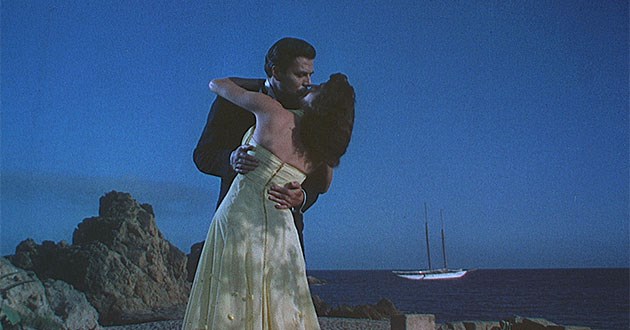
Classic Film Review: Ava and Mason and the restored Technicolor pleasures of “Pandora and the Flying Dutchman”

One of the epic star vehicles of Ava Gardner‘s career earned a nice restoration a couple of years back. So if nothing else, Ava at her peak in glorious Technicolor should be lure enough to draw one to “Pandora and the Flying Dutchman.”

The film pairs her up with James Mason in the other title role, surrounds them with solid British and Spanish supporting players, and became one of the rare films directed by Golden Age studio executive Albert Lewin, most famous for “The Picture of Dorian Gray” and “The Moon and Sixpence.”

It’s a dreamy tale of doomed romance, a scenic fantasy of the “Beauty and the Beast” order anchored in 1920s period piece reality recreated in Spain and coastal Wales. And while there are elements which date it and others which hobble the storytelling, there’s too much to admire to write it off.

“Pandora” is a classic Gardner character, a great beauty who enjoys men mostly as playthings to be toyed with. She’s a former nightclub singer who always seems to decorate the arm of someone wealthy, famous and who lives with risk.

That modus operandi is established when someone jokingly suggests she take an interest in dashing Stephen (Nigel Patrick), a racecar driver who has come to Esperanza in pre-Civil War Spain to set a land speed record on the beach there. Never mind that pretty Janet (Sheila Sim) dotes on him and plainly has her heart set on marrying him.

Pandora, the namesake of his race car, ensures poor Janet doesn’t stand a chance. Whatever Pandora wants, you know. She talks him into an impulsive dash about the countryside in his not-street-legal racer (simpler times) which ends with a cliffside proposal, and a cliffside dare. Will he give up everything, or his race car, for her? By Jove, he will!

Damned if they aren’t engaged to marry, but at her suggestion, a ways off. He has to A) retrieve the wrecked (and sunken) car, restore it and race it down the beach. They’ll marry just after that, giving Pandora an implied out. There won’t be a marriage if his open-wheel/open-topped race car kills him.

But in the distance there’s an anchored sailing ketch that figures to also have a role in this wedding to come. Pandora’s next impulse is to strip and swim out to it. That sort of thing happened a lot in the Jazz Age.

That’s how Pandora meets the Dutchman, played by that beautiful brooder Mason. She is seductive and playful, he is distant and dreamy. One can smell the romance, gardenias, sea spray and doom in the air.

A prologue has told us all we need to know of the legend of the Flying Dutchman, a condemned man doomed to roam the seas, coming ashore every seven years to see if there’s one woman who will love him enough to die for him and put him out of his eternal-life agony.

“The measure of love is what one is willing to give up for it,” we hear from our English academic observer Geoffrey Fielding (Harold Warrender), who also narrates the tale. This Henrik van der Zee, Fielding observes straight away, “is not like other men.”

Geoffrey sees Pandora’s effect on men, watches the broken Reggie (Marius Goring) drink himself to death right in front of the unattainable Pandora and takes in her capture of Stephen.

“Why do you make yourself out so bad?” he rhetorically asks the man-eater.

“I don’t have to. I leave that to others.”

But this Dutchman is a wild card Geoffrey can’t readily size up. As Pandora acknowledges her token of troth to Stephen, she can’t help but carry on — in generally genteel, if a tad “open-minded” ways — with Hendrik. Because the brooding mystery of the man is irresistible, he’s got a seriously posh yacht and there’s a Byronic doom hanging on his every pronouncement.

“Faith is a lie and heaven is a deception.”

As if things aren’t romantically-tangled enough, “the most famous matador (Mario Cabré) in all of Spain” returns to his hometown, to his fretful fortune telling Gypsy mother and to the singing temptress who got away, Pandora. A man who uses daggers and swords and makes his living killing bulls isn’t to be trifled with.

It is Geoffrey the archeologist and collector of folklore who starts to piece all this together, narrating as he does from some presumed point in the future. There is this legend, and an ancient sailor’s journal Geoffrey has found, written in Dutch, that’s a tad too familiar to the mysterious yachtsman.

Will Geoffrey figure it out? Is Pandora up to sacrificing herself for this mysterious man? Should she be? Will Geoffrey warn her? Or will he stand back and watch the racing driver risk his neck, the matador put on an alarming bullfight to a command audience of Pandora and Geoffrey, preferring not to interfere with the affairs of “you rich people?”

Lewin, who based the script on the writings of Omar Khayyam and 18th century writer and “transported” to Australia hustler George Barrington, conjures up a spell in this soundstages-and-Costa Brava fantasy. He makes great use of Spanish and Welsh locations and cinematographer Jack Cardiff serves up arresting and inventive screen compositions, including an artfully/whimsically-shot Jazz Age/jazz band party on the beach.

Gardner has an icy allure here, beguiling in a less overtly-sexual sense than her signature roles. The attraction to The Dutchman is more scripted and “fated” than anything we sense in the way of on-screen chemistry or “heat.” But we believe it because the fantasy never lets go of the sense that all this simply “must be,” as the story has repeated itself every seven years for hundreds of years.

Yet all that appreciation runs up against a fatal flaw that not so much dates “Pandora” as violates cinema’s first order of business, –telling the story with images.

The gorgeous “Pandora” is marred by an incessant and generally superfluous voice-over narration by Geoffrey — not merely shoveling out exposition, first scene to last — or filling in back-story — but stating the too-obvious in scene after scene. We’ve already witnessed a great screen actor getting across precisely the whirl of emotions a screen moment requires. Why tell us “He seemed rapt. Transported to another world. I sensed an almost desperate ecstasy in his enjoyment?”

This goes on and on to a maddening degree, passing beyond any “Last night I dreamt I went to Manderlay again” sense of “Let me tell you a tale” and beating the viewer about the ears with the always mesmerizing, too-often inane or at least redundant musings read by Warrender.

That sea of purple prose and poesy somewhat dulls the poignancy of the Dutchman, doomed to search the world for a faithful woman, and of the bittersweet fate of “Pandora Reynolds – the secret goddess whom all men in their hearts desire.” It doesn’t spoil this classic, but it does turn an epic love story to a film that the viewer can too-easily keep at arm’s length, never wholly embracing or falling under its spell.

Rating: “approved,” TV-PG, violence

Cast: Ava Gardner, James Mason, Harold Warrender, Sheila Sim, Nigel Patrick, Mario Cabré and Marius Goring.

Credits: Scripted and directed by Albert Lewin. An International Film Distributors release on Tubi, Amazon and other platforms.

Running time: 2:03

Posted in Reviews, previews, profiles and movie news | Comments Off on Classic Film Review: Ava and Mason and the restored Technicolor pleasures of “Pandora and the Flying Dutchman”

Netflixable? A quarrelsome Mexican family gathers at the beach for a “Grumpy Christmas”

You read the plot description in that headline, and you see promise in the premise. So you figure “Why not watch one more Christmas movie,” right? What can go wrong with rounding up fractious family and having it out over the holidays at a big, “two pools” beach house?

When it comes to the Mexican comedy, “Grumpy Christmas (Una navidad no tan padre),” a sequel to “The Patriarch (Un Padre No Tan Padre),” that turns out to be the wrong question. “What can go right?” might be more apt.

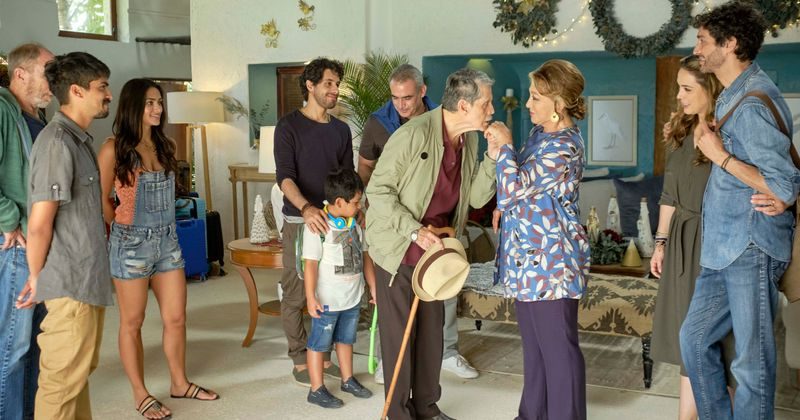
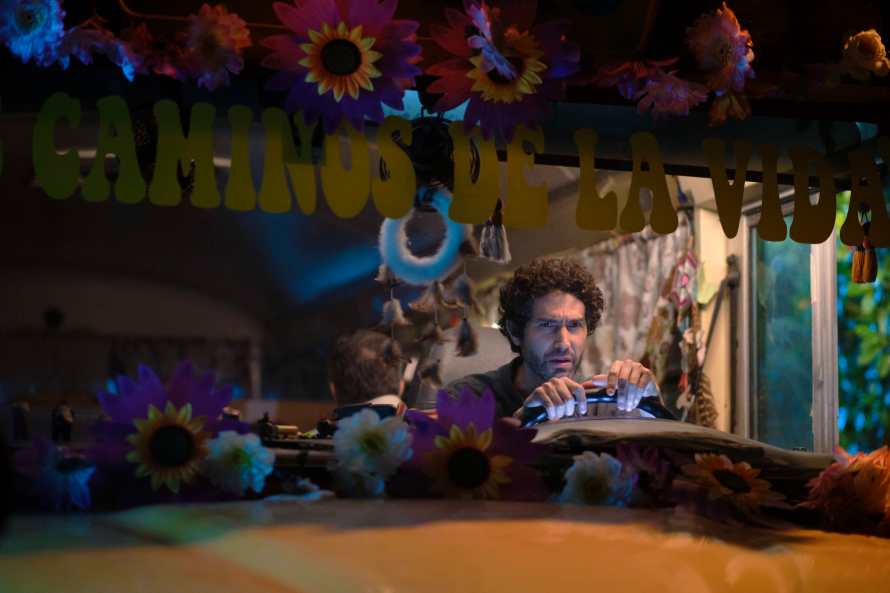
The vast brood of widowed Don Servando (Héctor Bonilla) piles into a converted school bus for a trip to the coast, to the luxurious beach house of the patriarch’s daughter-in-law Alma (Jacqueline Bracamontes) for the holidays.

Every “couple” in this family — straight or gay, “secret” or public — is in trouble. Nothing like a vacation with an imperious, bossy woman with their imperious, bossy and quarrelsome dad to patch things up. Sadly, there’s barely a chuckle in this contrived, forced “romp.”

Servando has these “traditions” he wants to be sure they all preserve, even if they’re away from home. Aunt Alicia (Angélica María) “would rather not participate in your traditions.”

Her attitude towards the holiday is more remote, “spoiling” Santa for the guy couple’s newly-adopted son, banning the tacky over-decorating that Servando has passed down to his brood.

But with other traditions such as “Argument Night,” a gimmick borrowed from “Seinfeld” as a holiday “airing of grievances,” who can blame her?

And how can this half-hearted brawl between the elders help the workaholic couples resolve their differences, create commitment in the “sneaking around” younger couple who met through the family and started hooking up after (we hope) they realize they weren’t related?

I mean, of course all the quarrels/conflicts get fixed before the closing credits. But the eye-rolling ideas two screenwriters manufactured for generating “resolutions” to the many comic conflicts in this don’t produce many laughs. Or any.

How to make Alicia and Servando mend fences? Casually yank the mooring lines of the schooner she keeps docked out back (Who doesn’t?) so that it drifts out to sea, stranding them and forcing them to reconcile? OK.

Force hot Gala (Renata Noti) to realize hot Renato (Juan Pable de Santiago) is more than just a side-piece.

And so on.

Bonilla and María are veteran performers who can find laughs when there’s a laugh worth looking for in the script. There just aren’t many, aside from senior citizens toking up and doing bong hits by the pool, the posh and snobby aunt who doesn’t realize how tone deaf dressing everybody up in Nativity costumes for a creche family photo is.

Rating: TV-MA, adult situations, profanity

Cast: Héctor Bonilla, Angélica María, Jacqueline Bracamontes, Benny Ibarra, Renata Notni and Juan Pablo de Santiago.

Credits: Directed by Raúl Martínez, scripted by Eduardo Donjuan and Pedro González, based on characters created by Alberto Bremer for “The Patriarch.” A Netflix release.

Running time: 1:27

Posted in Reviews, previews, profiles and movie news | Comments Off on Netflixable? A quarrelsome Mexican family gathers at the beach for a “Grumpy Christmas”