Documentary Review: New York teens run a campaign for president — “American Gadfly”

Sometimes your homework on a film takes you back to first principles. Is “American Gadfly” a documentary, or is it a mockumentary? The pitch from a publicist hired by the self-distributing filmmakers had me befuddled.

Senator Mike Gravel? From Alaska? I don’t remember anybody by that name. It sounds made up. And I used to live in Alaska, working in radio news. He was a Democratic Senator from Alaska? He wrote a book called “Citizen Power?” He ran for president in 2008? And again in 2020?

I mention all that because I dare say I’m not alone in forgetting the “gadfly” senator from Alaska who read the Pentagon Papers into the Congressional Record to help get the word out about the dishonest origins and “truth” about the Vietnam War. He was first on board the push to end the draft.

Gravel (pronounced grah-VELL) wasn’t exactly a TV news fixture in the ’70s into the ’80s. But he had a profile, a resume and a reputation, a politician with “real progressive chops” who might be persuaded to make one more quixotic run for president to create “ripples in the system” and introduce subjects no one else was talking about in the 2020 campaign.

One problem with that? Gravel was long-retired, 89 years old and living in Monterrey. He’d be the “oldest person ever to run for president.” Another problem? The people asking were a bunch of teenagers from Ardsley, in Westchester County, New York, Ground Zero for white entitlement in America.

“American Gadfly” is about a campaign that few noticed outside of the twitterverse, a funny, unfiltered re-introduction of Gravel to America and a peek into todayt American politics and the political and political news ecosystem.

A quartet of whipsmart high schoolers — David Oks, Henry Williams, Elijah Emery and Henry Magowan — cooked up the idea of a campaign that could inject leftist ideas and ideals into an already-large but generally conservative Democratic political primary field with the hope of shifting the debate leftward.

In Gravel, the boys had themselves a potential candidate “more Bernie than Bernie,” says New York Times Magazine writer Jamie Keiles at one point. They had a figure with a “real record, a real place in history,” adds Washington Post political reporter Dave Weigel, a gadfly who might serve the role of “irritating the front runner” as he shifted the direction of the debate.

If only Gravel could get into the candidate debates, something he did back in 2008. If only his young, idealistic, quick and clever “staff” could get him the 65,000 individual campaign donors — using mainly Twitter as their campaign platform and donation soliciting tool — that the Democratic National Committee had set as the bar for qualifying to be on the stage in those debates.

The debut documentary of Skye Wallin takes us into that campaign, the blizzard of tweeted jokes, platform positions and cutesy videos they used to make a very minor splash back in 2019-2020. Gravel, who died last summer at 91, was a lively, willing participant in this attempt to game the system, just to get his long-dormant push for “direct democracy, a legislature of the people” (everybody having a vote on every major issue) back into the public eye.

They pitched Gravel by phone, took notes on his pet causes and direct way of expressing himself, and he gave them his Twitter password. They’d translate his thoughts into slangy, Gen Z “owns” of Trump and the Democratic candidates trying to take his job.

 “Good morning @pete.buttigieg did you finish your policy page yet it’s due today you can copy mine dude just hurry.”

The next thing you know, “No More Wars,” and “every donation” goes to help cover “Henry Kissinger’s air fare to the Hague (to stand trial for war crimes)” are tweeted out in comic Jeremiads. Political celebrities like Susan Sarandon, Sarah Silverman and Alyssa Milano were retweeting them and even late night talk show comics were taking (limited) notice.

Political journalists were giving credit to Gravel, who did almost no campaigning himself, as “the id of the (Democratic) left” in a campaign where centrists, outright conservatives and flakes such as Marianne Williamson, Andrew Yang and Tulsi Gabbard were getting heard, but nobody really to the left of Bernie Sanders was.

“American Gadfly” can come off as a self-satisfied victory lap for a victory that never happened. Gravel never made it on a debate stage, never campaigned in Iowa and some of the claims the kids make for his “impact” seem dubious, at best.

The film captures little of the lives these college-bound teens interrupted to take on this challenge, and does little to make them likable. It’s no shock when they start to have falling outs over the level of commitment, with them comfortable together, but not all that at home holding forth as public speakers or the “face” of the campaign.

One can’t get past the sense that it’s all just “a game” and that these youngsters, probably the least diverse campaign of that election cycle, were treating it as that or as resume building. They snark-tweet about candidates using their campaigns to raise their profile and to some degree, this quartet is doing exactly the same thing.

Did Andrew Yang really want to hire them as his digital outreach/social media team?

As they hobnob with Yang and beg for his help, and that of Williamson (who comes off much more sane here than she was portrayed by the political press) and the opportunist Gabbard, in getting the word out to round up those final donors, you expect some cynicism to enter into their generally self-aware efforts.

I mean, look at who they were asking for help. Look at who was retweeting them.

Still, the film gives us a taste of digital-age politicking, the ways Twitter shapes and amplifies debate on the Left and the limits of that digital-only campaign approach, as valuable as it might be in shaking off the country’s allowing two backward, conservative states — Iowa and New Hampshire — to hijack the process of picking presidential candidates.

And to their credit, “There’s no real reason (for Generation Z) to be cynical,” Williams asserts. And, Magowan adds, “Young people have more power than they can possibly realize.” And maybe “the teens running #Gravelanche” did “get a couple of ideas” into the political “ecosystem.” Maybe if they don’t give up and start showing up, the “radical reforms” Gravel backed for most of his career, reforms that have a constituency not just in celebrities and Generation Z, but in other corners of the electorate, won’t just be the fruitless pleas of the next American Gadfly.

Rating: unrated, some profanity

Cast: Sen. Mike Gravel, Henry Williams, David Oks, Dave Weigel, Jamie Keiles, Elijah Emery and Henry Magowan.

Credits: Directed by Skye Wallin. A SunPunks release.

Running time: 1:36

Posted in Reviews, previews, profiles and movie news | Comments Off on Documentary Review: New York teens run a campaign for president — “American Gadfly”

Movie Review: “TRON” meets “Beauty and the Beast” in anime — “Belle”

“Belle” is an ambitious anime fantasy with gorgeous, dreamy, CGI-assisted eye-candy images illustrating a somewhat cumbersome marriage of sci-fi and fairytale fantasy.

It is grounded in a classic Japanese anime setting — a rural, mountainside town and high school. But writer-director Mamoru Hosoda (“Mirai,” “Wolf Children”) folds in a cyberlife “Beauty and the Beast” story set in a “U” that very much resembles the metaverse in Mark Zuckerberg’s “Meta” extension of Facebook, with images, characters and tensions not unlike those from Disney’s “TRON.”

“Belle” is too long, thanks not only to the melodrama piled onto the story, but also owing to the extensive exposition and explanations of the digital universe of “U,” which is where this “Belle” avatar becomes a singing sensation, and meets her “Beast.”

In “real life,” she’s just a shy, sad, motherless schoolgirl Suzu (voiced by Kylie McNeil in the North American version of the film). Suzu lives with her widowed father, and we see in a flashback the trauma of her childhood — watching her mother lose her life attempting the rescue a child from a raging river.

She seems to have just one friend, the snarky Hiro (Jessica DeCicco) and pretty much zero presence in their uniformed high school.

“You’re like the side of the moon that gets ignored,” Hiro offers, helpfully.

Suzu crushes on the tall, athletic Shinobu (Manny Jacinto) and envies pretty, popular sax-player Ruka (Hunter Schafer).

But if her classmates only knew…

With a lot of help from the digital tech of the U, which interprets her “energy” into her AS (avatar), and some clever management and hyping from Hiro, Suzu she becomes the pink-haired beauty Belle, a U phenomenon and rising star of J-Pop.

Hiro thinks the online mania to discover “Who IS Belle?” is a hoot, the fact that no one anywhere will guess this “mousy country bumpkin” is the siren of the U, serenading the masses surfing the circuits that make up the Cloud on a whale covered in loudspeakers.

Hiro enabled this transition/alter ego to help Suzu “be more confident.” That’s not really working out.

And then there’s the other anonymous U figure, the Beast — a cowled, horned brawler who fights other avatars and always wins. He’s sought by the “police” of the U, Justice, players/avatars empowered by the Five Voices who run this place. But the Beast won’t be defeated and won’t be exposed, no matter how brutal the U-verse police become.

Belle and the Beast cross paths when he busts up her concert, Kanye-style. Can they, will they find a connection, discover each other’s secrets — perhaps by decoding the code-embedded petals of the “Secret Rose” that the Beast protects?

Yes, that reads as clumsy and it plays out in Hosada’s film. He decorates the tale with pixie avatars and AI “helpers,” school crushes and hidden pain. The U gives the Beast literal scars which may mimic the ones he supposedly has on his back, his “real life” abuse injuries.

The best parts of the film aren’t the wailing, hand-holding of a tentative romance of the “real” world, but the drama of the TRON world of avatars and electrical pulses where chiseled, superhero-muscled Justice figures intimidate Belle and threaten her in an effort to get at the Beast.

“The ugly Beast must be unveiled! I ask YOUR origin!”

Hosoda has a little fun with assorted figures — an artist, a “troubled” star baseball player — who “might be” the Beast, according to web rumors. And he restages the famous ballroom dance scene from Disney’s “Beaty and the Beast” as an homage.

It’s all a little hard to follow. But it’s always a wonder to look at, and even children will pick up on the fact that this is a different take on a classic tale, even if they, like the adults watching it with them, may sit on the fence about how well this hybrid story works.

Rating: PG (Thematic Content|Language|Brief Suggestive Material|Violence)

Voice Cast: Kylie McNeil, Manny Jacinto, Jessica DeCicco, Hunter Schafer, Brandon Engman

Credits: Scripted and directed by Mamoru Hosoda. A GKIDS release (Jan. 14).

Running time: 2:03

Posted in Reviews, previews, profiles and movie news | Comments Off on Movie Review: “TRON” meets “Beauty and the Beast” in anime — “Belle”

Next Screening? G-Kids anime “Belle”

It’s a stunning looking tale of a motherless teen girl who lives through her online avatar. I think.

There’s a “Beauty and the Beast” parallel.

The trailer is for the newly-dubbed feature film, but I’m watching the subtitled version.

Because. You know. “Snob.”

H

Posted in Reviews, previews, profiles and movie news | Comments Off on Next Screening? G-Kids anime “Belle”

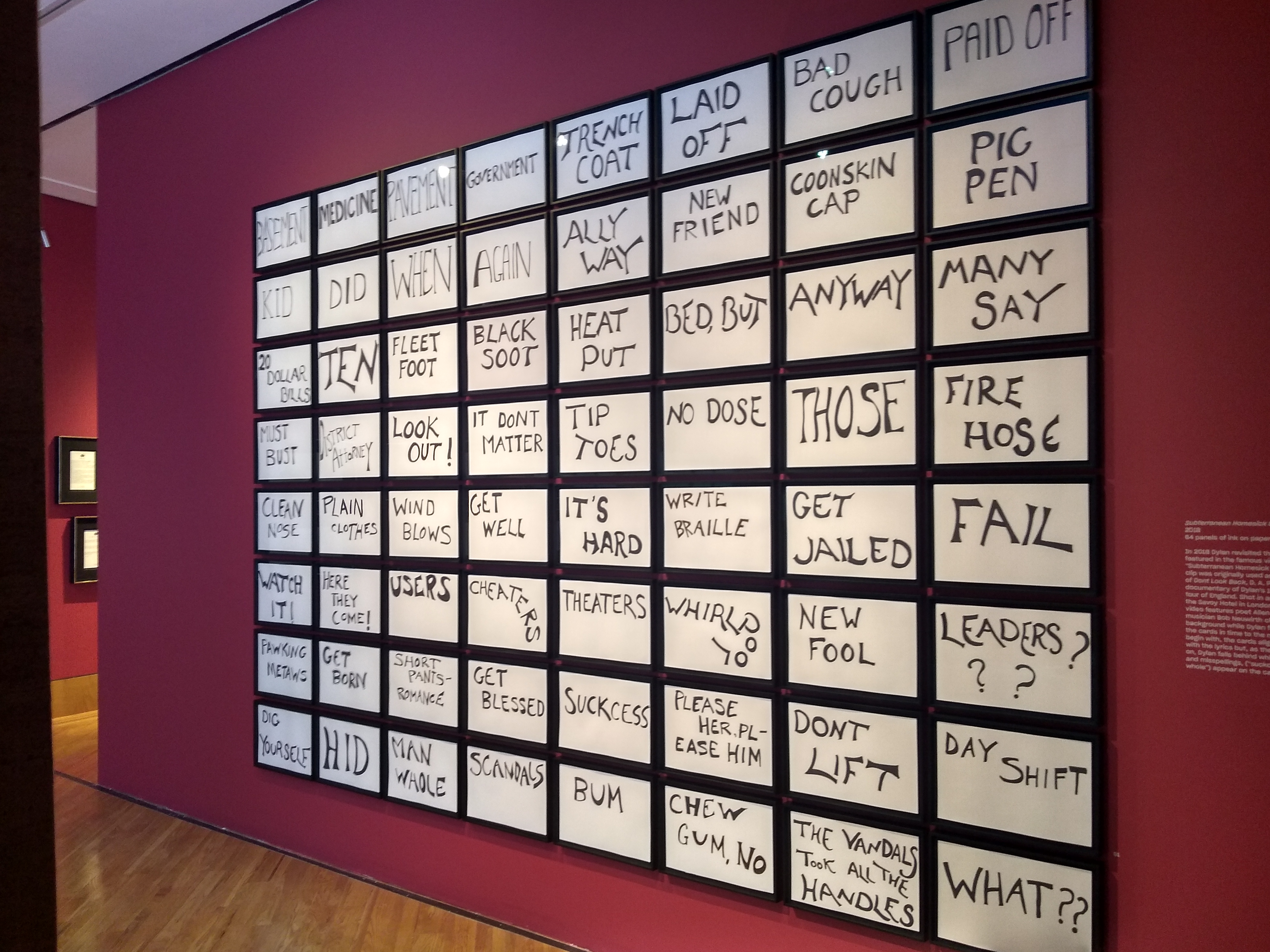
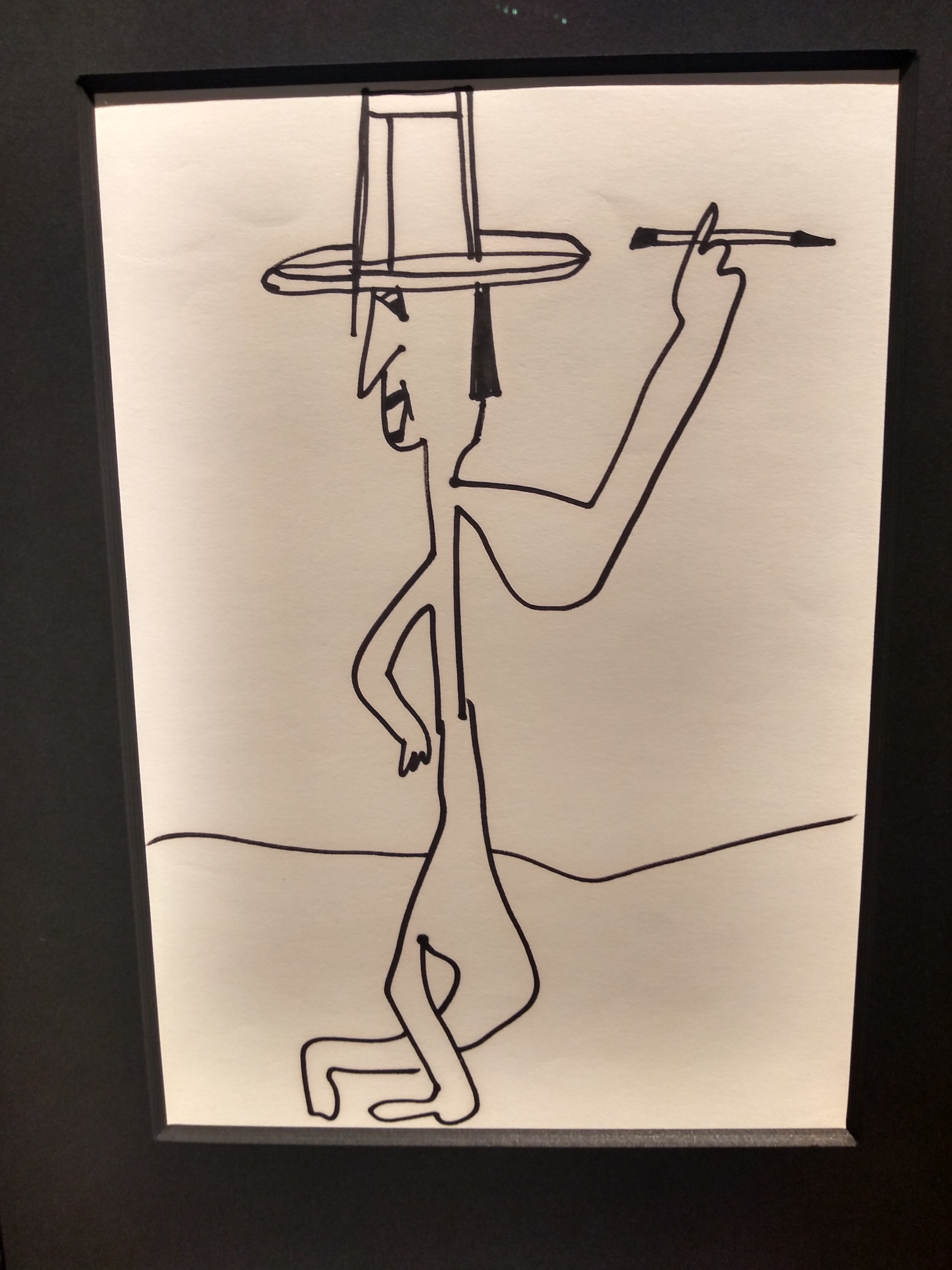
A day off from the Movies to take in Bob Dylan’s paintings, sketches and flash cards in Miami

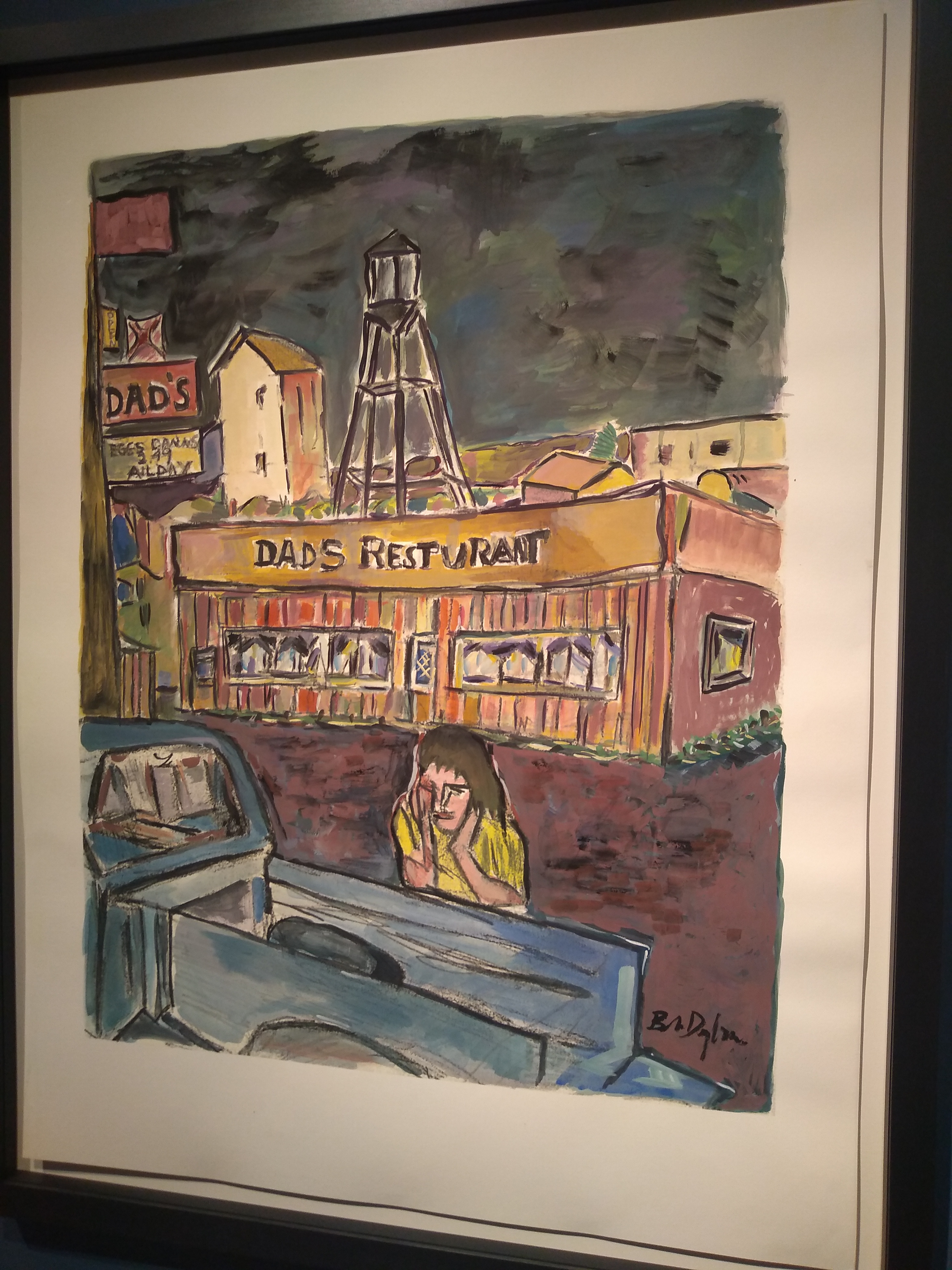
The most complete exhibition ever of Dylan as visual artist shows him a sort of imitation  Edward Hopper of Hibbing, with a heavy dose of Van Gogh and a hint of late period Winslow Homer.

This Bob Dylan the Visual Artist exhibit, “Retrospectrum,” is “a conversation between the artist and his songs,” a wide visual survey of the Nobel laureate’s influences — folk music to movies, lonesome prairies to city bars, from Minnesota and North Dakota to New York and New Orleans, all tried out in sketches, paintings and ironwork sculpture befitting a product of Minnesota’s “Iron Range.”

There’s a fascinating room of works inspired by Dylan’s many visits to New Orleans, other pieces with a Key West lineage — New York street scenes, others from the Great Plains, folk music reveries on trains, homages to Woody Guthrie, diners, dives, bars and drive-ins.

And then I duck into a gallery filled with the most polished paintings of all. Even though I got there when the exhibit opened and they hadn’t set out the brochures guide to the show to lead you through it, there’s an iconic image of Robert Mitchum at a bar. “Farewell My Lovely?”

Dylan copies stills from movies? Yes he does, and beautifully. Any film buff would be lucky to have these pieces hanging at home.

Robert Duvall must be the preacher exhorting his flock in “The Apostle.” The seedy jungle bar, another fellow I ran into there pointed out, was inspired by William Friedkin’s “Sorcerer.”

And there’s this Dylanesque faux cowpoke leaning against the bar, possibly staring at the mechanical bull from “Urban Cowboy.”

“Deep Focus” he calls the section of film-inspired paintings, glimpses of “Taxi Driver” and other obvious ones, and obscure images copied from 1930s newsreels.

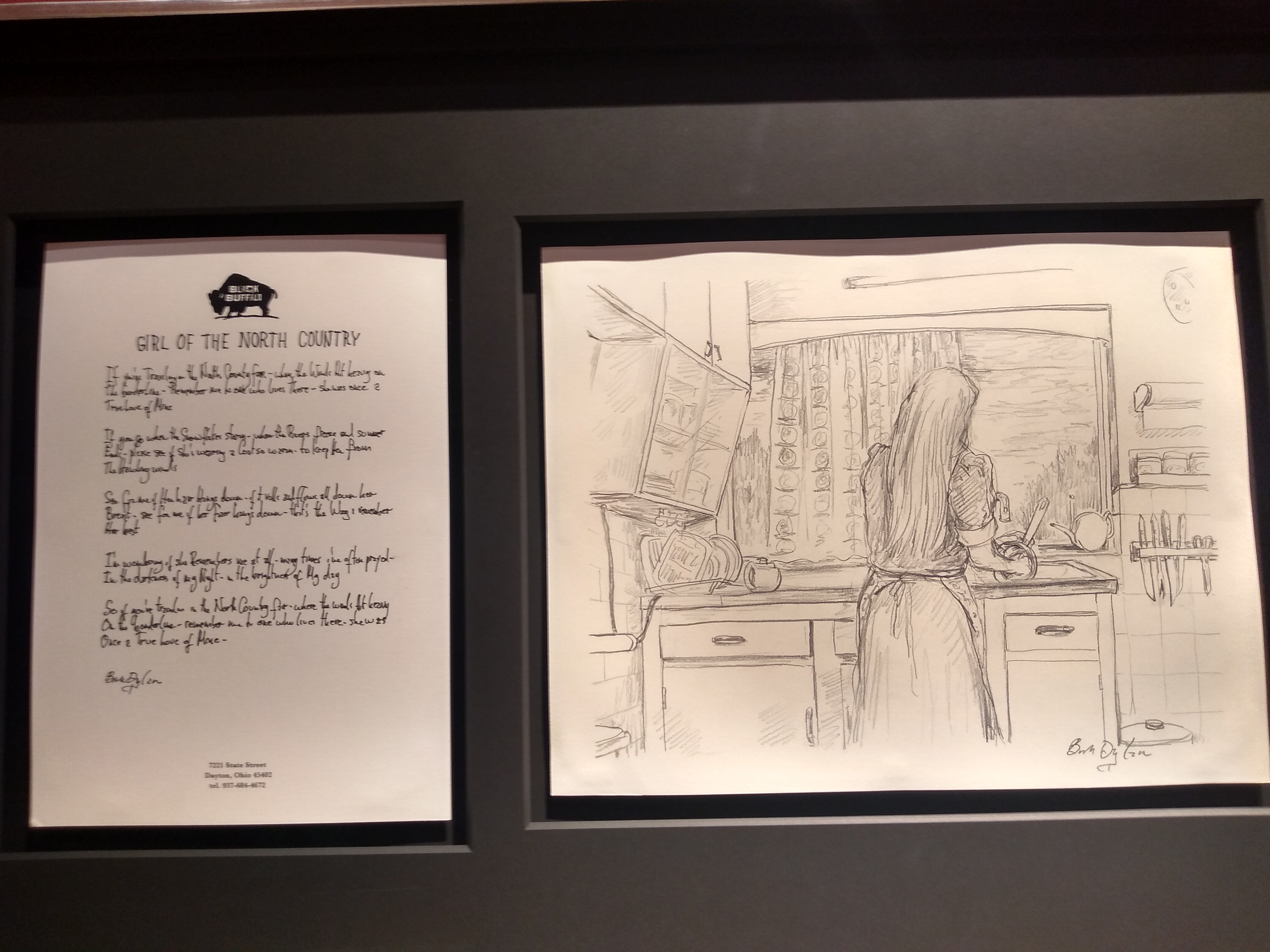
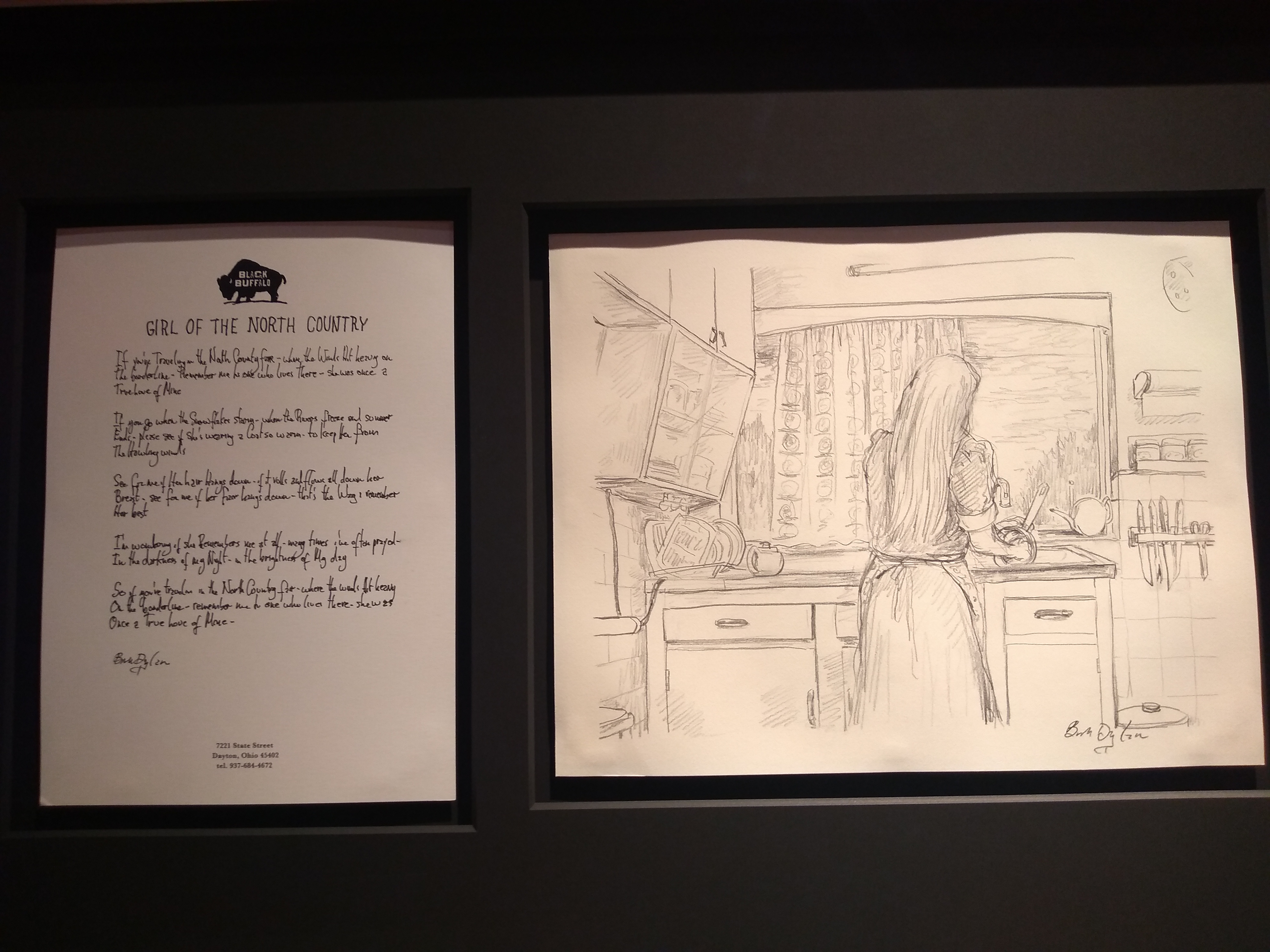
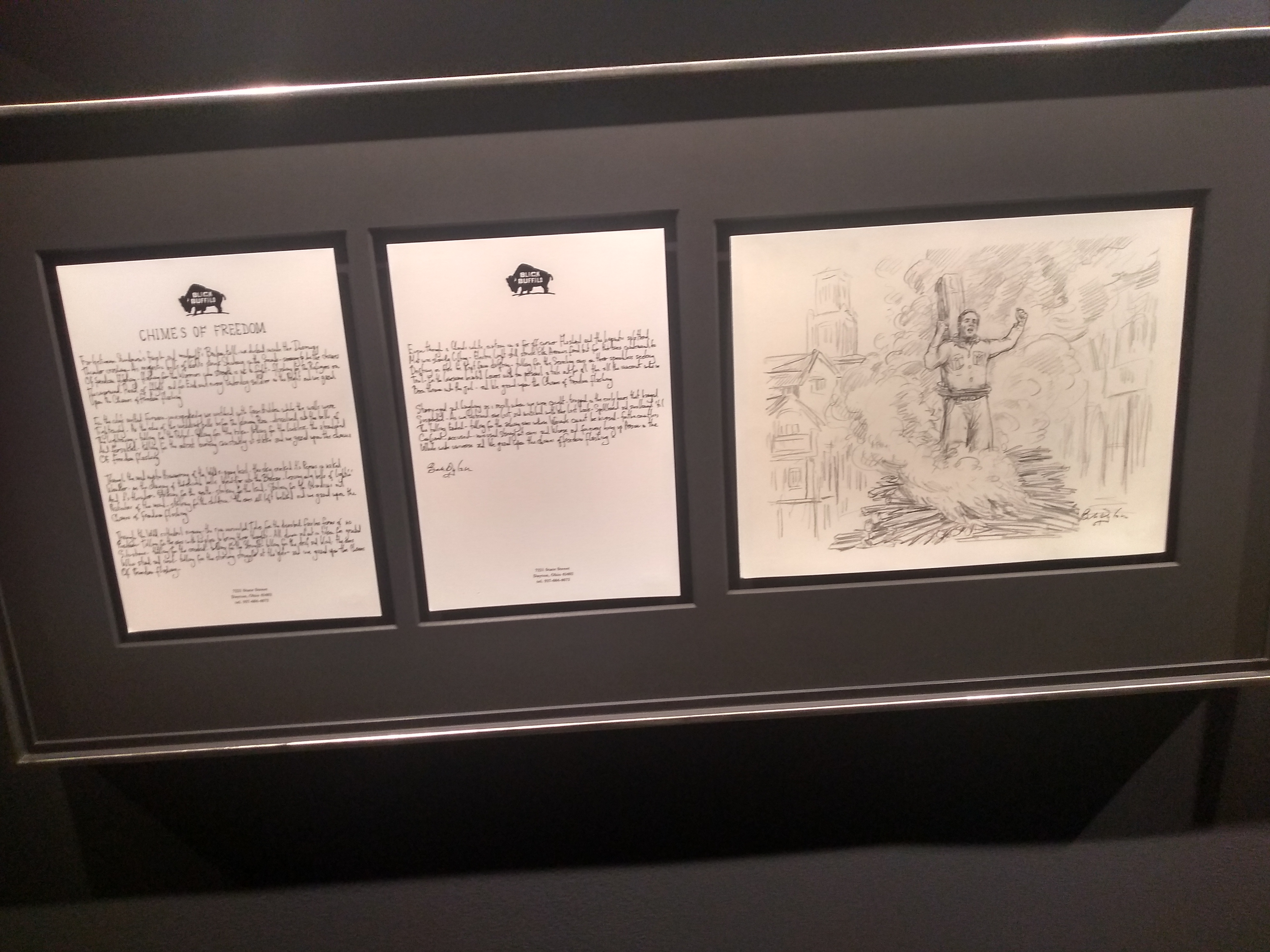
Much of this work has never before been shown in the US. There are handwritten lyrics of many of his greatest songs paired with sometimes representative sketches of “Maggie’s Farm” or “Girl of the North Country,” and sometimes the pairings are ironic. “Song for Woody” paired with a sketch of perhaps Louis XV., etc. That stuff came from “Mondo Scripto.”

It’s at the Frost Museum of Art on the Florida International University campus in Miami for a bit longer. April, to be exact.

Listen closely, and you can almost hear Springsteen shouting “Honey, I think I need to stop by the paint supplies store” across his lonesome, echoey Jersey ranch.

Posted in Reviews, previews, profiles and movie news | Comments Off on A day off from the Movies to take in Bob Dylan’s paintings, sketches and flash cards in Miami

Movie Preview: A last peek at “Scream” the reboot, almost the last January movie standing

Jared Leto’s “Morbius” pulled out of January today. Just three major titles are set to open wide on Jan. thanks to the latest unvaccinated spike in the pandemic.

“The 355” this week, “Redeeming Love” 1/21 and “Scream” (1/14) are all that’s left, save for a few Oscar contenders like “Cyrano” getting theater expansions this month.

Get your shots, wear a mask and I’ll see you at the cinema.

Posted in Reviews, previews, profiles and movie news | Comments Off on Movie Preview: A last peek at “Scream” the reboot, almost the last January movie standing

Movie Review: A “Textbook” home invasion thriller — “See for Me”

If there’s a better recent piece of cinematic plot problem-solving than the compact thriller “See for Me,” I must’ve missed it. This tight, tense and oh-so-logical home invasion tale brings “Wait Until Dark” into the cell phone era, with suspense that rivals the equally simple “Don’t Breathe.”

What do all three films have in common? There’s a blind protagonist, and somebody’s busted into their house. Director Randall Okita and screenwriters Adam Yorke and Tommy Gushue have to put our heroine in peril and find fresh and inventive ways to get her out of it, some of them having to do with the state of the art assistance-for-the-blind phone apps, such as “Be My Eyes.”

Skyler Davenport plays Sophie, a young downhill ski racer adjusting to life without sight. An accident blinded her, and she’s made “I’ve got this,” “I’m good” her mantra. She doesn’t want help, and doesn’t want pity. Not even from her Mom.

Sophie’s taken on house-sitting/cat-sitting work, and that’s how she’s come to this hillside mansion out of town. She’s quick to dismiss the jetting-out owner (Laura Vandervoort), and just as quick to call up her skiing pal Cam (Keaton Kaplan) when she’s left.

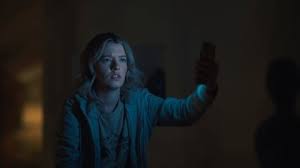
Cam becomes her “eyes,” as she holds up the phone so that he can describe the view, the obstacles and the nature of the place where she’s on duty,

So sure, we glimpse extreme close-ups of the cat, jingling car keys and owner Deborah’s shoes as they cross the floor, showing off Sophie’s newly-heightened hearing that the blind are famous for turning into a sort of movie trope “sonar”. But we can also see Sophie’s got a cheat.

And when she ducks into the owner’s wine cellar, there’s conflict. Because Cam wants nothing to do with the “poor blind girl’s” larceny. She likes stealing and reselling pricey bottles of wine.

When she locks herself out of the house, she can’t very well call Cam again. It’s this newly-loaded app, “See for Me,” that she consults. Thank heavens online first-person shooter game addict Kelly (Jessica Parker Kennedy of “The Flash”) logs off long enough to take Sophie’s “See for Me” request.

And when Sophie hears people break into that mansion later that night, Kelly with See for Me is her second call, after 9-1-1.

Some problems a canny viewer will see that need to be solved. Sophie has to hold her brightly-lit phone up to get Kelly the visuals she needs to give directions and try and get the blind blonde out of this jam. She’s doing this in a dark house. Surely the villains could find her in a flash, even if Sophie’s hearing Kelly’s directions via an earpiece.

It’s unfamiliar turf, Sophie has no idea where or how to hide from the intruders. They’re guys. They’re bigger and stronger than our admittedly pretty fit ex-athlete. And there are cops on the way.

Screenwriters Yorke and Gushue keep finding new layers to add to Sophie, who is both reluctant to take up blind Paralympics skiing (which also requires a guide) and not shy about stealing or taking other risks to fill the adrenalin gap that losing sports has taken from her life.

The story takes twists we don’t see coming, not all of them logical or morally defensible. We loose track of the “Die Hard” dynamic that having that “helper,” Kelly, guiding our heroine out of a jam, provides.

But Davenport, an actress with mostly streaming series and video game credits, more than holds her own and commands all our attention, if not always all of our sympathy. Kennedy is more sympathetic, and her character is given other “very particular skills” that don’t really add to the plot save for justifying her character’s cool under pressure. Unnecessary.

Director Okita, who did “The Locksmith,” laudably leaves titillation out of the equation. Our two protagonists are attractive young women, but they could be anybody. Okita skips the cheesecake and keeps the movie on the move, making much use of the spacious interiors and immediate exteriors of this modern showplace of a mansion.

The ending may be a tad too pat for my taste, and the many little climaxes along the way tend to spoil some of the edge-of-our-seat suspense that this or that sequence is building towards.

But I’m still tipping my hat to all involved here. “See for Me” takes a time-honored thriller plot and techs it up without pulling its punches, and without ever giving away where it’s going.

Rating: unrated, violence

Cast: Skyler Davenport, Jessica Parker Kennedy and Kim Coates.

Credits: Directed by Randall Okita, scripted by Adam Yorke and Tommy Gushue. An IFC Midnight release.

Running time: 1:33,

Posted in Reviews, previews, profiles and movie news | Comments Off on Movie Review: A “Textbook” home invasion thriller — “See for Me”

Netflixable? A militarized cartoon about the real “Seal Team”

The South African CGI animation house Triggerfish (“Zambezia”) makes its Netflix debut with “Seal Team,” an animated action comedy about seals taught to fight back against “ravenous seal-eating sharks” by a grizzled HMMF (Hydro-Marine-Military-Force) trained walrus

We see seals not as human Naval commandos, but as…seals — complete with acronyms (RSI, “really stupid idea”), seal jargon and gadgets — “puffer mines,””shrimp pistols,” a bara-zooka,” and “electric eel volts” — as well as sometimes amusing birds, scary-funny (ish) sharks and a “Baby Shark” joke.

It’s more a time-killer than anything anybody, young or old, needs to see. But the animation’s quite good.

Jessie T. Usher voices Quinn, a guilt-ridden seal whose carelessness gets a friend of his eaten. They’d run across these dog tags on the sea bottom, tags that used to belong to a walrus/seal/dolphin team led by Taggart, a walrus voiced by J.K. Simmons. Quinn stumbles into Taggart, who dismisses him because he’ll need help, others who are “brave, stupid or crazy enough” to take on that sort of combat.

So Quinn lands crazy Beth (Kristen Schaal) and preening “brave” blowhard Geraldo (Patrick Warburton) and they talk/blackmail Taggart into training them. What should this “ensemble,” “club” or “flipper patrol” call themselves?

Yes, the jokes are like that.

The sharks (Matthew Rhys voices the scariest) are serious trash talkers, of the “Get INTO my FACE hole” and “This is what happens when you go up against the FOOD chain!” school.

The seals are mainly fed up with sharks, and fed up with the limited diet they endure with sharks seriously cramping their fish-hunting style.

Barnacles? Ick. “They taste like sand…and disappointment.”

With this voice cast and a “Shark Tale” setting, there’s no reason “Seal Team” couldn’t have been funnier.

The movie’s more militarized than most parents like their kiddy entertainment to be, but that’s not what lets down “Seal Team.” The action beats are borrowed from “Finding Nemo/Finding Dory” and “Shark Tale,” pretty much, and nothing to tempt tiny tots to sit still for 100 minutes.

Co-director Greig Cameron is the sole credited screenwriter. He should have shared the credit and put out a call for writers of better one-liners than “Kiss my tail fin!”

The singer “Seal” plays a singer seal named Seal, singing that “Quinn is never gonna survive.” There’s a funny basking shark reminiscent of characters from “Finding Nemo,” and a really good Australian “shark cage” tour boat send up.

But that’s pretty much every comic highlight of “Seal Team.”

Rating: TV-Y7, violence

Cast: The voices of J.K. Simmons, Kristen Schaal, Jessie T. Usher, Kate Micucci, Sharlto Copley, Patrick Warburton, and Seal.

Credits: Directed by Greig Cameron and Kane Croudace, scripted by Greig Cameron. A Triggerfish Animation film for Netflix.

Running time: 1:38

Posted in Reviews, previews, profiles and movie news | Comments Off on Netflixable? A militarized cartoon about the real “Seal Team”

Robert Reich States the obvious — Watching and Understanding “It’s a Wonderful Life” Could Save American Democracy

You’d think we’d have all picked up on this by now.

But maybe the annual showings, the “tradition” of watching Frank Capra’s masterful Jimmy Stewart/Donna Reed tear-jerker, has drained it of its meaning.

We watch a sentimental black and white melodrama from the postwar exhaustion of 1946 and we miss the film’s core, the quintessence of the Americanism that Italian/Sicilian immigrant Capra preached in such films as this one and “Meet John Doe.”

The meaning of the movie first hit me when “Back to the Future Part II (1989)” dabbled in Capra’s idea of what unscrupulous, greedy, crypto-fascist capitalism’s end game would look like. A divided America, kept poor, drunken, gambling-addicted and beaten-down by the one percent whose interests that served.

Former Labor Secretary, economist and now pundit Robert Reich says he’s made the connection, too.

“As America has moved closer to being an oligarchy — with staggering inequalities of income, wealth, and power not seen in over a century — and closer to Trumpian neofascism (the two moves are connected), “It’s a Wonderful Life” speaks to what’s gone wrong and what must be done to make it right.”

The messages of the film, which premiered over Christmas 75 years ago, are a black and white embodiment of “The American Dream.” That dream is financial security represented at its simplest in home ownership. That dream, as the movie makes clear, isn’t shared by people who don’t want to “share.”

So it comes down to a “broken down old Building and Loan” and a member of a generation that knew group action was the only thing that could make that happen. George Bailey, taking over the family credit union whose members were its security, people who shared that dream and could be made to understand that they shared it — that “united we stand” and get a house and a good life, “divided we fall” and pay rent to the shrinking minority of super rich who thereby “control” us — becomes the Poster Boy for “The Greatest Generation.”

This Financial Times piece points to the tests that formed that “Wonderful Life” generation — a global depression brought on by unregulated stock/securities “gambling” that causes pretty much every global financial meltdown, the rise of fascism thanks to hobbled underclasses being susceptible to “revenge” on whatever “other” fascist leaders con them into blaming — never the rich, entitled and democracy-killers who “break” government and then insist they’re the only ones who can “fix” it.

And here we are again, a violent, intolerant and willfully ignorant minority swelling up its chest to do the bidding the of Mr. Potters/Biffs/Gov. DeSantis/Abbotts/Trumps of this world. Because we can’t remember the last time we were tested this way and have forgotten or never learned the lessons of “It’s a Wonderful Life.”

Posted in Reviews, previews, profiles and movie news | Comments Off on Robert Reich States the obvious — Watching and Understanding “It’s a Wonderful Life” Could Save American Democracy

Movie Preview: “Black Panther: Wakanda Forever”

This echoes with the memory and spirit if not the voice of the late Chadwick Boseman, and teases around the edges of the Nov. 22 release — pomp, circumstance, gravitas, a new villain and a car.

“Black Panther” was his legend-cementing hit, but far from the best of the high-minded Boseman’s best performances.

If Marvel makes this character replaceable, that’s totally on brand, “just business.”

Let’s hope they got an interesting movie out of their efforts.

Posted in Reviews, previews, profiles and movie news | Comments Off on Movie Preview: “Black Panther: Wakanda Forever”

Classic Film Review: Brit POWs keep calm and carry on, “The Colditz Story” (1955)

Don’t know how I missed catching “The Colditz Story” on this or that cable channel over the years. I saw many of its 1950s Brit-film WWII classics — “The Dam Busters,””Dunkirk,” “Bridge on the River Kwai” — but never the best British example of the POW dramedy, a genre most famous for “Stalag 17” and “The Great Escape.”

Perhaps after seeing PBS and History Channel documentaries on the “escape proof” German camp at Colditz Castle, I never felt the need.

Like WWII movies about the Pacific conflict from the same period, one can feel a certain softening of attitudes towards the Hated “Hun” and the murderous “Jap” in films made after the two former adversaries morphed into Cold War allies. The evolution of the prison escape/POW film is an exemplar of that.

Starting with “Stalag 17” (1953) and climaxing with “The Great Escape” (1963), the movies about this deathly serious business of breaking out of machine-gun-guarded prison of war camps became somewhat, well, campy. There are traitors and shootings and cold and privation. But the films also feature a “Jolly good sport, wot?” jauntiness.

There was even a hint of that in the brutally serious “Bridge on the River Kwai,” although David Lean’s 1957 masterpiece reflects Europe and America’s testier, racially-charged attitude towards the (even more racist) Asian adversary.

The music of “The Great Escape” is a bouncy little martial ditty fit for a film about kids playing hide and seek…with guns. It’s no wonder that epic, a “true story” and a bloody but often lighthearted blockbuster, inspired the indefensible Nazi-normalizing cartoon “Hogan’s Heroes” on TV.

By contrast, the Francis Chagrin score of “Colditz” is alarming, its opening bars promising a dire thriller that the movie only rarely is.

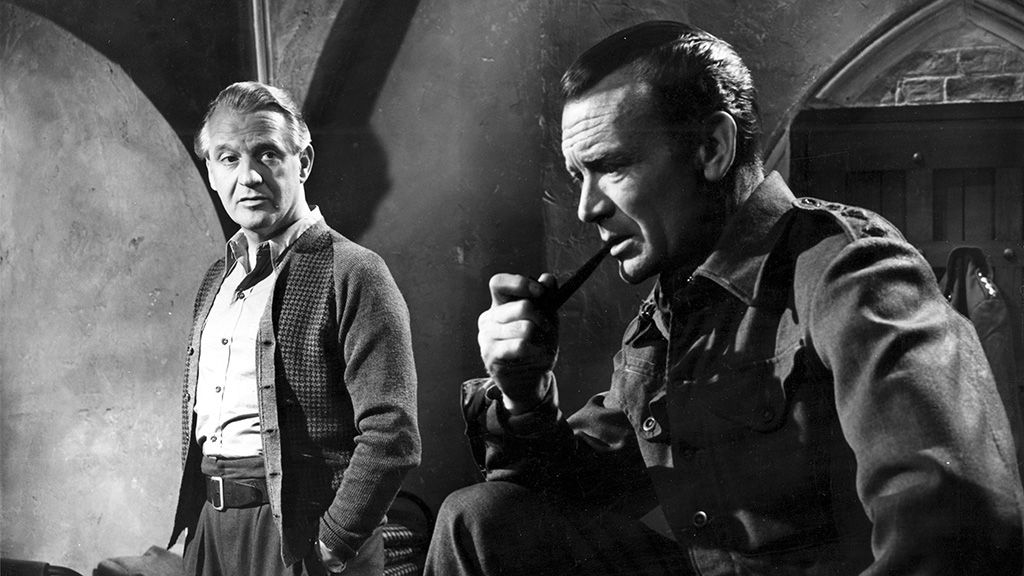
“Escape” had the jauntier tune and a more blunt depiction of violence. “Colditz” had a strident score and a jocular, sporting tone with actual comedy included in the account, provided by “Carry On” comics Ian Carmichael and Richard Wattis, playing the “stars” of the camp revue at Olfag IV-C.

That was the official name (Oflag is a shortening of Offizierslager “officer’s camp”) of Colditz. It was set aside for officers of the British, Polish, Dutch and French armed forces who repeatedly attempted escapes at their other camps.

That’s how Pat Reid (John Mills), Harry Tyler (Lionel Jeffries) and others under the command of Colonel Richmond (Eric Portman) ended up there.

Although they, the Poles who preceded them there (Guido Lorraine plays one), the Dutch (the great character actor Theodore Bikel is most prominent) and French (Eugene Deckers) are told “Zere IZZ no ESCAPE” from Colditz by the Kommandant (Frederick Valk) and warned of what awaits them if and when they’re caught, they crack on with it.

“Let me repeat this once more. The sole reward for attempting to escape from Colditz will be death!

The initial problems seem to be a senior officer, Col. Richmond, indifferent to the escape mania and seemingly passive, taking the German’s words at face value. And then there’s the lack of organization. The four groups of prisoners are forever screwing up each other’s attempts with their own. Nobody trusts or respects anybody else.

“This blasted Frenchman makes Colditz look about as dangerous as a child’s playground,” Reid complains.

That’s a complaint that suits the film a tad too much, as well. The Germans’ lax security means clever escapers will try hiding under shrubbery in the outside-the-walls soccer pitch reserved for prisoners’ use, gymnastically leap-frogging over a fence, hammering out all manner of woodwork in a workshop where they build sets for their next “Theatre Colditz” show to build tunnels and fake German uniforms to trick apparently near-sighted guards at every turn.

It’s all a bit much, but aside from the occasional shooting, future Bond director Guy Hamilton keeps it light and fun.

The light tone doesn’t so much disrespect the dire straits those imprisoned there struggled through as discount the difficulty of what they accomplished. Time and again, a funny fake mustache (sported by Richmond), a feigned Nazi salute to a guard while in a quite-convincing Wehrmacht uniform or an ingenious tunnel or rope ladder seems on the verge of success.

And when it isn’t, often as not, there’s a “Now now you naughty boys” reprimand from the Kommandant or his second (vulpine veteran character player Anton Diffring).”Solitary” is nothing of the sort, and it’s even where one semi-successful attempt is carried out.

That lowers the stakes in a movie that has fine moments of suspense somewhat undercut by the idea of “Oh well, better luck next time” for most of the failures.

“Colditz,” which became a British TV series in the ’70s, also feels feels incomplete, the ending truncated — cut-off — at the 94 minute mark. If you’ve read or seen anything about this gathering of escape artists, it’s that their getaways got to insanely elaborate levels. One even built a glider.

Much of that is left out, here.

But the players are all on top of their game, with fuming Mills, stoic Portman (of “The 49th Parallel”), Bikel and the comics Carmichael and Wattis standing out.

Hamilton (“Goldfinger,” “Live and Let Die”) and director of photography Gordon Dines (“The Third Key”) make great use of the actual castle and present a stark story with silly touches in silky black and white.

The best way to approach it is as a proof-of-concept picture for the later, bigger budget, all-star cast “Great Escape.” Movies like “Colditz” and “Stalag 17” proved that audiences, after hating and fearing and mourning loved ones lost to their recent WWII adversaries, were finally open to see the ridiculous, as well as the sad and horrific.

Rating: approved, violence

Cast: John Mills, Eric Portman, Lionel Jeffries, Anton Diffring, Ian Carmichael, Richard Wattis, Frederick Valk and Theodore Bikel.

Credits: Directed by Guy Hamilton, scripted by Ivan Foxwell and Guy Hamilton, based on the book by P.R. Reid. A Film Movement release, also on Tubi, Amazon, etc.

Running time: 1:34

Posted in Reviews, previews, profiles and movie news | Comments Off on Classic Film Review: Brit POWs keep calm and carry on, “The Colditz Story” (1955)