
Solid looking Southern fried thriller about Ozark crime families and an ex-con causing a shift in the balance of power.
Revenge?
Editor turned writer-director John-Michael Powell (“The Send Off”) cooked up this one.
Oct. 31.
Solid looking Southern fried thriller about Ozark crime families and an ex-con causing a shift in the balance of power.
Revenge?
Editor turned writer-director John-Michael Powell (“The Send Off”) cooked up this one.
Oct. 31.


OMG there are some real LOLs packed into the Liam Neeson action sequel, “Ice Road: Vengeance.” Sadly enough, there aren’t many of them that are intentional.
It’s implausible but far from impossible to believe the sight of gaunt, weathered 70something Neeson free-climbing The Needles in South Dakota. He bellows at the gods — or Tom Cruise — when he summits.
How’d he master that skill and stay in shape for it doing all that driving?
Mike, our “Ice Road” hero, is hellbent on remaking the long-haul truck driver image, one movie at a time. They’re not all pill-popping, sleep-deprived road hogs and most-likely-suspects in most serial killer cases.
In “Vengeance,” Mike’s kidnapped on his way to spread his climber/Air Force sergeant brother’s ashes on Mount Everest. That brother recites in voice-over his final wishes in a letter he Mike left before deployment from Minot, N.D. to Iraq.
Hilariously, the dope mispronounces the name of his base town. It’s “MY-not,” ya silly micks. Not “ME-not.”
Actually, that’s on writer (“Armageddon,” “Die Hard with a Vengeance”) turned “Ice Road” writer-director Jonathan Hensleigh. Who’d expect a Belgian actor (Marcus Thomas) to know Northern Plains pronunciations?
Hensleigh probably didn’t set out to make an outlandish, plot-holes-you-could-drive-a-semi-through sequel. Then again, the original film wasn’t exactly “Wages of Fear.”
Mike’s trek to Everest is interrupted when he and his “half-Sherpa” guide Dhani (Fan Bingbing of “Iron Man 3” and “The 355”) are waylaid by a black-clothed hit team who hijack their Kiwi Express bus to the base camp.
The grizzled New Zealand bus driver Spike (Geoff Morrell) has just enough time to bond with his fellow “asphalt jockey” when the bus is taken — in broad daylight, in the middle of Kathmandu– and Mike and ex-military Buddhist Dhani have to figure out a way out of their jam.
“In Nepal, kidnappers leave no witnesses.”
There are Americans — a professor/NGO aid worker (Bernard Curry) and his inattentive daughter Starr (Grace O’Sullivan). And there’s a local. Vijay (Saksham Sharma) is the son of a landowner who has refused to sell out and allow a predatory developer (Mahesh Jadu) to dam their village’s river and bury all their property under water.
Yeah, this all about getting to Vijay.
Foiling the hijackers (Amelia Bishop plays the petite, bob-cut French killing machine) only puts Vijay into the hands of murderously corrupt cops led by Capt. Shankar (Monish Anand). Crossing them and the “Kathmandu Mafia” is “poking the dragon,” high-mileage Mike is warned.
“I’ve poked one or two before, trust me,” he purrs.
Chase after impossible chase, crashes that don’t end their quest, shootouts where everybody does a lot of missing — unless Mike picks up a pistol — insanely difficult on-the-road repairs and at least one trap we have no idea how the passengers and bus driver escape from unfold along this stunningly scenic, more-harrowing than it plays here “Road to the Sky” highway through the Annapurna Highlands.
A few of the action beats play — brawls and the like. Many don’t.
The repairs are pie-in-the-Himalayan sky absurd, a couple of get-aways are too implausible to even be entertainingly silly and the victims die off in the most utterly predictable order.
But that chiseled-out-of-Irish-stone Neeson always gives his all and delivers fair value, even if the movie that surrounds him isn’t all that.

Rating: TV-14, violence and lots of it
Cast: Liam Neeson, Fan Binging, Grace O’Sullivan, Saksham Sharma, Geoff Morrell, Amelia Bishop and Mahesh Jadu.
Credits: Scripted and directed by Jonathan Hensleigh. A Vertical release on Netflix.
Running time: 1:52
Somebody launched a missile without authorization. Who?
A tale from the New Cold War, this missile was launched from the U.S. Malevolence? Or just the stunning incompetence we’ve come to expect from the current regime?
This Idris Elba/Rebecca Ferguson thriller from the director of “The Hurt Locker” hits theaters Oct. 10, and comes to Netflix Oct. 24. For awards consideration, no doubt.
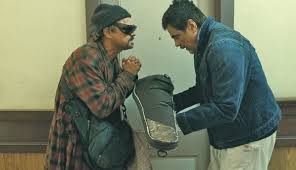


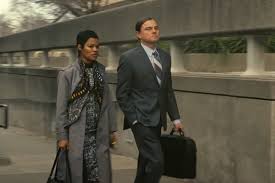
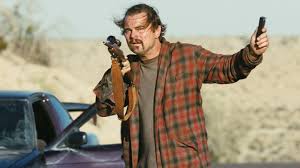
“The Revolution,” Gil Scott-Heron taught us, “will not be televised.”
But it might turn up on the big screen. And not just in the end game of “Civil War.” “One Battle After Another” is a reminder that the struggle never ends and the revolt against the forces of oppression is ongoing. And it’s not just Chairman Mao who preached that. He was quoting Thomas Jefferson, who taught that a “little rebellion now and then” is how you preserve your liberty.
Paul Thomas Anderson’s new thriller is practically a call to action, the closest we’ll ever come to “The Anarchist Cookbook” adapted to the screen. “Inspired by” Thomas Pynchon’s “Vineland” tale of aged radicals confronting the racist repression and “greed is good” power grab of the Reagan years, “Battle” is is by turns serio-comic and chilling to the point of depressing.
A country rapidly devolving into a militarized police state, the rule of law and due process going out the door and sinister oligarchs pushing and implementing a white nationalism agenda through violence and staged provocations, this movie is why a lot of us can’t stomach the no-longer-trustworthy evening news. So we go to the cinema/
Leonardo di Caprio plays The Rocket Man, Ghetto Pat, a member of a militant revolutionary group that ironically named itself after a piece of French artillery, The French 75, which was famous before the cocktail that took that name.
Pat is a bomb builder, a fireworks “distraction” provider for his cell, a young man in love with the profane, reckless and outspoken Perfidia (Teyana Taylor of the “White Men Can’t Jump” remake and “Coming 2 America” sequel). She is a sexy Rhianna radical, an unmasked fury who shrieks about “a declaration of war” when they release imprisoned immigrants or rob a bank to finance their battle against the fascist powers that be.
When Perfidia sexually humiliates a proto-ICE MKII unit Captain Lockjaw (Sean Penn) as they liberate a detention camp, the seed is planted for a story of revenge that will span a “Les Miserables” lifetime. She winds up pregnant, and captured after the baby’s birth. She killed a bank guard, so she becomes a “rat,” giving up her comrades to her Army interrogator.
And Ghetto Pat? He becomes Bob Ferguson, a single dad raising young Charlene-renamed-Willa (Chase Infiniti) in a fictional “sanctuary city” in California, where the teen tries to live a normal life with a dad determined to stay stoned and as close to off-the-grid as an ex-revolutionary can manage.
She takes karate classes from Sensie Sergio (Benicio del Toro) and lives under the illusion that her mother was a “hero” and her dad is the only person she can trust. Unless she hears this code phrase about ’60s TV shows “Green Acres,” “Beverly Hillbillies” and “Hooterville (sic) Junction.”
Anybody reciting that? “Trust them with your life.”
When Willa’s “extracted” from a high school dance by one of Dad’s old comrades (Regina Hall), all the aged chickens have come home to roost. Col. Lockjaw wants her because there’s something he wants to hide from this Bohemian Grove/White Supremacist “Christmas Adventurers Club” of above-the-law shakers and movers (Tony Goldwyn and Kevin Tighe are among the villains).
And Pat-now-Bob is on the lam, on the run, hoping to elude capture long enough to rescue her. Stoner Bob is about to learn that The Revolution never ended. It just turned Latino. Because Willa’s martial arts sensei (del Toro) is a lot cooler than anybody figured.
Continue reading


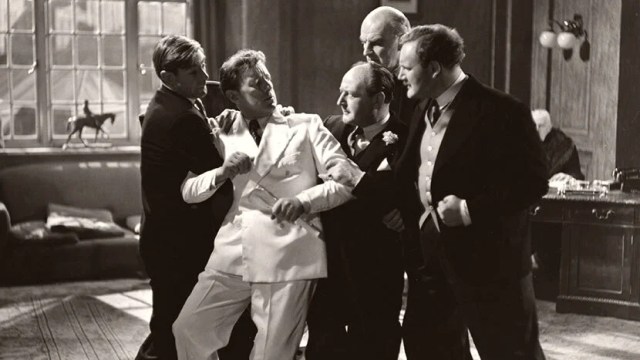
In the years after “The War,” Britons got back to indulging the quirkier aspects of a national character that “Keep Calm and Carry On” had superceded, at least as far as “Fritz” and his “Bloodthirsty Guttersnipe” gang were concerned.
The Ealing comedies of that era were — to a one — twee and eccentric, working class, government baiting and posh-puncturing. Films from “Hue and Cry” to “The Maggie,” “Whisky Galore!” and “Kind Hearts and Coronets” could be dark (“The Ladykillers”) or simply liberating (“Passport to Pimlico”). But out of the bombed-out ruins of a broke country and vanishing empire they bubbled over with self-mocking wit and that peculiar sense of playfulness that produced Noel Coward, Peter Sellers and Monty Python.
No other place on Earth could have made “The Titfield Thunderbolt,” or found the fun embodied by that silly, alliterative title.
Alexander Mackendrick (“Sweet Smell of Success,” “Whisky Galore!”) was behind the camera for 1951’s Oscar-nominated “The Man in the White Suit,” a screwy satire of capital and labor that could not be more British.
It’s built around British bourgeouisie, Cockney union members, titles and old money, all of them flummoxed and all but undone by a single-minded practioner of that grand British tradition of tinkering.
Our title character is a Cambridge-trained chemist (Alex Guinness) who flits around the periphery of Manchester, in the Lancashire heart of Britain’s aged, Industrial Revolution era textile industry.
Sidney Stratton has had many jobs and been “sacked” from all of them. So he takes janitorial work just to be around the labs of these venerated mills so that he can secretly fund his tinkering on a new kind of polymer fiber in the golden age of Rayon and Nylon.
We see him skitter out of Corland’s (Michael Gough, later “Alfred” to Bale’s Batman) textile works and over to Birnley’s (Cecil Parker), who just happens to be the father of the fair Daphne (Joan Greenwood of “Kind Hearts and Coronets,” and “Tom Jones”).
Mr. Corland would love to marry Daphne, and get an infusion of cash from Mr. Birnley. But his books show all these unexplained expenditures. That queers the courtship and the investment. Sidney, the source of those expenditures, sneaks out just before he’s discovered.
Before he knows it, Mr. Birnley’s lab is running up bills for this chemical or that chemical-manipulating gadget. Sidney is at it again, bluffing the lab techs and their boss with his education and monomaniacal self-confidence.
Everything he orders, every experiment he carries out, every assistant he waylays or boss he buffaloes is explained away with “It’s very important” and “It’s really quite simple.“
Nobody wants to admit they don’t quite know what he’s on about.
When he shouts “I’ve DONE it,” nobody knows what he’s done. Or who he is. Or that he’s spent all their money on it.
“You can’t fire ME! I don’t WORK here!”
What he’s “done” is invent a long-chain molecule that produces thread that repels dirt and stains and is so indestructible that it takes a blowtorch to cut it.
“It never gets dirty and it lasts forever,” the taken-with-Sidney Daphne translates. “The whole world is going to bless you!”
But what about the textile moguls who make all their money on customers replacing clothes and cloths that wear out? What about their labor force? Or say, the labor force of cheap labor textile-dependent India? What’s Sidney’s poor landlady/washerwoman (Edie Martin)to do “eef they’s no washin’?
The comedy in the early acts of this film, based on an unproduced play by Mackendrick’s cousin, is slapstick of a misdirection variety — Sidney eluding discovery, droll Daphne figuring it out, Sidney tumbling as he chases the rich girl who might “out him down in her MG roadster.
Guinness, coming into his own as a comic actor, is in a fine, daft dudgeon. He’s given an able assist in the “cute” department by an uncredited sound designer. Mary Habberfield gives Sidney’s DIY bubbling, gurgling chemical reflux apparataus musical toots and burps courtesy of blurts on the tuba and bassoon.
The pace picks up and the satire kicks in for the film’s last act, as Sidney is confronted by a consortium led by the Scrooge-in-a-vintage-Rolls Royce Sir John Kierlaw (Ernest Thesiger), a crone who won’t have his textile empire undone by “progress.”
The labor activist (Vida Hope) who rooms in the same boarding house as Sidney and develops a crush on him as she helps him stand up to capital and enforces his “tea breaks,” even though he’s basically working for nothing in his pursuit of “progress,” is crushed.
“TEA BREAK! We had to FIGHT for it!” And now he’s about to do away with all their jobs-for-life in short order.
The cast of character players make these workers and oligarchs, scientists and idealists feel lived-in and real.
And Guinness, dashing about, tumbling down a street or Bat-climbing down the side of a building thanks to a thread from his “indestuctible” invention, looks very good in a white suit.
That central sight gag plays on what the late writer and New York man about town/dandy Tom Wolfe used to say about his signature white suits. “You have to have three of them” in order to be recognized for having one.
What’s the point of wearing something that shows you never have to dirty yourself with anything resembling labor or effort, if it’s chemically incapable of getting dirty?
“The Man in the White Suit” plays as more slight these days, even if the satire still stings. It was never the laugh riot of “Whisky Galore!” or “The Ladykillers.” But its delights are still there in its shrewd observations about the shared interests of capital and labor, the fear of “progress” and mistrust of impersonal “science” and its ability to always move humanity forward.
And the Old School Englishness of it all still resonates, even in a Britain marked by 75 years of change, immigration, loss of empire, evolution and “progress.” Maybe they don’t “keep calm” the way they used to. But there’s still something twee about their taxis, their phone boxes, their tea and tea breaks and their tinkerers and hobbyists.

Rating: “approved”
Cast: Alec Guinness, Joan Greenwood, Cecil Parker, Ernest Thesiger, Vida Hope and Michael Gough
Credits: Directed by Alexander Mackendrick, scripted by Roger MacDougall, John Dighton and Alexander Mackendrick, based on a play by MacDougall. An Ealing release on Tubi, Amazon, other streamers.
Running time: 1:26
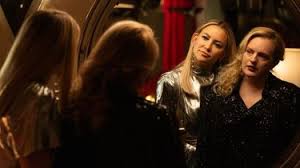


“Shell” is a body horror thriller with hints of Michael Critchton’s “At What Price Eternal Beauty?” sci-fi “Looker,” and pretensions of the Demi Moore satire it borrows from the most, “The Substance.”
An actress pursues the latest thing in beauty treatment to prolong her career. But she won’t be so pretty when it all goes wrong.
In the hands of Max Minghella, an Oscar winning director’s son turned actor and then director, it all slowly — oh-so-slowly– unravels into camp.
It’s as if they looked at the rushes, of Elisabeth Moss’s unworried look when “rising paranoia” is what she’s supposed to be getting across, and at her unhurried get-aways, and at Kate Hudson vamping up her “ageless beauty” villainy and just said “The hell with it. Nobody’ll take this seriously.”
And they shouldn’t. It’s “The Substance” devolving into “The Toxic Avenger.” But hey, the laughs are intentional. Some of them, anyway, not that there are a lot of them.
Moss plays Samantha Lake, 40something actress of the near future (wrist phones, driverless electric cars) shamed into seeking a means of making herself younger and thus more easily cast in the eternally sexist-ageist world of showbiz.
A beauty/eternal youth treatment, like so many pills, etc. hawked on TV these days based on custacean shells (but not “from the pristine waters of New Zealand”)? That could be just the ticket.
Zoe Shannon (Hudson) is the CEO and a walking endorsement for “Shell,” a beauty treatment even the young and beautiful are trying.
Shannon’s a stunningly well-preserved 68 year-old, and a flinty, foul-mouthed realist.
“You know what they call a woman trying to ‘improve’ herself? A punch line!”
But there’ll be no “She’s had work done” scars, no “Lookit Ms. Botox!” for Samantha “Sam” Lake.
Next thing Sam knows, she’s landed the role she was passed over for. She moves to a swank new home. But we know there are “side effects” coming.
We and Sam learn that a young influencer-turned-actress (Kaia Gerber) whom Sam babysat for as a child disappeared after her Shell treatment.
And we the viewers have seen the body horror effects starting to take hold of a woman (Elizabeth Berkley of “Showgirls”), bloodying her until she’s killed and stuffed in a body bag in the film’s opening scene.
Got to keep any mishaps out of the media. Wouldn’t want the stock price to tank.
The presence of Berkley and later Peter MacNicol as the Mad Scientist behind this “Shell” science tells us “Shell” was supposed to be a goof all along, and more’s the pity. Randall Park shows up for the finale, another telltale sign of “camp.”
But “Shell” isn’t funny at all in the early acts, and barely worth a chuckle later on. Screenwriter Jack Stanley (“The Passenger”) isn’t known for comedy or satire or scripts worthy of A-listers.
The comment on standards of beauty is watered-down and most overt in the anticlimactic epilogue.
The finale? We see that coming early, and wait and wait and wait for the inevitable to arrive.
Moss is rarely bad, but the A-list character actress seems miscast here. Her “before” and “after” image is no different, and I thought they had her in a bulked-up bodysuit for the longest time, as if losing body fat was going to be part of the “transformation.”
But that’s just a reflection of the very prejudice the movie would be about, if it weren’t so inept.

Rating: R, bloody violence, nudity, profanity
Cast: Elisabeth Moss, Kate Hudson, Este Haim, Arian Moayed, Kaia Gerber, Randall Park and Peter MacNicol.
Credits: Directed by Max Minghella, scripted by Jack Stanley. A Republic Pictures (Paramount+) release.
Running time: 1:40
“Your wizard lies!”
Subtle. And in sky writing, no less.
Cynthia Erivo, Ariana Grande, Jeff Goldblum, Peter Dinklage, Bowen Yang, Jonathan Bailey and Michelle Yeoh — a diverse cast with a woke-as-all-get-out message to send in song and one-liners.
Nov. 21.
The world remembers and obsesses over history’s monsters, but it reveres those who resist hatred and tyranny. Especially young people clever enough to figure out other peoples’ “fuhrer” is an empty suit, a vindictive clown and stupid.
Ewan Horrocks of “The Last Kingdom” stars as Helmuth Hübener, one of those who spread the word that The Would-be Emperor Has No Clothes in Nazi Germany during WWII.
Angel Studios has produced several films on religious-minded resisters to fascism. Wonder if they’re trying to tell us, or their faith-based film target audience, something?
Pity Charlie Kirk didn’t live long enough to see this one, which opens Oct. 17.
One Gyllenhaal (Maggie) steps behind the camera, another (Jake) in front of it for this all star re-imagining of “The Bride of Frankenstein.”
Set it during the James Whale Gothic America of the 1930s, put Oscar winner Christian Bale in Boris Karloff-wear with Jessie Buckley in the title role, Maggie’s husband Peter Sarsgaard, Oscar winner
Penélope Cruz, Annette Bening, John Magaro and Julianne Hough.
Finally, a picture LOADED with genuine names, lots of them big name stars.
A “Joker” inspired all-star riff on a horror classic?
March 6.


If you’re a sports fan, chances are if you’ve ever heard of Sul Ross State University, it’s because they let a 59 year-old walk-on play football for them back in the mid 2000s.
That true story of Mike Flynt, who’d been kicked off the team and out of school for being a two-fisted hothead back in 1971, becomes a sentimental faith-based drama for Angel Studios in “The Senior,” a well-cast if utterly formulaic sports drama where the “faith-based” piece of the puzzle is very much an afterthought.
Where this Rod Lurie (“The Contender,” “Resurrecting the Champ”) film goes right starts with the casting. If ever a guy seemed born to play a short-tempered fireplug who never stopped playing linebacker, it’s Michael Chiklis. Hell, he’s even got a linebacker’s name.
We encounter Chiklis as Flynt 37 years after the film’s prologue, which saw young Mike (Shawn Patrick Clifford) loose the captaincy of the college football team, his place on that team and his enrollment in that school for never failing to take offense and “never walking away” from a possible fight, because that’s the way his bullying old man (James Badge Dale) taught him.
Grown-up Mike may have married his college sweetheart (Mary Stuart Masterson) and become a successful home builder, raising two kids — one of whom has a grandchild. But when we see him leave the worksite, pushing-60 Mike gets into a fistfight with an irate a-hole in a pickup.
In Texas? What’re the odds?
Wife Eileen may see the bruised knuckles and know the full story. Mike’s college professor son (Brandon Flynn) doesn’t need to see the knuckles. He’s the bullied kid that the former bullied kid Mike raised, just the way his old man did. Mika Flynt never forgave that.
But when wife Eileen talks Mike into joining classmates who graduated when he did not for a 35th reunion (held in a Texas roadhouse), he takes time to make amends with a former rival. And when his classmates note that A) he’s still in good shape and that B) he has another “year of eligibility” at NCAA Division III Sul Ross, that’s all the encouragement Mike needs.
Next thing we know, Mike’s glad-handing the coach (Rob Corddry), “sticking around” Alpine, Texas for a try out. Eileen isn’t consulted, so naturally she tells her bullheaded husband that he’s finishing up his degree or else she isn’t signing on to the possible concussions, head, knee and spinal injuries that this risks.
All its takes is a would-be teammate declaring that Mike’s “like a 59 year-old ‘Rudy,'” referencing the famed kid-who-dreamed-of-Notre-Dame movie, for “The Senior” to settle into its formula and never deviate from it that point on.
Making the team means he becomes their “geezer” mascot, and an inspiration to the others. No, the coach doesn’t want to play him. And sure, some of the kids respect and adore him, but there’s always one who doesn’t.
Robert Eisele’s script deviates a LOT from the “true story.” He spends his alotted screen time setting us up for “The Big Game,” and “the big speech” in that game. Lurie kind of blows that moment, which plays like an anti-climax punctuated by a rapped second anti-climax.
The son Mika is the one providing voice-over narration to the story of his father’s redemption, and that, like the “faith-based” hook attached to the movie, is pretty much forgotten about and plays like an afterthought.
But for an hour or so, director Lurie tackles the tropes lightly as we see lots of football practices, and a few games, and not a lot of anything else. And it plays, helped by the fact that the formidable Masterson doesn’t need a lot of script to get across a flinty “West Texas Gal.”
It’s just that the finale and the final act leading into it stale, uninspired and manipulative. The “learning” curve in the character arc isn’t believable, even if Chiklis, a pretty decent “Thing” in an earlier “Fantastic Four,” is damned convincing as a walking muscle who tackles like a Mack truck.

Rating: PG, gridiron violence, mild profanity
Cast: Michael Chiklis, Mary Stuart Masterson, Corey Knight, Brandon Flynn, James Badge Dale, Chris Becerra, Terayle Hill, Chris Setticase and Rob Corddry.
Credits: Directed by Rod Lurie, scripted by Robert Eisele. An Angel Studios release.
Running time: 1:40