
Is it “real,” or is it all in our hero’s head?
Interestingly, our hero is a young gay potter with a boyfriend and a dark, violent past, troubled family history, the works.
July 29 in a few theaters, streaming Aug. 4.
Is it “real,” or is it all in our hero’s head?
Interestingly, our hero is a young gay potter with a boyfriend and a dark, violent past, troubled family history, the works.
July 29 in a few theaters, streaming Aug. 4.
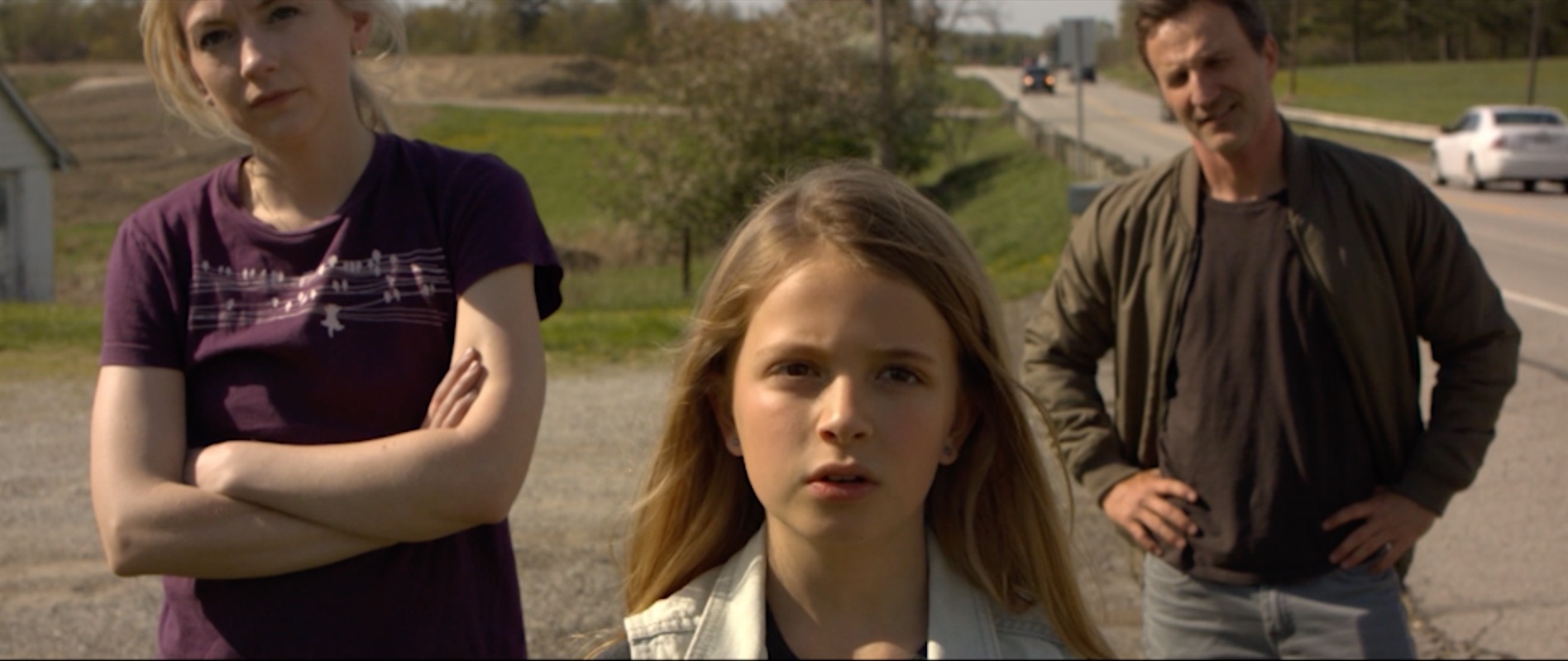
A dark comedy about mental illness and its collateral damage, “The Enormity of Life” never really manages a laugh and rarely even crawls out from under its own dispiriting shadow.
And then it gets to one of its many points. A little girl, permanently-triggered by Sandy Hook, endless “Fox News…fear” and mass shootings, wants to stop in Marinette, a town where the one mass shooting that haunts her nightmares took place.
The film is fictional, but this part of it is at least inspired by a real incident. Well, they mess up the age math re: a “survivor,” but something happened in Marinette, Wisconsin that becomes a plot point. The film’s Ohio setting means the movie’s Marinette is meant to be in another state, supposedly off U.S. 16 (which spans the Dakotas).
So, as hard as it is to find a single real-life city or town name in the U.S. that hasn’t had a machine gun shooting event, the filmmakers took liberties with a real life tragedy. That’s unseemly, to say the least.
But long before we take a detour into Marinette, USA, “The Enormity of Life” has lost its way with little hope of ever finding it.
Character actor Breckin Meyer, a veteran lead or lead’s BFF since “Clueless” and “Garfield,” most recently seen on TV’s “Good Girls,” stars in a movie that reaches for cute laughs, sentiment and romance in the midst of depression and schizophrenia and suicide and a little girl broken by obsessing over a unique horror of American childhood.
Meyer plays Casey, whom we meet in voice-over as he reads his own suicide note. Things haven’t worked out, and as the film unfolds and we figure out who he is, who his mother his and see how his nightmarish sister (Debra Herzog) turned out, we kind of get it.
But unlike Casey, we know how tying a noose to a ceiling fan usually works out. They’re not really built for that, son.
That’s not so bad, as he drops to the floor to the sounds of the answering machine message that a probate lawyer needs to see him. Turns out, he’s inherited some cash.
We’re meant to get a chuckle out of the disheveled bottom-feeder attorney (Allen O’Reilly). Maybe things can be turned around when he chats up his cute neighbor (Emily Kinney from “The Walking Dead”), who just happens to be his waitress at a diner nowhere near home. If only he remembered she is his neighbor, that they’ve talked before, that he unclogged her sink once.
Casey is kind of deep into his own despair. He doesn’t really notice other people.
But over the course of a couple of days, he gets involved in Jess’s life, and that of her shooter-obsessed 11 year-old (Giselle Eisenberg), and even of his lowlife sister and off-her-meds mother (Anne McEvoy) as he tries to tamp down his own issues and figure out if this big check and cute blonde and her kid are reason to try again, or just distractions from a life he wishes he’d ended.
The acting here isn’t so much bad as dissonant, as if nobody here is aware “Enormity” is as charmless as it is.
Cleveland director and co-writer Eric Swinderman put some effort into making a Cleveland movie without anything other than the license plates giving away the locale. What he and this film were going for is a sort of life-goes-on, could-be-worse optimism which the viewer and its leading man do not share.
Sometimes things are just too awful, and a lump of cash, a new love and the prospect of helping a similarly despairing child through her funk isn’t enough.
And God forbid Casey should click on a VOD channel streaming “The Enormity of Life” to get him through this. I felt like opening a vein myself by the time it was over.

Rating: unrated, violence, profanity
Cast: Breckin Meyer, Emily Kinney, Giselle Eisenberg and Debra Herzog
Credits: Directed by Eric Swinderman, scripted by Eric Swinderman and Carmen DeFranco. A BayView Entertainment release.
Running time: 1:42
“The Purge” meets “The Handmaid’s Tale?”
July 29.
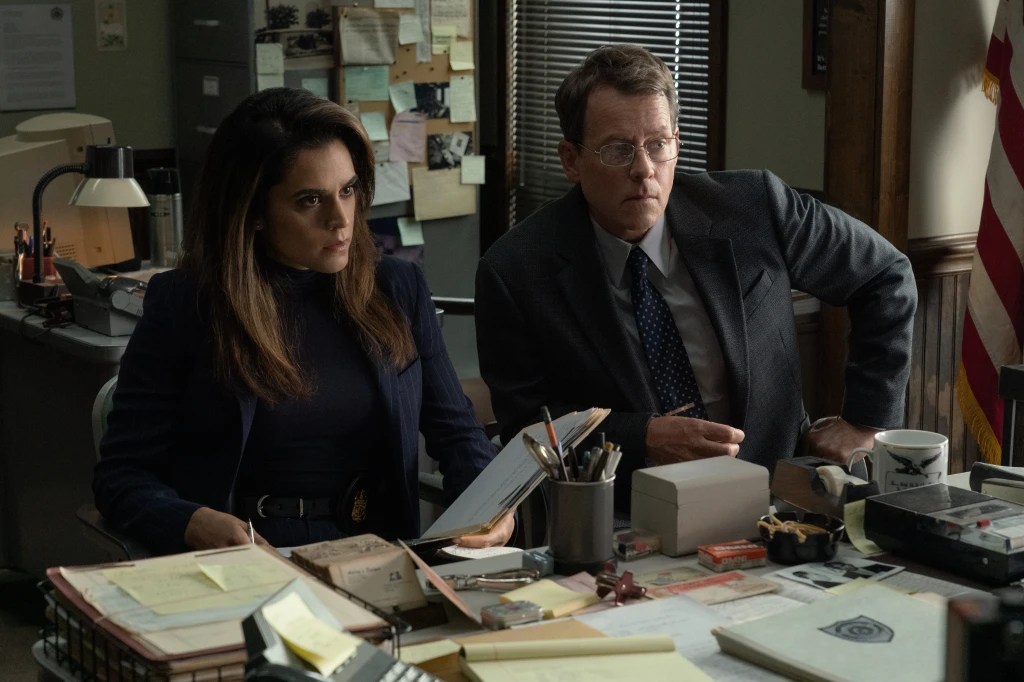
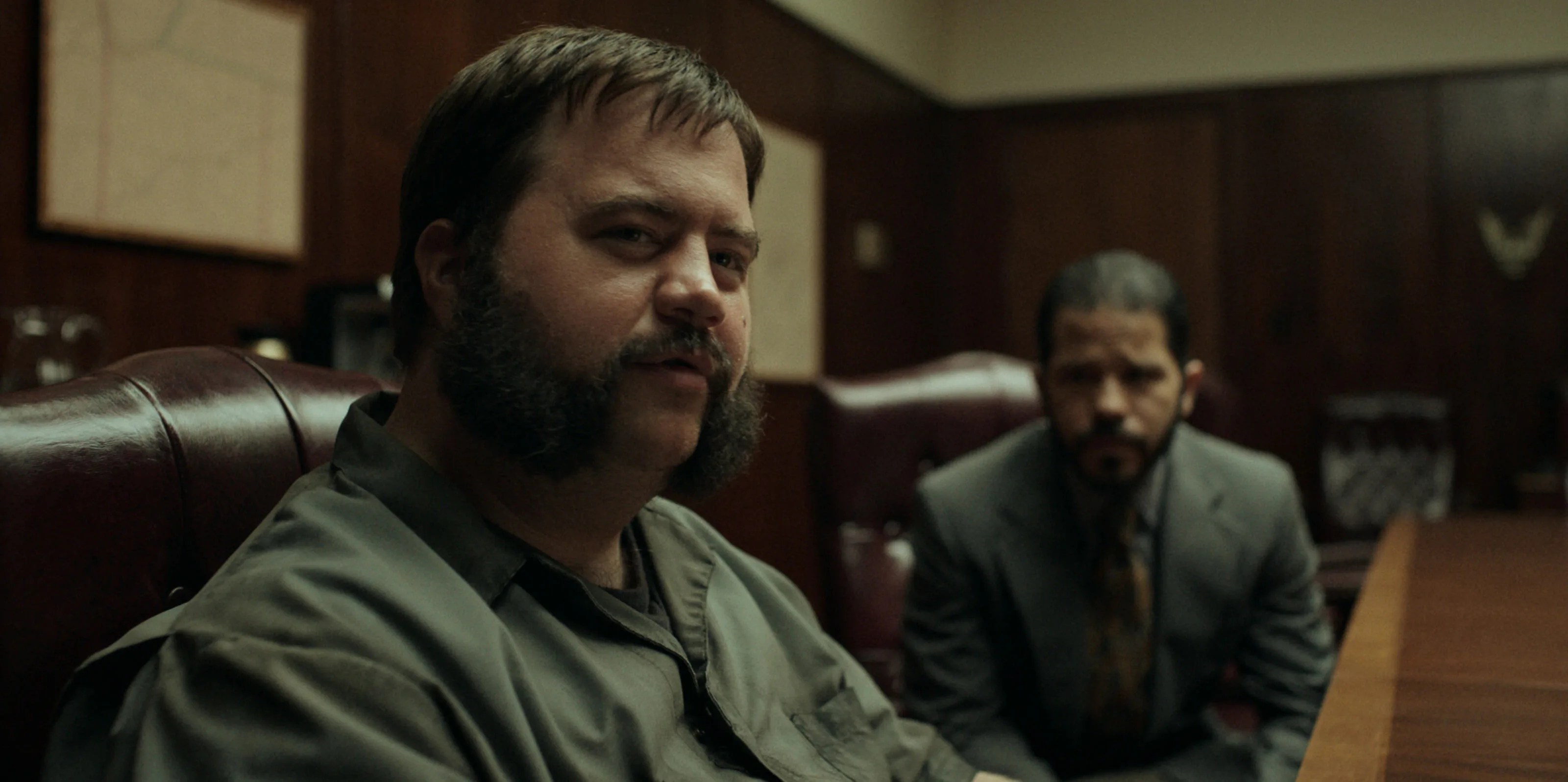
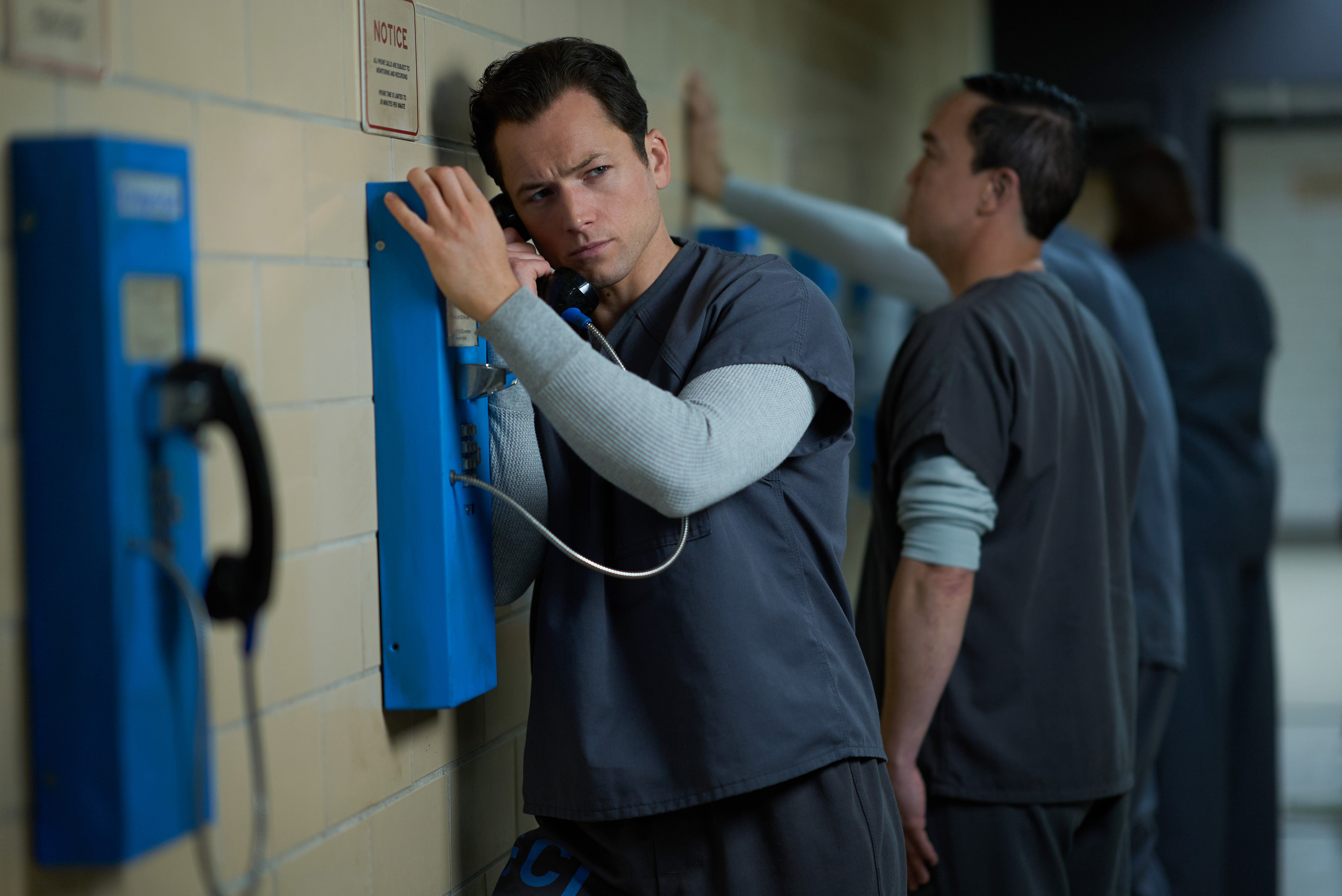
What an interesting niche Paul Walter Hauser has carved out for himself. Whatever else he’s played as an actor, a universal character we might call “Person of Interest” dominates his resume.
From “Richard Jewell” and “I, Tonya” to his new series true crime series “Black Bird,” Hauser’s almost typecast as the seemingly slow, almost certainly “off” prime suspect in whatever crime is at the heart of the action.
With “Black Bird,” Hauser goes prime suspect tour de force as a twisted serial killer who may be in prison, but isn’t wholly trapped. Not yet, anyway. Not until somebody provides him the audience he craves. Hauser’s turn is over the top and stunning to behold.
This series, developed by “Mystic River/Gone Baby Gone/Shutter Island” novelist Dennis Lehane, is based on a prison inmate’s story of being coerced into getting details and perhaps even a confession from a probable serial killer fellow inmate.
With Taron Egerton as the high-rolling, drug-dealing son of a retired cop, Hauser as the suspect who may be released on appeal thanks to the nature of his confession, Sepideh Moafi (“The Deuce,” “The L Word: Generation Q”) as a short-tempered, desperate Fed and Greg Kinnear as an Illinois sheriff’s dept. detective who first puts the pieces of the case together, “Black Bird” becomes a taut, well-cast and beautifully structured limited series that pulls us in and doesn’t let go.
It’s damned good, with equal parts suspense and mystery, a tale told in flashbacks as the prospective “snitch” Jimmy Keene (Egerton) reads the case file on the guy — Larry Hall (Hauser) — law enforcement wants to keep off the street. The flashbacks later shift back to the damaged childhoods of the new prison chums as Keene tries to develop common ground through similar life experiences with a mass murderer.
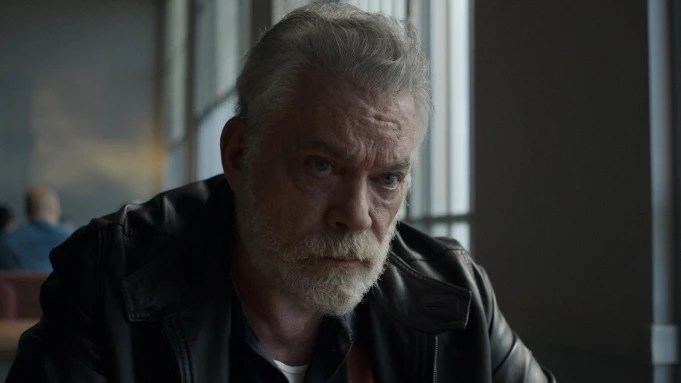
As Keene’s cop-dad is played by Ray Liotta, in a moving, magnificent and wholly-committed final screen performance, that “We’re not that different” business doesn’t seem as far fetched as you might think.
Consider all the baggage this Hall fellow carries around with him, the simpler, slower twin (Jake McLaughlin plays the smarter, more handsome one), son of a gravedigger whose childhood was more ghoulish than you could imagine. He’s a professional custodian, expert at cleaning up any mess, from a murder scene or the possibly incriminating back of his Dodge van to the aftermath of a prison riot. He’s a Civil War reenactor, with the “Burnsides” to prove it and the marching ballad “We Are Coming, Father Ab’ram” from the war committed to memory.
But as our Fed and out intrepid local detective figure out, he pretty cunning for a guy who “had that look of somebody who’d never been loved or hugged.”
Hauser pitches his voice high and slow, in the M. Emmett Walsh range, for this character, a plainly-off and quietly paranoid man who practically has the run of Springfield (Federal) prison thanks to his mechanical skills and ability to clean anything.
“In my dreams, I kill women,” he confesses, which is all Det. Brian Miller (Kinnear, excellent) needs to be off and sniffing around.
Egerton bulked up from his “Rocket Man” babyfat to become the embodiment of a ’90s drug dealer on the rise — Dodge Viper, turtlenecks and sports jackets, catnip to every beautiful woman he meets, and not just because of his access to nose candy. Keene’s journey starts to resemble a breakdown as events, bad actors and circumstances close in on him stuck in one of the most dangerous places on Earth.
Alone? This guy is as alone as they get.
There are prison complications, blackmail and an aged big time Italian mobster to contend with and the ever-ticking clock as Hall and the Feds become more and more convinced he’s going to walk out a free man, their only hope a desperate-to-shorten-his-sentence coke dealer.
The villains pile up, and then, “The Lovely Bones” enter the picture — pathos from a victim, quite unexpected in light of the rising suspense of the prison scenes, full of treachery and doom.
Some of the best scenes are the early ones, Miller’s infuriating pushback from his fellow local cops who dismiss his suspicions because they’ve dismissed their own, and Agent McCauley’s “testing” taunting and grilling Keene to see if he’s up to the job of finding common ground with a monster.
“What DON’T you like about women,” she snaps, because what they want is a guy who can connect with a man who traps young women and girls and kills them.
Liotta brings a fading-fast father’s guilt to his few scenes as Big Jim, the cop father who feels responsible for letting his son get away from him and into this trouble, and probably is.
Crime or true-crime has proven itself the most durable genre for limited streaming series, with the built-in cliffhangers, stand-offs, red herrings, underworld or here, prison — beware when the place goes “Riot Quiet” — milieus, interrogations and investigations and police procedural tropes that build in a puzzle and a ticking clock into the proceedings.
“Ozark” and “The Night Of” to “Fargo” or “Black Bird,” you can never go far wrong when you start with awful crimes and unravel the mystery and horror of them, one episode at a time.

Rating: TV-MA, violence, drug content, sex, nudity and profanity
Cast: Taron Egerton, Paul Walter Hauser, Sepideh Moafi, Greg Kinnear, Christopher B. Duncan and Ray Liotta
Credits: Developed by Dennis Lehane from the memoir “In with the Devil” by James Keene and Hillel Levin. An Apple TV release.
Running time: 6 episodes @:59 each.
“True story,” the cusp of the 19th century, Dahomey, a power in pre colonial Africa, an Oscar winning star, a sometimes good director needing to redeem herself after that Netflix bomb “Old Guard,” this September 16 release looks promising but of course this could go either way.
A November awards season contender from a marquee director. Think it might be good?
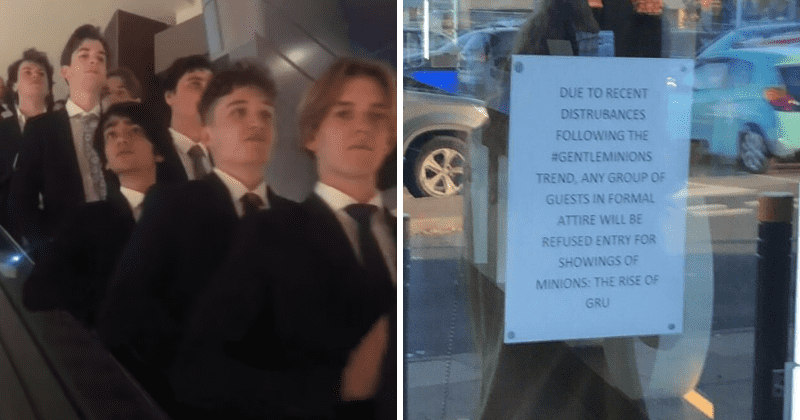

That Menace 2 Society TikTok has created another distraction that’s birthing a mini-uproar.
Teens are dressing up in suits and ties and the like and showing up, “Men in Black” attired, to “Minions: The Rise of Gru.”
They’ve created an online TikTok “cult,” as a sort of game. A mock cult based on an animated comedy whose heroes speak and sing in gibberish? OK. Fine.
Seems harmless enough on its surface, right? But some theaters and chains are seeing “disturbances” in these repeat-viewing flash mobs. In the UK and the US, this copycat behavior is being banned from cinemas. Not sure if the kids are acting out and acting up in theaters, as this seems unclear.
If it was just young white males showing up en masse at daytime screenings of a child’s cartoon, I could totally see this ban. If you’re not a little freaked out by any odd white teen boy behavior these days, you’re not paying attention. Mass shootings, anyone?
Parents complaining at teenagers messing up their experience of taking their children to a CHILD’S movie is not unreasonable. And if the teens playing at this are indeed creating “disturbances” of another sort, sure. Ban them. Theaters have shut down screenings of movies that draw gangs on the fear that rival gangs might show up.
And if you want to carry on with your #gentleminions, do it at night. Any parent dragging their tykes to see “The Rise of Gru” after 9 or 10 seems less likely to sweat a few well-dressed nerds nerding out over a very funny movie.

Who doesn’t love a good hoax? The audacity, the cheekiness of the hoaxer, losing yourself in the question of whether or not you’d have the nerve to try “Inventing Anna,” to attempt becoming “The Phantom of the Open,” much less the confidence trickster of “Catch Me if You Can,” makes such stories irresistible.
What about a hoax where the stakes are much lower, so low as to seem “just the most bizarre thing,” making those victimized by it ask “What would POSSESS someone to do that?”
“My Old School” is about a 32 year-old Scotsman who enrolled at a just-elite-enough Glasgow private school, inventing an elaborate back story and lying on the fly to explain his look, his past, his unwillingness to produce a birth certificate.
When it all came out the press labeled him “The Peter Pan of Bearsden Academy.” But some of his less kind classmates were onto something when they taunted this early ’90s enrollee with the nickname of a recently-broadcast American TV series — “thirtysomething.”
The movie is one of those what’s real/what’s fake documentaries — Orson Welles invented the genre with “F for Fake,” half a century ago — a film that presented unique challenges that encouraged a unique solution.
The 32 year-old who called himself “Brandon Lee,” same as the then-recently-deceased martial arts and film star and son of Bruce Lee, agreed to be interviewed for the film, just not on camera. So the director talked the Scottish stage and screen star Alan Cumming to come in, master the guy’s lines and lip-synch the picture, every line “Brandon Lee” speaks acted-out by Cumming.
Filmmaker Jono McLeod got many classmates and a few surviving teachers to sit down for interviews. And for the flashbacks, he hired animators to recreate the early ’90s school and pop culture in the style of that early MTV hit “Daria.”
The resulting film is a fascinating mystery, a weird case study and an unalloyed delight.
Part of the joy of it is how amused the former students — who went on to become an actress, a mixed-martial arts fighter, a pharmacist, a chiropractor and so on — seem to be at having been fooled, and at how the snobby school was utterly buffaloed by this stunt.
There are any number of places this story could have turned sinister — a secretive, sketchy grown man mixing and mingling with high school kids, impressing their teachers, stealing their thunder and starring in the class musical (It sounds like Cumming sings the animated snippets of “South Pacific”).
The play required an on-stage kiss between “thirtysomething” and a 16-year-old classmate. “Icky.”
But the deeper we get into this documentary, the more we learn about this fellow’s motives, the more questions we — and the reconsidering classmates — have, and the more we and they have to chew on the unreliability of memory.


McLeod makes “My Old School” a nostalgic catalog of the pop culture of the day — “Brandon,” secretive and slow to socialize, making a few friends, driving them in his car (a CLUE) to see “Muriel’s Wedding,” passing on mixtapes not of Ace of Base, R.E.M., UB40, The Pet Shop Boys or Scotland’s own The Proclaimers, but of late ’70s-early-80s punk like Black Flag, television and Hüsker Dü.
Yeah, that another clue, the now-adult kids realize.
And then there’s this man-among-kids influence on school culture and social life, a delightful turn that starts with having somebody around who “knew how to mix cocktails,” but who also helped more than one student with his studies and brought social outcasts into a new social orbit via “Brandon Lee’s” approval.
The real Lee’s story has bits of pathos and misdirected energy, but also cunning and entitlement. If his classmates, interviewed in a classroom at old school desks, can’t quite form an opinion of him, what chance do we have?
The film’s third act turn towards the light side plays with those faulty memories and takes on a “28-Up” tone as we see how the kids have turned out, despite or perhaps because of this disruption of their last year of childhood by this stranger in their midst and the media circus that erupted when it all came out.
I don’t know if there’ll be a feature film on this subject (I seem to recall this project starting life along those lines), but it’s a natural — the dark parts of “Catch Me if You Can” married to the lark of it all of “Phantom of the Open.”
Perhaps Alan Cumming can play the earnest but self-important head master. Be a shame to leave him out of it.

Rating: unrated, some profanity
Cast: Alan Cumming, Juliet Cadzow, Dawn Steele, David Tattoo Dave McKinlay, with the voices of Lulu and Clare Grogan,
Credits: Scripted and directed by Jono McLeod. A (July 22) Magnolia release.
Running time: 1:44
Ever since the first trailer to Taika’s latest take on Thor I cannot get this damned tune out of my head, one of three GNR tunes in the tale.
A fourth Guns N’Roses tune turns up in the open to Apple TV’s “Black Bird.” A band having another moment?
I remember when this tune was new, how Mickey Mouse it seemed in light of the classic rock era that preceded it. But it’s terribly touching emotional shorthand in the trailers and the movie.
Nah, we don’t believe the camera tricks that put petite Natalie Portman in the frame with Man Mountain Oz Chris Hemsworth. But the tune resonates in a sort of love long lost but refound way.
This version? No Axl? No prob. It’s Slash’s tune anyway.

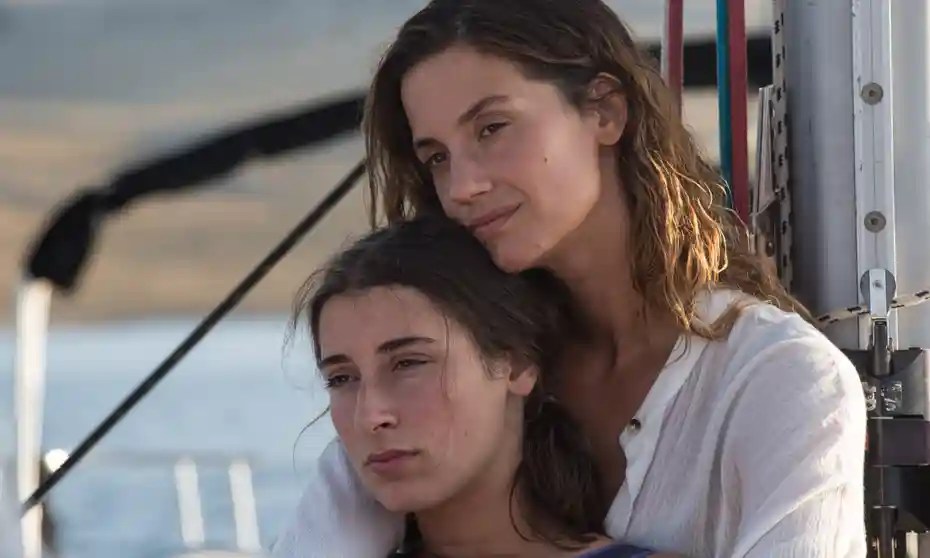
The Moray eel is a scary-looking sea creature that’s only really dangerous when it’s cornered. But hiding in the cracks and crevices of the deep, hunted as a delicacy, it’s pretty much “cornered” by default.
That makes it an apt metaphoric title for Croatian filmmaker Antoneta Alamat Kusijanovic’s debut feature. “Murina” is Croatian for Moray eel. And this Cannes award winner for Best First Feature is about a dangerous and slippery subject to be wary of, even if you think you’ve got a handle on it — teen sexuality.
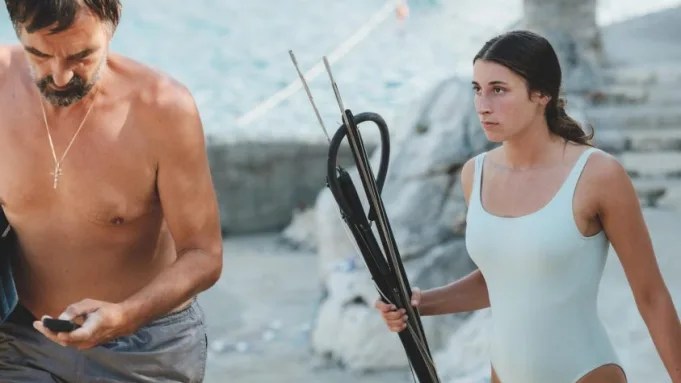
A teenage swimmer who has grown up on Croatia’s Dalmatian Coast is just old enough to bridle at her overbearing, bullying father’s control, how it impacts her mother and limits her own future. And in a scheme that has hints of “Lolita” and “Knife in Water” about it, she decides she’ll replace him with Dad’s rich, childhood friend, the Spaniard Javier.
Gracija Filipovic is Julija, 17 and just girlish enough to suggest her immaturity, just mature enough to alarm her ex-beauty queen Mom, Nela (Danica Curcic).
“What are you doing naked?” Mom hisses, as Julija has never shed her swimsuit-all-summer fashion choice. And “Stop LOOKING at him like that,” she hisses again, when inexperienced Julija can’t help but gawk at the sex appeal of rich and laid-back Javier, given a flirtatious edge by veteran character actor Cliff Curtis, of “Hobbes and Shaw,” “The Meg” and “Doctor Sleep.”
In this isolated island village, we see no locals Julija’s age, hear no hint of a “boyfriend.” “Paradise,” her bossy father Ante (Leon Luvec) calls it. “Paradise” Javier repeats when he returns to the scene of “many adventures” he had with her dad before becoming a Business Week cover-mogul.
Julija, ordered around like an employee by her father, is deep into her resentment over that, his hair-trigger temper and boorishness. Javier’s arrival coincides with her growing feeling that “There’s more to life” than this. There might even be more than Dad’s scheme to sell a chunk of the island to Javier for “a resort,” so that they can move and buy an apartment in Zagreb.
The contrasts between the men are obvious, but not archetypal. Javier is kind, solicitous of her and plainly aware of her and her equally-bullied mother’s plight. Ante is frantic, short-tempered, desperate to make this deal with a rich “pal” who might just be looking for a few days on vacation, lost in his more romantic past.
“If he gets this, he’ll be calmer,” Nela assures Julija (in Croatian with subtitles).
“If he gets money, he will be worse,” all-knowing Julija spits back.
As Javier used to have a thing for Nela, that becomes Julija’s first line of attack. And if that doesn’t work, what might be her Plan B?
Kusijanovic immerses us in this world of salt water blues and arid Mediterranean shores. Silent free diving — holding their breaths as father and daughter snorkel down to nab dinner — give Julija blissful isolation, with a hint of danger. There are a lot of ways to drown, poking around holes where the Murina eels hide. And then we take note of the spear guns.
As the sales banter with Javier turns from trying-too-hard (in English) to off-putting, Julija’s “acting out” gains consequences as she ups the stakes. Luvec (“The Load,” “The Miner”) paints Ante’s outrage at this in shades of insecurity. Like all bullies, the cards he has to play are limited. In front of the friend he needs to badly, he can’t slap his daughter silly, and she knows it. Insulting asides — “You have a boy’s shoulders” — is his calmest put-down.
Curcic (of Netflix’s “The Bombardment” and Spike TV’s “The Mist”) gives Nela a sort of haplessness in the face of her increasingly sexual daughter’s “power” to manipulate these two men, both of whom are much older than her, much less the manipulative teen she sees goading them on.
“Murina” is the sort of engaging and tetchy drama that keeps you guessing if it will cross into thriller, right up to the very end. Kusijanovic has given us a “Lolita” without exploitation, a “Knife in Water” with spear guns, and a disturbing riff on toxic masculinity and rash teenaged impulses simmered in a seaside chowder of sex and gamesmanship, making for a dazzling first feature.

Rating: unrated, violence, adult themes
Cast: Gracija Filipovic, Danica Curcic, Leon Luvec and Cliff Curtis
Credits: Directed by Antoneta Alamat Kusijanovic, scripted by Antoneta Alamat Kusijanovic and Frank Graziano. A Kino Lorber release.
Running time: 1:38

 Movie Nation