Movie Review: Koreans repel the Japanese in the 16th Century Naval epic, “Hansan: Rising Dragon”

“Hansan: Rising Dragon” is a Korean naval war epic that takes us into the actions — before and during a series of sea battles in the 1590s — of Korea’s great naval genius, Admiral Yi Soon Shin.

It’s a sprawling and dense period piece with a fleet’s worth of characters moving from bases and fortresses, to land campaigns, shipyards, fractious war councils and battles on board armored galleys. Here, all that is boiled down to the bloody chess game and military innovations of competing admirals — the Japanese “Wae” invader Wakizaka (Byon Yo-han) and the “righteous” defender of Joseon (the Korean peninsula dynasty), Yi Soon Shin (Park Hae-il).

For a Westerner, think of it as being more “300: Rise of an Empire” than John Woo’s Chinese “Red Cliff” epic. It’s a CGI-assisted old-fashioned flag waver filled with chaotic combat in which the day is always saved by the sudden lifting of this fog, the shocking arrival of that surprise fleet or the out-of-nowhere cannon balls that forestall the certain doom ready to befall this or that brave, patriotic Korean.

The phrase “It’s a TRAP!” (in Korean, with English subtitles) erupts so often I half-expected “Star Wars” Admiral Ackbar to make his presence known. But he’s here in spirit.

Set during the most perilous phase of the Imjin War, we learn that the Wae — fresh from staging the largest seaborne invasion in history (to that point) are on the brink of total conquest of the Korean peninsula, with only cunning Admiral Yi Soon (sometimes spelled “Sun”) Shin and his fleet of galleys in the country’s southern region standing in their way.

The “secret weapons” of this conflict are the the Koreans‘ “turtle ships,” covered galleys called Geobukseon with bronze dragon head rams in their bows which terrorized the Japanese, whose smaller galleys — some of them armor plated, had enough to deal with in fighting the bigger, more heavily-built Panokseon galleys that were the main Korean combat vessels.

Much of the movie has this admiral strategizing with his subordinates to figure out the weaknesses of the other side. Covered “turtles” may have spikes on their backs to prevent boarding, but are blind to what they’re charging into. The Koreans didn’t try to rapidly reload their cannons. They used their superhuman rowers to spin the ship around to bring a fresh broadside of cannons to bear on the enemy after each volley. The Japanese schemed to exploit these weaknesses with their smaller, quicker, more lightly-armed and far more numerous galleys, which sought to board the enemy and win the fight with samurai wielding their katana swords.

There are spies and saboteurs, and the war councils threaten to dissolve into infighting blood feuds — especially among the hotheaded Japanese warlords.

All of which are just the preliminaries leading to an epic sea fight, an Asian version of the Greco-Persian Battle of Salamis with enemies in rowing galleys battling among the rocks and narrow passages of a strait littered with islets and islands.

Only those deep into naval history — or Korean history — will have heard much about these titanic struggles in the seas off Korea, or be all that interested in a movie about it. There’s a reason the West has never produced a proper epic about the Battle of Lepanto, Europe’s last great galley battle, which thwarted the Ottoman Turks from pouring into central Europe and Italy and happened over 20 years before the Battle of Hansan Island. This sort of overpopulated war picture is complex and expensive to put on the screen, makes for seriously cluttered storytelling and has limited appeal, being about mostly-forgotten pieces of history.

Leading up to its Big Action Finish, “Hansan: Rising Dragon” is an oft-unwieldy film, struggling to keep the many fields of conflict and layers of intrigue straight.

Technically, writer-director Kim Han-min shows off period-appropriate firearms, armor, tactics and hardware, and galleys scooting through the water like Jetskis. There was a lumbering, slow-motion nature to this two thousand year era in combat, with the ships too heavy to move without armies of enslaved (in the Middle East and West) rowers. The number of two-man oars dipping into the water here could never propel these vessels at those speeds, something “Hansan” ignores for the sake of fast action.

See “Ben-Hur” for examples of why that makes no sense. And remember, the Spanish Armada battles of just a few years before (1588) had already turned Europe away from labor-intensive rowed galley combat close to shore and to sailing galleons, caravels and later frigates and ships of the line fighting it out under sail.

But “Rising Dragon” still makes a fascinating film version of a “further reading” history lesson, a reminder of the historical enmity between Korean and its avaricious, warlike neighbor and why Koreans in the film and in the modern day regard this as a “battle of the righteous against the unrighteous.”

Rating: unrated, violence

Cast: Park Hae-il, Byon Yo-han

Credits: Written and directed by Kim Han-min, based on the graphic novel “Yi Soon Shin.” A Well Go USA release.

Running time: 2:09

Posted in Reviews, previews, profiles and movie news | Comments Off on Movie Review: Koreans repel the Japanese in the 16th Century Naval epic, “Hansan: Rising Dragon”

Movie Preview: Stallone takes a late-life stab at superheroing — “Samaritan”

MGM and Sly get into the unkillable superhero business with Sylvester Stallone in this “Death Wish” vengeance-driven thriller, Aug. 26.

Posted in Reviews, previews, profiles and movie news | Comments Off on Movie Preview: Stallone takes a late-life stab at superheroing — “Samaritan”

Movie Preview: A South American country reminds us how you prosecute traitors — fearlessly, and swiftly — “Argentina: 1985”

Coming soon to Prime Video, a legal thriller with the highest stakes possible.

Posted in Reviews, previews, profiles and movie news | Comments Off on Movie Preview: A South American country reminds us how you prosecute traitors — fearlessly, and swiftly — “Argentina: 1985”

Movie Preview: A bank robbery goes sideways, as an act of protest — “Breaking”

A big turn by John Boyega, with support from Nicole Beharie, Connie Britton and Michael K. Williams.

An African American Georgia-set “Dog Day Afternoon” is the pitch, and this looks very good.

Aug. 26, from Bleecker Street.

Posted in Reviews, previews, profiles and movie news | Comments Off on Movie Preview: A bank robbery goes sideways, as an act of protest — “Breaking”

Movie Review: “DC League of Super-Pets” is a comic book movie for the Garanimals Generation

There are movies born of obvious inspiration and perspiration on the part of all involved, and then there is “content,” manufactured to maximize potential profits from a piece of intellectual property.

That’s what the comic book adaptation “DC League of Super-Pets” is. Warners owns the rights to everything in the DC Comic Book Universe, and if Marvel can make a mint over an animated “Spider-Man,” “Why not us?”

They rounded up a big-name voice cast for this dive into the younger-kids-skewing “Super-Pets” comics. They cooked up an origin story of how Superman’s dog, Krypto, came to Earth and how denizens of a rescue pet shop acquire similar super-powers and help Krypto help the Justice League out when Superman, Wonder Woman, Batman, Cyborg, Aquaman, Flash and Green Lantern get in a jam.

It’s formulaic, rarely funny and seriously cynical for a movie aimed at small kids. But a couple of moments have a lovely and quite-unexpected pathos to them, about the relationships people — even superheroes — develop with companion animals. That doesn’t atone for some of that milk-our-IP-for-every-cent-it-can-earn cynicism. Still, it’s something.

Dwayne Johnson voices Krypto, given his own cape and partnering duties with Superman (John Krasinski) as part of their normal “Wake up, it’s WALK o’clock!” dog-owner relationship. Krypto’s a classic side-kick, there to carry half the load when an explosion knocks out a link of elevated train tracks, which always happens in superhero movies.

Kevin Hart voices Ace, a bull-terrier mix and longtime inmate at a pet rescue store, waiting — like PB the pig (Vanessa Bayer), Chip (Diego Luna) the squirrel and Merton the sometimes potty-mouthed turtle (Natasha Lyonne) — “to feel the warm embrace of a middle-aged person who lives alone.”

They share their space with the hairless lab-experiment guinea pig Lulu (Kate McKinnon) who harbors delusions of supervillain grandeur.

When Lex Luthor (Marc Maron) comes up with yet another Kryptonite scheme to foil Superman, aka “Mister Outside Underpants,” Krypto has bigger problems than fretting over Lois Lane coming between him and his best buddy. And the rescue critters find themselves endowed with super powers.

The gags here come from TV coverage, which features jokey graphics underneath this or that extraordinary calamity suggesting a “wealthy person actually goes to jail” and the like. There’s a funny-at-first, progressively more lame as it is repeated “smooth jazz” riff, a few “dookie” jokes and the extremely nearsighted turtle voiced by Lyonne comes close, time and again, to actually swearing.

“I can’t see (bleep)!”

Krypto gets starchy, stentorian prerecorded advice from his Kryptonian dad (Keith David, quite funny), the only pets picked for adoption at the shelter are kittens (who are evil), and Lulu keeps shrieking her views on world domination, which humans only here as the irate squeaks of a petulant pet.

The heart-tugging bits spin out of how Krypto followed baby Kal-El from Krypton and how Ace came to be in a rescue shelter.

The big-name voices rarely pay dividends, as only Lyonne and McKinnon have much in the way of fun with the characters. Johnson always makes an effort, but Hart — saddled with even fewer laugh-lines — pretty much phones it in. And even he put more into this than Marc Maron, the dullest Lex Luthor ever.

Keanu Reeves brings his best brooding, deadpan take on Batman, muttering about how he doesn’t want a pet because “I work alone…except for Robin…and Alfred…and whoever that guy was that Morgan Freeman played.”

The CG-assisted animation’s good, if nothing special. The messaging?

“You don’t have to have superpowers to be a hero.” Words to live by, kids.

“Super-Pets” doesn’t add up to much, not for adults sitting through this with the kids, anyway. But eight-and-unders? They’re down for dookie jokes and the almost-saying-“a-bad-word” Merton the turtle. A little more of that might have above this one above “mediocre ‘content,’ with a smidgen of heart.”

Rating: PG, innuendo

Cast: The voices of Dwayne Johnson, Kevin Hart, Kate McKinnon, Diego Luna, Vanessa Bayer, Natasha Lyonne, Marc Maron, John Krasinski, Jemaine Clement, Daveed Diggs, Keith David and Keanu Reeves.

Credits: Directed by Jared Stern and Sam Levine, scripted by Jared Stern and John Whittington. A Warner Brothers release.

Running time: 1:46

Posted in Reviews, previews, profiles and movie news | Comments Off on Movie Review: “DC League of Super-Pets” is a comic book movie for the Garanimals Generation

Classic Film Review: Sex After Marriage gets complicated for “Dona Flor and Her Two Husbands (1976)”

A widow finds herself missing her abusive trainwreck of a late husband after she remarries in “Dona Flor and her Two Husbands,” a Brazilian classic that’s been remade under many titles, and even became a Brazilian TV series.

Racy, quite sexy for its time and for decades the most popular movie ever made in Brazil, the 1976 breakout feature of director and co-writer Bruno Barreto has been restored in all its lurid, colorful, slice-of-1940s Brazilian glory for a re-release.

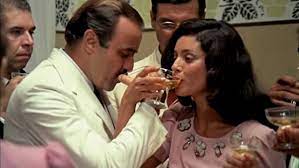
It’s a gorgeous period piece, vividly recreating a lively Salvador, Bahia, Brazil during World War II. That’s where we meet the drunken, handsome partying playboy Vandinho. It’s Carnival time, and he’s in drag with a mob of his mates, tipsily crooning along with a guitarist by the dawn’s early light until he keels over and drops dead.

His wife Dona Flor (Sônia Braga) runs to his side and wails, and as the women of her neighborhood comfort her, the funeral preparations begin and the men start to tell stories, a comically contrasting portrait of the blond rake (José Wilker) emerges.

He was “a gambler and a whoremonger,” the ladies cluck, in Portuguese, with English subtitles. His wedding ring? “He never wore it,” maybe because of the womanizing, more likely because “he lost it” in a bet. “And he BEAT her.”

The men lament the loss of their louche life-of-the-party. He always had an eye for “the stars, the dice and whores,” they chuckle. Roulette wheels all over town should stop spinning in tribute.

A boorish brute and a charmer he was. And a rascal. And since this was Brazil in 1943, that one time he slapped Florípides when she wouldn’t surrender her savings during a gambling binge, his fellows — at least — are willing to let that slide.

But a long flashback takes us through their lives as a couple. Florípides runs a cooking school, and we see her recall preparing (in sumptuous detail) his seafood favorite dishes. It’s just that there’s no indication of where HIS money comes from. What keeps him in white linen suits, always a high roller with the dice, always betting on “red” at the roulette wheel, always bluffing at the after-hours poker game at the funeral parlor?

There’s someone at the door? Twenty reales says its about a dead MAN, not a woman!

Valdomiro or “Vandiho” is quite the charmer, running tabs, flirting with every good looking woman in town — hookers, casino singers, his wife’s culinary students. He leans on his local priest for stake money for his latest sure thing bet, and the padre is almost sold.

And Vandiho is an uninhibited lover. We almost don’t need to see him in action with his wife to figure that out.

Sensuality just oozes out of this film — Vandinho, sitting on a streetside windowsill, lounging about in his underwear, buxom women all up and down the street spilling out of their windows, and bodices to see him and appreciate the show.

But all that carnality leaves Florípides’ life when she dons the black dress. Remarrying the respectable, socially upstanding pharmacist (Mauro Mendonça) improves her life in every regard — save in the bedroom.

She ignores the warnings from the bruxa, conjure woman (witch) who suggests there were and are steps to make sure her late husband’s soul is “at rest.” That’s how her mostly-silent longings for that “excitement” in her life result in his ghostly return — mostly nude, entertaining her reluctant — “I am MARRIED now!” — sexual fantasies, sitting on their wardrobe, cackling at Dr Teodoro Madureira’s clinical, perfunctory love-making. Only she can see him as he joins them in their marital bed each night.

“Dona Flor” was a Golden Globe contender in its day, and quite notorious. Its closing image is as iconic as the final shot of films like “The 400 Blows” — a happy trio, emerging from church on Sunday, promenading down the rua and across the square, with naked Vandinho arm in arm, grabbing Flora’s bottom.

Barreto, already a veteran filmmaker with two features under his belt and yet just 21 when this film came out, went on to successfully adapt another Jorge Amado novel, “Gabriela,” with Braga, hit another high water mark with “Four Days in September” and make a mostly-forgotten string of also-ran dramas and comedies such as the Gwyneth Paltrow flight attendant sex romp “View from the Top.” He was married to Steven Spielberg’s ex, Amy Irving, in the ’90s.

Braga became a fixture in Brazilian and then international cinema with “Kiss of the Spider Woman,” and was most recently in “Wonder,” “The Jesus Rolls,” “Fatima” and TV’s “Luke Cage.”

And “Dona Flor” went on to be remade, again and again, with Hollywood’s laughably PG “Kiss Me Goodbye (1982) starring Sally Field and Jeff Bridges as the newlyweds, with James Caan the rake and gambling man she never got over, the worst of the lot.

Perhaps the main reason this classic been so ripe for remakes is that the original, colorful as it is, has some pretty slack storytelling, a 90 minute yarn squeezed into a 110 minute sex farce. The long flashback detailing Vadinho’s excesses is marvelous. The pharmacist’s staid and upper class speeches (to his fellow pharmacists), musicales and starchy parties just go on and on.

But it’s still funny, still gorgeous to look at. And if Wilker smirks, leans and leers off the screen, Braga positively shimmers as a woman who can’t always get what she wants — not in one package, anyway.

Rating: R, sex, nudity, domestic violence

Cast: Sônia Braga, José Wilker and Mauro Mendonça

Credits: Directed by Bruno Barreto, scripted by Bruno Barreto and Eduardo Coutinho, based on a novel by Jorge Amado. A Film Movement restoration and re-release.

Running time: 1:50

Posted in Reviews, previews, profiles and movie news | Comments Off on Classic Film Review: Sex After Marriage gets complicated for “Dona Flor and Her Two Husbands (1976)”

Netflixable? A tale of brothers, race and South Africa just after Apartheid — “Amandla”

“Amandla” is a South African siblings saga built on the classic “one brother becomes a cop, one a thief” formula.

An unconventional setting gives the film a certain novelty — South Africa just before Nelson Mandela was released from prison, and years after he was elected president and Apartheid was over. But writer-director Nerina De Jager’s film frustrates as it struggles and stumbles to add a racial subtext to hang an essentially Zulu story upon, and some of the performances don’t measure up to others.

The story opens with two little boys hunting birds, their jobs on an estate run by what we take to be pretty liberal if still quite patriarchal Boers. Little Impi (Thabiso Masoti) has just turned 11, and is the tougher sibling, the one who has to wring a wounded game bird’s neck. Nkosana (Bahle Mashinini) may be taller, but he’s younger and not as tough.

They work, help their parents and joke around about the music they overhear from the owners.

“You wanna know why they’re white? They all died listening to this music. They’re GHOSTS!”

But Mom has a warning about this “very important day for the whites,” Dingaan’s Day, a white nationalist South African holiday celebrating a victory over the Zulus. The boys should be on their guard, as the most virulent and violent racists might use it as an excuse to act-out.

On that day of all days, Impi helps his friend, Elizabeth (Jeanique Fourie) from the white landowner’s family learn to use a bow and arrow. She kisses him within the sight of local ruffians, and that sets off a chain of events that dooms the boys’ parents.

“Amandla,” which takes its title from the “Power to the People” slogan of anti-Apartheid activists, first goes a little wrong as the boys see their father’s dead body and flee, stopping just long enough to see their mother murdered. These boys don’t cry. They don’t react at all to what they’ve witnessed.

Years later, Impi (Lemogang Tsipa) has become a near legend as a “ghost,” a burglar who never gets caught. He’s kept himself and Nkosana alive and on the streets. But now the younger brother (Thabo Rametsi) is ready to become a policeman in Nelson Mandela’s South Africa, “to restore justice,” he says.

Impi may talk of returning to their native Kwazulu, but he’s got a girlfriend and a baby on the way in Soweto, so that’s where he moves. On the evening of his first day there, he’s kidnapped by a gang and blackmailed into working for Shaka (Israel Matsete-Zulu), trapped and forced to go along on their versions of breaking-and-entering, where murder and rape are commonplace.

At times, it seems as if De Jager (“The Greenwich Village Massacre”) has seen melodramatic thrillers that use this formula, but is too impatient to stick to what works. We get one brief entrance-day speech at the police academy where the force demands that all new recruits enforce the law “without prejudice” — for a change. We never really see evidence of Imbi as any sort of master thief whose skills are in demand.

That makes the film’s turn towards tragic melodrama ring hollow. Its efforts to tie the past to the present play as an afterthought.

“Amandla” has no emotional core. This potentially riveting drama about siblings and violence and a country going through one of the most astonishing political/racial transformations in history has barely a moment that moves or inspires. Too many of the performances lack much in the way of heart, either.

The idea was here, but the execution was pretty much botched. Perhaps Netflix should pay closer attention to the resumes in the many countries where it does business, as this sort of “bad filmmaker makes a not-all-it-could-be film” surprise happens over and over again, all over the Netflix world.

Rating: TV-MA, graphic violence, profanity

Cast: Lemogang Tsipa, Thabo Rametsi, Thabiso Masoti,
Bahle Mashinini, Jeanique Fourie and Israel Matseke-Zulu

Credits: Scripted and directed by Nerina De Jager. A Netflix release.

Running time: 1:46

Posted in Reviews, previews, profiles and movie news | Comments Off on Netflixable? A tale of brothers, race and South Africa just after Apartheid — “Amandla”

Movie Preview: A new Neil Labute thriller starring Diane Kruger — “Out of the Blue”

Labute was the king of toxic masculinity takes back in the day. Here, he’s got a “Double Indemnity/Body Heat” thing going on with Kruger calling the shots, Hank Azaria as the husband and Ray Nicholson as the hapless pawn lured to commit murder.

I’m just spitballing that plot, but that usually the way these things play out. Labute should make it twisty and interesting.

Quiver has this Aug. 26 release.

Posted in Reviews, previews, profiles and movie news | Comments Off on Movie Preview: A new Neil Labute thriller starring Diane Kruger — “Out of the Blue”

Movie Review: Paranoid, hallucinating, self-harming, but sure, he’s a “Hypochondriac”

Properly paranoid and just trippy enough to be triggering, Addison Heimann’s “Hypochondriac” takes us into one tortured life and the troubled past that led to it.

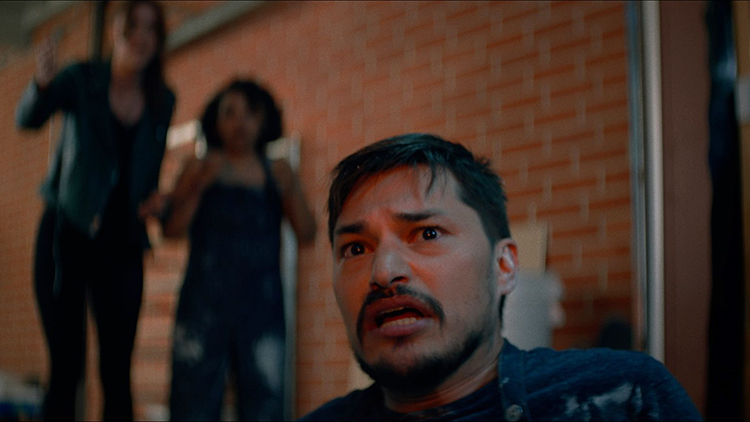
A prologue sets up the trauma to follow. Young Will, whom his manic, prattling Puerto Rican mother (Marlene Forte) calls “Lindo” (pretty boy) creates what he figures will be a happy Halloween memory in a wolf costume. But the sounds of shattered glass signals another of his mother’s episodes.

If “Pack a bag, we’re LEAVING” isn’t answered quickly enough, she’ll fly off the handle. “You’re in COLLUSION with him!” And that leads, on one memorable night, to her hands wrapped around his neck, coming so close to strangling Will to death that he has to wear a turtleneck to Little League practice.

Eighteen years later, Will (Zach Villa) outwardly seems over and done with that traumatic childhood. He’s a happy potter, dancing his clays to the kiln for baking, in a relationship and high on life. And occasionally mushrooms.

But a colleague’s panic attack shows Will’s other skill, one hard won in his difficult childhood. He knows how to talk people out of their weeping, fetal crouch.

And Mother’s Day is coming, which means his other half Luke (Devon Graye) wants them to visit his mother. Whatever Luke doesn’t know about Will’s past, his “my mother’s been dead most of my life” hints he might not be up for that. But sure, it’s a brunch date it is.

Will hasn’t told Luke much, which makes the paranoid text messages from “Mom” and hallucinations he starts to have other things he can’t broach with his new love. Mom is as manic as ever.

“You must become a private INVESTIGATOR,” she insists, at one point.

But dizzy spells, headaches, arm injuries and the like while working around a white hot kiln? It’s time to see a doctor.

Writer-director Heimann’s debut feature does well at keeping Will’s uncertainty about what ails him in doubt. Could this be all in his head? “Just stress,” his frat-bro doctor insists. But, all these symptoms…what about ALS, schizophrenia?

“Duuuude,” frat-bro doc advises, “don’t GOOGLE.”

But as visions of wolves and his nutty mother persist and self-harm becomes a real concern, if Will isn’t googling, at least he’s getting second and third opinions. So are we.

“Hypochondriac” makes a broad spectrum of the medical profession a running gag. Every doctor, specialist and shrink has the same sassy Pomeranian poster on the wall, the wone with “Be bright like glitter and bubbly like champagne!”

That contrasts with the many manifestations of Will’s mother’s illness — nonsensical packages, insane voice mails, threats, pleas. His disinterested, nonchalant father (Chris Doubek) even cracks a faint smile when he suggests the son is turning out just like the kid’s mother.

It doesn’t come together nearly as neatly as you’d like. But “Hypochondriac” manages a few chills and some eyes-averting gore thanks to Will’s memories of what happened and how close he is to repeating the awful past he grew up in.

Rating: unrated, graphic violence, explicit sex, profanity

Cast: Zach Villa, Devon Graye, Marlene Forte, Yumarie Morales and Chris Doubek.

Credits: Scripted and directed by Addison Heimann. An XYZ release.

Running time: 1:37

Posted in Reviews, previews, profiles and movie news | Comments Off on Movie Review: Paranoid, hallucinating, self-harming, but sure, he’s a “Hypochondriac”

Movie Preview: Ti West’s prequel to his ’70s horror porn hit “X” — “Pearl”

Mia Goth played Pearl in “X,” and she figured her back story had another movie in her.

Ti West agreed. A24 has this, you say? Of course.

Posted in Reviews, previews, profiles and movie news | Comments Off on Movie Preview: Ti West’s prequel to his ’70s horror porn hit “X” — “Pearl”