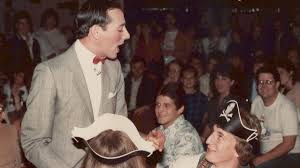
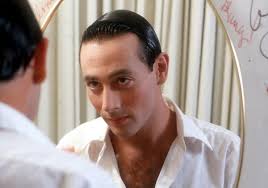
I once got an angry and wounded piece of hate mail from Judy Rubenfeld, an annoyed Sarasota, Florida retiree who didn’t appreciate my inclusion of her son’s lowest moment — his arrest in a porno theater string in this hometown — as one of twentieth century American pop culture’s 100 Moments of Infamy.
This was before Paul Rubenfeld, aka Paul Reubens aka Pee Wee Herman, was welcomed back from the pre-cancel culture wilderness, and even that was too late to resurrect his career or make his last years the triumph he’d enjoyed in his prime. She might have had a point.
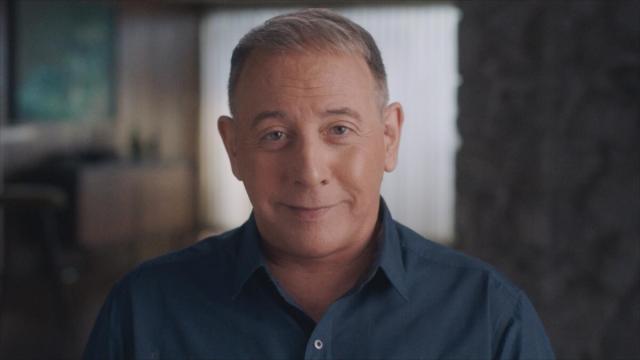
But her son — “out” then closeted, popular then a pariah, self-creation or credit hog — was a complicated guy, something we get a close look at in Matt Wolf’s celebratory but absurdly thorough, warts-and-all portrait of Reubens. “Pee Wee Herman as Himself.”
Wolf got Reubens to sit for 40 hours of something testy interviews — Reubens wanted control and gives the impression he initiated the project, first appearance to last. He died of cancer shortly after filming was finished in late summer of 2023, a cancer he hid from everyone, including the filmmaker, who talks Reubens out of this or that bit of manipulation and into this or that corner of divulgence.
Paul himself speaks of his lack of “perspective” on his own life — or lives. But he gives us a decent blow-by-blow of his life and his feuds in his words and his version of the truth.
No, he doesn’t apologize to those he “stepped on” along the way. “It’s show business.” So Phil Hartman fans will have to wait for a Phil Hartman bio-doc to get his side of the credit theft of Pee Wee’s warped and witty imaginary world.
Tim Burton, Reubens points out, got the lion’s share of the credit for the daffy, childish and colorful “Pee Wee’s Big Adventure,” and the star resented the director forever after.
Pee Wee Mania burned white hot — PALE white hot — across American culture in the mid-to-late-80s.
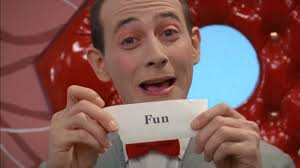
Paul Reubens‘ alter ego, the eternal “weird” man-child of “The Pee Wee Herman” stage show, “Pee Wee’s Big Adventure” and “Big Top Pee Wee” on the big screen and the absurdist “Pee Wee’s Playhouse” kiddie show was an inescapable presence and pop culture icon and presence of his day. He inspired catch phrases, mass cosplay — especially at Halloween — and brought “Tequlia,” classic bicycles and “dare to be different” into every corner of the country.
The film about Reubens’ rise from a kid who grew up in the winter-quarters circus town of Sarasota, studied acting at the famed Asolo Theatre there, got the bug to go West to LA to join the Groundlings and invent one character that made his name and fame, and his slow fade that turned into an abrupt masturbating-in-a-theatre sting fall is an engrossing deep dive into the man.
We see what made Rubenfeld into Reubens, how Reubens made Pee Wee and how fans like Steve Martin and landing the right management at the right time in a particularly absurdist and tolerant era made Herman a phenomenon.
His parents — including his celebrated Israeli Air Force veteran dad — accepted him and his gay sister and reveled in his success. Reubens’ Groundlings peers Laraine Newman (“SNL”) and Tracy Newman and Cassandra Peterson (“Elvira, Mistress of the Dark”) and some of his “Pee Wee’s Playhouse” co-creatives and castmates (Natasha Lyonne was a child star on the show), Laurence Fishburne and S. Epatha Merkerson, talk about working with him and his way of wearing out or discarding talent around him.
Having an alter ego make itself, not you, famous, was an interesting existential crisis to live through.
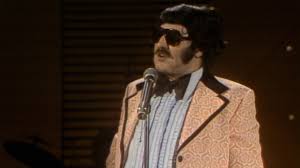
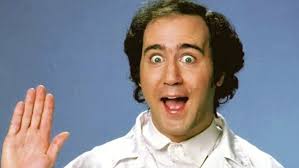
It’s stunning to see the sort of alter ego fame and arrested development as path to success story depicted here and compare it to the very similar and even more thorough (and shorter) Andy Kaufman doc, “Thank You Very Much.” Kaufman and Reubens had almost exactly the same influences — “Howdy Doody/Mickey Mouse Club/Captain Kangaroo” — which drove them to pursue surrealist TV fame either using or mimicking children’s TV of their youth, creating alter egos they insisted be treated as “real” on set and in interviews.
Reubens teases and even insults his interviewer/filmmaker and still comes off as personable but standoffish. But at least he got to have that much influence on telling his actor/comic as performance artist story. And he’s right about filmmaker/interviewer Wolf, “one film I liked and five I didn’t.” This beast of a doc has lots of performance footage, but should have and could have been half as long.

Rating: TV-MA, drug abuse discussed, sexual situations/innuendo, profanty
Cast: Paul Reubens, Laraine Newman, Laurence Fishburne, Richard Gilbert Abrahamson, Cassandra Peterson, S. Epatha Merkerson, Tracy Newman, Natasha Lyonne, Abby Reubenfeld and Matt Wolf.
Credits: Direceted by Matt Wolf. An HBO Max release on Roku, Youtube, Hulu and Amazon.
Running time: 2 episodes @ 1:45-1:50 each