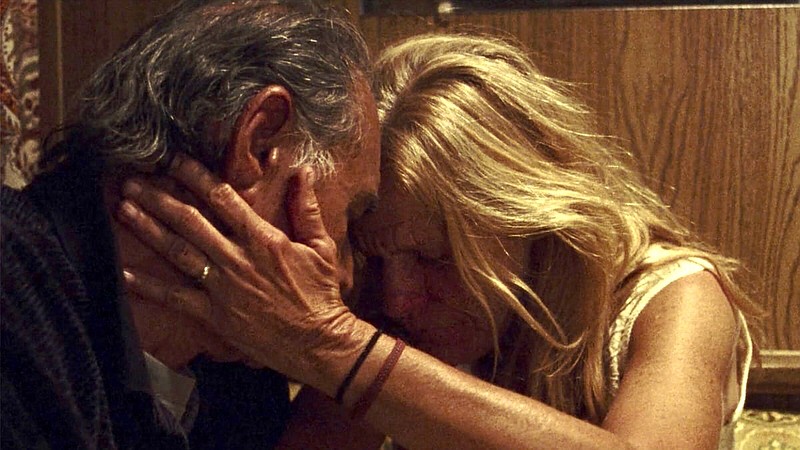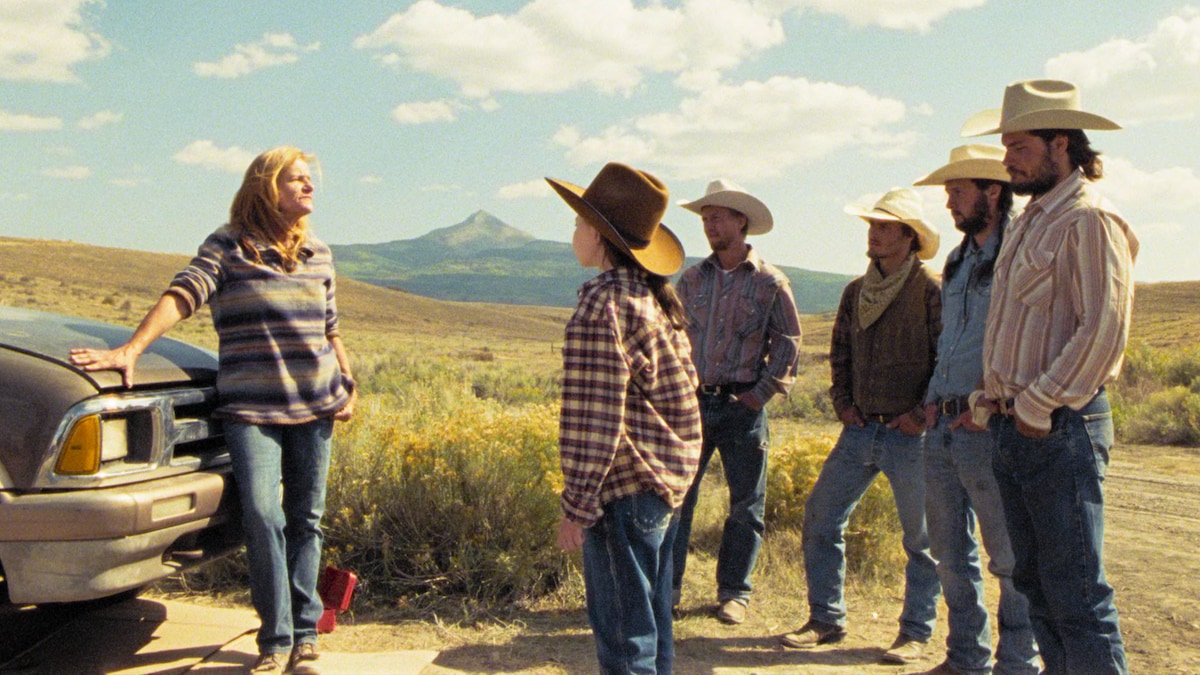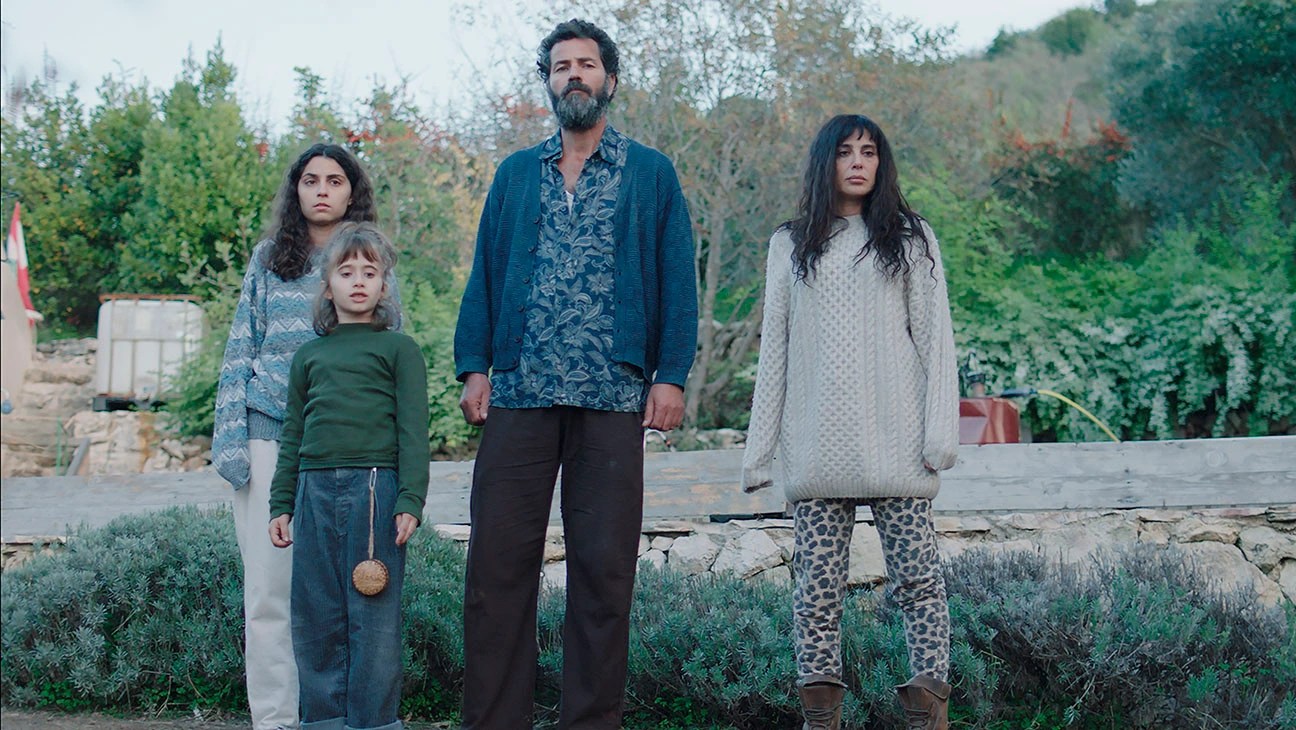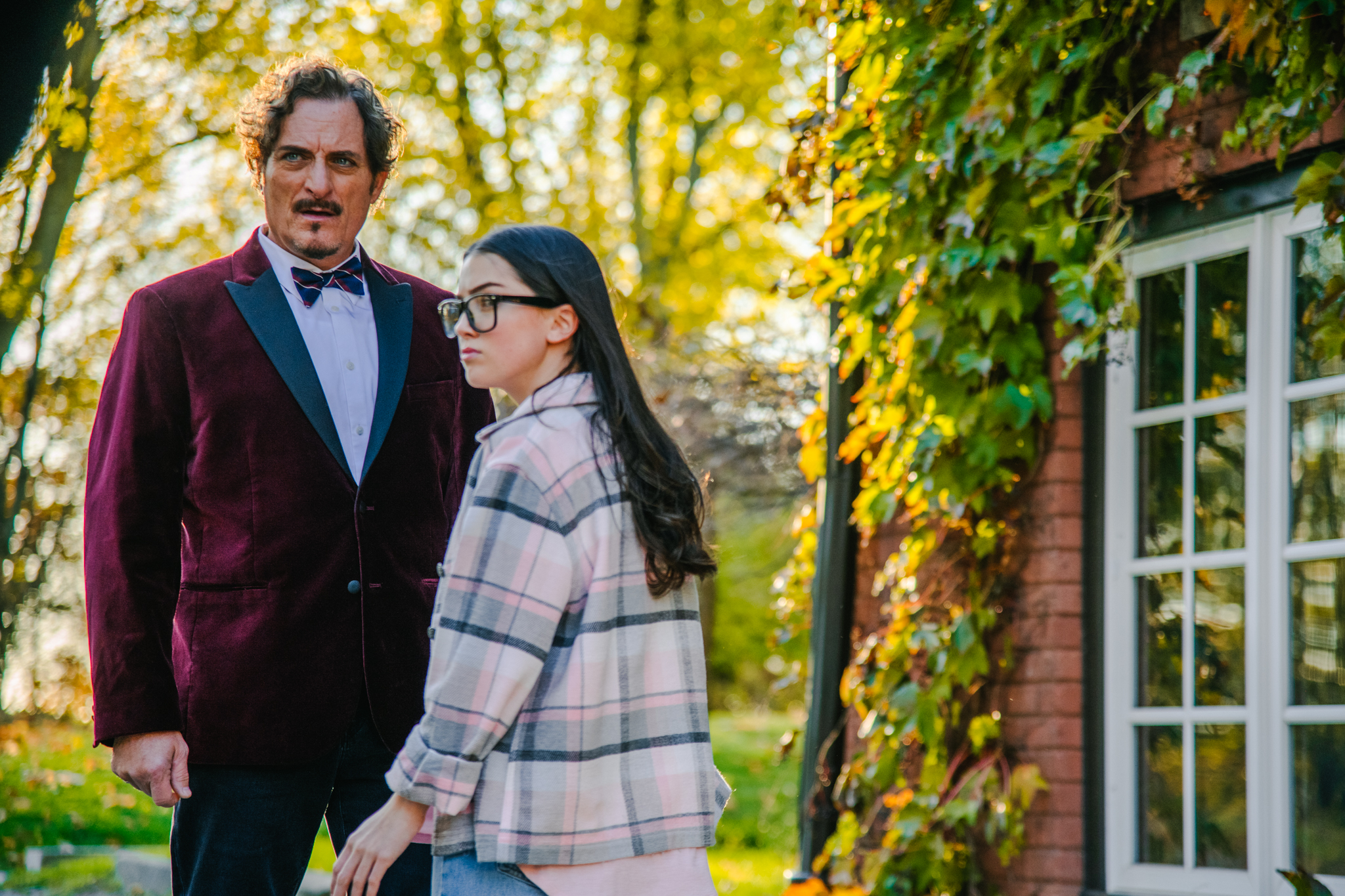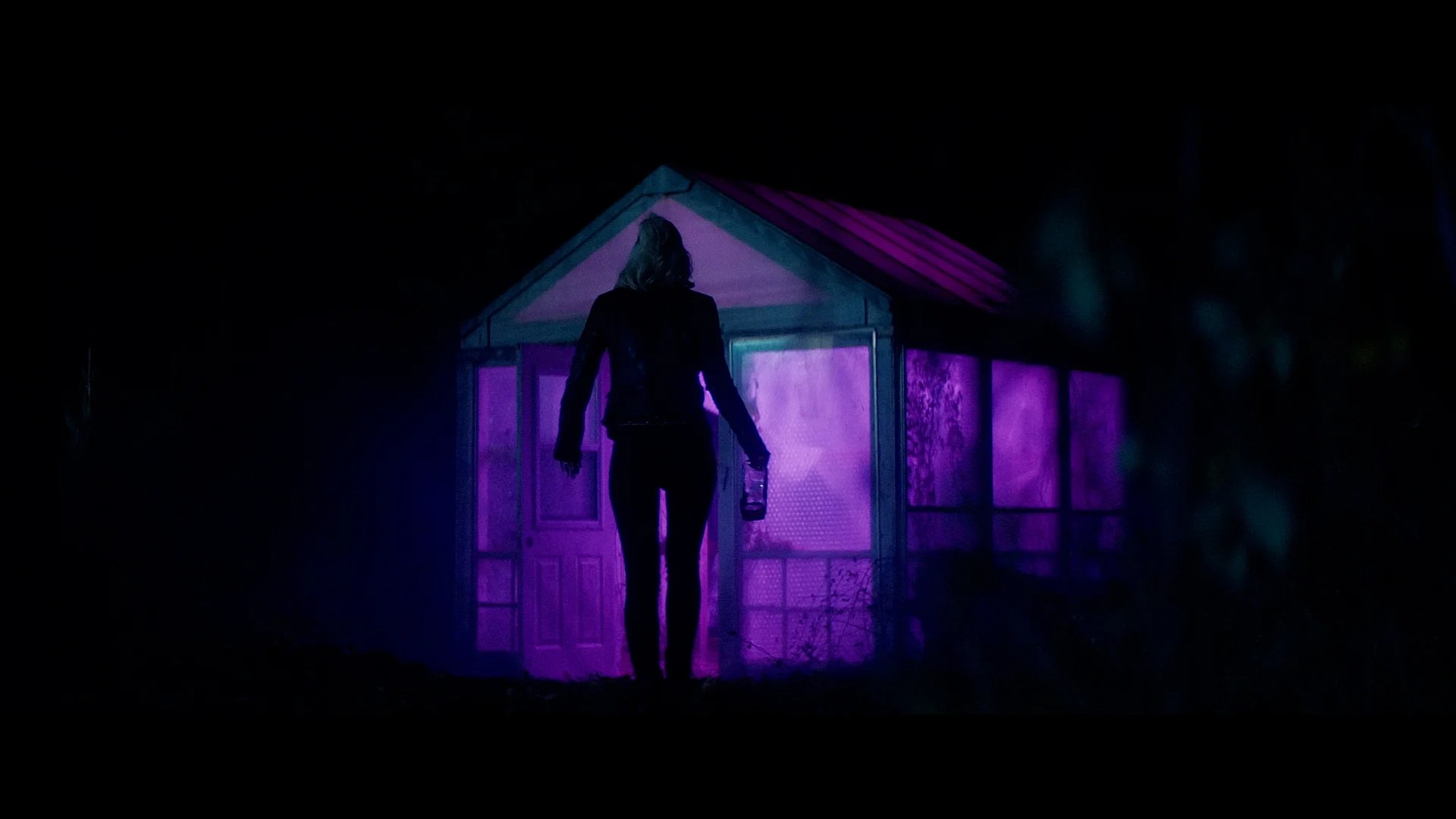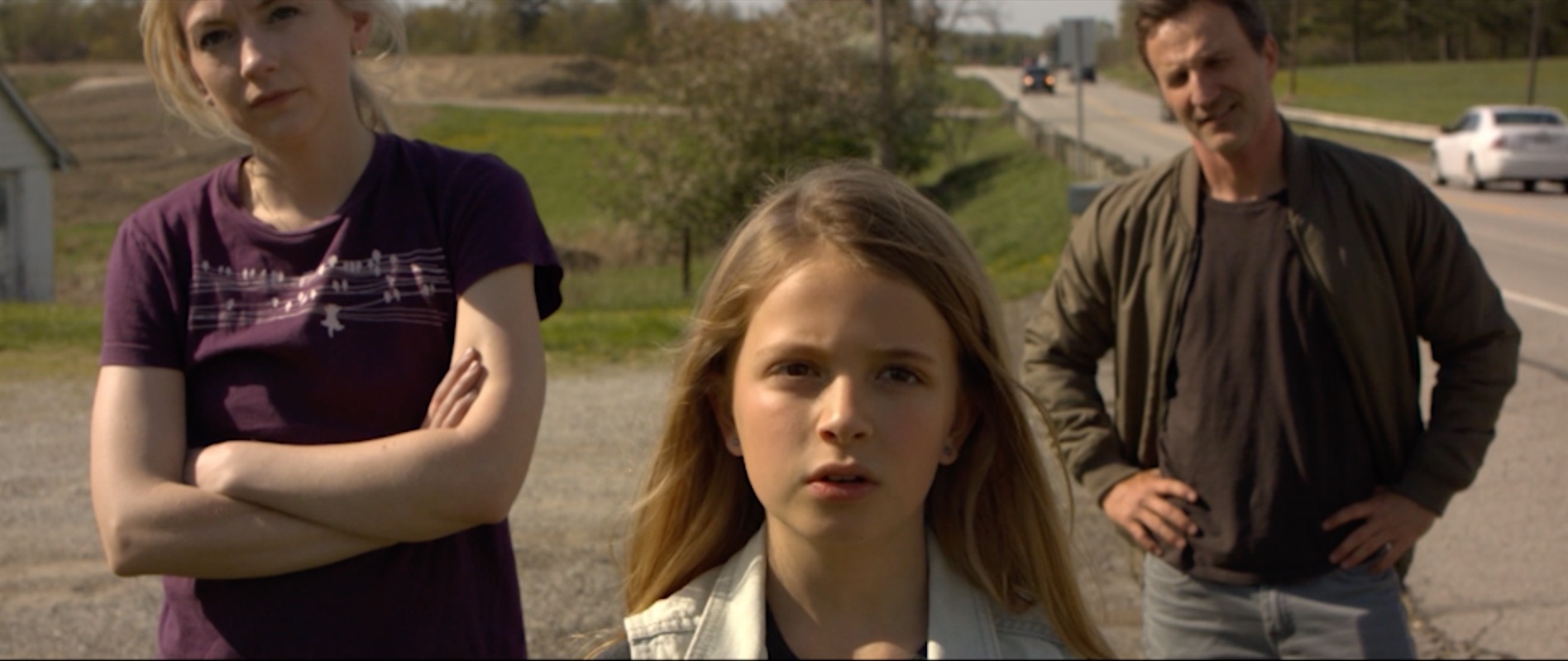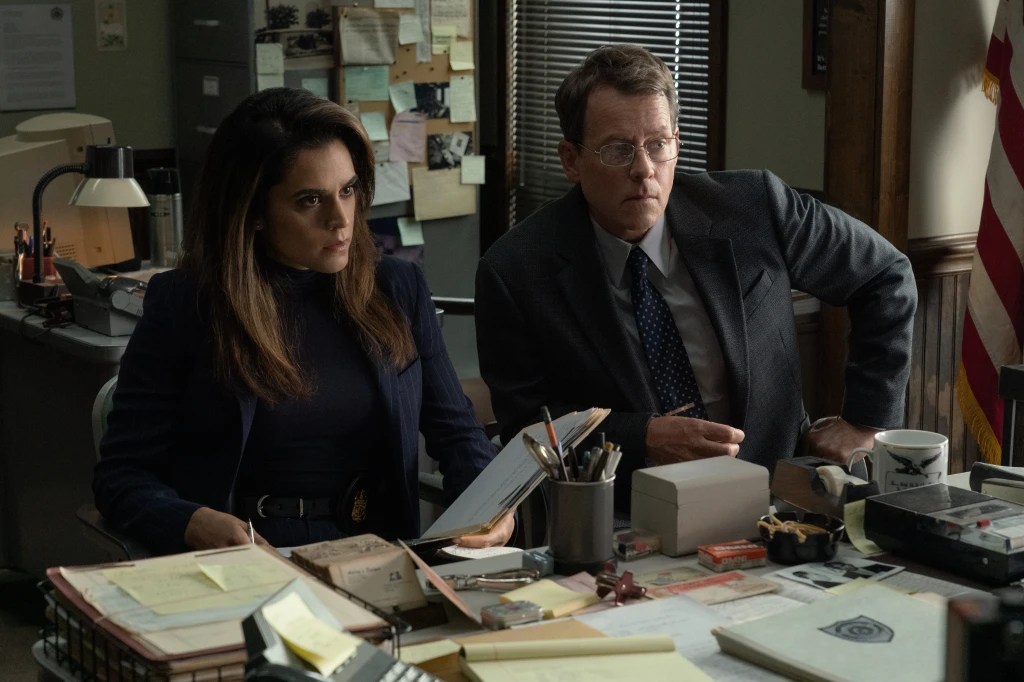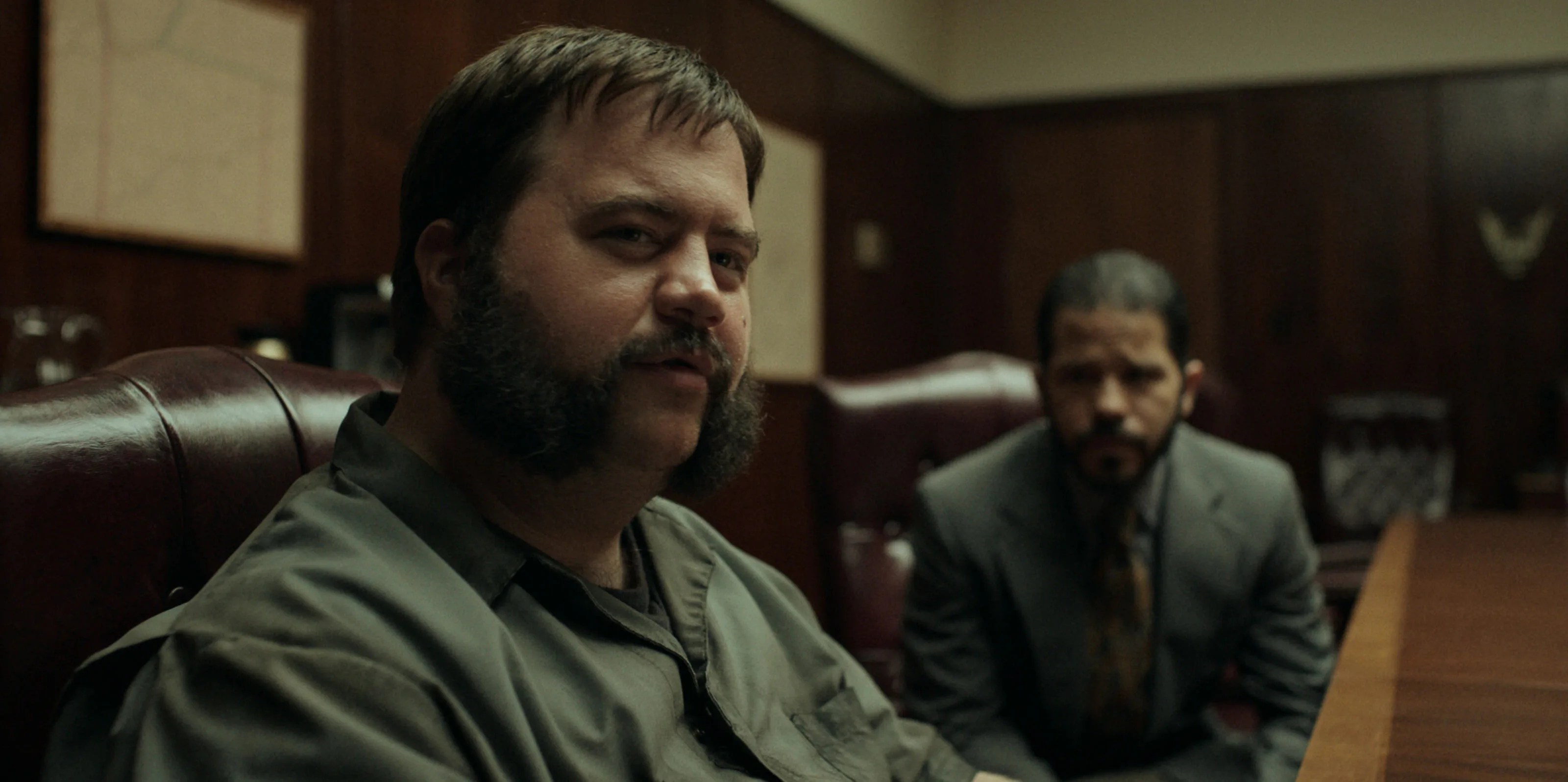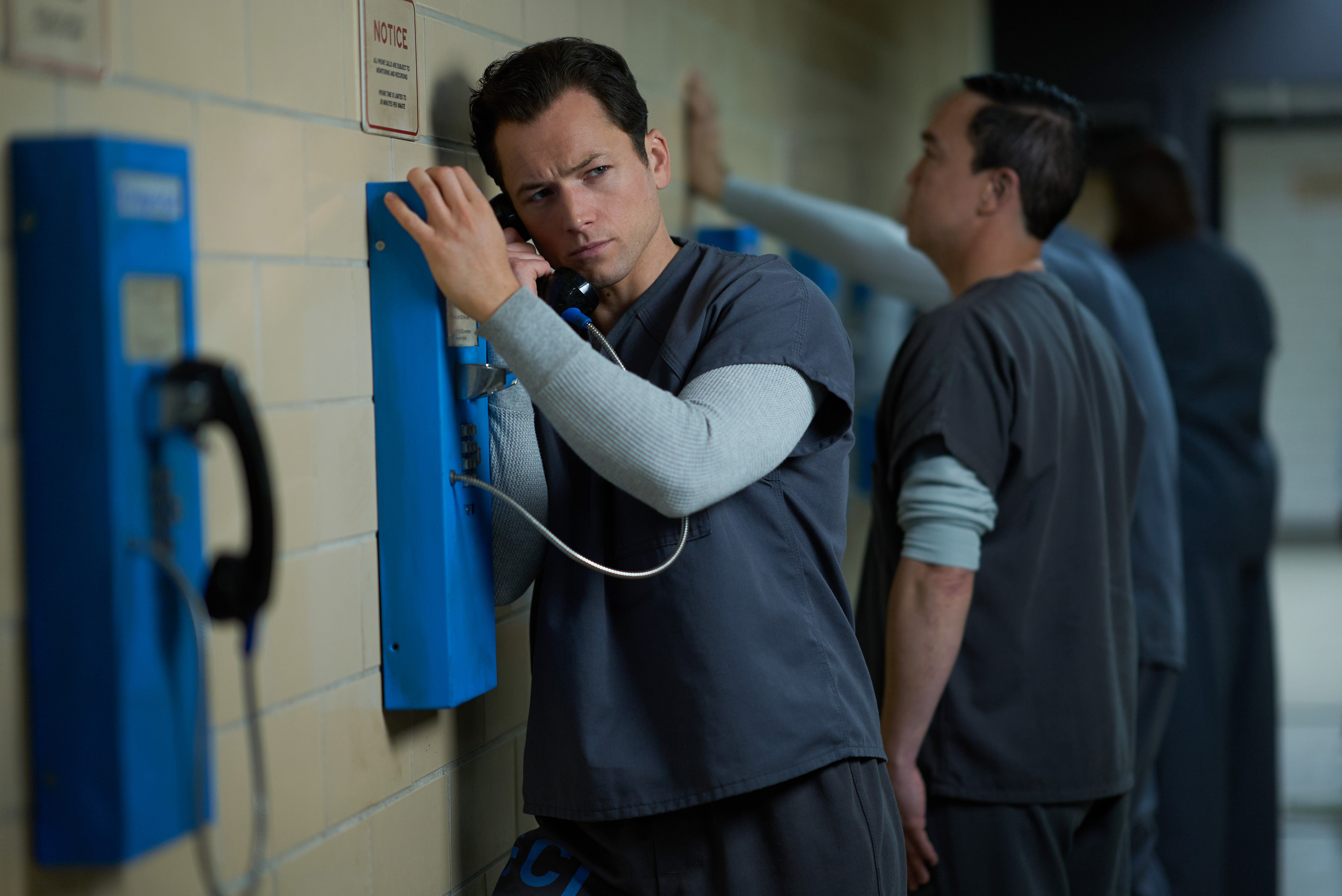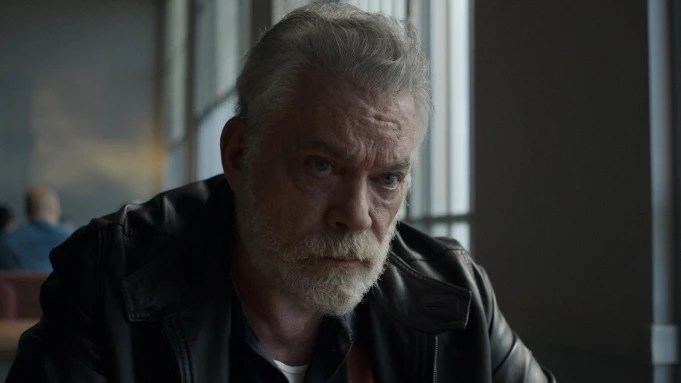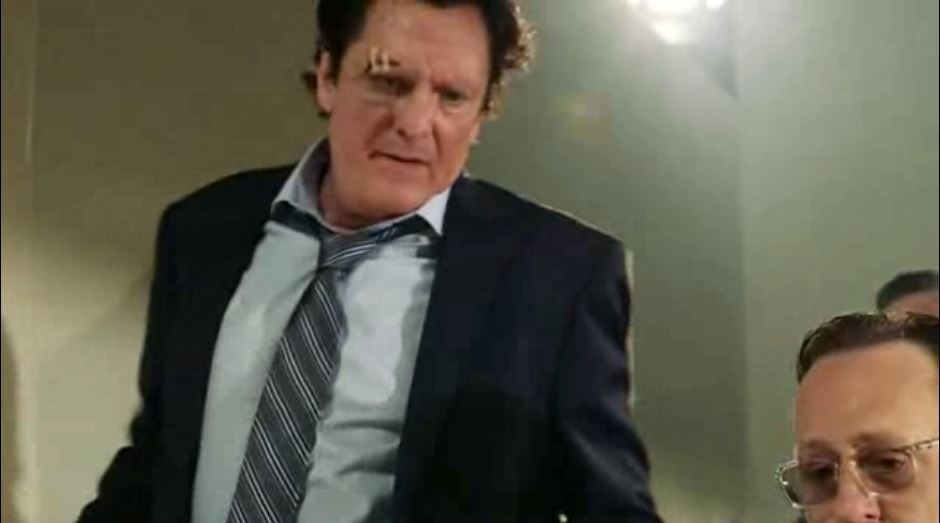
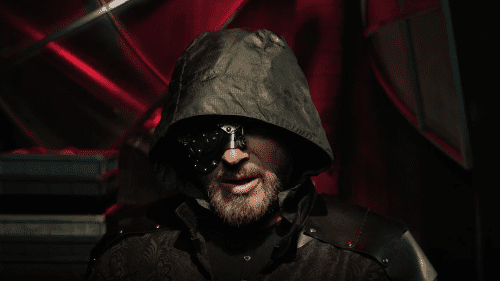
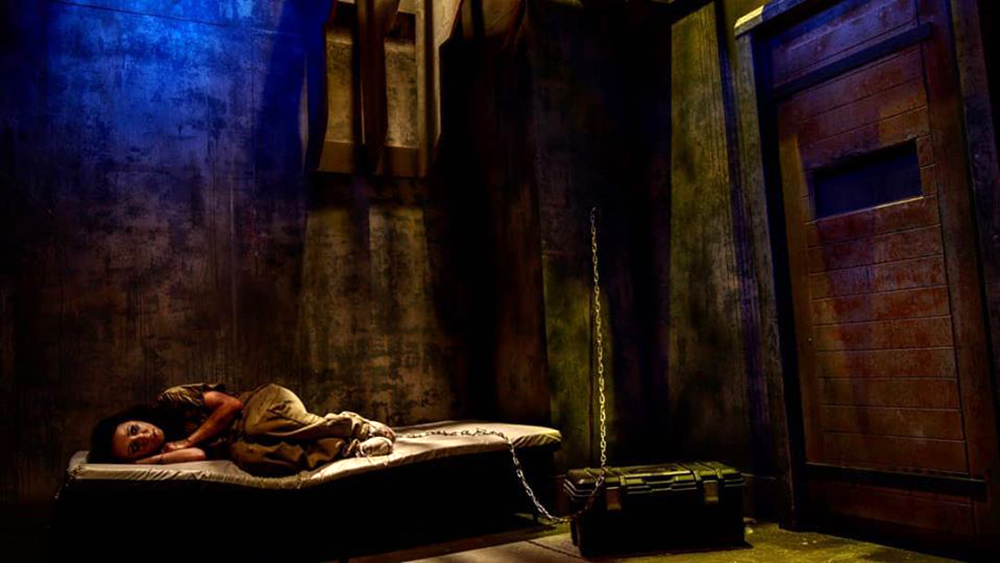
A grisly indie murder mystery with darkly comic undertones.
This one streams VOD next week.
A grisly indie murder mystery with darkly comic undertones.
This one streams VOD next week.
The “true” story of a middle-aged woman who gets obsessed with finding England’s most infamous monarch as a sort of midlife/career-stalled crisis.
Steve Coogan plays her quizzical, amused husband, and Harry Lloyd is the Ghost of “A horse, a HORSE, my KINGdom for a horse!” Richard.
Damn this looks delightful. No US release date, yet. But let’s hope.


A serious upgrade in “Dragon Ball” franchise animation runs up against the same overdoses of exposition, endless back story and arcane plot contrivances designed to pit characters against each other in epic throwdowns in “Dragon Ball Super: Super Hero.”
Honestly, I don’t know how anyone drops in on this long-running anime action saga, and the twenty-plus minutes that the latest installment begins with shows that the creators are puzzling over that, too.
Heck, the clumsy title gives away the endless amendments/additions and variations of the same story nature of this.
The long LONG roll call of characters, the ever-shifting agendas and allegiances, all this back story built around “You remember when” summaries involving this character’s son or granddaughter, that one’s clone — if it weren’t for the new-and-improved look, this film’s droning, drawn-out opening would kill off the fanbase with tedium and could send first-time viewers fleeing to another cinema in the multiplex.
Even the filmmakers recognize the clutter and just hope the faithful will continue confusing density for “complexity.” Because better looking or not, even the jokey, lighter touches of “Doragon boru supa supa hiro” — I saw the subtitled version — land like a sack of potatoes.
A stunningly-wordy and bulky screenplay overloaded with inanities doesn’t mean you’re animating “War and Peace.”
The odd punchy line — “I’ve changed my plans to include your death.” — drowns in “Once we knock off Bulma and the rest of her powerful and evil secret organization” and its endless variations. Yes, the Red Ribbon gang villains have to keep projecting and labeling the alien-led anti-reds a “powerful and evil secret organization.” It’s like they’re reciting agreed-upon smear-labeling and talking points — like Republicans.
The plot concerns efforts to “new and improve” the Cell Max and other android super-soldiers created by Red Ribbon Pharmaceuticals so that its new heir-hoodlum-overlord Magenta and his new Pugsley/Gomez look-alike ex-con scientist Hedo, grandson of an earlier labcoat, can make a fresh attempt at taking over the world.
Yes, the stories feel recycled, even if you haven’t been waiting eagerly for every new installment in the series. And yes, grandchild characters are now in the fray. This has been going on that long.
Generations of the sometimes-bickering Saiyan aliens and their allies are always training, with slam-bang practice bouts and odd attempts at one-liners.
After one Japanese burst of comic-book blows illustrated with punch-balloons — “DoKaaam!” and the like taking the place of “Biff,” “POW” and “Crunch!” — the Great Demon King Piccolo sputters, “Why are words appearing?”
That was kind of funny in the 1960s when characters in TV’s “Batman” said it. Here, that’s not nearly as amusing as the correction offered every time someone recognizes “The Great Demon King Piccolo.”
“It’s just ‘Piccolo.'” He’ll have none of your “Demon King” shaming, thank you.
There is a moment where it looks like one mobster — designed and dressed to look like anime yakuza — cold-bloodedly murders another character, and I thought, “Hey, this may get edgy.”
Nah. The “deaths” are generally soap opera/superhero comic book fatalities. Wait for it…wait…ok he/she’s back.
The big brawls are peppered with “I didn’t know you could…” and “How’d you develop…” remarks about the ever-evolving powers and skills bestowed, this time, by the dragon of “dragon ball” guardian fame.
Whatever the faithful get out of their devotion to these films, any objective take on any given installment can only praise the investment in better animation and point out the obvious — again. The storytelling leaves a lot to be desired.
Rating: PG-13 for some action/violence and smoking.
Cast: Toshio Furukawa, Yûko Minaguchi,
Miyu Irino, Kensuke Ôta, Ryôta Takeuchi and Masako Nozawa
Rating: PG-13 for some action/violence and smoking.
Credits: Directed by Tetsuro Kodama, scripted by Akira Toriyama. A Sony/Crunchyroll release.
Running time: 1:40
A buttoned-down, bowler-hatted Brit cuts “loose” for a day.
A Christmas season release for Father Christmas himself, the dapper scene stealer of “Love, Actually.”


“Sissy” is a one messed-up thriller wrapped up in the most adorable, upbeat and value-affirming package.
It’s a horror variation of the Agatha Christie “Ten Little Indians/And Then There Were None” school in the language of influencers, self-actualization and self-help. Yes, it has plenty in common with every house-party slaughter movie from “Bodies, Bodies Bodies” all the way back to the first version of Christie’s genre-defining thriller in the 1940s (“And Then There Were None”). But there’s wit folded into the wickedness, and that puts it over.
Sunny, ever-upbeat Cecilia (Aisha Dee) is an Aussie influencer whose soft-spoken testimonials and “self-care” videos earn her a lot of online love. She’s not a therapist or anything, but she’s cute — which is its own Internet credential. Episodes of her web series “Sincerely Cecilia” are a hit, with hundreds of thousands of fans “Making Friends With Hyperventilation” and learning her mantra.
“I am loved. I am special. I am doing my best.“
Her seemingly solitary life of meditation, sponsor-pitches and “advice” is interrupted when she runs into an old friend for the time in years. Emma, played by co-director Hannah Barlow, is getting married, has an engagement party that night and simply won’t take “No” for an answer.
Since Emma was the blonde we saw with “Sissy” in an old video back when they were two little girls making a “pact” to “end up in the nursing home together,” we wonder at Cecilia’s reluctance. Maybe she liked moving on from that “Sissy” nickname.
They clumsily, then heartily bond at the karaoke bar outing, and Emma ups the ante by demanding that Cecilia join her for a “hen party” that weekend. And even though there’s a hint that Emma’s still pals with this old nemesis from their childhoods, Cecilia figures she’ll tag along.
Only Mean Girl Alex (Emily De Margheriti) is there for this weekend in the country. It’s at her bloody house. And Alex is taken aback at “that psycho” showing up.
No, we don’t know the whole story, but we have to wonder if as we learn the history of their bad blood if our allegiances will switch and just how this women (Yerin Ha and Lucy Barrett) and a bitchy gay guy (Daniel Monks) dynamic is going to work with a couple of blood enemies under the same roof.
The picture’s tone is set in those insipid “Sincerely, Cecilia” videos, right at the top of the movie. We’re invited to view our “heroine” one way, as treacly sweet and meek. She’s even timid when she comically and accidentally gets in the way of an angry pregnant woman at the drug store where she picks up a packet of a feminine hygiene product with the catchiest name ever.
There can’t really be tampons labeled “Bloody Brilliant,” even in Australia. Can there?
Co-writer/directors Kane Senes and Hannah Barlow set us up with jokes and a light tone. Then they drop the hammer.
The meanness depicted here is takes-no-prisoners cruel, the violence unforgivably brutal and gory.
Yes, it’s formulaic, which means we kind of know where things are going. And yes, they do the formula justice, with “Saddle Club” child starlet Dee making the transition from sweet and supportive to something dark and vengeful in style.
Some grudges you carry with you a lifetime, unless the chance comes round to bury them, once and for all.
Rating: unrated, graphic, gory violence
Cast: Aisha Dee, Hannah Barlow, Emily De Margheriti, Daniel Monks, Yerin Ha and Lucy Barrett
Credits: Scripted and directed by Kane Senes and Hannah Barlow. A Shudder release.
Running time: 1:42

You probably don’t remember this movie, even though it was directed by Ron Howard and starred Vince Vaughn, Kevin James, Jennifer Connelly and Winona Ryder.
“The Dilemma” was a painfully unfunny “what I know about the state of my friends’ relationship” comedy that was a rare Howard swing-and-completely-miss. It came out almost ten years ago and is pretty much forgotten.
But the job that the guys with cheating-on-their-spouse issues were collaborating on was one that converted a Dodge muscle car — the Charger, depicted above — into an electric car that drove, felt and SOUNDED like a testosteroney V-8.
As something of a car guy, that plot detail struck me at the time as the cleverest thing in the movie, in a “That could happen/That SHOULD happen” sort of way.
Yesterday, Dodge showed the world its new concept Daytona. Here it is.

It’s electric, they hope to have it out in 2024. And it’ll sound like a muscle car, with “a multigear transmission” (That you can SHIFT?) and other muscular effects.
No, they’re not calling it “The Dilemma Edition.” But they could have.
So did product placement Dodge tip the filmmakers about the concept, or did Dodge get the idea from the screenplay for a pretty bad movie?


Let us begin with a few words in praise of Iyana Halley, the young actress tasked with playing a trope and knocking that trope out of the park.
In “Beast,” the “This is Us” ensemble member is the Hollywood idea of EveryTeen, the daughter in many a thriller who picks the worst moments to rebel, the most idiotic times to lash-out and unload all her personal issues with the parent tasked with saving her naive, know-it-all ass from the worst possible predicament.
As Meredith — who will correct you to “Mer” the minute you meet her — she blames her doctor dad (Idris Elba) for the premature death of her mother, for dragging them to a South African nature preserve near where their mother grew up. The only thing left unsaid is her blaming him for putting them within reach of the lion hellbent on killing every two-legged human in sight for the slaughter of his pride by poachers.
Halley is irritating every time Meredith-sorry-“Mer” abruptly blurts out something judgmental at her father, infuriating every single time she ignores his “Stay in the truck” and “look after your SISTER (Leah Jeffries),” maddening every time she takes on the role of “putting people in needless danger” character that every ensemble thriller has to have.
She’s your average annoying teen on steroids, in other words, stopping just short of “Gosh, when’s the lion going to eat that pain in the neck?” Well done.
“Beast” is an over-the-top savage and sometimes head-slappingly silly animal attack thriller. Its artfully paranoid and claustrophobic, comically cuddly and pretty much begs the audience to shout at the screen. A lot.
Oh God, don’t do THAT! Oh, come on. You IDIOTS!
Thanks to Halley’s unerring turn as the designated do-what-I-want-you’re-not-the-boss-of-me, “IDIOTS” isn’t always plural.
Elba ably plays Nate, a New York doctor whose estranged wife has just died. So he and his two daughters, Mer and Norah have made a pilgrimage back to South Africa, where his wife and he (it is implied) grew up. An old college buddy (Sharlto Copley) lives on this wildlife preserve in a big, half-rundown villa. He hems and haws about exactly what his work is, but Internet savvy Norah’s figured it out.
“He’s an ANTI-poacher,” one of those guys who shoots at the armed-to-the-teeth gangs who slaughter protected wildlife for profit. We’ve seen such a gang wipe out a pride of lions in a late night ambush in the film’s opening scene. “Wiped out” that is, save for one male, who tears a few poachers apart at the start of a rampage that consumes the rest of the movie.
A few scenes of family tension, eventually disarmed with a warm and cuddly reunion with (digitally animated) lions later, they stumble across a slaughtered village. No more hunting for animals to photograph. The four of them have just turned into prey, “law of the jungle” and all that.
Icelandic action director Baltasar Kormákur films this just the way he framed Denzel and Mark Wahlberg in “Two Guns.” The camera circles scene after scene, heightening the fear and paranoia of of the would-be victims about what’s “out there.” The attacks are in-your-face shocks, all close-ups and quick cuts to make us forget that the murderous menace snarling and swiping its paw at them is animated into the scene with them.
There’s even a moment where we can see Elba’s face digitally added to the body he’s using to tangle with the King of the Beasts.
At several points I was reminded on the perfectly paranoid killer (digital) gator thriller “Crawl” as I watched this family-plus-guide try to work the problem while claustrophobically trapped in a wrecked Toyota Land Cruiser, with a vengeful lion punching out the windows and taking bites of this and that. Dr. Nate, stuck under the SUV, about to be eaten and knowing it is about as primal as human fear gets.
Nate has time to dream of his late wife in an African afterlife context. But those dreams are interrupted by nightmares of what might happen to them all thanks to what’s coming for them all.
It’s just that the logic of many moments is simply loopy, some scenes play as pure, poorly contrived corn, and the problem-solving leaves a lot to be desired. “Beast” doesn’t necessarily traffic in great frights. It’s all about the shock-scares, sudden arrivals by The Beast Who Cannot Be Killed…apparently.
The violence is WAY over the top, especially in the otherwise eye-rolling finale. Anybody taking young children to this can reasonably expect their nightmares to begin on the drive home.
All that said, “Beast” is a briskly brief popcorn picture, even if we can’t take its “Lion King” killer lion as seriously as the animators would like, even if what its most annoying teen does is just give us our own flashbacks.
Rating: R for violent content, bloody images and some language.
Cast: Idris Elba, Iyana Halley, Leah Jeffries and Sharlto Copley
Credits: Directed by Baltasar Kormákur, scripted by Ryan Engle. A Universal release.
Running time: 1:33

There’s been talk in India of remaking “Forrest Gump” as a pan-historical Indian parable for decades, but landing Aamir Khan as star was what it took to get it made. If Gurinder Chadha can take on Jane Austen for “Bride and Prejudice,” why not see if Winston Groom’s riff on a “simple man’s” journey through American history translates?
I’d suggest that a quick read-over of a quick refresher on recent Indian history before buying a ticket to “Laal Singh Chaddha.” But even skipping that won’t leave you lost once the story of the “crippled” boy who crosses paths with Indian history and meets and inspires historical figures establishes its time frame with world famous events such as the incident that triggered the assassination of Prime Minister Indira Gandhi in 1984.
“Laal Singh Chaddha” is a straight-up “Forrest Gump” adaptation, with “Forrest” now Laal and played by Aamir Khan (“Like Stars on Earth,” Lagaan”), his unhappy, adrift childhood love Jenny now Rupa and played by Kareena Kapoor (“3 Idiots” ), and that Army buddy Bubba who inspired a shrimp restaurant franchise now named Bala (Naga Chaitanya Akkineni) and an expert in underwear.
It’s “Run, Laal run!” (in Hindi and Punjabi with English subtitles), the war isn’t Vietnam, but one of the many bloody dust-ups with neighboring Pakistan and the nation torn by strife, struggling to discover itself, not America in the ’60s and ’70s but India in the ’80s and ’90s.
“My Mama always said life is like a box’a chocolates,” becomes “Life is a box’a Golgappas,” and so on.
Anyone familiar with “Forrest Gump” should at least be curious to see how a different culture might interpret a comic parable of how its history was experienced by a “simpleton” who just lets the parade of horrors and conflict roll over and past him, focusing only on what’s important to his limited world view — loyalty to family, friends and that one true love, no matter how far astray she wanders.
But the movie opens with the longest, most detailed disclaimer in screen history. If you thought American politics, culture wars and racial strife was a touchy subject, that “work of fiction” and “never happened” messaging reminds you of the many cultures and religions of the Subcontinent and how no one would want to set them against each other with a movie.
No sense dwelling on the Sikh assassination of PM Gandhi, or the bloody assault on a Sikh shrine that incited it, for starters. Stick to turning Forrest-inspires-Elvis into Laal gives a leg-braces-move to future Bollywood singing star Shah Rukh Khan, and the like.
It’s just that there isn’t enough that plays as all that funny in this version of the comic satire Groom cooked up. It’s a mostly joyless slog, reaching for laughs with Aamir Khan’s bug-eyed, head-bobbing dopey take on the title character, special effects that turn the former “cripple” into an Indian track star and Laal’s eternal fish-out-of-water status as a guy who never wholly grasps everything that’s going on.
The pathos in his mother’s (Mona Singh) devotion to teaching her “special” boy “you’re no different from anybody else” is lacking. And all the socially conservative Indian cinema does by making Jenny’s misguided “searching” for meaning a kept-woman/nude model “scandal” for Rupa, instead of surfing the waves of counterculture via abusive “free love” and drugs and the like so tames the character as to neuter her.
Khan’s turn as Laal/Forrest is superficial, a performance of exteriors. There’s no “soul” to “the dimwit,” and few grace notes in the performance. And being so afraid of offense — when you’re dealing with SATIRE here — muzzles the movie.
In America, conservative firebrand Newt Gingrich was a great “Forrest Gump” champion as he recognized the GOP base then and into the future — loyal, rural and often Southern people who stick to the important things in life, mostly skipping the faddish nature of pop culture, but also unquestioning, easily-led and “simple.”
There’s nothing in “Laal” to grab hold of, not for a Westerner, anyway. You just check off everything you know is coming — “This is ‘Lt. Dan,'” that train ride dissertation about Laal’s life takes the place of Forrest on that bench in Chippewa Square in Savanah, and so on.
Another problem with tackling over-familiar material, from Shakespeare and Dickens to global blockbusters or their equivalents in other cultures is the impatience they build into the experience. We know what’s coming and we’re restless getting there.
Wonder if anybody in India sat through this and thought, “Wait, our movies ARE too bloody long!”
Rating: PG-13 for some violent content, thematic elements and suggestive material.
Cast: Aamir Khan, Kareena Kapoor, Naga Chaitanya Akkineni
Credits: Directed by Atul Kulkarni, scripted by Advait Chandan, based on the film adapted from Winston Groom’s novel. A Paramount release.
Running time: 2:39

The glib response to George “Mad Max” Miller’s “Three Thousand Years of Longing” is suggesting that only Terry Gilliam should be making Terry Gilliam “epics.” That assertion carries the message that it’s sprawling, fantastical and ambitious and that there’s a decent chance it doesn’t quite work.
But Miller’s earned a filmmaker’s benefit of the doubt. Every movie’s he’s made is at least “about something,” from the apocalyptic environmental/political warnings of the “Mad Max” movies, to the cautionary parables for kids that were “Happy Feet” animated films.
This strange and quirky tale is far more somber than you’d expect. A “narratologist” stumbles into a Djinn or genie by popping open a bottle she buys in exotic Istanbul. That leads to a movie-long debate that ponders aging, loneliness and the essence of happiness even as it never quite wrestles with the question the djinn (Idris Elba) poses to the “happy,” divorced and self-described “fulfilled” academic, played by Tilda Swinton.
“What is your heart’s desire?”
Miller’s film, based on an A.S. Byatt short story, is long and feels incomplete, weighty without much psychological or intellectual heft, colorful but rarely dazzling and never whimsical enough. It’s like a Terry Gilliam (“Brazil,” “Adventures of Baron Munchausen”) take on “Eat, Pray, Love.”
Because Alithea, the enterprising English academic expert in the commonalities that folk tales around the world share, isn’t having this “three wishes” business. She knows that “there is NO story about wishes that is not cautionary,” aka “Be careful what you wish for” She knows “all the stories about trickster djinn.”
And as the djinn, who’s been locked in assorted bottles and such for who epochs of time, tries to explain things from his point of view, what “no wishes” or the wrong wish might mean for him, the academic feels free to interrupt with the occasional “Oh, I KNOW where this is going.” Because she does.
“Three Thousand Years of Longing” is mostly these two in an Istanbul hotel room, debating the nature of fate, happiness and history by sharing (mostly his) flashbacks of their lives, which start with the djinn losing his true cross-species love, Sheba (Aamito Lagum) — a crafty, sexy queen known (to him) for her famously furry legs — to the persistent King Solomon (Nicolas Mouawad).
As the djinn relates each tale of his “incarcerations” back in a bottle, we visit Byzantine Constantinople and Ottoman Istanbul, all designed to sway Alithea’s decision about whether or not to make her wishes, or find some sort of escape clause.
And the viewer, watching the realms of the djinn’s experience give way to Alithea’s more modern wizardry, notices that the flashbacks grow murkier and less elaborate, the “relationship” strains and the storytellers try to wrestle their tale into something relevant for our divided, perilous world.


The first half of “Three Thousand Years” is the most engaging, with our narratologist explaining to a conference that “Mythology is what we knew back then, science is what we know…so far.”
But once the djinn’s out of the bottle, the film takes on an inscrutable mantle, mostly thanks to the muted emotions of the writing and the performances. The “djinn” effect has its digital elements, but once the vapor in the bottle has shrunken down to a manageable size — half again as big as Alithea (Forced perspective?) — basically the film becomes a two-hander, two muted performances tentatively waltzing around one another in an effort to come to mutual understandings, and more.
I couldn’t help but think Miller, for all the effects and occasional Gilliam-grotesquerie (a harem of absurdly corpulent Ottoman concubines) of this film, is making a statement on the way life shrinks to fit and closes in around you as you age. He’s 77 and maybe this dream project — like Gilliam’s “The Man Who Killed Don Quixote,” like Barry Levinson’s “Toys” or Orson Welles’ “The Big Brass Ring” or “The Other Side of the Wind” — is meant to be valedictory but fated to be sad and reflective and a letdown.
For all the power the djinn has, he is never not hemmed in by “rules” and the threat of entombment and forced isolation. He wants to satisfy his needs, but they come second to those he serves, and he’s not enough of a “trickster” to ensure his “heart’s desire.” That’s life — disappointment. You can’t three-wishes that away.
Whatever the source short story is about, a London interlude which involves Alithea’s co-habitation with a Black djinn and facing off with aged “bigot” neighbors is plainly about today, and one can read Swinton’s own concerns into her complaints. It feels shoehorned in.
The leads don’t really make their characters move “considering” the other into anything we can warm up to.
Whatever Miller was getting at, not egging his leading players into something warmer, sexier, lighter and funnier seems like a blunder. Not casting famous faces as his assorted historical figures makes them largely forgettable.
The movie around Swinton and Elba suggests that strife and struggle and prejudice and loneliness are eternal. How might a creature trapped in a bottle for hundreds of years at a time spend that time? Stuck in memory, trying not too hard to hate himself for the fate he suffers.
“I am just an idiot who has been extravagantly unlucky.”
Surely that’s not how Miller sees himself.
Still, a great — if not prolific — director of popular entertainments with a message has earned the benefit of the doubt, and our attention and willingness to mull over what he shows us. But it’s hard to look at his magic lamp movie and not notice that it’s not just the djinn who has no clothes.
Rating: R for some sexual content, graphic nudity (LOL) and brief violence
Cast: Tilda Swinton, Idris Elba, Aamito Lagum, Matteo Bocelli, Nicolas Mouawad and Lachy Hulme
Credits: Directed by George Miller, scripted by George Miller and Augusta Gore, based on a short story by A.S. Byatt. An MGM release.
Running time: 1:48
Not the first title that comes to mind for a Korean sword and sorcery/time travel fantasy.
But We’ll Go USA picked it up, and they rarely steer us wrong. Aug. 26 release.