
A god sphere in orbit around Mars? Let’s see what’s in it come Sept. 13.
A god sphere in orbit around Mars? Let’s see what’s in it come Sept. 13.

There’ve been so many bank-hostage thrillers that it’s pretty much a thriller genre all its own. And as such, it’s very hard to make one that stands out from the crowd.
The phrase “as you’ve never seen him before” was long ago worn out by Hollywood hype masters, mainly because it’s compact enough to stuff on the top of a movie poster.
And as a film critic, it’s not necessary advisable to slap the label “soulful” on an African American actor, even when it fits, even when talking about the actor’s final film.
But “Breaking” breaks free of its genre thanks to some terrific performances.
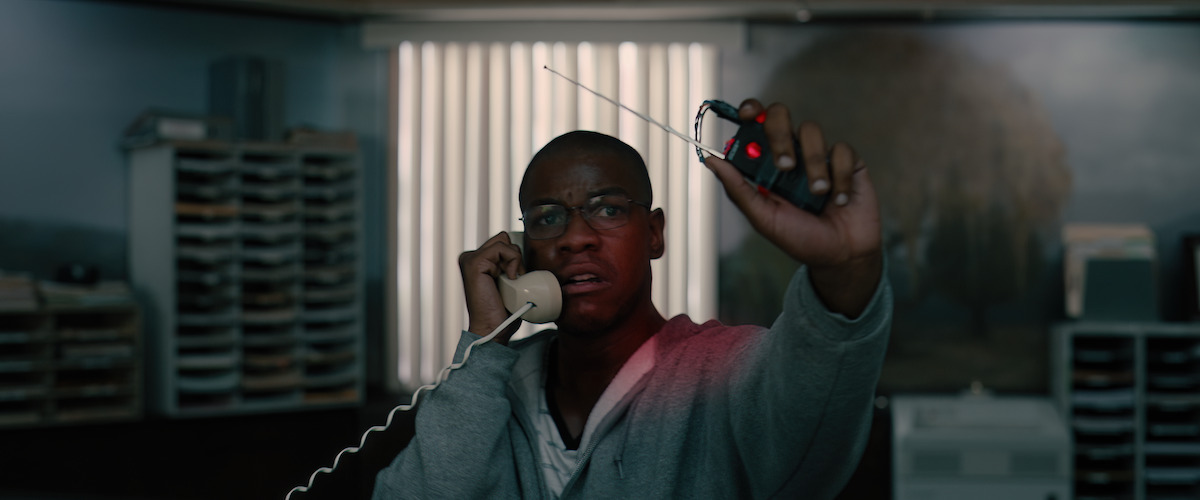
John Boyega is so startling and mercurial in the leading role, playing a Marine Corps vet who holds up and holes up in a bank, claiming his has a bomb, just to let satisfaction of the VA and a crushing student loan trap, that I forget the actor inside the character. This is Boyega as we’ve “never seen him before.”
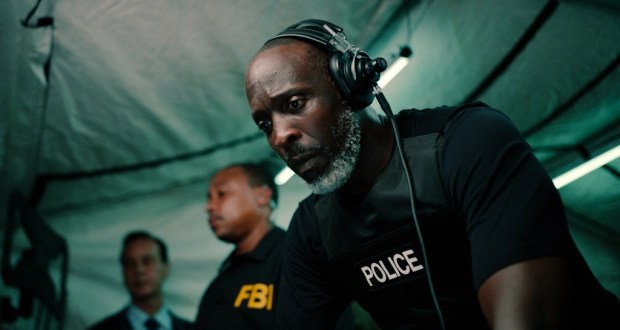
And as a disrespected, passionate and compassionate police hostage negotiator, the late Michael Kenneth Williams reminds us that we could almost retire the term “soulful” as it pertains to acting with his performance.
This “true story” happened in Marietta, just outside of Atlanta. We meet Brian Brown-Easley on a good-bad day. He’s able to get his little girl (London Covington) on his phone for a warm, what-to-name-the-puppy-I’m-getting-you chat. But he runs out of minutes before he can talk the child into giving the phone to his ex (Olivia Washington).
He’s got a room in a local fleabag motel, but gets a “You paying, or leaving?” dig from the manager.
We sense the desperation. And him looking at that Wells Fargo branch across the street has us worried. Sure enough, he ponders his options and marches in. He eyeballs the cameras inside and thinks some more.
He withdraws a little cash from the chatty, over-sharing clerk (Selenis Leyva, good). And then he passes her a note, says he has a bomb, holds up what looks like a detonator, and asks, with increasing insistence, her to dial 911.
It’s the delay in her getting through, seeing the other bank staff (Nicole Beharie plays the nervous/nervy manager) quietly usher customers and staff out, that sets finally sets him off for the first time.
“I need the FIRE trucks. I need the NEW CAMERAS! I need the X-MEN!…Don LEMON!”
Whatever we think this guy is up to, this disturbed “off your meds” fellow, who just held up a woman who knows everything about him because she took money from his account to give it to him, has his own agenda.
He wants some help with the VA. He needs them to stop garnishing his account for student loan payments.
Abi Damaris Corbin, who also directed, and Kwame Kwei-Armah construct a script around an almost comical lack of urgency from first responders, a cavalier “What are you wearing?” from a 911 operator who figures she can pass on to law enforcement who to shoot, and a lot of folks — inside and outside of the bank — who know what a nightmare the VA, student loans and American policing have become, and sympathize with their unstable captor.
Has the bank manager every been robbed before? What happened?
“They arrested the guy.”
“Musta been white!”
Boyega can overdo the “triggered” thing, flipping out at sudden noises or due to simple paranoia. But he’s good and wonderfully relatable as the lead.
Williams is sharp, deflated and a bit irked (his specialty) as a hostage negotiator poked by SWAT (Jeffrey Donavan, playing the latest in a long line of jerks), forced to sit back and wait until Brown-Easley calls the ex, and a WSB reporter (Connie Britton) BEFORE he can introduce himself and commence negotiations.
The upshot of all that is a feeling of familiarity that the genre inspires, but which this film lightly trips up, here and there.
“Breaking” isn’t “Dog Day Afternoon” or “Inside Man” because it isn’t as good or as original as those two classics of the genre. But Boyega, Williams and Beharie make this well worth our while, a tense and empathetic hostage thriller that could be literally — one last cliche coming — “ripped from today’s headlines.”

Rating: PG-13 for some violent content, and strong language.
Cast: John Boyega, Nicole Beharie, Selenis Leyva, Jeffrey Donovan, Connie Britton, Olivia Washington and Michael Kenneth Williams.
Credits: Abi Damaris Corbin, scripted by Abi Damaris Corbin and Kwame Kwei-Armah. A Bleecker St. release.
Running time: 1:43
A German language drama about incest?
Fall is here. Sept. 20, from the aptly-named Altered Innocence distributor.
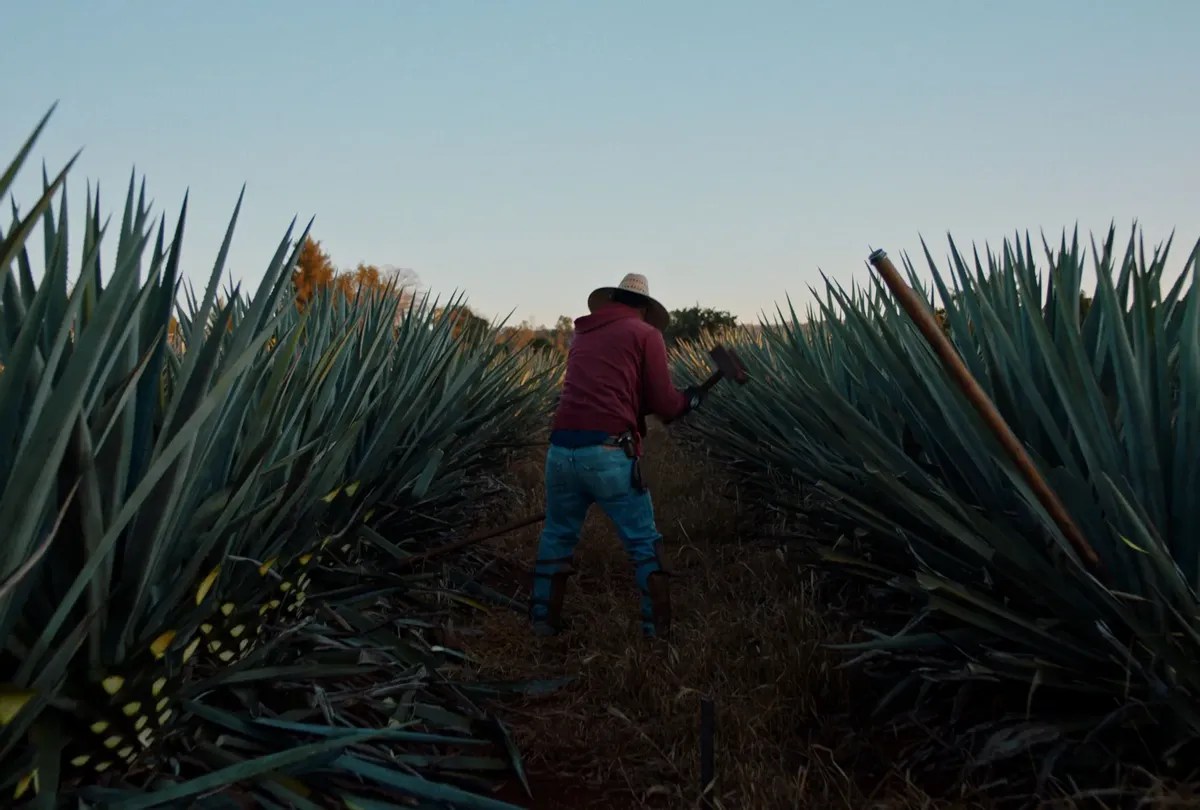

Men in wide sombreros and long-sleeved shirts that fend off cuts from the sharp leaves harvest agave plants in the opening scene of “Dos Estaciones” (Two Stations), an intimate drama about a family business and hopes beyond it facing the trials of the farmer/distiller’s lot in life.
Things are percolating along at the Coleman Spirits distillery, which María presides over like a matriarch to-the-business born. She doesn’t have to say “We’re like family” here for it to be understood as she works among men and women she’s known all their lives.
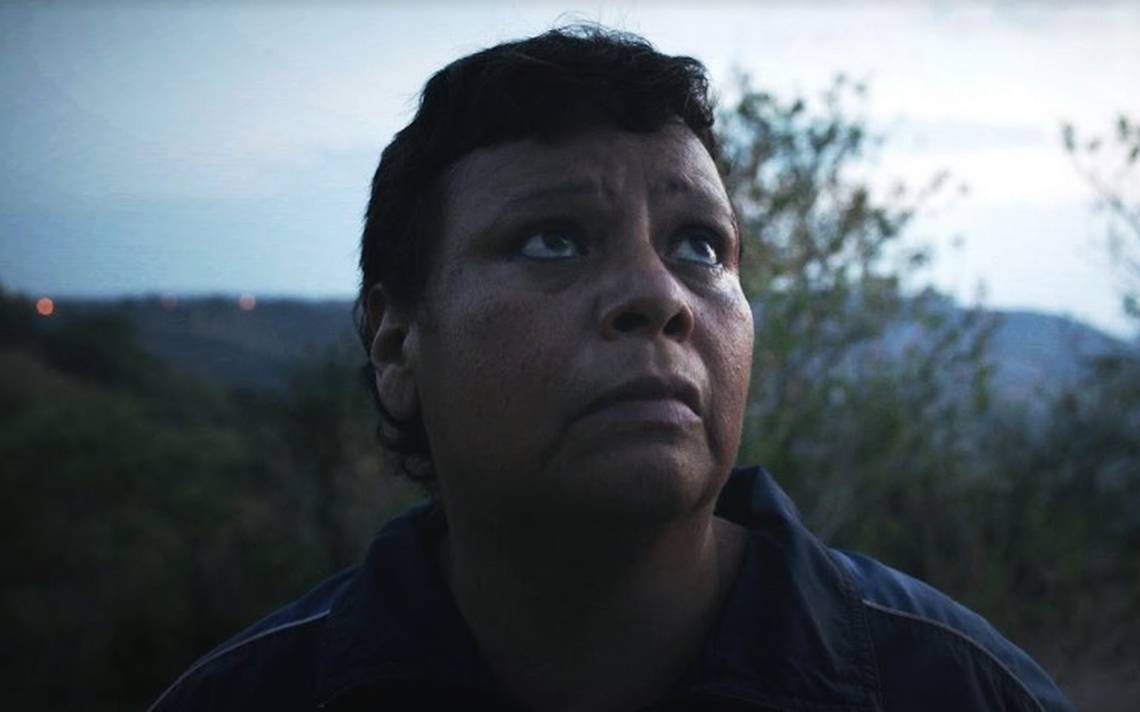
María, sturdy, fiftyish and “mannish,” as people used to say, is followed as she purposefully walks the fields, the factory floor, supervises the packaging of the tequila and even samples it with her meals. She (Teresa Sánchez) is friendly but keeps the “boss lady” distance necessary to run a small business. If the tortillas get cold at lunch, she isn’t shy about barking at the cook.
But this queen of all she surveys seems lonely. The work she’s hurled herself into has deprived her of everything else. We can see it as she almost melts when Tatín (Tatín Vera) massages her scalp as María gets “the usual (in Spanish with English subtitles)” haircut — short and unfussy and butch.
The business she is watching like a hawk has problems. “Plague” is wreaking havoc with the crops. Agave takes five years to mature, and the virus is hitting other farms nearby. María may have the hacienda and modernish factory and plenty of dependent employees. But her truck won’t start and the staff is on reduced wages, so “the tequila boom” has hit a rough patch.
And then, socializing with her oldest and most trusted employee’s family, a pretty young woman with bookkeeping/office experience, Rafaela (Rafaela Fuentes), hits her up for a job. We’ve seen the state of the business, but as María hears her out, we sense that this is a hire she needs and wants, a possibility of something more than somebody to get her business affairs in order.
Director and co-writer Juan Pablo González brings a documentarian’s eye to the life and world of agave growing, harvesting and fermenting in and around a tiny town in Jalisco, Mexico. The labor is timeworn, and there are working-class pleasures like informal horse races down a dirt road behind town. We see the co-dependence of an eco-system centered around the local distilleries and the denial that María settles into over the dire state of affairs she faces — plague, flash floods, shifting suppliers, bills piling.
Sánchez is the center and heart and soul of the film, mostly poker-faced even as she starts acting-out at employees who have to move on when she can’t pay them, grinning only when she’s doing donuts in the dry dirt in a pickup truck she borrows, trying to impress Rafaela with the lands, the crops she’s diversified into and the foresight she once had.
González made a film of muted tones and emotions, a movie that pulls you in as he makes you come to it. Little things like waiting a good, long while before identifying María by name, never IDing Rafaela and Tatín, even as he lets the story follow the hairdresser for a few scenes make us focus, but also can be frustrating as you make sense out of why we’re seeing this side of Tatín.
“Dos Estaciones” has the feel of a docu-drama, even if there seems to be little sign that this small story is being writ large. Norteamericanos haven’t lost their taste for margueritas, after all. It’s the detail, the sense of small lives closed off and growing more isolated that makes this film worth watching.

Rating: unrated, profanity
Cast: Teresa Sánchez, Rafaela Fuentes and Tatín Vera
Credits: Directed by Juan Pablo González, scripted by Ilana Coleman, Ana Isabel Fernández and
Juan Pablo González. A Cinema Guild release.
Running time: 1:39


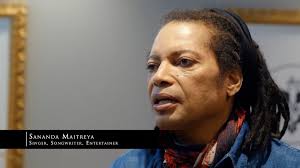
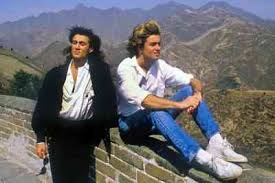
The title of Simon Napier-Bell’s warm, incisive “George Michael: Portrait of an Artist” documentary is somewhat limiting. The film captures the rise of a pop icon and taps into his creative process and place within pop culture. But it also explores Michael’s activism, romances, his tortured public life and decades of secret and often extravagant philanthropy.
It’s damned good, a brisk overview and a celebration of the man, his music and the world he lived in and, as many of those interviewed here maintain, changed, and a lamentation of his addictions and premature death.
We hear from collaborators and peers, biographers and broadcasters, journalists, friends and a lover — but also psychotherapists — all of them with an opinion of how he lived, what he endured and the things that made him the person he was and the pop artist he became.
Napier-Bell, who’s made music videos as well as docs on Sinatra and “The 27 Club” (“27: Gone Too Soon”), dashes confidently through quick-cuts of this life and material, giving us a taste of the breathless rise to fame of the former Georgios Kyriacos Panayiotou, the heady highs and the grim, often self-destructive lows.
Sometimes, those could happen the same day. “The love of his life,” Anselmo Feleppa, was dying of AIDS and watching as Michael paid tribute to the late Freddie Mercury by covering “Somebody to Love” in the concert celebration of the Queen singer’s life.
Michael’s arrest for propositioning an undercover cop in an LA public restroom was “liberating,” more than a few who knew him say. Michael not only complained of the 1950s style entrapment still being practiced by the LAPD. He made a righteous spectacle of his “community service,” working at the Project Angel Food kitchen and dragging the media along to highlight a charity he’d been giving to for years, and continued to support for years afterward.
British actor, wit and activist Stephen Fry talks about the “secret” philanthropy that suggested Michael wanted to give as much away as possible without getting credit. Fry remembers breaking down in tears when Michael declined to write another check to an AIDS charity Fry was fundraising for, instead offering the group all British royalties from a greatest hits album.
Michael’s self-destructive side wasn’t just limited to his shifting sexual image and later drug addictions. He took on Rupert Murdoch’s venal right wing media empire. “He knew he was going to get eaten alive, and he did,” one observer notes.
He even wanted to make a pornographic film, expanding the music video for one of his most eye-opening and sexually raw tunes, “Freeek,” and got pretty far into production before thinking better of it.
The “telling anecdotes” from friends, the TV interviews Michael did himself, the armchair analysis of the things that drove Michael and shaped his later life make “Portrait of an Artist” a terrific snapshot of the Wham! star who became a legendary figure not just in music, but the gay community and world pop culture as well.

Rating: unrated, profanity, drug abuse discussions, sexuality
Cast: George Michael, Stevie Wonder, Jo Whiley, Terence Trent D’Arby, Kenny Goss, Sandana Maitretya, Rufus Wainwright, Stephen Fry and Piers Morgan.
Credits: Directed Simon Napier-Bell. A Protocol Media release available on streaming platforms.
Running time: 1:34

A little slice-of-the-long-war in Ukraine satire from Film Movement, “Donbass” has a title everyone recognizes as a region the Russians covet and have been destabilizing and invading since 2014, calling it a “civil war” as they send “separatists” in to kill and take ground.
From my review — “This is “civil war” as performance, a big, broad lie pushed by Putin, pushed-back-against by the legitimate Ukrainian government, where it’s not so much ground taken and public support implied as how everything “appears.”
If you’re a library card holder in the greater Casselberry region, ask for it by title. It should be on the shelves shortly.
MovieNation, spreading fine cinema one title, one Southeastern public library at a time.
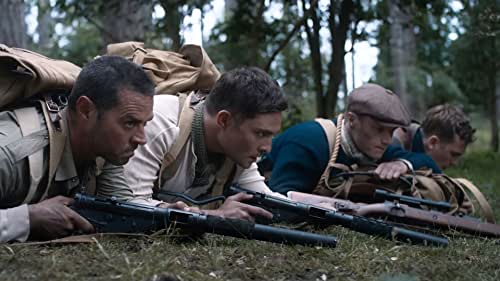
“Wolves of War” is a straight-up WWII B-movie, leaning towards C.
A semi-sensible “secret mission” thriller, it sends a bunch of British paratroopers — accompanied by a young scientist (Jackson Bews) — in search of a researcher who’s been living in Germany for decades, working on nuclear physics, aka The Bomb.
The film’s a grab bag of WWII movie cliches — a “drop” mission gone wrong, a bit of noble sacrifice here, a little executing Nazi militiamen there. Plenty of shooting, which is what we came here for, right? That, and a little “moral of the story” profundity.
“There’s this old saying that there are two wolves fighting inside all of us. One good, one bad. And the wolf that wins is the one we feed the most.”
Ed Westwick is Jack Wallace, a father who reads a bedtime story to his little girl one night in 1939, and now — five years later — is still fighting, second or third in command of this mission “a thousand miles from” the front lines (nobody knows geography any more), somewhere in Bavaria.
Matt Willis is Captain Norwood, ruthlessly focused and on-task. There’s also an Irish sharpshooter (Sam Gittins).
The father and the captain have their battle of conscience. A skinny Nazi commander (Max Themak) hunts them without mercy.
The screwy bit is that the scientist collaborating with the Nazis is an American (Rupert Graves). At no point does anybody question his actions or patriotism. They choose to treat this 20 year collaboration as a “rescue” mission, and the scientist and his daughter (Anastasia Martin) go along like good little von Brauns.
I kept waiting for the local militia, with their twisted swastikas, to turn out to be zombies or something. Alas, no “Overlord” laughs here.
The action’s decent enough, if plainly shot on a tiny budget. The script? Whew.

Rating: unrated, violence
Cast: Ed Westwick, Sam Gittins, Matt Willis, Jackson Bews, Éva Magyar, Max Themak, Jack Parr, Anastasia Martin and Rupert Graves
Credits: Directed by Giles Alderson, scripted by Ben Mole. A Blue Fox release.
Running time: 1:27
This looks cute, in a bending the Church rules, swiping from the Catholic Church sort of way.
Sept. 23?
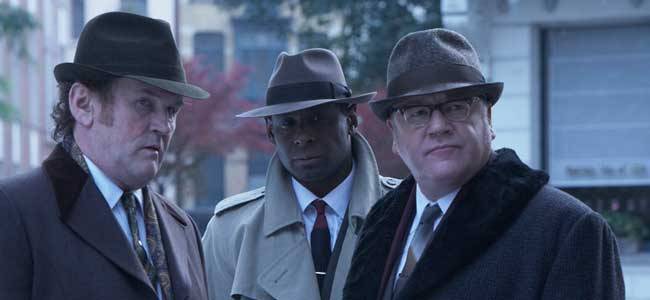


Here’s a little Brit bauble that got by me, and you and most everybody else when it popped out briefly back in 2012.
“The Hot Potato” was “inspired by a” true story about a stolen lump of uranium and all the trouble a couple of mugs — and the thugs they consult — have unloading it in the late 1960s.
It’s got Ray Winstone and a stand-out turn by his daughter Lois, along with Colm Meaney as a fight-fixing mobster, Jack Huston (“Ben-Hur,”American Hustle”), David Harewood (“Blood Diamond”) the wonderful John Lynch (“The Secret Garden,” “Best,” “In the Name of the Father”) and veteran bit player Derren Nesbitt, who played many a Nazi in his day.
And while this caper comedy isn’t a laugh riot, it’s damned funny at times and generally wry and daft in tone, a Cockney-accented “Hot Rock,” for those who remember that ’72 burglary-goes-bad comedy with Redford, Segal, Liebman and Mostel.
Redoubtable Ray plays Kenny, who runs a low-rent metal casting/metalwork shop that’s slowing going to seed when a young mate (Huston) shows up with a fancy and locked chrome shipping case he’s nicked at a salvage job after a fire or gas explosion or something.
They get it open, and see all these lead pellets surrounding something even heavier than the lead — “sort of a baked potato with ears.” They try chiseling it and sawing it. Not gold. Harder. Finally they find somebody who can tell them what the metal is, at least.
It’s uranium.
A couple of running gags in the movie are the fact that Kenny and Danny have to be reminded how “dangerous” this stuff is. They never give voice to what this stuff is used for. Have you ever tried to sell something you don’t dare take out of a lead casing, something used to make nuclear bombs?
It takes over half the movie for somebody to figure out, “get a Geiger counter.” Maybe that’ll help with the sale.
Kenny calls the shadiest guy he knows, Harry (Meaney). And Harry warns him and warns him again and then sets him up with underworld kingpins, “The Twins,” both played by Lynch. They aren’t really The Krays, but that’s who they’re meant to be.
The twins, seriously dangerous men with serious connections, set up a meeting. And being hardballers, they start our story down a comically torturous path, as the price they try to wrangle keeps going up and this portly, shifty German, Fritz (Nesbitt) they’re working with keeps playing the angles.
Kenny, Danny and bookkeeper Carole (Lois Winstone), Danny’s girlfriend, find themselves galivanting from Brussels to Ostend to Luxembourg to Rome.
“The Vatican? Where the Pope lives?”
“That’s good. Someone with a bit of money, at least!”
The running gags are light and plentiful here. Nobody, not the alleged CIA buyer (Harewood), not the various Germans, the Italian or Israeli, ever shows up with a bag of cash and a willingness to close the deal.
The mobsters beat up Kenny and Danny, who burn through cash buying plane tickets or fixing Danny’s 1961 Jaguar — which keeps getting shot up as double-crosses and chases become part of the adventure of it all.
Writer-director Tim Lewiston, who usually works in sound design (he also directed last year’s “There’s Always Hope”) gives the most complete character arc, and many of the funniest lines, to Winstone’s daughter, and she delivers. Carole goes from lovesick office manager to pistol-packing mama like ones she’s seen “in the pictures.”
“She thinks she’s Emma-Bloody-PEEL!”
And Nesbitt, finding a giggle every time there’s food in sight as he’s playing a glutton who literally shoves everything into his face, camps it up just enough to delight.
“Eye zink ve are beink FOLLOWED,” he mutters, at the wheel of the Jag in the Belgian countryside. Not to worry, “I used to fly Messerschmidt 109s! Zis car iss a BALLERINA in mein heart!”
Winstone the elder is deadpan, a thick-accented Cockney showing us how out of his depth Kenny is by every thing he doesn’t know about uranium and geopolitics. That mysterious would-be buyer they just met?
“MOSSAD!”
“I fought ‘is name was ‘arry!”
The “Hot Rock” comparison should tell you this is a tad old fashioned, with “Man from U.N.C.L.E” and “James-bleedin’-BOND” jokes, dated chases and a lot of stumbling to and fro without anybody getting any closer to paying up and collecting the goods.
I’m guessing the choppiness of the narrative slowed this to a crawl in theaters, never letting the picture get up a full head of steam. But streaming lessens such flaws, and good players stand out no matter how the story is unfolding around them.
If you’re a Winstone and Meaney fan, it’s got just enough of what they do best to get by, even if Winstone’s daughter and a guy who supported himself for decades by clicking his heels and demanding “Vere are your papers?” upstage them.
Rating: TV-14, violence, some profanity
Cast: Ray Winstone, Jack Huston, David Harewood, Lois Winstone, Derren Nesbitt, John Lynch and Colm Meaney.
Credits: Scripted and directed by Tim Lewiston. A FilmRise release on Tubi, Amazon, etc.
Running time: 1:38


