Classic Film Review: Tarantino-approved Spaghetti on the Trail — “The Hellbenders (I crudeli)” (1967)

Sergio Corbucci might have faded into obscurity if Spaghetti Western fiend Quentin Tarantino hadn’t reimagined his most famous character, Franco Nero’s “Django,” as an ex-slave avenger in “Django Unchained.”

Corbuccci made over 60 films, from sword and sandal fare of the early ’60s to 1980 genre trash like “Super Fuzz.” But he found his steadiest employment with Westerns, filmed on Spanish locations and Italian soundstages, blood-spattered action fare with looped sound, Italian actors, sometimes an American lead or two, occasionally even a German (Klaus Kinski).

The costumes, firearms and rolling stock was always just a little off in Spaghetti Westerns. Pre-Internet, there was only so much research a director of Italian quickies could do. That fake electronic-whistling gunshot sound effect is an instant give-away that you aren’t going to see any sagebrush, cactus or tumbleweeds in this particular film. Because while Spain might have had its share of weathered cantinas and vaguely European wagons and coaches, the flora and fauna is quite different.

“The Hellbenders,” titled “I crudeli” in Italian, was highlighted at a Tarantino-curated film festival and made it onto the “Hateful Eight” and “Django Unchained” director’s Top Ten Westerns list some years back.

It’s a post-Civil War massacre and robbery tale about unreconstructed Confederates led by the great Virginia-born character actor and Orson Welles chum Joseph Cotten. The film is best appreciated for the unsentimental view of the Confederacy it presents, something Hollywood was still avoiding in such contemporaneous fare as John Wayne’s “The Undefeated.”

The movie is a simple villains’ odyssey, get the cash and get it “home” to the South, and fend off Yankee cavalry, a nosey posse, Mexican bandits, a lone bushwhacker and Indians as they do. The siblings in Col. Jonas’s “Hellbenders” (named for a salamander) will fight over the mission, the money and the women they get to play a grieving widow escorting her late husband’s coffin to wherever they expect to bury him. And Col. Jonas will sound positively Falwellian in his mission to create his “new Confederacy of states created under God.”

But, about that mission. Does anybody think a lone coffin could hold enough greenback dollars to “reorganize the Confederacy, attack the Union and win back the South?” Confederates were never very good at math, then or now.

The one son of the colonel who seems savable might be Ben (Julián Mateos), the one who has to recruit a fresh “widow” (Norma Bengell) when their first one, a brassy, weepy drunk (María Martín) gets herself killed. Ben had a “different mother” from the other two (Gino Pernice and
Ángel Aranda), who are drooling savages. Ben is almost humane.

Corbucci puts on a staging, filming and editing a shootout tutorial in the film’s first set-piece, the ambush in which the cavalry escorting a load of worn out currency to a mint where it can be destroyed is wiped out.

There’s a cornball game of cheater’s poker in a Denton, Texas saloon, a borrowed Sergio Leone plot-point (treasure in a coffin to be dug up) and a less-than-Leone feel in the dialogue, the cheap costumes, too-tidy makeup, the looping and the not-Morricone score.

The film doesn’t dawdle between the way stations on this quest. But it lacks urgency, and even the fanaticism seems blase.

Critics at the time noted this was not one of Cotten’s better performances, and it most certainly isn’t. But one can appreciate the callous fanaticism for the Lost Cause, his dismissal of the slaughtered, foe and friend.

“Don’t fret about them, son. We’re not kin.”

But I’m not all-in on this film, which has its moments, just not enough to overcome the grating shortcomings Italy’s finest brought to America’s greatest gift to genre cinema.

When it comes to Spaghetti Westerns, there’s Chef Leone, and everybody else — Corbucci included — is just pasta in a can.

Rating: unrated, violence

Cast: Joseph Cotten, Norma Bengell, María Martín, Julián Mateos, Gino Pernice and
Ángel Aranda

Credits: Directed by Sergio Corbucci, scripted by Ugo Liberatore, José Gutiérrez Maesso, and Albert Band. An Embassy Pictures release on Tubi, Youtube, etc.

Running time: 1:32

Posted in Reviews, previews, profiles and movie news | Comments Off on Classic Film Review: Tarantino-approved Spaghetti on the Trail — “The Hellbenders (I crudeli)” (1967)

Netflixable? Turkish rom-com “Private Lesson” follows the International Formula

The new Turkish rom-com “Private Lesson” was filmed and set in Istanbul. But with its fashionable college kids on the make, sexy consenting adults flirting and showing a little skin, tech touches and the like, it could be set in Milan, Mumbai, Madrid, Mexico City or Miami.

Western culture and Hollywood mores have spread far and wide. And one of the reasons we take these trips Around the World with Netflix is to see how much alike world cinema, if not the world itself, reflects that. Watching these films just builds on my thesis that Netflix is Hollywoodizing global filmmaking faster than any big studio franchise.

With Netflix approving the projects and signing the checks in Spain, Uruguay, Italy, Poland, France or Indonesia, we’re seeing local versions and local customs imprinted on time-tested Hollywood formulae.

“Private Lesson” — the title has a Hollywood raciness because of what that implies in most every Western film that’s used it — is about an Istanbul influencer and makeover artist, a gorgeous young woman who teaches girls and young women in a secular corner of the Islamic world how to get what they want.

So there’s a little “What a Girl Wants” about it, with stakes that every now and then tip us off to Middle Eastern morals and dire or at least unpleasant Islamic consequences.

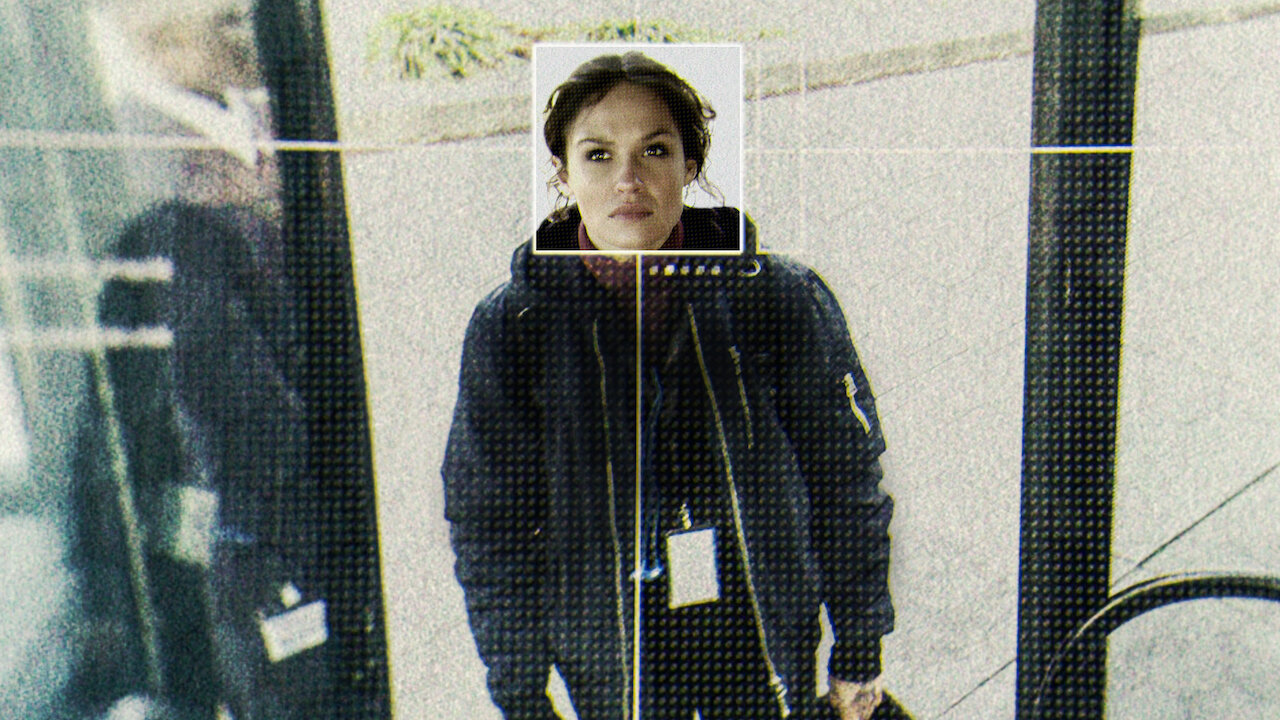
When “I want to be noticed” is a coed’s fondest wish, the midriff baring hotties at World University consult with Azra (Bensu Soral), who isn’t really enrolled there any more, but is still young enough to pass for a super-stylish grad student mingling with her peers.

She teaches them how to attract a man’s attention, how to place herself within his field of view at the right parties or clubs. She will call this school dean or that other responsible adult in her clients’ lives, pretending to be a teacher or a parent, just to provide cover for where they’re going tonight, trips they might take or dance classes their conservative parents wouldn’t approve.

But it’s a secret. The last thing Azra wants is several popular girls blabbing about her services in the restroom and having the university chancellor’s niece overhear them.

Hande (Helin Kandemir) is a studious bore, cosplaying as Afife Jale as she tries to sign classmates up to her “Imo” club on activities day. I mean, who wouldn’t want to meet and talk about “Immortal Literarians?”

But Hande lusts after the popular hunk Utku (Rami Narin). She blackmails Azra into taking her on. First lesson? Enough with the “comfortable” clothes!

“You don’t need ‘comfortable. You can be ‘comfortable’ when you’re old!”

Let’s start with lingerie shopping. And if you didn’t realize Turkey produced romantic comedies before now, you certainly won’t see that coming.

Hande learns “Men and women aren’t equal. We’re in balance.” That sounds almost traditional.

Another lesson? “What was Cinderella’s biggest mistake? She picked a guy interested only in appearances.”

A lot of these “rules” seem to contradict themselves — be a lady, dress sexier, “learn to say no” but sure, I’ll call and make an excuse so that you can hit this or that party.

In the tradition of scores of such mentoring comedies, Azra is thrown off her game when a bare-chested, cocky and self-centered fashion photographer (Halit Özgür Sari) moves into her apartment building and rudely imposes on her life.Burak becomes more attractive when he helps out with Hande, who falls into the “tequila shots” trap on her first night clubbing.

Director Kivanç Baruönü, who did the sci-fi comedy “Arif V 216,” doesn’t so much strike a balance between Westernized values and Islamic Conservatism here as normalize the sorts of things one sees in scores of North and South American and European rom-coms — many of them released by Netflix — for a Turkish audience.

Likewise, he and screenwriters Murat Disli and Yasemin Erturan are putting a palatable “tolerant” and quasi-feminist face on Turkey with films like this. As I said at the outset, hit the dubbed translate button on your Netflix settings and this film could take place literally anywhere that The Gap, Forever 21, H & M or Urban Outfitters is spoken. There’s no hint of ancient Istanbul about it.

That makes “Private Lesson” too generic to recommend. It’s too tame, trite and formulaic (there’s even a hip hacker called in to save girls from a nude-photo date predator) for Western tastes.

But like other Turkish rom-coms Netflix has released and I have reviewed, it’s a promising start.

Rating: TV-MA, adult situations, profanity

Cast: Bensu Soral, Halit Özgür Sari, Rami Narin and Helin Kandemir

Credits: Directed by Kivanç Baruönü, scripted by Murat Disli and Yasemin Erturan. A Netflix release.

Running time: 1:30

Posted in Reviews, previews, profiles and movie news | Comments Off on Netflixable? Turkish rom-com “Private Lesson” follows the International Formula

BOX OFFICE: Here comes the flood — “Avatar: The Way of Water” washes up a $134 million opening weekend?

Opening on over 4200 screens, upsold as a 3D movie “event,” James Cameron’s latest march to box office dominance began with a whopping $17 million in Thursday night showings.

Load that into the $53 million “opening day” (plus previews) , and “Avatar: The Way of Water” is on track to meet the many box office forecasts that suggested that even in a not-really-post-pandemic box office, it’d blow up to $150 million by midnight Sunday.

As Deadline.com points out, it could fall short of that, or just short, if Saturday doesn’t add $55-70 million to the coffers. But it almost certainly could and should. As low as $130, when earliest projections were as high as $175.

As it turned out, it hit much closer to the bottom end, $134

It’s simply stunning to behold, if a bit creaky and repetitive in its endless combat beats and returning villainy.

That 3D ticket (one third of the nation’s screens are so-equipped) is well worth the extra cash, and even a MiniMax version of IMAX screen should get the total immersion job done. Expect it to blow up “Max” numbers achieved by “Top Gun,” no sweat.

“Black Panther: Wakanda Forever” finally surrenders all the biggest screens, gives up the top spot at the box office and will finally drop below double-figures in box office take after being out close to two months. A $6 million weekend could push it over $420 million by end of biz Sunday.

“Violent Night” is adding over $5 million. “Strange World” continues to sell poorly, even though it’s the only big animated picture for families with small children out there. Save your money, Mom. Get Netflix and screen “Pinocchio.”

The tony, high-minded thriller “The Menu” is still a top five hit, and will be well north of $30 million by Sunday.

I’ll be updating this all weekend as the cash rolls in and Disney/20th Century brags about it.

Posted in Reviews, previews, profiles and movie news | Comments Off on BOX OFFICE: Here comes the flood — “Avatar: The Way of Water” washes up a $134 million opening weekend?

Movie Review: Friend Leads a Comic Lockdown Missing Person Hunt — “The Disappearance of Toby Blackwood”

It seems as if every film conceived and shot during the COVID lockdown found one novel way to turn the restrictions, claustrophobic stir-craziness and isolation conditions into an asset.

“7 Days” got the most out of the least. But if you cast two funny people with chemistry, that “lockdown happens during their first date” two-character romance can work.

“Stop and Go” took the lockdown on the road, two friends traveling to rescue one’s grandmother, who won’t be able to survive with closed stores and no contact or help from the outside world.

“Family Squares” got laughs out of the Zoom call split screen gimmick. “The Same Storm” drew a bigger cast and got more humor and a lot of pathos out of lives reduced to contact via Zoom. It’s the best of the lot.

And the farcical “The Disappearance of Toby Blackwood” manages a snappy Facetime cell phone montage of interviews with crackpots, the “subscribers” of a missing Youtube survivalist whose disappearance is investigated, from the comforts of their own homes, by a just-dumped guy who went to middle school with the missing nut, and a pal who is amped-up just to have something to do during lockdown.

The writing and one would assume improvising opportunities drew the biggest names in the cast in for quick-and-dirty cell phone questioning cameos that offered the chance to go down the rabbit hole of crackpot conspiracies played for breathless, ranting laughs.

“It’s the reptilians. It’s ALWAYS the reptilians!”

Here’s comic Maggie Maye, veteran character actor Luiz Guzman downloading this or that crazy theory. Joseph Russo and Jeremy Luke play sketchy, wired cousins worried and threatening anybody who might name them as “suspects” in this disappearance.

And is that Brit-accented loon with the beard really Simon Pegg?

“You find Dean Koontz, you find Toby Blackwood!”

Director, star and co-writer Joe Ahern has done a lot of things in front of and behind the camera for TV and film. He plays just-dumped Wes, who learns that nobody’s heard from this old friend who went nuts and got popular for it as the host of hundreds of insanely-stupid survivalist episodes of “Take Charge with Toby.”

“Always assume everybody’s out to get you.,” Toby Blackwood (co-writer Doug Mellard) preaches. “And that’s how you start a fire with spicy mustard and tin foil,” he says on another episode. “Remember, you’re gonna need a LOTTA gasoline, and matches!”

Among all his supportive get-together-on-Zoom friends, the one Wes listens to is the always-drinking or lighting up a pipe Luke (Grant Harvey), who has gotten into Toby’s videos and is bored enough to become obsessed, egging Wes in joining him for a social-distanced investigation while sheltering in place.

Depressed Wes starts wondering if Toby’s crank fans, his crackpot girlfriend (Dana DeLorenzo) or those sketchy cousins had something to do with his disappearance.

Then again, maybe he took on a “mission” to find the “real” Area 51, “where Bill Gates INVENTED this pandemic” and the vaccine, “which plants microchips” in everyone who takes it, helping facilitate some Amazon oligarchy global takeover.

Todd Giebenhain scores points as a private eye they consult whose chief training for the gig might have been watching “Cagney & Lacy” as a kid and who dresses like a thousand down-and-out TV gumshoes, the ones based in Florida retirement communities.

“Toby” himself is a funny creation, although the dopy videos he’s made, interspersed throughout the movie, lose their comic sting thanks to over-exposure.

“Disappearance” is a movie that begins with a little promise, peaks with that long montage of “sheeple” hating conspiracy nuts early on, and kind of sputters and limps to the finish line.

The leads are amusing in tiny doses, but even the funniest lockdown screenwriting wouldn’t have given them screen presence or a charismatic pop to the their punch-lining.

Like most make-work-with-our-down-time pandemic film projects, “Disappearance” is a sketch comedy idea that overstays its welcome, a short film that feels too long because it lacked enough top flight comic talent to make it come off.

Rating: unrated, a bloody injury, drug abuse, drinking and lots of profanity

Cast: Joe Ahern, Grant Harvey, Doug Mellard, Dana DeLorenzo, Natasha Hall, and Todd Giebenhain, with Luiz Guzman, Maggie Maye, Joseph Russo and Simon Pegg

Credits: Directed by Joe Ahern, scripted by Joe Ahern and Doug Mellard. A Gravitas Ventures release.

Running time: 1:17

Posted in Reviews, previews, profiles and movie news | Comments Off on Movie Review: Friend Leads a Comic Lockdown Missing Person Hunt — “The Disappearance of Toby Blackwood”

Movie Preview: Thus Spake “Barbie” Thustra

Next summer, Margot Robbie, Ryan Gosling, Will Ferrell and Kate McKinnon show up in Greta Gerwig’s take on the body image issues in plastic, “Barbie.”

Considering the classic film I reviewed this very AM, well I laughed my bunions off at this.

Posted in Reviews, previews, profiles and movie news | Comments Off on Movie Preview: Thus Spake “Barbie” Thustra

Movie Review: Eight Directors spitball “The Seven Faces of Jane”

I made a resolution not to bother with reviewing anthology films a few years back.

Basically, they’re a way of getting critics to review short films, which whatever their value in teaching filmmakers, helping them polish their craft and creating proof to agents and producers that they know what they’re doing with actors, crew and a camera, the audience for them is tiny. The audience for reviews of them consists of the filmmakers and their families (often the people who paid for the movie) — even tinier.

Considering how labor intensive they are for a critic — scores of names of actors, writers and directors to list and attach to each “short” — it’s much easier to use the four-letter word “pass” when they’re pitched.

Not that “The Seven Faces of Jane” is an anthology film, not like movies such as “Paris, J’taime” and “vhs.” It’s a tag team tale that the filmmakers describe as a filmed version of the Exquisite Corpse Game, usually done by having many hands draw on a sketch or group-effort painting.

Eight directors and eleven screenwriters would take one character — Jane, played by actress, writer and director Gillian Jacobs — and put her through a series of scenarios over the course of a day in which she drops her daughter off at camp. I like Gillian Jacobs (“Ibiza”). Let’s take a look.

Jacobs would write and direct the framing scenes that open and end it, and sequences by others would envision Jane driving her new hatchback around getting mixed up in mischief at a surreal coffee shop where her doppelganger works, getting “called in” by a long-dormant Svengali-like agent for an audition at a mausoleum and catching up with a former lover (Chido Nwokocha) as his Black friends and his Black Afro-funk ensemble and dance troupe play on a beach.

Joel McHale plays another almost-ex whom she bumps into, takes a hike with and has something like a tearful epiphany about paths not taken and high school reunions one might have been better off skipping.

Jane picks up an exotic hitchhiker (Emanuela Postacchini) in the desert on that oft-filmed lonely road outside of Joshua Tree. They dish on men as Jane gives off an “escaped” from a mental institution, possibly suicidal and behind the wheel vibe. Later she meets and tries to buck up a very unhappy Latina teen (Daniela Hernandez) who has stormed out of her quinceanera in this big, fancy dress which she hates and heels she can’t handle.

Look at the credits below and you can see some famous folks (Jacobs and Dr. Funnyman Ken Jeong) and some famous film surnames (Coppola, Cassavetes) that collaborated on this.

The segments of “Seven Faces” are competently shoehorned into this “corpse” of a narrative. But no, “Jane” doesn’t work as a feature. It’s the sort of indulgent bauble that might make the rounds of film festivals, where audiences will check out and appreciate short films and “experiments” or “games” like this.

Having a few famous names on board would help sell tickets, but again, only in a film festival.

Like too many films of this not-quite-genre, “Seven Faces” is both uneven and close to nonsensical. Like most of them that I’ve seen — mostly in film festivals — there are one or two stand-out segments strong enough to turn into a feature film.

Here, that’s the quinceanera segment. Jane turns about to be a Los Angeles native who spent a year studying abroad in Spain, who speaks Spanish and knows the 15th birthday coming out party tradition, knows a good Mexican food joint in the neighborhood where she stumbles into Rose, and is nothing but helpful and supportive of this unhappy girl having a very bad “special day.”

The hook? Rose lost her mother when she was young. She’s being raised by grandparents who are from Albuquerque, originally, who don’t necessarily connect to this culture either, but force it on her. Rose doesn’t even speak Spanish.

She “hates” the dress, which was her late mother’s. “I hate this neighborhood,” hates what her grandmother is forcing her to do, hates the Mexican food granny makes her cook.

That’s a script-flipping comedy pitch if I’ve ever heard one, the seed that could sprout into a full, funny and charming. No, I don’t know who wrote and/or directed it and have no interest digging any deeper into this to find out. Even the credits to this Frankenstein’s monster are tedious.

The rest of “The Seven Faces?” I liked the Afro-funk. And uh, I didn’t realize Ford was making Mustangs in hatchbacks again.

The folks involved wanted to play a game making a movie. Maybe next time sign up for “The 48 Hour Film Project” so that you’re not wasting a lot of people’s time on this experiment that failed. I’m not saying it’s a complete waste of time. I am saying it’s not worth one more second of mine.

Rating: unrated

Cast: Gillian Jacobs, Joel McHale, Sybil Azur, Chido Nwokocha, Daniela Hernandez, Emanuela Postacchini and Joni Reiis.

Credits: Directed by Gillian Jacobs, Gia Coppola, Boma Iluma, Ryan Heffington, Xan Cassavetes, Julian Acosta, Ken Jeong and Alex Takacs, scripted by Julian Acosta, Xan Cassavetes, Ben Del Vecchio, Ryan Heffington, Tran Ho, Boma Iluma, Nick Itwataki, Gillian Jacobs, Antonio Macia, Alex Takacs and Kaydee Volpi. A Gravitas Ventures release.

Running time: 1:32

Posted in Reviews, previews, profiles and movie news | Comments Off on Movie Review: Eight Directors spitball “The Seven Faces of Jane”

Netflixable? Homeless, aged “Togo” crosses drug dealers in his corner of Montevideo

Uruguayan filmmaker Israel Adrián Caetano gives an old Hollywood formula a fresh workout in “Togo,” a tale of a homeless old man that the local toughs underestimate at their own peril.

This Around the World with Netflix title is a tight, downbeat story as compact as its seaside Montevideo location. And while its ending may seem revenge-thriller cut and dried, we’re left wondering as the closing credits roll.

Whatever he used to be, Togo (Diego Alonso, quite good) has let his world shrink to a single city block, “my block,” in which he collects tips for directing shoppers into the compact parking lot of the local supermercado. The security guard at the market and a lot of neighbors feed him, as well. To them, he’s “looking out” for their barrio, keeping an eye on things.

He sleeps in between the roots in a tiny park that consists of a single tree, right across the street from the beach. He walks with a cane, moving slowly. But with this little bit of cash coming in, the donated meals and folks looking out for him, Togo’s got the day-to-day living business down, sharing his tips with the more organized fellow in a wheelchair who handles the next block over.

The delicate balance of their lives is tipped over when the local drug dealers kill one of their own on his block. And then there’s the apparently well-cared-for teen who shows up, drunk, slumming it as “homeless” by choice.

There’s a lot of symbolism in her name, Mercedes. Plainly she (Catalina Arrillaga) is somebody’s child, somebody fairly well off. And now her acting out against her disinterested parents has brought her under foot, a nuisance Togo can’t shake, but can’t abandon.

“I live here and I work here,” he protests. When she says she could do his “work,” they make a bet, which he assumes will get rid of her. “Everything I have” vs. everything she has to prove she can’t “guide cars” into the parking lot without screwing up.

Of course she loses, and then tries to limit what she’s paying out. Nothing doing. But as he goes through her backpack, he stuffs the money she just gave him back into it, notices everything else in it, and scolds her.

“Why do you want to live on the streets? You even have a credit card!”

“Togo” is about him finding out about her and us finding out about him, his tragic story, his secret, and the ways he will be tested when the drug dealers aren’t satisfied with killing one of their own. They want this block for themselves, as cover for their dealing.

Caetano, a veteran of Uruguayan TV, paints his picture with local color and casts this relationship in mournful tones. A neighbor dies in his apartment, alone, and the only way anybody realizes this is the smell.

“He needed her more than she needed him,” Togo says of the man, whose wife left him some time earlier. When a shocked Mercedes does what teens do when confronted with death, asking Togo if he’s ever thought of killing himself, she’s asking for we viewers as well.

“You don’t talk about dying when there’s death around,” Togo counsels.

The third act of this film turns more towards straight Hollywood revenge melodrama, but as predictable as it is, it still plays. The villains are well-cast and the fighting-back action beats scripted, shot and edited with professional flair.

With “Togo,” Caetano and his veteran South American cinema bit-player tell an intimate redemption tale with just enough turns away from formula to make it interesting, and a setting North Americans almost never see on screen — Montevideo by the sea.

Rating: TV-MA, violence, drug abuse

Cast: Diego Alonso and Catalina Arrillaga

Credits: Scripted and directed by Israel Adrián Caetano, A Netflix release.

Running time: 1:35

Posted in Reviews, previews, profiles and movie news | Comments Off on Netflixable? Homeless, aged “Togo” crosses drug dealers in his corner of Montevideo

Movie Preview: Cartels, crazed-killers and a kidnapping have Frank Grillo ready to burn down “Little Dixie”

Well-cut trailer, gives us the flavor but doesn’t give away the whole plot.

DEA agent dad’s kid is kidnapped? Things just got even more serious.

Feb. 3, “Little Dixie” explains itself.

Posted in Reviews, previews, profiles and movie news | Comments Off on Movie Preview: Cartels, crazed-killers and a kidnapping have Frank Grillo ready to burn down “Little Dixie”

Classic Film Review: “2001: A Space Odyssey,” Still Trippy after all these Years (1968)

One of the duller stretches between the combat sequences and alien life showcase moments of “Avatar: The Way of Water” gave me a few minutes to ponder what other movies produced visuals this stunning, this far beyond the Hollywood state-of-the-art of their era.

And that instantly brought to mind “2001: A Space Odyssey,” a landmark of science fiction cinema, a quaint artifact of the 1960s and undeniably one of the most beautiful, majestic films of all time.

It has been analyzed, parsed, investigated and written about more than virtually any other movie of its era. As a teen I devoured books on it and the obsessive eccentric who made it, Stanley Kubrick. So much had to be invented — effects tricks and low-light celluloid camera lenses — so much imagined, extrapolating from our “Space Race” present to thirty-three years into the future.

The new documentary “Jurassic Punk” brings “2001” to mind as well, as it is about the next era of Hollywood effects innovation — the transition from “optical effects” and camera tricks and hand-made models to computer generated effects. “2001” was the breakthrough film that allowed “Star Wars” to come to thrilling life less than a decade later. “The Abyss,” “Terminator 2” and “Jurassic Park” brought us to “Avatar.”

There was not much in the way of computer-generated-imagery in the era when computers were all mainframes with less versatility and utility than your average smart phone of today. Watching “2001” now, I was struck by how modern the graphics still seem, even if the switches and keyboards and mostly-cathode-ray-tube screens give away how dated the film is.

Back in 2018, the fiftieth anniversary of its release, writers revisited “2001” to note how much of “the future” it predicted actually came true. No, we still haven’t colonized the moon. Paying passenger space flight was and is still in its infancy and Pan Am is long dead and gone. But the astronauts on board the spermatozoa-shaped Discovery One spaceship bound for Jupiter can communicate and watch videos from tablets. And every so often, the design flourishes of “2001” — from its shimmering spaceport Hilton airport lounge to the suits the space bureaucrats wear to meetings to discuss what astronaut miners have found in the lunar crater named Tycho — make a comeback.

What connects “2001” to the latest “Avatar” most directly are the shimmering, pristine images put on the screen. Kubrick went for “accuracy” when depicting the pitch-blackness of space, and its silence. But every meticulously-designed, made and filmed model in “2001” is beautiful to behold. From the sleek Orion spaceliner that brings Dr. Haywood Floyd (William Sylvester) to a huge rotating and not-quite-finished space station, to the rotund, large lunar transport capsule/lander that gets him to the lunar base and the hovering shuttle bus that takes him to the crater where they’ve found an ancient black monolith, Discovery One and its EVA pods, everything we see in space is just eye-popping and elegantly conceived.

It took Ridley Scott and “Alien” to imagine space as a worked-in/lived-in environment, with ships that have to last for decades and decades, that would conserve energy and not be lit up like a new car showroom, repairs never quite finished, grime and decades of use and machinery that sweats and creaks and shows its wear.

The future tech in “The Way of Water” reflects that “Alien” sensibility — gear and vehicles built for combat and use in adverse conditions. Nobody’s spending the money to put white paint on anything traveling the cosmos or used to pacify and exploit alien worlds.

“2001” begins with “The Dawn of Man,” an ape overture that sees the first black monolith arrive to pass on the knowledge of tools and willingness to commit violence to the pre-human apes, played by actors in thin, facially-expressive ape suits.

Here’s the big difference between the apes of “2001” and the striking motion-captured CGI version in the recent “Planet of the Apes” franchise — moist, expressive and distinctly human eyes. Animation can make their movements more chimp like, but in ape suits or motion-capture leotards, humans are still “playing” these sentient simians and computing power still can only manage a convincingly sinister glower as far as the eyes go.

Kubrick’s depiction of his and Arthur C. Clarke’s “first contact” sequence is near seamless blend of soundstage footage edited into stunning 70mm or Cinerama -filmed natural vistas. But the edits used to depict the passage of time are simple Dawn of Cinema blackouts, and the money moment in this sequence is an old-fashioned slow-motion montage of apes learning to use thighbones and sticks as weapons to kill game and eat meat and get strong enough to overwhelm the ape tribe that took their water hole.

The “Dawn” sequence gives way to the “2001” present day. A scientist/technocrat (Sylvester’s Dr. Floyd) travels to the moon, ostensibly on a near-routine visit, to help a “council” come to a decision about what to do with this discovery of an alien-made object (monolith) buried beneath the lunar surface.

Kubrick and Clarke correctly predicted that America and Russia would still be at odds, even in an era of space cooperation. “We are not alone in the cosmos” would just be another secret they have to keep from the ideological rival spacefaring power, which also has a presence on the moon.

When this black lunar monolith is exposed to sunlight for the first time in many millennia, it beams a signal to the vicinity of Jupiter. That’s why the Discovery One — huge, modular, its segments linked by girders — was built and/or repurposed for a trip to Jupiter, with most of its crew in cryo-sleep and only two astronauts (Keir Dullea and Gary Lockwood) awake during the long passage as the computer HAL 9000 (mesmerizingly voiced by Douglas Rain) runs the ship for them.

What could go wrong with that?

Kubrick’s biggest culture-shifting coup might have been musical, turning Richard Strauss’s tone poem “Also Sprach Zarathustra” into an epoch underscoring cliche. Even Elvis stole it. Hell, here’s the trailer to the Margot Robbie “Barbie” movie sending it up. But in “2001,” this audio punchline is still a thrilling effect every time one watches and hears it.

To this day, you hear that thunderous piece used as an overture under the first stunning shot of planets aligning as the title “2001: A Space Odyssey” appears and you are overwhelmed with the idea that this isn’t just a movie. It’s an event.

Kubrick’s use of Johann Strauss waltzes to underscore the middle lunar act’s spaceflight scenes gives them a timelessness, even if then and now the music has a hint of “cute” and “quaint” about it. Fifty years and counting later, and we’ve got the “Guardians of the Galaxy” cruising to Blue Swede’s “Oooga Chugga” song, “Hooked on a Feeling.” Progress.

The quiet of conversations throughout “2001” seems an extrapolation of what Tom Wolfe later labeled “The Right Stuff” — the cool professionalism astronauts needed to bring to even the most dire situations. One moment that seems terribly retro in the limited talk and communications in the film is guessing that even in the distant future, Earth to spaceship conversations would be in the clipped, sing-songy staccato of a 1960s NASA CapCom (Frank Miller), speech designed for clarity in an age of staticky analog radio communications between noisy planes and combat radio command centers, or Mercury, Gemini and Apollo capsules and “Houston.”

And that head-trip third act, when an astronaut has proven to whoever or whatever made those monoliths that he had the “Right Stuff” to get to Jupiter — including displaying the cold-bloodedness needed to kill a murderous computer — is still “out there,” mysterious, non-narrative and non-verbal and not exactly nonsensical. But indulgent, to be sure.

In the 1960s, movies were freer to just immerse you and move you along, with or without waypoints on a narrative. Can you imagine a corporate-owned studio giving a James Cameron the cash to tell a “story” this obscure, symbolic and opaque today? Aside from Netflix, which may have spent its way out of the “indulge great filmmakers” stage of its adolescence? That’s why Cameron saddled “Avatar” with its colonialism narrative and combat focus.

As anyone who goes down the Stanley Kubrick rabbit hole knows, you can’t get too deep into Kubrick and cannot see “2001” too many times. Like “Citizen Kane” and the great works of Kurosawa, Godard and a few others, there’s something new to pick up on and pick at every time you watch it.

I hadn’t seen the film in many years. Kubrick strikes me as a filmmaker one can outgrow, but still come back to. But every time I revisit it I’m reminded of every other time I’ve seen it, from childhood (left to myself to watch it in the lone cinema in my grandmother’s town of Franklin, Va.), college (a Unitarian church screening in Roanoke, Va.), a 70mm revival showing in the ’80s, that first DVD copy. And every time, something new or a different angle to seeing it presents itself.

These days, I’m still inclined to think that third act is more obtuse than it needed to be. But “2001” stands taller and taller over the years in one last important regard, one that the gorgeous-looking “Avatar: The Way of Water” summons up.

Kubrick, production designer Tony Masters, cinematographer Geoffrey Unsworth and their crew made a thing of great beauty, one of the most stunning movies ever filmed in color. It took half a century of digital improvements and 3D enhancements for James Cameron’s latest “Avatar” to even merit a comparison.

Rating: G

Cast: Keir Dullea, Gary Lockwood, William Sylvester, Ed Bishop Margaret Tyzack, Vivien Kubrick and the voice of Douglas Rain

Credits: Directed by Stanley Kubrick, scripted by Stanley Kubrick and Arthur C. Clarke. An MGM release available on Amazon, Tubi and BluRay.

Running time: 2:29

Posted in Reviews, previews, profiles and movie news | Comments Off on Classic Film Review: “2001: A Space Odyssey,” Still Trippy after all these Years (1968)

Movie Review: Hollywood at its Whore of “Babylon” peak

Damien Chazelle’s “Babylon” is the movie viewing equivalent of being assaulted by a hot mess, perhaps the hottest hot mess you’ve ever met.

Even as it’s shouting at you and unpleasant, even when you’re most aware that “this will never work out,” you’re bowled over, marveling at how “hot” this mess is.

A sordid, seamy fantasia on Hollywood’s “pre-Motion Picture Code” era of unsafe sets, unsafe drugs and unsafe and uninhibited sex, it is over three hours of every unsavory story you’ve ever read about those freewheeling, scandalous years. Names of stars and would-be stars have been changed, but if you know the lurid lore of 1920s “Babylon” you’ll have some idea of who’s who, and who is doing what to whom.

Nicknamed “Babylon” long before Kenneth Anger’s scandal-mongering expose “Hollywood Babylon” was published, the director who gave us “La La Land” sets out to show us the “real” Hollywoodland. He yanks aside the curtain of just how “Gatsby on Steroids” crazy it all was — decadent, drugged up, oversexed, unpoliced and Prohibition Era drunk.

And if you thought the shock-to-the-system that the coming of “talkies” heralded was no scarier and crueler than “Singin’ in the Rain” depicted it, friend are you in for an awakening.

Brad Pitt stars as Jack Conrad, a mustachioed John Gilbert type at the very top, aside from his latest wife (Olivia Wilde) cussing him out and dumping him as he swaggers into the latest 1926 baccanale, the sort of hedonistic no-holds-barred soiree a studio chief (Jeff Garlin as a Weinstein Golden Age type) would throw back then, a boozy/druggy party filled with hot jazz, hot stars and even hotter wannabes.

Jack is jaded, over doing the old costumed epic nonsense so popular with studio execs. He pretentiously talks up “the art,” wishes he could make films more like those coming from Europe, and reverently references architecture as if has mastered that art, too. Which sounds a lot like Brad Pitt.

Margot Robbie is Nellie LaRoy, a would-be EveryStarlet and uninhibited wild child who shows up drunk, wrecks whoever’s roadster she rolls up in, and proceeds to flash it and “work it” in search of her moment of discovery.

“Honey, you either ARE a star, or you ain’t. You don’t ‘become one.'”

Jovan Adepo of “Fences” and “Overlord” is “hot jazz” virtuoso Sidney Palmer, a Louis Armstrong type who faces less racism in Hollywood than perhaps he would in the rest of the country, until that humiliating moment when he figures out these white folks don’t know how to light and photograph Black folks. They want him to cover his face in burnt cork so that he looks like the rest of his band.

And the film’s fourth distinct point of view is of the Mexican immigrant Manny (Diego Calva of Netflix’s Mexican series “Unstoppable”). Manny is just a guy bamboozled into getting an elephant to this party and is perhaps the most iconic Hollywood “type” of all. He’s a fixer. He’s that person on the studio lot or on location who takes an assignment, a whim or a wish by those in charge and by God makes it happen. He gets that elephant to that party, kids. Damn straight he does.

There’s always a place in show business for a can-do hustler like Manny. Jack picks up on Manny’s superpower. Directors, studio chiefs, and everybody in between will be just as impressed as he rises up the food chain. But at that party, Manny bumps into Nellie and is smitten by this hot mess in a way that’s going to last this entire three hour and eight minute epic.

Labeling “Babylon” itself a “hot mess” doesn’t just refer to the stars and starlets misbehaving as if there’s no tomorrow — because as we see, people were killed in on-set accidents, drunkenly driving home from parties, overdosing on drugs and alcohol or sexually assaulted by the perverts prowling such parties. Careers ended in a lot of ways, and the end was too often terminal when the dreams were this big and the fall could be that steep.

Chazelle accentuates the ugliness, opening the film with projectile pachyderm pooping and as many shots of bombshell du jour Margot Robbie vomiting as her contract allows. It’s a movie that positively reeks of sweat and sex and vomit and desperation.

As the thunderous jazz score by “La la Land” composer Justin Hurwitz pins you to your seat in that cacophonous, roiling opening act, it really does feel as if Chazelle is assaulting both the senses and the sensibilities of anybody willing to be plunged into this inferno.

We go to the set of a Medieval epic, and note that out there, in a Los Angeles with less development and more wide open spaces, multiple scenes and multiple pictures are being shot in the same valley, at the same time. Actors stagger in straight from that party and are greeted with a different sort of shouting, extras-wrangling bedlam.

One can’t help but wonder if that experience wasn’t shared by the players in this film about making films, finding your way through managed mayhem. Pitt is grand as the sage veteran of the work and the scene. Robbie is carnal chaos incarnate, and the only way she and Nellie can get through this is by crowd surfing the riot Chazelle is staging and filming.

For me, the first sign of genius is when the second act begins. The overnight revolution that “The Jazz Singer” forced on Hollywood — “talking” and singing pictures — turns riotous, rowdy moviemakers into frazzled “QUIET on the SET!” Nazis. All are enslaved by this new god, the microphone. “Babylon” turns chillingly quiet.

In one brilliant and agonizing sequence, the now-established B-movie star Nellie must endure take after take of an inane under-scripted scene with no comic payoff, struggling to bring some life via some “acting,” but forced to hit her mark and say her line in the precise spot underneath the heavy microphone, no matter what.

A camera operator, condemned to run the noisy contraption inside of a suffocating soundproof booth, gasps in protest. An assistant director blows his top and Nellie loses it as well as one and all worry if this new way of doing things won’t just take the freedom and “fun” out of their work. It could put anybody who can’t adapt out of a well-paying, ego-and-vice-feeding job.

There’s just so much to take in that even the gossip columnist (Jean Smart, venomous and costumed like silent cinema era Gloria Swanson) has trouble keeping up.

Red Hot Chili Peppers icon Flea plays a mobsterish studio “fixer.” Lukas Haas is a wealthy Angelino producer pal of Jack’s given to falling for every starlet who crosses his path and Tobey Maguire is the kind of mobster who gets rich in such dens of iniquity, supplying every vice — drugs, sex and gambling credit.

Famous names like William Randolph Hearst, his paramour actress Marion Davies and MGM wunderkind Irving Thalberg (Max Minghella) flit in and out. Li Lun Li is Lady Fay Zhu, an R-rated chanteuse and silent film titles-writer who happens to be stunning. She is Chinese-American and a lesbian, a woman with all sorts of barriers to making a name for herself once sound comes in and the production code changed employment conditions via contracts with “morality” clauses.

“Babylon” wears out its welcome before it brings these stories to their logical and/or grim conclusions. But for a film fanatic, it grows more fascinating the further we get away from that soundtrack-on-stun/eyes-scorching opening act.

It compares to Tarantino’s “Once Upon a Time…in Hollywood” in glorious ways, and excessive, crude and coarse ones.

For all its fictionalized 1926-34 “history,” the Hollywood period Chazelle really summons up here is the late’40s and early 1950s, when desperate film studios were first confronted with the cathode ray tube TVs flooding America.

“Make it BIGGER” became the mantra. “Make it LOUDER. And in STEREO.”

“Babylon” is gorgeous and grotesque, huge, noisy, and unlike anything else we’ve seen or heard on screen this year. Like “Avatar: The Way of Water,” this isn’t just a movie, it’s an event. And big screen events, even the hot messes, aren’t meant to be watched on Netflix on your iPhone.

Rating: R for strong and crude sexual content, graphic nudity, bloody violence, drug use, and pervasive language.

Cast: Brad Pitt, Margot Robbie, Diego Calva, Jean Smart, Jovan Adepo, Li Jun Li, Jeff Garlin, Flea, Olivia Wilde, Lukas Haas and Tobey Maguire

Credits: Scripted and directed by Damien Chazelle. A Paramount release.

Running time: 3″08

Posted in Reviews, previews, profiles and movie news | Comments Off on Movie Review: Hollywood at its Whore of “Babylon” peak