


Here’s a thought.
Of the legions of Hollywood offspring who became “nepo baby” movie stars, Charlie Sheen may be the only one to question his status and how he got it, who developed guilt over his fame and even his gifts and feels he doesn’t “deserve it.”
That insight is from Sheen’s longest-serving co-star, Jon Cryer (“Two and a Half Men”), a smart cookie who has observed the wonder and the terror of Charlie Sheen — son of Martin, brother of Emilio — up close. He’s experienced the “regular guy” charm. He’s seen his own livelihood battered by Sheen’s addictions.
And, as he says in the new two-part documentarty “aka Charlie Sheen,” he’s noticed that “consequences” never keep cuddly, charming Charlie from making another comeback, which is why Cryer was a reluctant participant in this ups-and-downs/Charlie-in-his-Own-Words documentary.
He’s not sure the world, or Charlie, needs a “comeback” to happen.
Cryer, Sheen’s old pal and childhood neighbor Sean Penn, Sheen’s ex-wife Denise Richards and his former “boss,” “Two and a Half Men” creator Chuck Lorre are among the canniest observers and analyzers of this “icon of decadence,” as Cryer describes Sheen.
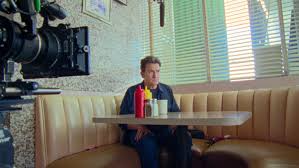
But Sheen himself, interviewed in a marathon session or two by filmmaker Andrew Renzi (“Ready for War,” Netflix’s “Pepsi, Where’s My Jet?”) in a booth in closed-after-hours Chips Diner, is the star attraction, the spinner, rationalizer, deflecter and teller of hard unpleasant truths in the story of his star-studded, sexually adventurous, cocaine-and-everything-else addicted life.
“If you ask Charlie did he do this,” Penn avers, “he’s gonna tell you the truth.”
Penn’s the expert on fame and addiction and “public life” in this dirty laundry doc. Richards, the second of Sheen’s ex-wives — famous since “Wild Things,” his wife and sometime co-star during the “Two and a Half Men” meltdown — brings the pathos, all that the man kept throwing away. “Hollywood Madam” Heidi Fleiss is here to bring judgement, the woman he threw under the bus after getting caught hiring her prostitutes.
And Marco is here to talk about the drugs, drugs which Marco supplied Charlie with for years. “My pal” Charlie calls him. Marco’s got home videos and selfies to give him street cred and Charlie cred.
Who takes SELFIES with their drug dealer? Charlie effing Sheen, that’s who.
No, he’s not like us, and it’s not just him who says so. His Keith Richards tolerance for controlled or banned substances leaves people like third ex wife Brooke Mueller in awe and even gives Penn pause.
Sheen is here to speak his “truth,” own to a lot of it and blame some of it one this or that drug and his struggle with it at the time as he answers Renzi’s off-camera questions, queries that probe more than challenge, but that take him and us into the worst of the worst of Charlie Sheen.
Sheen also provides “structure” to his rise and fall, “comeback” and “come back again” story.
With fame, there was “Partying.” Then “Partying with Problems.” And finally that devolved into “Just Problems.” The fact that Shee’s still here tells us there might be a more upbeat ending after those three “chapters” than you’d expect.
Home movies with brothers Emilio Estevez (who declined to participate) and Ramon Estevez (interviewed) sister Renée Estevez (not interviewed) show a Super 8 movie-making obsessed childhood in pre-super wealth Malibu and parenting that had the family traipsing off to movie star dad Martin Sheen’s (not interviewed) film locations (the Philippines for “Apocalypse Now”).
The love and support of Dad (Mom is almost never mentioned) is a constant, from Martin giving Charlie the one bit of coaching he needed to launch his career with a one-scene turn in “Ferris Bueller’s Day Off” to Martin urging the public to “pray for Charlie” after one near-fatal drug-induced collapse, prayers the elder Sheen had been asking journalists to provide for years any time he met the press.
But we get a hint that maybe distracted ’70s parenting was a part of this mix, too. Charlie, his siblings and neighbor kids, were into “weed” in their tweens. That came after his parents’ “naked” around the house years.
Sheen’s a fun storyteller, and he relates how fellow nepo-baby and childhood friend Jennifer Gray got him that one scene role in “Ferris,” and how he borrowed older brother Ramon’s leather jacket and stayed up all night to create the “look” of his police station delinquent in the film.
He loved sports, and revels in his basketball encounter with Michael Jordan and a close friend verifies his baseball skills, even “just after he got outta rehab.”
Sheen laments having to give up “The Karate Kid” big break for a C-movie he agreed to make in Eastern Europe. So he made his screen debut with George Clooney and Laura Dern and Louise Fletcher in “Grizzly II,” a bomb nobody saw.
“Platoon” came calling, then “Wall Street.” Penn astutely notes how Charlie’s screen career mirrored his dad’s — a punk in “Badlands,” a Vietnam soldier in Apocalpyse” and so on.
Sheen regales us with the heady fame that came, with little effort, in his peak years and his shift to comedy — “Hot Shots,” “Major League.” The world was his oyster. But competing with pal and running mate Nic Cage on partying binges sealed his fate. He’d get out of control. And time and again there’d be “no consequences” for it.
The entire part two of “aka Charlie Sheen” is about the reckoning that came and the public’s disturbing reaction to it when the wheels finally came off.
Continue reading











 Movie Nation