
We’ve had months of hype for this AI robot doll turns murderous thriller.
Universal seems high on it. Let’s see what the deal is.
We’ve had months of hype for this AI robot doll turns murderous thriller.
Universal seems high on it. Let’s see what the deal is.

Legend has it that Clint Eastwood’s first move when accepting a script — as an actor or a director — is to go through it and slash extraneous dialogue, leaving just enough to have the story make sense.
I guess they don’t teach that sort of Hollywood lore and accepted-wisdom in film school these days. Because when Nic Cage finally got around to doing his first-ever Western, “The Old Way,” some greenhorn got’hold of the script and tried to turn it into a The Compleat Works of Wm. Shakespeare.It’s a simple vengeance quest, and aside from the Spirit Halloween store mustache he wears in the opening scene, Cage isn’t terrible in it. But. That. Script.
Nobody in this thing says three words when 473 will do. It’s almost played as a joke, all these long-winded general store customers, outlaws, U.S. marshals and the like, launching into soliloquies. But the joke isn’t funny.It’s as if screenwriter Carl. W. Lucas (“The Wave”) watched one Western, it was “True Grit,” and he decided everybody had to talk as much as Mattie Ross, but didn’t realize he’s no (novelist) Charles Portis.
When the “retired” gunman’s wife (Kerry Knuppe) is grabbed by the desperados who catch her at home alone, it isn’t enough that she sputters the cliche “You boys are in a world of hurt,” as a threat. “You boys have woke up the Devil” is another. And on and on she goes.This starts with the opening scene and carries on all the way to the epilogue, one character after another getting diarrhea of the mouth, monologuing, repeating himself or herself, as if the screenwriter was trying out lines that he was sure would mostly wind up on the cutting room floor — with the weakest words edited out. As they should have been.
A marshal (veteran character actor Nick Searcy) monologues the tween-age daughter (Ryan Kiera Armstrong) a list of what she doesn’t know about her store-keeper father. It’s a short list, thin on details, just repeated ad nauseum.“Your daddy about the meanest son of a bitch I ever met, pardon my language,” he declares. We get it. She gets it. But on he drones.
“Your daddy was not a good man…Your daddy was a violent man.”Lucas, who scripted a forgotten Justin Long action pic, “The Wave,” isn’t a screenwriter. He’s a Western cliche aggregator. And director Brett Donowho, who has been one of those trying to wring the last ounce of acting out of Bruce Willis (“Acts of Violence”), lets him get away with it.
The plot — Cage plays a mustachioed town-tamer who intervenes, belatedly, when a (long-winded) hanging is interrupted, and winds up shooting the condemned man just as he’s about to escape, and right in front of the man’s kid.That kid’s going to want revenge for that.
“Twenty years later” Colton Briggs (Cage) is a family man in another town, impatiently listening to his prattling-on daughter and long-winded customers at his town store, when one day, his past catches up to them. As his wife threatened the outlaws — Nepo Baby Noah Le Gros plays the gang leader, screen veterans Abraham Benrubi and Clint Howard are members of the gang — Briggs will have his revenge.That simple quest, packaged in a 95 minute movie, takes forever to play out thanks to one eye-rolling Pause for a Monologue after another.
Cage, who will be 60 next January, looks at home in the saddle and strikes a mean pose in a hat and duster. If John Wayne could hairpiece-and -dye his way through sagebrush sagas into his 70s, why shouldn’t Oscar-winning B-movie King Nicolas Cage do the same?But next time, maybe he should take a little more responsibility for what’s being filmed. Maybe take on at least some semblance of Clint. Bring a Sharpie to that first read-through, and commence to editing right on the spot. Remind the lesser lights around you that the movie rule is, “Don’t tell us, SHOW us.”

Rating: R for violence
Cast: Nicolas Cage, Ryan Kiera Armstrong, Noah Le Gros, Kerry Knuppe, Nick Searcy, Abraham Benrubi and Clint Howard.
Credits: Directed by Brett Donowho, scripted by Carl W. Lucas. A Saban Films release.
Running time: 1:35
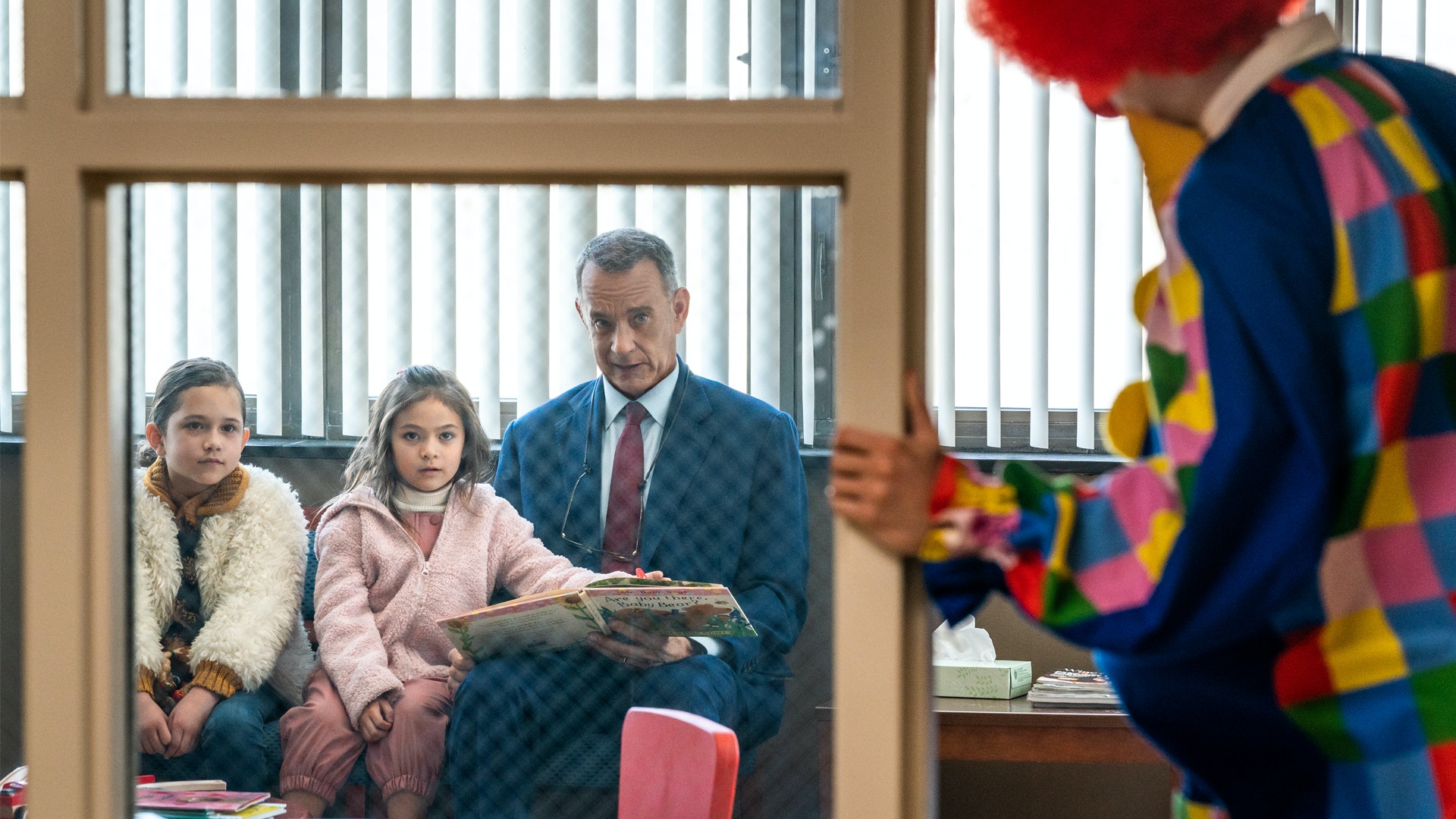
Every neighborhood has one, that perpetually prickly “You kids get off my lawn!” martinet. He lives, in his mind, in an ordered universe. And all the “idiots” around him, at work, at home and in life, are screwing that up.
“Codgers” is our most affectionate name for them.
Tom Hanks cannot help but play the soft side of just such a codger in “A Man Called Otto,” a maudlin, drawn-out to the point of “endless” remake of an Oscar-nominated international hit from Sweden a few years back.
Director Marc Forster eschews action (“World War Z”) for his “Kite Runner/Finding Neverland” sentimental side in a movie that is affecting, here and there, and resonates because sad, embittered loneliness is a universal curse of old age. As I pointed out in my review of the Swedish film, “A Man Called Ove, “the bitter have their reasons.”
But the previous film and the novel it is based on work in ways this sunnier, sappier Hollywood one simply can’t. The metaphor of a Swedish film about a lonely, suicidal widower who finds renewed purpose in the inept-at-home-ownership immigrants who move in across the street may translate. It’s the film’s suicide attempts that don’t land as dark comedy laughs this time.
The Swedes have a lot more experience with that sort of thing.
Otto is an exacting 60something who expects everybody to follow the rules, especially in the townhouse subdivision he’s lived much of his life. “Idiots” who can’t properly sort their recycling, won’t clean up after their dogs, who fling unwanted ad circulars on every lawn and treat this gated, parking-by-permit-only oasis the way people do these days — as if “rules” are for “other” people — get an earful from Otto.
We see him storm out of his retirement “send off” at the steel mill (Pittsburgh and Eastern Ohio were filming locations) in a huff and demand to “see the manager” at his local big box hardware store when they won’t sell him five feet of rope as “we sell it by the yard.”
The rope and the metal shackle he bought are needed at home. Otto testily shuts off his phone service and his electricity, bickers with the gas company, fetches his drill and mounts a hook on the ceiling of his living room. That’s where five feet of rope will become a noose.
He puts on his best suit, and…
As efficient and competent as he is about everything else, we’d expect this to go off without much of a hitch. But then these “idiots” who can’t back a U-Haul trailer into a parking space across the street distract him. And this kind of adult incompetence he cannot tolerate.
Marisol (Mariana Treviño) is pregnant, animated and Hispanic, chattering directions at hapless Tommy (Manuel Garcia-Rulfo). Before he knows it, Otto is intervening in their sloppy parking job. And thanks to everything else these new renters don’t know how to do, or have the tools to do, Otto is drawn into their lives.
Marisol’s “Are you always this unfriendly?” falls on deaf ears. But her proffered Tupperware tubs of assorted Central and South American delicacies (she grew up all over) might wear him down. His longtime neighbors might still get the curt growls, and the developers intent on buying out this subdivision his rage.
Bubbly, talks-with-her-mouth-and-hands Marisol is harder to resist. Even when it comes to the stray cat that shows up. Not that Otto has been completely distracted from his main objective — ending this misery of a life.
Continue reading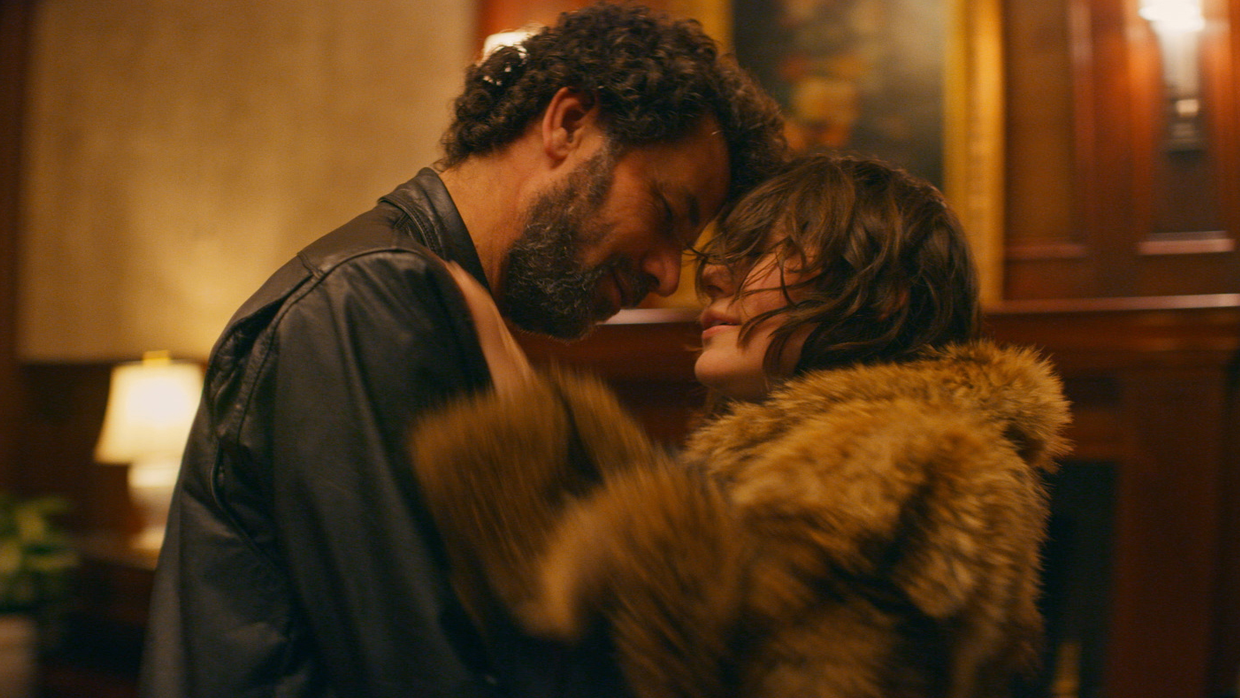

They seem like such a nice couple. He’s strolling around the grounds of their gated subdivision in his robe on a chilly winter’s morning. She’s sleeping in.
When she wakes, she wants him to repeat a “lost at sea/remember why we made the journey together” toast he once made to her. He’s got her first cocktail of the day in hand, a mimosa from the looks of it.
They are from different parts of the world. He’s Middle Eastern. She’s Eastern European, perhaps Russian, and English is their common language. But Nijm and Irina plainly communicate in more physical ways, with or without alcohol erasing any inhibitions.
But within a few minutes, we figure out that they don’t actually belong here. This McMansion in suburban Chicago (Palatine, Ill.)? This open bar? That mink stole? “Borrowed.”
They are “Grasshoppers,” just another word for squatters of the “locust” family. They have the run of almost this entire neighborhood of second homes whose wealthy owners winter in warmer climes.
Writer-director Brad Bischoff’s debut feature is a day-in-the-life riff on squatting, class and class resentment, aspirations, love and “family.” It makes a compelling, compact showcase for stars Iva Gocheva and Saleh Bakri. They play lovers who happen to be alcoholic outlaws.
Over the course of the day, they drink their way around their corner of the world, breaking into houses, crashing a realtor’s “open house” and invited in by the few neighbors still around, who accept their improvised lies and casual chutzpah as evidence that they “belong.”
This couple, whose refer to each other as “husband” and “wife,” are co-dependent co-conspirators. He is something of a revolutionary, rudely muttering resentful insults at the “haves” that have what he never will, and more than their share of it, to boot. He might be right, but he’s quite the jerk about it, even to a realtor, a restaurant’s sommelier, a friendly customer or neighbor who bends over backwards to “be nice” and never quite patronizing.
She is talking about “family” and “the future,” in the way women in societies all over the world do. She might be pregnant. But sure, a chocolate martini would be great! Because there couldn’t be a “future” in living like this, and with this guy.
Oh, and that open house? What better way to stick it to the man than having sex in these absentee landowners’ bathroom?
Bischoff has grafted a “Days of Wine and Roses” romantic bender onto what is normally a more fraught “Homeless in America” story, with the geopolitics of migration and the unseemly accumulation of wealth by the tax-privileged rich as subtexts.
Bischoff has created a bracing first feature in which society’s designated losers mask their bitterness in contempt and their desperation in alcohol.
Bakri and Gocheva let us see the flawed logic and painful realizations that this couple are not “really THESE people,” the sorts who own multiple McMansions and decorate in the “a bit gaudy” style. And whatever dreams they harbor, they never will be.
The cleverness in the performances is that they never wholly repel us, but never exactly invite our sympathy and let us root for them either. Older viewers will cringe a little at what they’re doing. Younger ones, facing economically-limited futures, might wonder if they’d have Irina and Nimj’s nerve.

Rating: unrated, sex, alcohol abuse, profanity
Cast: Saleh Bakri, Iva Gocheva
Credits: Scripted and directed by Brad Bischoff. A Gravitas release.
Running time: 1:20
It’s a menace the single woman thriller with gimmick casting fleshing out the ensemble.
Paris Hilton, Pamela Anderson, G-Easy, Winnie Harlowe, Deadass, Luis Guzman, Sky Ferreira, Jake Weary — a slasher thriller with laughs?
Jan. 20.
So Keaton and Richard Gere are a couple, and Sarandon and William H. Macy are a couple, only they’re cheating on each other with each other.
If you follow.
And one couple’s daughter (Roberts) is stuck with the commitment-phobic son (Luke Bracey) of the other.
Only they haven’t met until they do meet — at a meet-the-potential-in-laws get together.
Jan. 27 this pre-V-Day rom-com rolls out.
There’s something about the world’s first detective novelist that makes writers and filmmakers envision him as a gentleman sleuth.
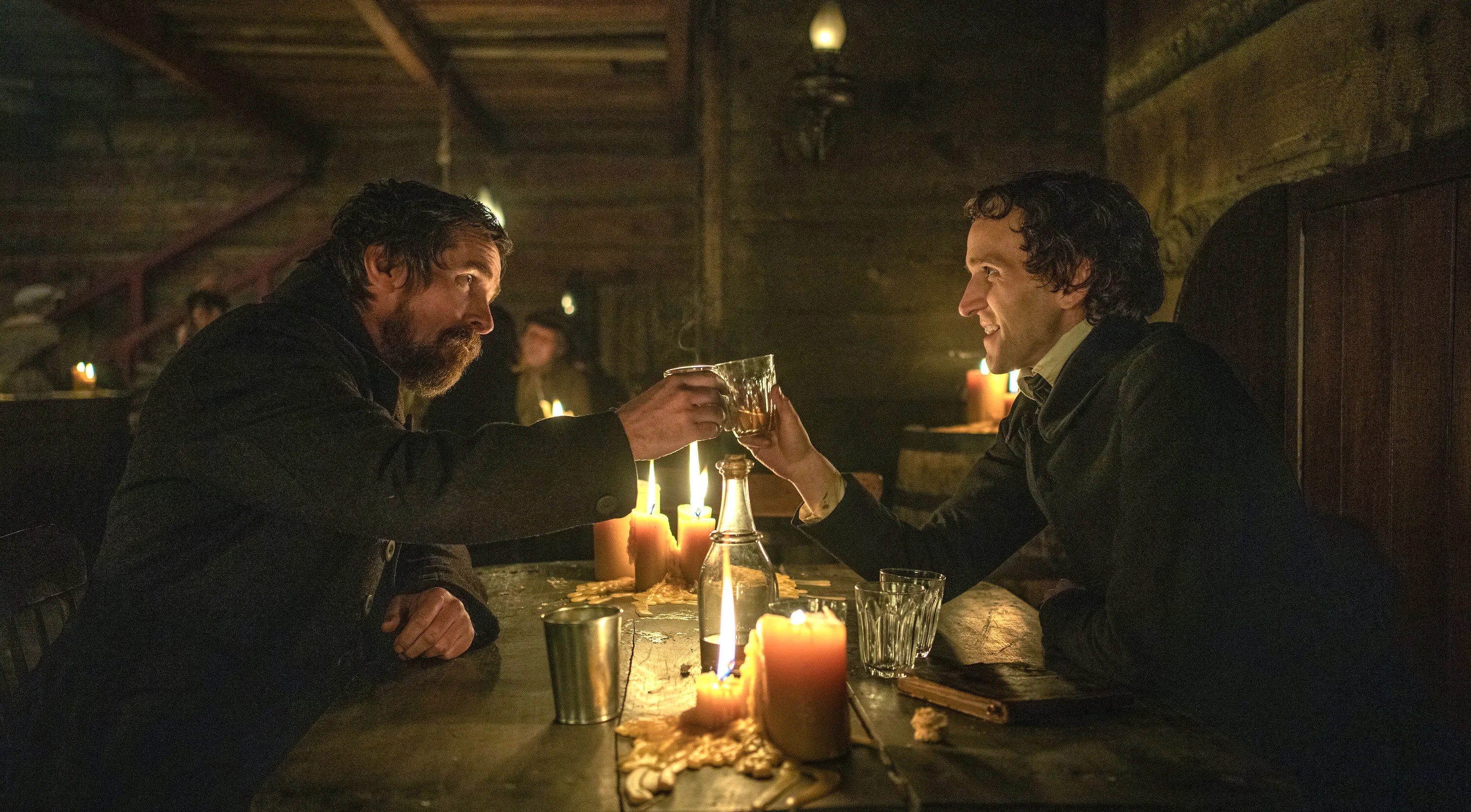
A courtly, erudite romantic with morbid streak and a Virginia drawl, Edgar Allan Poe must have been one of the inspirations for “Glass Onion” peeler Benoit Blanc. That Poe himself is on the case in the period pieces “The Raven” and last summer’s “Raven’s Hollow,” a writer solving a mystery that directly implicates him, there is no doubt. That’s also the case in Louis Bayard’s novel “The Pale Blue Eye,” which shares its Poe-as-a-West-Point-cadet setting with “Raven’s Hollow,” on the page and now on the screen.
There could not be more compelling subject for a Virginia filmmaker like Scott Cooper to lure his “Hostiles” star Christian Bale to than Poe and a macabre murder mystery bathed in gloom, snow and unstinting period detail.
Bale stars as Augustus Landor, a retired New York police constable whose last years of highlands solitude are interrupted by a summons from the nearby U.S. Military Academy. A cadet has died by hanging, and the captain (Simon McBurney) sent to fetch Landor, and the school’s commanding officer Colonel Thayer (Timothy Spall) figure they could use the help of an investigator, expert code breaker and master of “gloveless interrogation” (no torture) to figure out what’s happened.
“Discretion” is called for. And sobriety. Yes, they’ve heard all about the widowed Landor, whose only daughter disappeared as well. If this matter isn’t tidied up, this still-new school could be defunded and shut down, Col. Thayer, the superintendent frets. So “no drinking” on the job.
Landor finds himself examining the body, correcting the school physician (Toby Jones), questioning witnesses, looking for clues and then abruptly offered help by this quirky uniformed weirdo with the big forehead and floridly poetic speech.
“It is incumbent upon me and the honor of this institution to share some of the conclusions which I have reached.”
Yes, we know who this oddball cadet is before Landor figures that out. It’s the already-published poet, drinking and gambling University of Virginia drop-out and future father of detective fiction Edgar Allan Poe. Perhaps he (Harry Melling) can be of some assistance?
As the dead man had his heart carved out, as mutilated animals have been found nearby and as a second cadet turns up hanged, Landor is going to need someone inside the institution to break down clues and sift through suspects.
Continue reading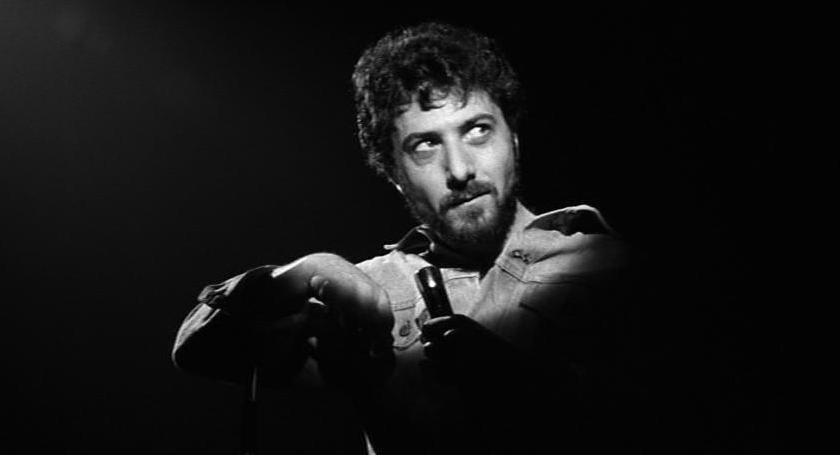
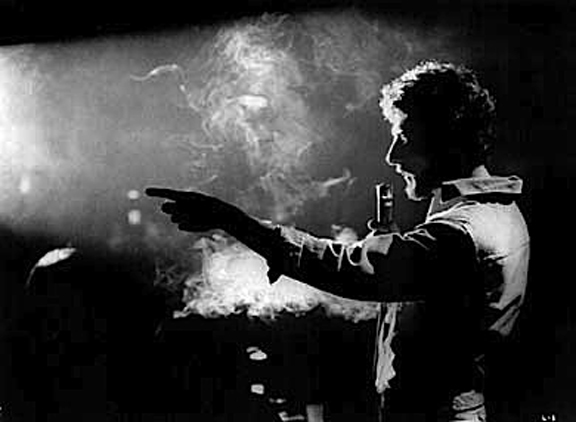


It isn’t the black and white cinematography that gives away the fact that “Lenny,” Bob Fosse’s film about the life, career and decline of comedian Lenny Bruce, is of a different era. It’s the patience.
This 1974 film, based on a stage play by Julian Barry (who adapted it for the screen), almost does a disservice to one of the most influential stand-up comics of all time simply by taking forever to get going.
But cinema was a rarified entertainment back then. You couldn’t watch a movie, distracted by commercials or text messages on the cell phone or tablet you might now be watching it on. You had to sit in the dark and watch this dark movie slowly unfold. You had to pay attention.
“Lenny” introduces Bruce — real name Leonard Schneider — near the end of his career, in his bearded, hipster deep dives into the veneer of American culture, censorship and his own persecution for violating “decency” standards with the words he used in his act.
The structure portrays Lenny’s ex-stripper ex-wife (Valerie Perrine), his retired-comic mother (Jan Miner) and his agent (Stanley Beck) being interviewed about him, intercut with snippets of his act, at the end and at the very beginning of his stand-up life.
The long flashbacks that give us more of his story come later. But the film opens when Bruce had ceased being funny, literally reading his obscenity trial transcripts in his last years, and showing us what a terrible, derivative, worn-out-joke hack he was in his early days, following his mother’s career path into the Borscht Belt resorts and venues, the smoky strip clubs and and dives of the early 1950s.
The viewer can be tricked into thinking “What’s the big deal? This “nepo baby” wasn’t the least bit funny.” The film, shot in grainy, dark black and piercing white as an aesthetic choice, is arresting right from the start. Bruce, played by Dustin Hoffman in what could be his finest performance, is onstage in tiny pools of light amidst the inky darkness and general silence (there’s no laughter from the audiences), hunting for laughs or at least pithy observations.
But the lack of laughs and monochromatic film stock set a tone. This is a history lesson. This will document a performer and thinker who transcended punchlines and shtick and talked about sex, race, violence and the grim unspoken truths of The American Experience and The American Way. Even when Bruce hits his stride, becomes the hot and happening stand-up embraced by “the in-crowd, he’s going to be pointing his humor at the maladjusted psyche and arrested development of the land of his birth.
“Now dig,” he’d say, before zeroing in on some insight about “uptight” America’s prudishness about sex, sex acts, venereal disease, the Kennedy Assassination or racism. Our biggest hang-up, he said then in an opinion that resonates today, is our desire to “not start talking about it.”
He was the first mainstream comic to get into “doing it,” “the dirtiest thing we could do to each other.” Bruce was the original “f-bomber,” talking casually in a big city street argot that would shock “Ed Sullivan Show” America, even in San Francisco, where his act really found its improvisational groove and its most appreciative audience.
“What is dirty and what is clean?” he’d ask. And then he’d open up the Life Magazine issue that broke down the frame-by-frame analysis of The Zapruder Film on declare this these were the real “dirty pictures,” the gruesome violence of the assassination of President Kennedy captured on a home movie camera. And that would lead him into the country’s way of sanitizing its myths and hiding the truth.
No, the shocked Jacqueline Kennedy wasn’t trying to retrieve part of her husband’s head that had been shot off, the way “history” remembers it. She was “fleeing” a car being targeted by a murderous sniper.
The film’s most breathtaking stand-up sequence is Bruce going off on race by asking if there were any Black members of the audience. He used the N-word to make that query, and you could hear a pin drop. He singles out people here and there, and starts his head-count, identifying this Jewish patron by an ethnic slur and that Italian, Hispanic or Irish one similarly. He basically excuses generations of comics who followed by insisting that banning such utterances from the culture wouldn’t change hearts and minds. Only the appropriation and overuse of them would defang the slurs and rob them of their power.
That still hasn’t quite come to pass.
Continue reading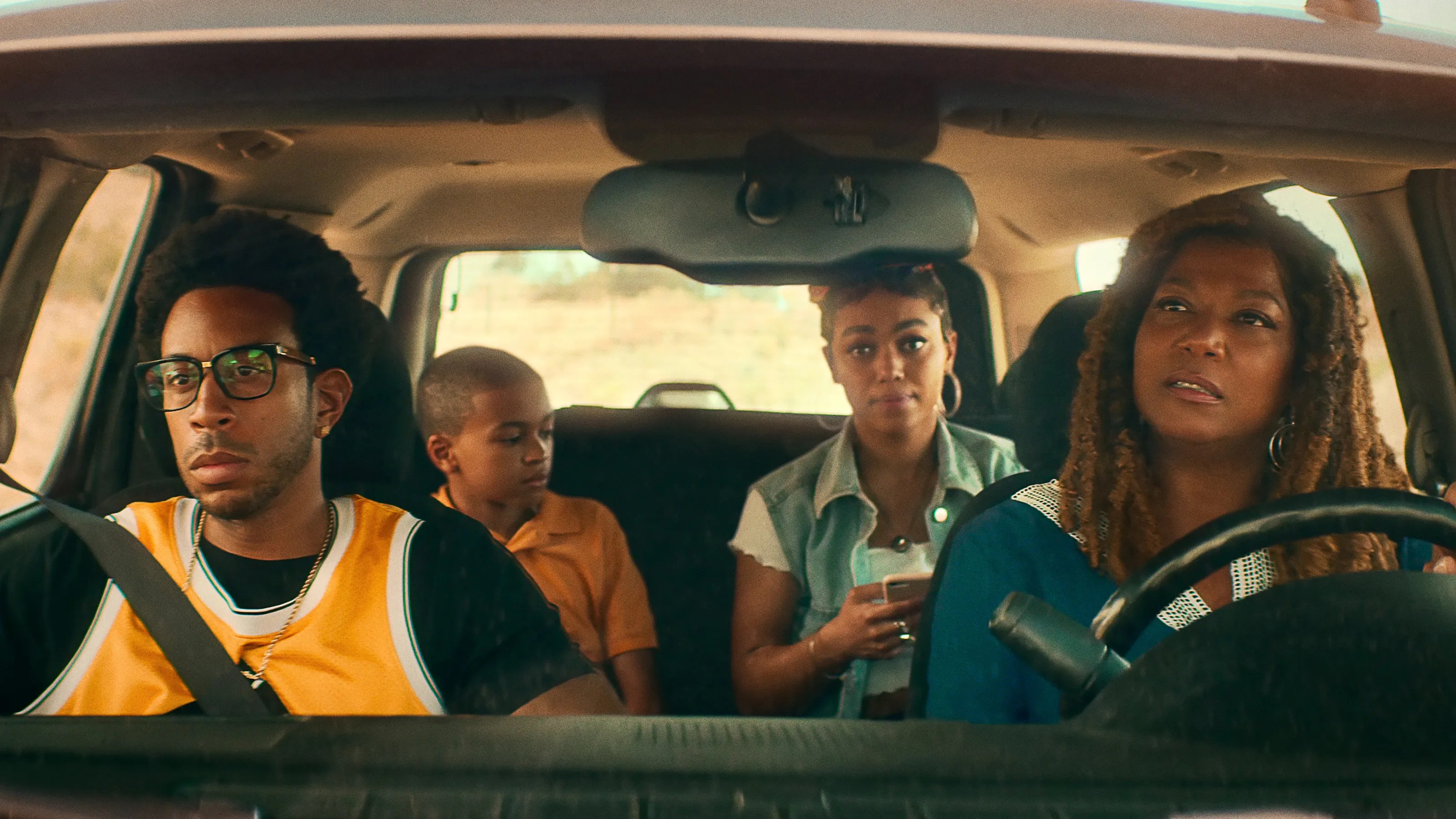
It can sometimes seem that all the “let’s throw some money at” productions that Netflix streamed as feature films over the past year are just one interminable and awful movie. Maybe you figured that out on your own. Me? I had to restart my Netflix account for the holidays (about to shut this pipeline off for a few months again) and cram scores of them into a short period of time to have this epiphany.
Queen Latifah is the producer and star of “End of the Road,” and thus the figure Netflix “threw a lot of money at” in this case. She and her team — director Millicent Shelton, who has directed a lot of episodic TV, including one “Equalizer” outing — cooked up the most generic family-hunted-by-drug-lord odyssey ever.
Every piece of road, every location, every character in it — villain or heroine or just unpleasant bystander — is as generic and over-familiar as the plot of this dog. It’s barely 90 minutes long and feels “Blonde/Bardo” length.
It doesn’t sprint, run or even walk out of the gate. It crawls. And it crawls and crawls until we hit a couple of decent action beats on our way to a laugh-out-loud-bad finale.
I think co-star Ludacris had the right idea for all this. He’s barely awake, first scene to last. His line readings couldn’t have been sleepier unless we actually saw him stifle the yawn that plainly preceded every “Aaaaaannd ACTION” command from behind the camera. It’ was never going to be a very good movie. Ludacris gives away how bad it will get by his lack of commitment and somnambulant stoner energy.
Latifah plays a widow who has gone broke trying to keep the family intact after her husband’s death. We meet Brenda as she finishes packing the house and rousts her lovesick teen daughter (Mychala Lee) and grieving son (Shaun Dixon) up and into the car.
Her brother Reggie (Ludacris) is coming along for the three day drive to Houston. He has to be reminded “no drugs and no weed for the entire trip.” It’s like that.
Wouldn’t you know it, they’re dust-deep in Arizona when they have their first rednecks in a pickup encounter. That’s merely a prelude to the murder they overhear at the dive motel they stay in that night.
These scenes establish that Mom and Reggie understand the rural racism they’re driving through. But Mom is willing to “apologize” and walk away from white male provocations, something she learned from her late Army Col. father. Short-tempered Reggie never learned that lesson, although the weed has definitely mellowed him out, if impaired his decision making. We also hear how Dad taught her and Reggie how to hunt, because foreshadowing should always be this obvious.
That foreshadowing will come in handy when they find themselves hunted by the drug gang of Mr. Cross, “the boss” who had a hand in the motel room murder next door. They’re questioned by the police, and then hounded across country as this Cross gang tries to track down some missing drug money.
Continue reading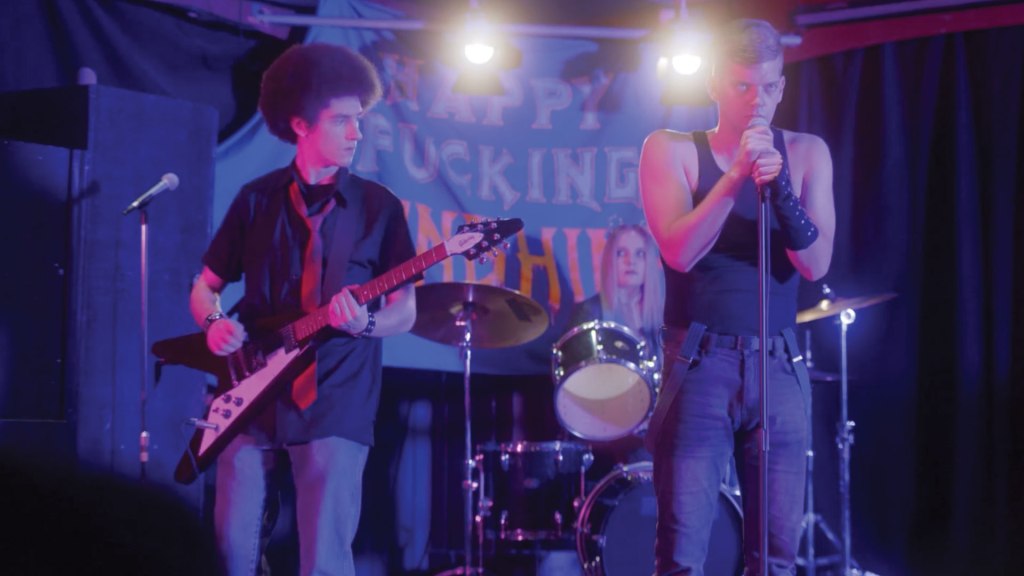
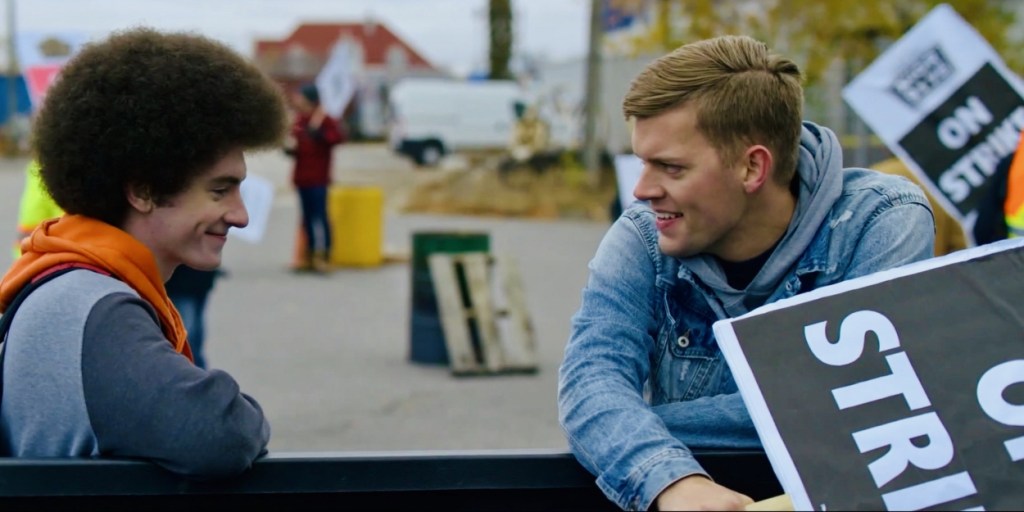
The best selling point of “Happy FKN Sunshine,” a “let’s start a metal band” dramedy, is that the title makes it sound British, or better yet Irish.
But no. It’s Canadian, set and shot in Ontario. They swear up there in the Land of Nice, too. So no going on aboot spilt milk, eh?
It’s a scruffy little dramedy that borrows from its better predecessors. There’s more than a little of Alan Parker’s rollicking film of Roddy Doyle’s “The Commitments” in it. But the tropes of this genre are so well-worn it’s pointless dwelling on those connections.
What matters more is that it’s dark and funny, but not quite funny enough. It’s musical, but not so musical that you think “God I hope they make it,” based on the tunes and performances we see here.
And it should be touching, even though it never is.
An Ontario mill town (North Bay was the filming location) hits the wall when its local mill goes on strike. Maybe that’s not the best time for a bunch of high school kids to upgrade their instruments and try to make it as a band.
But all it takes is hearing sensitive Will (Matt Close) turned down by their on-strike dad (Lewis Hodgson) and fretful mom (Carrie Schiffler) for big sister Ronnie (Mattea Brotherton) to buy her sibling a Flying Vee knockoff from the local music and pawn shop.
Ronnie has means of her own. She can tell her parents she works at a landscaping business, and maybe they believe it. Ronnie’s dealing drugs, and Will can do her “a favor” or two, and she’ll get to be the band’s manager on the bargain.
You can guess what the “favor” will entail. But the band name ever-rebelling Ronnie puts out there?
“Happy FKN Sunshine,” only without the “FKN” abbreviation.
With hotheaded lead singer Vince (Connor Rueter) and cute drummer River (Maxime Lauzon), they’re ready for stardom. But as the film’s “Chapter One” tips us, they’re still one brick shy of a load.
“Chapter One: Who the f— Plays Bass in Town?”
That’s how how they end up with local loudmouth and BS artist “Artie,” an annoying pathological liar who is always regaling anyone stupid enough to pause and listen about who he “jammed” with this weekend, or which infamous auto-part-named rocker gave him a BJ last weekend.
Will is as shocked as we are when Artie (Dana Hodgson) turned out to be “unfortunately REALLY good at bass.”
Throw in Artie’s aged Irish-accented music industry vet “Fast Eddie” (Ted Dykstra), the one who sold most of them their instruments, and they’ve got a ticket to ride, or at least rehearse until they’re ready to push their social media numbers up with a live gig.
Continue reading
 Movie Nation