
Opens in January, VOD and DVD in Feb.
Opens in January, VOD and DVD in Feb.
Well, at least they give away their big spoiler in the trailer.
Future ordnance unleashed against T Rex?
This is a rare straight up action pic for Driver, and looks very “Chariots of the Gods,” for those who remember the books of Mr. “Ancient Astronauts.”
March 10

I was inspired to pick this up after seeing Sully’s copy in his van in the cannibalism romantic thriller “Bones and All.”
What’s the meaning of this short story collection being something a roving diner on human flesh would keep at his fingertips on his murderous odyssey? A detail from the Camille DeAngelis novel? A favorite of the Kentish Oscar winner, Rylance?
It’s the collection that has the long short story “The Dead” in it, which became an acclaimed curtain call film for the great filmmaker and sometime member of the Irish gentry, John Huston.
Reading “Dubliners”, I had an epiphany. Its inclusion in “Bones and All” is a comment on academia and its determination to force-feed Joyce’s magnum opus, the 730 page “Bloom’s Day” epic of style “Ulysses” on students of English lit. Plainly, Sully’s choice of reading matter is suggesting that approaching Joyce via the shorter novel “Portrait of the Artist as a Young Man,” or better still, the short story collection, “Dubliners,” would be preferable.
Introduce Joyce to readers via, um, bite size chunks, in other words.

Hallmark of a Hallmark style holiday romance? The pretty single woman/divorced mom always falls for a guy who moisturizes and uses more makeup than her.
Sometimes they shave. Sometimes they’re fashion mag cover-model “rugged.” And sometimes they’re a bit older and relying on hair dye and Clinique to hold back Father Time.
As Netflix has made “OutHallmarking Hallmark” a core tenet of its business model, you can see this scenario play out a half dozen times in any given year’s Netflix Christmas movies.
John Ducey, a veteran supporting player whose TV credits go back nearly 30 years, wrote and co-stars in “I Believe in Santa,” a mirthless and generally unromantic goof on a couple mismatched because Tom, a lawyer, is seriously into “Christmas magic,” and Lisa, the jaded online columnist, is “famously” not into Christmas. Oh no, not at all.
Christina Moore plays Lisa, and she’s Mrs. John Ducey in real life. Ducey plays Tom.
They “meet cute” when she loses track of her little girl Ella (Violet McGraw) at a July 4 fair, and he’s the nice not-at-all-“creepy” lawyer who has her sit in his “Free Legal Advice” booth until self-involved Mom realizes she’s missing.
Once the near-accusations have been abandoned, they watch the fireworks together, and a couple, plus Ella, is born.
But when the year’s biggest “holiday appreciation” column assignment comes around, this loving couple is put to its severest test. To Lisa, Santa is “the poster child for spending money at Christmas,” so no way the corporate overlords will let him fade away. Ella’s just getting old enough to ask questions about the fat man with this very busy Dec. 24 lined up. Tom?
“I believe in Santa!”
He blocks out the entire month of December to attend caroling concerts (beat-boxing holiday tunes), tree lighting ceremonies, visits to department store Santas and the like. And Lisa grits her teeth through it. None pf these “events” is anything other than set-designed pretty. It’s not funny, illuminating, nor do most of them lead to anything like a debate on “Santa’s real” that anyone needs to hear.
Their debates see Tom launch into QAnon level craziness about “Santa time” and other “explanations” for Christmas miracles.
“It’s not about logic. It’s about the Christmas spirit! It’s about the magic!”
Yeah, it’s all a tad insipid, which is another trait these “Hallmark style” pictures all share. And Lisa’s general contempt for “commercialized” Christmas is given no explanation. Just “she’s a journalist” and that’s on brand for us, I guess. Just a bunch of “Killjoy to the Worlds.”
Ducey cooked up an oddly sterile script, making it a point to have Tom separate the “religious” Christmas from of his belief system. The guy’s all in on Santa, debunking the idea that there’s a “global conspiracy” that billions of people around the world believe in. Nonsense like that.
There’s barely a chuckle in this thing, despite giving Lisa the “funny Black BFF from work” (Lateefah Holder) and Tom the funny gay Muslim pal (Sacheen Bhatt) who is either from his work (unclear) or Tom has an even bigger secret he’s keeping from Lisa.
The biggest “name” in the film is the delightful character actress Missi Pyle (“Charlie and the Chocolate Factory”)who pops in as Missi Toe, one of the singers in the assorted pageants, tree-lightings, etc., that Tom drags Lisa and the viewer to.
“I Believe in Santa” fails to warm the heart, wrap us in romance, salve us with sentiment or tickle the funny bone, the things we typically crave in a Christmas comedy or dramedy. Like too many of these mass production holiday pictures, it’s just filler, something for Netflix to plug in as a place holder and time suck, because Santa forbid Hallmark should have more quick-and-cheap holiday offerings than the world’s dominant streaming service.

Rating: PG
Cast Christina Moore, John Ducey, Lateefah Holder, Violet McGraw, Sacheen Bhatt and Missi Pyle.
Credits: Directed by Alex Ranarivelo, scripted by John Ducey. A Netflix release.
Running time: 1:30

I just wasted more time than I should have trying to pin down whether Nora Kaye and Whitney Uland were real life friends since childhood, which is what they play in their new comedy, “The Cosmos Sisters.”
As I’ve seen another film recently made by two actual lifelong BFFs, and which includes home movie proof that this is the case, I thought I onto what could be a movie “trend.” No such luck with these two. And I can’t remember the title of the earlier film either, it turns out.
But Uland and Kaye, who co-wrote, co-directed and co-star in this feather-light indie comedy, are that convincing as super 30ish tight-since-childhood friends who reunite when one has slipped into a funk after her mother’s death.
They finish each other’s sentences, chant catchphrases that were part of their “act” back during “Homecoming Halftime,” share pot brownies and they burst into songs that they used to perform together as “The Cosmos Sisters,” each in a wig the color of a different brand of ice-packs — frozen corpse metallic blue or chemical spill purple.
From the shorthand they converse in to the way they fight — biting, bitter, personal and yet never terminal — you’d swear they’d been doing this for decades.
“That is sooooo 2007.”
That’s the cute thing about “The Cosmos Sisters,” and “cute” will have to do. Because it’s not deep, not insightful and not all that funny outside of the dynamic these two set up on screen.
Nora’s hiding under the covers these days. So influencer/skin-care vlogger Whitney stages a one-woman intervention, at the behest of Nora’s boyfriend (Jake Swain), or so she says.
Th truth is, Nora went through something awful and Brooklynite Whitney was just too busy to show up and be supportive. The fact that Nora subscribes to Whitney’s inane product-review “channel” just makes it sadder.
But now Whitney is prepared to blow in their small town, “take a break from Insta (gram)” and help Nora get through this grief, and maybe help her sort out her late mother’s barn full of “stuff.” That seems suspicious. We and Nora are looking for an “ulterior motive.”
Whitney’s strategy changes when they do a little mini-revival of their “act” from way back when for her Instagram channel, and somebody requests that they do a benefit show for her son, who has cancer.
Whitney’s all “Let’s get the band back together,” Nora’s breaking out her guitar, her boyfriend just wishes she’d clean out her Mom’s barn and Whitney insists on working in time to flirt with a hottie (Madeleine Grey DeFreece), now a pizza deliverer, whom she didn’t give a second look in high school.
“The Cosmos Sisters” tries to surf on the rapport between the leads and their random, seemingly riffed banter.
“You’re going to age sooooo badly!”
“That’s RUDE. But if the Russian filters taught me anything, it’s that it’s probably true.”
Very little here merits more than a smirk, with the lone exception being their visit to a former classmate (Alexander Manuel) whom Whitney dissed way back when, but who’s become a successful musician/producer now. Manuel brings the glower, smirk and comical pop to his single scene that the rest of the movie lacks.
Other than that, it looks like the ladies had fun making this not-quite-funny comedy in Florence, Massachusetts. That, and my hearty congratulations that they got their film distributed it about all the holiday cheer I can offer.

Rating: unrated, profanity
Cast: Whitney Uland, Nora Kaye, Madeline Grey DeFreece, Jake Swain and Alexander Manuel
Credits Scripted and directed by Nora Kaye and Whitney Uland. A Gravitas Ventures release.
Running time: 1:18
March 10, the masked murderer takes the subway.

“I Used to be Famous” is a sweet little nothing of a feel-good comedy, a sometimes cloying wish-fulfillment fantasy about a pop music has-been and his new drummer, an autistic prodigy with the sticks.
It’s built around a winning turn by Ed Skrein and a little movie magic — or magical interpretation of “on the spectrum,” something screenplays bend and over-simplify because they can and because they must if they’re to have their onscreen “wish” fulfilled.
Skrein, of “Midway,” “Deadpool” (he was Ajax) and the “Maleficent” sequel, plays a 40something veteran of Stereo Dream, a Brit boy band that was all the rage in the early 2000s.
Vinnie D used to be blond and “used to be famous.” Now he’s reduced to towing his keyboards around on a cart as he hits up bars around his Peckham, South London neighborhood, begging for a gig.
His noodling at the synthesizer sounds amateurish, in that “anything that comes out of a synthesizer sounds musical” way. We’re not surprised when we learn he was “self taught.” Even in his heyday, his actual skillset was limited to his looks, his swagger and the way his average voice blended in with others.
Busking inane notes at a street market, powering his keys with a car battery, insulted by the one local who remembers who he used to be, Vincent finds himself accompanied by a teen who won’t make eye contact, and won’t take a hint that his impromptu drumming on the metal railing of a bench isn’t wanted.
But the kid finds his groove and the duet takes something like a pleasant form. That’s when Stevie (Leo Long) is finally hunted down by his worried single mom (Eleanor Matsuura of “The Walking Dead,” “Wonder Woman” and “Justice League”). He’s spirited off before Vinnie can finish thanking him.
Someone, of course, recorded that duet and it’s almost going viral, which has Vinnie pursue more gigs, and hunt for the mysterious DIY drummer — whom he stumbles into at a drum-circle/music therapy session at a local rec center. All he’s got to do is convince mother Amber to let him drag her special needs son on stage, in front of crowds, to play his drums…and pans and pots and whatever.
Director and co-writer Eddie Sternberg makes his feature directing debut an expansion of a short he filmed earlier, and I like the way he depicts the creative process and the chemistry Skrein and Long develop. Their “first gig” is encouraging and uplifting, right up to the point when a single audience member brings it all down, an all-too-common occurrence, even before our boorish era blossomed.
But the movie is so predictable as to be drab and dispiriting. Vinnie hits up his still-famous former bandmate (Eoin Macken) for help, there are “management” issues, and all the while, Amber is bristling at the situations this selfish stranger is putting her vulnerable child in.
Stevie isn’t the easiest sale for Vinnie’s “let’s get famous together” pitch.
“It’s not about being you, is it?” Vinnie believes. “It’s about being SOMEone.”
The subtexts, of meeting your potential, regrets over selfishly putting yourself first, paths not taken (Amber used to be a dancer) are just as predictable as the glib way the film treats autism and drumming as something that will transform Stevie.
Maybe. Maybe not.
The music is mostly forgettable. Skrein has a nice, flat, unschooled crooner’s voice.
Coupling those not-exactly-assets to a story without a single twist you can’t say you didn’t see coming, the best one can say about “I Used to be Famous” is that, all things considered, it’s harmless, and not entirely charmless.
Rating: TV-14, profanity
Cast: Ed Skrein, Eleanor Matsuura, Leo Long, Eoin Macken
Credits: Directed by Eddie Sternberg, scripted by Eddie Sternberg and Zak Klein. A Netflix release.
Running time: 1:44
Heartfelt, animated to look like a comic book in motion, zany, trippy and multiverse.
The dot matrix style of animation gave some folks vertigo and headaches (me among them). Same deal, you think?
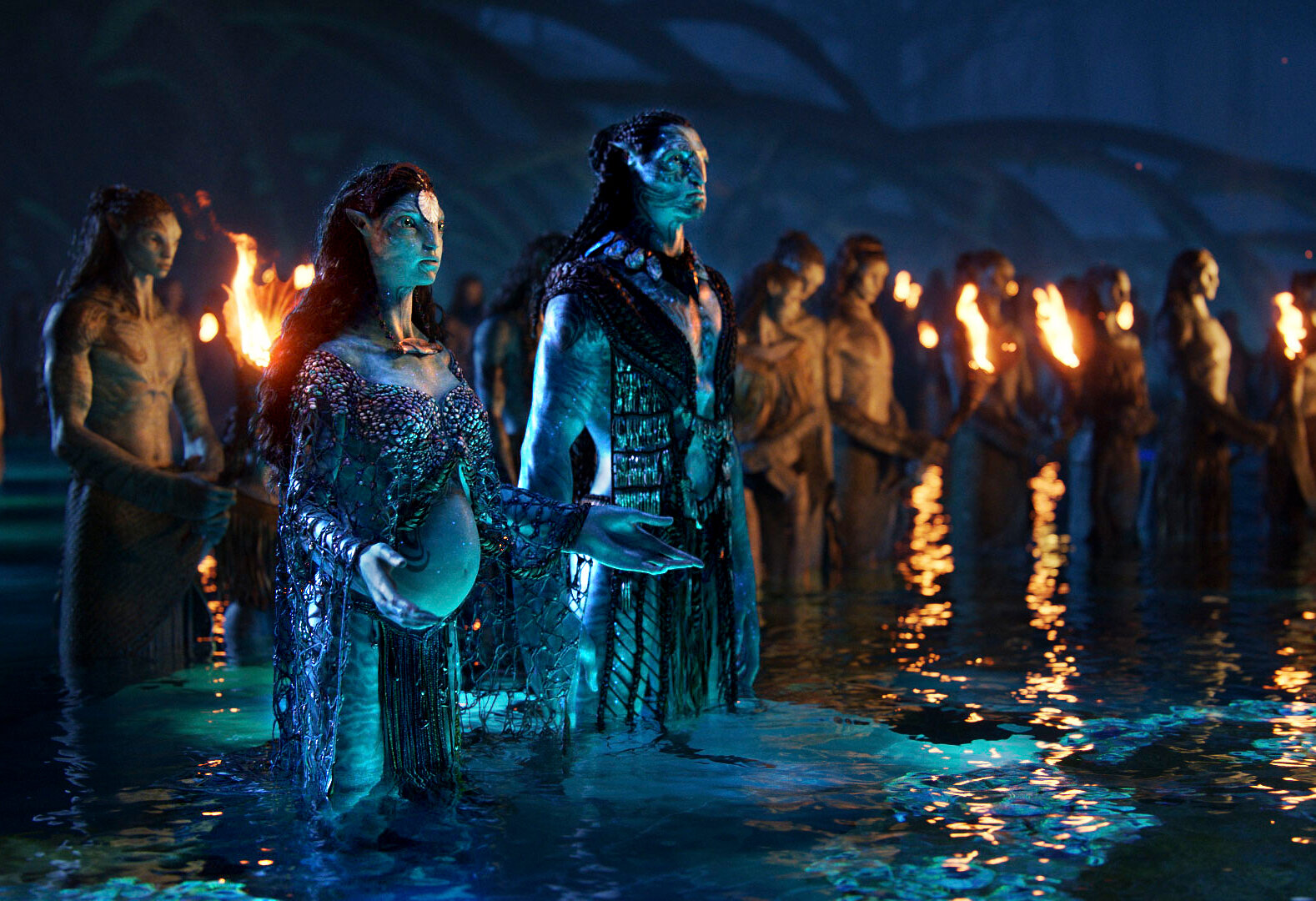
Here’s a movie that opens a theme park in every 3D cinema in the world.
James Cameron’s “Avatar: The Way of Water,” is a stunning and immersive big screen experience pretty much without peer in cinema history. Its beautiful, digitally-realized other-worldly visuals are eye-popping, detailed down to the thread count in uniforms, so crystalline as to be disorienting. You lose track of where the screen ends and the tactile, physical cinema you’re watching it in begins.
Pandoran birds and Pandoran fishes — recognizable, yet distinctly alien variations on species we see on Earth — fly at us, float right into our faces. And in firefights, Cameron has us ducking arrows, spears and tracer-bullets in that time-honored 3D gimmick, only more realistic than it’s ever been.
Disney was wise, you think, to devote real estate and cash and technology to “Avatar” as a burgeoning theme park attraction. As striking as this movie makes the place look, one can’t help but think all it lacks is a themed Disney “world,” or Disney World hotel.
“The Way of Water” not only bests the Atlantean sequences of the “Black Panther” sequel, it represents a quantum leap improvement from the images the first film in the “Avatar” franchise.
The story? Well, it seems to unfold somewhat smoother this time around, although it’s just as prone to grating lapses in logic and groaningly obvious plot contrivances, conveniences in aid of lazy storytelling. The dialogue isn’t as cringe-worthy, and the film overall doesn’t seem as silly, although it bears the fresh burden of being repetitive.
When you’ve pieced together an action epic of well over three hours, with huge action beats in between scenes primarily calculated to generate “Oooohs” and “Ahhhhs,” even the very pretty pictures and vast explosions take on a “Seen that, and?” quality.
Cameron taps into “Terminator” tech and “Titanic” perils at sea, as if to show us how much better he could have made those blockbusters with the computer power behind today’s special effects. But the “Avatars” and actors playing the digitized Na’vi peoples of Pandora, who now include Oscar winner Kate Winslet and the wonderful character actor Cliff Curtis, are still too plastic to have the subtlety of facial and body expression to break our hearts.
From the sounds of her character, Zoe Saldana gives one of her most empathetic performances, full of rage and grief. But the animated Na’vi version of her doesn’t really get across the what the voice is conveying. Winslet (you’ll recognize the mole to the right of her nose) and especially Curtis have an easier time of it, playing Pandora’s version of “The Reef People” (a Sea People), a tribe built out of whatever Cameron knows about the Maori of New Zealand.
Even their whales have Maori-styled tattoos on them. Because in this movie, the whales are confidantes and conversationalists, every bit the equal of the blue (or seafoam green) biped anthropoids with magic tails.
The plot — over a decade has passed, and Jake (Sam Worthington), the paralyzed Marine reborn via an avatar clone of a Na’vi, and his native wife Neytiri (Saladana) had some good years, giving birth to two sons and a daughter, raising the spiritual, inquisitive half-human daughter (Sigourney Weaver) of the scientist Dr. Grace Augustine (also Sigourney Weaver), with a “feral” human kid, Spider (Jake Champion) left behind when the natives ran off the rapacious American miner/capitalists and their soldiers years before.
Now, the “Sky People” have returned for more exploiting and despoiling. The Na’vi resistance, primarily Jake Sully and his family, have their hands full. And the invaders have a Na’vi version of Marine Col. Quaritch (Stephen Lang) and a crack commando team that fly in with them. They’ll hunt the train-wrecking Na’vi (French) Resistance, with Quaritch’s avatar hellbent on capturing and killing the treasonous ex-Marine Jake.
That’s why the family flees their floating mountain hideout and jungle stomping grounds for the islands and the Sea People. The Sullys are fish out of water and thus have to have this new way of life explained to them — and for the viewing audience’s benefit. The chief of the Reef People (Curtis) just wants to save the Sullys, and their quarrelsome teen boys, from “the shame of being useless.”
But Quaritch’s commandos are relentless, and are not above commandeering a gigantic hydrofoil whaler to track down their quarry. With those Sully kids constantly ignoring adult direction, things are about to get real.


Before visiting Pandora again, I went back to look over my review of the 2009 film that launched this blockbuster franchise. Back then I called Cameron “a visionary tour guide,” but a filmmaker who painted himself in a corner with a “predictable story, clichéd dialogue and logical lapses.”
Sadly, that hasn’t changed. “The Way of Water” is a better film, to me at least, because the effects are that much more impressive and it’s set on and under the water, with sea creatures just close enough to jellies, manta rays, whales and orcas and Loch Ness monsters (for riding) to be recognizable. The sea setting makes it more interesting.
Cameron and his co-writers take shallow digs into anthropology and biology, never quite coming up with creatures we don’t recognize. The people are tall, green alien Pacific Islanders, the creatures mildly exotic variations on an Earth theme.
The dialogue, also tribal and anthropological, when it isn’t using current slang (this or that somebody is “seen”), is kind of world traveler tourist trap T-shirt mumbo jumbo.
“The way of water has no beginning and no end.”
The environmental subtext gives us glances of the waste of resource-devouring capitalism, from the way the “Sky People” clear ground for “Bridgehead City” in the jungle — a giant explosion and fire — to whaling, which they devote military campaign resources to carry out. That’s still topical, although the screenwriters adds bits about American troops taking hostages and engaging in acts of cruelty for cruelty’s sake, very much a topic of conversation among those watching conversative politics around the world these days.
The stakes could have been higher, the deaths could have had meaning and the script could have added layers to the villainy, even added a villain or two. But it doesn’t.
With all these images, all those storyboards, all that digital rendering and compositing going on — from creatures to crab-submarines and the like — who has time for story meetings?
So this “Avatar” looks better without improving the shortcomings that made the original, the blockbuster among blockbusters, so narratively frustrating. Every time you think, “This is SO much better than ‘Avatar,'” some stupid turn in the plot makes you roll your eyes, some dumb bit of dialogue makes you slap your head in frustration and you wish Cameron had added a fourth writer just to have three voices shouting him down from his more juvenile indulgences.
His storytelling crutches and quirks can seem almost quaint, now. How quaint? How many movies do we watch in 3D, now, 13 years after “Avatar?” That quaint.

Rating: PG-13 for sequences of strong violence and intense action, partial nudity and some strong language
Cast: Sam Worthington, Zoe Saldana, Sigourney Weaver, Kate Winslet, Stephen Lang, Cliff Curtis, Edie Falco, Jemaine Clement and CCH Pounder.
Credits: Directed by James Cameron, scripted by James Cameron, Rick Jaffa and Amanda Silver. A 20th Century release.
Running time: 3:12



As the world girds itself for the next-level immersive experience cooked up by “Avatar” impresario James Cameron, now would be a good time to remember “how we got here.”
In this digital effects world, Cameron may be the reigning king. But the people who put him there are less heralded visionaries, the people who really fought for this revolution.
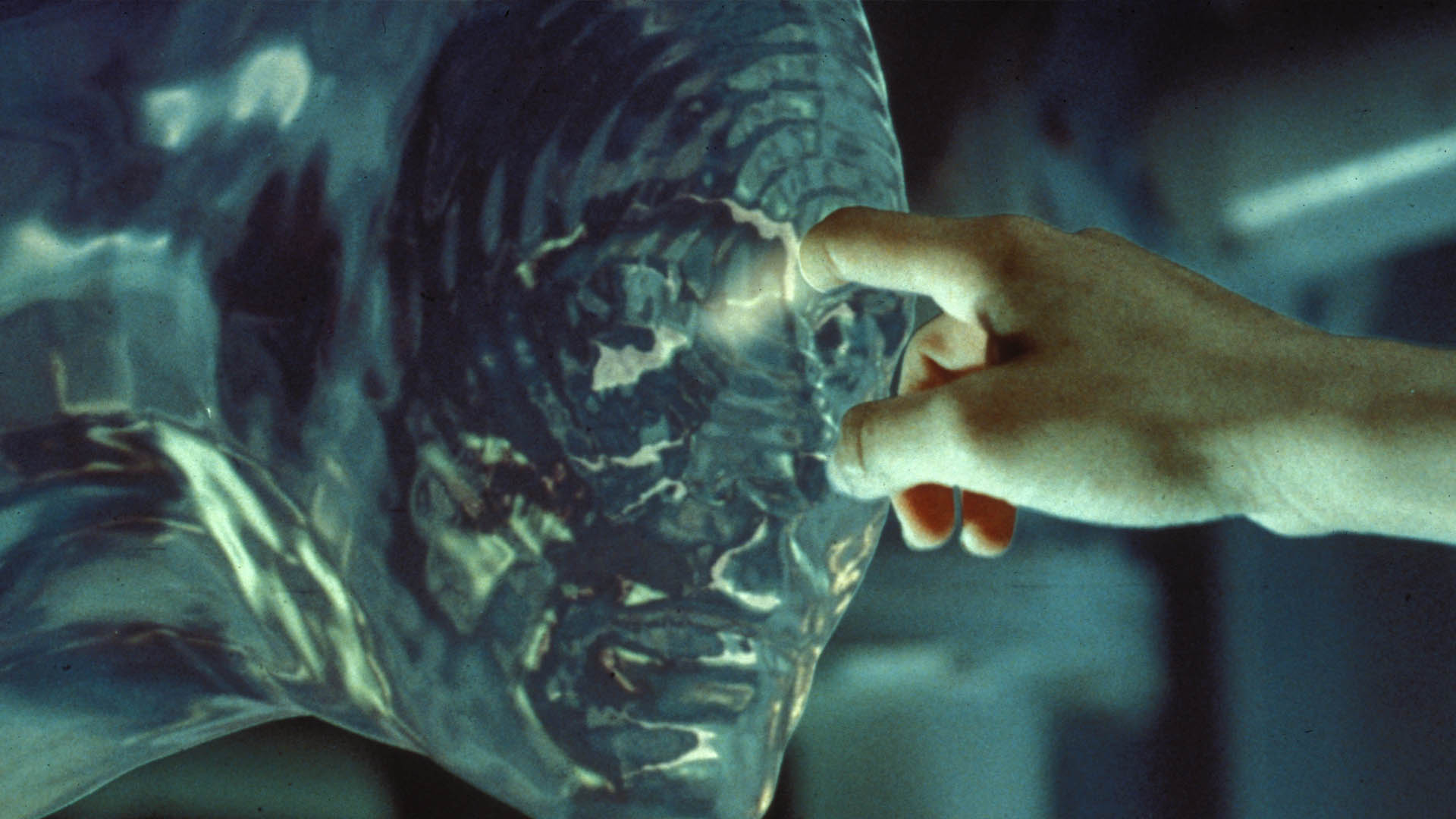
One guy in particular might be the DaVinci of computer-animated special effects. Canadian-born animator and computer effects guru Steven “Spaz” Williams is the quirky, brawny, biker/blacksmith who got water to form face shapes in Cameron’s “The Abyss,” the fellow who let the mercury-in-motion T-1000 Terminator walk through fire and take human form, who let us believe that dinosaurs were again roaming the Earth.
Call him the “Jurassic Punk,” because no other nickname fits.
Director Scott Leberecht’s eye-opening and memory-jogging documentary is a Spaz Williams — an ironic geeky nickname, because “Look at me. I’m Popeye!” — appreciation and in many ways a rehabilitation project.
Williams was a key figure in changing how movies are made, a resident genius at the Oscar-winning Industrial Light and Magic effects house that George Lucas launched to bring movie making into the computer-assisted 21st century.
But clips of assorted Oscar-winning special effects speeches reveal that others, old school “film” (analog, hand-made, in-camera) effects supervisors, often his computer-naive bosses, got the credit for his innovations and “kept the little statues” for his stunning, hands-on/computer-assisted creations.
Still photos and home movies from his working years on films like “The Abyss,” “The Mask,” “Terminator 2,” “Jurassic Park” and the like show why that might have been. Williams is seen as a rebel in permanent arrested adolescence. He flips the bird at whoever was filming him scores of times in this brisk and entertaining trip through modern effects history.
“I’m not a diplomat,” Williams, now in his late ’50s admits. “Never have been.” Not that we haven’t figured that out. “I’m not political. No good at it.”
Old school stop-motion modeler Phil Tippett, a guy working in the Ray Harryhausen puppet effects style that dates back to the birth of cinema and the original “King Kong,” appears here. He’s someone whose craft Williams helped render obsolete during the making of “Jurassic Park.” Tippett was among those who shared Oscars for “Jurassic Park,” even though Steven Spielberg — upon seeing Williams’ spare-time renderings of how he could animate dinosaurs into more natural motion via computers — made “Jurassic” an all-digital effects shoot, never using Tippett’s planned models.
Williams’ ILM nemesis, the oft-honored Dennis Muren, who won many Oscars despite not knowing much at all about computer effects, is only seen in old interviews. It’s hard not to see Muren, who seemed to go out of his way not to “thank” Williams in his “boss man gets the statue” speeches, as the villain of “Jurassic Punk.”
It’s also easy to see Williams himself as a villain, his own worst enem. He’s a self-defeating maverick who drank to excess, chasing away the mother of his child, wrecking a later marriage, threw wild parties in the ILM effects “pit” (room where animators work together), crashed into Lucas’s office at Skywalker Ranch during a celebratory dinner, and generally flipped-off authority at every turn. Obviously being brilliant and a good “team player” and colleague to his peers, even if never quite fit in with them, wasn’t enough.
“Art is about always questioning established systems,” he lectures digital art students. “Authority” makes him bristle, even today, because “When you think differently, you’re seen as a ‘heretic.'”
The film has Williams lamenting the way this reliance on big effects houses has “destroyed filmmaking,” with movies like “Scooby-doo” and “Casper” and others (Marvel’s many CGI-heavy outings are ignored, as are the “Transformers” movies) abusing the new “magic,” and running up costs so much that film is no longer an artist, actor’s, creator’s or “director’s” medium, but a corporate one.
True enough. But “Jurassic Punk” is great when it recaptures the days when Spaz Williams, his fellow computer effects “punk” (and “Spawn” director and collaborator) Mark Dippe’ and others were showing up to work at ILM and asking “How’re we gonna do THAT?” When nobody else had the answer, they came up with one, and then others.
Williams notes how many months it took to film “75 frames” of this piece of “Jurassic Park,” and we see the gridwork drawn on actor Robert Patrick so that they could do what had never been done before in “Terminator 2,” “building a human in data” via motion capture cameras that would pick up on every muscle movement that needed to be replicated to make molten metal walk like a human being in a police uniform before that uniform ever forms on screen.
Spielberg, speaking in a 2013 interview about the history of the “Jurassic” shoot, remembers saying of Williams’ test-animation of a T-rex skeleton walking and nibbling through “Jurassic Park,” “That’s the future…That’s the way it’s gonna be from now on.”
He was right. And now we have a documentary to tell who we have to thank for all the wonders that the movies have shown us since.

Rating: unrated, smoking, profanity
Cast: Steven “Spaz” Williams, Mark Dippe’, Phil Tippet, Adrienne Biggs, Hannah Williams, Jody Duncan, archival interviews with James Cameron, Dennis Muren and Steven Spielberg
Credits: Directed by Scott Leberecht. A Gravitas Ventures release.
Running time: 1:21

 Movie Nation