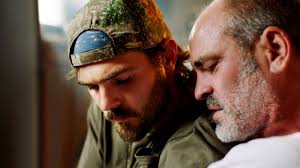
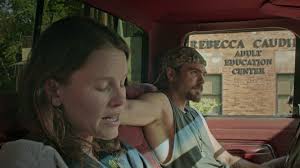
Movie Review: Pokey Cowpoke Saga takes us “Where the Wind Blows”

A chiseled cowboy between jobs and a newly widowed farm wife he takes a message to means a ranch in need of tending and a woman in need of a man around the house in “Where the Wind Blows,” a handsomely mounted Western shot on Montana’s Yellowstone Film Ranch.

It’s a good thing the visuals in this John Schimke horse opera are striking. There’s not much else to recommend a sloppily-plotted meander through Western tropes and cliches which pedestrian direction, shooting and editing do nothing to rescue.

Trevor Donovan, best known for the “90210” reboot of a dozen years back, is our blond hunk on horseback, named Chase (of course) and charged with taking care of a fellow ranch hand’s “heirloom” and cash roll. Because when ol’Nathan (C. Thomas Howell) sits down to gamble at the local saloon/brothel, he’d hate to get rolled.

Gunshots awaken chaste Chase — he’s fended off the advances of the prostitutes — and he finds Nate dead, caught cheating at cards. There’s nothing for it but to take that news to far-off Jessie (Ashley Elaine).

He’s not much on comforting someone who learns her husband is dead, although he’s considerate enough to lie about Nathan’s cause of death.

“These things have a way of working themselves out” isn’t what you say to a woman left to fend for herself on the wild frontier.

And that roll of cash and “heirloom?” That becomes one of the more clumsily-handled plot devices I’ve ever seen in a Western. Did Chase “forget” to give it to her? Is he keeping it for his own use? Motives and “secrets” don’t take us toward any satisfying answers.

All we know is that Jessie has a girl from the orphange she herself came from on her way with a guardian (Don Swayze) to see if she’s fit to raise the child. Will Chase pretend to be Nathan, just long enough to ensure the adoption?

Events contrive to make the possibly thieving cowboy do just that, and accept a teen orphan boy (Cole Keriazakos) in the bargain, with the promise that he’ll skeedaddle as soon as the guardian leaves. Jessie is supposed to manage this place with two kids, no livestock and the kindness of her intrepid storekeeper pal (Michelle Hurd).

And then there’s the creepy, sunglasses-wearing drifter (Rob Mayes) with a rapist vibe who has taken to stalking her with a vengeance.

Will Chase stick around? Is he up for a showdown with rapey Lonnie? And how many chores can he do with his shirt off as he does?

Based on what I am guessing is a romance novel by Caroline Fyffe, “Where the Wind Blows” has the tone and light messaging of a faith-based romance. Characters are sketched in as archetypes, most every turn of events leans on coincidence and cliche and the picture never lets us forget that director Schimke is out of his element, if he has one.

The cast is game but rather drab — even the villains.

And we never doubt for a second that as messy and violent as this tale turns, “these things have a way of working themselves out,” and not in any way a more cleverly plotted script would have delivered.

Rating: PG-13, bloody violence, attempted sexual assault, prostitution

Cast: Trevor Donovan, Ashley Elaine, Michelle Hurd, Rob Mayes, Cole Keriazakos, Lochlyn Munro, Don Swayze and C. Thomas Howell.

Credits: Directed by John Schimke, scripted Mike Maden and John Schimke, based on a novel by Caroline Fyffe. A Level 33 release.

Running time: 1:31

Posted in Reviews, previews, profiles and movie news | Comments Off on Movie Review: Pokey Cowpoke Saga takes us “Where the Wind Blows”

Movie Preview: It’s 1981, so “Casey Makes a Mixtape”

Rush, The Police, Rick Springfield anyone?

How can you tell someone you crush on them without a cassette deck?

Oct. 14.

Posted in Reviews, previews, profiles and movie news | Comments Off on Movie Preview: It’s 1981, so “Casey Makes a Mixtape”

Movie Preview: Cumberbatch is a Dad haunted in his Grief by “The Thing with Feathers”

Briarcliff has this widowed dad psychological thriller based on Max Porter’s novel “Grief is the Thing With Feathers.”

David Thewlis is this father’s all-too-real-tohim feathered beast haunting him.

This comes out Oct. 24.

Posted in Reviews, previews, profiles and movie news | Comments Off on Movie Preview: Cumberbatch is a Dad haunted in his Grief by “The Thing with Feathers”

Documentary Review: Paul Reubens bids a bittersweet good-bye — “Pee Wee as Himself”

I once got an angry and wounded piece of hate mail from Judy Rubenfeld, an annoyed  Sarasota, Florida retiree who didn’t appreciate my inclusion of her son’s lowest moment — his arrest in a porno theater string in this hometown — as one of twentieth century American pop culture’s 100 Moments of Infamy.

This was before Paul Rubenfeld, aka Paul Reubens aka Pee Wee Herman, was welcomed back from the pre-cancel culture wilderness, and even that was too late to resurrect his career or make his last years the triumph he’d enjoyed in his prime. She might have had a point.

But her son — “out” then closeted, popular then a pariah, self-creation or credit hog — was a complicated guy, something we get a close look at in Matt Wolf’s celebratory but absurdly thorough, warts-and-all portrait of Reubens. “Pee Wee Herman as Himself.”

Wolf got Reubens to sit for 40 hours of something testy interviews — Reubens wanted control and gives the impression he initiated the project, first appearance to last. He died of cancer shortly after filming was finished in late summer of 2023, a cancer he hid from everyone, including the filmmaker, who talks Reubens out of this or that bit of manipulation and into this or that corner of divulgence.

Paul himself speaks of his lack of “perspective” on his own life — or lives. But he gives us a decent blow-by-blow of his life and his feuds in his words and his version of the truth.

No, he doesn’t apologize to those he “stepped on” along the way. “It’s show business.” So Phil Hartman fans will have to wait for a Phil Hartman bio-doc to get his side of the credit theft of Pee Wee’s warped and witty imaginary world.

Tim Burton, Reubens points out, got the lion’s share of the credit for the daffy, childish and colorful “Pee Wee’s Big Adventure,” and the star resented the director forever after.

Pee Wee Mania burned white hot — PALE white hot — across American culture in the mid-to-late-80s.

Paul Reubens‘ alter ego, the eternal “weird” man-child of “The Pee Wee Herman” stage show, “Pee Wee’s Big Adventure” and “Big Top Pee Wee” on the big screen and the absurdist “Pee Wee’s Playhouse” kiddie show was an inescapable presence and pop culture icon and presence of his day. He inspired catch phrases, mass cosplay — especially at Halloween — and brought “Tequlia,” classic bicycles and “dare to be different” into every corner of the country.

The film about Reubens’ rise from a kid who grew up in the winter-quarters circus town of Sarasota, studied acting at the famed Asolo Theatre there, got the bug to go West to LA to join the Groundlings and invent one character that made his name and fame, and his slow fade that turned into an abrupt masturbating-in-a-theatre sting fall is an engrossing deep dive into the man.

We see what made Rubenfeld into Reubens, how Reubens made Pee Wee and how fans like Steve Martin and landing the right management at the right time in a particularly absurdist and tolerant era made Herman a phenomenon.

His parents — including his celebrated Israeli Air Force veteran dad — accepted him and his gay sister and reveled in his success. Reubens’ Groundlings peers Laraine Newman (“SNL”) and Tracy Newman and Cassandra Peterson (“Elvira, Mistress of the Dark”) and some of his “Pee Wee’s Playhouse” co-creatives and castmates (Natasha Lyonne was a child star on the show), Laurence Fishburne and S. Epatha Merkerson, talk about working with him and his way of wearing out or discarding talent around him.

Having an alter ego make itself, not you, famous, was an interesting existential crisis to live through.

It’s stunning to see the sort of alter ego fame and arrested development as path to success story depicted here and compare it to the very similar and even more thorough (and shorter) Andy Kaufman doc, “Thank You Very Much.” Kaufman and Reubens had almost exactly the same influences — “Howdy Doody/Mickey Mouse Club/Captain Kangaroo” — which drove them to pursue surrealist TV fame either using or mimicking children’s TV of their youth, creating alter egos they insisted be treated as “real” on set and in interviews.

Reubens teases and even insults his interviewer/filmmaker and  still comes off as personable but standoffish. But at least he got to have that much influence on telling his actor/comic as performance artist story. And he’s right about filmmaker/interviewer Wolf, “one film I liked and five I didn’t.” This beast of a doc has lots of performance footage, but should have and could have been half as long.

Rating: TV-MA, drug abuse discussed, sexual situations/innuendo, profanty

Cast: Paul Reubens, Laraine Newman, Laurence Fishburne, Richard Gilbert Abrahamson, Cassandra Peterson, S. Epatha Merkerson, Tracy Newman, Natasha Lyonne, Abby Reubenfeld and Matt Wolf.

Credits: Direceted by Matt Wolf. An HBO Max release on Roku, Youtube, Hulu and Amazon.

Running time: 2 episodes @ 1:45-1:50 each

Posted in Reviews, previews, profiles and movie news | Tagged , , , , , , | Comments Off on Documentary Review: Paul Reubens bids a bittersweet good-bye — “Pee Wee as Himself”

Movie Preview: Emily Bader and Tim Blyth are Mismatched Besties on a Holiday — “People You Meet on Vacation”

One’s a homebody, one’s adventure-bound.

“Platonic traveling companions” my Aunt.

Could be cute. Worth a Netflx peek if nothing else.

Jan. 6.

Posted in Reviews, previews, profiles and movie news | Comments Off on Movie Preview: Emily Bader and Tim Blyth are Mismatched Besties on a Holiday — “People You Meet on Vacation”

Netflixable? Phylicia, Seraya and Tyler riff on The Book of Ruth — “Ruth & Boaz”

The Biblical “Book of Ruth” was the inspiration for “Ruth & Boaz,” a modern, semi-faith-based romantic melodrama from the fantasy factory that is Tyler Perry Studios.

Ruth isn’t a widow who bonds with her widowed mother in law, meeting the rich Boaz as she gleans his barley fields. Here she’s an Atlanta rapper on the lam with the woman who might have been her mother-in-law had Ruth’s fiance lived long enough to marry her. Ruth picks grapes for a wealthy vintner in Tennessee wine country and catches the eye of the bottler Boaz with her beauty.

Actress turned writer-director Alanna Brown’s (“Trees of Peace”) film of a Michael Elliot, Cory Tynan script takes us from a dangerous Atlanta music scene, where performers do what they’re told and honor their contracts or else, to the rural outskirts of Nashville, where a Black winemaker can make a mark with the family winery and the mostly-Black workforce can let off steam by going line dancing in the Country Music Capital, Nashville.

It’s got moments of eye-rolling fantasy, absurd plot twists and lots of faith-based voice-over and face-to-face advice from widow Naomi (Phylicia Rashad) to singer-turned-wine-picker Ruth (singer-actress Seraya of TV’s “Empire”).

“Sometimes God’s angels don’t wait for an invitation.”

At least this corny, formulaic “collision course with destiny” drama is short and sweet-natured, and the Book of Ruth connection shows some imagination.

Ruth Moabley and her singing partner Breana (Nijah Brenea) are on the cusp of stardom. Their hip hop act, The 404 (Atlanta’s area code) has the sex appeal and sonic pop to break out. Their manager Syrus (James Lee Thomas) has a lot invested in them. He’s counting on that So So Def Records “eight figure deal” in the offing.

But Ruth isn’t sure about this tiny-costume/suggestive lyrics/grinding dancing future. We see the crucifix she always wears. And she feels the disapproval of her fiance’s mother Naomi, who isn’t subtle in suggesting her son Marlon (Chaundre Hall-Broomfield) could do better.

Bailing out on Syrus is not allowed. When Marlon and his dad (Gregory Alan Williams) are murdered in a “car jacking,” Syrus flat out tells Ruth he did this.

Rather than run to the police, she runs off to Pegram, Tennessee with grieving Naomi, whom she keeps in the dark about her role in losing her husband and son. They’ll live in the half-ruined farmhouse Naomi left behind when she married well and moved to the Big City.

Beautiful Ruth will learn to cut and crush grapes, sing just enough as she works to raise an eyebrow from her fellow farmworkers and catch the eye of Boaz (Tyler Lepley of TV’s “The Haves and Have Nots” and “Harlem”), the owner who is sure he’s got a vintage coming to market that will make his winery famous and successful.

The film’s many Biblical allusions are in names — Ruth Moabley (Biblical Ruth was from Moab), Syrus (Cyrus) and Eli and Bo Azrah, nicknamed “Boaz” — in the way Boaz washes Ruth’s feet (it’s for wine-crushing, in this case) and in the lessons of love imparted in many, many snippets of voice-over narration or sage pronouncements from Naomi.

“Love is patient and kind, but love can also break your heart.”

It’s a shallow, corny story with absurd twists — the way Syrus keeps admitting to crimes, of course Naomi’s old church comes by to fix up her house, Ruth “going viral” by covering Avicii’s “Wake Me Up” in a country bar, Boaz just happening to be pals with producer Kenneth “Babyface” Edmonds.

The usual Tyler Perry Studios sheen of affluence coats the production and removes the story from reality and fails to sugar-coat half-hearted dialogue-writing.

“Like I said before, I TOLD you.”

Seraya sings and handles the spotlight well enough. The character may be thinly developed,. A smorgasbord of screenwriting cliches make up Ruth’s background. But our star never lets us doubt her musical destiny.

There really is a Tennessee Wine Country, so kudos for finding a story that fits that setting. But with “Ruth & Boaz,” it’s the dull, predictable and ever-so-chaste fantasy romance that’s the hard sell.

Rating: TV-14, threats of violence

Cast: Seraya, Phylicia Rashad, Tyler Lepley, James Lee Thomas, Nijah Brenea, Walnette Carrington and Kenneth “Babyface” Edmonds.

Credits: Directed by Alanna Brown, scripted by Michael Elliot and Cory Tynan. A Tyler Perry Studios release on Netflix.

Running time: 1:33

Posted in Reviews, previews, profiles and movie news | Tagged , , , , , , | Comments Off on Netflixable? Phylicia, Seraya and Tyler riff on The Book of Ruth — “Ruth & Boaz”

Movie Review: McConaughey, Ferrara and Greengrass rally around “The Lost Bus”

Paul Greengrass, one of the last and greatest of the cinema’s action auteurs, stages, shoots and edits the hell out of “The Lost Bus,” turning a conventional enough “true story” of children trapped on a schoolbus in a raging wildfire into a minor epic.

It’s about something that happened in the horrific Camp Fire that devoured Paradise, California and environs and killed 85 people in 2018. A blaze lit in a stiff breeze swept down on thousands before many knew what was happening, and a bus sent to evacuate school kids to safety got lost in the smoke and flames.

Greengrass, the director of “United 93” and “Captain Phillips” and the best of the “Bourne” thrillers, takes us into the inferno and the race to fight or flee it in a tale told at a breathless sprint, almost from start to finish.

The story may be old fashioned “Disaster of the Week” TV movie generic. But Greengrass elevates it to pulse-pounding thriller art.

Matthew McConaughey plays Kevin McKay, a townie who left Paradise and came back — one busted marriage, one surly teen son and one aged mother later. He’s driving a school bus and barely hanging onto that job thanks to family distractions. His dad died not long back, his mother is getting up there in years, the kid is getting on his last nerve and the day before the worst happens, his aged dog has to be put down.

And then those poorly-maintained, slow-to-be-shut down Pacific Gas & Electric high-tension lines lose an insulator in a stiffening breeze. Sparks become flames and a brush fire turns into an inferno in the climate-change baked and wind-blasted mountains and canyons.

Not a good day for Kevin’s son to get sick and act-out by not answering his phone.

“I wanna go live with Mom!”

Ashlie Atkinson is Ruby, the school bus dispatcher who’s reached the “I don’t care” stage of Kevin’s excuses. But his “family emergency” stop offs and delays in getting bus 693 into the maintenance shed mean that he’s the only driver in a position to evac the last kids from a school about to be swept over.

America Ferrara is Mary Ludwig, the teacher determined to get the 22 kids “into two straight lines,” , remind them to “keep calm” and follow “procedure” just long enough to ensure that their window to escape all but closes. She’s armtwisted onto the bus to manage the children while Kevin tries to outsmart crushing traffic and the fire racing towards Paradise to get them to safety.

And Yul Vazquez of “Captain Phillips” and TV’s “Succession” is Chief Martinez, the professional but overwelmed Cal Fire commander whose hope to “Let’s knock this out before it becomes something” come to naught.

Greengrass moves us to the edge of our seats with technique — hand-held cameras swirling through the chaos, extreme jumpy close ups of his sweating and panting stars letting us see the fear and panic and fire’s-eye-view tracking shots of the blaze as it swoops its way from an inaccessible origin point down into the towns and villages of this corner of California.

You know what you’re seeing can’t be real and has to be CGI augmented with smoke and flashes of real flames blended in. But Greengrass and his effects team do a grand job of faking it. Somebody on this production must have seen the eerie and hellish dashcam drive through a Siberian forest fire scenes of “The Road Movie” documentary of a few years back. This is that realistic.

But that’s what you get when you hire the best action director out there for your formulaic disaster made-for-TV movie. “The Lost Bus” takes that weary formula, lets the player grab our empathy and then just plain dazzles us with the inferno the filmmakers light.

Greengrass sees to it that Apple gets a movie so well-crafted that they’ll regret not opening it in theaters.

Rating: R, people burning, scenes of children in peril, profanity

Cast: Matthew McConaughey, America Ferrara, Ashlie Atkinson and Yul Vazquez

Credits: Directed by Paul Greengrass, scripted by Brad Ingelsby and Paul Greengrass, based on a book by Lizzie Johnson. An Apple TV+ release.

Running time: 2:10

Posted in Reviews, previews, profiles and movie news | Tagged , , , , | Comments Off on Movie Review: McConaughey, Ferrara and Greengrass rally around “The Lost Bus”

Movie Review: “Running on Empty” pretty much sums this Rom Com Up

“Running on Empty” is a dark comedy that tests the comic limits of the infamous “Gen Z stare.”

A deadpan rom-com about death, it has reliable comics in supporting roles and co-stars Lucy Hale. And it is stillborn thanks, in part, to the expressionless turn by Keir Gilchrist, our leading man, who plays a young mortician (“post-mortem artist”) who would like to find one last love before his impending death.

Gilchrist, also star of “It’s Kind of a Funny Story” (It wasn’t.) is Mortimer Mortensen, a 30ish bore trapped in the black suit he wears everywhere and every day, even when he’s not prepping corpses in “How they lived their life” poses — skiing, parasailing — for death photos.

“Adventure funerals” is how he and his uncle (Jim Gaffigan) pitch this concept to their Sherman Oaks and Greater LA patrons. And it’s a hit. What movielover or critic wouldn’t want to be captured, post mortem, in a mock up of a cinema, wearing 3D glasses as the way they’d like to be remembered?

Mortimer is engaged to Nicole (Francesca Eastwood, you-know-who’s kid) and house shopping. He’s the practical-minded one. But when she can’t talk him into a house just beyond their means, they’re persuaded to get their “LDCs” to ensure they’ll have decades and decades together to justify this expense.

Your “Life Day Count” is a service provided by a medical science startup that will tell you, with “97.9%” certainty, the day of your death.

No, they can’t anticipate accidents, murder or suicide.

So “How exactly do you figure that out?”

“We just do.

Nicole has a death date over half a century into the future. Mortimer? He’ll be dead within the year.

Writer-director Daniel André takes a sort of “We just do” to this fanciful conceit, and that spills over into the rest of the movie. Neither we nor Mortimer are told of how he’ll die. No medical condition is mentioned, no treatment suggested. And as André has already scripted himself into a corner — no “accident, murder of suicide” is predictable — he just skips by that.

“Skips” is entirely too merry a word for anything that happens in this stiff of a comedy.

Awkward meals with Mortimer’s family (Monica Potter, Dustin Milligan and Clara McGregor) have no pulse.

There’s not much amusing about the dating service that’s set up to take advantage of this new “We know exactly when we’re going to die” world. Til Death Do Us Part’s interviewer/videographer Kate (Lucy Hale) allows herself to connect with the colorless Mortimer. But not before we endure a generally joyless bad-dates montage of women who either share Mortimer’s predicted-death situation, or who just aren’t interested in “commitment” or anything um, long term.

The film’s big “obstacle” to Mortimer’s dating-until-death plans is a misunderstanding with a sex worker that leads to endless, escalating threats from a pimp (Rhys Coiro). That story thread — which begins with the hooker reaching her “death date” — has promise that the script never realizes.

Comic Jay Pharoah, playing the hearse driver for Uncle Barry (Gaffigan) patters away for laughs that never come. Gaffigan is pretty good at deadpan, but there’s not much funny to work with here.

Mortimer’s profundities about reasons not to fear death aren’t even worth quoting, much less packaging in a fortune cookie.

And through all this humorless flailing in front of and behind the camera — you’ll notice shots literally repeated (the same sailboats pass by Mortimer and Kate as they chat on a Marina del Rey pier) — Gilchrist never delivers more than a shrug or that generational stare.

It’s not wholly his fault that “Running on Empty” is comically empty. But he does nothing to compensate for the inadequacies of script or direction, not that anyone else in the cast could.

Rating: R, slapstick violence, “sexual content,” profanity

Cast: Keir Gilchrist, Lucy Hale, Jim Gaffigan, Rhys Coiro, Jay Pharoah and Francesca Eastwood was

Credits: Scripted and directed by
Daniel André. A Lionsgate release.

Running time: 1:31

Posted in Reviews, previews, profiles and movie news | Comments Off on Movie Review: “Running on Empty” pretty much sums this Rom Com Up

Series Review: “House of Guinness” is a Pint in a Gilded Gallon-sized Glass

How long does it take you to decide if a streaming series is worth bingeing all the way to the end? One episode? Three? Five?

That’s why such series frontload the action, the parade of characters, the colorful settings and in the case of period pieces, costumes. The series opener has to be a grabber. Think of “Ozark,” still Netflix’s streaming gold standard.

At the very least, a series-narrative needs to get down to the business of really entertaining by the second or third installment.

The late 19th century Dublin, rural Ireland and New York Bowery of Netflix’s period piece “House of Guiness” is striking and lavishly recreated for the series, set during a tumultuous changing of the ruling guard of Ireland’s most famous export — the dark porter of St. James Gate, Guinness Beer.

But a jolt from the first episode seems all creator Steven Knight budgeted for, so his director Tom Shankland — who shot half of the eight episodes — fills the screen with lush sepia (gas lit) interiors, dark repetitive shots of the sweaty, fiery, steelworks-like brewery.

The second installment feels like a placeholder, with melodrama of the dullest, most predictable variety wrung out of this saga of “fiction inspired by true stories.” So…it’s based on Guinness lore and gossip?

The third episode didn’t hook me, either.

The professional reviewing standard for most series is one should watch at least two or three episodes to form an opinion you can back up with a review. Most reviewers, judging from the notices I glanced over just as I started this review of “House of Guinness,” seem to have only watched an episode before passing judgement. It’s lovely to look at, but were they just guessing it would get better?

I sat through a third installment, and then a fourth, which is half-consumed by Jane Austen-esque scheming at a marriage ball. But midway through that fourth piece of the puzzle, the series crackles to life as a chancer (Jack Gleeson of “Game of Thrones”) finagles his way into representing the company as it tries to make a mark in the Irish-hating New York and Eastern American seaboard market of that era.

Finally, all these introductions and all that table-setting for the intrigues to come is sort of set in motion –halfway into the series. It starts to play as if our attentions to it will be rewarded, if only partially. Eventually. We hope.

The characters are a grab bag of melodramatic tropes. There are personal secrets and intrigues among the four heirs to the brewing empire — Arthur, played by Anthony Boyle, is mustachioed and closeted, Benjamin (Fionn O’Shea) is a dissolute drunk, Anne is the daughter (Emily Fairn) struggling to negotiate or procreate herself into a place at the table and Edward (Louis Patridge) is the dashing, resentful middle brother who works seven days a week making sure the beer and the business come to a perfect head every time.

“Your name is Guinness. That is not WHO you are! That is WHAT you are!”

So we have a gay blade whose “secret” could be exposed and ruin them, a scheming drinker/gambler, sexual adventures outside of marriage and even the poshest of the posh drop F-bombs like they’re auditioning for “Trainspotting.”

The sountrack is packed with anachronistic Irish rock, pop and hip hop by the likes of The Mary Wallopers, Thin Lizzy, Kneecap and Fontaines D.C. to give the enterprise an angry sonic edge that the narrative rarely provides.

Players earn their keep with frequent costume changes — Gilded Age tuxes and dresses for the swells, 18th century uniforms for the servants and green coats and sashes and skirts and bowler hats for the Catholic majority, especially the Fenians, agitating for Irish independence.

In 1868, when the Guinness patriarch dies, Ireland is still under the thumb of the British and the Fenian Brotherhood, precursor to the IRA, is protesting and angling to make the Brits consider giving them their freedom. The brewery may be a huge employer, but it is a Protestant enterprise in a Catholic country, which the Fenians — just a generation removed from the British-overseen potato famine — see as an angle to exploit.

But at least one Guinness sees that angle first and vows to play it for electoral advantage. The family has historically run for a seat in Parliament, and the Irish working class (males) are newly enfranchised. And Fenian connections will do wonders with the Irish diaspora in America, if they’re to sell their beer there.

Series creator Knight scripted and directed the very fine “Locke” and wrote terrific thriller “Eastern Promises” and the abomination “Serenity.” One gives somebody with those bonafides the benefit of the doubt.

But while I have no problem with the fictionalizing and the era-inappropriate music, I couldn’t get into Knight’s over-reliance on “types” — the power-and-position-hungry wife (Danielle Galligan), the fiery redheaded Fenian agitator (Niamh McCormack) and the Guinness family’s two-fisted “fixer,” Mr. Rafferty (James Norton) whose ties go deeper than most of the siblings realize.

Knight uses types rather than casting famous Irish acting names and faces to invite us into the story. Norton is the most famous player in the cast. He and Gleeson make the strongest impressions.

Future billion dollar business aside (graphics do the exchange rate math between then and now), the stakes in this story never feel all that high. The characters never give us the impression they’ll be paupers if they don’t make the others bend to their will.

Pretty faces or not, there’s no “romance” to any of this and scene after scene plays as decoration rather than forcefully advancing the plot.

As someone who loves the beverage and visited Dublin’s most popular tourist attraction — the St. James Gate Brewery — I was inclined to love this, and I enjoyed a moment here and there.

The stout? “I taste the bitterness of Ireland” in it, an Irish-American opines.

Where’d they get the symbol that decorates every bottle, keg and can of their beer? It’s Brian Boru’s Harp, but you’d have to go to Wikipedia to understand its symbolism and know where Edward Guinness first saw it.

Granted, the real history’s not exactly sizzling. But giving it a half-arsed “Bridgerton” sexing up doesn’t really pay off. Not early on, not even a bit after than and not really to so great a degree as to recommend this very pretty Irish travelogue bathed in beer and fire.

Rating: TV-MA, violence, sexual situations, nudity, profanity

Cast: Anthony Boyle, Louis Partridge, Emily Fairn, Fionn O’Shea, Danielle Galligan, Jack Gleeson, Niamh McCormack and James Norton

Credits: Created by Steven Knight. A Netflix release.

Running time: Eight episodes @:53-:55 minutes each

Posted in Reviews, previews, profiles and movie news | Tagged , , , , , | Comments Off on Series Review: “House of Guinness” is a Pint in a Gilded Gallon-sized Glass

Documentary Review: “Thank You Very Much” is the Deepest and Most Thorough Andy Kaufman Remembrance of All

There have been scads of TV specials, documentaries and books about comic performance artist, singer and hoaxer Andy Kaufman in the 41 years since his death.

I swear I’ve tried to take in one and all, from that sentimental, cute and childish pre-Pee Wee ABC special he did — belatedly aired around the time of his death — through his first biographer, who figured he had Kaufman nailed down as someone who perfected his shtick as a tween and basically repeated himself in more and more bizarre and maddening ways right up to his untimely death at 35.

His “alienating comedy,” intentionally bombing, posing as a virulent sexist, taking on weird disguised and untalented personas that could never have gotten on TV, was part and parcel of an entire career devoted to making his audience uncomfortable.

Our response? A lot of people, to this day, think he faked his death, the ultimate “commitment to a bit.” His “Taxi” co-star Carol Kane says she poked the corpse at his funeral “just to be sure” it wasn’t a hoax.

“Thank You Very Much” is the most thorough examination of Kaufman’s childhood, his psyche, his influences and the things that drove his art. For those who still care — and really, there has been no one who has done what he did and how he did it since — Alex Braverman’s documentary fills in more of the blanks than all the ones that preceded it.

There’s an image of tiny tyke Andy glimpsed in “The Peanut Gallery,” the kiddie audience present for broadcasts of “The Howdy Doody Show” in the mid-50s. We see and hear 20ish, bearded Andy challenge his Transcendental Meditation guru Maharishi Mahesh Yogi on “What is the value of entertainment?”

Their exchange, with the yogi chuckling at the audacity of the increasingly pointed queries, all but predict Kaufman’s future in entertainment back in 1970 and is one of the highlights of “Thank You Very Much.”

“Oddness is just a means of creating contrast,” Andy’s guru intoned. The yogi couldn’t have been more on the money if he’d added a verse of “That’s Entertainment!” as a kicker.

The late Robin Williams weighed in on his sometime collaborator. Michael Richards and Melanie Chartoff recall his intentionally disastrous “performance,” live on TV’s “Fridays.”

The wrestling, reading aloud from “The Great Gatsby” way past the point where the point it was funny on “Saturday Night Live,” “banned” from the show by popular vote, staging fake feuds and altercations with hecklers with his pal Bob Zmuda and fellow hoaxers, it was a career striking in its impact on the culture, and in its brevity.

Danny DeVito and Marilu Henner remember Kaufman posing as a panhandler down the street from where they were filming the sitcom Andy had just been cast in, “Taxi.”

Childhood friends, his parents and Andy himself talk about the childhood he reached back for and the trauma that might have triggered that.

The Tony Clifton alter-ego gets his due.

And the late Garry Shandling, seen in a pained and brief archival interview, adds “I would still like to know who the real Andy Kaufman was.”

Zmuda and Kaufman’s girlfriend Lynne Margulies are among the most authoritative witnesses and analysts of his mind and what shaped him.

I’d never seen Kaufman’s community college roommate, the Iranian-born Bijan Kimiachi, who relates how he became Kaufman’s “foreign man” model, Kimiachi’s “gift” to his friend.

Another great “get” for Braverman’s film? The avante garde singer and artist Laurie Anderson remembers her years as Andy’s favorite designated heckler/slap-fighter. She was “attracted to the violence in Andy,” a button-pushing comic for a “very violent country.”

There is a stunning amount of extant footage of Kaufman doing bits, playing clubs all the way to Carnegie Hall, on TV from a ’74 Dean Martin summer replacement series, doing “the foreign man,” through a Dick Van Dyke series two years later to “Saturday Night Live” and culture devouring stardom.

Steve Martin had him on when he guest-hosted “The Tonight Show,” and in an interview for this documentary, breaks down the comic tension that Kaufman made his own, playing variations of the guy “who has no business being here (on stage, on TV, etc).”

As Kaufman would stumble and seemingly struggle to tell a joke or find a laugh, the first giggles would be nervous. The guy wasn’t just bombing, he was deer-in-the-headlights freezing up.

“He’s also funny when he’s waiting,” Martin observes. The TM-trained comic was making comic magic out of awkward pauses and silences.

Generations have grown up since Kaufman’s death, and decades have passed since that Jim Carrey biopic, “Man on the Moon” came out. But if fans want to remember his work, art, genre-bending performances and signature bits, as well as his sad and precipitous decline, “Thank You Very Much” covers all the bases.

It’ll more than do until Andy comes back from the dead and has the last laugh in the greatest hoax of them all.

Rating: TV-MA, drug content, sexual subject matter, profanity

Cast: Andy Kaufman, Bob Zmuda, Marilu Henner, Robin Williams, Lynne Marguiles, Steve Martin, Lorne Michaels, Melanie Chartoff, Bijan Kimiachi, Michael Richards, James L. Brooks, Jim Burrows, Laurie Anderson and Danny DeVito.

Credits: Directed by Alex Braverman. A Drafthouse Films release on Tubi, other streamers

Running time: 1:39

Posted in Reviews, previews, profiles and movie news | Tagged , , , , , , , | Comments Off on Documentary Review: “Thank You Very Much” is the Deepest and Most Thorough Andy Kaufman Remembrance of All