
Looks the way you remember, plays like the novel made cinematic and rabble rousing.
Looks the way you remember, plays like the novel made cinematic and rabble rousing.

The hook’s in the title, the title tells the tale and if you’re reading this review, you too must have been lured by the bait of “Plus One at an Amish Wedding.”
This sunny, PG rom-com is free streamer Tubi’s answer to a Hallmark romance, a mild-mannered fish-out-of-water story set in Pennsylvania Amish country.
The budget’s modest, so there’s no barn raising scene. We’ll leave that to “Witness.” There’s a hint of Rumspringa, a young Amish person’s late teens “break-the-rules, test-the-waters” taste of life as “The English” live it to decide if the devout, unmechanized, Luddite lifestyle they grew up in is for their them. But this isn’t a sensationalized ratings-bait TV documentary about Amish Kids Gone Wild, or Netflix’s “Rumpspringa.”
And yes, it’s got an Amish wedding — which isn’t really shown. That’s kind of a hallmark of this Hallmark-lite comedy. A lot isn’t shown, the conflicts are minimal and predictable and there’s little that would pass for particularly romantic or comedic in these 86 minutes.
But it’s sweet. There’s a fresh-out-of-med-school New York doctor (Galadriel Stineman) whose trademark is her unhurried, listen-to-the-patient bedside manner — not popular with her “work flow” boss. She falls for a handsome, considerate veterinarian (Kevin Joy). And Dr. April is about to find out Dr. Jesse’s secret, just as he’s about to pop the question.
“He could be hiding a lot worse,” counsels her sister May (Mary McElree) when she tells her.
Can this relationship among “You Englishers” survive a trip back in time amongst The Amish, where Jesse’s brother (Travis James) is about to marry and grow one of those Biblical beards?
April must hear how the Amish don’t “put much stock in English medicine.” And she’s got to hear it from Jesse’s myopic, widowed Mom (Pamela Daly, a stand-out in the cast). She must find out that Jesse is not-quite-shunned for having left, gone to vet school and moved to New York instead of sticking around and marrying Naomi as his mother wished.
Naomi’s (Summer Mastain) newly widowed herself. She gives April a taste of what an Amish mean-girl is like.
And then there’s Jesse’s spirited little sister Rachel (Mercedes Marcial, fun), of Rumspringa age, curious about the big wide world and what life among The English, as the (movie) Amish refer to the modern world.
The situations hold promise, albeit of a limited and low-hanging comic fruit variety. And the players are pleasant enough.
But the three credited screenwriters figure it’s enough just to mention (not really show) the assorted eccentricies of the lifestyle, as if we haven’t seen the buggies, heard about the volleyball, the passion for baked goods and that the traditional wedding “creamed celery” delicacy.
OK, I hadn’t gotten wind of the celery thing in any documentary or news report about the traditional farmers and their traditional, primitive religous sect. But “German cooking,” come on.
It’s not the mere mention of things about this culture that make a movie set in it promising. It’s what you do with those differences. A little modern medicine intervenes in medical crises allows April to shine. I was waiting for a Jesse-the-modern-vet moment, but no. He’s kind of left in the background (VERY Hallmark). And we get a bit of contrived soul-searching about whether these judgmental folks will ever “accept” her.
That’s all she wrote for “conflict” here, and for novelty in the story. It’s just not enough.

Rating: TV-PG
Cast: Galadriel Stineman, Kevin Joy, Pamela Daly, Mary McElree, Summer Mastain, Travis James and Mercedes Marcial
Credits: Directed by Richard L. Ramsey, scripted by D.F.W. Buckingham, Miralee Ferrell and Kimberly Rose Johnson A Tubi release.
Running time: 1:26
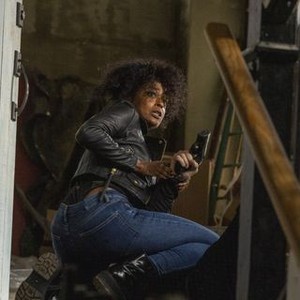


I got a few laughs out of “Double Life,” a Canadian thriller about a two-timing man who gets murdered and the widow and his chick-on-the-side who team up to solve the crime.
Whatever grieving widow Sharon (Pascale Hutton) doesn’t suspect of this pretty barmaid Jo (Javicia Leslie) who just happens to drop by her husband’s grave is nothing to what we don’t expect from the lovely-sexy Jo the first time they’re in a jam.
Jo kicks ass. Jo takes names. Jo, in the parlance of the post-“Taken” thriller genre, has “particular skills.”
Sharon’s husband (Niall Matter) was a prosecutor living a “double life” — wife and steady after-the-bar-closes hook-up. His big case involved a big polluter, so when he gets himself dead on the drive home, you’d think the cops would be in a tizzy.
Well, there is a detective (Carmen Moore) on the case. But when Sharon and Jo get threatened by a veteran local “fixer” in the employ of somebody sketchy, attacked at the scene of a SECOND homicide, making Mr. Strand (John Cassini) and his minion the TOP SUSPECTS in two murders — positive ID, as in “I NEVER forget a face I punched! — this is all Det. Traxler can tell her.
“Now, you’re both on his RADAR!”
No, “We’re ON it” or “We’ll have them in custody” or anything. What, they don’t have “All Points Bulletins” or citywide manhunts north of the border?
Perhaps Traxler senses what the viewer does, that as far as heavies go, these guys are about as scary as Ryan Reynolds. I mean, they ARE Canadian, and not every Canadian is as frightening as Michael Ironside or Kim Coates.
Our intrepid duo bond as they stumble towards The Real Killer and tumble into the Big Secret each is keeping from the other. No, other than that first time Jo charges into danger and drop-kicks some Murphy down some stairs, there aren’t any real surprises.
“Double Life” — scripted by Michael Hurst and Chris Siverston — is so generic that the moment Jo senses danger which she passes on to victim-to-be Mark, we know what he’s going to say and know precisely how wrong he is, right down to the number of minutes that will pass before his demise.
“You don’t need to worry about me. I’m a big boy.”
At least she got in a good, cheap shot as the last words she says to her paramour.
“Not THAT big.”
Rating: PG-13 for violence, language and some sexual content.
Cast: Javicia Leslie, Pascale Hutton, Niall Matter, John Cassini, Vincent Gale and Carmen Moore.
Credits: Directed by Martin Wood, scripted by Michael Hurst and Chris Siverston. A Paramount release.
Running time: 1:31
For the Floyd completist in your life a documentary that opens May 15 in his native UK and comes to North America in June.
They’re pitching this as a comedy drama, I’d say “Dramedy” is the emphasis the trailer gives off.
This doesn’t really sell the movie, downbeat, extended clips, not one light moment in it.
But maybe that’s just me.
June 27.

“The Matchmaker” is an edgy Saudi parable, an inverted “Handmaid’s Tale” warning the patriarchy about a mythical reckoning to come from the oppressed women in their lives.
But being Saudi, it was filmed by men and its words of warning are both directed at and told for the benefit of the men impacted when the women figure out a way to trap, torture and kill the wayward males in their ranks.
It’s OK as it is, but Margaret Atwood might like a word and a have a few suggestions.
“Matchmaker” sets up as a folk tale, of an abused girl of the desert who cries for help and “an ear…that could understand her” hears her cries and intervenes on her behalf. The story then evolves into a thriller about a bored workaholic and disinterested husband and father (Hussam Alharthi) who finds himself tempted by a woman (Nour AlKhadra) at the office.
Salma keeps her head uncovered, and is thus catnip to all the Saudis around her.
Tarak eyes her like everybody else, pretends to smoke so he has an explanation for following her into their office’s stairwell, and gets absolutely zero encouragement for his troubles.
And then she quits. He grabs a purse she’s left behind, and that’s where he finds the tablet, the iPad that opens up on an ad for a discrete marriage “matchmaking” site.
“Register now, and no one will know,” (in Arabic, with English subtitles, or dubbed into English).
Next thing we know, he’s being chauffeured into the desert, to a remote resort hotel. To Salma, he hopes.
That’s where The Matchmaker (Reem Al Habib) finishes the sales pitch, promises him his heart’s desire and initiates Tarak and other Saudi men of enough means into her and her staff’s “services.”
Of course there are “rules,” and of course he’s going to break them. But without doing that, how can Tarak get the idea that all is not what it seems, that these uniformed staff rituals and special garments he’s given are not what they seem, when what they seem is kind of creepy anyway?
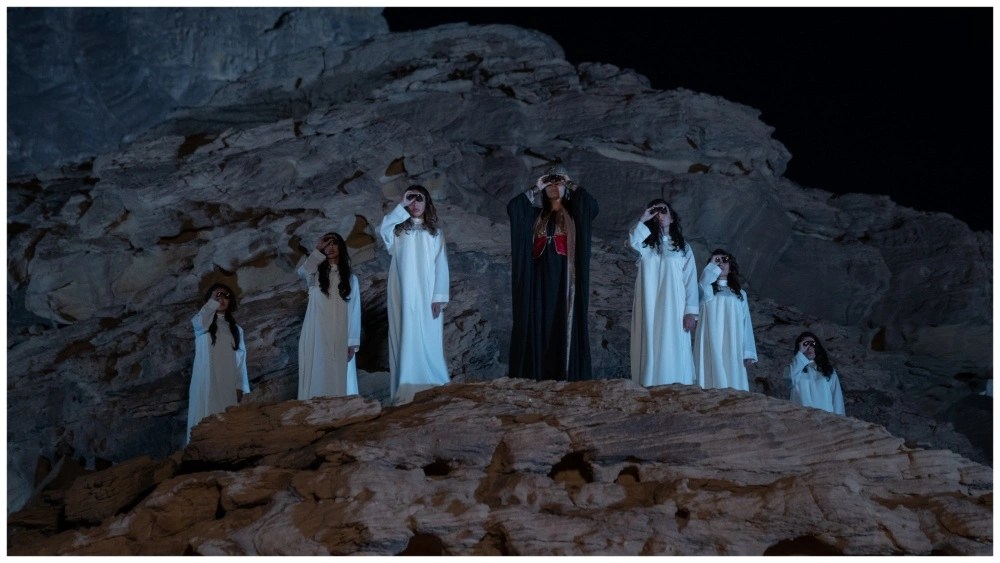
Director and co-writer Abdulmohsen Al-Dhabaan maintains a chilling tone by showing us the consequences of the revenge exacted by “the ear” in the folk tale/legend that introduces the story.
He’s dabbling in “Twilight Zone” and “Seconds” (the Frankenheimer film) territory here, grabbing hold of male insecurity and wish-fulfillment fantasy and repeating the age-old warning, “Be careful what you wish for.”
This Around the World with Netflix offering isn’t anyone’s idea of a scathing indictment of a culture’s sexist mores and practices, or all that daring a film by Western standards. The film has a sappy, sentimental coda that feels like a punch that’s been pulled.
But considering its source, a land built on a patriarchal “moral” code enforced by a state that advocates Sharia Law at its harshest, a monarchical theocracy that still beheads people, “The Matchmaker” plays as a fascinating if oblique filmed acknowledgement of how things are and a soft warning to the powers that be that this is unsustainable, and that perhaps they should repent or liberate half their populace before that bell tolls.

Rating: TV-14, violence
Cast: Hussam Alharthi, Reem Al Habib, Nour AlKhadra,, Rahaf Ibraheem
Credits: Directed by Abdulmohsen Al-Dhabaan, scripted by Fahad Alastaa and Abdulmohsen Al-Dhabaan. A Netflix release.
Running time: 1:22
This May 26 release from Quiver stars Lulu Wilson as our avenger, a troubled teen who has it in for American Nazis, and Seann William Scott as their Poster Boy.
Looks like a ton of bloody fun.
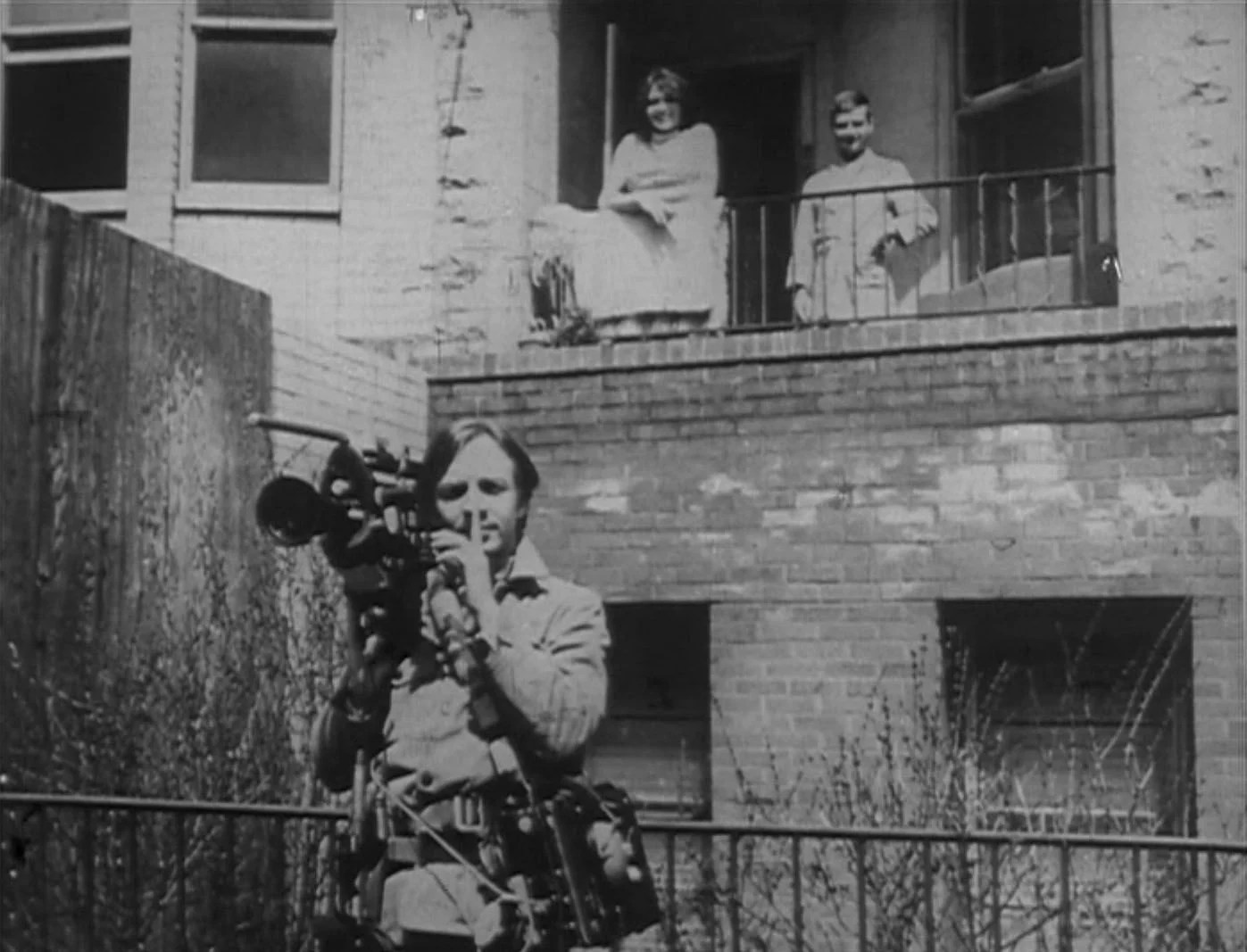
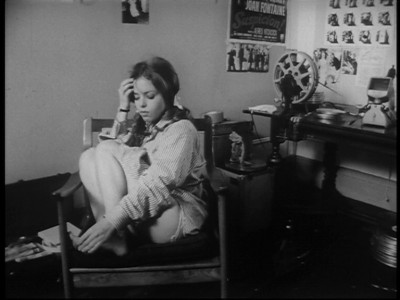
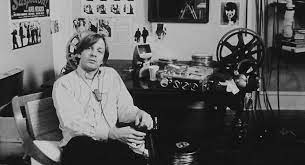
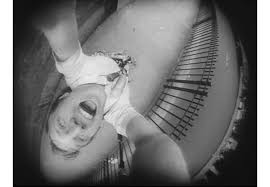
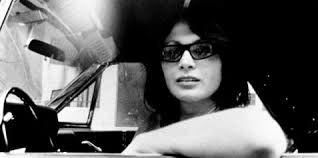
“David Holzman’s Diary” is as much as stunningly-prophetic predictor of “now” as it is a fascinating artifact of “then.”
It’s a 1967 mockumentary before that term was even invented. It was photographed by one of the great documentary cinematographers of all time, “Woodstock” DP Michael Wadleigh, so it looks like what it is purported to be, a self-filmed “diary” of an aspiring NYC filmmaker, David Holzman, even though Holzman was played by L.M. “Kit” Carson and the movie was scripted (mostly) and directed by a young filmmaker who would go on to make “The Big Easy,” the Richard Gere remake of “Breathless” and “Great Balls of Fire!” — Jim McBride.
Watching this darkly-comic tale of a cinema-obsessive in the New York of the ’60s, we can see the cell phone “film” revolution to come and performative “Attention Economy” narcissism of the Tik Tok generation foretold in the story of a film student/graduate who has no ideas for a movie save for making a diary of his own life.
The old joke about budding novelists writing novels about wannabe novelits writing their first novel can apply to film, too, especially in an age where all the tools to make your own movie — an iPhone with a tripod and a little editing software — are so cheap.
Only our fictional David Holzman is doing this back when even filming something as simple as a “diary” of a week in New York when the process of making that diary is tearing your life apart is expensive.
But young Holzman shows us his NPR (noiseless portable reflex) Eclair 16 mm camera and his just-as-pricey portable Swiss NAGRA reel-to-reel recorder, so obviously he has means. Maybe Mommy and Daddy’s money is paying for the film stock (B&W), too.
Holzman lets us see his stumbling attempts to narrate his self-absorbed diary. “This is a fantasy,” he begins, then changes his mind and starts again. “EXPOSE yourself” is his credo, perhaps handed down by an NYU professor, but here sounding like the onanistic exercise this almost certainly will turn out to be.
He’s just lost his job, which means he’s gotten a draft notice in the mail, which means he’s desperate to make something that will either change his employment state or something to leave behind if he’s sent to Vietnam.
Wasting a lot of celluloid isn’t an issue.
He hopes to discover “some meaning” in what’s going on in a life that “seems to haunt me in uncommon ways.”
Or maybe they’re not that uncommon. But that’s exactly how a narcissist would see it.
His aim is to make a sort of “Lulu’s Diary,” referencing the classic Louise Brooks’ silent film “Pandora’s Box.” He quotes “Breathless” filmmaker Jean-Luc Godard noting that his camera “tells the truth 24 times (frames) a second.”
So Holzman will film his world, the streets he walks in the neighborhood (W. 71st Street) on this week in July of 1967, capturing the people along those streets, the storefronts, the historic sites (The Ansonia Hotel, the “Red House”).
He plays around with a fisheye lens, walks us down the longest park bench in New York, taking in the faces he captures as he does, takes us on a noisy subway ride where he stalks a pretty rider as she detrains.
Okaaayyy.
He introduces us to his very reluctant model/girlfriend Penny (Eileen Dietz), who averts her eyes and asks him to stop filming her out-of-makeup. When she catches him filming her nude, sleeping in post-coital repose, she flips out and storms out.
He peeps out his window at the neighbor woman across the street whom he names “Sandra” (Louise Levine) because, you know, he’s looked up the name on the mailbox downstairs — “S. Schwartz” — and decided she “reminds me of Visconti’s Sandra.” He even calls her up and figures out, in a flash, that she isn’t a “Sandra” when she hangs up before he can run through all the other “S” first names he can think of.
So yes, this guy is obsessed and inappropriate and seriously creepy and we’re allowed to laugh at him, maybe cringe a little bit and wonder if there’s a joke in the native-New Yorker McBride giving this creepy character a Jewish surname and if we’re allowed to laugh at that now.
The funniest and most celebrated sequence is perhaps unscripted and is certainly uncredited. A transvestite neighbor pulls up in her T-bird convertible (Hellooo, “Thelma & Louise”), stops traffic (horns honk, other drivers complain and gawk) and engages David — actually McBride, his star and his film crew — in a long, crude come-on of a conversation.
“David” is a a bit amused and a little rattled, and not just at the idea of a New Yorker in the ’60s having the guts to own an easily-broken-into rag-top Thunderbird.
“David Holzman’s Diary” is a lovely snapshot of Manhattan in the ’60s and a biting portrait of the cinema fanatic/film school student of the day, and indeed every day that’s followed. It may portend our current Youtube/Tik Tok “influencer” era, but it more directly inspired the “documentary diaries” of Ross McElwee (“Sherman’s March”) and Michael Moore (“Roger & Me”).
It’s all pretty much faked, and you can see the early comedies of Albert Brooks (“Real Life,” “Lost in America”) and “This is Spinal Tap” in this twist on upending and ridiculing the then-new “cinema verite” documentary conventions of the ’60s.
McBride’s Holzman even brings in an artist friend (Lorenzo Mans) to launch into a diatribe of how the presence of the camera alters the “reality” of what he’s doing, a philosophical debate that erupted when fly-on-the-wall “truth” documentaries in the cinema verite style became a thing.
“David Holzman’s Diary” may not be as funny and off-the-wall transgressive as it once was. But it’s still a marvel, a movie that one can look at now and see the building blocks for the “realistic” DIY cinema to come, and see it brutally mocked well before its “My movie is about ME” time.

Rating: unrated, nudity, profanity
Cast: L.M. “Kit” Carson, Eileen Dietz, Lorenzo Mans, Louise Levine and Robert Lesser.
Credits: Scripted and directed by Jim McBride. A Kino Lorber release on Tubi, Mubi, Amazon et al.
Running time: 1:14

There’s something deliciously ironic in the notion that the “bomb throwing anarchist” of legend — 19th century leftists who dreamed of the end of states, with all democracy “local” and every workplace run by voting workers — people fanatical enough to assasinate leaders all over the industrialized world and who would literally throw bombs, were inspired by that hotbed of anarchist thought, Switzerland, and the folks who made the watches that inspired the selling point, “Swiss time.”
Wait,. Anarchism Central was Bern and the Jura Mountains valley where assorted Swiss watchmaking concerns obsessed over time, effeciency, profits and market share? And the front line troops in that “revolution” were the Swiss women of that workforce, meticulous builders of precision timekeepers who kept “The Commune” in their hearts as they supported anarchists from Europe, the Americas and Asia with their labor and their salaries?
“Unrest” (“Unruh”) is the punny title of a Swiss period piece about that late 19th century epoch, where Swiss women, or Russian upperclasswomen, would discuss “Marx and Engel” and how the anarchists weren’t satisfied with those two, but alligned themselves with the “pure” democracy of the Paris Commune.
Writer-director Cyril Schäublin (“Those Who are Fine”) leans heavily on the simple irony of it all for a seriously deadpan and dull pretty-much-by-design dive into what seems, on its surface, like a fascinating corner of history to explore.
Because really, what do we think of when we think of Switzerland? Amoral, international tax-haven banking, chocolate and watches.
“Unrest” plays like a film inspired by that self-written Orson Welles speech as the amoral American Harry Lime in Carol Reed’s “The Third Man.”
“Like the fella says, in Italy for 30 years under the Borgias they had warfare, terror, murder, and bloodshed. But they produced Michelangelo, Leonardo da Vinci, and the Renaissance. In Switzerland they had brotherly love – they had 500 years of democracy and peace, and what did that produce? The cuckoo clock.”
A Russian prologue has a gaggle of politically-aware upper class ladies of the 1880s who await their turn being framed by a Saint Petersburg photographer and bemoan the fate of “Poor little Pytor Kropotkin,” who’s taken up anarchism and gone to “the capital of international anarchism” to ply his trade.
Pytor ( Alexei Evstratov) is in Switzerland to ply his trade as a geographer/cartographer, redrawing the maps in a more “workers/peoples” centric manner. But the movie isn’t really about him. He’s an observer, an epistolary linchpin of The Internationale, reporting on what the women do there, and communicating with his fellows all over the world via telegraph.
It’s the women of an unnamed watch-making concern, bent over worktables, relentlessly-timed, quizzed and coached towards “higher productivity” so that the Swiss can maintain their edge over “New York, Hong Kong” and other locales producing the pocket watches that the world runs on, who drive, finance and inspire this movement.
It’s already a “global” marketplace, and Factor Director Roulet (Valentin Merz) knows it, even if he never uses the word “globalism.”
The women are quiet, seemingly compliant. But they are quietly organizing, with Josephine Gräbli (Clara Gostynski) as both the factory’s model employee and the anarchist’s darling, an activist at the heart of the movement.
Her specialty? She sets the “unrest” wheel (A Swiss-specific term?) in place, so that the watchspring, escapement and other wheels work in perfect sync and keep Swiss time.
Can she and her sisters change the world with their thinking and the workers’ democracy that they’d love to spread the way Swiss watches seized the global marketplace? Can they manage it without Swiss women even having the vote? They didn’t until the early 1970s, thanks to the Swiss practice of compulsory male-only military service determining who could vote.
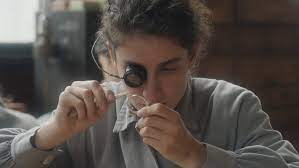
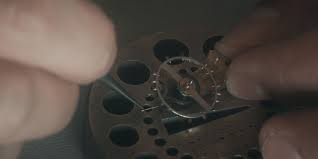
Everything about “Unrest” seems promising — the history lesson, the leftist agitation, the political and labor “unrest” that spread around the world.
But if you’re looking for a movie with drama, confrontations, moments of sweeping emotion and action and women making history ahead of their time, “Unrest” is not that film and writer-director Schäublin is emphatically not that guy.
This relatively short film — barely over 90 minutes — is often the cinematic equivalent of “clock-watching.” We stare at blank-faced characters and conversations often seen from afar, in unemotional, character-disconnecting long shots.
The one time a character raises a voice, it’s a publican, democratically “polling” his pub about a new “anarchist” made map (by you-know-who) and whether the working class Swiss there approve of it, or disapprove.
A key moment? Not really.
The most efficient workers in the watchworks are lauded in a meeting for “saving” the company with their improved efficiencies, but noting that they’re anarchists and that the country and the company can’t have this, their dismissal is also announced.
Curiously, the ladies go right back to work, as if Schäublin is making a point about the Swiss character and “business is business” lack of follow-through. Sack their best workers? Maybe not.
The film’s recreation of its time and place includes the birth of the practice of collecting photographic prints of heads of state, and anarchists, whom all the workers in Switzerland seem to know by name — August Reinsdorf, for instance.
“I LOVE criminals,” one female collector/enthusiast gushes (in French, with Russian also spoken in the film).
But as would-be assassin Reinsdorf was never photographed, she’ll have to settle for another “criminal.” Perhaps there are shots of Pyotr?
The script, the shot-blocking and the performances combine for a most dramatically flat exercise, apparently embraced by some at film festivals (groupthink) but which, in the cold hard light of day, is just disappointing.
“Unrest” could have been a lot of things that it’s not — “fascinating,” “illuminating,” “entertaining” and even “inspiring” among them. Instead, we’re treated to engrossing details that never add up to more than watching a second hand labor its way around a clock face.

Rating: unrated
Cast: Clara Gostynski, Alexei Evstratov, Li Tavor, Monika Stalder and Valentin Merz
Credits: Scripted and directed by Cyril Schäublin. A Kimstim Films release.
Running time: 1:31
The dream…
The Reality…

 Movie Nation