
A “Dog Day Afternoon” true story/period piece about a hostage situation with political and predatory lending overtones.
With that cast, I don’t see how this Jan. 9 release can go wrong.
A “Dog Day Afternoon” true story/period piece about a hostage situation with political and predatory lending overtones.
With that cast, I don’t see how this Jan. 9 release can go wrong.
This February release looks more dark than comic, which its “Kind Hearts and Coronets” set up might have promised.
Guys want to inherit a fortune but he has relatives to kill off to get it.
Bill Camp, Margaret Qualley, Topher Grace and Ed Harris have their supporting parts to playing this one.
Powell could use a hit right about now.
The great German character actor Udo Kier died last weekend in Palm Springs, where many of the movie famous (Liberace to John Schlesinger to Janet Gaynor to Alan Ladd to Howard Hawks to Darryl F. Zanuck) end their days. He was 81.
A brooding but playful presence, he worked with Warhol and Van Sant and Von Trier, popping up in junk like “Bloodrayne” (by the infamous hack Uwe Boll) and “Surviving Christmas,” but also in the gonzo trailer to “Werewolf Women of the S.S.” directed by Rob Zombie for inclusion in “Grindhouse,” piling up over 280 credits, from films and TV to video games.
He dressed up horror films like “Skin Walker,” and “The Painted Bird” and indie dramas such as “The Mountain.”
But gems like “American Animals” and “Swan Song” decorated his later years, an indie film icon who had many films in the can and a few awaiting distribution when he passed away.
“My Neighbor Adolf” is one of those and makes its way to theaters Jan. 9.

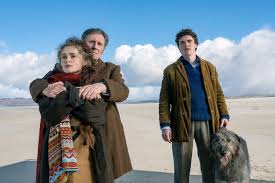

Pierce Brosnan, Helena Bonham Carter and Gabriel Byrne appear on screen together for the first time in “Four Letters of Love,” a lovely, sentimental and ever-so-Irish romance about fate, faith and the power of words to woo, especially when folded into those old fashioned envelopes we used to drop in the post.
It’s a ’70s period piece directed by Polly Steele (“Let Me Go”) and adapted by Niall Williams from his own novel about a couple “meant” to be together who take an entire film — with tragedies, missteps and missed connections — to find their way to one another.
From “Much Ado about Nothing” to “Serendipity” and “Four Weddings and a Funeral,” that’s been a formula that works. On some of us, anyway.
Young Nicholas (Fionn O’Shea of TV’s “House of Guniness”) narrates our story, about the day “God spoke to (his father) for the first time” and upended his and his mother’s lives. Dad (Brosnan) was a civil servant, toiling away at his Dublin job-for-life until the moment the sunlight hits his desk blotter in a way that tells him he was meant to paint.
William Coughlan abruptly walks out on the job, shocks his wife (Imelda May) and leaves his son confused and bereft. Dad may wander off to “the mythic West of Ireland” to paint impressionist seascapes of this one island he’s fixated upon. Nicholas loses his father and watches his mother come to pieces over this disaster.
Meanwhile, young Isabel or “Izzy” (Ann Skelly of Netflix’s “The Sandman”) is coming of age on that island when her Gaelic-speaking family is visited by a different tragedy. Her older brother Sean (Dó`nal Finn) has a stroke while playing a pipe for her to dance for by the sea. Her published poet father (Byrne) falls into writer’s block, and his wife and muse (Bonham Carter) is bereft.
There’s nothing for it but for Izzy to attend a distant Catholic girls’ school to get her away from their grief.
Nicholas, “a son who could not speak to his father,” must find and make a connection with a man who thinks “All this time I’ve been living the wrong life.” And the girl with the father who shouts at God over his stricken son’s fate will find her escape from the nuns in the form of a rakish slightly older mamma’s boy (Ferdia Walsh-Peelo) with a steady job, a roaming eye and a Triumph 2000 to whisk her away from her troubles.
The obstacles to love in this romance are both practical and ethereal. How does a broken-hearted son cope with a father who takes a bit of sunlight through a skylight as a “sign” from above? At least the distance between our two prospective lovers — the island is only reachable by ferry — offers some of the most beautiful scenery on Earth. The County Donegal in Ireland and Ulster and Murlough Bay in Northern Ireland settings will have romantics plotting their next cliffside vacation.
A longer cut of “Four Letters of Love” — the title’s a pun on the spelling of “l-o-v-e” — played festivals and was released in theaters. But losing 16 minutes before its streaming release was almost certainly for the best. Novelists who adapt their own books into scripts tend to avoid murdering “their darlings” and this lumbers during the early acts and the almost omnipresent novelistic voice-over narration grates — it’s an unnecessary crutch in most movies — until it finally pays off.
But Brosnan grows his hair out and shows off his painterly eye (he really paints). Byrne has spent most of his wide-range-of-roles career hinting at the fact that he was born to play an Irish poet.
And Bonham Carter lands all the laughs as she twinkles and casts side-eyes in the film’s utterly delightful and wholly charming third act, when her character’s morality demands that she try to keep Nicholas’s heartfelt written odes from reaching the fair Izzy.
Spoiler alert — her efforts come to naught. And this engaging make-work project for cherished older actors touches as they sparkle and remind us all, and the younger characters around them, that they know what it’s like to be young and in love and remember the blush of recieving the perfect love letter.

Rating: PG-13, adult themes
Cast: Pierce Brosnan, Helena Bonham Carter, Fionn O’Shea, Ann Skelly, Ferdia Walsh-Peelo, Dó`nal Finn and Gabriel Byrne.
Credits: Directed by Polly Steele, scripted Niall Williams. A Quiver release on Amazon Prime.
Running time: 1:49
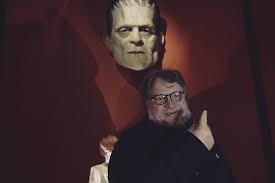

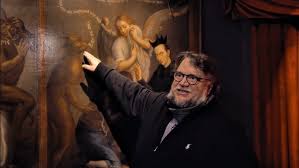
Guillermo del Toro is not just the fanboy’s fanboy, a comic book collector (“Horror comics, mostly.”) turned Oscar winning horror director.
He rivals his idol David Cronenberg as the reigning intellectual of his genre, a thoughtful, philosophical Mexican who knows horror literature, horror iconography and horror cinema like the back of his hand.
“Sangre del Toro” is an affectionate and revealing dive into what made him who he is, a monster-obsessed movie maker who makes movies that give those monsters personalities, heartaches, fears and agendas that connect to the hallmarks and the failings of humanity.
Yves Monmayeur’s documentary is built around del Toro touring an exhibit — “En Casa Con Nos Monstruos,” “My House of Monsters” — that he co-curated and opened in his hometown Guadalajara’s museum. Walking through its childhood photos, collectible comic displays, gigantic props from his films and collected from others’ classics, he meditates on the nature of horror, his personal obsessions and the (privileged) childhood that informed “The Devil’s Backbone,” “Pan’s Labyrinth,” “The Shape of Water” and even “Hellboy.”
He sat down for chats and held public conversations about his work there, in which del Toro lays out the influences that made him and the threads of his monster horror/body horror filmography that point back to his childhood.
“The Mexican marriage of the sublime and the brutal,” he says of that country’s hybrid “Dia de los Muertos” form of Catholicism, “is very much in me.”
So in “Sangre del Toro” — a play on “Sangre de Cristo, aka Blood of Christ” — del Toro doesn’t just talk about his films and the Buñuel, Cronenberg and George A. Romero movies that shaped his art, or expound on his 15,000 comic book collection of “Tales from the Crypt” and many other legendary horror titles. He notes how the horrific is best experienced “through the eyes of a child,” like the child he once was and kind of still is.
The first time I interviewed him, I grilled del Toro about that, which was the focus of the earliest films he made in America (“Mimic”) or which were distributed here (“The Devil’s Backbone”). Children can be witnesses, victims and heroes in his horror. And once you’ve established you’ll “kill the dog,” (in “Mimic”), a world of horrific possibilities opens up.
Like Spielberg, del Toro obsessed about becoming a film director before he knew there was such a job. “I wanted to be a monster maker!” He designed monsters and makeup and dreamed up scenarios and shot and edited super 8mm films as a young child (age 8, in his case).
Unlike Spielberg, del Toro can talk about the grandmother who helped raise him’s faith, relating a painful, bloody, rending of the flesh horrific anecdote about his grandmother’s lessons about Catholic eternity and purgatory, which involved the injurious application of jagged bottle caps on his tiny feet.
Hey, better than eternal damnation, Granny figured.
“Most of my movies talk about…choice and sacrifice,” del Toro says. And they do, from his earliest works to his “Hobbit” films and “The Shape of Water” to his latest, Netflix’s “Frankenstein.”
We see the long-closed childhood comic book stand where he first tasted horror on the page, which he bought and installed in the museum exhibit. We visit Guadalajara’s Gothic cathedral and its catecombs below, and visit the cemetery in Belen that inspired every cemetery scene ever in a del Toro movie, from “Hellboy” onward.
“Sangre del Toro” is very much a documentary “in his own words,” and thus a portrait of how del Toro sees himself and the destiny he is sure he was born to fulfill. He comes off as introspective, someone who has given some thought to the sort of artist he became and how he got there.
Lacking more outside voices — we hear from Cronenberg and horror manga artist Junji Ito– the film dispenses with others singing del Toro’s praises or criticizing the occasional misstep, or family members, academics and childhood friends doing del Toro’s psychoanalyzing for him. That works for and against the film’s reach for a “definitive” portrait.
But if “Frankenstein” or his more recent series work since “The Shape of Water” has piqued your interest in this grownup cinematic version of R.L. Stine, “Sangre del Toro” makes a fine introduction to the sacrements and stations of the cross of this horror icon — who and what made him who he is.
That grandmother must have been some piece of work.
Rating: TV-MA, gruesome images, violence, nudity
Cast: Guillermo del Toro
Credits: Scripted and directed by
Yves Montmayeur. A Netflix release.
Running time: 1:26
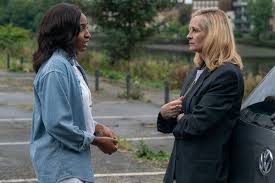
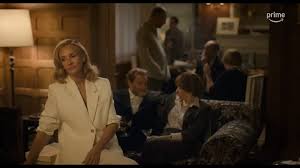
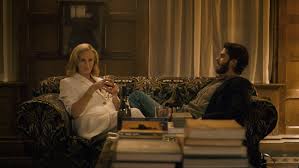
“After the Hunt” re-litigates the #MeToo/Cancel Culture wars and muddies the waters about what has and is being achieved by this latest rift along the gender and generation gaps.
It’s only mildly provocative and not at all satisfying. But it’s mysterious and Ivy League immersive enough to hold our interest until it settles into an anti-climax.
The film lacks the usual slap in the face shock that has become director Luca Guadagnino’s trademark. Whatever sharp storytelling with an edgy sexual subtext the director of “Call Me By Your Name” and “Bones and All” achieved with “Challengers” and “Queer,” you’d have to say this academic melodrama represents a step backwards.
Perhaps the subject matter is too distinctly American or just too slippery for him to get hold of. Or perhaps taking on a script by a young actress turned first-time screenwriter wasn’t the smartest decision of his career.
Julia Roberts stars as Alma, a Yale philosophy professor in “Hunt,” a smart, brittle but self-confident achiever who doesn’t suffer fools or thin-skinned Gen Z students gladly.
In her 50s, she’s not the careless smarty-pants her departmental bestie, rival for a tenure position and flirtatious “work husband” — perhaps “with benefits” — Hank (Andrew Garfield) is. But if he’s the sort of younger male associate professor who banters with and flirts with students at a faculty-students cocktail party, Alma’s the arrogant empress who figures she can throw such parties without repercussions.
Because inviting a couple of “favorites” among her students isn’t smart. Whatever they bring to the conversation, adoration of her and deference to Alma when she snippily cuts their assertions and arguments to ribbons is their chief function.
Her canny psychotherapist husband (Guadagnino favorite Michael Stuhlbarg) sees through Alma. He might have a sense of whatever “secret” she’s keeping from her past. He certainly suspects she’s had or is having an affair with Hank. But she’s keeping these bouts of gut pain from him.
That “secret” is something student Maggie (Ayo Ediberi of “Bottoms” and TV’s “The Bear”) stumbles into while poking around her hostess’s bathroom. But the risks of that evening’s mixer blow up in everybody’s faces when drunken Hank walks Maggie home.
Shaken Maggie skips class the next day, but confides to Alma what happened. Or her version of it. The calculating, tenure-track academic isn’t exactly a feminist shoulder to cry on.
“What are you saying happened?”
We know that she knows that no young woman is likely to make something like this up. Maggie’s “given your history” hint suggesting that they’re gender allies may get Alma’s back up, but she dodges Hanks frantic calls, is noncommital when he attempts to “explain” himself and goes straight to her dean as word races across campus. Alma is by the book.
Maggie may be a “mediocre” student. Maybe she plagiarized her dissertation-in-progress. She’s “rich and entitled.” That doesn’t invalidate what happened to her. Or it shouldn’t. But Alma maintains her spot sitting on the fence.
With little mystery about what happened, “After the Hunt” becomes a movie about what happens “after.” But there’s not much to that. So it becomes a delivery platform for protesting monologues and cutting digs at “kids these days.”
As in “These kids have had everything handed to them their entire lives,” blurted by Alma’s friend, a school psychotherapist (Chloë Sevigny). Hank’s plea that Maggie’s “word” will undermine “a lifetime of hard work and good deeds” may resonate with some sexual assault equivocaters.
Academia, the most direct intergenerational contact between The Old Guard (Boomers) and the “entitled” young (Gen Z) is “a minefield these days,” especially at a school that holds open public debates over “The Future of Jihadism is Female.” But that “minefield” line, like “the insane times we live in” and “this shallow cultural moment” are among the scripts’ many statements of the obvious.
“I can be cold sometimes” is practically Julia Roberts’ brand, in or out of character.
There are assertions meant to generate a knowing smirk to whichever generation’s character is delivering the hard truth to the other.
“Not everything is supposed to make you comfortable, Maggie.”
“Am I not OWED” the benefit of the doubt in such an accusation, Maggie demands?
Roberts is only somewhat convincing as a starchy academic and Garfield is more at home playing the tipsy cad struggling to justify his advances than either is in the many off-the-cuff debates among academics and between teacher-and-student over Foucault, Hannah Arendt and millenia of great thinkers. The names and lines feel read, not acted.
Ediberi lacks the fire and outrage we’d expect from someone in her situation, even a “mediocre rich” student.
The standout performance comes from Stuhlbarg, who gets across Frederick’s “We’re too old and too married to lie about anything so blatantly” wit and lets us see how comically passive aggressive a shrink can be when he’s reminded he’s the junior partner in this relationship with smart, brilliant beauty.
But as our screenwriter (Nora Garrett also plays Billie in the cast) paints her story into a corner and actors and her director can’t get her out of it, “After the Hunt” stumbles towards a finale that doesn’t satisfy, resolve anything or even make sense.
As current as these issues and this debate remains, a story meant to pass judgement after the dust settles just comes off as mediocre, murky, both-sidesing virtue signalling from a writer out of her depth.

Rating: R, “sexual content” and profanity
Cast: Julia Roberts, Andrew Garfield, Ayo Ediberi, Chloë Sevigny and Michael Stuhlbarg.
Credits: Directed by Luca Guadagnino, scripted by Nora Garrett. An MGM release on Amazon Prime.
Running time: 2:18
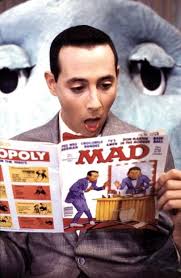
It was more obvious 40 years ago, but we in America live in a MAD culture, a land of mockery, parody and running gags aimed at the institutions, pop trends, entertainment and “Americana” that we once thought of as “sacred cows.”
Generations grew up with MAD magazine, “Humor in a Jugular Vein” as it was billed in the early days. And many of those of us who grew up with it came to make a mocking mark on the culture in their own vein, from the ’60s, when that first generation of kids who grew up on it started pursuing careers in comedy, sketch and humor writing or cartooning, to today, when cultural mockery has spread from “Saturday Night Live” to “The Daily Show” to Tik Tok, Youtube and beyond.
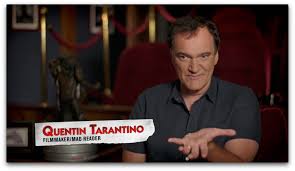
“When We Went MAD!” is an affectionate documentary history of this magazine, taking us back to the prehistory — publisher and founder William M. Gaines was the son of pioneering comics publisher (“Wonder Woman,” “Green Lantern,” “Hawkman”) Max Gaines — on through the magazine’s 2019 demise, with a Quentin Tarantino “Time Warp Final Issue” conceived to provide set decor for “Once Upon a Time…in Hollywood.”
MAD was conceived as a venture in juvenile humor from a company (EC Comics) that had devolved from its “Education Comics” mission — with illustrated stories from The Bible as one of their titles — into tween/teen horror comics like “Tales from the Crypt” and “Vault of Horror.” The horror titles and violent “Two-Fisted Tales” had gotten EC into trouble with Congress during the “juvenile delinquincy” panic of the 1950s, an earlier version of the culture’s later panics — fear of TV, rock music, video games and social media’s impact on children.
The idea in house was to write for older juveniles so that the mag would appeal to younger ones.
“Things that go over your head make you want to life your head up,” writer Desmond Devlin reasons.
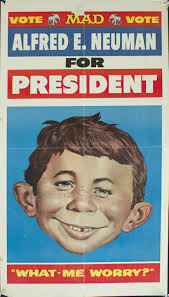
“When We Went MAD!” hits the red letter dates in that early history that gave the magazine its style, its mission and its cover-boy, Alfred E. Newman. Politics and social mores, movies and TV and pop culture phenomena were targets that worked their way into the comic book that transitioned into a “slick” (monthly magazine with better paper, sharper images) to hang onto an early editor.
“MAD went after EVERYone,” one and all marvel as Gaines & Co. assembled staff and contributors who came to be known as “The Usual Gang of Idiots” as they were credited on the masthead.
Early readers became aspiring writers, and the irreverent style was established with that blend of old art and gag writing pros and youth culture alumni who turned the magazine into a major force in America in mid- ’60s through the ’70s.
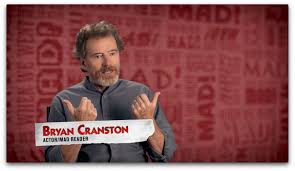
The testimonials here— Bryan Cranston, Howie Mandell in interviews and Jerry Seinfeld, Howard Stern and others in archival clips from TV appearances, are filled with performers and personalities needing “no other honor” in their lives after their show or shtick earned them a MAD Magazine cover.
Bernstein’s documentary revels in Baby Boomer nostalgia and the magazine that mocked much of what Boomers still get nostalgic over. And we get a hint of just how “out there” the mercurial personalities and wise-crackers who wrote it, drew and joked MAD up could be.
The man behind it all — Gaines — was a hands-off publisher who didn’t see any issue until it hit his desk at publication, with a staff that lovingly hated him awaiting his first belly laughs. Gaines is remembered as a bon vivant, generous cheapskate and “one of the biggest nuts who ever lived.”
But the genius of the magazine was its instinctive wrong-footing of the reader. Nothing was sacred. Capitalism and socialism were mocked in equal measure, politicians were punctured and smoking and faux “patriots” and “gun nuts” were relentlessly ridiculed.
“The curse of being a satirist,” former editor Nick Meglin opines, is “you laugh in the WRONG places.”
Continue readingThis Lav Diaz film is the Philippines’ entry on the Best International Feature Oscar race.
Epic, but hardly old fashioned, on the way it treats the “cost” of “discovery” and conquest
Mercenaries trying to carry out a rescue of some sort in the middle of an African civil war.
Sounds a lot like a Christopher Walken outing from the ’80s, “Dogs of War.”
The title “Lost Horizon” has been emblazened on Shangri La in the Himilayas fantasies for a century. Here, it’s slapped on a generic B-movie that feels like an ’80s throwback.
But maybe not.
This “Lost Horizon” hits theaters Nov. 28.
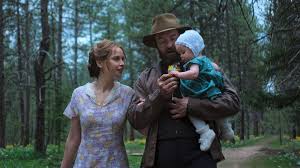

“Train Dreams” is a forlorn folk ballad with pretensions of being a tone poem.
This downboat but picturesque saga of one man’s life during the lumbering-mad early years of the 20th century is both intimate and remote. We see a life closely-observed and lived in Big Sky Country by a solitary and simple man looking for meaning and never quite giving away that he’s found it.
It’s based on a novella by Denis Johnson, a long short story which implies lots of cinematic room to expand on characters, situations and dialogue while hanging onto the the life-death-and-not-exactly-“rebirth: themes. Johnson’s “Jesus’s Son” and “Stars at Noon” were also turned into films, albeit movies almost no one saw.
Here Clint Bentley of “Sing Sing” and “Jockey” fame is the director and co-screenwriter. He tends towards “elegaic,” and with this film, it feels as if he’s reaching for something broad, deep and evocative, a sort of Terrence Malick (“Badlands,” “Days of Heaven” and “The Tree of Life”) meditation on life and nature.
There’s no dishonor in falling short of that. Bentley’s film is watchable — beautiful in its reveries, sad in it’s laments — but somewhat less than great. And the more I chew on it, the less satisfying it seems.
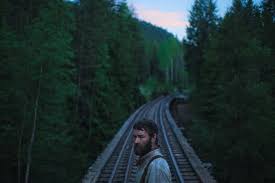
Bentley shot it in the little-used 3:2 aspect ratio, a narrow “boxy” frame meant to remind us of old photographs (but doesn’t) in the images of virgin forests facing the axe, sunsets on the high plains and railroad tracks receding into the woody horizon. Those cinematic picture frames, which are among the film’s great assets, are less than spectacular, majestic and soul-stirring in that chopped frame.
Malick wouldn’t have made that mistake. Nor would Costner, Redford or Campion.
And our lonesome hero’s story is voice-over narrated, seemingly taking every line of description, back-story and narration from the novella and having the actor Will Patton read it for the screen, when in many cases, the image alone — with Joel Edgerton‘s senstive turn as the lead — tells the story and ponders the mysteries the movie never solves, even with that remedial narrative boost.
Malick and many a more confident filmmaker would have eschewed this as the needless, self-conscious writerly crutch that it is. The movie’s mystery is part of its allure, and all that yakking about who is thinking what don’t solve the mystery. So why disturb the peace?
Edgerton plays Robert Grainier, who grew up an orphan to live his entire adult life mostly in Idaho, with railroad crew and lumbering treks as far east as Montana and far west as Spokane.
Grainier is an Idaho introvert who probably never would have met and married the love of his life (Felicity Jones) had she not made the first move.
In the years during and after the First World War, they build a cabin on an acre beside a river and have a happy if lean life, raising a little girl out on the edge of the forest.
They have chickens and perhaps a garden. And wife Gladys is handy with a firearm. She’s the hunter of the family. To make ends meet, they need Robert’s income from cutting lumber or clearing land through mountains and gorges for railroad lines.
A litany of tragedies bedeviled Robert’s early life, and when he sees a Chinese railroad laborer publicly murdered by the rail gang for reasons unknown, he has a horror that will stick with him always. Did he do enough beyond complaining “What’s he done?” The narration mentions mass deportations of previous years, as if this will be a big theme of the movie.
It isn’t.
Visions of Fu Shing (Alfred Hsing) stick with Robert, displacing the nightmares about a murdered man (Clifton Collins Jr.) Robert saw bleed out as a child. The random dangers of lumbering work in that pre-OSHA era hang over every day in the woods on the job. Accidents with big saws among big trees are a given.
Among the blowhards, braggarts and silent types Grainier encounters, a colorful old-timer Arn (William H. Macy) stands out. His declining strength limits his usefulness in the actual tree cutting. But he eulogizes the ever retreating forest line and laments the majestic trees, “over 500 years old,” that they’re chopping down as fast as they can get to them.
Arn’s seen things and might give Robert new perspective.
“It’s just beautiful.”
“What is, Arn?”
“All of it. Every bit of it.”
But the script doesn’t let itself sentimentalize nature in some John Muir early environmentalist reverie. It doesn’t address the guilt at the murderous racism Robert witnesses, or the random nature of violence depicted here and the dangerous, destructive work that might be a metaphor of warning.
It just takes us through a hard life, with periods of domestic harmony and the long mourning that accompanies personal tragedy.
We can’t get too attached to anybody or anything, and yet we do. And we suffer when we lose them.
Graingier may believe he’s dogged by tragedy because of some transgression, that he carries every bad thing that he’s been a part of with him to the grave. A lady forest ranger (Kerry Condon) comes as close as anyone to explaining why life goes on after something happens to you.
We’re all “just waiting to see what we’ve been kept here for.”
That’s kind of deep and sort of poetic, which is why it stands out enough to quote. But as somewhat famous faces (Nathaniel Arcand, Paul Schneider, John Diehl, Collins and Condon) pass by and register but serve little to no purpose in the plot, we’re entitled to think we’re entitled to more.
There’s pathos in the deaths that pass us by, but they lack the punch in the gut we feel we deserve and that might somehow change or educate the shocked but silent about it Grainier.
I enjoyed this world, random and sometimes melodramatic tragedies included, and the people who populate it. Macy in particular stands out in the cast, but everybody does justice to their roles, even the ones barely sketched in and here for but a scene or two.
“Train Dreams” feels as if it’s supposed to be bigger than it is — soulful or soul-stirring even. It never gets there. And at some point we have a right to expect more than musing voice-over narration.
“A River Runs Through It” was just as scenic and just as heavily narrated and still had a point. For all its attempted ethereal touches, “Train Dreams” never settles on a track that delivers one.

Rating: PG-13, violence, sex
Cast: Joel Edgerton, Felicity Jones, Nathaniel Arcand, Alfred Hsing, John Diehl, Paul Schneider, Clifton Collins, Jr., Kerry Condon and William H. Macy.
Credits: Directed by Clint Bentley, scripted by Clint Bentley and Greg Kwedar, based on a novella by Denis Johnson. A Netflix release.
Running time: 1:43


