
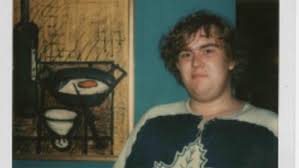
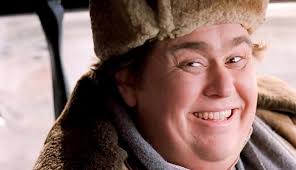
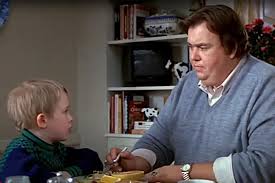
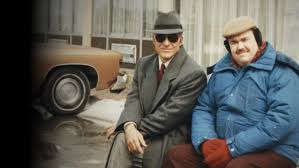
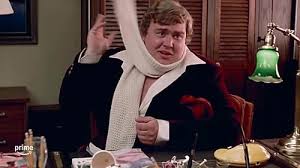
Friends, acquaintances and fans still get choked up when the subject of the late Canadian comic wonder John Candy comes up.
I’d be talking to Richard Lewis or Ron Howard or Hanks or somebody who worked with Candy and out of the blue, they’d mention his name and turn emotional.
Fans remember “Planes, Trains and Automobiles” or “Uncle Buck” or “SCTV” or “Splash” and the big man with the big grin and big laugh that you just knew were covering for some painful vulnerability, and tear up.
So you knew that Colin Hanks, as director and interviewer, would have no trouble getting legions of Candy friends and fans to sit down for chats about a funnyman who died over 30 years ago.
“He filled a room with his aura,” Conan O’Brien recalls. “The minute you see his face you smile,” his “SCTV” co-star Dave Thomas says. Funny? Sure. But “he was a great actor who stuck acting in his back pocket and behaved like a human being,” says Mel Brooks, who directed Candy in “Spaceballs.”
“John Candy: I Like Me” isn’t just a documentary appreciation of the actor, comedian and “good guy” everybody from Eugene Levy to Catherine O’Hara and Bill Murray insists that he was. It’s a love-in for a man who knew he was “living on borrowed time” and who made movies that have outlived him and impressions that stick with people for a lifetime.
Director Hanks generously samples from Dan Aykroyd and O’Hara’s effusive eulogies for Candy at his Toronto funeral in 1994. “Johnny Toronto” his old Canadian comedy friends nicknamed him, was his pal Aykroyd remembered, simply “Grand.”
Home movies and interviews with Candy’s widow, Rosemary, and children Christopher and Jennifer and other childhood friends and relatives summon up a childhood scarred by the death of Candy’s WWII veteran father at 35, when John was just five.
He dreamed of sports glory until he blew out a kneecap — which was never replaced — and became a high school drama nerd who had to be tricked by friends into auditioning for Second City Toronto.
Murray was a castmate in that company, and he gets as emotional as we’ve ever seen Bill Murray when he fights back tears relating that “I wish I had more bad things to say about him.” Because he didn’t have any.
Candy started off as timid background in many a Second City sketch, because as Murray recalls, “We were the WORST.” But that was a key to Candy’s dedication to his craft and path to the top.
“I don’t think people realize how bad you have to be…be REALLY bad and know you’re bad…to become a perfectionist.”
The film dips into Candy’s gregarious nature, a Canadian Falstaff who’d “always pick up the tab” even when he was as broke as everybody else at the table, his inability to say “no” to a friend — making appearances, taking on bit parts or even leading roles in movies as “a favor” — a toxic failing in a business that takes advantage of such generosity.
We get a hint that he held “grudges” and those including film studios he felt let him down. I distinctly remember him taking digs at Tristar for the failure of “Who’s Harry Crumb?” when we were supposed to be talking about “Delirious.”
He held onto friends for life, and Akyroyd, Levy, Martin Short and Steve Martin offer great insights into his character, his on screen “vulnerability” and its causes and how it manifested itself in his comedy — mercurial turns from jolly to vindictive, everybody’s pal to Mr. Petty — all in service of his art.
Hanks got his father Tom to relate a story of being a young stage actor on tour and stumbling into an early TV incarnation of “SCTV” and just “killed” by the audacity of “Leave it To Beaver 25th Anniversary Reunion” and Candy’s star turn in it.
And the director sat down with Macaulay Culkin, who recalls, at 44, the fatherly, giving and concerned impression the man forced to “work with kids” made on the set of “Uncle Buck,” a time when Culkin’s own dad was lost in the dollar signs his offspring could generate.
We catch snippets of decades of tactless and rude remarks in the form of questions about his weight from legions of forgotten Canadian and American TV interviewers.
“Don’t you think everyone loves a fat man?”
“I Like Me” takes its title from Candy’s blowhard saleman’s confession in “Planes, Trains and Automobiles,” and strains to ensure that the phrase isn’t understood to be ironic. His anxiety manifested itself in unhealthy lifestyle choices; avoiding doctors, eating and dieting and drinking — I remember him ducking out for smoke breaks the couple of times I interviewed him — a tad too generous, too giving, too guilt-ridden about being away from his family, doomed to die young, in Candy’s case alone on a film shoot in Durango, Mexico.
But if anybody deserves this sort of love-in, it’s John Candy. Hanks’ film remembers him living large, “Johnny Toronto” becoming an owner of the Toronto Argonauts who promptly won a title, dragging friends onto films with him, making his mark not just as a funny man, but a sweetheart of a guy.
It was “no meager life” that they reflected on at his funeral or that this film remembers. And if they closed the King’s Highway in Toronto for his final limo trip, that’s no less than he deserved. Hanks just reminds us of that, as if annual re-broadcasts of “Planes, Trains and Automobiles” wasn’t enough.

Rating: PG-13, profanity
Cast: John Candy, Catherine O’Hara, Bill Murray, Macaulay Culkin, Steve Martin, Tom Hanks, Mel Brooks, Dan Aykroyd, Andrea Martin, Martin Short, Eugene Levy, Chris Columbus, Christopher Candy, Jennifer Candy and Rosemary Hobor.
Credits: Directed by Colin Hanks. An MGM film on Amazon Prime
Running time: 1:53



