
Letitia Wright faces off with Jeffrey Donovan and Jamie Bell in this post-Civil War Western.
The last film of Michael Kenneth Williams looks worth tracking down when it comes out in June.
Letitia Wright faces off with Jeffrey Donovan and Jamie Bell in this post-Civil War Western.
The last film of Michael Kenneth Williams looks worth tracking down when it comes out in June.

What’s the difference between a Polish exorcism movie, and every other exorcism movie you’ve ever seen?
In Poland, the priests and monks summon Satan so’s he can take over and begin his cloven-hoofed reign.
“Hellhole” is a Polish exorcism thriller that tries its hand at just that.
It’s undone by a lot of things, I thought. The victims are unnamed women and barely make it into the credits. That lowers the stakes to zero. There’s no pace to it, little urgency and even less rising suspense.
So don’t blame that “Polish joke” plot alone for the ways co-writer/director Bartosz Kowalski screws the Polish pooch on this one.
A priest has been summoned to a Church-operated “sanitarium” in 1987, just before the communist dictatorship unraveled and Eastern Europe tore free from Russian dominance.
A young priest, Father Marek (Piotr Zurawski) has been summoned by the Prior (Olaf Lubaszenko), who needs help with an exorcism.
“It’s so hard to find an exorcist these days,” the Prior complains, in Polish with English subtitles, or dubbed into English. None of the young priests in the Polish People’s Republic want to learn the ritual and suffer through the ordeal.
But there’s a suspicion between the two men. The Prior has Marek’s bags searched. He “tests” the priest’s Latin.
And Marek? He’s got a hidden compartment in his suitcase. There are newspaper clippings about “missing young women.” And there’s a pistol.
Something weird is happening in this place. A prologue showed us police (called Citizen’s Militia) shooting a priest about to sacrifice a baby some 30 years before.
Now Marek has found a way inside this…cult. He’s a cop. He’s going to uncover these “scam” exorcisms, maybe free victims and find out how many “failed exorcisms” are buried behind this monastery.
Nothing goes according to plan. Everything goes according to the (entirely too obvious) script.
As Marek digs up clues to how a possessed woman’s bed shakes, how a crucifix catches fire and the like, we and he are sure it’s all some perverse fakery. But is it?
Some of the effects are pretty good — a bit of business in which a monk disintegrates into a cloud of flies, body, habit and shoes.
But for a 90 minute movie, this beast is one leaden lump.
I couldn’t get over how little heed was paid to the female victims, but that fell by the wayside as an abrupt change in point of view kicks in. For a moment, it almost lapses into farce. That’s a serious stumble in tone.
There’s a great gloom to it all, especially the exorcism scene with all the monks present, watching the ritual by (hand held mostly) candelight. Fights? Jolts? Suspense? Nah.
This stinker smells like 10-days-left-in-the-sun borscht.

Rating: TV-MA, gore, violence, some nudity, profanity
Cast: Piotr Zurawski, Olaf Lubaszenko, Sebastian Stankiewicz and Rafal Iwaniuk
Credits: Directed by Bartosz Kowalski, scripted by Bartosz M. Kowalski and Mirella Zaradkiewicz. A Netflix release.
Running time: 1:31



Actor (“Little Women,” “Rifkin’s Festival”) and sometime director (“A Faithful Man”) Louis Garrel manages some seriously deft misdirections in his droll, dark comedy “L’Innocent” (“The Innocent”).
It’s a tale of love and grief, guilt and prison and ACTING, all folded into what could morph into a heist picture but is almost certainly destined to be a less serious “caper comedy.”
And before all is said and done and the last twist has registered, “L’Innocent” is guilty of unleashing a few serious LOLs.
The misdirections begin with the opening shot. A tough guy (Roschdy Zem) is hissing some hard truths at another goon.
“If you kill only one man, you will break even with death,” he says (in French with English subtitles). “Kill two men, you beat the odds!”
Damn. This dude’s serious. And it turns out he’s in prison, so sure, we buy it.
But the setting? It’s a prison acting class, which older actress Sylvie (Anouk Grinberg) fusses over. That “actor,” Michel? Him she gushes over.
Her son Abel (Garrel) simply MUST meet him. Because she’s marrying Michel!
Abel’s cynical crack “It’s not a prison, it’s a DATING service!” tells us that this isn’t her first prison romance. Actresses, amIright?
Michel gets out of the joint mere days later, and now sullen Abel, a tour guide for kiddies at the Lyon aquarium, must contend with another of his flighty mom’s impulses. He’s already wearing resting “depressed” face. Now, he’s got her latest problem project to mistrust and not try at all to get along with.
Abel’s depression is anchored in grief. He lost his wife some time earlier. Her best friend Cleménce (Noémie Merlant) works with him as a diver at the aquarium. That’s our second bit of misdirection. The way she teases him, she could be his sister or girlfriend. No, she’s his confidante.
She’s the one who has to hear his suspicions about Michel. Because Abel starts shadowing the ex-con. And he’s bad at it. Michel seems amused by the clutzy Clouseau on his heels.
But just as we get used to the idea that Michel’s disarming charm might win the stepson over, Abel finds a pistol in Michel’s French hoodlum’s leather sportcoat. A-HAH! So he IS up to no good!
Or is he? Remember that “performance” in the opening scene? I mean, this “caper” business could go either way.
Garrel, co-writing the script with Tanguy Viel and Naïla Guiguet, conjures up a comically over-detailed heist that is destined to ensnare the mistrusting Abel, and even Cleménce.
Every scene seems to offer a fresh version of a “rehearsal,” an “improvisation” lesson, a cunning plan conceived by criminals who are, we know, never the masterminds the movies make them out to be.
We’re encouraged to be wary, maybe raise an eyebrow over what we see or think we’re seeing.
Garrel is a poker-faced stoic in all of the roles I’ve seen him in, so he’s the straight man to giddy Grinberg as his unsuspecting, mercurial mom and Merlant’s wild-child down for ANYthing friend and confessor.
As a director Garrel is so good at wrong-footing the viewer that the “L’Innocent” almost trips over itself. How do we categorize such a film? What are we to make of this?
Fair warning. Expect to be surprised and expect the surprises to tickle and delight. The dry, uncertain first two acts are but a set up for a fun, goofy and wholly plausible finale.
Because in the end, who is wholly “innocent” in this life? All we can say for sure is who is guilty of delivering giddy giggles in this tasty Gallic delight. And that would be “this entire cast.

Rating: unrated, violence, sexual situations, profanity
Cast: Louis Garrel, Noémie Merlant, Anouk Grinberg and Roschdy Zem
Credits: Directed by Louis Garrel, scripted by Louis Garrel, Tanguy Viel and Naïla Guiguet. A Janus release on Criterian Streaming.
Running time: 1:38



Well damn, I did not see this coming.
The best film in ages about coming to grips with “fluid” gender issues so dominating film, TV and other media these days is smart, reassuringly sweet and Polish.
I dare say you know someone in your life who is dealing with this culture-roiling issue — an uncertain kid, a confused parent wondering if “just a phase/cry for attention” is wishful thinking, an intolerant relative or politician figuring he/she can wish or legislate it away — who’d get something out of “Fanfic,” the story of an angry, pill-popping motherless teen who stops being angry the minute she tries on a boyfriend’s clothes.
Model/actress Alin Szewczyk stars as Toska, the unhappiest kid at her high school. Eating-disorder-thin, she’s got razor marks on her wrists and a tendency to steal her contruction foreman father’s pain pills.
Toska’s only escape is writing “fanfic,” a Polish fan fiction that isn’t exactly like the fan-written further adventures of popular intellectual property characters from “Star Trek” and comic books and the like that blew up in the West. She imagines herself as a rock star or whoever, writes a story about that and posts it online, where others give her affirmation for this introverted creative outlet.
But one day, throwing up in the toilet during a “welcome back to school” assembly, Toska has a “meet cute.” The new boy, Leon (Jan Cieciara) is throwing up in the next stall.
He makes the effort at friendship, maybe even flirting. But we’ve established that tough-girl Toska is above all that. She is asexual and friendless, the class “weirdo” (in Polish with subtitles, or dubbed into English).
Leon persists, and something about him gets her fancy. She starts writing fanfic of herself as a rock star and Leon as a cross-dressing guitarist in her band.
And one party invitation later, she gets soaked on the walk over, he lends her some clothes, and Toska’s makeover becomes her transformation. The stress is gone with the hair and Leon helps her trim.
Her widowed dad (Dobromir Dymecki) may wish she’d “act like a normal girl,” and “stop playing ‘dressup’ already.” But Toska has changed her look, consulted Youtube videos on taping down her breasts and changed her pronoun and name to the more masculine “Tosiek.”
That complicated enough? No? Did I mention Leon’s gay, and crushed-on by a gay classmate? And yet he and Tosiek are still drawn to each other.
Tosiek is too young to know how to process or at least articulate what’s happening.
“I just know when something feels right and when it doesn’t.”
And no matter what school bullies, online trolls or a particularly intolerant teacher — “Did you watch too many American movies?” is her best put-down. — say, that settles it with Tosiek and with Leon.
Adapted from a novel by Natalia Osińska, “Fanfic” loses track of the fan fiction subtext (Tosiek’s imagined black and white movies of rock stardom with Leon in drag) after that dominates the early acts.
But what director and co-writer Marta Karwowska gets out of this is a lived-in school life, kids who flirt and fight and flee and bully like real teens, a realistic depiction of confusion-based anger and “dysphoria” and a hopeful note that if Poland, ground zero and eager participant in the Holocaust, may just catch on, with or without “too many American movies.”
Tosiek speaks for cultures and generations in a single, simple line explaining a botched co-written class assignment about a topic that is eating up a lot of headspace in cultures around the world.
“Gender is BORING.” And if today’s teens and 20somethings do their part in erasing it as “an issue,” that might be a public service no one saw coming.

Rating: TV-MA, violence, teen drinking, sexuality
Cast: Alin Szewczyk, Jan Cieciara, Maja Szopa, Krzysztof Oleksyn, Ignacy Liss, Agnieszka Rajda and Dobromir Dymecki
Credits: Directed by Marta Karwowska, scripted by Marta Karwowska and Grzegorz Jaroszuk, based on a novel by Natalia Osińska. A Netflix release.
Running time: 1:36

The mere presence of Julia Louis-Dreyfus in a Manhattan movie creates expectations even though we’re decades-removed from her “Seinfeld” stardom.
But this time she’s working for that indie icon Nicole Holofcener, a writer and director known for intimate and sometimes lighthearted portraits of characters in a particular world and a distinct, instantly-recognizable stage and status in life.
Remember those poor souls coping with “Friends with Money,” featuring “Friend” Jennifer Aniston, or the New Yorkers wrestling with neighbors and living space and the appearance of charity in “Please Give,” or the odd couple at an odd time to be dating again (Louis-Dreyfus paired with James Gandolfini) of “Enough Said?”
This time Louis-Dreyfus is playing someone much older and no wiser, still craving status, still insecure enough to let a little white lie, tactlessly revealed, move her to admit “You Hurt My Feelings.”
Beth teaches fiction writing for one of the colleges in town, an intimate workshop of five slightly off-center “over-sharers.” She’s published a well-received memoir that reached a tiny audience, an audience she is deflated to learn doesn’t include her students. Maybe if the fatherly “abuse wasn’t just verbal” it’d have sold better, she tells herself, her agent, her mother (Jeannie Berlin) and others. And she has been wrestling with draft after draft of her first novel.
Her agent is cool on it. Her adoring husband of several decades, Don (Tobias Menzies, Prince Philip in “The Crowne”) gushes with encouragement. But she might want to consider what Don does for a living — he’s a psychotherapist — when she hears that from him. Because when she overhears Don candidly complaining that he doesn’t “like” the book, or being subjected to reading draft after draft of it, Beth is shattered.
In an instant, she tells her sister (Michaela Watkins, terrific), she goes from affection and a tendency to share food and ice cream cones with her soul mate to “I am NOT going to be able to look him in the face again!”
Even among the fragile family circle/bubble Beth has ensconced herself in, that seems extreme.
But consider her sister, an interior decorator who has to keep a smile on her face as she shows one wall-mounted light fixture after another to a shallow, demanding client and hold her tongue when her semi-successful husband (Arian Moayed) struggles to get acting roles and not lose them because he’s not very interesting in the spotlight.
Consider Don’s practice. If Beth could spy on him with patients, she’d hear the inane, ineffectual advice he passes on, see how forgetful he’s getting with age and hear clients muttering “Idiot” when they leave or sign off a Zoom session.
One feuding couple (Amber Tamblyn and David Cross, hilarious) set aside a little time from tearing into each other in every session to chew on Don’s competence or seeming unwillingness to help.
And then there’s Beth and Don’s pot-store manager son (Owen Teague), a 23 year-old playwright wannabe who lashes out at his privileged, only child upbringing and those who supervised it and their little white lies of encouragement.
“You always expect the BEST from me!”
What can a mother say to that but “You’re WELCOME!”
“You Hurt My Feelings” and its characters are caught up in a low stakes game built on petty complaints, and that impacts our appreciation of it. It’s lightly funny, but only occasionally. It’s sharply-observed, but like “Seinfeld,” its populace is caught up in New York minutia.
The broad nature of sitcom structure and laughs allowed that earlier TV show to explain Manhattanites (with a dose of Queens) to America, and mock them to great success. Holofcener is shooting fish in a much smaller barrel here.
“You’re Hurting My Feelings” feels confined by geography, claustrophobic in its concentration on a few city blocks and a tiny number of annoying people within them. It’s a twee comedy, well-played and mostly close-to-the-vest, but lacking much in the way of novelty and the sharper observations Holofcener is famous for.
Her surehandedness with comedy — it’s not wholly her thing — can also be questioned in the tightassed academia farce “Lucky Hank,” which she directed and which never quite delivers in a way you’d hope.
But Louis-Dreyfus is an always-engaging screen presence, most entertaining when she’s most exasperated. And Holofcener has parked her in a cute if slight sociological study that takes navel-gazing New Yorkers into their AARP years, still comfortably discomfitted by the littlest things, still making mountains out of lives littered with molehills.

Rating: R, (profanity)
Cast: Julia Louis-Dreyfus, Tobias Menzies, Michaela Watkins, Arian Moayed, Owen Teague, Amber Tamblyn, Jeannie Berlin and David Cross
Credits: Scripted and directed by Nicole Holofcener. An A24 release.
Running time: 1:33


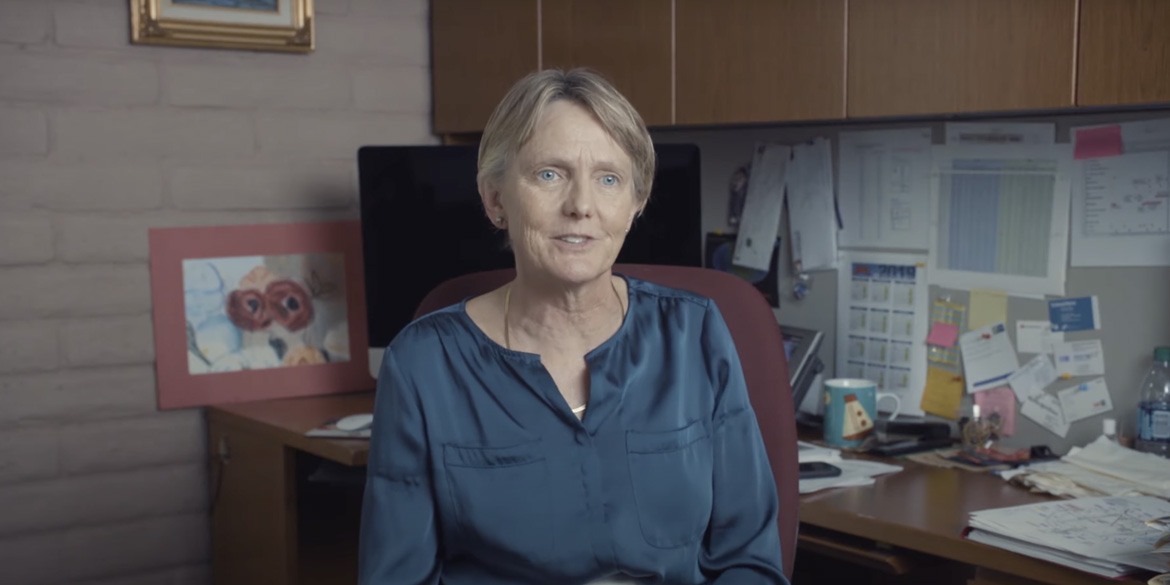

An elderly man walks into the frame and sits on a park bench, a ritual repeated tens of millions of times every much day pretty everywhere in the world.
This little old man with a Spanish accent isn’t talking about retirement, winding down his days or anything like that. He’s got purpose, a lifetime of work behind him and years — as many as he has left — to carry on.
After all, Enrique Medina says. “You don’t want to let down Voyager.”
Two matching NASA spacecraft were launched in 1977, in the middle of America’s “national malaise.” A culture famed for inventing disposability and “planned obsolescence” produced engineering that would dazzle science fiction fans and impress even Medieval cathedral builders or Victorian engineers with its durability and ultility.
And now, 45 years-and-counting on, Voyager 1 and Voyager 2 are still out there, traveling well beyond our solar system, adding to the breadth of human knowledge with instruments and tech designed before Ford Pintos were pulled off the road.
“It’s Quieter in the Twilight” is an elegaic documentary about the aging, shrinking Jet Propulsion Laboratory team that keeps track of, in touch with and maintains and monitors what these two intrepid spaceships discover.
As we meet the dozen scientists and engineers still on the job (this was filmed from 2019-2021/22), they get emotional over the job, the spacecraft and how they and their two starships are nearing the end of the the line.
“Age casts a shadow over everything we do,” one engineer notes.
Billy Miossi’s film speaks to most everyone on that shrinking team, some of whom have been around since launch, all of whom sing the praises of the “forgotten hero” of America’s space program, how it was envisioned, the optimism and excitement that greeted this first effort to hit a grand slam — visiting Jupiter, Saturn, Uranus and Neptune, all in one trip. And they talk about the ongoing mission as both craft left the Solar System, passed through the heliosphere (the edge of the sun’s “solar wind”) and the project settled into “out of sight, out of mind” status, as far as NASA has been concerned.
The team wrestles with repairs to the one Deep Space Network communication dish that can reach one of the craft, in Australia, fretting over everything they can do to keep their baby alive enough to re-awaken when the dish comes back online. And they struggle with everything that could and did go wrong during COVID.
That part of “Twilight” is more technical and a tad duller than the rest.
But early on, Miossi fills the screen with images of the prep and the launch, montages of long ago headlines, reports by long dead TV news reporters and anchors waxing rhapsodic, many of them landing the Big Interview on this subject, science superstar in the making Carl Sagan.
The bulk of the film is about the work today, an aging workforce of the usual NASA “pocket protector and glasses” white guy nerds, but also immigrants from South America and Korea, a Black engineer who grew up during segregation and had to carve a new path just to get into science.
In that regard, “It’s Quieter in the Twilight” is both an elegy and a film infused with a dewy-eyed optimism. We’re looking back and remembering an era where science and achievement and diversity were lauded and lionized, when national pride was based on swinging for the fences, and we’re looking back from an age when every value epitomized by Voyager and the America back then is under assault.
Maybe, this film suggests, it is “Twilight.” But if we remember what we did then, a new dawn will be just as bright.
Rating: unrated, G-worthy
Cast: Suzanne Dodd, Chris Jones, Jefferson Hall, Sun Matsumoto, Enrique Medina, Todd Barder, Lu Yang, Fernando Peralta, Andrea Angrum and Ed Stone
Credits: Directed by Billy Miossi. A Gravitas Ventures release.
Running time: 1:24
Granted, it is a post World War I story, the tail end of “the closing of the West” era.
But this October Awards Season release has Oscar winners and an epic look and an “erased” history subject.
DiCaprio and De Niro and Scorsese and Brendan and Lithgow. Oh my.
One of the great gifts the cinema has bestowed on us has been the lovely third act comeback afforded writer-director Paul Schrader.
A figure from the “Taxi Driver,” “Hardcore” and “Raging Bull” era of iconoclastic American cinema, he was all but left for dead in the age of “content” and comic book cinematic juvenalia.
But here he is, Scorsese’s greatest screenwriter and a damned fine writer-director (“Cat People,” “Light Sleeper,” Light Sleeper”) in his own right, serving up stories with patience, depth, metaphor and moral and cultural topicality, our most Christian filmmaker plumbing the depths of our modern mortal souls.
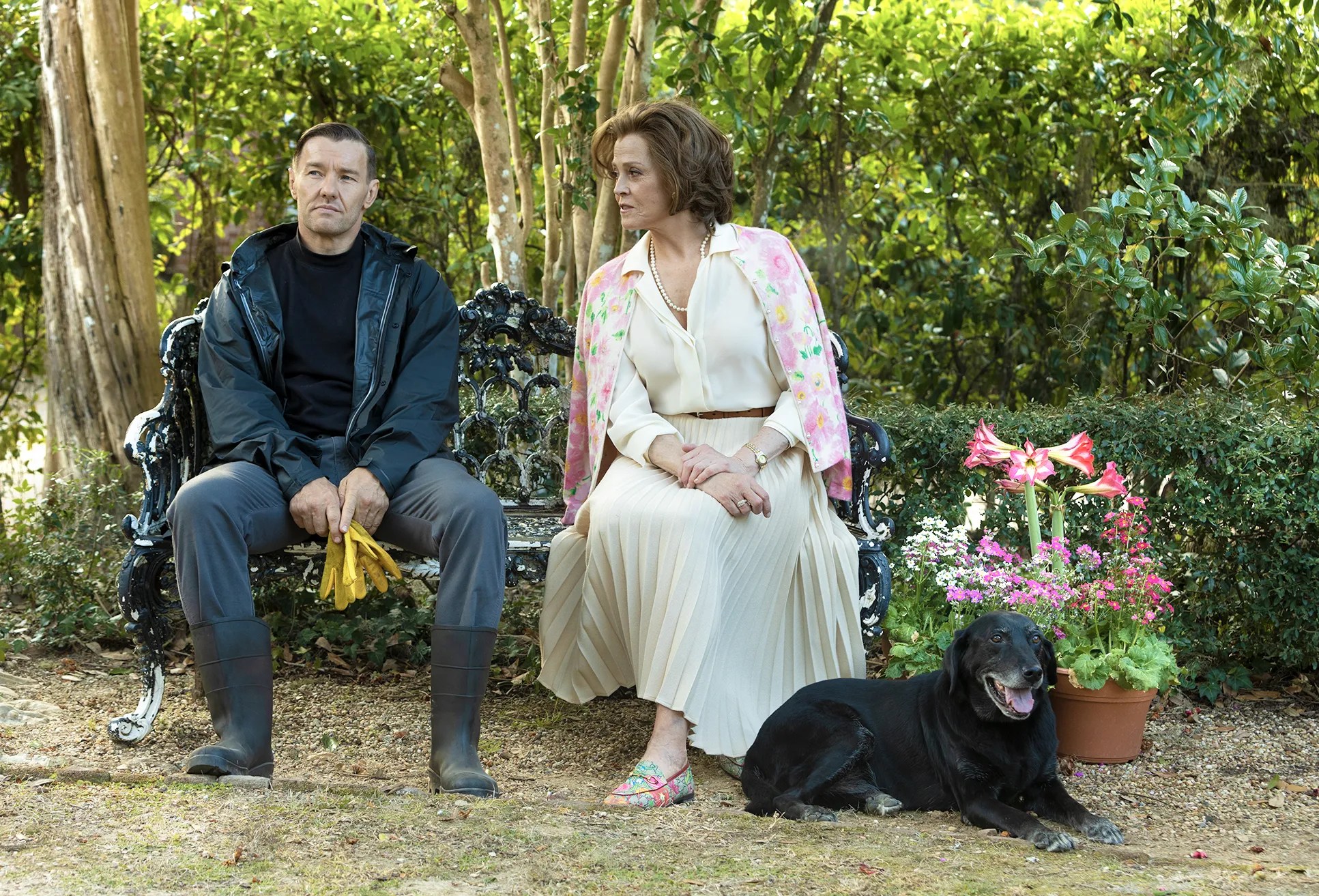
Religion isn’t in the foreground of the latest from the writer/director of “First Reformed.” But it’s a subtext lying just beneath the surface of “Master Gardener,” a story of redemption and cultivating one’s way towards the renewal that every growing season promises.
The Aussie Joel Edgerton (the film “Animal Kingdom,””The Great Gatsby,” “Loving”) gives one of his finest performances as our narrator and protoganist, a true believer in the nobility of the garden and the power of working with plants to restore the soul.
“Gardening is a belief in the future,” Narvel Roth narrates, floridly filling pages of his journal with reveries of flora and pedantic asides on the history of this hobby, which he treats with the reverence of one newly-converted to the faith that saved him.
The way he talks, we might think he’s a college lecturer on the subject. But the way Narvel carries himself, the cut of his hair and the slicked-down way he wears it, suggests something harder. Narvel is a man with a past, and we know it long before he compares a particular floral scented “buzz” as “like that you get just before pulling the trigger.”
Sigourney Weaver plays his old money boss, the owner and steward of Gracewood Gardens on her family’s estate, where “four generations of curated botany, horticulture and display” is nothing to sneeze at.
Norma is patrician without being patronizing, devoted to an annual charity auction that lets her gardens raise money for Meals on Wheels, and informal enough to relish Narvel’s sarcasm about watching “grown men in pastel pants outbid each other for a flower,” even calling Narvel “Sweet Pea” with more affection than we’d think possible, considering the diffence in their classes.
But Norma needs a favor. Her troubled grandniece, daughter of an addicted daughter of her late sister, needs help straightening out her life. Maya is 20ish, “of mixed blood,” and Narvel is to take her on as a an apprentice.
Narvel asks questions of Norma, and when Maya (Quintessa Swindell of “Black Adam”) arrives, he asks more. He sizes her up, senses her past and her present. He embeds her with the garden staff, teaches and mentors her. And when her messiness cannot be hidden, he asks her a question everyone could stand to hear on occasion.
“Are you satisfied with your life?”
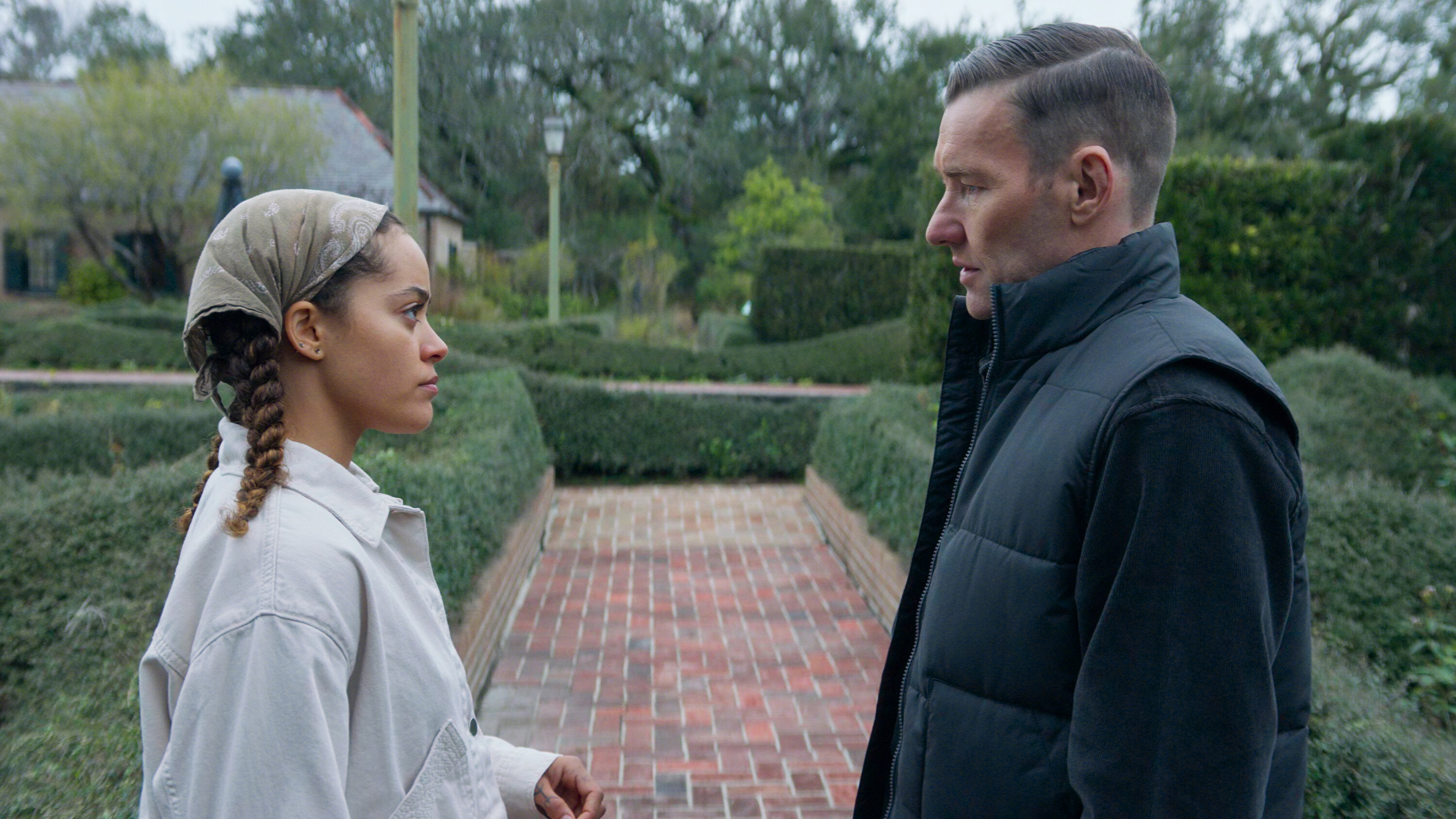
If you’ve read or heard anything about “Master Gardener,” you’ve figured out the pun in its title. Narvel’s big secret isn’t a secret to Norma, his U.S. Marshal Service handler (Esai Morales) or the viewer, the first time we see him peel his shirt off in the comfort of his garden cottage.
Narvel’s swastika tattoos connect with his camo-clad militant white supremacist past which we glimpse in flashbacks. This was who he used to be, a cruel “master race” cultist consumed by hate and the violence that spins out of that.
“I found a life in flowers. How unlikely is that?”
But this isn’t just his road to redemption story. “Master Gardener” is about planting seeds, culling dead or dying branches and making room for new growth. Whatever he’s held onto from that past life, he’s cultivating something in Maya that could save her.
Edgerton gives one of his most compact and introverted performances as this man “saved” by “manure” and what can grow in it. Weaver is similarly quiet, almost subdued, the very embodiment of a widowed woman of property. And Swindell slides easily into the rhythms of the world Schrader conjures up, where even the arguments have a gentility about them.
The grandniece is “impertinent,” a deadly sin in a world this ancient and ordered.
Schrader makes more melodramatic choices in the film’s later acts, some of them unfortunate. Every time you see a 50ish leading man linked romantically with a 20something beauty, the viewer is free to consider that the aged writer-director’s wish fulfillment fantasy.
But he still manages to trip up expectations, leaning into “man of violence returns to violence” genre conventions, even casting his hero and heroine into the wilderness, but letting them and his movie find their footing and their core values as they do.
There can be no renewal, after all, without a periodic and brutally unsentimental cutting, killing or trimming.
Rating: R for language, brief sexual content and nudity
Cast: Joel Edgerton, Sigourney Weaver, Quintessa Swindell, Esai Morales
Credits: Scripted and directed by Paul Schrader. A Magnolia release.
Running time: 1:51
I did theater in high school, worked on shows in college.
But plainly I was missing out, not going to “Theater Camp.”
This summer release from Searchlight is so clever and tolerant it could get banned in Florida. See it while you can, boys and girls.
This looks rough and tumble, and a tad edgy.
A Middle Eastern poet and med student who gets a rep as a “Dr. Feelgood,” thanks to his hipper-than-thou, gets-around girlfriend?
As Paris Hilton would say in her day, “Sounds hot.”
June 27.

 Movie Nation