Movie Review: Nazi Relics are snowed-under in Iceland in “Operation Napoleon”

One can think one has a handle on all every cheese-making nook and cranny of Europe, and then something like “Operation Napoleon” rolls in and makes you realize “Iceland can be cheesy, too!”

“Operation Napoleon” a lumbering B-movie about a lost Nazi transport plane, Americans hellbent on finding it and the plucky, dogged Icelandic loan officer who gets ensnared in their murderous search.

It’s more or less watchable, especially as it takes a turn towards the daffy in the third act. But filmmaker Óskar Thór Axelsson (“I Remember You”) cooks up a classic ninety minute thriller wrapped in an ungainly 110 minute package.

Vivian Ólafsdóttir plays Kristin, the last person you want going over the financials if you haven’t sorted your loan plan properly, crossed all the “t’s” and dotted all the umlauts. She’s pretty much all business, with her brother (Atli Óskar Fjalarsson), a snow-machine rescue patrol member, the only one allowed to prank her.

That’s what she thinks he’s up to when he suddenly goes radio (cell-phone) silent while on Vatnajokull Glacier. But then he hastily dumps video and pictures to her.

Elias and a couple of friends stumbled across a plane in the melting glacier, one with a big’ol Swastika on the tail. It’s a JU-52, and no way is it supposed to be there. They were just poking around in the emerging fuselage when some American “scientists” show up, grinning and gushing about the “climate change” research they’re doing.

Then the “scientist” with the biggest grin (Adesuwa Oni, she played Njinga in Netflix’s “African Queens” series) stabs one of them in the neck with her pencil and Elli’s on the run on his snow machine. SOMEbody wants whatever’s in that plane, and wants to silence anybody else who finds it.

As Kristin has video and images of it, they send an assassin into Reykjavik to get her and her phone. She sees someone murdered and flees into the snowy Icelandic night with neither coat nor shoes nor cops (she “can’t” go to them) for comfort.

She’ll need the help of her boss, a British historian (Jack Fox) she sort of dated and a burly and a goofy Icelandic farmer (Ólafur Darri Ólafsson) to help her survive, get to the bottom of the mystery and free her brother.

But that American military man (Ian Glen, because Brits make the best villainous Americans) is so relentless in his pursuit of her and the contents of aircraft that we know better than to get too attached to any character.

The film, based on a novel by Arnaldur Indriðason, has a whiff of “Smilla’s Sense of Snow” about it, as our mystery “that could change the course of history” is a classic MacGuffin, a plot device that drives the action and yet, in this case, is too pedestrian to ever explain.

Remember that briefcase in “Ronin?” We never found out what was in it, did we? That might have helped this plot, because once things really get cracking in the third act, we’re treated to a lengthy dissertation on what was on the plane, and why it’s worth adding a dead-weight epilogue to a picture that already has pacing problems.

Ólafsdóttir, a bi-lingual (at least) Icelandic actress, makes a very pretty and engaging lead, although the injuries her character sustains make her fight scenes even less believable than the usual model-gorgeous/runway-thin actress throwing haymakers heroine.

The script and direction let Kristin lose track of her objective — that urgent need to save her brother — as she pokes around and dodges death and assumes, all along, that the bad guys haven’t killed him on the spot.

Fox is a bit bland as the bookish love interest. Man-mountain Ólafsson is a walking, joking sight gag. But Glen is as scary as ever as the fanatic hellbent on getting what he wants, even if he has to threaten the U.S. Ambassador and kill a few locals along the way.

The picture’s third act peaks almost make it worth recommending. And then the climax is chased with a corny anti-climax and even that momentary buzz vanishes.

Still, as hot as this summer has been, seeing a bunch of chases and shoot-outs in the Icelandic snow is almost the only definition of “escape” at the movies that matters.

Rating: unrated, violence

Cast: Vivian Ólafsdóttir, Ian Glen, Jack Fox, Atli Óskar Fjalarsson, Adesuwa Oni, Annette Badland and Ólafur Darri Ólafsson

Credits: Directed by Óskar Thór Axelsson, scripted by Marteinn Thorisson, based on a novel Arnaldur Indriðason. A Magnolia release.

Running time: 1:53

Posted in Reviews, previews, profiles and movie news | Comments Off on Movie Review: Nazi Relics are snowed-under in Iceland in “Operation Napoleon”

Movie Preview: Oscar winner Binoche is a writer who experiences the life of a cleaning woman — “Between Two Worlds”

This looks real-world gritty, a side of French life not often captured on film. August 11, we sample what it’s like to live “Between Two Worlds.”

Posted in Reviews, previews, profiles and movie news | Comments Off on Movie Preview: Oscar winner Binoche is a writer who experiences the life of a cleaning woman — “Between Two Worlds”

Movie Preview: “3 Days in Malay” puts Mandylor and Marines in the Malayan Campaign at the start of WWII

There doesn’t seem to be much in the way of “true events” that this B-movie was “inspired” by. An integrated Marine unit fighting the Japanese in 1942?

The heck you say?

August 11.

Posted in Reviews, previews, profiles and movie news | Comments Off on Movie Preview: “3 Days in Malay” puts Mandylor and Marines in the Malayan Campaign at the start of WWII

Netflixable? “Bird Box: Barcelona” brings Blind Faith in as a Subtext

The second film Neflix has made out of Josh Malerman’s dystopian thriller novel “Bird Box” has two veterans of the viral/zombie thriller genre, the Spanish Pastor brothers (“Carriers”), behind the camera, and not the Emmy winning Danish director Susanne Bier, of “Things We Lost in the Fire,” “In a Better World” and TV’s “The Night Manager.”

It doesn’t have Sandra Bullock struggling to save herself and her children years after a monstrous invasion that triggered mass suicides, with any person who gazes upon that creature immediately embracing the idea of death.

So it’s fair to treat “Bird Box: Barcelona” as a stand-alone film, a concurrently-set story that covers a period of time well after the attack, with flashbacks taking us back to the shock and slaughter of those first hours in which the world succumbed to monsters who didn’t kill, they just made us want to die.

The first film arrived hot on the heels of “A Quiet Place,” a 2018 blockbuster in theaters, and earned comparisons to that, Cormac McCarthy’s “The Road” and M. Night Shyamalan’s “The Happening,” as well as other apocalyptic thrillers.

“Barcelona” leans hardest on “The Omega Man,” as its a movie about blind faith, a cult that springs up out of this catastrophe, a priest turned-cult-leader and an “angel” acolyte of that cult haunted by a need to “free” those struggling to survive by “letting” (making) them “see” the unseeable. That’s the entity and phenomenon that inspires everyone to look for a rope, a roof to jump from, a sharp object or anything at hand that might allow them to end their lives.

It’s pretty creepy, and the religious subtext gives this “Bird Box” a weight that Ms. Bullock’s tear-jerking Netflix blockuster lacked.

We meet Sebastian (Mario Casas) as he leads his tween girl Anna (Alejandra Howard) through the ruins of Barcelona, seeking one safe, dark place after another to hide and food enough for them to eat.

He gets jumped by thieves who beat him badly, but Anna implores him to not fight back. Then he meets and falls in with a small group holed up in a bus depot where his wounds are treated and we wonder if this is how civilization rallies and starts to develop a strategy to fight back.

But the fact that Anna doesn’t come with him gives us a clue. When Sebastian flips-out and kills or causes others to kill themselves, we have confirmation.

Anna is a ghost. Sebastian sees himself as an Angel of Death sent out, with Anna’s voice and vision to guide him as he leads others to “see” and kill themselves.

Sebastian’s mission was born, we learn in flashbacks, in the deranged reaction to the entity/contagion by one priest (Leonardo Sbaraglia). He “sees” and somehow survives, and figures everyone ought to do what he’s done.

But Sebastian’s “mission” is tested when he falls in with a group that includes the British shrink and author of “Age of Madness: How to Survive the Modern World” Claire (Georgina Campbell) and a little German girl (Naila Schuberth) who can’t even communicate with those who would save her. With human predators on the prowl, they’re understandably wary of letting Sebastian in.

“The one thing more terrifying than the darkness, right,” Claire says, in English (much of the movie is in subtitled Spanish or German)? “Not knowing WHO you can trust!”

Will this group survive their quest to reach a possible refuge, the cable-tram-isolated Montjuic overlooking Barcelona?

The script does a LOT of over-explaining in the finale, as well as hinting that this is a “franchise” Netflix won’t soon be giving up. But there’s also the explaining of Father Esteban and others, that what one experiences when “seeing” the thing that makes objects levitate when it shows up is something akin to a mental take-stock moment, a chance to atone for past sins or give yourself over to past trauma by killing yourself.

Can one “see” souls rising to heaven when people around you kill themselves? The seraphim necklace Anna wore to Catholic school gives us more Biblical interpretation to chew on about this awful “test” of humanity.

The film may not have the sensitive Dane Bier behind the camera and Bullock yanking out a few tears, but it manages a touching moment or two. And the Pastor brothers make the action beats visceral and exciting.

There’s almost enough here to recommend, but like the other “Bird Box,” there’s not enough that’s surprising, gripping or moving to make anybody forget “A Quiet Place” or its sequel. Novel setting aside, this just isn’t original enough to manage much in the way of shock and awe.

Rating: TV-MA, graphic violence, suicide

Cast: Mario Casas, Georgina Campbell, Diego Calva, Lola Dueñas, Gonzalo de Casto, Naila Schuberth and Leonardo Sbaraglia

Credits: Scripted and directed by David Pastor and Àlex Pastor, inspired by the Josh Malerman novel. A Netflix release.

Running time: 1:52

Posted in Reviews, previews, profiles and movie news | Comments Off on Netflixable? “Bird Box: Barcelona” brings Blind Faith in as a Subtext

“Sound of Freedom” — the Gift to Crackpots that Keeps on Giving

There’s always movie money to be made by pandering to a particular audience, be it comic book and sci-fi fanboys and fangirls, foodies, this under-represented race or that disrespected cult.

Back when it was called 20th Century Fox, somebody thought a movie about that obsession the far right has with child trafficking conspiracies might make some money. They may not have fathomed that they’d be pretty much target-marketing to a cult, validating and normalizing thinking that sent one nut looking for kid-smuggling tunnels beneath a Washington, D.C. pizza parlor.

Cast it with Mel Gibson’s “Jesus” from “The Passion of the Christ,” get the director of a passionately anti-abortion drama to direct it, base it on whatever one former government agent turned vigilante says he experienced fighting this monstrous crime says he witnessed and stopped, and that’s money in the bank, right?

Disney bought out Fox studios and didn’t think much of that “red meat to Q-Anon” cynicism, and this 2018-2019 film sat on the shelf until Angel Studios took it over.

“Sound of Freedom” came out July 4, reaching an audience of the curious, but pre-sold to a whole subculture of child sex-trafficking obsessed fanatics, the people who throw “groomer” and “pedo” around like they have first hand experience of it. And it’s a surprise hit. It’ll have cleared $80 million at the box office by the end of the weekend, if not sooner. It’s reaching its audience.

With Caviezel asking viewers to “buy more tickets”in the closing credits, actual attendance for this thing is hard to gauge. This crowd is largely made up of folks sending regular cash payments to the former grifter in chief.

But that’s not enough for the faithful. The conspiracy-minded have seen conspiracies behind everything about this movie, its middling reception from critics, to the number of screens it’s showing on and the frequency of its showings.

Angel Studios and AMC Theaters had to issue a denial that they were manipulating showtimes, disrupting schedules and dropping screens showing the film in an effort to suppress the Q-Anon crowd’s first excuse to go to a movie since the first Bush administration.

Have you heard the one about nanobots? AMC and Snopes had to smack that one down, too. Not every ticket buyer to this movie is a crackpot, but an awful lot of QAnon morons are in every showing, it would seem.

Almost everything about this movie is wrapped in controversy and crackpottery. Angel Studios started life as a Mormon movie operation that would edit all the naughty words out of your DVDs. I guess they’re learning what happens when you pander to cranks living in their fake news hysteria bubble.

I guess AMC also figured out, a bit late, that when you pander to the ignorant, base instincts of the conspiratorial fringe audience, this is your reward.

The “Operation Underground Railroad” “hero” of the film, Tim Ballard, exposed to the harsh light of day for a heavily fictionalized (lies) version of his life and his career, has had to “step away” from his own organization. He’s a Glenn Beck-backed self-mythologizer, kids. He exaggerates his exploits, and the extent of the “global child-trafficking pedophile conspiracy” to sucker people into giving money. He’s just been sued for child abuse.

Yes, it’s really happening and yes, those CCTV videos of Third World (mostly) abductions seen in the movie are real. Yes, it’s an awful thing that should be stopped. No, it’s not blown up to become this massive, pandemic-level tragedy. They exaggerate to feed on the hysteria ginned up by OAN and Fox hype.

Star Jim Caviezel’s fringe beliefs and Q-Anon conspiracy-backing activities have been aired and discussed.

And on and on it goes.

Actors and filmmakers are tale-tellers by profession, and quite aside from his A-to-B acting range, Caviezel is no different from any other person who takes on guises for a living. I covered his speech at a megachurch in Orlando some years back, when he stood at the altar and wept about how playing Jesus in Mel Gibson’s hit, and controversial (anti-Semitic tropes) movie had “cost me my career.”

It was quite the performance. But Caviezel knew, as we all did the following week, that ABC was picking up the pilot to a new series by the hottest producer in Hollywood. Everything J.J. Abrams wanted to make he got to make back then, and “Person of Interest” was a sure thing the moment Caviezel was cast and Abrams & Co. put it in the can. Caviezel’s career wasn’t “cost” a damned thing. He lied, playing to his compliant (gullible) megachurch audience, selling them videos and his martyrdom.

Those of us who had the temerity to point out the movie’s shortcomings — leaving out the controversy and limiting our ridicule to the acting, the failed manipulations of what seems like an easy layup of a story — were immediately buried under hate mail and “pedo” comments from the deplorably unhinged.

I went back into my review and added links to a lot of the things mentioned here, just to make the review a “teachable moment.”

This movie’s box office take has been “gamed” by the fact that Caviezel urges viewers to leave the theater and buy more tickets to it. It’s a cheap “astro turf” way to make it appear its more popular than it is. I witnessed this first hand at a Danville, Va. cinema where I was about to watch “The Meg 2.” Elderly couple came out of “Freedom,” got back in line and bought more tickets. For nobody.

The dirt surrounding this picture keeps piling up. An actual sex trafficker of children was an “Angel” investor in it? Not at all surprised.

So no, I won’t be taking comments on this piece. I don’t have any interest in explaining what a movie review is to people who don’t know “opinion” writing when they see it because they’ve had that brainwashed out of them by the opinionated “news” liars (convicted, forced to pay out a $billion, and counting) at Fox.

All the”projecting” from confused, deranged people all worked up over what their Pied Pipers tell them to be worked-up over, while voting for actual pedophiles, groomers and traffickers (Trump, Roy Moore, Gym Jordan, Gaetz) and their enablers, all this fury over “Think of the children” when God forbid anybody suggest the sick, twisted gun-fetishists should be reined in to stop school shootings, who needs it?

If you’re gullible enough to believe the billboard I just saw, heralding “Sound of Freedom” as “The #1 Movie in America” on the weekend “Mission: Impossible” opened, the weekend after “Insidious: The Red Door” opened, etc., why waste keystrokes arguing with you?

There’s too much explaining of the basics to cranks who have no interest in learning anything.

My motto? Never try to reason with toddlers, drunks or conservative cranks. They’re irrational, quick to anger and in the end just wet their pants in fury.

Posted in Reviews, previews, profiles and movie news | Comments Off on “Sound of Freedom” — the Gift to Crackpots that Keeps on Giving

Movie Review: A Colorfully Grim Depiction of Life on the Rez — “War Pony”

“War Pony” is a compelling, wholly-lived-in drama that tracks the dead-end lives of two aimless young males of the Pine Ridge Indian Reservation in South Dakota and Nebraska. We follow immature-even-for-19 Bill and tweenage Matho as they navigate their opportunity-deprived world of poverty, drugs and no parental guidance, each seemingly-destined to repeat the cycle that created them.

It’s moving and immersive experience with hints of “Trainspotting” in how it feeds our growing fear for who will pay the consequences for these awful decisions, and a taste of “Smoke Signals” and “Songs My Brothers Taught Me” in its depiction of life “as it is” “on t”he Rez.”

The film’s narrative aimlessness is in keeping with the life-paths of multiple baby-mamas Bill (Jojo Bapteise Whiting) and just-starting-to-go-wrong Matho (LaDainian Crazy Thunder) and its humorlessness keeps the viewer at a sort of clinical remove from the characters.

Left with a depiction of reactive, impulsive and immature decision-making by young people almost wholly on their own in the midst of a culture that has collapsed — with only pow wows for show and a nice school most of the boys check out of — the overriding feeling this film feeds is despair.

One of Bill’s toddler-sons is with him in his mother’s house. Mom is a new grandmother who wears the mileage of a great-grandmother, and hearing his “I ain’t got time for this s–t” when he hears why Carly, the child’s mother, isn’t around annoys us almost as much as his mother.

“You ain’t got time for what ‘s–t?’ Your baby mama, or me?”

Carly’s been arrested. Her threatening “man-the-f–k-up” calls to her ex all on deaf ears. Bill doesn’t have any cash. He’s already moved on to Echo (Jesse Schmockel) and has a little boy with her, too. Not that she wants anything to do with him. That ancient Chevy Caprice he drives? Stolen from her, we gather.

Matho is a distracted boy of eleven or twelve who’s hanging with three other free-range tweens, smoking, pilfering, hitting on girls and scavenging each others’ houses and single-wides for food.

His occasional stumble into his druggy/maybe-dealing dad has the kid shrugging off “the last time you ate” questions. Not that we figure the two-fisted father-figure gives a damn.

Stealing Dad’s stash and making those first meth-pills sales earns Matho and his boys junk food to get them through another day. School? That’s for passing notes to girls and maybe acquiring that one sure-thing meal a day at lunch.

Bill’s job-hunting is half-assed, his eye for “opportunity” a bit juvenile. He finds a woman’s “poodle with papers,” returns her and resolves to raise the cash to (overpay) for the dog and breed it. Because poodles are a favorite accessory of the 17,000 or so Oglala Lakota Sioux who live there?

It’s while raising cash for the dog that he helps a white Nebraska rancher (Sprague Hollander) and haggles his way into a dubious “help around the place” job that includes drinking wine with Tim and his lonely wife (Ashley Shelton) hustling turkey-farmer/processor Tim’s assorted “girls” back to the Reservation after he’s enjoyed their company.

The poodle is impregnated, he has cash to “help out” Echo and their baby, and his mother and the baby he had with the still-jailed/still fuming Carly. Bill’s making it, he figures.

Matho just gets drunk and stoned and beaten and kicked-out of the house when his father figures out he’s been stealing. Matho’s lifeline is a woman who takes in boys, a woman who turns out to be a drug dealer who oddly demands that he “keep your drama out of my teepee.” With Matho trying like hell to grow up too fast and bravado his way into “manhood,” fat chance that’ll happen.

Each guy’s tenuous chance of beating Pine Ridge’s nationally scandalized low-life-expectancy is sure to be tested.

Co-directors Gina Gammell and Riley Keough let the narrative drift from one lad to the other as they’re more interested in immersing us in the feel of this world and the logistics of this life. Their one artsy touch is having Bill stare down what we can guess is his spirit animal, a bison, a few times when he’s losing his way.

The hooting and hollering funeral caravan that makes up one scene is a Sioux spin on your standard American funeral, overloaded pickups weaving all over the highway in their procession. A bit more local color like that would have been appreciated.

The movie’s narrative and entertainment value attitudes seem summed up by Carly when she gets out of jail and Bill hits her with the “Mad at me?” baby-daddy puppy dog eyes that always seem to work for these dudes.

“Didn’t expect much from you.”

Whiting has a magnetic, young James Franco screen presence here, a bit dopey and lazy but somehow dangerous. Crazy Thunder’s Matho doesn’t meet Bill until the third act. But everything the younger kid does seems designed to emulate the older one and make Matho The Next Bill.

Its lack of star-power and depressingly downbeat story may limit this film’s prospects, even if Elvis’s granddaughter did have a hand in making it.

But the two Native actors-turned-screenwriters — Franklin Sioux Bob and Bill Reddy — whom Keough met while filming “American Honey” give “War Pony” an authenticity that is hard to beat. If it hurts a little and leaves you a tad hollowed-out by then end, that just means they got the details right.

Rating: R for drug and alcohol use involving minors throughout, pervasive language and some violence

Cast: Jojo Bapteise Whiting, LaDainian Crazy Thunder, Jesse Schmockel, Ashley Shelton, Sprague Hollander, Iona Red Bear

Credits: Directed by Gina Gammell and Riley Keough, scripted by Franklin Sioux Bob, Bill Reddy, Riley Keough and Gina Gammell. An eOne/Momentum Pictures release.

Running time: 1:55

Posted in Reviews, previews, profiles and movie news | Comments Off on Movie Review: A Colorfully Grim Depiction of Life on the Rez — “War Pony”

Movie Review: “The Lesson” gets lost in the lesson plan

“The Lesson” is a writerly thriller that spends the better part of its first hour trying to convince you it’s not “Deathtrap Lite,” no matter how many times its author-antagonist insists “Good writers ‘borrow,’ great writers STEAL.”

And then the final 15 minutes kind of undo all that effort in the most contrived ways imaginable.

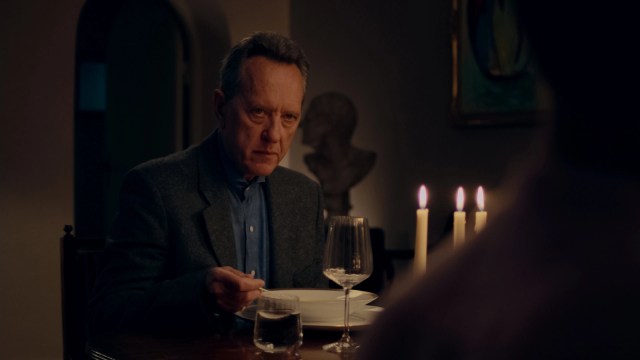
But it makes a grand showcase for the snobby, aloof villainy of Richard E. Grant, who devours his best role in decades like a starving man who breaks his fast with caviar and canapes.

Britain’s “most revered writer” needs an Ox-Bridge pedigreed tutor to prep his teen son for an entrance examination, and that’s what brings Liam Somers (Daryl McCormack, the sex-worker in “Good Luck to You, Leo Grande”) into the home of novelist J. M. Sinclair (Grant). Not that he meets his idol. Not right away, anyway.

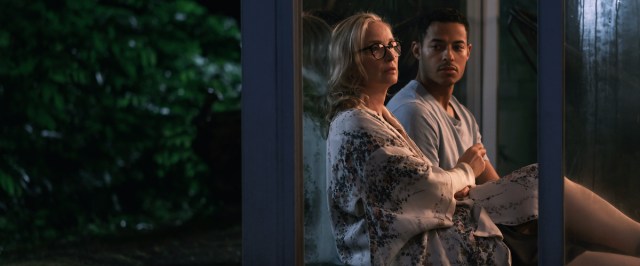
Art dealer/curator wife Hélène (Julie Delpy) handles that hiring and moves our would-be writer/hero into the guest apartment in their posh country home. Liam will drill, coach and counsel nervous, touchy Bertie (Stephen McMillian) through this all-important admissions process.

The son of the testy, five-years-“blocked” novelist will be “reading” for a class place in literature, of all things, and father’s too busy and as we gather, entirely too judgmental and lacking in Oxford/Cambridge experience to manage that prep himself.

A tragedy hangs over this house, an older son Felix who died. Liam must navigate not just the whims of the upper class — some nights, he’s invited to eat with them at their classical-music-underscored dinners presided over by the imperious workaholic Sinclair, some nights he isn’t — but the “rules,” which Hélène lays out.

“We don’t talk about his work,” she says. “And we don’t talk about Felix.”

But as Liam has been led to understand that Sinclair has, from time to time, “used” members of the family and short-term employees as his muse, clerk, proofreader and “amanuensis,” the fellow who made sure to pack his own handwritten manuscript when he moved in has hope.

A framing “prologue” shows Liam as a writer sitting down for a public Q&A about his work, and a “prologue” guarantees an “epilogue,” unless the screenwriter’s forgetful or prone to cheat.

So we know Liam is going to get something out of this, no matter how long it takes for the imperious, rude (“Close the door on your way out.”) and dismissive Sinclair to invite the young man into his writing sanctum and routine, no matter how challenging teaching his stressed, striving kid turns out to be, no matter what he learns about the death of the other son and no matter how much of a MILF the lady of the house might seem to be.

That’s a flaw this screenplay never quite papers over. By the third act, narrative problem-solving is abandoned altogether for a goofily ghoulish finale.

But Grant shimmers and seethes as the “revered” yet resentfully-pressured author who demands fealty and brushes off praise and criticism the instant he sizes up the stature and status of his new “helper.”

McCormack is rather blandly inscrutable as Liam, a character given the sort of prodigious memory one only sees in movies or lazy sitcoms where there’s a need for someone with a British Library-sized capacity for quoting the Bard and every-bloody-body-else who ever published a poem or book in the Mother Tongue.

Good scenes establish Liam’s hard-won ability to “pass” in this world of letters, Lizst and Rachmaninoff. A question about his taste in music is treated like another quiz this working class (Dad was in “IT”) lad must pass with his “betters.”

Bad scenes have him recovering an entire “lost” manuscript, which he’s read once, from memory.

The middle act manipulations leave one hoping the efforts of British TV director Alice Troughton and screenwriter Alex MacKeith (“Chubby Funny”) will amount to something worthy of Grant’s grandiose performance. “Good writers borrow, great writers steal” and all that.

What do you say about a script that doesn’t manage either, despite luring an ace-cast with a few well-drawn characters and couple of sharp scenes that stand out from the melodrama surrounding them?

“Close the door on your way out?”

Rating: R — violence, suicide, sexual content, profanity

Cast: Richard E. Grant, Daryl McCormack, Stephen McMillian, Crispin Letts and Julie Delpy.

Credits: Directed by Alice Troughton, scripted by Alex MacKeith. A Bleecker St. release.

Running time: 1:43

Posted in Reviews, previews, profiles and movie news | Comments Off on Movie Review: “The Lesson” gets lost in the lesson plan

Movie Review: More Sad than Desperate, “The Miracle Club” travels to Lourdes

“The Miracle Club” is a downbeat Irish Catholic character study in a minor key, a period piece about the tragedy, desperation and simple superstition that sends the faithful to the French shrine at Lourdes in search of “the cure.”

What recommends the film is the sadness of it all, as it isn’t just physical maladies that motivates these characters to seek the salvation of “Our Lady.” Grief, guilt and regrets bond these women on their 1967 pilgrimage. And the fact that their ranks include Oscar winners Kathy Bates and Maggie Smith and Oscar nominee Laura Linney makes it an acting showcase for legends of the silver screen.

An old woman has died in Ballygar. Her estranged daughter Chrissie (Linney) has come all the way from Boston, but just missed the viewing and church service. Father Dermot (Mark O’Halloran) is full of reassurances that her mother was loved and will be missed, but Chrissie seems disconnected from that. She just wants to know who paid for the flowers, so she can pay them back.

Her mother had been organizing a church talent show/fundraiser, whose top prize is tickets to the church-sponsored bus tour/pilgrimage to Lourdes. Mother Maureen had a ticket to go, but her niece Eileen (Bates) and oldest friend Lily (Smith) formed a singing trio in the hopes of winning their way their way onto the bus.

Their third singer, Dolly (Agnes O’Casey) has a 4 year-old boy who hasn’t spoken yet, and Lily isn’t singing to seek a “miracle” for the club foot she was born with. She wants to help Dolly. That’s Eileen’s motivation, too. That, and this worrisome lump in her breast.

They all have disapproving, doubting and absurdly-needy husbands (Mark McKenna, Niall Bugger and Oscar nominee Stephen Rea) they could use a break from. Eileen’s big, clingy Catholic family and all their problems are another motivation for her to flee.

And then there’s the stark and secret connection the older women share, hinted at by the seawall shrine Lily visits almost daily to a son who drowned there 40 years before. Something still has Eileen carrying an ugly grudge, Lily wracked by grief and Chrissie hardened to loss and regret.

Veteran Irish director Thaddeus O’Sullivan (“Nothing Personal”) does well by his leading ladies, showcasing Bates in a role that calls for mercurial turns of temperament — testy, sarcastic, tender and vulnerable. Eileen’s to-her-face insults to Chrissie are jaw-droppingly cruel and Bates’ accent easily passes the ear-test. Smith’s Lily is the most devout and seemingly the most magnimous. But her magnanimity can flash its nasty edge when it comes to Chrissie.

Linney’s Chrissie is harder to pin down, a woman who almost regrets showing up for her mother’s funeral because she can trace a lifetime of hurt and damage to this town and these people. Her decision to join the pilgrimage is the most abrupt and contrived.

O’Sullivan gets a little out of the lighter moments, and the film’s budget precludes making the bus tour anything but digitally-augmented perfunctory. We see the same bus and same set-dressing Mini and Citroen in scene after scene.

But they all do justice to Lourdes as an experience that’s holy, and wholly commercialized ballyhoo. Some of the best-written scenes have the ladies’ illusions stripped away, cynicism almost overwhelming them and the priest hastening to explain that you don’t come to Lourdes for a “miracle,” but for the strength to “carry on” when no miracle is forthcoming.

I also liked the way the characters address the burdens of being a woman in a country and a time where the Church dictated a ban on not just abortion, but birth control, and staked an unholy claim on unwed mothers and their babies. Shared tales of attempted miscarriages are have a hint of desperation, and an almost comical resignation about them.

But this uneven and often unsatisfying dramedy’s saving grace might be the sadness that permeates the sunny settings, the sunny bus ride and the beatific awe they feel upon reaching that holy grotto and giving themselves over to the water “cure” machinery the nuns there run.

“The heartbreak of the world is upon us,” Lily declares, and so it is. And no “miracles” will alleviate it. Only a tiny dollop of closure delivered with compassion helps, and even that’s never really enough. Evolving, liberating “change” is the subtext this “Club” hints at but never really grapples.

Rating: PG-13 for thematic elements and some language

Cast: Kathy Bates, Maggie Smith, Laura Linney, Agnes O’Casey, Mark O’Halloran and Stephen Rea.

Credits: Directed by Thaddeus O’Sullivan, scripted by Joshua D. Maurer, Timothy Prager and Jimmy Smallhorne. A Sony Classics release.

Running time: 1:31

Posted in Reviews, previews, profiles and movie news | Comments Off on Movie Review: More Sad than Desperate, “The Miracle Club” travels to Lourdes

Documentary Review: Black and Trans, or Trans-attracted — “Kokomo City” street life

Friend, if you can’t get an entertaining documentary built around defiant, defensive, sassy and verbose Black transgender sex-workers, you’re talking to the WRONG Black transgender sex workers.

Transgender filmmaker D. Smith finds a fascinating subjects to profile in New York, Miami and Atlanta — almost everywhere BUT Kokomo, Indiana — for “Kokomo City,” a raw and rough, blunt and bold look at the people doing this work, the “community” they come from and the men from that community attracted to them.

If you don’t think this is a touchy subject, you must not have been paying attention to Black comics like Kevin Hart or Tracy Morgan or the long history of open homophobia in that community.

Smith is canny enough to remind the viewer that age-old numbers like “Sissy Man Blues” point to a whole other side of Black life, one not often openly acknowledged.

Assorted trans sex workers talk about men, “the trade,” “biologicaal women” and “getting work done” and what one does if not enough “work” has been “done.”

“We be broken down, but we NEED to stand out!”

The film’s a series of interviews edited into monologues in the often-vulgar but occasionally-insightful street argot of their corner of the Black world.

When transgender prostitutes get beaten up is a hard and fast truth to these hookers.

“Violence don’t happen before the orgasm. It happen after,” a form of “acting out” on one’s “embarassed masculinity,” Dominique Silver explains.

Smith, a singer who transition, gives us an intimate portrait of this segment of the transgender sex worker workforce, catching prostitutes as they primp to go out, groom their facial hair and lie in the tub ruminating the meaning of their existence, their ongoing beefs with society, the system, men and women and their struggle for “acceptance.”

There’s a lot here to offend the easily-and-not-so-easily offended, so if the “B” word and “N” word and “C” word sprayed about life confetti bother you, or the very idea of transgender triggers you, “Kokomo City” isn’t a stop for you.

But these generally uninterviewed sex-workers will give you an earful if you give them the chance. They tell tales from “the life” and dream of moving out of it. Because they all know the lyrics to the Randy Crawford/Crusaders tune that opens the film — “Street Life.”

“Street life, but you’d better not get old, street life, or you’re gonna feel the cold.”

But the film’s more unusual interviews come with from “trans-attracted,” men who have formed relationships with former sex workers, book night clubs with trans revues and who address the “fetishes” some of the sex workers have observed in their attraction.

“It depends on what state I’m in,” one music promoter shrugs. “If somebody’s attractive, they’re attractive.”

Some of the psychological and sociological opinions delivered are more colorful than peer-reviewed and proven. And some of the pontificating is wearing in that particularly gay trans narcissist way.

But “Kokomo City” is eye-and-ear-opening and mind-expanding and easily the most colorful black and white documentary you’re going to see this year. Guaranteed.

Rating: R (Strong Sexual Content|Drug Use|Language Throughout|Graphic Nudity)

Cast: Koko Da Doll, Daniella Carter, Liyah Mitchell, Michael Carlos Jones, Dominique Silver, Lexx Pharoah, Rich-Paris and Xotommy

Credits: Directed by D. Smith. A Magnolia release.

Running time: 1:13

Posted in Reviews, previews, profiles and movie news | Comments Off on Documentary Review: Black and Trans, or Trans-attracted — “Kokomo City” street life

Movie Preview: Temuera Morrison and Isabel Lucas star in a Down Under surfing thriller, “Sons of Summer”

Shades of “Point Break,” mate.

Looks solid and salty. July 28.

Posted in Reviews, previews, profiles and movie news | Comments Off on Movie Preview: Temuera Morrison and Isabel Lucas star in a Down Under surfing thriller, “Sons of Summer”