Let’s go ahead and call the code on “E.R.” alumnus George Clooney‘s days of serving up nostalgic Americana as a director. “The Boys in the Boat” is that badly-botched.
After “Monuments Men” and “Leatherheads” and a stumbling “Catch-22” series, maybe it’s time to get your head out of the past, pal. You’ve lost your feel for it. Or maybe you’re just too distracted to make these sentimental sagas work.
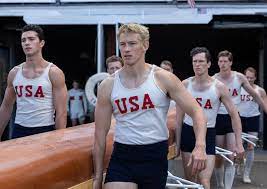
“Boat” is an uplifting story about the University of Washington’s rowing team’s path to the 1936 Olympics — broke, hungry and (in one case) homeless guys get on the boat, in the middle of the Great Depression, and splash a little cold water on Nazi faces in Berlin.
That’s what it’s supposed to be, what came through in the Daniel James Brown non-fiction book about this tale of pluck and pathos. You figure your director has the good sense to absorb that from the book, and the time to watch “Seabiscuit” and maybe “Chariots of Fire” and triangulate a tone, a story arc and an uplifting Big Finish the way those classics did.
Nah.
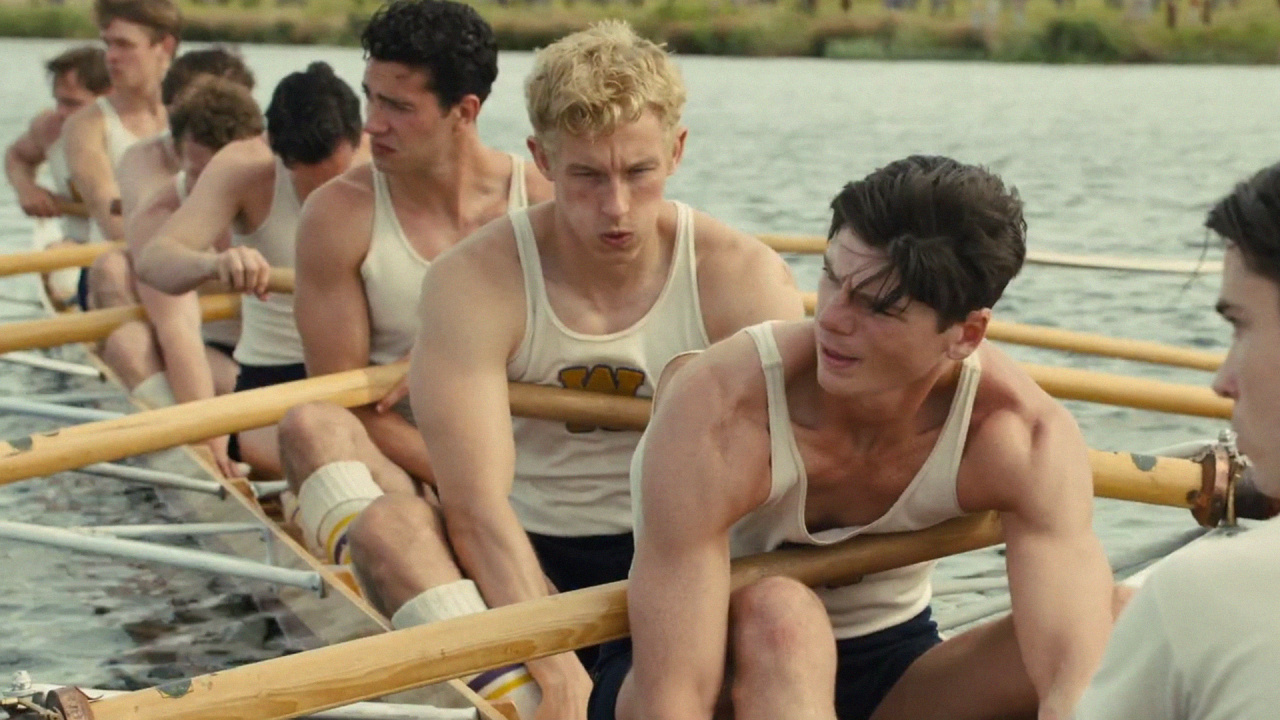
Blandly-cast, dully-scripted and flatly-directed, the only moments of life in this story are tucked in that eight-man rowing shell. A diminutive coxwain (Luke Slattery) urges the rowers on. Callum Turner, Jack Mulhern, Sam Strike and the others — who learned to row at a convincing, championship level for the movie — work themselves ragged in the face of high odds, stiff competition and the trials of ordinary life during that perilous age.
But if you can’t get anything emotional of a homeless young man (Turner) eating from a can in a burned-out hulk of a Model A Ford, where he lives, his life and future saved by rowing, maybe the time for trafficking in nostalgia is over.
The rawboned, strapping young Brit Turner (“Fantastic Beasts,” “Emma.”) physically looks the part of Joe Rantz, a struggling young man on his own too early, trying to find enough work to stay alive and plug his way through engineering school at the U. of W. But the character is so underwritten, his scenes so heartlessly scripted and directed, that we don’t identify with the guy, his struggle or his reluctant courtship of the cute coed (Hadley Robinson) who sets her eye for him.
“Take me on a boat ride!”
Not that the love story is supposed to be with her. It’s really on the boat, where Rantz, fellow broke non-athlete Roger Morris (Strike) and the silent, stern and focused Don Hume (Mulhern) bond and battle first the university’s varsity crew (they’re JV), then the best of the collegiate west, all the way to a national championship which will determine who will join Jesse Owens in Berlin.
Aussie Joel Edgerton barely registers as the gruff coach who insists “Rowing is more poetry than sport.” Brit Peter Guinness isn’t given moments to rhapsodize about the love and life he pours into making these slick wooden racing shells, and thus lacks the obligatory twinkle.
Clooney and the screenwriter do a poor job of setting up the “rich kid” rivals that they’re rowing against. Hell, the coaches mention “what money gets you” and “Harvard and Yale” back East, and then never put them in the water against U-Dub.
We get a nice taste of rowing tactics, training and terminology. But the story lacks the Depression Underdog context of “Seabiscuit,” the heart and soul of “Chariots of Fire” and other sports movies of this genre.
Clooney, who sold his tequila brand for a billion bucks a couple of years back, isn’t doing this for money, doesn’t act that much these days and wouldn’t appear to have a lot of distractions keeping him from focusing on more than just how to film the races. He knows what the story’s heart is. And yet he fails utterly in getting that across and saving this “Boat” from sinking.
Which it does. Like a stone.

Rating: PG-13 for profanity and smoking
Cast: Callum Turner, Joel Edgerton, Peter Guinness, Hadley Robinson, Luke Slattery, Jack Mulhern and Sam Strike.
Credits: Directed by George Clooney, scripted by Mark L. Smith, based on the book by Daniel James Brown. An MGM/Amazon release.
Running time: 2:04