
Not even bothering to suggest what his latest film “might” be about. That’s reputation, for you.
June 21, we’ll find out.
Not even bothering to suggest what his latest film “might” be about. That’s reputation, for you.
June 21, we’ll find out.


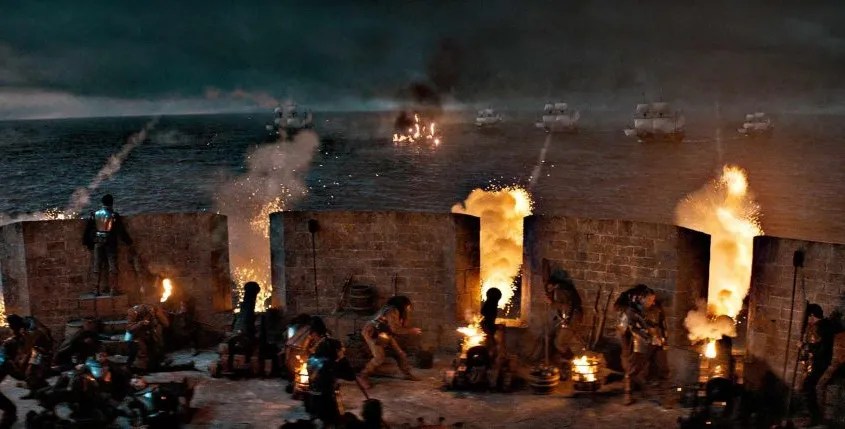
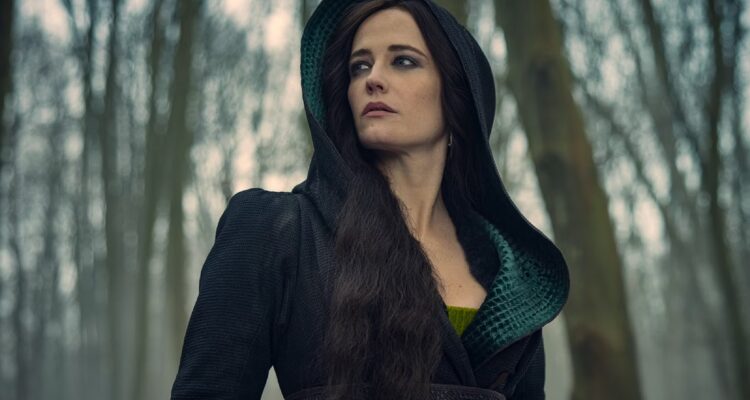
The stakes are higher, the set pieces grander and new heroes arrive, along with new villains, in “The Three Musketeers – Part II: Milady,” the second half of the sprawling, brawling and fresh French take on Alexandre Dumas’ beloved novel.
Eva Green‘s ferocious version of the spy Milady de Winter steps center stage for this film, with Cardinal Richeliue (Eric Ruf) stepping into the background as more sinister figures are introduced, all striving the topple King Louis XIII (Louis Garrel), plunge France into religious civil war and make it easy pickings for those interfering Protestants, the Brits.
It’s hard to top Faye Dunaway’s delicious turn in the Milady role in the riotously entertaining Richard Lester “Musketeers” of the ’70s, but multi-lingual Green more than holds her own in the fights, the feints and the fury of a woman on a somewhat ill-defined mission to undo so much of what the menfolk have been scheming to bring to pass.
The assassination attempt that the Musketeers foiled in the climax to “Part I” has repercussions that extend in many directions. The Queen (Vicky Krieps) and her intrigues with the Duke of Buckingham (Jacob Fortune-Lloyd) are in the clear. But others are still out there, plotting.
Young D’Artagnon (François Civil) might be engaged in the traitor-hunt thanks to his duties as a king’s musketeer. But the dastardly plotters have taken his beloved Constance (Lyna Khoudri) and made this personal. So of course brooding Athos (Vincent Cassel), dashing Aramis (Romain Duris) and burly hedonist Porthos (Pio Marmaï) are dragged in as they are separated, with all fated to meet again in a confrontation at the seaside fortress of La Rochelle.
A new count (Patrick Mille) figures in their plans.
“I am Henri de Talleyrand Perigord, Comte de Chevalier!”‘
“So many words, such a small person!”
There is no smack talk like 1627 French smack talk. And at every turn, there is Milady, slicing, stabbing, seducing and insulting.
“So handsome, and yet so stupid” (in French with English subtitles).
The swordfights are almost as furious as in the first film, just fewer in number. Her the emphasis is on set pieces, sweeping scenes of a city beseiged, a fleet engaged with a heroic artilleryman of noble birth, “Hannibal to my friends” (Ralph Amoussou) bringing a little diversity to this oft-told-tale.
Cassel and Green are the class of this cast, but there isn’t a false note acted or swashbuckled in front of the camera.
The pace is brisk enough to allow us to lose track of just who is allied with whom, and more than once. And the finale suggests that all involved don’t know when to drop the mike, take a bow and move on.
But Martin Bourboulon’s two films more than hold their own with Hollywood’s best versions of this classic cloak-and-swordplay mystery, preserving the surprises and adding a few fresh ones to iconic, noble-hearted “All for one, and one for all” heroics.

Rating: unrated, violence, seduction
Cast: François Civil, Vincent Cassel, Romain Duris, Pio Marmaï, Vicky Krieps, Louis Garrel, Lyna Khoudri, Ralph Amoussou, Eric Ruf, Marc Barbé and Eva Green.
Credits: Directed by Martin Bourboulon, scripted by Matthieu Delaporte and Alexandre de La Patellière, based on the novel by Alexandre Dumas. A Samuel Goldwyn release.
Running time: 1:53


Don Siegel won a couple of Oscars for short films early on, did a lot of 1950s and ’60s TV, directed Elvis and John Wayne and the original “Invasion of the Body Snatchers.” He was behind the camera for enough Clint Eastwood movies that he became Clint’s film school.
Hard boiled? You bet. “Dirty Harry,” “The Shootist,” “Charlie Varrick,” “Riot in Cell Block 11,” the guy turned-out a steady line-up of unsentimental, sometimes downright sadistic action.
“The Lineup” (1958) wasn’t one of his best, but it’s tough, brutal and kind of kinky, with a finish that packs a punch.
The idea behind it was, if the LAPD’s “Dragnet” could begin as a hit radio series, transition to a hit TV series and become a movie, why couldn’t the same thing happen with the San Francisco-based “The Lineup?”
A “taken from real case files” police procedural set in The City by the Bay, “The Lineup” featured fairly colorless cops — like “Dragnet” — chasing more colorful criminals than “Dragnet” ever managed.
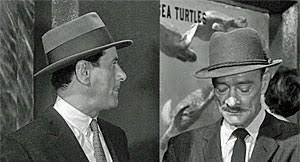
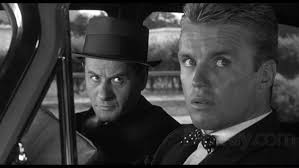
Siegel’s workmanlike 1958 film takes us into a killing spree over drugs being smuggled into the city by tourists returning from Asia, and lets us see the pursuit through the eyes of the police chasing the killer, and inside the car with a door-to-door murderer-for-hire named Dancer, played with his usual relish by Eli Wallach.
Richard Jaeckel is the short blond punk assigned by The Man behind the scenes to drive our no-nonsense drug-retriever from destination to destination. And Robert Keith plays Julian, the demonic dandy correcting Dancer’s English usage and grammar, a misogynistic muse sitting on his shoulder urging him to collect “famous last words” from the poor saps he’s killing.
“For the book.”
Julian tells the driver who’s been sent to take them to the various unsuspecting “carriers” whom Dancer will collect from that the trigger man is “a wonderful, pure pathological study, a psychopath with no inhibitions.”
Julian seems to relish this. Julian is a Hollywood “type” all his own, the homocidal homosexual whose connection to Dancer isn’t so much homoerotic as sadistically co-dependent, a tough-talking but spineless sidekick with a fey obsession for mentoring in the social graces.
The first hint the cops have of drugs flooding into town this way comes when a San Francisco opera swell (Raymond Bailey) has his luggage grabbed in a handoff that gets a cop killed.
Bailey’s innate highborn shiftiness — he went on to player the banker Mr. Drysdale on “The Beverly Hillbillies” — makes him suspect one as Detectives Asher (Marshall Reed from the TV series) and Quine (Emile Meyer) start pulling together clues, visiting the 1950s medical examiner and tossing the cop killer’s apartment, so wrecked it looks a Halloween party got out of hand there.
“No self-respecting witch would bring a broom into this trap!”
Dancer and Julian roll into town and Dancer makes his demands on the wheelman brought in to work for them.
“I like my wheels stored in a prepared drop…I want my plates snatched not more than one hour before I move.”
Sure, those demands fall by the wayside. But a merchant seaman, a society swell and a mother and daughter have no idea who is about to pay them a “friendly visit.”
The direction is quick, cheap and unfussy, with Siegel forced to use low-heat TV actors as cops, early mornings for his exteriors and a lot of rear projection in the still-nerve-rattling chase scenes.
But he and the crew make great use of San Francisco locations, with the climax taking in the famous Sutro Museum and Skating Rink, and the elevated freeway, still under construction as the movie was being filmed, that would famously collapse during the 1989 World Series earthquake.
One thing that grabbed me right away was Siegel’s confidence that the camera could show you things dialogue and the lazy intertitles modern filmmakers use to set the scene. We can SEE it’s San Francisco. We don’t need to be spoon-fed that information.
Whatever the low-risk/pre-sold reasons for putting this TV-tailored tale on the screen, there’s no doubt Siegel went to school on the city and some of the Stirling Silliphant script’s sharper edges while making it. He’d return to the Bay Area several times in the future, most famously for “Dirty Harry” with Eastwood in 1971.
And even if that killer was to be even sicker than ever, this time, the sadist would be the fellow with the badge.

Rating: TV-14, violence, drug content
Cast: Eli Wallach, Robert Keith, Richard Jaeckel, Marshall Reed, Mary LaRoche, Emile Meyer, Raymond Bailey and Vaughan Taylor.
Credits: Directed by Don Siegel, scripted by Stirling Silliphant, based on the TV series created by Lawrence M. Klee. A Columbia release on Tubi, Amazon, etc.
Running time: 1:26

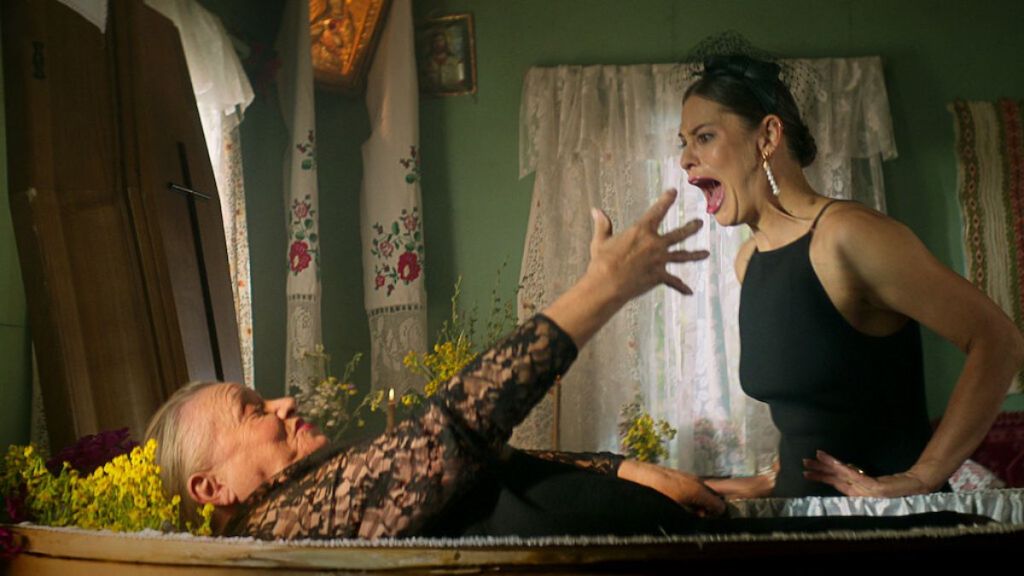
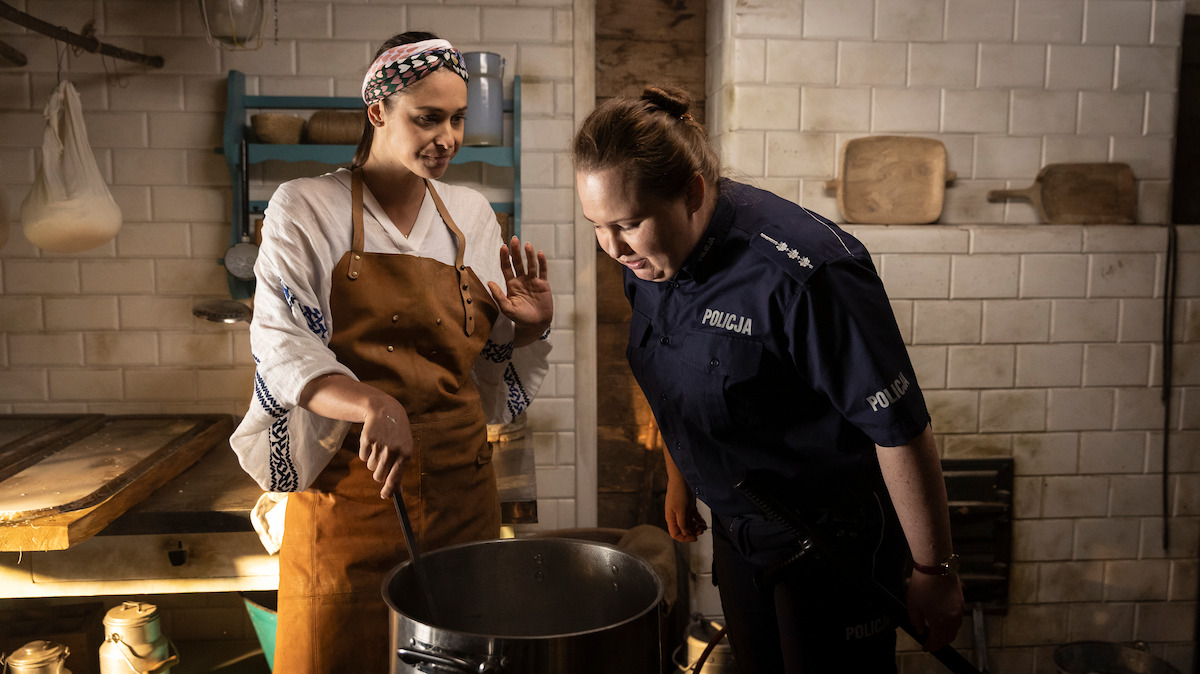

A bit of food, a dash of moonshine and a smattering of local color decorate “No Pressure,” a lackluster, lumbering Polish romantic comedy about finding love and life balance by leaving the big city for grandma’s farm.
Cinematographer turned director Bartosz Prokopowicz (“Chemo”) and screenwriters Karolina Frankowska and Katarzyna Golenia build this laugh-starved farce around a faked funeral, professional sabotage and mistaken identities used to trick Chef Oliwa (Anna Szymanczyk) into giving up her culinary life in Wroclaw for backward, pastoral Bodzki, in rural Podlachia.
Oliwa tells us in voice-over (in Polish, or dubbed into English) about her “hot temper.” But considering all she’s put through as she drops everything, begs for two days off from the boss, and gets her Mini stuck in the mud on the way to her beloved grandmother’s funeral, she maintains her cool.
Especially considering that grandma Halina (Anna Seniuk) pops up in her coffin and snaps “I had to find out if you were sad to see me go!”
That’s the sort of thing that only happens in rom-coms, Polish or otherwise, titled “Nic na Sile” or “No Pressure.”
When granny doubles-down after re-introducing lightly exasperated Oliwa to the farm by disappearing, leaving her career-woman granddaughter holding the bag, we’d expect more of a meltdown than Oliwa ever delivers.
After all, this is a busy time back at the restaurant, which is just about to expand. It was a hassle getting to “the literal middle of nowhere,” and part of that hassle was with this redhead (Mateusz Janicki) who blocked the one-lane bridge Oliwa was trying to cross, and who helps out on the farm. Supposedly this is Wojtek and not the herb grower Kuba who, with his father, are trying to get their hands on the farm and put Halina out of business.
Oliwa finds herself sucked back into this life and all this drama despite being furious at her conniving granny and granny’s paramour (Artur Barcis) and not being all that keen on the life lesson they’re trying to teach her.
“Sometimes, you’ve got to do something bad to do something good.”
Say what?
The colorful, cute neighbors aren’t all that colorful or cute. The mistaken identity thing is dragged out when aspiring pop-singer Wojtek — the real one (Filip Gulacz) returns and is enlisted in the scheme.
The Polish singing — pop, funeral dirge and folk — is a nice touch. But the misadventures with geese and goats and whatnot are weary tropes of the “back to the land/farm” comedy genre.
Like most every other element of the picture, it’s all been played before and played-out. So even if the stars had great, caustic chemistry — which they don’t — “No Pressure” was never going to surprise or delight .
And a comedy with no urgency, edge or stakes isn’t much of a comedy, with or without “pressure.”

Rating: TV-14
Cast: Anna Szymanczyk, Anna Seniuk, Mateusz Janicki, Artur Barcis and Filip Gurlacz.
Credits: Directed by Bartosz Prokopowicz, scripted by Karolina Frankowska and Katarzyna Golenia. A Netflix release.
Running time: 1:52
Alicia Silverstone co-stars in this nightmarish twist on a ’90s sitcom that turns murderous, thanks to the arrival of bloody minded Russians
It’s from those Dutch treats who gave us the ultrasound violent “New Kids” movies.


Long before a Palestinian activist/agitator has confronted a busload of tourists to an Israeli “Plant a Tree in Israel” forest with “Just think of the refugees they keep out of your news,” viewers of the new film “Alam” have figured that out.
If nothing else, Palestinian filmmaker Firas Khoury’s dramedy about coming of age Palestinian under the Israeli “Alam” (flag) underscores the vast disparity in whose story gets told and whose point of view is almost invisible there, in that fractious sliver of land on the Eastern Mediterranean.
Whatever efforts to balance coverage and explain the endless conflict within Israel and the Occupied Territories by journalists, virtually the only movies anybody sees or has ever seen about that corner of the world and about Israeli history are celebrations of its founding, from “Exodus” and “The Juggler” through “Cast a Giant Shadow” and the recent “Golda.”
That’s even the history that teenaged Tamer (Mahmood Bakri) and his mates are taught in high school in their corner of Israel, named Al Safa here, after a “depopulated” village erased from history. With Israeli Independence Day coming up, their history teacher is taking a deep dive into the specific events that led up to what Palestinians mark as Nakba, a day of mourning recalling a “catastrophe.”
But it is a history written or at least approved by the winners. A tattered Israeli flag flies over the Palestinian school. The students are labeled “Arab Israelis,” not Palestinians. Israeli soldiers occasionally drop by. And the kids have heard from their parents and grandparents of the land they lost, the villages “erased” via “ethnic cleansing,” and the sugar-coated version of all that served up to the world, always wrapped in Israeli spin, often tagged with “Plant a Tree in Israel” funding or foreign aid appeals.
“Alam,” set in an a Palestinian town within the boundaries of Israel proper, had to be filmed in Tunisia.
Khoury — “Maradona’s Legs” was his best known film — packages this condmened-by-history drama in a coming-of-age dramedy about being smitten by an activist girl, and a comically hapless group of argumentative friends getting caught up in a symbolic attempt to do something about which “Alam” is flying over their school.
Tamer and his buddies Rida (Ahmad Zaghmouri) and the hustler-goof nicknamed Shekel (Mohammad Karaki) debate who if off-limits to date and which relatives must be consulted before dating on their surreptitious smoke breaks between classes, which get them into trouble.
Tamer, trying to ensure his parents allow him to continue to live by himself in his late grandfather’s empty but un-air-conditioned house, is already on thin ice.
And then he spies a new beauty in their midst, a girl “kicked out” of her last school. Maysaá (Shereen Khass) is a mystery to them, but the argumentative Safwat (Muhammad Abed Elrahman) seems to know her. Tamer pumps him for information as they sit outside the principal’s office, each getting another demerit of warning for some bit of malfeasance.
Safwat is always tardy and always determined to debate the teacher who won’t let him join class already in progress.
“The bus is late,” he protests (the film is in Arabic and Hebrew). “It’s an ARAB bus, not a German one!”
That little crack about Palestinian People’s Time gets a laugh in class, and earns another trip to the principal’s office. Safwat is always arguing, often worked-up about something. But Tamer has to befriend Safwat to learn more about about the mysterious Maysaa’.
That’s how he gets caught up in Safwat’s plot to secretly replace the Israeli flag with the Palestinian one flying over their school. Because confident, mature and radicalized Maysaá is already on board.
Continue readingThis May 24 “event” on Disney+ looks to hit a lot of the right notes.
Lots of authorities from music, peers, session musicians, etc., singing their praises and pointing out what made “The Beach Boys” special.
It might be too “official” to have much edge to it, but we’ll hear what a jerk the Wilson brothers’ dad was again, if nothing else.
Joaquin Phoenix and La Gaga, mon dieu!
And Steve Coogan?
Oct 4.


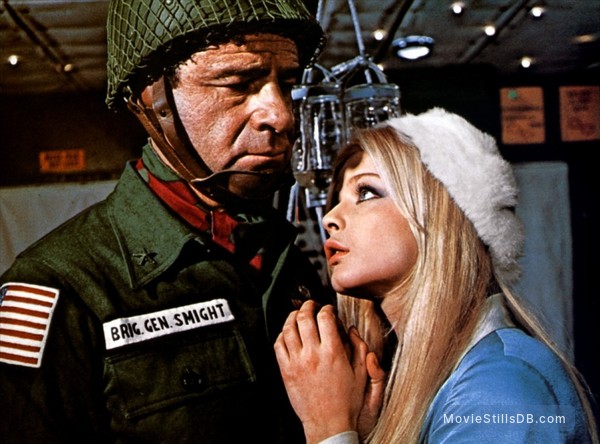

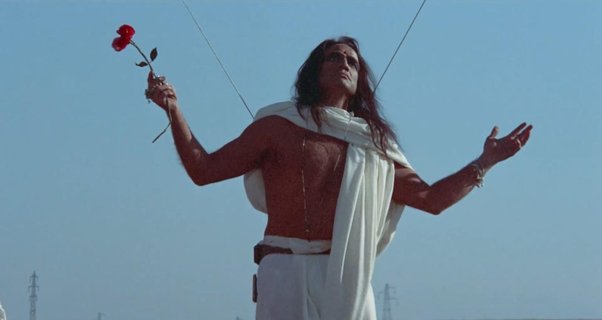
“Candy” was notorious on its release, and widely acknowledged by everyone who was in it, and the various actors’ biographers as well as generations of film scholars, as “the worst film” virtually anyone involved ever made.
The acting ranges from players who “get it” and pitch their performances to be at least lightly amusing — despite the comedically incompetent director’s worst efforts — to “clueless.” The writing, done on the fly, is a red mark on the career of screenwriter and sometime actor Buck Henry (“Heaven Can Wait”). The sexuality in it is painfully dated and, well, rapey.
But context matters in pseudo-psychedelic satires like this. And it wasn’t just fear of being perceived as unhip or “square” that had critics like Roger Ebert embrace it on its release. Well it was mostly that, one suspects, but moving on.
Based on an infamously-bawdy 1959 best seller by Terry Southern that American schoolboys shared, hand to hand, well into the ’70s, it was a coming-of-age odyssey that sent-up American mores, sexual hangups and increasingly sexualized “girls” in a world of supposedly uptight but actually lecherous and predatory men.
Whoever thought of casting a Swede in the title role and shooting it in Italy with a not-really-proven French actor-turned-director probably ending up drinking himself to death. Because the movie doesn’t play. At all.
There is pre-digital camera trickery aplenty on display, from filming a sexual come-on (assault) below the glass floor of a Mercedes limo to a surgeon’s gloves being slipped on too gracefully for reality (they were filmed being taken off, and the footage reversed).
The players who knew comedy well enough to atone for director Christian Marquand’s clumsiness in the genre don’t embarass themselves. Leering loon John Astin of TV’s “Adams Family,” playing Candy’s school teacher father, who wants to protect his “naive” child from premarital sex, and also playing her father’s randy “with-it” New York uncle, is almost funny. Walter Matthau vamps up his always-on-duty Brig. Gen. Smight and James Coburn keeps his cool as a surgeon who might save Candy’s injured father if a little sexual quid pro quo can be arranged.
“You’re trying to out-diagnose a world renowned surgeon who has attended eight institutions of higher education and who has more degrees than a thermometer!”
Whatever is in the novel (I’m a long way from my Southern-reading teens), that “”do this for me” and I’ll do THAT to you “transaction” is a bit of plot gimmickry that’s beaten to death here.
Continue reading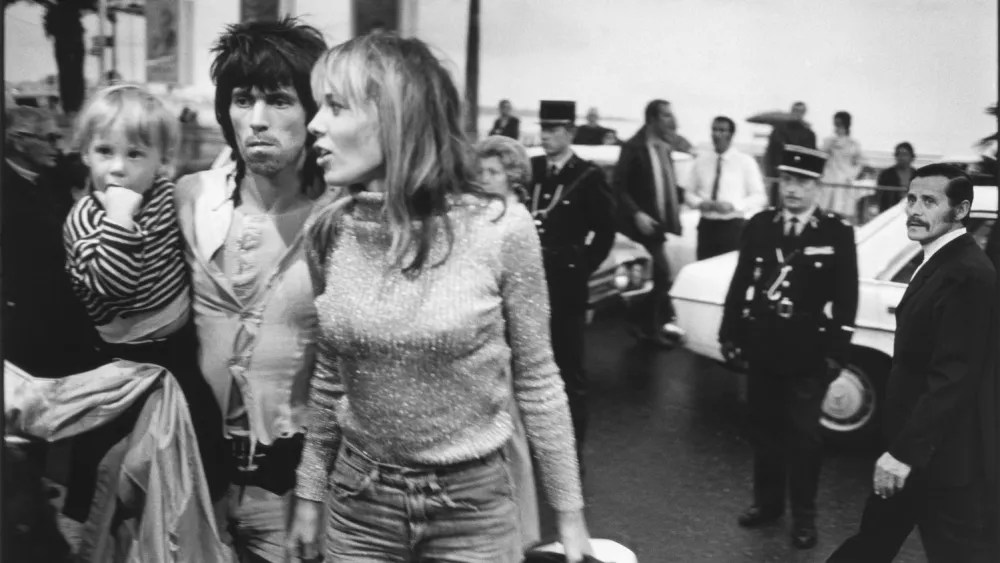


Anita Pallenberg was, model Kate Moss declares, “The original Bohemian rock chick.” And Kate, who dated and married rockers and wannabe-rockers like Johnny Depp, should know.
She was the great rock muse of the ’60s, ex-husband Keith Richards says of the German-Italian Pallenberg. She dated three members of The Rolling Stones, with guitarist-songwriter Keith admitting that their role was chiefly “keeping up with her” as she generated friction and inspired “Gimme Shelter” and “You Can’t Always Get What You Want,” among other songs.
Aptly enough, she even sang backup on “Sympathy for the Devil,” when she wasn’t “making the scene,” popping up in quasi-underground indie films, and co-starring in two of the iconic movies of the era — “Barbarella” and “Performance.”
Filmmakers Alexis Bloom and Svetlana Zill take a shot at capturing the essence of Pallenberg and why she matters in “Catching Fire: The Story of Anita Pallenberg.” They profile a great beauty of her sexist, limited-horizons-for-women era and that first model to take up with famous rockers, immerse herself in their world and become an essential part of it.
If we remember her, it is because of her connection to The Rolling Stones during their most tempestuous, creative and drug-soaked era. But she was more than just a “rock chick,” a striver who used her connection to famous people to become famous herself. Or maybe she wasn’t and she was just kidding herself, despite her 40 or so film credits and the self-consciously poetic turns of phrase in her unpubished memoir, “Black Magic,” generously sampled in “Catching Fire.”
It was to be “a traveler’s tale through a landscape of dreams and shadows,” she wrote.
“My motto was forward, forward forward, never look back” Pallenberg says, her words read and performed in the film by Scarlett Johannson. That line captures the life force and “sparkle” of this singular figure of that storied time. But it also hints at the self-absorption that fed her addictive personality, a life lived without repetenence but also without much in the way of self-reflection.
“Many people confuse me with the roles I played in films,” she disengenously wrote in “Black Magic.” Or not, seeing as how few people saw “Performance” and nobody would mistake her broad, theatrical turn as a “Tyrant” in “Barbarella” for a real woman.
Continue reading

