Classic Film Review: The “Candy” debacle, still awful after all these years (1968)

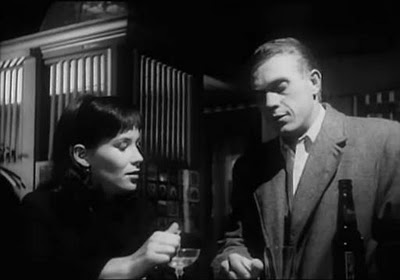
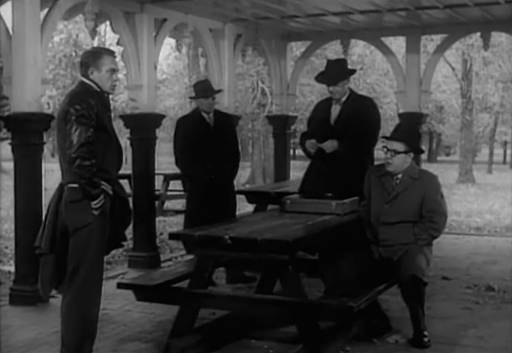
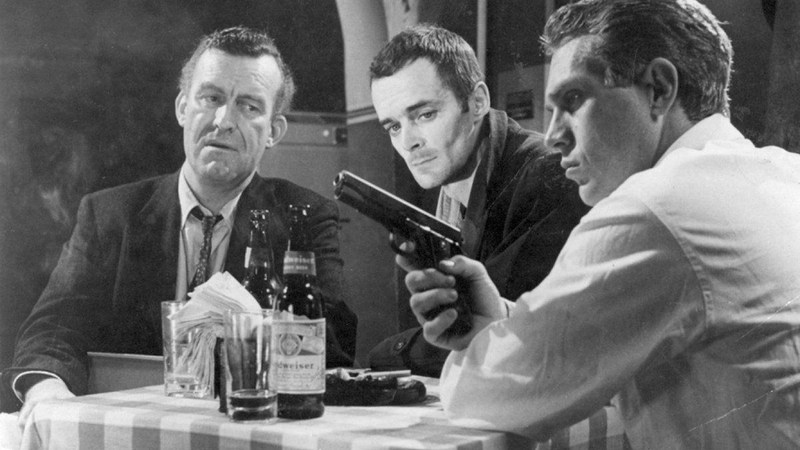
“Candy” was notorious on its release, and widely acknowledged by everyone who was in it, and the various actors’ biographers as well as generations of film scholars, as “the worst film” virtually anyone involved ever made.

The acting ranges from players who “get it” and pitch their performances to be at least lightly amusing  — despite the comedically incompetent director’s worst efforts — to “clueless.” The writing, done on the fly, is a red mark on the career of screenwriter and sometime actor Buck Henry (“Heaven Can Wait”). The sexuality in it is painfully dated and, well, rapey.

But context matters in pseudo-psychedelic satires like this. And it wasn’t just fear of being perceived as unhip or “square” that had critics like Roger Ebert embrace it on its release. Well it was mostly that, one suspects, but moving on.

Based on an infamously-bawdy 1959 best seller by Terry Southern that American schoolboys shared, hand to hand, well into the ’70s, it was a coming-of-age odyssey that sent-up American mores, sexual hangups and increasingly sexualized “girls” in a world of supposedly uptight but actually lecherous and predatory men.

Whoever thought of casting a Swede in the title role and shooting it in Italy with a not-really-proven French actor-turned-director probably ending up drinking himself to death. Because the movie doesn’t play. At all.

There is pre-digital camera trickery aplenty on display, from filming a sexual come-on (assault) below the glass floor of a Mercedes limo to a surgeon’s gloves being slipped on too gracefully for reality (they were filmed being taken off, and the footage reversed).

The players who knew comedy well enough to atone for director Christian Marquand’s clumsiness in the genre don’t embarass themselves. Leering loon John Astin of TV’s “Adams Family,” playing Candy’s school teacher father, who wants to protect his “naive” child from premarital sex, and also playing her father’s randy “with-it” New York uncle, is almost funny. Walter Matthau vamps up his always-on-duty Brig. Gen. Smight and James Coburn keeps his cool as a surgeon who might save Candy’s injured father if a little sexual quid pro quo can be arranged.

 “You’re trying to out-diagnose a world renowned surgeon who has attended eight institutions of higher education and who has more degrees than a thermometer!”

Whatever is in the novel (I’m a long way from my Southern-reading teens), that “”do this for me” and I’ll do THAT to you “transaction” is a bit of plot gimmickry that’s beaten to death here.

Continue reading
Posted in Reviews, previews, profiles and movie news | Comments Off on Classic Film Review: The “Candy” debacle, still awful after all these years (1968)

Documentary Review: The ’60s “Rock Chick” incarnate — “Catching Fire: The Story of Anita Pallenberg”

Anita Pallenberg was, model Kate Moss declares, “The original Bohemian rock chick.” And Kate, who dated and married rockers and wannabe-rockers like Johnny Depp, should know.

She was the great rock muse of the ’60s, ex-husband Keith Richards says of the German-Italian Pallenberg. She dated three members of The Rolling Stones, with guitarist-songwriter Keith admitting that their role was chiefly “keeping up with her” as she generated friction and inspired “Gimme Shelter” and “You Can’t Always Get What You Want,” among other songs.

Aptly enough, she even sang backup on “Sympathy for the Devil,” when she wasn’t “making the scene,” popping up in quasi-underground indie films, and co-starring in two of the iconic movies of the era — “Barbarella” and “Performance.”

Filmmakers Alexis Bloom and Svetlana Zill take a shot at capturing the essence of Pallenberg and why she matters in “Catching Fire: The Story of Anita Pallenberg.” They profile a great beauty of her sexist, limited-horizons-for-women era and that first model to take up with famous rockers, immerse herself in their world and become an essential part of it.

If we remember her, it is because of her connection to The Rolling Stones during their most tempestuous, creative and drug-soaked era. But she was more than just a “rock chick,” a striver who used her connection to famous people to become famous herself. Or maybe she wasn’t and she was just kidding herself, despite her 40 or so film credits and the self-consciously poetic turns of phrase in her unpubished memoir, “Black Magic,” generously sampled in “Catching Fire.”

It was to be “a traveler’s tale through a landscape of dreams and shadows,” she wrote.

“My motto was forward, forward forward, never look back” Pallenberg says, her words read and performed in the film by Scarlett Johannson. That line captures the life force and “sparkle” of this singular figure of that storied time. But it also hints at the self-absorption that fed her addictive personality, a life lived without repetenence but also without much in the way of self-reflection.

“Many people confuse me with the roles I played in films,” she disengenously wrote in “Black Magic.” Or not, seeing as how few people saw “Performance” and nobody would mistake her broad, theatrical turn as a “Tyrant” in “Barbarella” for a real woman.

Continue reading
Posted in Reviews, previews, profiles and movie news | Comments Off on Documentary Review: The ’60s “Rock Chick” incarnate — “Catching Fire: The Story of Anita Pallenberg”

Movie Preview: Ti West and Mia Goth take us to 1985 LA in  “MaXXXine”

A porn actress is hellbent on finding stardom via horror, but a “Night Stalker” haunting LA may get in her way.

Did I mention she’s played by Mia Goth? I pity the stalker.

Kevin Bacon, Michelle Monaghan, Giancarlo Esposito,  Bobby Cannavale and Elizabeth Debicki star in Ti West’s latest Mia Gothfest.

July 24?

Posted in Reviews, previews, profiles and movie news | Comments Off on Movie Preview: Ti West and Mia Goth take us to 1985 LA in  “MaXXXine”

Netflixable? Ron Perlman vs. Brad Pitt? “A Stoning in Fulham County”

You can look at the young actors playing four redneck teens accused of throwing rocks at an Amish buggy and killing a baby and tell which one of them might have become a star in “A Stoning in Fulham County.” And not just because Brad Pitt’s the most classically handsome of the lot.

Pitt brings a lovely sensitivity to his few scenes in this 1988 TV movie, first aired on NBC. He generates pity, which considering how loathsome what he and his pals did, is saying something. “Stoning” was his first credited role on screen.

The term “TV movie” was, for much of its history, a pejorative label in Hollywood. Shot speedily and on the cheap, usually in between broadcast seasons of network programs and often featuring network series stars or supporting cast members, they generally feature perfunctory direction, adequate acting and just a little more polish than your average indie film.

I used to cover them in the same part of the country that “Fulham County” is set in — central North Carolina — and saw actors like M. Emmet Walsh, William Daniels, David Ogden Steirs, a very young Keri Russell, Jesse Borrego and others bring a little flash and a lot of professionalism to these two-takes-and-done projects.

These days, not many are produced as TV has migrated to the streaming series model, although you can find lots of them on The Hallmark Channel, especially around the holidays, and on Netflix, which has offered players like Lindsay Lohan a new lease on life in these B-movies for the boob tube.

But Steven Spielberg launched his career with “Duel,” Elizabeth Montgomery discovered life after “Bewitched” with her fierce turn in “The Legend of Lizzie Borden,” Cicely Tyson immortalized herself in “The Autobiography of Miss Jane Pittman” and Andy Griffith left his “Aw, shucks” sheriff behind with TV films like “Savages” and “Murder in Coweta County.”

“Fulham County” is better than your average TV movie, if not one of the exemplars of the genre. It was scripted by writers with “Quincy, M.E.,””Murder She Wrote” and “Columbo” credits and directed by a make-your-“day” and make-the-trains-run-on time filmmaker who worked on “Remington Steele,” and did “Mendez: A Killing in Beverly Hills” and the excellent  “Tecumseh: The Last Warrior,” which I watched him film near Winston Salem.

It’s a courtroom drama based on a real case of local harassment of the Amish that led to a death in 1979 Indiana. The film came out three years after the classic murderers-among-the-Amish romantic thriller “Witness,” and squares off “thirtysomething” star Ken Olin against “Beauty and the Beast” (the series) star Ron Perlman, and features Jill Eichenberry (“L.A. Law”) as prosecutor Olin’s wife, big city folk who have moved to rural N.C. (Statesville was the primary filming location).

Well-known character players Peter Michael Goetz, Nicholas Pryor and Noble Willingham (as the judge) flesh out the cast. And one of the greatest character actors of his era, Theodore Bikel, is cast as the Amish elder Abe, classing-up the entire enterprise with his fluid mastery of German (he was a villain in “The African Queen”), his soulful singing (he was a folk music star) and gravitas, joining Perlman’s grieving father Jacob in explaining “our ways” to the city slicker, and to the TV viewing audience.

When the punks harass and hurl rocks in their “claping” prank on Jacob and his family (Maureen Mueller plays his with Sarah), they’re engaging in a local rite of passage, to scare and even injure the folks who are “different” from them, whose values and traditions that eschew many of the conveniences and temptations of modern life.

The new “finishing out the year” prosecutor has hopes of just doing his time and opening his private practice there until this horrific injustice lands in his lap.

As the locals start with “They’re just boys” and move into full-on harassment of the prosecutor, as Jacob declines to testify or allow any of his family to because “Vengeance is mine, sayeth the Lord,” prosecutor Jim has to ask, “What the hell have we gotten into?”

The film resembles many a “Matlock” episode (my elderly mother was an addict, before moving on to the hard stuff — “Blue Bloods”), and has barely a whiff of “To Kill a Mockingbird” or “Inherit the Wind” in it, despite the drawls, the desperate appeal for witnesses, a biased local judge and the organized, ingrained ignorance they’re fighting against.

“Turn the other cheek,” the go-along-to-get-along Sheriff (Greg Henry) says of The Amish Way. “Not a bad way to live.”

“Unless you’re the only ones who do,” Jim snarls back.

Olin was an early adapter of the empathetic vocal fry school of near-whispered TV acting of the era, and is less convincing in the fiery appeals for justice that are necessary for this button-pushing melodrama to close the deal.

Mueller doesn’t give us much, as a mother struggling with grief and to not lose her faith at this severest test.

But Perlman and Bikel are outstanding, and they do things the generic, sappy “TV movie” score and pedestrian shot selection and editing don’t. They make us invest in this story, move us and infuriate us, and in no way prep us for the formula-breaking finale that shows up and almost cheats us of what we’ve always comes to expect out of such courtroom tales.

That’s TV movies for you. Future “superstar in the making” or not, we’ve got 94 minutes to tell a story, with commercial breaks. And by God, that train’s got to arrive and leave on time, no matter what.

Rating: TV-14, violence

Cast: Ken Olin, Ron Perlman, Jill Eichenberry, Noble Willingham, Maureen Mueller, Greg Henry, Peter Michael Goetz, Nicholas Pryor, Brad Pitt and Theodore Bikel.

Credits: Directed by Larry Elikann, scripted by Jackson Gillis and Jud Kinberg. A Landsburg Co. production first aired on NBC. Now on Netflix.

Running time:

Posted in Reviews, previews, profiles and movie news | Comments Off on Netflixable? Ron Perlman vs. Brad Pitt? “A Stoning in Fulham County”

Movie Preview: Scarlett J and Channing T star in the perfect summer comedy for conspiracy-minded-America — “Fly Me to the Moon”

Woody Harrelson and Ray Romano also star in this ’60s period piece about a “back up plan” in case, you know, we don’t LAND on the Moon.

ScarJo plays the marketing whiz who “casts” and “sells” NASA and the Moonshot…or the faked one, to the public.

As if “Capricorn One” and Stanley Kubrick didn’t feed half a century of conspiracy crackpottery on the subject.

July 12, Apple and Sony and the director of “Love, Simon” try to find the fun in all that.

Posted in Reviews, previews, profiles and movie news | Comments Off on Movie Preview: Scarlett J and Channing T star in the perfect summer comedy for conspiracy-minded-America — “Fly Me to the Moon”

Movie Review: “A Forgotten Man” wrestles with Swiss complicity, and his own, in Nazi Germany’s Rise

The Swiss drama “A Forgotten Man” is an intriguing if not wholly satisfying dip into a piece of little debated history, Switzerland’s dubious “neutrality” during World War II.

Writer-director Laurent Nègre, inspired by a play by Thomas Hürlimann, seeks to address Swiss “good for business” complicity and collusion with Nazi Germany. We engage in that debate through the story of two “forgotten” (especially outside of Switzerland) men whose fates were intertwined thanks to the opportunistic bankers and industrialists that “run” the country, and either turned a blind eye to crimes against humanity, or secretly goose-stepped along with it when the world wasn’t watching.

One man was Hans Frölicher, the Swiss ambassador to Nazi Germany and a figure who had a hand in facilitating Swiss business ties with the Third Reich. His name was changed to Heinrich Zwygart in the play “The Envoy” and for the movie. The other was theology student and would-be Hitler assassin Maurice Bavaud, whom the Swiss state and its German ambassador declined to help when he was arrested for not-quite-going-through-with-his-attempt to kill Adolf Hitler in 1938.

Bavaud’s Wikipedia biography details his family’s and later the Swiss government’s attempts to rehabilitate and Swiss-wash a disturbed young man’s dubious, Russian monarchist motives for attempting what he lost the nerve to try.

Zwygart, played with a growing resentment and secret torment by Michael Neuenschwander, is depicted as a man who dashes home from Bavaria — where the German government fled after Hitler’s death — covering his tracks and burning papers, but seemingly confident of his reception back in Geneva.

But in Nègre’s film, Zwygart is tormented by visions of the very young and silent Bavaud (Victor Poltier), the would-be assassin he took no steps to save or have transferred to Swiss custody.

As he renews his connection to family and takes visits from a Hitler-fan publisher (Dominik Gysin) who wants him to write his memoirs, Zwygart quickly picks up on the arms’ length that his own government is keeping between itself and its German ambassador.

A relative who got into business with the Nazis and others may be furious that an “unconditional surrender” will let the Germans off the hook for all they owe the Swiss, for raw materials, machine parts and the like.

“But you guaranteed Goering’s trustworthiness (in German with English subtitles)!”

But Zwygart starts to wonder if his own state is setting him up as the “fall guy” for Swiss sins ranging from supplying and feeding Germany to laundering German-looted cash and Jewish assets via their banking system, which isn’t touched on here.

Nègre’s script ably recreates the tightrope the Swiss walked to stay fat, rich and independent after Germany conquered most of the rest of Europe. In the Zwygart house, Heinrich and his aged military father (Peter Wyssbrod) converse in German, where the son rolls his eyes at the old man’s assertion that “Our army kept us free!” One and all treat that as a “myth” the Swiss told still tell themselves.

But Heinrich’s wife (Manuela Biedermann) and college-age daughter (Cléa Eden) speak French, as wife Clara wonders how “Berlin changed you” and aspiring London chiropractor Helene introduces a French-speaking boyfriend (Yann Philipona) who wants to “interview” Ambassador Zwygart, and perhaps even confront him.

Nègre — “Confusion” and “Operation Casablanca” were his — walks his own tightrope, angling towards a Swiss reckoning over its national guilt, but pulling his punches as often as not. He leans just hard enough on the whole Bavaud plotline to play the “But look, one of our guys tried to SHOOT Hitler” card. And he’s more than willing to have an American official reinforce the “you’re excused” attitude that dismissed any swift reckoning for Swiss complicity simply because they were “democratic” and stable on a now-half-communist continent.

But “A Forgotten Man” still makes for a most watchable account of a country that may have “gotten it from both sides” during the war, which acted out of self-preservation and self-interst, but which got an undeserved pass for its selective, opportunistic views of “neutrality.”

Rating: R, nudity

Cast: Michael Neuenschwander, Manuela Biedermann, Cléa Eden, Yann Philipona, Peter Wyssbrod,
Dominik Gysin and Victor Poltier

Credits: Scripted and directed by Laurent Nègre, inspired by a play by Thomas Hürlimann. A Sovereign release.

Running time: 1:25

Posted in Reviews, previews, profiles and movie news | Comments Off on Movie Review: “A Forgotten Man” wrestles with Swiss complicity, and his own, in Nazi Germany’s Rise

Movie Review: A frigid, anarchic future hinges on “Permafrost” and dystopian cliches

Every indie film — if it’s “indie” enough — is a teachable moment in the sorts of story you can tell with very little money, a catchy conceit and the best assets you have at hand.

Sometimes those assets include “name” actors you’re able to talk into making your film, giving it visibility and cachet. And somethings it’s the locations.

“Permafrost” benefits from striking, snowy Utah settings and access to horses, ATVs and snowmobiles, which to writer, director and star Lenni Uitto, screamed “Ice Age Dystopia.” So he and co-star Rachelle Hardy dreamed up a new ice age where Russians, Russian gulags and bad Russian accents permeate a North America after — presumbly — the Bering Strait has frozen over and allowed Russianism to expand beyond its MAGA base.

The weather gives the film credibility, which the screenplay strips away, one limp cliche after another.

If you’re going dystopian, your future’s got to have bounty hunters. Because even if governments and techological infrastructure has collapsed, you’ll want to “employ” people to guard the gulags, and “loggers” (As in keeping a “log,” or “laggers?”) and hunters to wander the wasteland fetching or killing (and returning their tracking chips) escapees with electronic trackers.

Meat and apparently crackers will still be available, because anyone with a rifle can hunt and crackers will last long after manufacturing and distribution systems have broken down.

So loner James (Uitto) can get by, haunted by the ghost of a teen girl who gives him advice and urges him “Don’t shoot,” every now and then. Maybe she’ll talk him out of killing himself.

James shoots a lot, here. James stabs a lot, too, even after somebody’s apologized for shooting at him, or conked him on the head to rob him.

There’s a little girl (Riley Hardy) that someone is hellbent on tracking down. She’s on the run with her mom (Rachelle Hardy). James takes this assignment from his Boris & Natasha-accented bounty hunt booker and fights his way through (checks notes) “Somali pirates,” and the usual dystopian thugs, uniformed goons and over-made-up cult-gang members calling themselves “White Ghosts.”

He has to admit to the little girl that he kills people. Not that she can’t see that for herself.

“That’s a bad job! You need to get a new one!”

“Permafrost” has some arresting images, but the script is crap and the middling to mediocre acting, directing and general execution of it become more immaterial the crappier it gets.

“Phantom” gunshots extract our hero and the child from some situations. As in “Who fired that perfectly-timed shot to save them THIS time?” Sometimes, we never find out.

Continuity error?

One favorite moment occurs when two women bounty hunters come for little girl Meg, and one drops to the ground after a LOUD rifle report, only to have the other apparently NOT HEAR that and trudge on for several seconds, grabbing the kid, only for a second round to hit her, totally by “surprise.”

It’s not bad enough to prompt a drinking game over idiotic plot blunders, screwy dystopian “logic” no one thought through or Godawful Russian-accented “acting.” When you film an indie in Utah, at the very least you’d like to avoid drinking game prompts.

Rating: unrated, violence

Cast: Lenni Uitto, Riley Hardy, Ariel Dawn, Corey Dangerfield, Kalli Therinae and Rachelle Hardy.

Credits: Scripted and directed by Lenni Uitto. A FilmHub release on Tubi.

Running time: 1:19

Posted in Reviews, previews, profiles and movie news | Comments Off on Movie Review: A frigid, anarchic future hinges on “Permafrost” and dystopian cliches

Classic Film Review: Reconsidering “Sorcerer” (1977)

The stumbling French Netflix remake of “The Wages of Fear,” a 1953 thriller by Henri-Georges Clouzot, whetted my appetite for re-watching that touchstone tale of desperate men taking on a suicidal job, each for his own grim reasons.

But none of my streaming services had it available. Max has it, I think Criterion restored it and has it on their channel. (Tubi got it later). So I went in search of the second famous version of that classic story, William Friedkin’s epic “Sorcerer,” a 1970s updating that is as bathed in lore as any movie of that era.

Friedkin’s budget-buster opened a month after “Star Wars,” and the Internet is filled with hot-take reviews (many of them “performed” on youtube) about “the best movie you never heard of/saw” and the like. “Sorcerer” exists in a few versions, never got that much attention when it came out, and Friedkin lamented its fate every chance he got, right up to his death last August.

Poking around, I found a full-length cut used on European TV online and dove back into this world. Because if nothing else, “Sorcerer” is a half hour shorter than the original “Wages.”

“Sorcerer” is a film greatly-enhanced in memory by its signature scenes, down-and-out men driving huge, beater ten-wheeled trucks loaded with volatile nitroglycerine over an ancient, rickety rope and wooden plank bridge in the middle of the South American jungle. That iconic image made one helluva poster. I used to own one.

Continue reading
Posted in Reviews, previews, profiles and movie news | Comments Off on Classic Film Review: Reconsidering “Sorcerer” (1977)

Movie Preview: Dan Stevens goes scary, driving a young woman “Cuckoo”

Hunter Schafer stars as a young woman who moves with Dad’s (Marton Csokas) to a resort in the Bavarian Alps, a place where people with Germanic accents (Dan Stevens, et al) use words like “experiments” a tad too often for comfort.

“Cuckoo” got a little genre fan appreciation at festivals, but mixed reviews. Another Neon title nobody sees? We’ll see.

But that “Downton” Dan Stevens? He’s everywhere!

Posted in Reviews, previews, profiles and movie news | Comments Off on Movie Preview: Dan Stevens goes scary, driving a young woman “Cuckoo”

Netflixable? Argentinian man escapes his messy life via “death” — “Rest in Peace”

“Rest in Peace” is a sturdy Argentian thriller with too many soap operatic touches and twists for its own good.

It’s a tale of escaping a messy life through a horrific but all-too-convenient historical event, the bombing of a Jewish community center in Buenos Aires in 1994.

Novelist Martin Baintrub took that tragedy and imagined someone who used it to get away from ruinous debts and threats against his family. Director Sebastián Borenztein and co-screenwriter Marcos Osorio Vidal got a watchable if sometimes eyerolling, predictable and generally melodramatic movie out of that narrative.

Sergio (Joaquín Furriel of “Intuition”) is a Buenos Aires businessman who inherited the family factory but is struggling to keep it afloat, a fact that he keeps from his dental hygeinist wife, Estela (Griselda Siciliani, who was in “Bardo”).

He can’t have it burden his daughter Flor’s bat mitzvah, because her whole speech at the gathering is about how “He will make all my wishes come true” (in Spanish, or dubbed into English). He can’t let his worries color his little boy Matias’s opinion on his dad.

But the minute he says “Dad’ll always be there with you” to the boy, we know he won’t. It’s that kind of movie.

The celebration is marred by the presence of a collector from that one money lender Sergio cannot put off. Bruno (Gabriel Gioty) is impatient enough to tell him, when they meet again, that he wants “it all by Monday.”

Sergio has barely had a chance to bring Estela up to speed, beg a friend to buy their “country place” from him and fend-off an irate brother-in-law’s ugly accusations at a family dinner when that fateful day arrives.

And then a bomb goes off.

The narrative shifts back and forth between Estela’s concerned, then upset if-not-quite-frantic realization that her husband might have been in that blast. Authorities find his briefcase and the daughter’s new necklace which doting dad had just had repaired. She weeps.

But Sergio, his head ringing in the hospital, has survived. It’s just that as he gathers his senses, takes in the chaos and the scale of what he just lived through and he can’t complete that call “home.”

He runs away, making his way to Paraguay, South America’s version of “a place that doesn’t check ID that carefully.”

Sergio’s new life, working for an importer/trading firm of some sort, just requires that he make excuses any time he’s ordered to deal “with Argentines” or deliver something to another country.

Luckily, the boss’s wife (Lali Gonzálezi) is a fan. And when she’s suddenly widowed…

The tale is told with every moment of forshadowing underlined to ensure we notice it. The license of the driver on that taxi ride to the bus station to flee town is the perfect identity to steal. That heart-to-heart with his son in the bathroom at a big party is too good not to reprise, ironically, in the third act.

The performances are more adequate than compelling. Truth be told, I checked out of the picture at the moment where “seventeen years pass” and we see Sergio in a Robinson Crusoe beard and mop top, as if he hasn’t shaved in decades.

The time to acquire a permanent disguise might be the days and weeks after you make your escape and authorities might be looking for you.

Melodramatic touches — coindidences, old longings — pile up, so that by the finale, that’s pretty much all there is to “Rest in Peace,” a tale too self-consciously “dramatic” to feel “real,” too dramatically-pat to be all that entertaining.

Rating: TV-MA, violence, sex, nudity

Cast: Joaquín Furriel, Griselda Siciliani, Lali González and Gabriel Goity

Credits: Directed by Sebastián Borenztein, scripted by Marcos Osorio Vidal and Sebastián Borenztein, based on a novel by Martin Baintrub. A Netflix release.

Running time: 1:47

Posted in Reviews, previews, profiles and movie news | Comments Off on Netflixable? Argentinian man escapes his messy life via “death” — “Rest in Peace”