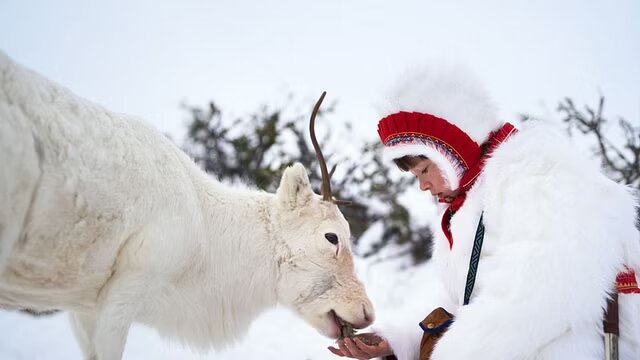
Today’s “Around the World with Netflix” outing takes us to snowy, remote region we outsiders used to call Lapland (Sápmi, is preferred by the locals), that treeline on the edge of the tundra in northern Norway, Sweden, Finland and a bit of Russia. It is the home of the Sámi peoples, traditional reindeer herders who have lived in this cold place for thousands of years.
That makes for a striking setting for “Stolen,” a seriously basic, if satisfying, thriller about the challenges this “outsider” group faces in the modern world. Adapted from a novel by Sámi journalist and novelist Ann-Helen Laestadius, it comes to the screen as a somewhat violent melodrama in the “Witness” mold.
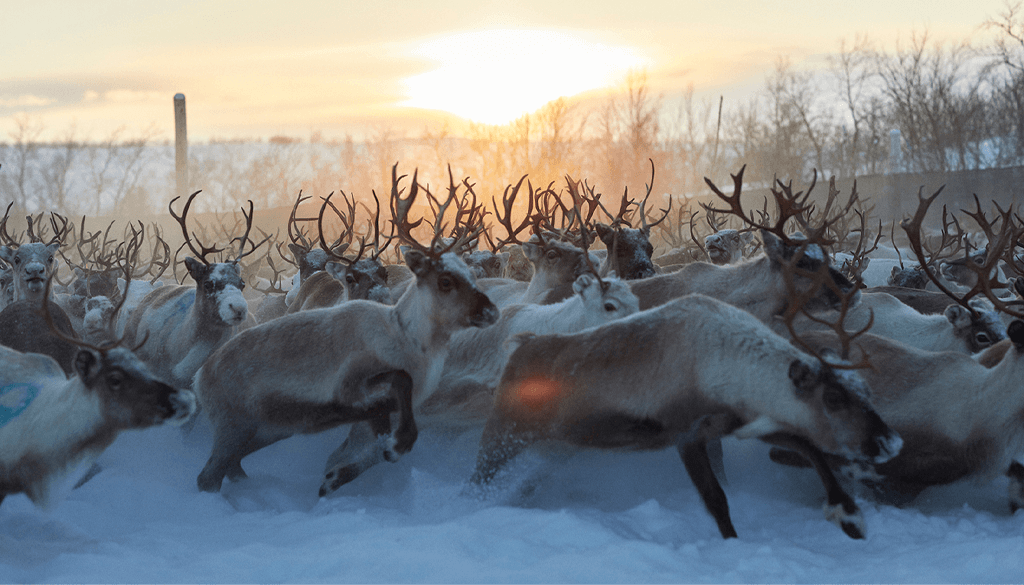
We meet the Sámi, a tiny population clinging to an almost prehistoric lifestyle in their traditional homeland. We see the beauty of the reindeer herds, galloping through the snow, meet a family from a small village, herding them with snowmobiles and griping about “changes” in the climate that make their lives harder.
And now there’s somebody killing reindeer and burning their feed.
An enthusiastic little girl, Elsa (Risten-Alida Siri Skum) gets her first reindeer, which she names and ear-marks and whispers the traditional Sámi incantation into that ear, “I don’t own you. I only have you on loan.” But shortly after that, she sees it have its throat slit by a local goon with a grudge against the Sámi. He makes a throat-slashing gesture to Elsa to keep her mouth shut. Which she does, even when she sees this creep in the station as her father (Magnus Kuhmunen) files yet another pointless police report.
No wonder the cops won’t do anything. Anybody who isn’t Sámi resents them, their government protections, their say over what happens to “their” grazing land.
So you’ve got a misunderstood and shunned outsider culture under deadly threat from a guy cozy with the cops. And a child is the only “Witness.”
But the Laestadius novel and the film adapted from it quickly shakes off any resemblence to the 1985 Peter Weir film as Elsa grows up to become a teacher ((Elin Oskal) in the village school. With her culture and family facing even more pressures — more attacks on their herds, more threats to their land, which may have iron ore beneath it — Elsa has grown up to be outspoken, unusual for a woman in this tradiational patriarchy.
Elsa has kept her secret about the animal-torturing and butchering Robert (Martin Wallström). Speaking out, badgering the cops, with her family seeing the threat and their own people shunning her warnings about it, something’s got to give.
Continue reading