
The strangeness and “festival darling” nature of this mystery/coming-of-age drama gets across in this dark and magical trailer for the latest film from “We’re Going to the World’s Fair” director Jane Schoenbrun.
May 3.
The strangeness and “festival darling” nature of this mystery/coming-of-age drama gets across in this dark and magical trailer for the latest film from “We’re Going to the World’s Fair” director Jane Schoenbrun.
May 3.


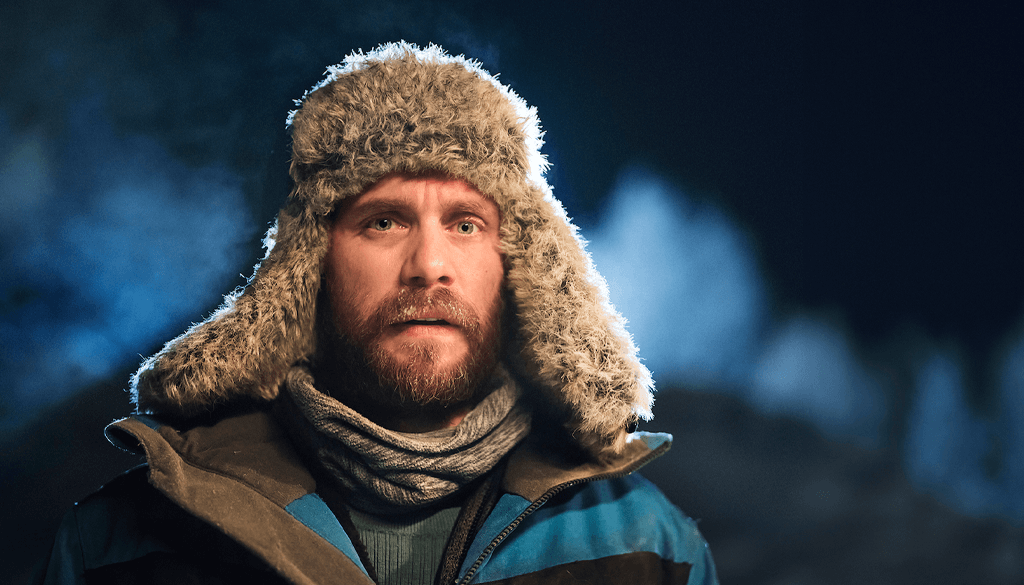

Today’s “Around the World with Netflix” outing takes us to snowy, remote region we outsiders used to call Lapland (Sápmi, is preferred by the locals), that treeline on the edge of the tundra in northern Norway, Sweden, Finland and a bit of Russia. It is the home of the Sámi peoples, traditional reindeer herders who have lived in this cold place for thousands of years.
That makes for a striking setting for “Stolen,” a seriously basic, if satisfying, thriller about the challenges this “outsider” group faces in the modern world. Adapted from a novel by Sámi journalist and novelist Ann-Helen Laestadius, it comes to the screen as a somewhat violent melodrama in the “Witness” mold.
We meet the Sámi, a tiny population clinging to an almost prehistoric lifestyle in their traditional homeland. We see the beauty of the reindeer herds, galloping through the snow, meet a family from a small village, herding them with snowmobiles and griping about “changes” in the climate that make their lives harder.
And now there’s somebody killing reindeer and burning their feed.
An enthusiastic little girl, Elsa (Risten-Alida Siri Skum) gets her first reindeer, which she names and ear-marks and whispers the traditional Sámi incantation into that ear, “I don’t own you. I only have you on loan.” But shortly after that, she sees it have its throat slit by a local goon with a grudge against the Sámi. He makes a throat-slashing gesture to Elsa to keep her mouth shut. Which she does, even when she sees this creep in the station as her father (Magnus Kuhmunen) files yet another pointless police report.
No wonder the cops won’t do anything. Anybody who isn’t Sámi resents them, their government protections, their say over what happens to “their” grazing land.
So you’ve got a misunderstood and shunned outsider culture under deadly threat from a guy cozy with the cops. And a child is the only “Witness.”
But the Laestadius novel and the film adapted from it quickly shakes off any resemblence to the 1985 Peter Weir film as Elsa grows up to become a teacher ((Elin Oskal) in the village school. With her culture and family facing even more pressures — more attacks on their herds, more threats to their land, which may have iron ore beneath it — Elsa has grown up to be outspoken, unusual for a woman in this tradiational patriarchy.
Elsa has kept her secret about the animal-torturing and butchering Robert (Martin Wallström). Speaking out, badgering the cops, with her family seeing the threat and their own people shunning her warnings about it, something’s got to give.
Continue reading
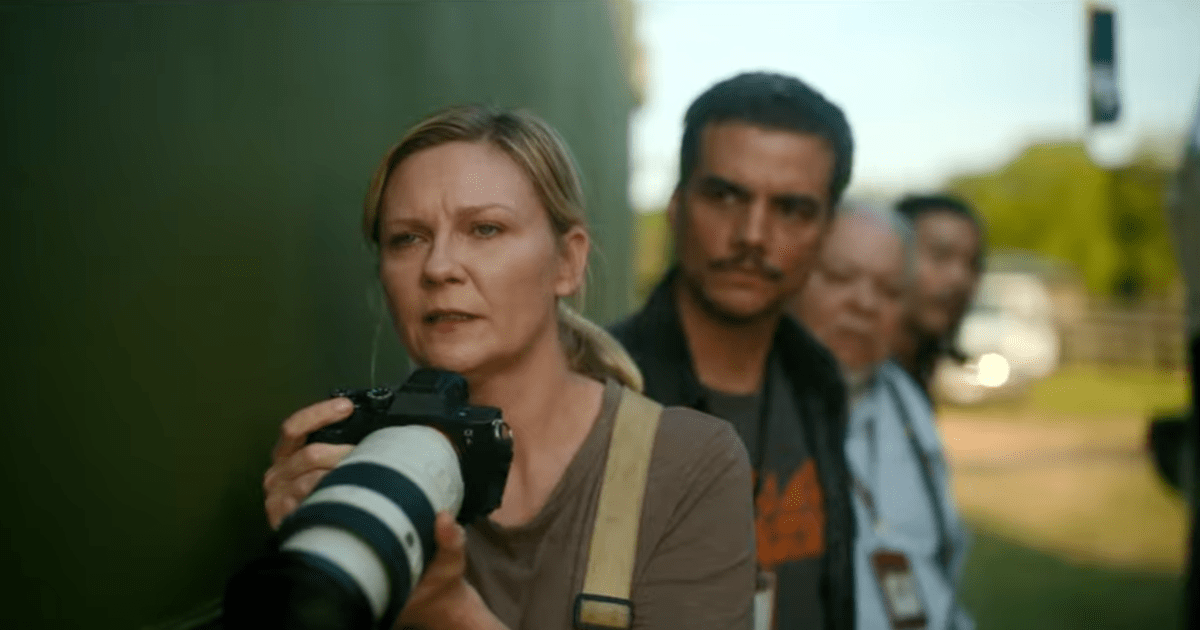


Alex Garland’s “Civil War” is brutal, unblinking and myopic, a sour taste of what a “real” civil war in the industrialized, armed-to-the-teeth United States might look like.
Garland, the thoughtful and thought-provoking auteur behind “Ex Machina,” “Annihilation” and “Men,” makes a smart and sobering political thriller that brushes past “how we got here” — because we’re seeing that literally every day in these Disunited States. He makes an attempt at playing this civil war tale as “apolitical,” but clues are there if you watch and listen.
He lightly touches on the Big Picture and instead shows us the brutality of war the way most of those caught in the middle of a conflict experience it — personal, limited to what we can see on the horizon and what we’re facing close at hand. The firefights are either just down the road, or just across the parking lot.
Nobody wants to be on the receiving end of a visit from a tank, an armored Humvee or a helicopter gunship. “Bad guys” and “good guys” fall, battle lines are blurred along with everything else shrouded in “the fog of war.” All noncombatants are, when the smoke clears, is “collateral damage.
It’s sometimes riveting, almost wrenching at others and kind of depressing. And it generally succeeds in its main mission, de-romanticizing “civil war” and “secession,” words that the glib, the rural, old-enough-to-know-better low-information voter types and their leaders throw around.
Kirsten Dunst grimly plays a veteran conflict photographer wearing the “thousand yard stare” of someone who’s seen it all, and a tad too often to let it impact her.
“Every time I survived a war zone — and got the photo — I thought I was sending a warning home. ‘Don’t DO this.’ But here we are.”
Photographer Lee works with reporter Joel (Wagner Maura of “The Gray Man” and TV’s “Narcos”), and they’re about to embark on a trip to Washington, D.C., crossing through lines where “We work for Reuters” is just another way they could get killed. It “don’t sound American.”
But that’s where they’re headed, hoping for a chance to interview and photograph the “third term” president (Nick Offerman, playing it straight) whom we’ve seen rehearsing his spin on a “great victory” announcement and the hyperbole that accompanied it.
All his talk about offering the “secession states” of the “Florida Alliance” and “Western Forces” (Texas and California) a chance to cease hostilities, we gather, was propaganda. Joel and Lee want to get to D.C. before the rebel forces close in on the United States Army and Secret Service et al defending that city and this sitting president.
We’ve seen the way these reporters and photographers hurl themselves into danger, walking into a New York riot as it begins, getting entirely too close to firefights when they break out. Lee must have some notion of the bullets that don’t have her name on them. Yellow vests and “press” helmets and passes aren’t bullet proof.
A kid (Cailee Spaeney) who calls herself 23 and could pass for 15, who shoots on celluloid film because her dad did, fangirls over Lee. But Joel is the one she talks into letting her ride along to Washington, by way of Western Pennsylvania and Charlottesville (“the front lines”). As Lee has allowed aged, hobbled New York Times reporter Stephen (the regal Stephen McKinley Henderson) to ride in their “Press” marked Ford Excursion, fair is fair.
Lee’s motherly-without-being-a-mother objections set up the back-and-forth with Jessie the kid about how hard-nosed you have to be to do this job. Heartless enough to photograph “me if I get shot,” Jessie wants to know?
In a dozen other movies, a line like that counts as foreshadowing.
On their trek they will stumble into a sniper situation, a mass grave and the scary soldiers (Jesse Plemons, aka Mr. Kirsten Dunst plays the scariest) filling it. They will banter with other press, grit their teeth over those “embedded” with one side or the other and face combat between regular and irregular forces, grimly documented by black and white still shots by our photographers.
Torture and summary executions long ago returned to warfare of the “civil war” variety. Hating “the other,” obsessing about guns, violence and the death penalty will do that to a people.
Little details enrich their odyssey. “Canadian” money is more valuable when you’re trying to score gas from assault-rifle-armed convenience store commandos. Rural folks, near and far, have found an excuse to “keep away” from all that and carry on some semblence of normal life.
Is Garland making an ironic comment on the “rural white rage” that is driving much of this Trumpist rhetoric? Big talkers want to start a civil war, and then sit it out?
Continue readingBut the discerning cinephile will want to see it in IMAX . Here we go.
Spoiler alert, it is Maria Menunos’ laugh that triggers the national rift that cannot be mended


Maybe it’s just me, but strong rhymes-with-mean/rhymes-with-lecturn energy from all the trailers for this one. Or, at least a taste of “Free Guy.”
I get wanting to do something for kids. Wasn’t “The Adam Project” enough? Or is Krasinski just making sure he gets his double decker stinker out of the way so that he can go about his business?
A fart joke in the trailer? Smells like…desperation.
Could be wrong, though. “IF” ould be The Movie of the Summer, just a hard sell, as movies about imaginary friends (the non HORROR ones anyway) are always hard to pin down.
May 17.

Making any movie is like trying to paint and write, telling a story and sending a message, on the sides, roof and undercarriage of a moving train. Once that train has left the station, you’re kind of at the mercy of a lot of things you don’t control.
That is especially true of documentaries, where a tiny crew often signs on, devotes months and even years to capturing a piece of reality and the human experience, only to have “real life” and real events just blow up around you and ruin the planned film.
I’m not sure where in the process of documenting “Beyond the Raging Sea” filmmaker Marco Orsini (“Dinner at the No-Gos,” “The Reluctant Traveler”) got involved. My guess would be well after the events chronicled here. That kind of makes his collusion in this dubious enterprise all the more contemptible.
Two entitled young, cosmopolitan Egyptians — “seven peaks” climbed, “both poles” visited “extreme adventurer” Omar Samra, and professional triathlete Omar Nour — decided to train for and join a cross-Atlantic rowing race. They didn’t know how to row, didn’t have any experience at sea or the navigation or even survival skills required for such an undertaking.
It goes about the way you’d expect.
They say, in this documentary, that they were trying to “raise awareness about the plight” of Meditteranean refugees, desperate people who pay sketchy intermediaries to get them from Africa or the Middle East on boats that no one who knows boats and who wasn’t desperate would willingly board.
I’m not sure when these “bros” made the idiotic connection of their “adventure sport” and near-helpless refugees. There is nothing about “the cause” emblazened on their 7 meter (23 foot) blue water rowboat, with its DHL, whisky and O2 logos in plain sight. Wait — there it is, in teeny-tiny letters #rowing4refugees.
In any event, in “Beyond the Raging Sea,” their assertions and the film’s third act connections to “refugee” experiences comes off as tone deaf as a lifelong con artist comparing himself to Nelson Mandela. Yes, what they experienced was perilous. But it was SPONSORED peril.
We hear other rowers talk of the team’s disastrous “practice” rows, which end in with them requiring rescue. There is no film footage of that, just of these two practice rowing on the River Nile.
Eight days into their participation in a mass Canary Islands to the Americas race, their boat capsizes, something that happens to even the most experienced who attempt something that daunting. And again they require rescue.
We hear them relating this harrowing misadventure, with the more gregarious Nour “performing” their fears and struggles, aided by a little animation to flesh out the cascading cluster-felucca of things that went wrong. And there’s some footage of their actual rescue.
But bros, seriously. Here’s how you’re different from Sudanese, Ethiopians, Syrians, Kurds or whoever fleeing conflict, climate crisis-worsened droughts and the like. There was an entire team of concerned, paid professionals tracking you, redirecting help for your rescue, welcoming your survival.
Ask anybody in a camp in Greece, Spain, Cyprus or Italy how that compares to their experience of “those in peril on the sea.” Then hang your heads in shame and flee to the safety of your Everest-climbing, Iron Man in Hawaii community.
Every non-profit trying to aid refugees is desperate for attention, funds and public empathy. But anybody tying their cause to this film should check themselves.
And everybody who made “Beyond the Raging Sea” should run from this “credit” on their resume the rest of their entitled, tone-deaf lives.

Rating: unrated
Cast: Omar Nour, Omar Samra,
Credits: Directed by Marco Orsini, scripted by Frederick L. Greene and Marco Orsini. A Cinema Libre release.
Running time: 1:10
Two couples, a “not quite right” child, and a sinister subtext. Mackenzie Davis and Scoot McNairy are the hapless pair thrown in with McAvoy and Alex West Lifler in this version of a recent Danish film (with one couple Dutch) one remembers with fondness.
Sept. 13.
Not even bothering to suggest what his latest film “might” be about. That’s reputation, for you.
June 21, we’ll find out.


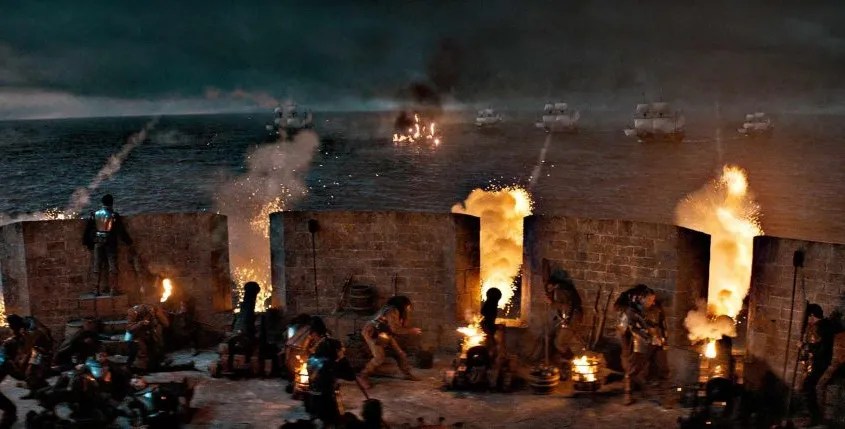
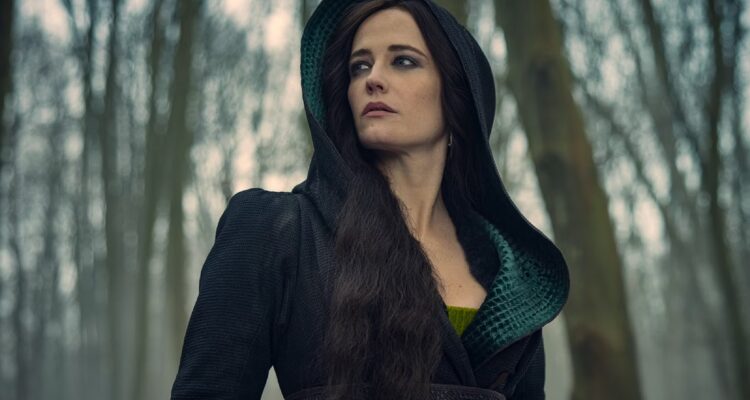
The stakes are higher, the set pieces grander and new heroes arrive, along with new villains, in “The Three Musketeers – Part II: Milady,” the second half of the sprawling, brawling and fresh French take on Alexandre Dumas’ beloved novel.
Eva Green‘s ferocious version of the spy Milady de Winter steps center stage for this film, with Cardinal Richeliue (Eric Ruf) stepping into the background as more sinister figures are introduced, all striving the topple King Louis XIII (Louis Garrel), plunge France into religious civil war and make it easy pickings for those interfering Protestants, the Brits.
It’s hard to top Faye Dunaway’s delicious turn in the Milady role in the riotously entertaining Richard Lester “Musketeers” of the ’70s, but multi-lingual Green more than holds her own in the fights, the feints and the fury of a woman on a somewhat ill-defined mission to undo so much of what the menfolk have been scheming to bring to pass.
The assassination attempt that the Musketeers foiled in the climax to “Part I” has repercussions that extend in many directions. The Queen (Vicky Krieps) and her intrigues with the Duke of Buckingham (Jacob Fortune-Lloyd) are in the clear. But others are still out there, plotting.
Young D’Artagnon (François Civil) might be engaged in the traitor-hunt thanks to his duties as a king’s musketeer. But the dastardly plotters have taken his beloved Constance (Lyna Khoudri) and made this personal. So of course brooding Athos (Vincent Cassel), dashing Aramis (Romain Duris) and burly hedonist Porthos (Pio Marmaï) are dragged in as they are separated, with all fated to meet again in a confrontation at the seaside fortress of La Rochelle.
A new count (Patrick Mille) figures in their plans.
“I am Henri de Talleyrand Perigord, Comte de Chevalier!”‘
“So many words, such a small person!”
There is no smack talk like 1627 French smack talk. And at every turn, there is Milady, slicing, stabbing, seducing and insulting.
“So handsome, and yet so stupid” (in French with English subtitles).
The swordfights are almost as furious as in the first film, just fewer in number. Her the emphasis is on set pieces, sweeping scenes of a city beseiged, a fleet engaged with a heroic artilleryman of noble birth, “Hannibal to my friends” (Ralph Amoussou) bringing a little diversity to this oft-told-tale.
Cassel and Green are the class of this cast, but there isn’t a false note acted or swashbuckled in front of the camera.
The pace is brisk enough to allow us to lose track of just who is allied with whom, and more than once. And the finale suggests that all involved don’t know when to drop the mike, take a bow and move on.
But Martin Bourboulon’s two films more than hold their own with Hollywood’s best versions of this classic cloak-and-swordplay mystery, preserving the surprises and adding a few fresh ones to iconic, noble-hearted “All for one, and one for all” heroics.

Rating: unrated, violence, seduction
Cast: François Civil, Vincent Cassel, Romain Duris, Pio Marmaï, Vicky Krieps, Louis Garrel, Lyna Khoudri, Ralph Amoussou, Eric Ruf, Marc Barbé and Eva Green.
Credits: Directed by Martin Bourboulon, scripted by Matthieu Delaporte and Alexandre de La Patellière, based on the novel by Alexandre Dumas. A Samuel Goldwyn release.
Running time: 1:53
Let’s see what all the fuss is about, wot wot?
This wasn’t previewed in my market, but truth be told I have been kind of dreading it, no matter how good and no matter what points this “future is now” dystopian thriller scores.
It’s a little close to home here in the Banana Republic.

 Movie Nation