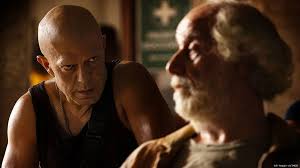


Will a third “Downton Abbey” movie give it the sendoff it deserves?

One long ago gave up any hope that Hollywood would give up any “hit” intellectual property without wringing the last drops of value out of it. But the news that there will be a third “Downton Abbey” movie, with Paul Giamatti reprising a character from the series and that Joely Richardson and Alessandro Nivola will join the cast for it, gives me an excuse to renew my plea that this worldwide phenomenon, running on setnimental fumes for its most recent big screen treatment, be given a graceful, apt and historically-defensible send-off.

“Gosford Park” screenwriter and series creator Julian Fellowes has been reluctant to take the Great House and its era towards a natural coda, which might be the lone gripe I have with this popular, populous and period-perfect highbrow soap opera.

It was never going to be “Brideshead Revisited,” because Fellowes, a terrific screenwriter, is no Evelyn Waugh. But “Brideshead” points the way for how to wrap this saga up with a fond farewell to the age of legions of lower-class Britons employed “in service” in a vast, unmanageable mansion whose inheritance, National Trust listing and tax breaks still would rarely be enough to keep it practically liveable.

“Brideshead Revisited,” based on the 1945 Waugh novel, has been filmed a few times, most famously as a 1981 TV series that became the “Downton” of its day. That story, told in flashback, used the World War II service that great house — Brideshead — as a training grounds/billeting for the British military as its framing device.

One could see the house as it once was and what it would become, nothing any one family facing progressive taxation could afford and keep up in the manner of such manors of the past, a mansion symbolic of Britain’s class-divided past and somewhat more equitable future.

Something like that was the subtext of the early run of the “Downton Abbey” TV series — World War I intruding on the stately pile and its generations of inhabitants, a property saved by the heir’s timely marriage to American money now full of people “doing our bit” for the Empire and the war effort.

World War II, its grim tests and a culture bracing for “the change” that would sweep over the British aristocracy and their estates in post-war Britain would be a great way to wrap this story up, giving the locale and its inhabitants purpose and the viewer a bit of “We’ll meet again” and “Keep Calm and Carry On” nostalgia.

Literally anything else — another story set in the ’30s, immune to the worldwide depression outside their grounds — would just be more of the same, cinematic running-in-place. And I would hope Fellowes wouldn’t want that, no matter how much Focus Features might.

Posted in Reviews, previews, profiles and movie news | Comments Off on Will a third “Downton Abbey” movie give it the sendoff it deserves?

Movie Review: Karen Allen and William Sadler star in “A Stage of Twilight”

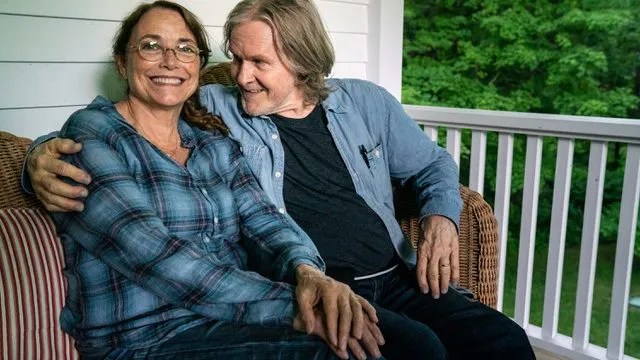
Writer-director Sarah T. Schwab’s “A Stage of Twilight” is a somber melodrama about a couple facing an end-of-life decision with despair and as much grace as either can manage, under the circumstances.

It makes a fine showcase for its venerated, venerable leads — Karen Allen and William Sadler. But the plot only escapes from the tropes of this downbeat genre by shoehorning in tropes of another as we meet a young neighbor struggling to decide his own future while coping with family responsibilities and a romantic entanglement.

Schwab never overcomes the grim seriousness implicit in the subject matter, never allows a lighter moment and never quite brings us to tears, despite Allen’s best efforts.

Allen plays Cora, a small town librarian in rural New England (New Milford, Connecticut was the filming location), a woman whom we learn aspired to more than this in the opening scene, re-shelving books.

One was a novel Cora wrote years before, and she smiles when she notes that people have been checking it out and reading it.

Husband Barry (Sadler) shows up to surprise her with an anniversary dinner. Her laments of how “old and frumpy” she looks prompt a smirk and a twinkle. But his wasting cough tells us this won’t just be about love and devotion. He quickly learns his prognosis has changed. He has three months to live.

Barry runs through a range of reactions, “toe-tagging the pipes” of their aged farmhouse so that a future plumber will be able to make speedy repairs, buying a truckload of firewood. Barry’s got in mind to take care of Cora after he’s gone. But he decides “I don’t want your last memory of me to be of some old, sick man.” He’s got a plan for that, too.

As we pick up hints of their long-ago courtship and Cora’s distress at their differing approaches to this inevitable fate, their young neighbor Jimmy (Marlon Xavier) is starting to wonder if life on dad’s dairy farm is all there is. An ag-and-tech college might be in Jimmy’s future, if his stubborn father (Alfredo Narcisco) is willing to listen to reason and his smart kid’s ideas for improving their operation.

Jimmy’s local ties include the girlfriend (Emily Kratter) who has their entire future mapped out for them. Cora, perhaps wondering about her own path not taken, passes on suggestions that remind us of what fonts of helpful information librarians often are, even if one’s high school guidance counselor is no help.

The limited scope of the drama lapses into melodrama as Barry states his dogged intentions for “the end” and Jimmy visits college and promptly finds himself a potential girlfriend with wider horizons — not much wider, as every young woman he meets seems to appreciate his prospects for inheriting a big dairy farm.

The players are fine, but the mopey pace and somewhat generic “twists” to the plot make “A Stage of Twilight” — whose title promises a literariness the script never lives up to — something of a well-intentioned slog.

Rating: unrated, sex, fisticuffs

Cast: Karen Allen, William Sadler, Marlon Xavier, Emily Kratter, Alexander Flores and Alfredo Narcisco.

Credits: Scripted and directed by Sarah T. Schwab. A Cardinal Flix release on Amazon

Running time: 1:47

Posted in Reviews, previews, profiles and movie news | Comments Off on Movie Review: Karen Allen and William Sadler star in “A Stage of Twilight”

Movie Preview: Alicia Vikander is a lesser-known wife of Henry VIII (Jude Law) — “Firebrand”

Vikander plays the last and perhaps toughest of the Six Wives of Henry XIII, Kateryn (Catherine) Parr, the one who tempted fate and stood up to the murderous monarch and lived to tell the tale.

This summer release is from the director of “Invisible Life” and “Mariner of the Mountains.”

Posted in Reviews, previews, profiles and movie news | Comments Off on Movie Preview: Alicia Vikander is a lesser-known wife of Henry VIII (Jude Law) — “Firebrand”

Movie Preview: Mel Gibson works again, as does 50 Cent, in the “Boneyard”

Brian Van Holt also stars in this serial killer thriller. The serial killer might be a “cop?”

“The Bone Collector,” they call the man they’re hunting.

Gibson plays an FBI Agent/profiler, Curtis Jackson a police chief. This Lionsgate release drops July 5.

Posted in Reviews, previews, profiles and movie news | Comments Off on Movie Preview: Mel Gibson works again, as does 50 Cent, in the “Boneyard”

Movie Preview: A problem child, a problematic tuned-out Dad, connected by “Ghostlight” and the Theatre

Theater actor Keith Kupferer and daughter Katherine Mallen Kupferer star in this dramedy about what it takes to create a problem child, and how acting can connect even people who have trouble remembering their lines to their feelings.

June 14, this IFC festival darling comes to theaters.

Posted in Reviews, previews, profiles and movie news | Comments Off on Movie Preview: A problem child, a problematic tuned-out Dad, connected by “Ghostlight” and the Theatre

Roger Corman, 1926-2024 — A film life worth Celebrating

Maverick movie maker, indie icon, “Pope of Pop Cinema,” sponsor of the careers of the great and near great, Roger Corman made a singular mark on the movies over a career that spanned half a century.

Directors Demme and Coppola and Ron Howard  and others got their start making movies the Corman way — fast and fun and furious and cheap. Actors such as Jack Nicholson got their foot in the filmmaking door on Corman sets.

Just last week I reviewed “Machine Gun Kelly,” a breakthrough film for the director, producer and impresario, and for actor Charles Bronson. It crackles with energy and plays as if it was shot in ten days. Which it was.

That’s the best way to remember him today, watching one of his gangster movies, his monster pics, his beloved Edgar Allan Poe adaptations.

Got to Tubi or YouTube or Amazon and watch one. They’re all over the free streamers.

He led a life and had a career worth celebrating, and that’s a way to celebrate it.

Posted in Reviews, previews, profiles and movie news | Comments Off on Roger Corman, 1926-2024 — A film life worth Celebrating

Classic Film Review: Nicholson, Dern and Burstyn poke at the corpse of Atlantic City — “The King of Marvin Gardens” (1972)

Long before its gambling revival and later slow return to decay, long before Louis Malle’s 1980 drama “Atlantic City,” the historic but forlorn resort city had been emblematic of American ennui, a place of elegaic, baroque nostalgia and decline.

The boardwalk beachside town, immortalized on the board game “Monopoly,” is a most evocative setting for director Bob Rafelson’s “The King of Marvin Gardens,” another of his classic collaborations (“Five Easy Pieces,” “The Postman Always Rings Twice”) with his muse, Jack Nicholson.

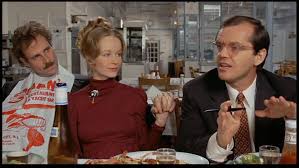
It’s an essay in excess, depression and delusions, capturing an America that had turned the corner on Vietnam as it braced for the Watergate scandal to come. Downbeat, droll and thought-provoking, it lets Nicholson play the quiet, brooding and long-suffering intellectual younger brother to a mercurial hustler sibling, Jason (Bruce Dern).

Many of this classic film’s pleasures derive from this mismatch, Nicholson maintaining his “Five Easy Pieces” cool, Dern at his most bug-eyed, pattering “Great Gatsby” manic.

Nicholson is a Philadelphia radio host from the golden age of radio monologuists. He’s a considered, self-confessional storyteller — Jean Shepherd or Garrison Keillor without the laughs. He still lives with a grandfather (Charles LaVine) who mocks the stories he hears grandson David weave on the FM airwaves, with the story David is telling that opens the film a possible whopper about granddad and his two grandsons’ conspiring to let him choke on a fishbone.

There’s a message, a summons from Jason down Atlantic City way. “Get your ass down here fast! Our kingdom has come!”

David gets off the train, greeted by a fading beauty queen (Ellen Burstyn) in a “Welcome to Atlantic City” costume, accompanied by a decrepit five piece brass band.

Jason, it turns out, is in jail.

Dern devours the screen, shouting-down fellow inmates in the holding cell, bowling-over the viewer with his energy, his protests of “a misunderstanding” and that he can get this fellow “Louis” to make this all go away.

David? He’s got the resigned silence of the sibling who’s heard all this before.

“I love all the hustle around here,” Jason bellows. It’s out in the open!”

His latest scheme involves a developable island off the coast of Honolulu, some potential Japanese backers, and that mysterious “Louis,” whom David can never seem to track down.

Sally (Burstyn) is Jason’s paramour, staying in their pick of the aging, elegant and almost empty hotels of a tourist trap that’s trapped-out — we only ever see small clusters of little old ladies visiting — and off-season, to boot.

Beach towns in winter are always great settings, “Marvin Gardens” to “Ruby in Paradise” and beyond.

Sally’s aged out of her dream — kind of. Now she’s raised Jessica (Julia Anne Robinson) to be her next shot at Miss America.

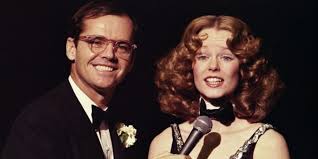
In one bitterly funny scene, we get a taste of Sally’s “talent” as she plays the world’s largest organ in Atlantic City’s vast, pageant-friendly but empty “Boardwalk Hall” as David MC’s a fake beauty contest and Jessica tapdances to an older-than-old Irving Berlin number, “Steppin’ Out With My Baby.”

“I wish you didn’t think I was a part of all this,” she tells David. But she is, along with dizzy, desperate and short-tempered Sally, the antic Jason and everyone Jason can lure into his orbit.

David’s got a secret. And an obligation to try and help his brother, who can’t be satisfied with just deluding himself. Others have to believe, buy in and sign on. Maybe this time, his ship will really come in.

Nicholson’s the great reactor, here, unblinking at Dern’s boisterous sales pitches, tirades, threats and plots. Burstyn is an open wound, a victim of a faithless lover who is more interested in Jessica, a dreamer who has hitched her wagon to that last fellow dreamer to give her a second look.

The script suggests an ever-shrinking city and circle of hustles and hustlers — trading, making deals on faded hotels and attractions, or claiming that deals have already been made. The “Monopoly” allegory is pretty obvious, suggesting that it takes optimisim and chutzpah to play the game and win.

David? “He’s got only one thing,” Sally declares, ticking off that “one thing” on her fingers. “That’s depression, suspicion, and mistrust.”

Nicholson’s future “The Shining” co-star Scatman Crothers is impressive as maybe the one hustler/real-estate shuffler in town still drawing a crowd — to a strip club, back room gambling (pre-casinos) and who knows what else.

Rafelson, Nicholson’s pal and collaborater since The Monkees movie “Head,” wasn’t shy about laying on the surreal, from the daft “Welcome” ceremony for David at the train station to the faux pagaent to a random, wintry morning’s horseback ride on the beach as workmen labor over restoring the planks on the vast Boardwalk that made the city, and the board game, famous.

Rafelson is a big reason we say “They don’t make movies like this any more” and “The ’70s were the greatest decade in American cinema.”

“The King of Marvin Gardens” is quirky, downbeat and allegorical, a challenging film that unfolds with the patience of David’s opening (and interrupted) six minute monologue about himself, his brother, their grandfather and fishbones.

Its genre-defying oddness makes “Marvin Gardens” a stand-out credit in every career that participated in it. Bursytn’s run during this time included the even more nostalgic “The Last Picture Show” and the blockbuster, “The Exorcist.”

And Nicholson, the actor and secret screen-rewriter and scene-polisher, is a bespectacled wonder here, giving us no hint of the larger than life figure he hinted at in “Easy Rider” and eschewed in “Five Easy Pieces” and even “Chinatown.” The early ’70s were where he figured out he could make a big impact by underplaying.

The giant personality who would almost everywhelm in films from “One Flew Over the Cuckoo’s Nest” to “Terms of Endearment” and “The Departed” and “As Good as it Gets” would become a screen icon, but the actor who could make us come to him in “Five Easy Pieces,” “About Schmidt” and “Reds” was always there, as well.

As edgy and understated as “Five Easy Pieces” was, “The King of Marvin Gardens” comes off as even stranger with the passage of time. And as the years and fads and business cycles pass, the Atlantic City seen here loom even larger in the memory, a pre-bankrupt casinos wonderland before the post-Trump wasteland it became.

Rating: R, violence, nudity

Cast: Jack Nicholson, Bruce Dern, Ellen Burstyn, Julia Anne Robinson and Scatman Crothers.

Credits: Directed by Bob Rafelson, scripted by Jacob Brackman. A Columbia release on Tubi, Amazon, etc.

Running time: 1:43

Posted in Reviews, previews, profiles and movie news | 1 Comment

Netflixable? “The Courier” Glibly Skips by a Scandal for a tale of High End Spanish Money-Laundering

Slick, sex-uped and maddeningly-shallow, “The Courier” is another variation on the “get rich quick via money-laundering” formula based on real events that roiled Europe and Spain in the early 2000s.

We learn precious little about the backers, reasons (real estate hustles, much of it financed by China) and economic perils of off-the-books cash-shuffling, because Daniel Calparsoso’s film — “The Warning” was his — is always in a mad rush to take us to the next night of clubbing with cocaine, the next posh sports car roll up (Porshes, Audis and AMGs) or the next sexual romp involving our anti-hero, Iván Márquez (Arón Piper), just another striver from Vallecas, a lowly parking valet who angles his way into the world of high rollers.

“El Correo/The Courier” tracks Iván’s abrupt introduction to this world and sudden rise in it without really getting into “details.”

The story is framed, as such tales inevitably are, within his downfall — showing up in a shipping container full of Euros.

Fast motion travel montages cover a lot of ground in those sports cars. And as he remembers his origins, we see Iván take up with the wife of one “financier (Laura Sepul) and the daughter (María Pedraza) of another (Spanish star Luis Tosar), and take on a bit of muscle (Nourdin Batan) as a “partner,” Piper voice-over narrates his character’s every inane thought.

“You know that one moment in life that can change everything…I was never the brightest kid in class” carries no more meaning in Spanish than it does dubbed into English.

The movie’s history, chronicling rapid development in the Spain of the 2000s, ending with Spain slumping back into the 20% unemployment that predated this “boom,” is disengenuous at best and barely sketched-in, mainly over the closing credits.

The settings have the sheen of affluence, the hedonistic sex of the very expensive underwear set and the world depicted is barely shown in a surface gloss. We know as little about our “forget his family/neglect his failed but righeous father” anti-hero at the end as we did at the beginning.

The more voice-over narration that winds through the soundtrack, the more I hated this facile, lazy exercise in excess.

Rating: TV-MA, some violence, sex, drugs, nudity, profanity

Cast: Arón Piper, María Pedraza, Laura Sepul, Nourdin Batan and Luis Tosar

Credits: Directed by Daniel Calparsoro, scripted by Patxi Amezcua and Alejo Flah. A Universal release on Netflix.

Running time: 1:39

Posted in Reviews, previews, profiles and movie news | Comments Off on Netflixable? “The Courier” Glibly Skips by a Scandal for a tale of High End Spanish Money-Laundering

BOX OFFICE: “Apes” Rule, “Fall Guy” falls off, “Challengers” hang around

The lesson for Universal Studios could not be more stark.

Twentieth Century (Disney) makes bank, yet again, with the middling, pointless and CGI-dominated tenth movie in the ever-rebooted/even-became-a-TV-series “Planet of the Apes” franchise. While “The Fall Guy,” a funny, well-cast but not quite all it could be action comedy based on a 40 year old TV series underperforms its way to red ink.

Universal needs to make a “Fall Guy” sequel for 2026, just to get its money’s worth out the idea and the investment. Audiences plainly only show up in droves for not just the familiar — Lee Majors and one of the ’80s Heathers starred in the TV series, after all — but the wearily over-familiar -+ sequels.

That’s what we can take away from the big Wed. “fan preview,” double the “Fall Guy” Thursday “preview” and big Friday for “Kingdom of the Planet of the Apes.” A $22 million opening day, with $1.6 of that “premium” cash from select locations on Wed. and over $5 more of it from Thursday night showings, puts this fourth film in the CGI-revived Apes operation on track to pull in $56 million this weekend. “Fall Guy” managed only half of that.

“The Fall Guy” is drawing half as many people as its opening weekend, and is on tap to sell another $13.7 million in tickets. It will clear the $50 million mark by midnight Sunday, but won’t come close to breaking even before it loses most of its screens to other summer fare.

Amazon’s much cheaper Zendaya star vehicle Challengers” is still doing well, another $4.6 million which should get it over the $40 million mark by mid-week next week.

“Tarot,” the latest underperforming horror tale to come down the pike, will clear another $3.3

And the OTHER CGI ape movie that audiences can’t seem to get enough of, “Godzilla x Kong,” might stick around long enough to clear the $200 million mark. Another $3 million keeps it in the top five.

Universal has released a good, original action film — “Monkey Man” –– and a very entertaining action comedy “The Fall Guy” and seen both flame-out against two different movies starring CGI apes this spring.

One weeps for what the masses are spending their movie ticket money on these days.

UPDATED: The final word from @boxofficepro

Posted in Reviews, previews, profiles and movie news | Comments Off on BOX OFFICE: “Apes” Rule, “Fall Guy” falls off, “Challengers” hang around

Classic Film Review: British Marriages Never Looked the Same after “A Kind of Loving” (1962)

One of the hallmarks of a classic film is the way it impacted the cinema of its day and all the movies on its subject that followed.

“Citizen Kane” changed the movies. “Stagecoach” became the benchmark of Westerns. And marriage, generally depicted in broad strokes — either sunny or dark — became something a lot more complicated to consider after the British “kitchen sink realism” of “A Kind of Loving” in 1962.

Based on a realistic novel by Stan Barstow, perhaps only a closted gay filmmaker in a country where homosexuality was still illegal, and a Jew in a culture still noted for its antisemitism, could have treated this subject with the sort of cynical, jaded beauty that the great John Schlesinger brought to it.

Schlesinger’s debut feature — he’d go on to make “Darling,” “Midnight Cowboy” and much later “Pacific Heights,” where I had the pleasure of interviewing him — was photographed by Denys Coop. Coop’s work on “Look Back in Anger,” “This Sporting Life,” and Schlesinger’s “A Kind of Living” and “Billy Liar” helped define an era in British film.

They moved domestic drama out of London, off of soundstages and into the stark, industrial north. Manchester and environs were the settings for its street and park life, with Fylde and Blackpool serving as the very place a working class bloke with “a white collar job” would take his bride on a honeymoon — the overcast and rocky British version of Atlantic City.

Alan Bates, very early in his run as one of the great leading men of his day, stars as Vic Brown, that “white collar” draftsman with a good job and “security” at a large, reputable firm.

But “security” isn’t on his mind, even on his beloved older sister’s (Pat Keen) wedding day. This opening scene lets us see a rowhouse (“semi-detached”) working class neighborhood dominated by its ancient church. But while the entrance of that church is where everybody is posed for wedding day photos, Schlesinger makes of point of letting all that business serve as the backdrop for the opening credits.

None of this “holy matrimony” and “sanctity of marriage” sentimentality will do. The world had already moved on from that. Now it was time for the movies to do the same.

Vic is ambitious enough to take his job seriously, outgoing enough to be “one of the lads” up for “pub crawling” after “the (soccer) match,” quick to share the latest nudie mag from France among the lot.

Vic has noticed the pretty and proper Ingrid (newcomer June Ritchie) around the office. He pines for her, stalks her to ride the same bus, and eventually fakes a “left my money at the office” excuse to get her to lend him ticket change just to start a conversation.

Among the piggish louts in his all-male department, she’s got a nickname — “the praying mantis.” Their distinction between “tarts” and “when it comes to marrying a bird, you want something else” has rubbed off on Vic. Ingrid, younger but from a more management class family, might be the one for him.

“A Kind of Loving” sets in motion what we’d now see as a most conventional screen “romance.” She’s falling in love. He might be, but his libido takes precedence. The on-and-off nature of the affair — movie dates, necking in the park, followed by an early ’60s version of “ghosting” — patiently plays out for the entire middle hour of the movie.

And then, also daring for its time, she lets him know that she’s “late.” Their affair becomes a marriage, one that might be dictated by tradition, doing “the honorable thing” and family pressure, which could also be their undoing.

Bates, a beautiful and magnificently “real” screen presence in his heyday, lets us see the confusion and calculations in Vic, handsome but too naive to be a playboy or rake, too upstanding to not do the right thing, too fragile to endure the abuse of his not-working-class mother-in-law (Thora Bird, infuriating).

She is “enough to make a bloody vicar swear,” she is. But will Ingrid see that? Will his own family?

“A Kind of Loving” was the first British film to show a flash of skin, “daring” in its “shut your cakehole” and “bloody” this and that (mild) profanity and as frank as any English speaking movie of its day about sex. One is always “careful,” but Vic chickens out and buys booze at the chemists (pharmacy) when our lad went in to buy condoms, young lovers face the dilemma of “We mustn’t” when their hormones are insisting “We must.”

Easy “divorce” is introduced, and seen for the cliche it was to become. An old mate of Vic’s admits he’s had one, and shows off the 1935 MG-PA he bought to celebrate.

“A Kind of Loving” is the sort of revolutionary classic that reminds us how hard it is to see the revolution, as it happened, from a distance. Watch the chaste romances of the mid-50s, and then catch “The Entertainer,” “The Apartment” or “This Sporting Life” and this film. A generational sea change was happening, and the plays and movies that came along were merely following it and documenting the New Normal.

The perilous war years and the lean decade and a half that followed were turning into “The Swinging Sixties,” where marriage and “love” itself were being redefined by simply taking off the rose colored glasses and seeing romance and marriage for “A Kind of Loving.”

And in this Bates, Schlesinger and Ritchie masterpiece, scripted by Schlesinger collaborators Willis Hall and Keith Waterhouse and lit and photographed by Denys Cooper, we have a gorgeous artifact of that — a patient, carefully-observed and sensitively- portrayed snapshot of a generation, culture and society shedding one value system and taking a hard look at a new one.

Rating: TV-PG, nudity, adult themes

Cast: Alan Bates, June Ritchie, Bert Palmer and Thora Bird

Credits: Directed by John Schlesinger, scripted by Willis Hall and Keith Waterhouse, based on a novel by Stan Barstow. An Anglo-Amalgamated Film now streaming on Tubi, et al.

Running time: 1:53

Posted in Reviews, previews, profiles and movie news | Comments Off on Classic Film Review: British Marriages Never Looked the Same after “A Kind of Loving” (1962)