Movie Review: Iain Glen is a Flanders Farmer Facing Down the Huns in WWI — “The Last Front”

The German army earned its nickname “bloody Huns” in the opening weeks of World War I. Their atrocities — slaughtering civilians, razing villages and towns — in 1914 Flanders and Wallonia instantly marked them as new barbarians, modern Huns, and that stain lasted through two world wars.

“The Last Front” is a sturdy, sentimental, WWI story of a Flanders town in those early weeks.

A farmer sees his son and daughter shot down by invaders led by a drunken sociopath whose commanding officer indulges his blood lust, with only the mildest of reproaches.That commanding officer is the German lieutenant’s father.

No, it’s not a subtle film. Nor were the Germans, it’s worth remembering. But it’s handsomely mounted and well-acted, and reaches a fine if far-fetched action climax. Not that the climax is the first time we’ve thought “Well, this is a bit much.”

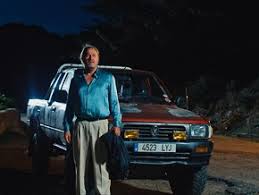
Iain Glen of “Game of Thrones” and “Operation Napoleon” is our hero farmer, Leonard, a man of the land still haunted by memories of his late wife, trying to keep their blond Adonis son Adrien (James Downie) from marrying above his station, as he did.

The fetching doctor’s daughter Louise (Sasha Luss) makes that quite the challenge. Fortunately, Leonard can count on younger daughter Joanna (Emma Dupont) to reveal how serious they are.

“If you love her you’ll let her go.”

But all that, and Louise’s family’s (Koen De Bouw, Caroline Stas) disapproval, tumbles into insignificance when the Germans pour into neutral Belgium as part of the Schlieffen Plan to flank the French and British and knock them out at the start of hostilities.

Among the “women and children” murderers, Lt. Laurentz Von Rauch (Joe Anderson of TV’s “Hannibal”) has to be one of the worst. A hot-tempered drunk, he initiates reprisals for every man in his company killed, often pulling the luger trigger himself.

He’s allowed to do this by his slow-to-act baronial commanding officer (Philippe Brenninkmeyer), the only father in the German army to let his son point his pistol at him during his drunken tirades.

Time and again we hear the baron make this or that threat, and never rein in the son who keeps insisting “I am NOT a monster!” The dead give-away that the son is a monster is his protest that he isn’t.

Every encounter with a Belgian is fraught with lots of luger-waving menace, none of it restrained by Kapitan Dad. That’s how the occupation of Leonard’s farm goes wrong. Laurenz seizes the younger daughter, the son fights him over this and both of Leonard’s children get shot.

It’s to first time feature director and co-writer Julien Hayet-Kerknawi’s credit that as much as his film depends on archetypes and a simple “revenge” plot, he doesn’t let it be limited by either of those. Leonard is more distraught than consumed with rage. He’s not a superhero, a super soldier or even a farmer with “special skills.” He’s not a particularly good shot, for instance.

But when the village priest (David Calder) entrusts Leonard with getting the townspeople across the French border, he must act. And as he does, vengeance enters into the story. And how.

The villainy here may be historically defensible, but that doesn’t mean it isn’t cinematically over-the-top. If our villain bothered to shave, he’d be pretty much twirling his mustache between deranged slaughters.

There are entirely too many pauses for poetic reveries for the picture to have the pace it needs. This was a chaotic, panic-stricken place and time, with the Germans in a rush to win the war before anybody gave a thought to digging a trench, the Belgians fighting back, the Allies struggling to respond to this mortal threat on their left flank and helpless civilians trapped in the middle.

The Germans become obsessed with “The Resistance,” as if they’re thinking one war ahead (nobody would have been using that term in the late summer of 1914).

And every time Father Von Rauch fails to stop his psychotic son, I was almost taken out of the picture.

But Glen is a magnificent presence who holds the melodramatic elements together, no matter how far-fetched they get. Anderson is perfectly loathsome as his opposite number, and the mad scramble of the action scenes work.

If you’re one of those film fans who will watch any movie about The Great War you’ll probably be more forgiving of “The Last Front,” which takes its title from a cumbersome aphorism about civilians in a war zone. But if you’re not and you roll your eyes at it, no one should argue that you have a point.

Rating: unrated, graphic violence, some profanity

Cast: Iain Glen, Sasha Luss, Joe Anderson, Philippe Brenninkmeyer, Koen De Bouw
Leander Vyvey, David Calder and James Downie

Credits: Directed by Julien Hayet-Kerknawi, scripted by Julien Hayet-Kerknawi and Kate Wood. An Enigma release.

Running time: 1:38

Posted in Reviews, previews, profiles and movie news | Comments Off on Movie Review: Iain Glen is a Flanders Farmer Facing Down the Huns in WWI — “The Last Front”

Movie Preview: Saoirse is an Orkney Islands native struggling with substance abuse — “The Outrun”

This Nora Fingscheidt film is based on Amy Lipsot’s poetic coming-through-the-other-side memoir.

Awards season, here we come!

Posted in Reviews, previews, profiles and movie news | Comments Off on Movie Preview: Saoirse is an Orkney Islands native struggling with substance abuse — “The Outrun”

Classic Film Review: Delon and Melville serve up the Quintessential Hit-Man thriller — “Le Samouraï” (1967)

Le samouraï” (1967) is rightly regarded as the hit-man movie, the one which most modern thrillers in this lone-gunman genre spin out of.

It’s got a handsome solitary “Killer,” living in a non-descript apartment with only a pet bullfinch (not a houseplant), getting his contracts through shady third parties, dependent on that one guy who can provide him with fresh license plates and registration for all the Citroens he steals, and a revolver when he asks for it.

John Woo, David Fincher, Walter Hill, Luc Besson, Nicolas Winding Refn and Quentin Tarantino have borrowed elements of this film to formulate a cinematic cliche — the loner who makes his (or her, “La Femme Nikita”) living by clocking in and killing targets for cash.

The movie that inspired this romantization of professional murderers is a spare, suspenseful thriller that parks handsome Alain Delon in the title role, a 30ish shooter so meticulous in his preparations that he cooks up not one alibi for “the night of,” but two. He’s expecting to get caught and he wants to be ready for the inevitability of the French police commissioner (François Périer) and his “routine roundup” of all Paris’s usual “suspects” — some 400 in number, in this case.

Delon’s Jef Costello uses his killer looks to score one alibi (played by Nathalie Delon, his then-wife) and his underworld savvy (a mob poker game) for the other.

He carries a vast collection of keys sure to fit whatever Citroën DS he comes upon along the street. He swipes one, drives it to an open, unmarked garage where no words are necessary for the fixer (André Salgues) to change the plates and registration, and surrender Costello’s pistol of choice — a revolver — for the night’s work.

But hitting the owner of a posh club in the middle of a busy night, even in a trenchcoat with the collar turned up and a fedora pulled down over his eyes, doesn’t seem smart. It’s as if our killer wants to be picked-up, as if he relishes the ritual of the ’60s French version of a police line-up.

The star piano player (Cathy Rosier) in the nightclub “made” him. The uniformed barman (Robert Favart) and others got a damned good look, too.

With no anonymity in the “Can you identify the man” process, virtually everyone involved is “uncertain” that Jef was the shooter. And he’s got those alibis. So he walks.

As is the way of such tales, his “payoff” turns into a double-cross. Now Jef must elude not just the police, who tail him and bug his flat, but the monied heavies who turned on him when he got arrested.

The film’s tone is set by a ten minute prologue in which no words are spoken, a touch borrowed by almost every filmmaker who sets out to do a film in this genre and understands the point of that tribute.

There’s a steely fatalism to Delon’s performance that sells this picture and made the character iconic. But no, he and writer-director Jean-Pierre Melville (“Bob le Flambeur,” “Army of Shadows”) didn’t invent any of this out of whole cloth.

When you look at Delon’s distinctive costume for the film– suit, fedora hat and trenchcoat — the cinephile can’t help but see the handsome Frenchman as cosplaying Alan Ladd in “This Gun for Hire (1942).” That is true urtext for this genre, whose hired assassin anti-hero can be traced back not just to American Westerns, but to Japanese samurai stories — as Melville argues — and tales of Chinese swords-for-hire.

The creepy touch Melville liked to give his killers — white cloth (film editor’s) gloves — seems ahead of its time, now.

The moral ambiguity of much of Melville’s underworld cinema is biographically traced back to his time with the French Resistance during World War II. He relived that experience through the film that followed this one, “Army of Shadows.”

Like many movie-mad members of his generation, after the war he was crazy about all things American — films, filmmakers and film genres. He was leaning into “This Gun for Hire” on purpose, just as he gave the hit-man’s would-be killer a Cadillac for a getaway car. You didn’t see many Yank tanks that size in the narrow streets of 1960s Europe.

Even given the picture’s stand-out attributes, I think “Le samouraï” is best appreciated today as a reset and relaunch of the genre. There have been better “lose your tail” chases, more colorful killers and grimmer final showdowns in the half century since this came out.

Melville’s films didn’t often get U.S. distribution, and this one arrived five years later, dubbed. But when it showed up you know Hollywood filmmakers and aspiring filmmakers took it in. The homages started in the ’70s and continue to this day.

It wasn’t just Luc Besson who’d make a name imitating Melville’s “cool” spin on familiar archetypes, even if nobody else was bold enough to dress their killers like Alan Ladd. To truly reinvent the genre Melville reinvented, you’d have to show us a “real life” hitman’s personality, world and crimes. Only “The Iceman” had the nerve to do that.

Rating: TV-MA

Cast: Alain Delon, François Périer, Nathalie Delon, Cathy Rosier and André Salgues

Credits: Scripted and directed by Jean-Pierre Melville and Georges Pelligrin. An S.N. Prodis/Sima release on Tubi, Amazon, etc.

Running time: 1:41

Posted in Reviews, previews, profiles and movie news | Comments Off on Classic Film Review: Delon and Melville serve up the Quintessential Hit-Man thriller — “Le Samouraï” (1967)

Movie Preview: The horrors that wash ashore with a “special child” on “The King Tide”

Frances Fisher is the big name in the cast of this “island girl with powers” thriller. Clayne Crawford and Michael Greyeyes also star.

Not sure of the streaming/theatrical date, but Vertical Releasing has this one.

Posted in Reviews, previews, profiles and movie news | Comments Off on Movie Preview: The horrors that wash ashore with a “special child” on “The King Tide”

Movie Preview: Mercedes Ruehl goes viral in “The Nana Project”

This cute old coot comedy stars an Oscar winner. Not that this incompetent trailer tells us that.

It opens Sept. 10. Not that this incompetent trailer tells us that.

It’s from Gravitas Ventures. At least they own that and got that “marketing information” into their otherwise utterly incompetent trailer.

Posted in Reviews, previews, profiles and movie news | Comments Off on Movie Preview: Mercedes Ruehl goes viral in “The Nana Project”

Movie Preview: Zoë Kravitz directs this last pre-release peek at Channing Tatum at his creepiest — “Blink Twice”

Naomie Ackie, Kyle MacLachlan, Haley Joel Osment and Alia Shawkat also star in this “billionaire’s island” nightmare from actress turned writer-director Zoë K.

August 23.

Posted in Reviews, previews, profiles and movie news | Comments Off on Movie Preview: Zoë Kravitz directs this last pre-release peek at Channing Tatum at his creepiest — “Blink Twice”

Netflixable? A Shakespearean spin on Nigerian history — “House of Ga’a”

“House of Ga’a” is a sweeping historical epic from Nigeria, a tale of backstabbing and poisoning intrigues, lust, brutality and greed set just before the events depicted in the West Africa of “The Woman King.”

There’s a universality to this story of power, how to get it and how to murder and rape your way out of it, summoning up memories of “Macbeth,” “Romeo and Juliet” and other works from Western theater, literature and history.

Battle scenes, cities and palaces of the Oyo Empire and its rivals are recreated in this story of of the rise and fall of Bashuron (prime minister/warlord) Ga’a, played by Femi Branch (“Unknown Soja”) in the latest film by the director of “Man of God,” Bolanle Austen-Peters.

Unfortunately, it’s a movie whose ambition is somewhat undone by a general ham-fisted approach to the situations, characters, dialogue and plot. And this Nigerian “Nollywood” saga is badly battered by one of the worst dialogue dubbing jobs I’ve seen since the death of Bruce Lee.

We meet the patriarch of the House of Ga’a after a great victory on the battlefield against one of the Oyo Empire’s Muslim rivals. His generals, sons and lieutenants praise his leadership and marvel at how the ruling council of the Alaafin (king) will react to his inspired use of infantry and cavalry. But Ga’a cuts them off by asserting that he and he alone with “report” this.

The story is narrated in voice-over by youngest son Oyemekun (Mike Afolarin), who is more of a lover than a warrior. Princess Agbonyin (Bridget Nkem), “the most beautiful woman in the kingdom,” is his great love. But their fates fall to the whims of the Bashuron, who sends Oye to Dahomey where a warrior woman will train him in the martial arts.

When we see Ga’a take a defeated and beheaded king’s youngest bride (Tosin Adeyemi) as his slave/concubine, we fear the worst.

When she rebuffs him with the assertion that her body will serve his desires, but “If you want my heart, you will have to earn it,” we know we’re slipping into clumsy soap operatic situations, scenes and dialogue.

Through the ups and downs of his rise to authoritarian, “king-maker/king breaker” power, we hear clunky lines like “I am disgraced, I am DISGRACED” repeated half a dozen times, as if we don’t roll our eyes at the first utterance.

Bashuron’s wives rebel at his new slave-girl “concubine,” and conspire to burn her as a witch. His sons do whatever he commands, but assorted kings and officials (there are many, and they’re maddening to keep straight) tremble at his wrath and ponder ways out from under his blood-stained thumb.

The most interesting character in all this might be the shaman/witch doctor Sasa (Ibrahim Chatta), a counselor and co-conspirator who purports to have supernatural powers over Ga’a’s health and events the two of them set in motion.

“Death is superior to sickness,” Sasa asserts. “A thief is superior to a witch! All a witch has a thief be able to steal!”

“House of Ga’a” is at its best in action, as the fight choreography is good and the pacing is sharpest. When we settle on palace intrigues, the picture slows to the point of being static with interiors, infighting and betrayals of the sort one sees in soap operas the world over, even those set in pre-colonial West Africa.

Rating: TV-MA, graphic violence, sex, nudity

Cast: Femi Branch, Mike Afolarin, Funke Akindele, Tosin Adeyemi, Femi Adebayo Bridget Nkem and Ibrahim Chatta

Credits: Directed by Bolanle Austen-Peters, scripted by Tunde Babalola. A Netflix release.

Running time: 2:00

Posted in Reviews, previews, profiles and movie news | Comments Off on Netflixable? A Shakespearean spin on Nigerian history — “House of Ga’a”

Movie Review: An Elegy to Age, Memory and Regret — “Great Absence”

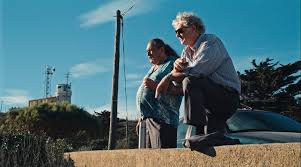
“Great Absence,” the festival-feted “breakout film” of director and co-writer Kei Chika-ura, is a somber, obscure mystery about memory, regret and entropy. It’s centered on a son trying to learn what his long-estranged father was really like before dementia took hold.

But the director of the engrossing, culture-dissecting “Complicity” makes his subtext Japanese culture itself — with an ageing populace, rigid social codes and adult children at a loss to understand how it call came undone in a single generation.

It opens with a SWAT team swarming around a tidy condo. An old man (Tasuya Fuji, who came to fame in 1976 with “In the Realm of the Senses”) opens the door, dressed and carrying his valise, seemingly resigned to his fate.

His son Takashi, played by Mirai Moriyama (“We Couldn’t Become Adults”) is an actor rehearsing a new multimedia play. He and wife Yuki (Yôko Maki of “After the Storm”) cross the country to deal with a social services review board planning the retired college professor’s care, and meet with the father who left his family, remarried and had little to do with the kid he nicknamed “Takkun” afterwards.

Our first impressions of Yohji Toyama (Fuji) aren’t pleasant. He’s bullying, brusque and “callous” his son admits. And he’s forgetting things, mixing-up facts. Rehearsals take a back seat as Takashi digs into the mystery that this man was and is.

His second wife, Naomi? He did marry her, right? Where is she?

“Dead,” the old man announces gravely. Cheated by electricians, raped. She killed herself. We, like Takashi, suspect that this isn’t true.

As Takashi and Yuki go through the house, he happens upon Naomi’s diary, with Yohji’s letters confessing decades-long romantic longing for her. The son decides that explains the loveless marriage he grew up under.

Every visit to his father deepens the mystery of his recent years. Is Naomi dead? Her son from her first marriage shows up, wanting help with her hospital care. Which hospital? Can we go and see her?

Um, no.

His father mentions an old colleague and protege who had his Dad lined-up to give a lecture and had no clue about his declining mental state.

And as these pieces of the puzzle come to light, the film’s point-of-view shifts, with flashbacks showing us Naomi’s plight, being married to an overbearing jerk who, as his mental faculties fail him, refused to give up taking the wheel or express what he should to her before his memory gave out.

A dementia-sufferer’s life of endless post-it notes, memory-prompt photo albums, lapses and their consequences is glimpsed in mostly quiet understated scenes.

Fuji’s performance is the highlight here, a man of science and obsessive Ham radio buff struggling to communicate what he’s going through but failing to soften his personality as his memory, and the self-control it might contain, fail.

Yohji lays out Japan’s “population loss” and the inevitable slide that accompanies it in a simple chat with his Ham radio gear salesman. The entropy here is personal, symbolic and grim. Who will take care of the rising tide of Yohjis in a culture that is literally shrinking, generation by generation?

The letters touch the son and the viewer in the contrast they provide — a judgemental grump who pined for the woman he finally would-up with in writing that is poetic and achingly romantic.

The shifts in points of view, slow-to-come explanations and slack pacing test one’s patience in ways “Complicity” — track that one down — never did. But Kei Chika-ura immerses us in these lives, in the sins of the fathers and the puzzlement of the children who recognize the “absence” of parents, even those who were never there for them all along.

Rating: unrated, implied violence

Cast: Mirai Moriyama, Tasuya Fuji, Yôko Maki and Hideko Hara

Credits: Directed by Kei Chika-ura, scripted by Kei Chika-ura and Keita Kumano. A Gaga release.

Running time: 2:13

Posted in Reviews, previews, profiles and movie news | Comments Off on Movie Review: An Elegy to Age, Memory and Regret — “Great Absence”

Movie Preview: A daughter missing for a decade “comes home” — “Reawakening”

Jared Harris and Juliet Stevenson play the parents, distraught yet never giving up hope in this thriller.

But when that daughter (Erin Doherty)  shows up, there are “so many questions.”

A Sept. 13 UK opening is set for this one, with a possible awards season release for North America.

Posted in Reviews, previews, profiles and movie news | Comments Off on Movie Preview: A daughter missing for a decade “comes home” — “Reawakening”

Classic Film Review: “Sideways” (2004) at 20 — aging like fine whine

Twenty years since its release, it’s fair to call Alexander Payne’s “Sideways” a classic, and even fairer to label this vintage dramedy a film that changed the culture — a couple of cultures.

It made Paul Giamatti a star and regular contender at the Oscars, lifted, expanded and extended the careers and of Virginia Madsen and Thomas Haden Church and thrust Payne’s then-wife, Sandra Oh, into the spotlight that led to her stardom.

It didn’t do the maverick movie-maker Payne (“Election,” “Citizen Ruth,””About Schmidt”) any harm, either. “The Descendents,” “Nebraska,” “The Holdovers” and two Oscars would make him the actor’s darling that he remains to this day.

And while wine was a pretty big deal pre-“Sideways,” its wine-wise/wine obsession changed that world, too. Merlot sales dropped and “pinot noir” became king of California and a big part of every vintner’s acreage and every wine-seller’s inventory in North America.

The film’s many locations became a tourist draw.

Bits of dialogue entered the popular lexicon.

“If anyone orders Merlot, I’m leaving. I am NOT drinking any f—–g Merlot!”

How does it play, twenty years on? Like a lovely vintage whose pedigree is no well-known, aging into intimate “special occasion” cinema. The wine analogies about it abounded from the first, and they’ve only grown richer with the years.

As I said in my review back in Nov. of 2004, “Payne has made a movie for the same sorts of people, one with body and ‘nose’ and character that movie lovers will savor long after the credits have rolled.”

Giamatti plays Miles, a self-described “loser,” temperamentally tardy and ethically “flexible.” He’s a San Diego middle school teacher living in a spartan apartment, a 40something divorcé with another overlong novel that no one wants to buy with his agent, broke and still driving an ’87 Saab convertible that he probably bought when he was young, about to marry and life had promise.

He’s taking a college pal, Jack (T.H. Church) north to wine country as a bachelor gift to an actor whose career peaked with a recurring role in a soap opera years before, a cocky charmer who is marrying money while his looks still hold up.

Miles is into wine, REALLY into it. He gets positively pedantic about the subject, even with the boorish Jack.

“First thing, hold the glass up and examine the wine against the light. You’re looking for color and clarity. Just, get a sense of it. OK? Uhh, thick? Thin? Watery? Syrupy? OK? Alright. Now, tip it. What you’re doing here is checking for color density as it thins out towards the rim.”

There’s one of the meanings of the film’s title, taken from the Rex Pickett novel it’s adapted from. You can’t get a handle on anything until you look at it “sideways.”

The other meaning gleaned from that title is how the trip turns sidseways thanks to Jack’s obsession with getting “Miles laid,” and his own desire to have a final fling before putting on a wedding ring.

Miles is a regular to the Solvang, Buellton, Santa Ynez Valley wine-stomping grounds. The fetching waitress he knows by name, Maya (Madsen), may or not be married, but Jack figures “She’s INTO you, man.” Jack starts badgering Miles to make a move.

Meanwhile, there’s Stephanie (Oh) the server at a local tasting room who responds to Jack’s flirtation with an extra generous pour.

“Oh, Stephanie, you bad girl.”

“I know, I need to be spanked.

Miles and Maya talk about wine and life, with aspiring writer Miles godsmacked by Maya — Madsen at her most romantic and soulful — in a couple of monologues that’ll make you swoon, too.

Wine is “a living thing,” she says. “I like to think about what was going on the year the grapes were growing; how the sun was shining; if it rained. I like to think about all the people who tended and picked the grapes. And if it’s an old wine, how many of them must be dead by now. I like how wine continues to evolve, like if I opened a bottle of wine today it would taste different than if I’d opened it on any other day, because a bottle of wine is actually alive.”

Miles the wine purist has made the grape the one thing in his life he will not compromise about. But we’ve seen him steal cash from his mother (Marylouise Burke, terrific) to finance his “gift” to Jack. What we learn about how his marriage ended ironically fits in his grumpy reluctance to cover for Jack’s indiscretions. He’s not the dogmatic purist he claims to be.

The performances and situations age well despite the comical, pre-#MeToo vulgarity and sexism of it all. The locations lend the picture a pre “Sideways Tourism” beauty and unspoiled novelty that burnish director of photography Phedon Papamichael’s gorgeous warm glow moments, which blend into even its downmarket working class wine country look.

Madsen and T.H. Church landed meatier roles for a stretch after this film. Oh’s career took off — “Grey’s Anatomy” to “Under the Tuscan Sun” to “Killing Eve.”

Giamatti had played highly-strung villains — comical, mostly — in films before this. Here, he shows us blasts of that and a mopey, whiny, solitary self-awareness that became his brand, kind of that “character actor’s plight” — destined to “never get the girl.” When he won the Golden Globe for “The Holdovers,” he took the award with him, in his tux, to an LA In-and-Out Burger for a post-awards evening snack.

That was totally on-brand, most of us thought. That’s about as “Sideways” as it gets.

Rating: R, sex, violence, nudity, profanity

Cast: Paul Giamatti, Thomas Haden Church, Sandra Oh and Virginia Madsen

Credits: Directed by Alexander Payne, scripted by Alexander Payne and Jim Taylor, based on a novel by Rex Pickett. A Fox Searchlight release on Amazon, Youtube etc.

Running time: 2:07

Posted in Reviews, previews, profiles and movie news | Comments Off on Classic Film Review: “Sideways” (2004) at 20 — aging like fine whine