Classic Film Review: Is “Run Lola Run” (1998) still a breathless sprint?

It’s hard to recreate the cold slap and jolt of adrenalin the German thriller “Run Lola Run” delivered when it sprinted into theaters back in 1998.

Primal right down to its blunt-instrument title — “Lola Rennt” in German — the film’s mashup of animation and live action, a simple narrative repeated by its heroine “until she gets it right.” was pin-you-to-your-seat bracing way back in 1998.

Edited into a heedless blur by writer-director Tom Tykwer in a style that Paul Greengrass would perfect in “Bloody Sunday” and his installments in the “Bourne” series, “Lola’s” influence extended far beyond Tykwer, whose career never delivered anything else remotely as captivating and cinema-shifting.

Viewed anew, it still packs a visceral punch and visual wit, even if the breathlessness with which this 80 minute marvel seems a little winded now. The gimmicks stand out as “gimmicks,” the techno-infected soundtrack seems both just-right but dated and the ever-sprinting Franka Potente never works up a pant or a sweat. Only a blushing hint of glistening, flushed exertion ever breaks through the makeup.

I mean, you or I try running through the streets of Berlin in 20 minute bursts and we’d be shvitzing and gasping, “Wo geht es zur Bierhalle?”

All it takes is a phone call — from a phone booth, in those pre-cell days — for Lola to spring into action.

“I’m done for,” her boyfriend Mannie (Moritz Bleibtreu) whimpers. Thanks to Lola’s bad luck and tardiness he’s botched a diamond smuggling payoff to the mobster who financed his deal. And yes, Mannie’s a little more butch sounding in German than the English-dubbed version.

Lola had her moped — the bane of Europe back then — stolen. She missed picking up Mannie and he lost the sack of cash on the subway. He’s sure to get killed if he can’t deliver.

“I’ll think of something!” Lola blurts as Mannie vows to rob a grocery store right behind the phone booth if she isn’t there in 20.

What she thinks of is hitting up her banker-dad (Herbert Knaup) for the cash. But she bursts in on him as his affair with a bank associate (Nina Petri) is about to go public and end his marriage.

That slows her up enough that she can’t stop Mannie from making a bad situation worse by pulling out a pistol and robbing that store.

So she’ll have to try again. That’s the conceit here, that this magenta-haired icon of European youth Lola runs through scenarios of how this day might go.

She repeats the quest, if only in her head. Maybe this time she won’t almost get hit by a car, she’ll grab that ride from an ambulance, it will or it won’t crash through a long pane of glass that installers walk across the street and Mannie and she will be “saved.”

Bystanders whom she offends or bumps into are hit or avoided, with various flash forward montages showing how these characters’ lives worked out — a Lotto win, wealth and happiness, or an embrace of fundamentalism, an accident that puts a woman in a wheelchair vs. a happy marriage with or without S & M, etc.

Tywker slows the pace to give Lola 360 degree pans as she makes her choices — the bank again, or a casino? Running through a herd of nuns, or around them? He keeps the action on the move with split screens showing Lola and Mannie’s moves and counter moves.

The techno-pop score — that’s Potente singing much of the time, with Tykwer (her then lover/partner) pitching in on the compositon and sythnesized performance — is most interesting when the movie takes a breather from it.

“What a Difference a Day Makes,” Dinah Washington sings, prefiguring the plot of this Eurothriller decades before it came out.

What holds up best over the nearly three decades since “Run Lola Run” came out is the sense of pluck and play. Lola is not to be denied. By hook or by crook she will sprint to the rescue her of man. And Tykwer’s giddy montages, transforming bit players into characters as we see how various fated versions of their lives turn out, is as deliriously fun as it ever was.

Potente never made much of a mark in Hollywood. But fittingly she was in a couple of “Bourne” films, playing Matt Damon’s love interest.

Tykwer’s best post-“Lola” work was for German TV, and the gaudy, sensory-overload big screen period piece “Perfume: The Story of a Murderer.”

But every time any movie hurtles by us in a mad rush and madder mashup of styles, genres, comical asides with pace pace pace, “Run Lola Run” lives on, its influence much grander than its box office take or critical acclaim would have you expect.

Rating: R, violence, profanity

Cast: Franka Potente, Moritz Bleibtreu,
Nina Petri, Armin Rohde and Herbert Knaup

Credits: Scripted and directed by Tom Tykwer. A Sony Pictures Classics release on Tubi, other streamers.

Running time: 1:20

Posted in Reviews, previews, profiles and movie news | Comments Off on Classic Film Review: Is “Run Lola Run” (1998) still a breathless sprint?

Movie Review: “I Was a Stranger” and You Welcomed Me

Just when you think that you’ve seen and heard all sides of the human migration debate, and long after you fear that the cruel, the ignorant and the scapegoaters have won that shouting match, a film comes along and defies ignorance and prejudice by both embracing and upending the conventional “immigrant” narrative.

“I Was a Strranger” is the first great film of 2026. It’s cleverly written, carefully crafted and beautifully-acted with characters who humanize many facets of the “migration” and “illegal immigration” debate. The debut feature of writer-director Brandt Andersen, “Stranger” is emotional and logical, blunt and heroic. It challenges viewers to rethink their preconceptions and prejudices and the very definition of “heroic.”

The fact that this film — which takes its title from the Book of Matthew, chapter 25, verse 35 — is from the same faith-based film distributor that made millions by feeding the discredited human trafficking wish fulfillment fantasy “Sound of Freedom” to an eager conservative Christian audience makes this film something of a minor miracle in its own right.

But as Angel Studios has also urged churchgoers not just to animated Nativity stories (“The King of Kings”) and “David” musicals, but Christian resistence to fascism (“Truth & Treason” and “Bonheoffer”) , their atonement is almost complete.

Andersen deftly weaves five compact but saga-sized stories about immigrants escaping from civil-war-torn Syria into a sort of interwoven, overlapping “Babel” or “Crash” about migration.

“The Doctor” is about a Chicago hospital employee (Yasmine Al Massri of “Palestine 36” and TV’s “Quantico”) whose flashback takes us to the hospital in Aleppo, Syria, bombed and terrorized by the Assad regime’s forces, and what she and her tween daughter (Massa Daoud) went through to escape — from literally crawling out of a bombed building to dodging death at the border to the harrowing small boat voyage from Turkey to Greece.

“The Soldier” follows loyal Assad trooper Mustafa (Yahya Mahayni was John the Baptist in Martin Scorsese Presents: The Saints”) through his murderous work in Aleppo, and the crisis of conscience that finally hits him as he sees the cruel and repressive regime he works for at its most desperate.

“The Smuggler” is Marwan, a refugee-camp savvy African — played by the terrific French actor Omar Sy of “The Intouchables” and “The Book of Clarence” — who cynically makes his money buying disposable inflatable boats, disposable outboards and not-enough-life-jackets in Turkey to smuggle refugees to Greece.

“The Poet” (Ziad Bakri of “Screwdriver”) just wants to get his Syrian family of five out of Turkey and into Europe on Marwan’s boat.

And “The Captain” (Constantine Markoulakis of “The Telemachy”) commands a Hellenic Coast Guard vessel, a man haunted by the harrowing rescues he must carry out daily and visions of the bodies of those he doesn’t.

Continue reading
Posted in Reviews, previews, profiles and movie news | Tagged , , , , , , , , , , | Comments Off on Movie Review: “I Was a Stranger” and You Welcomed Me

Netflixable? Comfort Food Film is Always in Season, “Goodbye June”

Oscaar winner Kate Winslet directed and stars in “Goodbye June,” a sentimental and sharply-observed dramedy in which terrific performances and a couple of deeply emotional scenes overcome the glum predictability of it all.

Because everybody knows the holidays are a magnet for emotion, family quarrels brought to a head and tragedy.

“Goodbye June” has a lot of “The Family Stone” and more than a bit of “Love, Actually” and other seasonal favorites in its characters, situations and their responses to them. But casting Oscar winner Helen Mirren as the dying matriarch and title character, with BATFA winner Timothy Spall playing her dotty husband, Oscar nominees Toni Collette and Andrea Riseborough joining Winslet as their three daughters and Johnny Flynn (Mr. Knightley in the latest “Emma.”) as their son ensures that every role that counts pops off the screen and every tried-and-true sibling conflict rings true.

The holidays are coming and mother June is losing her struggle with her health. She collapses at the stove, and loving but tuned-out husband Bernie doesn’t hear the kettle boiling over after she does. Live-at-home son Connor, their youngest, is the one who reacts and takes action.

That means calling feuding sisters Jules (Winslet) and Molly (Riseborough). Jules is organized, earning a good living and raising three kids — two in private school, one special needs — pretty much on her own with an overseas-employed husband. Mol is immersed in a more chaotic state of affairs with a less gainfully employed spouse (Stephen Merchant) and kids of their own, including one they’ve named for that British theatrical and cinematic rogue Alfie and another Tibalt, either after the fantasy card game “devil” or trouble-maker from Shakespeare’s “Romeo & Juliet.”

Connor neglected to call oldest sister, crystals-and-sage-burning New Ager Helen, who lives abroad. But wherever she is (US? Germany?), she bolts for home at the news of this latest crisis.

The doctors have reached their “no more treatment we can offer” stage of their efforts to save the cancerous June. Comfort care or paliative care, in hospital or in hospice, she’s not likely to make it to Christmas.

Jules is rattled. Her rival sister Mol is enraged, furious at the mere mention of “hospice,” spitting blame and ripping the doctors — one of whom has the misfortune of being named Simon Cowell.

Mum reflects on the birds she saw out her window and suggests “Why don’t we have goose for Christmas?”

And when Helen gets there — tie-dyed, pregnant and “energy” reading — she’s the one who pushes for “make it Christmas” in the hospital room.

Connor chews his nails and bites his knuckles, Jules juggles, Mol fumes, Helen weeps and tries to keep the peace. Dad? He drinks his ale, watches his football and pretends “It was the pipes” when it turns out he forgot to turn off the sink water when they all scrambled to get June to the hospital, ruining their house.

The script sets up lots of conflicts to resolve, and gives us and the Cheshire family a voice of calm and reason and empathy in Nurse Angel (Fisayo Akinade), who is Mum’s co-conspirator when it comes to making peace between the two warring sisters.

Mirren beautifully captures June’s annoyance at the indignity of the end of life as many experience it in the western world . Privacy, solitude and keeping one’s basic bodily functions to oneself is off the table, adding a touch of humiliation to everything else the aged and infirm are coping with.

Spall gets a redemptive story arc, Riseborough and Collette and Winslet make the most of characters that are little more than “types” with each getting declarative monologues explaining their function in this narrative.

Flynn’s Connor might be the most interesting, mainly because he lets us see who and what he is in all this. We don’t need a speech to understand how rough it was for him growing up under a matriarchy that included three overbearing sisters. But screenwriter Jon Anders lazily takes side in the “nature or nurture” debate by making Connor gay.

And yet predictability has its virtues in comfort food cinema. It’s the very familiarity of these people and these situations that make “Goodbye June” appealing and easy to digest.

Winslet, as actress and director, gets us to the emotional core of the story with skill and compassion even as her movie introduces its emotional buttons, one by one, before punching each in turn with a care and sensitivity that make this “Goodbye” therapeutic as well as over-familiar.

Rating: TV-MA, profanity

Cast: Kate Winslet, Helen Mirren, Toni Collette, Johnny Flynn, Andrea Riseborough,
Fisayo Akinade, Stephen Merchant and Timothy Spall

Credits: Directed by Kate Winslet, scripted by Jon Anders. A Netflix release.

Running time: 1:54

Posted in Reviews, previews, profiles and movie news | Tagged , , , , | Comments Off on Netflixable? Comfort Food Film is Always in Season, “Goodbye June”

Movie Review: “Psycho Therapy: The Shallow Tale of a Writer Who Decided to Write about a Serial Killer”

Sometimes a film title says it all, or at least entirely too much.

Turkish filmmaker Tolga Karaçelik blunders into that truism all too eagerly with his American feature film debut — a comic thriller he deigned to over-label “Psycho Therapy: The Shallow Tale of a Writer Who Decided to Write about a Serial Killer.”

Glib, hackneyed in subject matter (Hollywood makes entirely too many serial killer stories, so indie cinema should steer clear), slow in pace and with “Shallow” doing all the heavy lifting in that ungainly title, one can still see how it might have paid off in defter hands.

There’s an unhappy couple at the center of it all. We meet Keane (John Magaro) and Suzie (Britt Lower) at an NYC dinner party where his talk of his “new book” bores and almost amuses the other guests as he describes a Neanderthal/Homo Sapiens romance in the Slovenia of 40,000 years ago.

As his first novel was Mongolian in subject matter and won some award, Keane figures he’s found a gimmick that will suit perhaps his readership if not his agent (Ward Horton). And certainly not his wife.

Suzie the breadwinner has a severity about her reflected in bangs so sharp you could slice pizza with them and a dead-eyed stare that would break any spouse paying attention. Keane isn’t.

“They were laughing at you,” doesn’t get a rise out of him. “I want a divorce” does.

With a no confidence vote from his agent and a post mortem ultimatum from his wife, maybe Keane should reconsider the suggestions of this “fan” (Steve Buscemi) who approaches him with the suggestion that he write “a sexy story with a serial killer.” The stranger, named Kollmick, approaches him more than once. Because “just Kollmick” would love to “help.”

He’s a “retired serial killer,” he says. “I managed to stop before getting caught,” he explains.

Kollmick knows his craft, or at least knows all the right authors — pathologists and mystery novelists — to quote about that craft. He will lecture Keane, be his “counselor” as he takes him inside the mind of a serial killer and help him write his book.

But Kollmick taking drunken Keane home means he bumps into the soon-to-be-ex-wife. She confuses “counselor” with “couples therapist.” And brittle and bitter as she is, she perceives this as the first time Keane has “taken the initiative” in their relationship.

Kollmick finds himself trapped into faking his way through something he knows nothing about on any level.

Keane cuttingly sums up the totality of marriage counselor expertise needed in a couple of suggested phrases — “safe zone” and the prompt to answer any question with “Is that what you think?” The idea that a serial killer is conducting an “autopsy” of their marriage is cute. But that’s about it as far as “clever” goes here.

The script has Suzie noting Keane’s new routines, habits and research materials — books on toxicology, “How to Get Away with Murder,” etc. — and figures he’s plotting her murder. Soon she’s following him/”them” as they plot a sort of dry run kidnapping as training.

There’s potential for something madcap or at least droll in all of this. Magaro — of “Past Lives” and just seen in “The Mastermind” — is game and iconic character player Buscemi is as credible as the somewhat inane and verbose script allows him to be. Lower, of TV’s “Severance” lets us see Suzie as full of darkly comic potential.

But as it lumbers along, we can’t help but notice the succession of scenes, sequences, plot threads or plot twists that just don’t come off.

Every promising direction is stopped dead in its tracks. And most every fraught yet comical situation is left to wither on the vine.

Turkish cinema isn’t known for its riotous comedies. But perhaps Karaçelik could take this set up and make something funnier out of it in his native land in his native tongue. I’m sure Netflix would swallow that pitch.

Rating: TV-16, violence, profanity

Cast: John Magaro, Steve Buscemi and Britt Lower

Credits: Scripted and directed by
Tolga Karaçelik. A Brainstorm Media release on Amazon, other streamers

Running time: 1:42

Posted in Reviews, previews, profiles and movie news | Tagged , , , , | Comments Off on Movie Review: “Psycho Therapy: The Shallow Tale of a Writer Who Decided to Write about a Serial Killer”

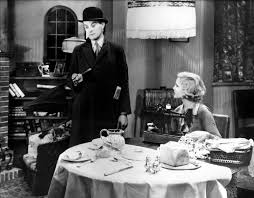
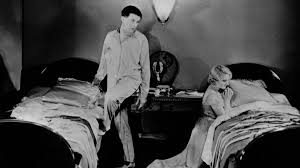
Classic Film Review: Hitchcock “adapts” to Talkies — “East of Shanghai” (aka “Rich and Strange”) (1931)

It came as a surprise for me, and probably shouldn’t have, that Alfred Hitchcock’s transition to sound from silent cinema took more than a film or two and more than a year or two.

Hitchcock was half a dozen films into the talkies era when he turned the Dale Collins novel “Rich and Strange” into a darkly comic hobnobbing-with-the-swells travelogue back in 1931.

Taking its title from a phrase from the “Full Fathom Five” verse from “Ariel’s Song” in Shakespeare’s “The Tempest,” retitled nonsensically to “East of Shanghai” for American consumption — the entire tale takes place west of Shanghai — it’s “silent” enough to make one think one is sitting down to a late Hitchcock pre-talkie comedy.

The opening scenes of London office job drudgery, sight gags on “the tube” and bowler-hatted proles marching and popping umbrellas open in synchronicity in long takes speed-adjusted to match the jaunty syncopated music, are dialogue free.

Even after the talking starts, the picture is littered with pointless, redundant silent-era intertitles, as if Hitch was anxious to give his title-writer wife Alma Reville the work.

“To Get to Paris You Must Cross the Channel.” “To Get to the Folies Bergère You Must Cross Paris.” “And to Get to Your Room you must Cross the Hotel Lounge.”

Those three knee-slappers are followed by the odd title that serves some function — a passenger liner arrives in “Port Said.” But many others tell us who’s in the scene that we can obviously see for ourselves — “Fred.” “The Princess.” — or other information (“Later.”) we can figure out for ourselves. This goes on ad nauseum.

Those silent cinema touches give the film a stodgy feel and slow what could have been an 80 minute skip to a crawl.

Still, there’s a dash of “pre-code” profanity sprinkled in a plot that sees a working middle class couple stray from one another as they take a first class trip to Europe, the Middle East and the Far East (Singapore). The cheating is sophisticated, genteel and even a tad racy.

And the light tone carries this comedy from London to Paris, Marseilles to shipboard, Port Said and Singapore, with even the Keatonesque third act shipwreck doing Hitchock and his reputation for seeing “funny” in many a situation proud.

Continue reading
Posted in Reviews, previews, profiles and movie news | Tagged , , , , , | Comments Off on Classic Film Review: Hitchcock “adapts” to Talkies — “East of Shanghai” (aka “Rich and Strange”) (1931)

Netflixable? Danish Dame goes “Mango” for a Man in Málaga

“Mango” is a tepid Hispano-Danish romance set in and in the hills above the resort city of Málaga on Spain’s celebrated Costa del Sol.

Rigidly formulaic and strictly low-heat as far as romances go, I’m guessing you can guess every turn the plot takes just by my listing the pertinent plot points.

Our heroine, Lærke (Josephine Park) is a workaholic deal-closer and detail-oriented re-designer for a big Danish hotel chain. Her boss (Paprika Steen) insists she go to Málaga, “get close to” the owner of this failed mango farm and get him to sell so that they can build on the property.

The boss’s biggest motivation? “I want a seat on the (corporation’s) board!”

That kills a planned vacation Lærke was to take with her neglected teen daughter Agnes (Josephine Højbjerg). As Agnes just failed to get into architecture school, she might as well come along and get something resembling a vacation out of it.

The owner of the scenic hilltop “mango plantation,” Alex (Dar Salim) is doggedly determined not to sell, debt be damned He has his reasons, and they might include his assistant, Paula (Sara Jiménez), who calls him “Bro” and is “family.”

Can Lærke please everyone? And if she can’t, guess who is destined to get the short end of the stick?

The “meet cute” happens on the jet from Copehagen to Málaga, a not-quite-funny bit of business involving the mother of a toddler who wants Lærke and her daughter to give up their window seats and a stranger who gives up his so that “both children” can be mollified.

The romantic leads are “rude” to each other at every opportunity. But “rude” by Danish standards.

The plantation’s shop and cantina features “mangolade,” “mangonade” and “mango vinegar,” amongst other products featuring their crop. Cute. Ish.

Park does a decent job of making Lærke a trained critic of all things “hospitality,” including “mangonade.” Salim’s Alex character barely registers, and the “girls” bonding scenes are perfunctory.

The funniest role is that of the imperious, vaping and demanding boss, whom we root against instinctively.

The dialogue — in Danish and Spanish with subtitles, or dubbed into English — doesn’t offer much zing.

Our director and screenwriter don’t show any flair for writing or executing comedy.

But the scenery is spectacular, and the fact that Lærke and Agnes — whose dad begs Lærke to “never let her drive” — traverse this landscape is a Mini Cooper had me pricing Mini rentals on the Costa del Sol.

So that’s something, anyway.

Rating: TV-MA, adult situations, profanity, smoking

Cast: Josephine Park, Dar Salim, Josephine Højbjerg, Paprika Steen and Sara Jiménez

Credits:Directed by Mehdi Amaz, scripted by Milad
Schwartz Amaz. A Netflix release.

Running time: 1:36

Posted in Reviews, previews, profiles and movie news | Comments Off on Netflixable? Danish Dame goes “Mango” for a Man in Málaga

Movie Review: Don Johnson REALLY wants what’s in storage “Unit 234”

It’s got a “name” or used to be “name” cast, a compact setting, a twisty plot and the director of “Sweet Home Alabama” behind the camera.

“Unit 234” has the makings of a gritty B-movie that makes the most of its underdog status.

But those twists turn in on themselves as the picture’s plot contorts into a pretzel dunked in one lapse in logic after another. The action passes by in what seems like slow motion.

The location and a pretty good cast giving decent performances are squandered in the process.

The setting is a lonely, potentially claustrophobic 24 hour self-storage facility on the outskirts of Jacksonville in the northeastern corner of the Self-Storage State. And if you don’t think “24 hour” denotes “We rent to sketchy people” you’ve never been to one of those joints after dark.

It isn’t exactly Girl Scout cookies ready for distribution or Aunt Frida’s mid-century modern furniture that has folks come poking around for in the wee hours.

“Orphan” alumna Isabelle Fuhrman plays Laurie, a 20something saddled with the family business after her parents died and ready to learn the hard way that she’s the only dependable Gen Z employee she knows. Her big vacation to see her beau (Anirudh Pisharody) is derailed by an underling who bails on taking her shifts from her.

And wouldn’t you know it, that’s the rainy night in Florida when somebody stashes a body in “Unit 234,” one that might wakeup from the hospital gurney it’s handcuffed to.

A prologue introduced us to blood-in-his-hanky sick rich guy (Don Johnson) who wants that body or person or what’s in that body or person. He rides around in a chauffeured G-Wagon and has minions who will shoot other minions for him if he doesn’t get what he wants.

Showing up at Schuyler’s Self-Storage after dark without a key runs him afoul of Laurie’s “procedures” and rules. So cold-blooded Jules’ henchmen will have to do this the hard way.

As she opens the unit herself and finds a guy still wired up to med fluids and such, who wakes up blabbering about “organ harvesting,” she has words for her foes when she and Jules cross paths again.

“You people are going straight to HELL!”

Jules? “Yeah, I think I’m OK with that.”

A harrowing night of using what’s in the other units to fight back or get away or at least get out the word about their peril ensues. Yes, “storage units are like a box of chocolates.”

Laurie learns the mistake of waking a sleeping-on-the-job Florida sheriff’s deputy and expecting help.

Director Andy Tennant — “Hitch” and “Fool’s Gold” were also his — isn’t known for thrillers. And that shows in the picture’s slack pacing. A bit of speed might have rushed the viewer past all the “Wait, in what alternate reality does this shooting/reaction/behavior make sense?” moments.

But the cast is game, with Huston properly frantic, Johnson oozing menace and Fuhrman dialing up the pluck and self-preservation savvy in her role.

It’s not their fault “Unit 234” turns out to be a blood-stained episode of “Storage Wars.”

Rating: 16+, bloody violence, profanity

Cast: Isabelle Fuhrman, Don Johnson, Jack Huston, Christopher James Baker and Anirudh Pisharody

Credits: Directed by Andy Tennant, scripted by Derek Steiner. A Brainstorm Media release on Amazon Prime.

Running time: 1:28

Posted in Reviews, previews, profiles and movie news | Tagged , , , , , | Comments Off on Movie Review: Don Johnson REALLY wants what’s in storage “Unit 234”

Documentary Review: An Environmental/Farm Economy Parable from Macedonia — “The Tale of Silyan”

An ancient parable is remembered and acted-out in modern day Macedonia in “The Tale of Silyan,” the latest documentary from the director of the Oscar-nominated “Honeyland.”

Writer-director Tamara Kotesvka documents the collapse of her country’s small farm economy and sees its parallels to the folk tale of a son, Silyan, who wants to leave his father’s farm and see the world only to be “cursed” by the father and turned into a stork.

Silyan doesn’t really fit in with the migrating storks. And his father no longer recognizes him. So they face their future separated, lonely and mourning what they once had.

Farmer Nikola Conev has been on the family land all of his 60 years. He and wife Jana plant and cultivate melons, potatoes, corn and grapes, and their daughter, her husband and children pitch in to help with the harvest.

But prices collapse and the younger generation migrates to Germany where they can only find low-paying jobs that barely cover the cost of their childcare. So Jana moves there to help.

Nikola and many of his peers meet and console each other, as many are in exactly the same boat. Their entire families have left. All that remains for them is protesting their plight with tractor parades and public crop dumping. “Giving up” could mean selling their land and moving abroad, staying on it until the money runs out, or suicide.

Nikola video calls his wife and tries to maintain ties. He takes a job running bulldozers and tractors at the local dump. He takes in an injured stork there and tries to nurse it to health.

And he broods over a son we never see, one like the son in the parable, a child he hasn’t talked to in years. He could be that injured stork, for all he knows.

As she demonstrated with her quiet, contemplative and mournful story of an old lady beekeeper in the mountains, Kotesvska is the very embodiment of the “patient” documentary filmmaker.

You can use words like “acted-out” and “story” in describing her films as she follows and films and waits and blends into this world, figuring out the narrative as it reveals itself to her.

We stop wondering if this reality we’re seeing is “performed” as we follow the still-playful-together couple into the fields, flirting and teasing, and we join Nikola with an even older and lonelier friend who’s just bought a metal detector which they take to all the empty houses in their village.

Did somebody bury gold in the walls? They’re that desperate and that delusional.

But this family left their house long ago, that farmer hung himself right here, etc.

Kotevska weaves the human story into the extensive footage of Europe’s omnipresent storks. They swoop down on newly-plowed fields for worms and grubs. And when field after field goes fallow, they follow “the sound of the tractors” of Nikola and fellow farmers to the dump where they now work.

Many storks die in the plastic-littered garbage. But one Nikola makes it his business to save.

It’s a beautiful film, equal parts sentimental and bluntly realistic. Like “Honeyland,” what Kotevska is capturing is a vanishing way of it.

If there’s hope to either film, it might very well be futile. But if the parable of the stork son and his father farmer can work out, why can’t modern day Macedonians find a resolution that brings balance, purpose and a future for the farmers and the storks who watch, follow and depend on them?

Rating: TV-PG

Cast: Nikola and Jana Conev

Credits: Scripted and directed by Tamara Kotevska. A National Geographic release premiering on Disney+ and Hulu.

Running time: 1:19

Posted in Reviews, previews, profiles and movie news | Tagged , , , , , , | Comments Off on Documentary Review: An Environmental/Farm Economy Parable from Macedonia — “The Tale of Silyan”

Movie Review: What Makes “Marty Supreme?”

New York filmmaker Josh Safdie has his fans, and I’ve been one of them at times. At other times? Not so much.

He does underbelly-of-the-city stories well. “Good Time” was something of a reinvention of the possibilities of Robert Pattinson. But I found “Uncut Gems” an indulgent wallow and laughably wrongheaded in its attempt to make Adam Sandler show off his “range” playing a thoroughly repellent hustler, philanderer and loser juggling the balls of his life as he struggles to pass for a winner.

“Marty Supreme” is very much in the same vein as “Gems.” It’s calamitous and chaotic, and not just in its deliberately assaultive and often indecipherable sound mix. A cornucopia of ugly Jewish archetypes and stereotypes, it’s almost but not quite offensive because Safdie’s allowed to get away with pretty much anything at this stage, especially with “his” audience.

But the movie? It plays like an abortive Coen brothers project that somehow got filmed and released.

It’s built around an utterly repellent lead character, a pushy, bullying, con artist — a shvitzer and all around gonif, if you want to get Yiddish about it.

It struck me, as our self-mythologizing whirlwind of need, desires, appetites and ambition hurtles through 1950s New York — throwing a jaw-dropping Holocaust crack into into the mix and declaring “It’s OK, I can say that. I’m Jewish.” — that it takes guts to make a character this stereotypical and loathsome and this Jewish at this moment.

Anti-Semitism is spiking all over the world, and not just over Israel’s genocide in the Palestinian concentration camp that they made out of Gaza.

But this is probably the closest we’ll ever get to Hollywood filming someone as nakedly recognizable as a “Sammy Glick Type.” Budd Schulberg’s “What makes Sammy Run?” always hit too close to home in the La La Land of Goldwyn, Mayer, Ovitz, Spielberg and Weinstein for any studio to make a film of it.

Timothée Chalamet has the title role in “Marty,”playing an early ’50s dynamo overflowing with chutzpah. Marty Mauser is a smooth-talking shoe salesman who works for his uncle and carries on with a shopkeeper’s wife (Odessa A’zion) down the block.

Marty’s dream is a lot bigger than this. This chutzpenik is a table tennis champ (inspired by a real person) and motor-mouthed hustler. He’s forever brushing off his clingy hypochondriac mother (Fran Drescher) and uncle (Larry ‘Ratso’ Sloman) with “I’m NOT a SHOE SALESMAN.”

He is certain that his destiny, his fate, is to become world champion and take the title away from a Polish Holocaust survivor (“I’m going to do to Kletzki what Auschwitz couldn’t! Finish him!”).

Everything — money — and every one standing in his way had better cough it up, bend to his will and step back, because Marty is not to be denied.

“This game, it fills stadiums overseas,” he preaches. It’s blowing up in Asia. Imagine what having an American champion will do for it. He can see it all — the cover of Wheaties boxes, magazine profiles, riches, fame.

He pushes his orange (more easily seen, and more striking to look at) ping pong ball idea at a lower tier sporting goods manufacturer, who is skeptical. The sporting goods maker’s son (Luke Manley) falls under Marty’s spell.

Marty bowls over table tennis officials, rants about “cheating” and “unfair” losses and fast-talks his way into everything, even an affair with a married-rich faded film star (Gwyneth Paltrow).

But Marty’s mono-maniacal focus has him stealing money (he says he’s owed) from his uncle to make a tournament, triumphing on his way to a title and losing The Big Match — and taking it badly.

And that’s nothing compared to the messiness that awaits him back home — kicked out, on the lam with his hustling cabbie pal Wally (Tyler the Creator, aka Tyler Okonma), in trouble with a mobster who loves his dog, carrying on with the married actress while dodging his pregnant paramour Rachel (A’zion).

Safdie strains to keep “Marty Supreme” moving at an exhausting sprint for its excessive, indulgent two and a half hours. He can’t. Even Chalamet needs a breather.

Marty’s juggling is doomed to bring a lot of balls crashing to the ground. But the longer the movie goes on, the more far-fetched the way those balls ever got in the air in the first place seems.

Paltrow does a fine job of imperiously dismissing this pesky, horny non-fan come-on artist. But the script has her character succumb to this nicked and pimpled punk’s relentlessness. As if.

Trying to keep this picture at a sprint means the long running time doesn’t allow characters moments to breathe and feel humanly fleshed out. You’re proud of Drescher’s work for the Screen Actor’s Guild. Great. Give her a plum role. But give her something to play.

Sandra Bernhard and others pass by on the picture’s periphery, a parade of little known and well known caricatures with exaggerated features, in Safdie’s eyes.

Kevin O’Leary makes a strong impression as the rich businessman/husband Marty almost impresses, but then doesn’t, leading to consequences which neither he nor the impulsive, mercurial Marty see coming.

And Chalamet, shorn of the makeup that made him a beatific matinee idol to many ages and every gender, fiercely commits to keeping this guy as detestable as they get — tactless, feckless, ruthless, so narcissistic you pray that he fails — until the script tries to soften him.

No deal.

Marty talks nonstop out of fear he’ll hear a “NO” and runs nonstop because life and the illusion of his fame and success will fall apart the moment reality sets in and shuts down his delusions. He is the athletic incarnation of Sammy Glick.

But in Safdie’s film, all this expended on-screen energy and effort isn’t edifying or rewarding. It’s just exhausting.

And nothing says “F-you” to an audience louder than a sound mix that buries dialogue under music and music — much of it stylishly anachronistic — so loud it induces tinnitus.

Rating: R, violence, sex, nudity, profanity

Cast: Timothée Chalamet, Odessa A’zion, Tyler the Creator, Luke Manley, Fran Drescher, Sarah Bernhard, Emory Cohen, Kevin O’Leary and Gwyneth Paltrow

Credits: Directed by Josh Safdie, scripted by Josh Safdie and Ronald Bronstein. An A24 release.

Running time: 2:30

Posted in Reviews, previews, profiles and movie news | Tagged , , , , | Comments Off on Movie Review: What Makes “Marty Supreme?”

Movie Review: “Song Sung Blue” Weepin’ in My Popcorn

Sing-along songs are musical comfort food, and any songsmith, singer or singer-songwriter can count him or herself lucky if they stumble into one in the course of a career.

Musical biographies are the cinema’s equivalent of such comfort food, and just as inviting of the impulse to sing along. “Rocket Man” to “I Wanna Dance with Somebody” to “Bohemian Rhapsody,” they’re as close to a can’t-entirely-miss genre as there is.

So as the “Gypsy Songman” Jerry Jeff Walker once put it, “When the chorus comes around, everybody jump on.”

“Song Sung Blue” is a veritable “Sing-along-‘Sound of Music'” musical, not the story of master craftsman and crooner Neil Diamond, but of a couple of Wisconsin fans and “interpreters” who made his music their life and livelihood and the inspiration of their love story.

It stars Hugh Jackman and bet-you-didn’t-know-she-could-sing Kate Hudson and was directed by “Hustle & Flow” filmmaker Craig Brewer.

So, a “can’t miss” holiday hit? Pretty damned much. You’ll laugh. You’ll cry. And if you’re not too uptight to admit you know the words, you’ll sing along,

“Who doesn’t like Neil Diamond?” is a running gag in the picture. In that part of the world, and for millions of a certain age, you’d have to be a redneck biker to not fit in that broad fanbase.

It’s a true story based on a celebrated 2008 documentary of the same title about a mechanic and waana-be famous singer-impersonator named Mike Sardina who finds his muse and duet partner in a hairdresser/Patsy Cline impersonator named Claire and who finds his purpose in the vast songbook of Neil Diamond.

Mike is a recovering alcoholic who sings a Neil tune to his AA group every “sobriety birthday.” And like Claire, he hustles up gigs as an impersonator for “the blue hair crowd” at fairs and conventions and the like, where everybody from Buddy Holly (Michael Imperioli, quite good) to James Brown (Mustafa Shakir) comes back to life in between Elvis, Patsy and Tina acts.

That’s where Mike meets Claire, on a night in the late late ’80s when he’s too principled to sing “Tiny Bubbles” (a drinking song) in the guise of Hawaiian singer Don Ho. Or maybe he’s just mad about his thwarted ambition. He’s in multiple bands, is well known around Milwaukee.

When it comes to being a “name” entertainer, “I should be enough!”

He and Claire flirt and give some thought to coming up with an act. He likes Elvis’ TCB lightning bolt logo, so he’ll be “Lightning.” She’ll be “Thunder.”

He gets “I’m an alcoholic” out of the way in short order. She mentions her kids straight off. They bond with their shared desire to sing, be entertainers and “pay my bills” doing it.

They’ll gather a decent-sized band, with horns. And they’ll “interpret” Neil and create an “immersive” Neil Diamond show-spectacle. They’ll eventually open for Pearl Jam, whose lead singer, like a whole generation of rock and pop acts, appreciates musicianship, cherishes songwriting and knows a fun bit of pop kitsch when they hear about it.

Ladies and gentlemen, the Foo Fighters welcome RICK ASTLEY!

But after the “Cherry, Cherry” montage in which they see if their voices blend, the “Holly Holy” montage charting their romance and “Sweet Caroline” montage of their sudden rise to fame, tragedy is sure to strike these middle-aged dream lovers.

There’ll be complications which his daughter (King Princess) and hers (Ella Anderson) will talk out and explain to the movie audience. There will be severe tests, bad breaks and the like.

But the music, with a huge repertory of Diamond tunes used to sort out feelings, difficulties and the tests and depth of their love, carries us over the formulaic story framework and past the cliches.

Jackman, a genuine “triple threat” who could probably out-Neil Neil, dials down his Tony, Grammy, Golden Globe and Emmy award winning singing talent to suit the role. He’s just a good Neil Diamond “interpreter,” not Neil-reincarnated — long hair and sideburns be damned.

And he does this to blend his voice more easily with Hudson, who rises to the challenge with her best screen performance since “Almost Famous.”

Brewer puts his leads in extreme, revealing and emotional close-ups and they do the rest. Don’t get extra salt in your popcorn. Your tears will provide that.

Brewer’s script never misses a chance to turn “cute,” from Claire’s cranky mother (Cecelia Reddett) to the dentist who doubles as Mike’s agent (Fisher Stevens), colorful fellow impersonators Shakir and Imperioli, to the in-state booking agent (Jim Belushi, a hoot) whose main livelihood is driving the Badger (trolley) Bus that takes senior citizens groups to casinos, concerts and tourist attractions like the fair.

If you’re allergic to “cute,” stay home. Otherwise, pack your hanky and try to keep your singing along at a level that it won’t drown out what’s coming off the screen. Because what Brewer, Jackman and Hudson cook up here is comfort food at its most comforting.

Rating: PG-13, drug abuse, sexual content and profanity

Cast: Hugh Jackman, Kate Hudson, Ella Anderson, King Princess, Mustafa Shakir, Michael Imperioli, Fisher Stevens and Jim Belushi

Credits: Scripted and directed by Craig Brewer, based on a 2008 documentary of the same title by Greg Kohs. A Focus Features release.

Running time: 2:13

Posted in Reviews, previews, profiles and movie news | Tagged , , , , | Comments Off on Movie Review: “Song Sung Blue” Weepin’ in My Popcorn