Movie Review: A Dash or Two of Daft comes with a serving of “Daaaaaali!”

As his entire public life was a performance — grandiose, extravagant and self-important to the point of silly — it’s no wonder actors have a lot of fun portraying the flamboyant surrealist Salvador Dalí.

Sir Ben Kingsley chewed the canvas if not the scenery itself of “Daliland,” with Ezra Miller taking on nearly-as-narcissistic younger version of the painter. Adrien Brody underplayed him and pretty much stole “Midnight in Paris” as just a bit player. Robert Pattinson had a go at a gay-and-conflicted (and not nearly as much fun) Dalí in “Little Ashes,” and “Trainspotting’s” Ewen Bremner had a funny go at him in a British TV movie.

Imagine what the surrealist filmmaker we first met when he showed us a sentient, murderous runaway tire (“Rubber”), and went on to dazzle and puzzle viewers with “Mandibles,” “Smoking Causes Coughing” and “Incredible But True” could do with Dalí.

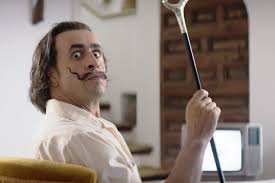
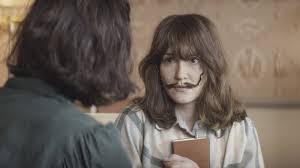
French filmmaker Quentin Dupieux serves up six Dalís for his brisk, bracing burlesque “Daaaaaalí!” That’s one Dalí for every “a” in the title, which is taken from the way the various players perform the way the affected, over-the-top and hilariously narcissistic Catalan said his name, always speaking of himself in the third person.

As in “Do you really think Daaaaaalí needs people other than himself to imagine in his stead?” And “Daaaaaalí no longer wishes the make the film! Period! NEXT paragraph!”

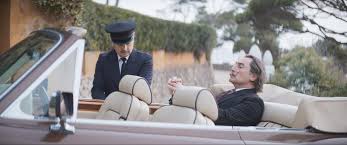
His driver brings him to an interview, and doesn’t want to take the Rolls Royce onto the beach because “A Rolls (Royce) is not made for sand?”

“John Lennon has one JUST like it! Drive on! Daaaaaalí has decided!”

You can’t always tell which actor — Edouard Baer,
Gilles Lellouche, Pio Marmaï, Jonathan Cohen
, with Boris Gillot, and Didier Flamand as the most aged version of the painter – is playing Dalí, as they all sport the overlong and wildly-waxed mustache, the flowing hair and comically mad, penetrating eyes. They’re all fun and having serious fun with the character and the material.

The clever conceit here is a sort of “Waiting for Godot” riff on “My Dinner with Daaaaaalí.” A pharmacist turned journalist (Anaïs Demoustier of “Smoking Causes Coughing”) has landed an interview with greatest living artist. (I’m assuming the setting is the mid-70s, just after Picasso’s death).

She awaits him in a hotel room, and then he makes his entrance. She is summoned to the hotel hallway to watch as the caped crusader of melting clocks sweeps down a corridor of almost surreal length, prattling on about how “ill-conceived” this building is, his signature posh cane in hand, double-breasted suit under all that hair, that mustache and that cape.

“Where are your cameras, your microphone,” he wants to know (in French with English subtitles)? She has none. She has pitched this “portrait” to a magazine. No, this will never do. “How can you interview Dalí without a camera?” How can anyone hope to capture the performance that is Dalí with just “your little notepad.” He is “not the least bit interested.”

He grandly and gallantly kisses her hand and storms out.

Thus begins poor Judith Rochant’s immersion in the surreal, as she re-pitches the story as a documentary to a film boorish film producer (Romain Duris, hilarious) and struggles, time and again, to set up and conduct an interview with a larger-than-life figure who “hasn’t a minute to spare.”

Judith has hallucinations about these encounters, but as she struggles to get him on camera and on mike and to keep the old master from making the interview about her, the film becomes a film within a film within other films.

Dalí takes dinner with the family of the groundskeeper of his seaside villa in the South of France. A priest (Éric Naggar) has coerced their host to set up this simple meal of “ragu” — which Dalí envisions is made of worms — so that he can relate a dream to the artist and his wife Gala (Catherine Schaub-Abkarian).

As the movie progresses, the interview keeps going wrong and the priest’s “dream” comes to encompass the narrative, taking the story further into the surreal.

One can assume that every time the artist is shocked at seeing the aged version of himself (Flamand) that we are seeing the elderly Dalí as he saw himself, as younger and vibrant and creative and dashing, even into his dotage.

There’s madness afoot, and Demoustier ably captures how overmatched a mere interviewer would always be with Dalí. And the various actors playing Dalí indulge in grand vamping of the genius in a script that only occasionally hints at his sense of his own mortality.

Dupieux has fun with Dalí’s working methods, suggesting he was using artist models who look as bizarre as he imagines them. The surreal filmmaker has the surrealist painter take a call with an “I cannot speak now! It’s raining dead dogs!” And so it is. Who could talk on the phone over such a “diabolical din?”

This short, clever-but-truncated dip into Dalí reminds us that there have been decades of talk about making a proper film biography of this charismatic, colorful and influencial rock star of 20th century art. Al Pacino was to play him at one time.

But one does wonder, after all the documentaries with Dalí as Dalí, after Oscar-winners Kingsley and Brody had their shots, and now a genuine surrealist and half a dozen actors have given us a humorous glimpse of how he saw the world, and how he hilariously carried himself in it, what would be the point?

Rating: unrated, profanity

Cast: Anaïs Demoustier, Edouard Baer,Gilles Lellouche, Pio Marmaï, Jonathan Cohen, Didier Flamand, Boris Gillot, Catherine Schaub-Abkarian, Éric Naggar and Romain Duris

Credits: Scripted and directed by Quentin Dupieux. A Music Box release.

Running time: 1:17
Posted in Reviews, previews, profiles and movie news | Comments Off on Movie Review: A Dash or Two of Daft comes with a serving of “Daaaaaali!”

Movie Preview: Holiday fun for the whole family! “Nosferatu”

Horror for the holidays (a Dec. 25 release) comes in the form of a new Robert Eggers (“The Witch,” “The Lighthouse,” “The Northman”) version of the classic vampire tale “Nosferatu,” starring Aaron Taylor-Johnson, Emma Corrin, Lily Rose-Depp and Bill Skarsgård, with Nicholas Hoult, Simon McBurney, Ralph Inesen and Willem Dafoe.

Sure, it’s the 1300th vampire movie to come down the pike. But hey, Robert Eggers!

Posted in Reviews, previews, profiles and movie news | Comments Off on Movie Preview: Holiday fun for the whole family! “Nosferatu”

Classic Film Review: Kurosawa’s “Rashomon” changed the Cinema and the way the World Views It

Few classic films have had the impact that “Rashomon” had on the world cinema when it premiered at the 1951 Venice Film Festival, and when it opened in the United States the day after Christmas that same year.

Much of the movie world became familiar with and enraptured by Japanese cinema. Japanese filmmaker Akira Kurosawa‘s career was transformed, making him a “legend” overnight, a director whose future films — including”Seven Samurai,” “Ikiru,” “Hidden Fortress,” “Yojimbo,” “Ran” and “Kagemusha” — would take on gravitas as most becapme landmarks in cinema history.

Filmmakers all over the world became fans, and Kurosawa’s movies became templates for classic Westerns, dramas and George Lucas’s sci-fi dreams of “A long time ago in a galaxy far away.”

Kurosawa muse Toshirô Mifune was turned into an “international star,” so iconic that he’d eventually become the comic obsession of a Danish film fan in the 1999 comedy “Mifune.”

And Hollywood, according to legend, realized once and for all that international features shouldn’t be overlooked among the elite films of any given year. The “Best Foreign Language Film” category was launched, eventually renamed “Best International Feature.”

In past eras, one had to haunt college or city film societies to experience Kurosawa’s compact murder mystery. A great library video collection is where I tracked first it down. Now, the free streamer Tubi is showing a collection of early Kurosawa films that lead up to and include “Rashomon,” as well as works by his contemporary Yasujirô Ozu, who gained much of his acclaim in the wake of Kurosawa’s international fame.

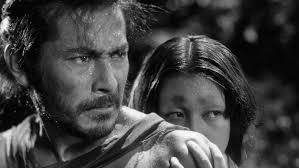
Tubi’s pristine print of this bucket list film reveals the stark monochromatic beauty of “Rashomon,” with perhaps 100 images among its 407 different shots worthy of being gorgeous stills hung on the walls of a museum or a film buff’s home.

The locations — the Komyoji Temple in Kyoto, and forests and river near Kyoto and Nara — vividly recreate the Heian-era of this tale of a murder, and four different points of view meant to tell us what happened.

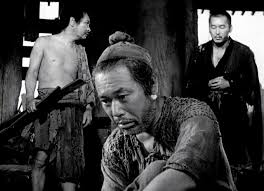
A priest, a woodcutter and a commoner meet under the half-ruined gate to the city of Rashomon to get out of the rain. They’re all absorbed by a murder that’s happened in their midst. But the woodcutter (screen legend and Kurosawa favorite Takashi Shimura) is most shocked by “the horror.”

There was an arrest and there’s been a trial. Three different points of view were presented. But was “justice” done?

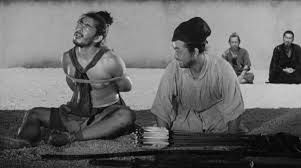
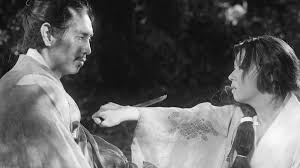
So they relate the story of the trial, and flashbacks present four distinct versions of what happened that day in the forest.

The bandit Tajômaru (Mifune) admits he killed a samurai right in front of the warrior’s wife, cackling and blustering as he does, staring straight at his unseen interrogator (the camera). But why and how?

The wife’s (Machiko Kyô) fraught testimony offers a conflicting version. A medium is consulted to contact the dead samurai (Masayuki Mori) for his testimony.

And a supposed eyewitness will offer yet another take on the killing.

Honor, greed, rape and guilt drive the conflicting accounts.

As the priest (Minoru Chiaki) ponders the morality of it all — “If men don’t trust each other, this earth might as well be hell,” (in Japanese with English subtitles), the Commoner (Kichijirô Ueda, another Kurosawa favorite) gets something like the last word with a simple piece of folk wisdom — “It’s human to lie. Most of the time we can’t even be honest with ourselves.”

Kurosawa’s technique included rare (for the era) hand-held shots that heighten the action, frantic versions of the swordfight and hand-to-hand struggle that led to the murder.

The plot, similar in structure to “Citizen Kane,” led the mere title “Rashonom” to become cinematic shorthand for any tale that relates differing points of view, related in flashbacks.

The most striking thing about the film seen nearly 75 years after its release is the startling “dabbled” light, searing shots of the sun through the trees, shadows underscoring the forest floor setting of the crime.

The film and Mifune’s legend (he stood out in “Seven Samurai” a few years later) muddle the memory and the reputation of the film among those who haven’t seen it and even those who have. The internet can amplify the misconceptions. No, Mifune wasn’t the samurai…this time.

Recent criticism written about “Rashomon” plumbs for added meaning, Kurosawa reflecting on the post war/post atomic bombed Japan so many of his films of this era directly reference. That may be a stretch, as the tale is based on a 1922 story by Ryûnosuke Akutagawa.

But the filmmaker has a reason for throwing the viewer with its image of “samurai” cut down to size, how cowardice and feminine malice and manipulation play into the story and how the characters telling the tale in the framing device of three men hiding from the rain might very well be reflecting on recent Japanese history — traditional class, gender and racial attitudes, ignominious defeat and WWII immorality and barbarism — when they weigh their opinions of “men” and mankind.

That’s very much in sync with Kurosawa’s prior “Scandal,” “Stray Dog” and “The Quiet Duel” in terms of theme.

The beauty of this enduring film, the things that make it a must-see for any person who claims to be a film lover, have nothing to do with that time-of-its-release historical resonance. It’s the striking setting, the iconic performances and stunning images artfully cut into a tale with suspense, mystery and morality folded into every scene that endure.

Seeing Kurosawa’s masterpiece again after many years had me searching for framed frames suitable for a filmlover’s decor. Maybe it will do that for you, too.

And if you haven’t seen it, you can’t be called a “cinefile” until you do.

star

Rating: TV-PG, violence, rape is discussed

Cast: Toshirô Mifune, Machiko Kyô, Masayuki Mori, Kichijirô Ueda, Minoru Chiaki and Takashi Shimura

Credits: Directed by Akira Kurosawa, scripted by Akira Kurosawa and Shinobu Hashimoto, based on a story by Ryûnosuke Akutagawa. A Daiei production, now on Tubi, Amazon, et al

Running time: 1:28

Posted in Reviews, previews, profiles and movie news | Tagged , , , , | Comments Off on Classic Film Review: Kurosawa’s “Rashomon” changed the Cinema and the way the World Views It

Kris Kristofferson, Singer, Songwriter and movie star –1936-2024

His weathered voice and high mileage good looks made it seem almost miraculous that he made it around the sun 88 times. 

And what did Kris Kristofferson do with those 88 years? An Army Air Corps brat (Dad eventually became a general), he was a published short story writer and a “Sports Illustrated” featured athlete (rugby) at Pomona college, a Rhodes Scholar who then studied at Oxford, enlisted and served his country as a helicopter pilot, earning the rank of captain and leaving the military just as Vietnam was heating up.

Because the man was a born poet and songwriter. He took several stabs at music stardom, flew choppers out to oil rigs, living off and on in Nashville, where he got a tape to Johnny Cash via his wife, June Carter. And when Cash didn’t respond to “Help Me Make It Through the Night” and “Me and Bobby McGee,” Kristofferson landed a chopper on Cash’s farm to “get his attention.”

As his songs became famous Cash remained his greatest champion. Here they are dueting on my favorite KK composition.

His bearded looks so personified the ’60s that Hollywood grabbed hold of him, seeing him as a rugged, more masculine version of the “hippy” image in a lot of ways. He was cast as a musician in “Cisco Pike” (1972), and the movies made him a star with Sam Peckinpah’s “Pat Garrett and Billy the Kid” (He played William Bonney, aka “Billy the Kid”).

He stood out in Scorsese’s “Alice Doesn’t Live Here Anymore,” starred in the last movie I ever remember walking-out on (“The Sailor Who Fell From Grace with the Sea”), and created one of Hollywood’s greatest anecdotes when he co-starred with Barbra Streisand in “A Star is Born” (1976).

Tangling with Streisand’s volatile, bullying hairdresser/lover-turned-novice-producer Jon Peters on the set, Kristofferson informed Peters that “Any time I need sh-t from you, I’ll squeeze your head.”

I interviewed him a couple of times, much later in life, about his evolving politics and protest music and about a rare kid-friendly film he did (“Dreamer”). He was folksy, modest as hell, and he never ever lost that twinkle.

If you want a quick appreciation of his film work, skip past the career-killing (almost) “Heaven’s Gate,” the three bloody-minded Peckinpah pix he made, and track down the most “rambunctious” Nashville music city comedy of them all.

“Songwriter” was his second job for director Alan Rudolph, an Altman protege who’d directed him in “Trouble in Mind.” Pairing Kris with Willie Nelson and making the formidable Rip Torn their antagonist proved inspiring.

Kristofferson spoke his mind, stood up for Sinead O’Connor when it mattered, and even though he played a few tasty villains over the years (“Lone Star”), he was at his best playing a version of himself — a smart, laid-back stand-up guy who didn’t take sh– from anybody, especially Jon Peters.

Ask anybody. Kris Kristofferson was one of a damned kind.

Posted in Reviews, previews, profiles and movie news | Tagged , , , , | Comments Off on Kris Kristofferson, Singer, Songwriter and movie star –1936-2024

Movie Review: Francis Shrugged — “Megalopolis”

It’s a pity the great filmmakers can’t all bow out with “A Passage to India,” “The Dead” or “Charlie Wilson’s War.”

And it’s a shame Francis Ford Coppola didn’t have some dream literary adaptation, some piece of Italian or Italian-American history or grand vision he wanted to get on the screen — a master’s version of “Babylon” era Hollywood, his “Napoleon” or “I, Claudius” or “A Man for All Seasons.”

But here is the cinema’s greatest riverboat gambler, an Oscar-winning icon baring his soul and pouring his heart and money into one last roll of the dice, one last stab at relevence in the dying embers of a comic book movie age.

His vision of science fiction is “Megalopolis,” which is basically “Atlas Shrugged” meets “Caligula,” a civics lecture in “fable” form.

It’s about human creativity and a parable of utopianism and fascist oligarchy that overreaches even as it enfolds all the tricks of the trade that he’s learned in 60 years in cinema.

This self-consciously artsy, eye-popping extravaganza has a star-studded cast that includes a couple of Oscar winners and a few Coppola relatives. It has a screenplay that quotes the “To be or not to be” soliloquy from “Hamlet” at length, that references “Utopia” by Sir Thomas More and paraphrases Henry II’s invective “Will no one rid me of this turbulent priest” about Thomas Becket, and gives the line to Shia LaBeouf.

“Metropolis” reaches for parallels to our times, when “rich men,” rabble rousers and tech demagogues, are doing so much injury to human liberty and human potential.

But a barely coherent narrative underscores a simple fact. There is no getting around the heartbreaking truth that this is never more than a Messianic mess.

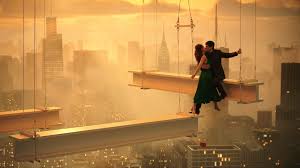
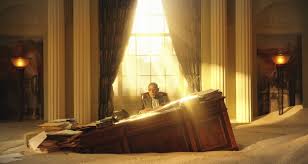
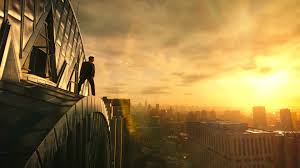
Adam Driver plays the John Galt/Howard Roark Ayn Randish “creative” figure. Cesar Catalina is a Robert Moses emperor of New Rome’s Design Authority, a man bent on remaking this mythical version of New York (the Chrysler Building is practically its own character) over with his new wonder building material, Megalon.

Coppola loves Japanese kaiju movies?

New Rome is roiled by economic disparity, and with one interelated family controlling the mayorship (Giancarlo Esposito), the most powerful bank (Jon Voight) and that design authority, in Cesar Catalina’s mind, it is is a place tailor-made for remaking.

He wants a city “people can dream about,” with soaring new buildings and people-friendly people movers, gardens for all and the like.

“Is this society, is this way of living the only one available to us?”

Mayor Cicero (Esposito) is an ex-prosecutor who thinks himself a man of the people, and he can only see the current unrest and all the ways “utopian” thinking fails to address genuine ills. He and Cesar have ugly history.

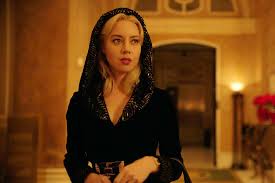
Catalina has an edge in the PR wars, as he’s sleeping with popular sexpot financial reporter Wow Platinum (Aubrey Plaza), aka “The Money Bunny.”

But the mayor’s gorgeous socialite daughter Julia (“Game of Thrones/Fast-Furious” saga alumnus Nathalie Emmanuel) is struck by this imperious, Nobel prize-winning, Shakespeare-quoting Lord of the Skyline, and stalks Cesar until he falls for her.

The hedonism is Fall of Rome/Weimar Berlin/NYC in the ’70s decadent, with clubs and parties for the beautiful people and street marches and riots for the have-nots.

Julia’s crazed, sometimes cross-dressing sibling Clodio (LaBeouf) figures he can tap into that undercurrent of unrest and topple this rival to his father, the mayor. Maybe his rich banker uncle Crassus (Voight) could bankroll that.

Clodio culturally-appropriates “Power to the people,” and he’s on his way.

Laurence Fishburne plays Cesar’s trusted aide and the fable’s stentorian narrator — “When does an empire die? When people no longer believe in it.”

Jason Schwartzman, nephew of Coppola, plays a mayoral aide and Schwartzman’s mother, Talia Shire (Coppola’s sister) plays Cesar Catalina’s mother.

The acting is pitched somewhere down the theatrically-grandiose scale, with only occasional snippets of dialogue meriting this approach.

Coppola brings in heaping helpings of effects, but found himself editing many great bits of eye candy into mere seconds of screen time in a tedious tale that runs over two hours, and feels much longer.

The madness of it all includes the look of the picture — swastikas and Roman SPQR signs, art deco and Cadillac Escalades. The design ranges from sleek, colorful and fashion-forward to the odd, jarring “What was that costumer THINKING?” This universe imagines “stop time” effects, magical floating moving sidewalks, classic Citroens, MGs and Bentleys sharing streets with Yukons and Caddy limos.

But the love story doesn’t click. Driver’s given many of the dumbest lines and most humbling stage directions and his struggle does nothing to dispel his “Box Office Poison” rep.

Plaza has the sexiest, showiest role, and she’s forgotten through most of the middle acts.

The muddle of characters merely clutter the narrative and the bigger point gets lost in a sea of small ones. Dustin Hoffman’s mayoral “fixer” figure is dispensed with as perfunctorily as this Great Threat hanging over them all, an old Soviet nuclear satellite that could hit Labrador, or doom New Rome.

But if you’re a film buff, feel free to ignore reviews, box office failure and everything else to see the last film by the screenwriter of “Patton” and the director of “The Godfather” trilogy and “Apocalypse Now.”

Coppola’s attempt to tap into a generation raised on sci-fi and comic book films fails. He can’t out-Gilliam Terry Gilliam (“Brazil”), has no patience for repeating himself (Helloooo, Ridley Scott) and has never been enamored of literary adaptations.

He’s been using phrases like “washed up” in interviews for nearly 20 years. I know. It’s why I buy his wine.

But if this mad gamble is indeed the “final film” of a great director from the Golden Age of great directors, cinephiles can celebrate the fact that at least he got it cast, filmed, edited and distributed and lived to see its release. That’s more than Orson Welles could say.

Rating: R, violence, sex, nudity, profanity

Cast: Adam Driver, Nathalie Emmanuel, Aubrey Plaza, Giancarlo Esposito, Laurence Fishburne, Shia LaBeouf, Jason Schwartzman, Talia Shire, Jon Voight and Dustin Hoffman

Credits: Scripted and directed by Francis Ford Coppola. An American Zoetrope/Lionsgate release.

Running time: 2:18

Posted in Reviews, previews, profiles and movie news | Tagged , , , , | Comments Off on Movie Review: Francis Shrugged — “Megalopolis”

Documentary Review: “Will & Harper” take a Road Trip to test America’s Transgender Tolerance

What was “the pitch” for “Will & Harper” like?

This road trip documentary about two longtime friends and colleagues getting together after one has transitioned is sweet as can be, but it’s “showbiz” all the way. Will Ferrell met Andrew Steele when they joined “Saturday Night Live” at the same time. One became perhaps the greatest star the sketch comedy series has ever produced, the other a writer who became head writer of the show.

After “SNL,” Ferrell starred in such Steele-scripted comedies as “Casa de mi Padre” and “Eurovision Song Contest: The Story of Fire Saga,” and they collaborated on the comedy website “Funny or Die.”

Ferrell tells us and shows us how he learned of his friend’s transition from Andre to Harper and accepted it.

But whatever the pitch or intent of what is, in essence, a documentary version of 2005’s “Transamerica,” this “put two funny friends in a car to see revisit America after one has come out as a woman” road picture becomes a sociological experiment.

How tolerant is this country, where a whole class of politicians and preachers has made hating transgender people a brand, rallying bigots far and wide?

As Steele, under her “dead name,” has long loved doing what writers do, hitting out of the way bars, diners, sporting events and the like, “meeting people,” listening to them, plumbing for ideas, “characters” and dialogue, how will that work with her in a dress and an assortment of not-quite-Dame-Edna glasses?

Where will she be accepted, and where won’t she?

How much “s–tty beer” (Steele’s lifelong love of “Natty Lite” is rightly mocked) and how many varieties of Pringles chips can two friends consume as they motor cross country to conduct this study?

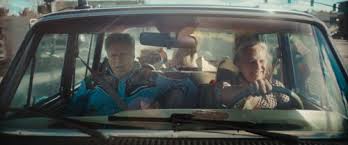
And whose vintage Jeep Wagoneer is Harper driving when she picks Will up in Van Cortlandt Park in the Bronx? It’s implied it’s Harper’s, but it has California plates. Is it Will’s? A properly “butch” classic rental for a gender-bending road trip?

Ferrell, whose “nice guy” bonafides are polished to a fine sheen here, is a surrogate for the audience in asking all the “s–tty questions you’re not supposed to ask people.” Harper welcomes this chance to deliver public service announcements in the basics. And being funny down to his bones, Ferrell finds the laughs.

On “boobs” — “Did you go to Nordstrom’s Rack once you got your rack?”

“Do you think you’re a worse driver as a female driver?”

Steele, whom Ferrell met as an “Iowa born, 501 jeans and s–tty beer” comic, never really comes off as all that funny, at least in this situation. She frankly admits that her life (formerly married, two kids) and the TV comedy writing career she had would not have happened had she transitioned sooner than her 60s. Tina Fey excepted, comedy writing has been by and large a “bro’s” game.

On their mid-winter trip, they’ll meet Harper’s two daughters, only one of whom is identified by name while the other invites questions left unanswered. They visit D.C. and Indianapolis for a Pacer’s game, accidentally meeting the state’s latest homophobic governor, unknowingly posing for “the photo you don’t want to be in.”

They’ll hit Harper’s hometown, Iowa City, stop in Oklahoma and Texas, at a car race and a honky tonk decorated with Confederate and Trump flags and worse, and a Texas steakhouse where Ferrell dons a Sherlock Holmes costume to compete in the “72 ounce steak is free if you can eat it in an hour” challenge.

Ferrell will also don a “disguise” that too closely resembles his “Zoolander” hair and costume to truly fool a Vegas waiter or anybody else.

And America, perhaps acknowledging the friend, relative or child, or friend or relative’s child we all know who transitioned, is for the most part polite and even accepting. Waiters and waitresses correct their “sir” to “madame,” and so on.

But on social media, where we’re at our meanest, a lot of those people taking selfies and cell shots and videos (even on the residential street where Harper’s Iowa City sister lives) take the time to share their online ignorance and their bigotry.

Steele is rattled, here and there. And Ferrell, who jokes around with his “celebrity” most of the time, has a few upsetting moments where he truly appreciates what his friend has gone through and is now subjected to and the dangers transgender people face in much of America.

We and he come to appreciate the role celebrity has in disarming such intolerance.

Whatever the original pitch to Netflix, “Will & Harper” became a hopeful, upbeat snapshot of a nation struggling with its own transition, just a couple of pals in a collectible Jeep, experiencing the “real” America — diners, dives and Walmarts — and the wide array of folks who inhabit it, at least some of whom are starting to “get it.”

Rating: R, profanity, adult subject matter, lite beer consumption

Cast: Will Ferrell, Harper Steele, Tina Fey, Will Forte, Tim Meadows, Molly Shannon, Seth Meyers and Kristen Wiig

Credits: Directed by Josh Greenbaum. A Netflix release.

Running time: 1:51

Posted in Reviews, previews, profiles and movie news | Tagged , , , , , | Comments Off on Documentary Review: “Will & Harper” take a Road Trip to test America’s Transgender Tolerance

Movie Preview: Aisling Bea and Nick Frost take the kids on the Vacation from Hell — “Get Away”

Well, “We’ve taken holiday to a Swedish horror film” is how they put it.

A little “Wicker Man,” a lot of Every Other “We’re not welcome here” thriller. With dark dark laughs.

This horrific farce from beyond the sea is now an IFC/Shudder Dec. 6 release.

Posted in Reviews, previews, profiles and movie news | Comments Off on Movie Preview: Aisling Bea and Nick Frost take the kids on the Vacation from Hell — “Get Away”

Series Finale: “The Grand Tour: One for the Road” lets Clarkson, Hammond and May drive, sail and rail into the Sunset

I was late but not terribly late getting around to “Top Gear,” finally bingeing on DVD screeners of the series the BBC was sending me for review about three or four years after the motoring show was rebooted around star Jeremy Clarkson.

Like many, I became addicted, devouring every episode, reveling in the many amusing challenges and epic road trips undertaken by its well-matched stars — the grumpy, reactionary jingoist “Jezzer” Clarkson, the curious, practical pedant and Renaissance Man James May and radio-polished, handy-with-a-spanner but accident-prone”Hamster,” Richard Hammond.

I was also late getting on board their Amazon replacement series “The Grand Tour,” whose promise was only fulfilled when they turned it into a literal “Grand Tour” with more epic road trips, which were, by and large, not as epic as those undertaken for the BBC.

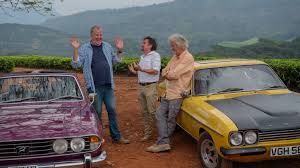
So of course I’m a tad tardy getting around to saying goodbye to these Brit-blokes and their last “classic cars across Africa” film together, “The Grand Tour: One for the Road.”

It’s a “greatest hits” adventure, most nostalgic in the minimal clips of their old series that they were allowed to use, revisiting their younger selves in the “Top Gear” quest episode that made them, their famed 2007 “Botswana Special.”

They’d made news with their “Polar Special” earlier that year. But taking three car nuts and three ancient and breakdown-prone autos on a rideabout through Botswana, with wildlife and largely unspoiled nature and terrible roads or no roads at all, gave all three the chance to shine and made their team and their show a worldwide brand.

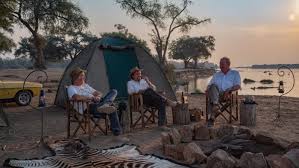
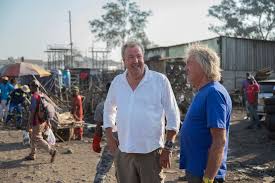
Seventeen years later, they go where the BBC was not allowed to go –Botswana’s neighbor Zimbabwe — for a scenic victory lap and three personal curtain calls. They remember the trek that made them and slip neatly into the characters that the two series molded around them, one last time.

The conservative, technically-inept Clarkson — now putting his sometimes brilliant, sometimes lunkheaded “outside the box” thinking on display in the delightful “I know nothing about farming” “Clarkson’s Farm” series — rejoins the ever-curious cosmopolitan, the methodical, mechanically-minded May, and the amusingly provincial, born romantic and motorcycle wrencher Hammond for one last road rally.

The idea is that they were to “buy a car you’ve always wanted” to own for this drive.

So Clarkson insists, one last time, that road rally racing champ Lancias are the “best cars” for such quests, no matter how flimsy, oddly-engineered and absurdly unreliable they are. He brings a “slightly modified” 1980 vintage Montecarlo.

Hammond shows up with an early ’70s Ford (badged as a Mercury in the States) Capri, which was “supposed to be my first car.” Hammond fell in love with his 1963 Opel Kadet in “Botswana,” naming it “Oliver” and taking it home with him. Will he be as affectionate towards “Essex,” this Capri?

And May, the third player added to complete the iconic “Top Gear” trio, the “bloke” who made his bones on the show by delivering appreciations of his costly-to-keep vintage Bentley and his lifelong love of the Triumph TR-6, arrives with the much-maligned Triumph Stag, a stylish but company-killing car infamous for the unreliable, ever-overheating engine.

As May crossed Botwana in a reliable-as-a-Swiss watch 1985 Mercedes, we’re left to wonder if “the practical one” has gone soft in the head.

The show’s famed fakery — their feigned “revolt” against longtime producer Andy Wilman — is sampled as they’re allegedly supposed to finish their TV run with an endurance race around London in new electric cars. That allows Clarkson to snipe about electric vehicles one last time, “They’re washing machines, microwave ovens,” and plot a coup where they all revisit the Southern Africa scene of perhaps their greatest triumph.

They allow themselves to get reflective over the fame and wealth that spun out of that special that made the series, and them, worldwide phenomena, and led to epic drives through South America, the U.S., Australia and almost every continent on Earth, something underscored by a world map graphic that lights up with all the places they’ve visited.

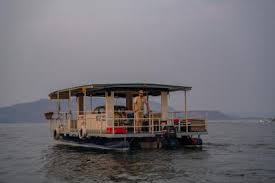
And as they make yet another “wrong turn” in a far off land, one so underfilmed as to be a wonder to behold, they do another cars-as-trains turn, as railroad tracks are smoother than washboard roads that shake old cars to pieces, and another cars-on-boats trip, this time across the crocodile-filled “largest manmade lake in the world.”

Clarkson goes jingoistic over British colonial rail construction and British dam engineering, but little is said about the unhappy British history of the country the limeys colonized as Rhodesia. The trio’s devil-may-care, “this show is ending” so “bugger off” with your complaints is a backhanded reference to all the things they said and did that finally got Clarkson kicked off “Top Gear,” with the other two following.

But as they pass imported-species pine plantations and note the vast mineral resources of the country, and drive on some perfectly-finished highways at times, they’re Amazon-circumspect in never mentioning Zimbabwe’s exploitation by and connections to China. Amazon or BBC, they still have paymasters they don’t want to upset.

Gone are the youthful pranks and many of the hijinks. Well, not the drinking. A boozy bit of boating is included. And they still resolve to leave-any-man behind whose car breaks.

A contrived bit of “smuggling” border crossing drama is no match for the international incident Clarkson created in Argentina, which if the BBC was honest, it would admit was the real reason he was sacked.

It’s a sentimental journey, to be sure, not exactly dispirited but definitely lower energy, an older men’s trek through their past at an age where you’d think the two oldest — the paunchy former (let’s hope) smoker Clarkson and the now-whitehaired May — would have at last learned to use suncreen.

But that was a big part of the charm of their chemistry. Clarkson’s inability to properly “fix” anything, May’s “Captain Slow” driving and thinking style, Hammond’s perky pluck in fixing whatever clunker he’s fallen in love with are reprised, one last time, with feeling if not with anything resembling the old gusto.

They’re admitting they’re dinosaurs, and if they’re not exactly passing the torch (the golden age of gas “motoring” is over), they know it’s time to leave. When Ewan McGregor and Charlie Boorman are doing what they’ve done, giving us more local flavor in their travels, different “celebrity” laughs, and doing it on (at times) electric vehicles, we’re seeing the future.

Clarkson, May and Hammond can joke about their limited futures and we can have a laugh with them over “now appearing in panto, TV’s Richard Hammond as ‘Buttons'” because we, like they, know their legend is secure, even if their fossil fuel and tire-burning days are over.

Rating: TV-MA, alcohol, profanity

Cast: Jeremy Clarkson, Richard Hammond and James May.

Credits: Produced by Andy Wilman, Jeremy Clarkson, Richard Hammond and James May. An Amazon Prime release.

Running time: 2:10

Posted in Reviews, previews, profiles and movie news | Tagged , , , , | Comments Off on Series Finale: “The Grand Tour: One for the Road” lets Clarkson, Hammond and May drive, sail and rail into the Sunset

BOX OFFICE: “Wild Robot” opens big, “Megalopolis” doesn’t, “Transformers” plunge, “My Old Ass” barely registers

I was betting that Deadline.com is lowballing, based on the hurricane-dampened “preview” night/opening day of “The Wild Robot” (right around $12 million), when their prognosticator said it’d hit $35 million on its opening weekend.

Saturday, post hurricane, should have been  huge. I was thinking $40 million+ was  within reach. Nope. It’ll take a very good Sunday to get it over $35.

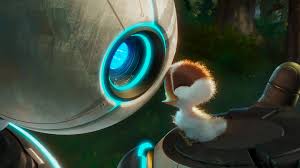
As I said in my review of the sweet and poignant “Robot,” this adaptation of a Peter Brown book wasn’t easy to sell via trailers and commercials. This official trailer never comes close to getting at the essence of the film and why it’s magical. The word “robot” was supposed to sell it.

“Beetlejuice Beetlejuice” had no such branding problems, being the sequel to a beloved if somewhat uneven horror comedy that found its audience and never let go of it. Neither of the films was great, no matter how much affection fans have for the first true wild and wooly mind of “TIM BURTON” branded hit (it even spawned an animated TV series in the late-80s, early ’90s).

Another $16 million for “Beetlejuice Beetlejuice” will push it over $250 million, domestically, and might give Burton the leverage to make any “dream” project he has in mind. He’s had so many.

“Transformers One,” which brings Paramount’s creaking franchise back to the animated toy show it always was, is falling off some 60% from its opening weekend take, good for another $9.3 million. This one will clear $50 or so by the time its run ends. Hardly a blockbuster.

Indian cinema has become a big deal in the post-pandemic box office era, one of the most reliable corners of the market for theater owners. So “Devara: Part 1,” three hours of subcontinent action starring N.T. Rama Rao Jr., is opening over $5.6 million.

Francis Ford Coppola’s last cinematic throw of the dice, “Megalopolis,” isn’t opening to long lines and ticket sales befitting a legendary/visionary film storyteller. The sci-fi parable stars Adam Driver, and good actor or not, he isn’t “box office,” nor is really anybody else in the cast. Maybe it’ll find its audience at some point, but $4 million isn’t the kind of send-off, mixed reviews be damned, Coppola deserves.

The sentimental dramedy “My Old Ass” and the combat photographer biopic “Lee” aren’t making so much as a ripple, with holdovers “Speak No Evil” ($4.3), “Deadpool & Wolverine” ($2.6) and “Never Let Go” ($2.2) and “The Substance” ($1.8) jockeying with them for placement within the lower half of the Top Ten.

Donald Trump couldn’t pay people enough to show up for “Trump Vindicated,” and Matt Walsh has made his last real money off  ” Am I Racist?” with neither of these wingnut docs making the top ten this weekend.

Posted in Reviews, previews, profiles and movie news | Tagged , , , , | Comments Off on BOX OFFICE: “Wild Robot” opens big, “Megalopolis” doesn’t, “Transformers” plunge, “My Old Ass” barely registers

Movie Review: Kate Winslet plays a Combat Photographer few recall — “Lee” Miller

“Lee” is a sturdy, episodic and sometimes moving “what I did in the war” biography of combat photographer Lee Miller.

She was a pioneer in the field, breaking down barriers, making her mark at the time. The reason we’ve not heard much about her is that she was an American model-turned-photographer, she published her work in British Vogue, and some of her most important work wasn’t published until much later.

Kate Winslet brings her to fiesty, uncompromising life in an occasionally immersive history lesson served-up with a dash of cinematic license when the unadorned literal truth isn’t sufficient.

We meet brash Lee Miller in the pre-war South of France, hanging out with artists and models and other beautiful people who aren’t shy about shedding their tops. Her friends include Picasso (Enrique Arce), a noblewoman and journalist for French Vogue, Solange D’Ayen, played by Oscar winner Marion Cotillard, and the famous French poet Paul Éluard (Vincente Colombe).

They’re an artsy, louche crowd, but they’re how the cynical Lee meets the artist Roland Penrose (Alexander Skarsgård), the love of her life.

Lee is a great beauty who doesn’t need to be reminded that typically, “ex-models travel the world and pretend to be interesting.” She may return to London with Penrose, but she’s a photographer hellbent on making a mark behind her Rolleiflex.

Vogue editor Audrey Withers (Andrea Riseborough) eventually finds a place for her, despite the sniping of famed staff photographer and future Oscar-winning designer Cecil Beaton (Samuel Barnett). And once there, when the war they all see coming finally begins, Miller becomes an integral part of British Vogue’s determination to “do our part” by showing British women doing theirs.

Miller captures women pilots who deliver bombers from the factory to air bases, nurses and anti-aircraft crews and those who simply “keep calm and carry on” during the Blitz.

After D-Day, she becomes an accredited American correspondant, getting around Britain’s rules against allowing women to cover combat. And she works the angles to break down the barriers the U.S. military throws up in front of her as the Allies march across Europe.

Andy Samberg plays Life Magazine photojournalist David Scherman, and they become a “team” and — it is implied — something more as they document battles, the liberation of Paris and The Holocaust.

Some of the most intriguing scenes here are recreations of how they sidestepped restrictions and curried favor to gain access to Nazi suicide scenes, the head-shaving punishmen of French “horizontal collaborators,” death trains and concentration camps. Hitler’s Munich apartment became the site of of one of Miller’s most famous poses and Scherman’s most famous photographs.

Cinematographer (“Summer of Sam,” “Eternal Sunshine of the Spotless Mind”) turned documentary and TV director Ellen Kuras ensures her feature debut looks documentary-real in the combat and wartime scenes and sun-drenched and somewhat carefree in the pre-war sequences.

The film meanders a bit, especially in the later acts. It’s somewhat hampered by a three-handed script that leans on a post-war interview “interrogation” Lee endures late in life, prompting her to recall her wartime efforts and exploits, dismissing them as “just pictures” but letting us see the images that were much more than that.

But Winslet is convincingly flinty, uncompromising and American in the part, a feminist in the truest traditional sense of the word. Excellent supporting cast aside, she’s the reason to see “Lee,” a one woman argument for why what Lee Miller documented and how she documented it mattered in a movie that honors her memory, and the memories that haunted her to the end of her days.

Rating:R, graphic war crime footage, violence, alcohol abuse, smoking, nudity and profanity

Cast: Kate Winslet, Alexander Skarsgård, Andy Samberg, Andrea Riseborough and Marion Cotillard.

Credits: Directed by Ellen Kuras, scripted by Liza Hannah, Marion Hume and John Collee, based on a biography by Anthony Penrose. A Sky production, a Roadside Attractions/Vertical release.

Running time: 1:56

Posted in Reviews, previews, profiles and movie news | Tagged , , , , | Comments Off on Movie Review: Kate Winslet plays a Combat Photographer few recall — “Lee” Miller