This comes down to pride. It does. Will Tom Cruise, who is being shown the door in the “Mission: Impossible” franchise — sort or — grab ahold of another spy project to “just show THEM”?
Guy Ritchie is the latest director (Steven Soderbergh was another) to try his hand at making a big screen picture out of the 1960s Cold War Spy Game series “The Man from U.N.C.L.E.”
Napoleon Solo and Ilya whats-his-Russian were the team of spies out to preserve the peace by any means necessary. It was ’60s Cool, with gadgets and cars and girls and what not. TV cool, anyway, Bond-lite.
He’s a hard dude to draw a bead on, this James Franco. He’ll be dismissed for years, then pull a performance in “Milk” or “127 Hours” out and make you go, “What?”
He took at a dive at the Oscars, and then Anne Hathaway comes back to win an Oscar and Franco is starring in the biggest hit of the new year (“Oz, the Great and Powerful”).
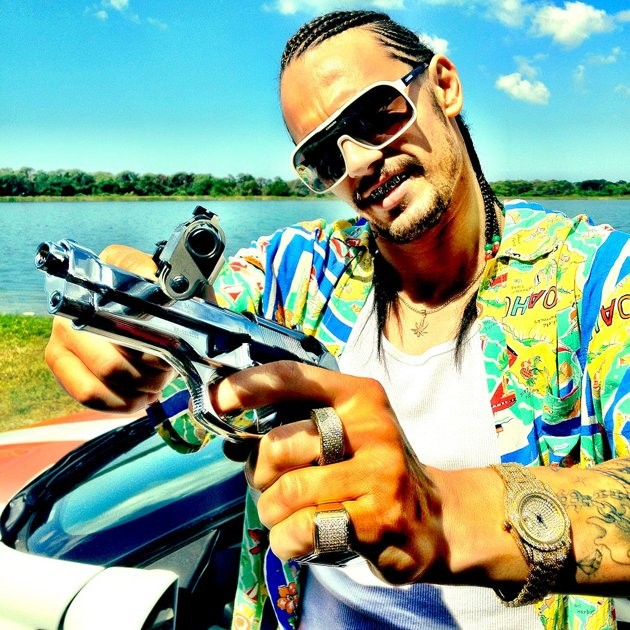
And the noise just gets louder with “Spring Breakers,” the controversial Harmony Korine tragi-comedy about Spring Break with Franco as the would-be rapper, really-is- gangster “Alien.” The heat around this movie is intense. Will the box office match it? Are the kids coming to see it when it hits Friday?
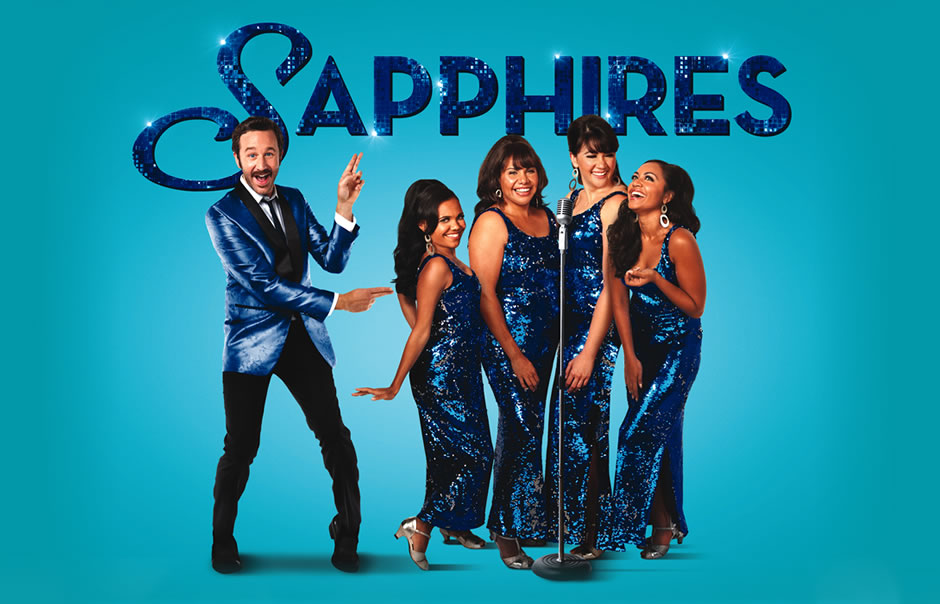
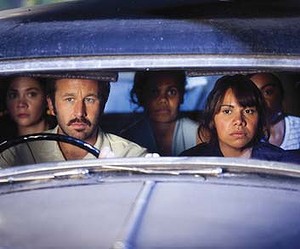
“The Sapphires” is an unpolished gem of a musical, a dramedy with a familiar ‘60s girl-group-on-the-rise story pasted over a backdrop of Australian racism and America’s long war in Vietnam.
It’s a tribute to the filmmakers (director Wayne Blair, working from a Tony Briggs and Keith Thompson script) that this confection often manages to connect the jaunty, sassy musical elements to the serious comment on Australian history.
A prologue captures a group of Aboriginal girls singing for family and friends in the Outback of the 1950s. This was an era when Australia routinely “stole” pale-skinned aboriginal children to be raised in institutions, “taught white ways.” So that quartet, when we next see them ten years later, is only a trio.
Gail, given a sneering fierceness by Deborah Mailman of “Bran Nue Day” and “Rabbit-Proof Fence,” plays guitar and bosses sister Cynthia (Miranda Tapsell) around. They’re off to a town talent show, if only they can shake their under-age songbird baby sister Julie (Jessica Mauboy of “Bran Nue Day”).
The talent show, where Gail and Cynthia sing a killer Merle Haggard cover, is where we meet the environment they’re trying to rise above. “No Abos,” one white Aussie yells. “Bloody monkeys,” growls another. The only guy to see their talent is the MC of the show, a drunken Irish piano player named Dave (Chris O’Dowd from “Bridesmaids”).
“This may have escaped your notice, but you’re black. And you’re singing country and western songs. And that’s just WRONG.”
They’ve seen an ad for singers needed to entertain American GIs in Vietnam and the sisters (Julie, too) want Dave’s help to get to the audition and win the job. But Gail’s only going to take so much advice from a white boy.
“My blood runs Negro, woman!”
There’s a cute montage of them polishing the act, learning to sing soul music, learning to sing “blacker.” The missing fourth from their childhood quartet (Shari Sebbens) joins up.
And then it’s off to Vietnam, where “Heard it Through the Grapevine” and “I’ll Take You There” take them from seedy Saigon clubs, to hospitals to the front lines at a firebase in the middle of nowhere. Along the way, they face love, blood and death, and come to terms with their heritage.
There’s more than a hint of the ‘90s Roddy Doyle adaptation “The Commitments” in all this – people far removed from Memphis and Detroit connecting to soul music on a spiritual level. You have to take the “inspired by a true story” label with a roll of the eyes, as the film’s history is sloppy – singing songs that hadn’t yet been written at the time the film was set, singing to military units that were never in Vietnam.
But the clashing personalities make it work and the singing makes it sing. O’Dowd makes a terrific comic foil to the quartet – who fall into and yet rise above the clichéd “types” that each girl represents – the one with the talent, the one with the libido, the one with the chip on her shoulder, etc.
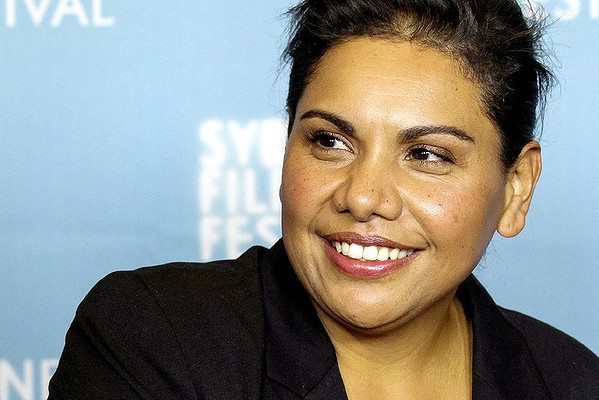
If you’ve seen an Australian film that had Aboriginal characters in it over the past 20 years, you’ve seen Deborah Mailman at work. She was in “Rabbit Proof Fence” and “Bran Nue Day.” She’s in “The Sapphires,” which opens Friday.
And she’s in “Mental,” a Toni Collette/P.J. Hogan comedy that opens in some markets this month. Mailman, 40, is an Indigenous Australian. Her parents give her Australian Aboriginal Bidjera and New Zealand Māori (Ngati Porou and Te Arawa) heritage. She starred in “The Sapphires,” about an Outback girl group that tours Vietnam during the height of the Vietnam War, when it was an Aussie stage play. And she reprises her role, as Gail, the flinty, willful hard-to-like sister in charge, for the movie, which co-stars Chris O’Dowd.
“Four very complex, very strong, very sexy, very headstrong and very real Aboriginal women on the screen. That hasn’t happened before. I had never heard about the entertainers who took these jobs and traveled to a war zone to entertain the troops,” she says. “That’s a fascinating story, because they’re not soldiers, and experiencing the war from their background, through their eyes, was a new idea to me.
“That correlation between African Americans and Aboriginal Australians that the movie shows was always there. My parents’ generation were very influenced by Martin Luther King, Jr. Civil Rights was on the march in America, and in Australia. In America, Martin Luther King was struggling for equal rights, and in Australia, people were inspired by him to attempt to get tribal recognition and equal rights for Aboriginal peoples.
“I like doing movies that touch on Australian history, telling the world about ‘The Stolen Generation’ (Aboriginal children removed from their homes and ‘raised white’). Most of the world doesn’t know about Aboriginal culture, and any movie that shows you one of the oldest living cultures on this Earth is a great thing. Our country’s history is a lot more than throwing shrimps on the barbee. It’s our national identity that comes through here. “That’s why I do these films. On a very human level, you tell a story that touches on something that is part of your heritage, and that help others understand it. Maybe we can transform the audience, in a way, by informing them.
On “The Sapphires” (my review is here) and its soul and country music subtext. “Soul music and country music are big in my house, and in my community. You hear a LOT of country music in Aboriginal peoples’ homes. “I hadn’t sung or danced outside of that original play. It takes a lot for an actor to just get the confidence to sing and dance – when you’re not a natural singer or dancer – up on the stage every night. WAY out of my comfort zone. The songs are great, but music like that is terrifying to perform.” On Gail’s similarity to her first big role — “the Shrew” in “The Taming of the Shrew,” Shakespeare’s play.
“I played Kate in ’93-94, fresh out of acting school, in Brisbane. She and Gail are basically the same character, aren’t they? Classic girl who doesn’t suffer fools gladly. Strong women who tell it like it is.” On the reception of “The Sapphires” — “When we did the premiere in Dublin last year (in Chris O’Dowd’s stomping grounds), it was the most amazing screening we had. Everybody there GOT the joke. The cultures connect, the way we use language is similar.”
On her role in “Mental” (my review is here) in which she plays the gay pal of Toni Collette, a woman we meet in a mental hospital Collette’s character is visiting. “The script didn’t say, ‘Aboriginal crazy woman,’ so I love that they considered me for that. We’re at a place within our industry where the landscape for indigenous actors is shifting. We’re moving beyond roles that are described as our background. A character doesn’t have to be described as an Aboriginal woman for me to have a shot at it. That happened in ‘Mental,’ where I’m a character who is never regarded as black or Aboriginal. She’s just crazy. “I’ve done TV shows back home that aren’t defined by my heritage, something Australia is just now achieving but something that’s been happening for actors in America for decades. To play a role that isn’t a label is a dream that’s finally starting to come true in Australia. Casting directors have to learn to be braver and look outside the box.
“There’s not too many black faces on the screen in Australia. Never have been. But things are changing. The first indigenous produced and written series is on, now – “Redfern Now” is one that I’m on. And another one’s coming up,’The Gods of Wheat Street.’ So the landscape is shifting for Aboriginal artists who are getting the opportunity to tell their stories. “But there’s a part of me that goes, ‘Let’s make this go a little bit faster.’
Tina Fey makes funny TV shows, funny movies and funny books.
Director Paul Weitz often goes for something beyond funny – emotional stories of parents and children trying to puzzle out something beyond flesh and blood that bonds them.
She did “30 Rock” and “Date Night.” He did “About a Boy” and “Being Flynn.”
And somewhere on the uncertain ground between the two is “Admission.” It’s a romantic comedy – of sorts – about a lovelorn Princeton admissions officer forced to reconcile her judgmental job with the news that the baby she gave up for adoption 17 years ago might be applying to…Princeton.
It’s not a particularly satisfying comedy, but thanks to the cast and some of the odd directions it takes, “Admission” is an intensely likable one.
Portia (Fey) spends her days competing with Corinne (Gloria Reuben) to see who can be the snobbiest in front of the head of admissions, hoping against hope to get the top job when he (Wallace Shawn) retires.
She comes home to her English lit professor live-in beau (Michael Sheen), who reads Chaucer aloud and declares “I like this life. I do I do!” No children, an academic setting, a life of letters and purpose, what’s not to like about it?
But calls are coming in. Quest, this new alternative school where kids learn to split wood, milk cows, how to build robots and think for themselves, has a star student. And his teacher (Paul Rudd) is determined to get Portia’s attention. Jeremiah (Nat Wolff) could be “Princeton material.”
There’s something else teacher John wants to get across, in between awkward moments of violating Princeton policy and instances where Portia is sure he’s making a pass.
“Jeremiah — I think he’s your son.”
Much of the film is about miscommunications, things that stop just short of being said – Portia accepting this shocking news, or denying it; John and Portia trying to not tell the kid. She keeps seeing little things the teen does that are like her, and starts looking for shortcuts so that he can get into college.
Fey has made romantically put-upon her stock in trade, and as Portia’s life unravels, there are plenty of moments that remind us of Fey’s lonely TV loser, Liz Lemon. Portia is set up to be in open revolt against a “hippie” school like Quest thanks to her brittle, Feminist Lit lioness of a mother (Lily Tomlin). But she’s an egalitarian acting as guardian of the gates of American exclusivity – a college where fewer than one in twenty-six candidates is “Princeton material.”
Fey plays this inner-outer conflict well. But at her most wide-eyed and vulnerable, she still has trouble making a romance credible, even with Rudd, edgy comedy’s puppy dog of a leading man.
And Weitz can’t winnow the story down to a simple personal journey with romantic overtones. “Admission” breaks down the college admissions process, makes blunt statements about the upper class’s “legacy,” and the cards students and their hovering parents will play to score Ivy League acceptance.
It’s too scattered and too ambitious for a movie that often slips into feminist, academic, postponed motherhood and “alternative” education clichés.
Teen pop idols rarely have a shot at a big second act in life. For every Mark Wahlberg and Donnie Wahlberg, there are a legion of Leif Garretts and Tiffanys, Miley Cyruses and Hilary Duffs.
But Nick Jonas is getting a shot at the big screen. He’s been cast in a leading role in the new indie thriller “Careful What You Wish You,” which films this spring in Charlotte, N.C., according to Variety.
Elizabeth Allen (“Aquamarine”) is directing, Isabel Lucas is the female lead. But it’s not a teen movie or even young adult romance. Again, “indie thriller.” Hyde Park is backing it.
Variety says that Nick will play “a man who begins an affair with the young wife of an investment banker renting the lake house next door for the summer. The husband then dies suspiciously.”
Hugh Jackman will get back to work following the Oscar hubbub of “Les Miserables” with “Six Years,” a Paramount film based on a yet-to-be-published novel. According to The Hollywood Reporter, the plot of Harlan Coben’s book is about a man “who watched the love of his life…marry another man. Six years have passed when Jake comes across the other man’s obituary. He resolves to attend the funeral, hoping to catch a glimpse of Natalie. But the mourning widow is not Natalie, throwing all of his past memories with the woman into question.”
“You know,” the Irish actor Chris O’Dowd says of his new film, “The Sapphires,” “I agreed to make this sweet little movie in Australia, hoping against hope that it’d make it, maybe, as far as the shores of oh, NEW ZEALAND. But the premiere in Dublin was WILD. And here it is, opening wide in the States. Who knew?”
Indeed. “The Sapphires,” a musical set in the 1960s, is about Aboriginal soul singers from Australia who take their act (and their piano player, played by O’Dowd) on tour in Vietnam, entertaining American troops there. It certainly didn’t have the whiff of a hit when it played at last year’s Toronto Film Festival. But now it does. And a lot of that has to do with O’Dowd.
O’Dowd’s character in the film, as co-star Deborah Mailman says, “Was English in the stage version” of “The Sapphires,” which she starred in back in 2005. “But our director (Wayne Blair) knew Chris would bring that Irish sensibility into the story, the Irish being kind of downtrodden people, connecting to soul music, connecting to oppressed Aboriginal people in Australia – that was a stroke of genius.”
O’Dowd is a leading man on the rise these days. “Bridesmaids” led to “This is 40” and “Friends With Kids,” and convinced HBO to back a series Christopher Guest co-created, with O’Dowd starring (“Family Tree”). Other projects are lining up to get the 33 year-old on board, probably responding to the sentiment NPR critic Linda Holmes expressed when she saw “The Sapphires.”
“To be honest, you could put Chris O’Dowd in almost anything, and I’d probably line up for it, and so would a fair number of other people.”
The actor, who got his first big break with the British TV series “The IT Crowd,” is taking an unusual path to stardom – doing a British TV series (“Moone Boy”) and an American series, simultaneously. He’s’ joined Judd Apatow’s extended comic family, but took the time to study piano for a little Australian movie that seemed to have limited prospects, because “I was into this whole Sam Cooke/Gospel soul phase when they called with the offer. I thought, ‘Why not?’”
He was intrigued by the film’s story, which touches on Australia’s “Stolen Generation” of Aboriginal children, removed from their families and raised “white.” “I knew little about that history, and I like the idea of a movie that teaches you something didn’t know about.”
He customized the “Sapphires” role, that of Dave the drunken piano player, a loser relegated to playing the backwaters of the Outback, which is where he meets the girls who form (with his help) the Aboriginal “girl group.”
“I was a teenager when ‘The Commitments’ came out, and in Ireland, it seemed to change everything,” he says, remembering the soul music comedy based on Roddy Doyle’s novel. “We all understood where we Irish fit in with soul music. And this film brings the Irish and the Aboriginal peoples of Australia together under the banner of soul.”
O’Dowd, who does a little writing and has experience on the “The best line wins” style of improve-by-improv screenwriting of the Apatow films, tinkered with his lines and wrote some winners.
“Country music and soul music are both about loss,” Dave says in “The Sapphires.” “But with country and western music, they’ve suffered loss, and they’ve given up. They’re drinkin’ and cryin’ about it. With soul music, they’re still straining, struggling mightily, with every fiber of their being, to get what they’ve lost back.” O’Dowd saw “that we hadn’t quite justified the reasons Dave turns this group away from Country & Western music (which they had been performing) and onto soul,” and whipped that up.
He plays leading man to the feisty leader of the group, played by Mailman (“Bran Nue Day, “Mental”).
“If we had chemistry, it’s all from her,” he says. “A lovely actress, and all you could ever want from somebody you’re playing the scene with is that they be totally present. That’s Deborah.”
And he got to sing, on screen – “I Can’t Help Myself,” by the Four Tops. That makes O’Dowd the “Irish Levi Stubbs?”
“The Irish Levi Stubbs. Now that, my brother, that is a compliment I’ll take to my grave.”
And now it may come to pass. A $200 million hit worldwide (and counting), that has them thinking they’ll come back for more witch hunting. Paramount, I mean.
There’s a hint of “Wait Until Dark” to this thriller, starring Michelle Monaghan as a blind woman whose lover is murdered. And then, just as he’s making her getaway — enter Michael Keaton.
Director Joseph Ruben (“Sleeping With the Enemy”) has worked about as much as Keaton in recent decades, so this is very much a wild card of a thriller. And a possible first step in a comeback.