Movie Preview: Remembering “Jimmy” Stewart’s Combat Service in WWII

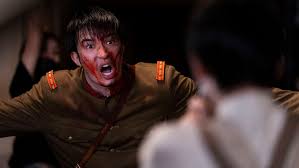
KJ Apa does a pretty fair imitation of Hollywood legend Jimmy Stewart, who took a break from the movies to pilot a bomber in the fight against Nazis in WWII.

The recognizable supporting players — Jason Alexander, Rob Riggle, Max Casella, Neal McDonaugh and Christopher McDonald — don’t exactly scream “BIG BUDGET” any more than the digital B-24s in this teaser trailer.

Not sure who will be releasing it, but I suspect it’s Angel Studios or some other distributor’s faith-based nameplate.

This hits theaters next November.

Posted in Reviews, previews, profiles and movie news | Comments Off on Movie Preview: Remembering “Jimmy” Stewart’s Combat Service in WWII

Movie Preview: Crikey, Hugh Jackman’s been murdered — “The Sheep Detectives” are On the Case!

Emma Thompson and Patrick Stewart co-star in this Big Time “Babe” vibes murder mystery comedy.

Julia Louis Dreyfuss, Regina Hall, Bryan Cranston and Chris O’Dowd provides voices for the sheep.

May 8.

Posted in Reviews, previews, profiles and movie news | Comments Off on Movie Preview: Crikey, Hugh Jackman’s been murdered — “The Sheep Detectives” are On the Case!

Classic Film Review: Lost in the Lush Longueurs of “Paris, Texas”(1984)

One has learned to temper one’s expectations when settling in to watch any Palme d’Or winner from the Cannes Film Festival over the years. One has.

A “best picture” honor selected by an ever-changing jury of filmmaking peers from all over the world, the politics and peer review that tends, often as not, to honor obscurity and/or indulgence make one leery of that “Palme d’Or Winner” label.

“Wild at Heart,” “Eternity and a Day,” “The Tree of Life,””The Birds, the Bees and the Italians” and “The Square” anyone?

The best I typically hope for from your average Palme d’Or winner is “I don’t mind the way it passes the time.”

One has to generally set a lot of time aside for any Wim Wenders film, seeing as how he tried to get a five hour cut of “Until the End of the World” into theaters (he didn’t) among other abuses of the clock. So “Paris, Texas” also has that weighing into my years of skipping past it.

But Wenders’ leisurely 1984 meditation on the American landscape, toxic relationships and the profound pull of love has been newly-restored. It’s the movie that “made” veteran bit player Harry Dean Stanton into an indie icon and is also memorable for a great supporting performance by Nastassja Kinski.

So problematic and dated gender politics aside, its famously indulgent twenty minute duel monologues climax and that Palme d’Or caveat emptor be damned. It must be seen, if only for the lonesome Sam Shephard screenplay and the striking way Curaçao native Robby Müller (“Breaking the Waves”) filmed grand Western vistas and the seedy and sandy side of Texas.

Our silent protagonist (Stanton) emerges from the wilderness in a red cap, sunburned beard, shoes worn down to sandals and a suit that was last fashionable in the ’50s and last cleaned not long after that.

He faints in a roadside/desert edge Terlingua, Texas bar, and the only ID the brusque, stogey-smoking German Mennonite doctor (Bernhard Wicki) can find on him is a business card with a California phone number.

That’s how Walt Henderson (Dean Stockwell) learns his brother Travis isn’t dead. Four years missing, four years in the wilderness when even Jesus limited himself to just 40 days, Walt is shocked. But he flies in and navigates his way to remote Terlingua in that pre-GPS stone age. Even he can’t get Travis to talk, or to stop walking off every chance he gets.

Walt eventually gets the never-flown/never-will Travis home to L.A. where the wandering brother gets requainted with Walt’s wife (Aurore Clément) and with their son. But Hunter (Hunter Carson) is actually Travis’ son.

As Travis starts talking and sounding more rational and the kid adjusts to his presence, Travis resolves to do something that might explain why he took his sojourn in the wilderness. He and Hunter will load up his old Ford Ranchero and track down the lad’s mom.

Continue reading
Posted in Reviews, previews, profiles and movie news | Tagged , , , , , , | Comments Off on Classic Film Review: Lost in the Lush Longueurs of “Paris, Texas”(1984)

Movie Review: You Can’t Go Home Again, “Blue Eyed Girl”

Realistic mid-life concerns and life reassessments earn a drab and generally colorless going over in “Blue Eyed Girl,” a dramedy with little real drama and even less comedy.

Actress Marissa Coughlan, taking that “Write something for you to star in” film actor’s maxim to heart, scripted this and stars as Jane, a struggling 40something actress in LA summoned home to Minneapolis by her aged father’s latest suicide attempt.

Going “home” to cope with Dad’s (Beau Bridges) depression and consult with her sisters (Elia Coupe, Bridey Elliott) means bumping into her high school flame (Sam Trammell). After sizing each other up — “You make a good grown-up!” — the once-smittens brush by the “hard” question left over from their “angsty youth.”

“So why aren’t we?”

“Aren’t we what?”

“Married to each other.”

There’s wistful promise in Dad’s mournful sadness and his bonding with his just-as-sad nurse (screen veteran LisaGay Hamilton). And the bickering/bonding sisters — Alex (Coupe) is an “I recommend marrying rich” trophy with a house on a private island on of of those “10,000 lakes” in Minnesota, the youngest Cici (Elliott) is a 30something Renaissance Faire “queen” with all the ambition (or lack of it) that entails — have possibilities. Especially when it comes to putting each other down.

About Jane’s limited acting success — she’s in a group of foley (human sound effects) artists who provide crowd noise for movie scenes — “At some point, don’t you have to just call it,” as in call the code on a “career” that’s never happening?

The dizzy Renaissance Faire flake? “She’s 35 going on 14.”

As the what-might-have-been romance is a bland non-starter, other story threads merited more screen time. Renaissance Faire folk are always good for a laugh, and the subculture of actors scraping by with voice-only gigs of every stripe has rarely been explored.

But most everything here is skimmed over, from the crisis (never treated as such) with their father to the second-guessing marriage to a failing writer (Freddy Rodriguez).

Dad may be depressed, but he’s still a sage when it comes to fathering

“Don’t trade in a faded portrait for true love.”

This Minneapolis movie has only the barest whiffs of the city about it. One doesn’t expect Minnesota cliches and “Don’chaknow” stereotypes, necessarily. But this picture could have been filmed and cast most anywhere, with the odd insert of a house on an island in a lake shot.

The entire enterprise is as bloodless as it is colorless.

As it was originally titled “Days When the Rains Came” and “Brown-Eyed Girl” was what beau Harrison used to call blue-eyed Jane back in the day, there must have been hope that they could afford the rights to Van Morrison’s over-used movie-friendly tune “Brown-Eyed Girl.”

That didn’t happen, and it’s just as well. It wouldn’t have helped.

Rating: 16+, adult themes, language

Cast: Marisa Coughlan, Elia Coupe, Sam Trammell, LisaGay Hamilton, Bridey Elliott, Freddy Rodriguez and Beau Bridges

Credits: Directed by J. Miles Goodloe, scripted by Marisa Coughlan. A Quiver release on Amazon Prime.

Running time: 1:37

Posted in Reviews, previews, profiles and movie news | Comments Off on Movie Review: You Can’t Go Home Again, “Blue Eyed Girl”

Movie Review: Mexico’s Oscar hope — “We Shall Not be Moved (No nos moverán)”

Dostoyevsky’s obsession with the unpunished murderers walking among us weighs heavily on the politics of the present.

Criminals whose crimes against people, nations and the rule of law are committed in plain sight or proven in court roam free.

People are vanishing in what can only be called gulags in Africa, Central America, Texas and Florida. .

Unaccountable, illegal and lawless “law enforcement” rounds up people — citizens and immigrants — injuring many, killing some and “disappearing” others. Soldiers are unleashed on civilians from Ukraine to Gaza and the streets of American cities as political and racial revenge.

And the citizens of nations spiraling down totalitarian rabbit holes draw little comfort from the attempts at “Truth and Reconcilliation” commisions in South Africa, Chile, Argentina and Northern Ireland. Merely exposing crimes and attempting to move on — even with attempts at “reparations” — will never be enough for many.

For some, the chance to “exact retribution” for what they’ve suffered is all they cling to.

Mexico’s submission to the Best International Feature competition for the 98th Academy Awards speaks to this moment and that fervent desire for revenge.

“We Shall Not be Moved” is a grim, patient drama about a survivor of Mexico’s Dirty War against students and dissent. Pierre Saint-Martin’s “No nos moverán” (in Spanish, with English subtitles) is about an aged attorney seeking a sort of “Death and the Maiden” closure.

Socorro Castellanos — played byLuisa Huertas — is an old woman now, a chain-smoker living with her silent, sullen and widowed sister, dabbling in just enough pro bono work to remind her of the struggles for justice that have consumed her life.

There’s a worn photograph that Soco holds onto, a snapshot taken by grinning goons in uniform as they tortured and killed her brother, Coque, back in the ’60s. Soco muses on how they first killed Coque, “then my Dad, and then my mom” who died alone in the hospital, each of them broken and eaten up with what happened to her brother and the fact that no one was punished for this state-sanctioned crime against humaity.

“We Shall Not Be Moved” begins with what’s in a long-delayed delivery of a package from a now-dead acquaintance. Over fifty years later, Soco finally has a name to go with one of those smiling, ghoulish faces.

It’s not “justice” she seeks. There’ll be no accusation, no public trial.


“Justice in this country is for the rich and those in power,” she advises a couple trying to settle a debt with a lendor. “Retribution,” “an eye for an eye” is what she has in mind for this Juan Antonio Agundez who murdered her brother.

The narrative is about how an old woman with some connections — mostly with the elderly or retired, like her — who tries to get her revenge and just how complicated that might be.

“Revenge thrillers” are typically a glib genre, making the idea of righting a personal wrong look easy, righteous and rewarding. “We Shall Not Be Moved” upends some of those conventions.

It has its Chekhov’s Gun, which is an old and under-maintained pistol that won’t scare anyone.

There’s Soco’s ex-con building maintenance man Sidartha (José Alberto Patiño) who may be sketchy and loyal, but is nobody’s idea of a killer for hire. Maybe a more shadowy (Alberto Trujillo) from her legal past can be tracked down.

Soco’s son Jorge (Pedro Hernández) and his Argentine wife Lucia (Agustina Quinci) buy her groceries and look out for her. She won’t trouble her unemployed journalist son. But there is a little something Lucia can do to pitch in.

As others are enlisted and wheels set in motion Soco sees a white pigeon that shows up as a “sign” that Coque is watching over her efforts. But Soco also has to stare down the collateral damage she’s causing and ponder the ripple effects of revenge.

Continue reading
Posted in Reviews, previews, profiles and movie news | Tagged , , , , , | Comments Off on Movie Review: Mexico’s Oscar hope — “We Shall Not be Moved (No nos moverán)”

So “Northern Exposure” (1990-95) stole from “Local Hero” (1983)?

I’ve never made a secret of my ongoing affection for Bill Forsyth’s classic fish-out-of-water comedy “Local Hero,” the sort of pixiedusted picture that conjured an adoration for small town Scotland even in people who’d yet to venture there when it came out in 1983.

And there’s nothing like sitting down for a periodic renewal of my connection to “Northern Exposure” to remind me of the year (it felt longer) I spent in Kodiak, Alaska. It might be TV’s best “fish out of water” comedy, and it’s inspired movies and movie characters, plot threads and casting whims in many a film since its heyday.

But I never made the connection between the two until this latest dial-hop-stop for “Local Hero.” Historically, Russians have not been strangers to Alaska, from their efforts to colonize it to Old Cold War and New Cold War efforts to threaten it. When I lived there, Russian trawlers would drop in for a touch of unofficial “good will” shore leave, just long enough to shock the crew into how expensive Alaska’s version of America was to shop in. I toured a trawler or two that stopped in when I worked for the NPR station there, always with a a fishing trawler equivalent of the Party Hack/security officer (Zampolit) trailing me as I asked innocuous questions about what they were fishing for and how often they made U.S. port of call stops.

The 1994 “Zarya” episode of “Northern Exposure” is a straight-up knock-off of a “Local Hero” episode — a quaint coastal village gets regular visits from their favorite Russian. Cicely, Alaska wasn’t coastal, but the plot element was close enough to matter, and plainly taken from Forsyth’s film.

Forsyth could have co-created or directed episodes of the show, thanks to the matching tone and colorful eccentrics populating his corner of Scotland and Alaska’s version of “The Middle of Nowhere.”

Late period Cold War comic twists on the cliched “Red Menace” leaned on another Russian stereotype — the gregarious, big living, big loving, hard drinking and singing life of the party Tovarich. We’ll likely never see their like on film or TV again until Putin and his puppet have passed from the stage.

Posted in Reviews, previews, profiles and movie news | Comments Off on So “Northern Exposure” (1990-95) stole from “Local Hero” (1983)?

Netflixable? Saudi son thinks “The Fakenapping” is How to Get Money Out of his Rich Dad

Flashes of competence adorn the new Saudi action comedy, “The Fakenapping.”

It’s not badly acted, and the few action beats make one wish director Amine Lakhnech had thrown in a few more car chases around scenic, modern after-dark Riyadh.

The plot is given away by the title. A son (Mohammed Aldokhe) is in hock to a loan shark, so he’s all ears when a sketchy pal (Yazeed Almahyul) suggests they fake a kidnapping to get ransom money out of Sattam’s miserly old man, Sulieman (Abdulaziz Al-Sokayreen).

A couple of goofy, inept Porsche-coveting lowllifes join the caper.

Sattam’s hapless yes-man-to-his-dad brother (Khaled Hweijan) and the brother’s greedy wife (Abrar Faisal) bicker over whether this is the best use of the fabric importer father’s under-the-table Saudi riyals.

But the subtitled translation is sloppy, with half the cast of characters never identified by name. The kidnapper accomplices aren’t ID’d at all. The “logic” of the plot doesn’t translate at times. And the finale makes less sense than the attempts to conjure up a “happy ending” out of all the greed, unpunished crime and family treachery of it all.

Aldohke is convincing as a father going through a divorce, doting on his pranks-loving little girl. But little is made of that plot thread and our leading man never works up what would pass for enraged and frantic that his character is meant to express in the latter acts.

A big fight is staged in which a chief henchman/bodyguard just stands by and let his mobster boss get smacked and grabbed into a wrestling tussle before finally — on cue — diving in.

Much of it is just “off” enough to not work. But as Saudi comedies and pretty much anything funny filmed in Arabic are rare, one can appreciate the effort.

I chuckled at the kidnappers making sure to provide a prayer mat and note the Qibla — the general direction of Mecca — to their victim. And I laughed at the realization — perhaps newer to the West than to the Middle East — that Saudi men who insist on dressing in a thawb, bisht and sandals are no damned good at chasing somebody, or getting away from anybody else. The shoes and all that cloth you have to gather up puts you at a disadvantage.

“The Fakenapping” isn’t very good. But it’s got possibilities. I’d keep an eye out for Amine Lakhnetch’s next outing. But he’d be well advised to spend some of that Saudi/Netfix money on paying for a more competitent closed caption translation than whatever Netflix is using now.

And if you’re going to put grown Saudi men into a chase on foot, the smart play is to make that stumbling, tripping, trapped in your “traditional” robes business a running gag.

Rating: TV-PG, mild violence, smoking

Cast: Mohammed Aldokhe, Yazeed Almajyul, Abdulaziz Al-Sokayreen. Saeed Al-Owairan, Abdullah Aldrees, Khaled Hweijan and Abrar Faisal

Credits Directed by Amine Lakhnech, scripted by Abdulaziz Alessa and Ahmed Amer. A Netflix release.

Running time: 1:26

Posted in Reviews, previews, profiles and movie news | Tagged , , , | Comments Off on Netflixable? Saudi son thinks “The Fakenapping” is How to Get Money Out of his Rich Dad

Rob Reiner: 1947-2025

Like most people I’d care to know, I was shocked and saddened to learn of the murder of Rob Reiner and his wife Michelle this past weekend in Los Angeles.

It’s the sort of crime that makes one leap to a lot of wrong conclusions based on who he was, how outspoken he was and how insensate, venal and violent those who openly professed hatred for him in recent years have proven to be.

But it’s the holidays. The police are questioning an estranged family member. It’s a stressful time of the year amped up by the sorry state of the nation and the sleepless, alarmed national pysche. Who knows what happened?

Reiner was an early adaptor nepo baby, the son of famed wit and funnyman Carl Reiner, and he followed Dad into writing, acting and directing — surpassing many of the old man’s achievements by making a string of great to near great films in the ’80s and ’90s.

“Spinal Tap” to “The Sure Thing,” “A Few Good Men” to “Misery,” “When Harry Met Sally” to “Flipped.”

I interviewed a few times over the decades, first with “Misery,” where he seemed proudest of his “discovery” of the Great Great Kathy Bates, and the last time when he had the utterly magical “Flipped” that he brought to an AARP convention in Orlando and we spoke. Nobody saw it, and that’s a crying shame.

I often think of his directing career when I see evidence of another filmmaker of similar stature unable to make the deals, get the jobs, that they used to. Or in the obvious and most recent case, of 88 year old James L. Brooks’ films of the past 25 years, reaching a nadir with “Ella McCay,” underlining the ways even great filmmakers’ instincts fail and the ways the filmmaking/film audience times pass you by and you’re late figuring that out.

“Old guys (and gals) can’t direct comedy” is an old maxim of criticism whose lone exception is the ancient Brit Charles Crichton, whom John Cleese got to steer “A Fish Called Wanda” to glory. A couple of Reiner’s later films reached their (retiree, mostly) audience, but most just didn’t work.

But Reiner, in his long, storied prime, was a grand talent, a guy with instincts that paid off time and again — launching John Cusack’s career with “The Sure Thing,” joining forces with Stephen King for “Stand By Me,” squaring Cruise off against Nicholson in “A Few Good Men,” matching glorious and still funny geezers Morgan Freeman with Jack for “The Bucket List,” hunting for truth and bringing murderous racists to justice in “Ghosts of Mississippi,” casting Peter Falk, Robin Wright, Cary Elwes, Wallace Shawn, Andre the Giant, Mandy Patinkin, his pal Christopher Guest and wee Fred Savage and making “The Princess Bride” an all time children’s classic that their parents could enjoy.

No doubt those who hated the guy who came to fame as their least favorite liberal “meathead” will relish the way this murder is covered on their favorite oligarchical news operations. But those who followed Reiner’s work and his politics know that he never gave up on changing their minds. And almost nobody deserves this.

Posted in Reviews, previews, profiles and movie news | Tagged , , , | Comments Off on Rob Reiner: 1947-2025

Movie Preview: Angel Studios takes a crack at “Animal Farm”

Those wags at Angel decided that the CIA backed 1950s “Animal Farm” wasn’t anti Soviet/collectivist enough.

OK, actually, this doesn’t look and sound nearly as Orwellian. “Cautionary,” but with more of a “Zootopia/Chicken Run” animals resistance vibe?

That’s what the trailer is selling, anyway.

So this coming MAY DAY (LOL) — Seth Rogen is the piggiest Piggy ever, with Glenn Close, Laverne Cox, Steve Buscemi, Woody Harrelson, Andy Serkis, Jim Parsons and Kathleen Turner providing voices to the characters we know so well.

Posted in Reviews, previews, profiles and movie news | Comments Off on Movie Preview: Angel Studios takes a crack at “Animal Farm”

Movie Review: A Tasty Tangled Web — “Sew Torn”

I once covered the first day of the first class of a brand new film school. Directing students were learning how to rehearse a scene with actors, and one of them finished his turn running the set when he asked the actors to switch roles — gender, age, plot and logic be damned — for another go.

The professor interrupted him and made a teachable moment out of this whim. At best, what the kid was trying was a gimmick. At worst, he would be wasting expensive production time on set for a movie that investors paid to turn out a ceratin way, in a way that amounts to a childish, unprofessional indulgence.

How you respond to the comic indie thriller “Sew Torn” depends on your tolerance for such gimmicks, and for pun titles.

First time feature director Freddy Macdonald, remaking a proof-of-conceit short film, hammers the viewer over the head with the parable he’s setting up, the “choices” our heroine/antu-heroine Barbara (Eve Connolly) makes which lead to four different outcomes spinning out of her moment of truth.

Is there a “right” and “moral” choice that will give her a happily ever after? Or will she have to break the rules, the law and rob and escape mobsters to commit “the perfect crime” to get there?

Barbara is a small town “mobile seamstress,” daughter of the seamstress who opened Duggen’s sewing shop and seamstress service. Haunted by her dead mother, whose own gimmick was a sort of forget-me-not machine-copied-from-a-photo embroidery pillow with a voice chip containing a loved one’s message, best wishes, etc.,

Barbara is trapped in her dead mother’s failing business dealing with a handful of eccentric to downright rude clients.

But one day, she skips out on a rude bride (Caroline Goodall) who is furious over a button on her “everything’s got to be PERFECT” wedding dress and stumbles across an accident/crime scene.

There are entangled, burning motorcycles, two battered and bloodied drivers crawling along the pavement, a couple of pistols in plain sight with busted bags of white power over the remote stretch of mountain road (This was filmed in Switzerland’s Tamina Valley). One rider has the busted half of a handcuff on one arm. The other handcuff half is on a briefcase.

We’ve seen a few movies and a lot of TV. We know the whole story without anybody telling us. Barbara’s stumbled into a “drop” gone wrong.

“Perfect crime,” Barbara narrates in her mind from the seat of her kitschy late model Fiat 500 with a giant needle and thread on the back. “Call police. Drive away.”

The “crime” part is driving away with that briefcase. We then see four different iterations of Barbara’s “choices” that have her trying to get paid and get out of the trap of her life with her wits and her three dimensional seamtress’s view of the world.

We watch her try to DIY her way out of jams — attempting to turn the tables on being held at gunpoint, weaving a web of thread that will give the two bad guys (Calum Worthy and Thomas Douglas) string-manipulated access to their pistols at the same time, setting snares and booby-traps, tying down her own hostage. using a needle and thread as a form of grappling hook, the works.

If it can be done with a thimble, thread, needle and tiny scissors, Barbara’s whe whiz who can manage it.

John Lynch plays the not-to-be-trifled-with — “He’s coming for me, then he’s coming for you” mobster. He will be her ultimate foil in these thought exercises in getting away with drug money.

Yes, it plays like a piece of theater workshopped into various finales. `And no, you never forget that what you’re watching is gimmicky. But so what? So is every “Knives Out” mystery.

It’s the script’s notion of problem-solving-by-sewing that sells this. That’s downright ingenious.

How will Barbara sew or thread her out of each jam is a fun way to conjure up suspense in a film that doesn’t have a lot of urgency, thanks to its rural setting.

We see the colorful currency, hear everybody speaking English and yet notice the (Swiss) mountains and architecture and ponder the curious and curious cliched characters and try to place this story in a logical place, and can’t.

Wherever this is, the great Northern Irish character actor Lynch (“The Secret Garden,” “In the Name of the Father”) seems both right at home and a scary aberration in a quaint, Swiss Miss TV commercial setting.

“Choices choices choices,” Barbara narrates. How will this gimmick pay off, and does it matter than she says “choices” three times in a movie where plainly a fourth option can be trotted out?

Who cares? It’s fun, and no matter how contrived, Macdonald and Connolly — of TV’s “Into the Badlands” and “Vikings” — keeps us engaged in a “Mouse Hunt” tale where the trick is to have the right thread and get it through the eye of the needle enough times to pay off.

Rating: unrated, bloody violence, profanity

Cast: Eve Connolly, Calum Worthy, Thomas Douglas, K Callan, Caroline Goodall and John Lynch.

Credits: Directed by Freddy Macdonald, scripted by Fred Macdonald and Freddy Macdonald. A Vertigo Release on Amazon Prime.

Running time: 1:40

Posted in Reviews, previews, profiles and movie news | Tagged , , , , , , , | Comments Off on Movie Review: A Tasty Tangled Web — “Sew Torn”