
This looks very funny, everybody playing in their comical comfort zones. It opens in a few weeks, I have to see it early because of an interview with Ms. Fonda, the matriarch of this troubled, stumbling clan.
This looks very funny, everybody playing in their comical comfort zones. It opens in a few weeks, I have to see it early because of an interview with Ms. Fonda, the matriarch of this troubled, stumbling clan.
 She was the original “Girl With the Dragon Tattoo,” the reason the Swedish films became a worldwide phenomenon. Hollywood came calling, with decidedly mixed results. A “Sherlock Holmes” sequel, an “Alien” prequel. English? Not her first language. Plainly.
But with “The Drop” Noomi Rapace has an English language film that makes great use of her talents and she has the English to make the performance natural. Tom Hardy stars as a seemingly simple Brooklyn bartender caught up in the scheming of Chechen mobsters, an embittered bar boss (James Gandolfini) and some fellows who robbed the bar of its “drop” money from assorted pimps, bookies, etc.
And Noomi is the touchy, damaged woman, Nadia, who had a battered pit bull dumped in her trash can by an abusive ex-beau. Hardy’s bartender takes in the dog and in Nadia.
It’s based on a Dennis Lehane story, and I’m talking with him as well.
Questions for Noomi?
A real “Piece of Work,” she was. Funny to the very end, biting, unblinking and boundaries-pushing mean.
 You’re seeing visions of ghosts. You’re hearing voices chanting in Latin. You’ve lost your mother and dad’s promptly taken up with the school nurse. And you suspect someone or something is killing students at this exclusive private girls’ school you’ve just enrolled in.
You’d think a girl would get a little emotional over all that, maybe worked up. Hysteria and panic could be expected.
Not in the way Sophie Curtis (“Arbitrage”) plays pretty, pouty Beckett in the film version of “Innocence,” based on a novel by Jane Mendelsohn. A stylish, moody and atmospheric tale contorted into a young adult horror story, it never works up a decent fright. And Curtis never for one second makes us believe the high stakes that her character supposedly faces. It’s as if both character and actress have been medicated into dullness.
Beckett (Curtis) loses her mother to a surfing accident in the opening scene. That’s why novelist/dad Miles (Linus Roache) relocates them to New York. And that’s how Beckett winds up in the tony Hamilton Prep, a private school where the students are all mean girls, the teachers are all gorgeous and the mothers, alumni and even the school nurse (Kelly Reilly) seem to have just given up the runway.
“Careful, we’re all sick here,” she’s warned.
So Beckett broods, keeps her eyes down, and ignores the voices, the odd scary vision of a ghost in her closet or of a carpet turning to blood right beneath her feet. Typical teen, right?
A classmate kills herself right in front of her, and the odd “Better escape while you can” wisecrack takes on a more sinister meaning. What happens in to the girls here, why is virginity so closely monitored and is Beckett in danger?
Strip out the occasional ghost-faced jolt and “Innocence” plays like a somber, moody TV movie about somber, moody teens. It’s a thriller where director/co-writer Hilary Brougher put all the care into creating atmosphere through casting and filming in a muted, blue-and-grey color palette.
But thrills? Not even in the blood-stained finale.

What works are the realistic, unforced depictions of budding friendship with the sometimes tactless Jen (Sarah Sutherland), budding curious romance with the cute Tobey (Graham Phillips). These kids flirt through skateboarding lessons and shared playlists, give each other bellybutton piercings and generally stay out of trouble.
Maybe it’s because almost all of them seem to be in the care of a psychotherapist (Sarita Choudhury). Maybe it’s the medications Nurse Pamela (Reilly) is giving out.
And maybe the alumni “book club” that keeps meeting and meeting is the source of all the weirdness.
First scene to last, Curtis shows only her poker face. No sign of alarm when the nurse ingratiates herself into her widowed dad’s life, thus keeping a closer eye on Beckett. No sense of urgency to the clues she starts to put together. And apparently, she just shrugs off every nightmare, every waking moment when ghosts, in school uniform, appear to her as if to guide her search.
Sadly, that lack of urgency hangs over the entire film, a draggy 90 minutes or so which no finale can transform into something scary or compelling. Young love and muted colors convey all the “Innocence” you’d want. It’s losing that innocence that fails here.

MPAA Rating: unrated, violence, suicide, adult situations
Cast: Sophie Curtis, Kelly Reilly, Linus Roache, Graham Phillips
Credits: Directed by Hilary Brougher, screenplay by Hilary Brougher and Tristine Skyley based on the Jane Mendelsohn novel. A Scion Pictures release.
Running time: 1:34
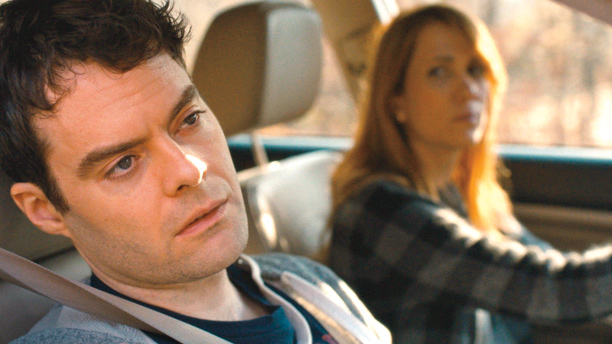
“The Skeleton Twins” shows us an entirely new Bill Hader. Well, he’s played opposite Kristin Wiig before, on years of “Saturday Night Live.” And he’s played “gay” before — effeminate voice, mannerisms, etc.
But “Twins” is a dramedy, which means there’s drama with the comedy, as he and Wiig play siblings damaged by their past, lovelorn people we meet as the news of one’s attempted suicide interrupts, by phone, the other’s attempted suicide all the way across the country.
Nice departure for both players, especially Hader, which big screen work has been all comic — “Superbad,” etc.
Questions for Bill Hader? Comment below, and thanks.
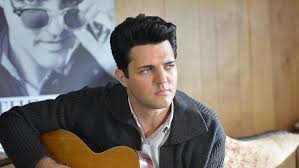
 A musical mashup of Elvis and Jerry Lee Lewis biography and myth, “The Identical” plays like a failed faith-based “Inside Llewyn Davis.” And that’s the closest thing to a compliment it will get.
Built around a too-tall Elvis impersonator, Blake Rayne, it tells the story of fictional twins, separated at birth. One grew up to be Drexel “The Dream” Hemsley, a hard-drinking rocker who survived rockabilly, the surfing/Beatles-imitating ’60s into the paisley and puffy shirts glam rock of the ’70s. His twin, Dexter Ryan, raised by a preacher (Ray Liotta) and his wife (Ashley Judd) as their son, is pushed toward the ministry. It’s his life we follow, from his discovery of his singing voice (an “American Idol” gospel breakdown in daddy’s Tennessee church in the 1940s) to his refusal to take “the call” to preach to his discovery of African American “boogie woogie rock’n roll.”
Ryan hooks up with a drummer (Seth Green, straining to be funny) and a worshipful garage boss (Joe Pantoliano) and builds a career out of imitating the guy he can’t help but notice is his musical and physical dead ringer.
The opening when the babies are split up is filmed in black and white, set in Depression Era Alabama and notable for hurling Liotta at us as maybe the scariest revival preacher this side of a Swaggart. The shotgun shack where the babies are born is decorated with a Menorah, conspicuous in the background. Hang onto that, kids. It’s called “foreshadowing.” Not that it foreshadows anything remotely important to the plot.
What follows is a parody of an Elvis musical. See young Ryan croon to his Army buddies, working in the motor pool. Watch him storm the stage at a miraculously integrated 1950s juke joint, and later at an impersonator contest. See him avoid drink and cigarettes even as he rebels (mildly) against his daddy’s Bible school wishes and pursues the fresh-faced prom queen (Erin Cottrell).
Rayne resembles a much taller version of Baby Fat era Elvis, and sounds enough like him to make you wish the made-for-the-movie drivel he sings was “I Can’t Help Falling in Love With You” or any real Elvis tune, even a bad one. For anybody familiar with the dozens of movies Elvis made, all that’s missing from the inferior songs/hokey dialogue/ bad acting formula of a “Speedway” or “Clambake” is the fistfight.
But that would have implied conflict, and conflict creates drama, both of which “The Identical” lacks. Screenwriter Howard “Grace Card” Klausner’s dialogue is too corny to call corny. Rock’n roll? “It’s just a fad.” Listen for the anachronisms, a 1950s mechanic preaching “pump up the volume,” a 1960s MC promising to “rock you like a hurricane.”
It’s wholesome, sure. They guaranteed that by focusing on Ryan’s story and not Drexel’s. Drexel was the one having all the fun, even if he was haunted by the dead twin (part of the Elvis legend) he doesn’t realize is still living.
The best you can say about it is that the established players — Judd, Liotta and Green — don’t embarrass themselves, and the vintage settings and cars look right even if details, in scene after scene, feel a little off. Check out the cheap schoolkids’ notebook used as a hospital register in 1960s Tennessee.
If they wanted to parody an Elvis movie, they succeeded. It’s every bit as misguided and maddening, almost “Identical,” you could say.
MPAA Rating: PG for thematic material and smoking
Cast: Blake Rayne, Ashley Judd, Ray Liotta, Amanda Crews, Erin Cottrell, Seth Green, Joe Pantoliano, Brian Geraghty
Credits: Directed by Dustin Marcellino, written by Howard Klausner. A Freestyle release.
Running time: 1:47
<
“Thunder and the House of Magic” is a beautifully animated cartoon from
Belgium, a kids’ comedy with barely a laugh in it.
Blame it on translation — it has been released in a number of countries,
perhaps it was funnier in German, French or Hungarian. Or blame it on the lack
of gag writers involved. But when the non-name voice actors playing a cat, a
rabbit, a mouse, a kindly old magician and his scheming nephew have nothing to
recite but exposition (story points, not jokes), and the sight gags don’t make
up for that, this pretty bauble just lies there.
A cat is dumped on the streets of suburban Boston, and after dodging Dodges,
Dobermans and skateboarders, he might find shelter in this spooky old house set
back from the street.
But there are gadgets and puppets come to life there, and a cranky old rabbit
and a mouse guarding their turf. This is an elderly magician’s home, and they
don’t want the cat horning in on their lifestyle.
Lawrence (Doug Stone) was and is Lorenzo the Illustrious, a doddering old man
who entertains at children’s hospitals and regales his former sidekicks — the
rabbit, mouse, “love birds” and automata — with the great illusions of his
past. He spies the cat, names him Thunder, and welcomes him in, much to the
rabbit’s chagrin.
Events conspire to land the old man in the hospital, and that’s when
Lawrence’s scheming real-estate agent nephew Daniel (Grant George) springs into
action. He’ll sell the house and put his uncle in a home. Daniel isn’t above
cursing when the critters scheme to foil his attempts to sell, and he’s not
above resorting to taking a shotgun after the cat. He’s allergic, and he blames
the cat for the “accidents” that happen during every sales pitch.
“It’s the Boston River for you!”
“House of magic” feels old school in that regard. Animated films today have
little at stake, and much of what might be called violence has been washed out
of them. Not in Belgium, apparently. Between the family, pulling a moving
trailer behind their car as they abandon their cat, to Daniel’s shotgun blasts
to the wrecking ball he wants to take to the house and all in it, this is
slapstick of an Elmer Fudd hunting Daffy Duck variety.
If only it was that funny.
The animated chases, from the cat’s or mouse’s point of view, are harrowing
and entertaining. The pull-out-the-stops household assaults on real estate
clients and Daniel are chaotic, if never quite hilarious.
“Magic” just has no magic about it, another limp cartoon in a year that has
been littered with them. This Euro-import dispensed with the classic “easy fix”
on weak animation, hiring movie stars to do the voices, letting fly with the
verbal zingers. The big money was spent on the animation. It’s too bad the
script lacks the sight gags or one-liners that could have made this good looking
picture more animated.
 
MPAA Rating: unrated with mild profanity, violence
Cast: The voices of Murray Blue, Shanelle Gray, Doug Stone, Joey Camen,
George Babbit
Credits: Directed by Jeremy Degruson and Ben Stassen, written by James Flynn, Dominic Paris and Ben Stassen. An nWave/Shout Factory release.
Running time: 1:24
A possible franchise, or a horror film dumped onto the first weekend after Labor Day? It’s based on a Jane Mendelsohn novel, part of a series, I think.
“Innocence” stars Sophie Curtis, a prep school girl who has lost her mom, Kelly Reilly as the creepy new redhead in dad’s life and Linus Roache (as the widowed dad who “just doesn’t see” what’s going on.”).
What is REALLY going on in that exclusive, uniformed prep school?
It opens Friday. And they’re showing it at the last minute, class. Why would be?

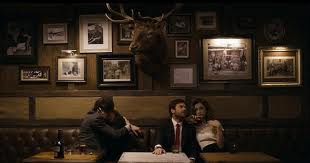
The considerable charms of Jason Bateman and Olivia Wilde get a considered workout in the lightly charming New York romance “The Longest Week.”
It’s a droll comedy, with a droll narration (by Larry Pine), set among the idle affluent of Manhattan, the sort of film that Woody Allen or Whit Stillman might make, given a Wes Anderson script — a little twee, but not Wes-twee.
Bateman stars as Conrad Valmont, a pampered, 40ish man-child lost in “the distractions of wealth.” He lives in the family hotel, rides with the family chauffeur and spends his huge family allowance.
Then his globe-trotting parents decide to divorce and that neither of them wants to support him. He’s evicted, penniless, with only a pricey haircut, tailored clothes and a motor scooter to his name.
His shrink, played by Woody Allen’s old pal, Tony Roberts, is worried. Conrad is shallow, obsessed with physical beauty. And he’s dead set against the idea of working for a living. How will he survive?
Conrad’s “Longest Week” begins with a first-time-in-decades ride on the subway, which takes him to his artist-friend Dylan (Billy Crudup). The lovelorn Dylan will put him on the sofa for a few days, but he has to fret over Conrad’s little peccadilloes, his inappropriate flirting with high school soccer players.
“Like little VEAL,” Conrad enthuses.
He nags and nags Conrad to not make a play for Dylan’s potential new “ingenue” girlfriend, Beatrice (Olivia Wilde).
“Don’t you try anything,” he says, in maybe 24 different ways.
“I won’t,” Conrad lies. Repeatedly.
Who could resist Beatrice, a child of wealth, a model, a Bach fan who fancies hers as a life of virtue. She’s a vegetarian.
“Do you love animals that much?”
“No, no. I just hate plants!”
Over the course of Conrad’s week, he endures an attempted set-up with a pretentious grad student, played by the comic Jenny Slate of “Obvious Child.” He tries to reach his parents, falls in love, and he hides his impending poverty with style, not letting on he’s penniless in the greatest city in the world…for those who have money.
Writer-director Peter Glanz doesn’t hammer his jokes, relying on the cast to wring charm out of characters and situations. Bateman’s eccentric line-readings will make you smile.
“I think I see some…foie gras. Want some…DUCK?”
Bateman and Wilde share a cute little aging hipster dance scene in a high-end bar where French pop plays on the jukebox. The few genuinely quirky bits, casting Slate as the “post modern criticism major,” making Dylan’s way of ending a relationship the act of giving the kissed-off a used Volvo, pay dividends.
There just aren’t enough such moments. This shiny New York-in-fall film is no deeper than its pairing of “a hopeless romantic” with “the romantically hopeless,” and hoping for the best. Sometimes that works, but not often enough to make this “week” the whirlwind it might have become.

MPAA Rating: PG-13 for sexual content and smoking.
Cast: Jason Bateman, Olivia Wilde, Billy Crudup, Jenny Slate, Tony Roberts
Credits: Written and directed by Peter Glanz. A Gravitas release.
Running time: 1:26

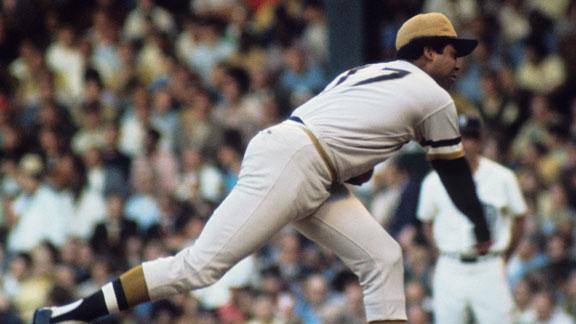
Dock Ellis was a pitcher for the Pittsburgh Pirates, New York Yankees and other teams during baseball’s turbulent and flamboyant 1970s.
He won a World Series ring with the Pirates, famously served up an epic home run to Reggie Jackson at an All Star game and won “Comeback Player of the Year” in 1976.
And in 1970, he pitched a no hitter against the San Diego Padres while tripping on LSD. So yeah, he was a genuine character in an era of baseball characters.
“No No: A Dockumentary” captures the essence of this outspoken loud mouth, a self-styled Muhammad Ali of the Major Leagues, a free spirit who wondered, late in life, if he’d ever pitched a major league game stone cold sober. His theory? He hadn’t.
Jeff Radice’s documentary is built around interviews with teammates, his agents, relatives and ex-wives, as well as one late-life interview with Ellis himself. It tracks a baseball career that began in California and adventured through the South in the years not-far-removed from Jackie Robinson’s integration of the game, where minor league towns such as Kinston, N.C. or Salem, Va., had not quite dialed back the racism that Robinson had faced twenty years before. Ellis didn’t take that well.
“I was an angry black man,” he says.
When he got to Pittsburgh, he dressed like Superfly, the drug dealing pimp daddy of early ’70s cinema. He wore curlers to practice. And he took speed — “greenies” — before every pitching appearance. In those pre-drug testing days, “everybody” did it, everybody in the film says. “We were all hungover,” pitcher Steve Blass admits. It was a hard-drinking era where getting one’s focus back, once it was game time, was paramount.
But nobody took that as seriously as Ellis. A drinker and pot smoker since childhood, on game day he went out “high as a Georgia pine.” And he won.
The no hitter is the centerpiece of the film, detailing what he took and when, and how drugs played a role in securing his edge on the diamond. A winning pitcher is an intimidating one, and what could be more intimidating that a tall, hard-throwing pitcher with uncertain control?
“They knew I was high, but they didn’t know what I was high on!”
The amusing anecdotes pile up as Ellis took that intimidation to the next level. He once started a game against hated rivals, the strutting “Big Red Machine” Cincinnati Reds, by beaning every batter he faced. He didn’t win, didn’t finish the inning. But he sent a message.
Rival Reggie Jackson took a beanball to the face that knocked him out of a few games a few years later.
“He knew what he was doing,” one teammate says with a shrug.
We learn who Dock’s mentor was, Negro Leagues pitcher Chet Brewer, but we don’t hear a whisper about his relationship with the equally volatile New York Yankees manager Billy Martin after Dock was traded to them.
And while Ellis only made his LSD no hitter assertion after leaving the game, the footage of that outing, a sloppy (hit batsmen, etc.) “no no,” shows a guy hustling to cover first base on an infield ground ball and getting his sinker across the plate. Yes, Robin Williams is captured using the Ellis anecdote in his drug era stage age, but sportswriters at the game insisted Ellis was lying. None of them, if any are still living, were interviewed.
The third act of “A Dockumentary” sags under the weight of spousal abuse, rehab and his later years as a drug counselor and anti-drug public speaker. But Radice has delivered an engaging portrait of a loose cannon back when professional sports still produced such unfiltered creatures, a man who lived by his own rules, said what he thought and wore curlers to practice when he felt like it.

MPAA Rating: unrated, with profanity, accounts of substance and spousal abuse
Cast: Dock Ellis, Al Oliver, Dave Cash, Donald Hall
Credits: Directed by Jeff Radice . An Orchard release.
Running time: 1:40