Movie Review: “Manchester by the Sea”

MBTS_3869.CR2

Lee Chandler isn’t crazy about eye contact. The Quincy, Massachusetts janitor carries himself like a person who’s taken one too many blows, a dead man walking, working, drinking and going through the motions.

Every interpersonal interaction is awkward, drawn out. He seems unfriendly simply due to reticence. But test him and an at-his-wits-end temper shows up.

It takes only the briefest of flashbacks to show how this wasn’t always so. Once upon a time, he was “cool” Uncle Lee, joshing around and mercilessly teasing his ten year-old nephew on his brother’s lobster boat, a man full of life and fun until something took it all away from him.

That was years ago, in “Manchester by the Sea.” The film that takes its title from that quaint coastal town is about Lee’s not-by-choice return to a place that haunts him and hates him.

Casey Affleck plays Lee as a man drained of all but the last hints of life, and in the opening scenes, we see him going through the motions with apartment dwellers he serves, the friendly and the unfriendly. The ones who are nice to him get nothing in return, the testy ones get told off.

His sole relief, the endless succession of beers he consumes after work.

Then he gets the phone call. His brother Joe (Kyle Chandler) is about to die. Somebody’s got to come see him, deal with a funeral. Somebody’s got to pick up Joe’s teenage son (Lucas Hedges) from hockey practice and break the news.

Lee is the last “somebody” anybody should trust with that. He is too drained of emotion, too broken to show empathy. But as Joe’s plans are laid out to him, Lee is forced to deal with his past, Joe’s death and Joe’s popular, sexually-active smart-mouthed/foul-mouthed kid, Patrick.

Writer-director Kenneth Lonergan is years and years removed from his debut success and signature film, the equally brittle and heartbroken “You Can Count on Me.” But he reminds us of his unflinching way of approaching pain and neediness with “Manchester.”

Lee and  Patrick are both closed-off, both seemingly-braced for that next awful body blow — Lee, thanks to his past, Patrick thanks to his lobsterman-dad’s long-diagnosed congenital heart disease. They need each other, and they need to be needed.

And they’re each reluctant to be the first to reach out. This is obvious from the moment Lee gives Patrick the news. Does the son want to see his father’s body?

“”Why? What’s he look like?”

“Like he’s dead. He don’t look like he’s sleeping.”

Patrick is quick to summon friends, just as quick to let the subject among them change to silly “Star Trek” debates — in “Saturday Night Light” thick Massachusetts working-class accents. Is he capable of mourning?

And he wants his girlfriend to spend the night. Is it OK?

“Is that what Joe would say?”

Every encounter, from nurses and doctors to funeral directors, family friends and Patrick, drags on into the discomfort zone. Lee can’t help it.

Lee deals, incredulously, with the family lawyer, unable to grasp why Joe would insist that he be the kid’s guardian. He tries to do his brother’s bidding, even though Joe’s demands include that he move back to this town Lee associates with pain and tragedy.

And as the flashbacks, carefully doled out, reveal, there’s an ex-wife (Michelle Williams) and an ex-life that Lee knows he’d be better off not remembering, but which he cannot forget.

Lonergan has the patience to try our patience and make us squirm at Lee’s discomfort. And Affleck so underplays Lee that he draws us in, forces us into Lee’s shoes. It’s not a fresh direction for Ben’s younger brother. He’s always given us variations of the small, still, pained man capable of disproportionate blasts of temper. But he invites pity, here, misplaced or not. And he nails the draining emptiness of grief and of a depression that will never lift.

Oscar winner Michelle Williams will tear your heart out if she lets you. And you will and she will here.
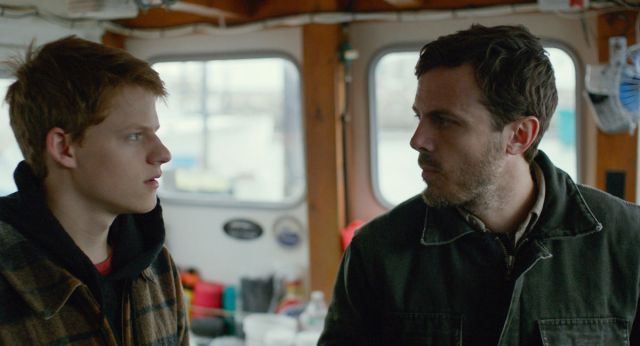
man2And young Hedges, best-known for TV’s “The Slap,” as well as “The Zero Theorem” and “Kill the Messenger,” brings a mercurial blend of callous sensitivity to Patrick. He’s the son of writer-director Peter Hedges, no stranger to sensitively told tales of life among the emotionally crippled (“Pieces of April,” “Dan in Real Life”). It shows.

Patrick is 16, not fully formed and needs adult guidance to show him how to react. And all the kid can bring himself to demand of his uncle is that he give up his life in Quincy, move here, give him money when he needs it, ferry him from place to place and do all that he can to facilitate Patrick’s various sexual encounters with different girls. It’s a selfish, callous veneer he wears instead of tears.

The kid needs a grownup to keep him from maturing into a jerk. Hedges walks that tightrope with skill.

Lonergan gives the film a lovely sense of place, even if he’s a bit over-fond of establishing shots reminding us that it’s winter, that this is what the river looks like frozen-over. Working class adults and children are loud, rambunctious, profane and permissive. Sex between teens is treated with little more than an adult wink.

And for such a somber and serious film, “Manchester by the Sea” can be quite playful — the comical profanity, the duologues (two people yammering away at once), the way Joe’s lobsterman friend George (C.J. Wilson) reacts when Lee abruptly asks is HE wants to be the boy’s guardian.

“I’m uh, tryin’ to LOSE some kids at this point,” George blurts out in the middle of Lee’s unfiltered plea.

What Lonergan has created here is one of the cinema’s defining statements on the kind of grief that leaves you empty, of wounds that will never heal. He’s got the guts to make us uncomfortable in scene after scene, and the courage to deny us “The Hollywood Ending.”

And Affleck, Hedges and Williams so immerse themselves in this world he’s conjured up that it is impossible to imagine it without them in it. Their scripted actions and acting reactions make “Manchester by the Sea” an exquisite cry, one of the most honest, rewarding and well-acted films of the year.

3half-star

MPAA Rating:R for language throughout and some sexual content

Cast: Casey Affleck, Michelle Williams, Lucas Hedges, Kyle Chandler

Credits:Written and directed by Kenneth Lonergan. A Roadside Attractions release.

Running time: 2:17

Posted in Reviews, previews, profiles and movie news | Comments Off on Movie Review: “Manchester by the Sea”

Documentary Review — “Harry Benson: Shoot First”

benson1

Harry Benson captured The Beatles, giddy on their first-ever arrival in the U.S., pillow-fighting in their hotel.

He was with them in Miami when he thought it would be cool and funny to drag them down the street to meet Muhammad Ali, training in a gym.

He caught Liz Taylor at her most glamorous, and was invited into her hospital room to photograph her at her worst — after brain surgery. “How do I look?” she asked him. “Be honest, Harry.”

“Like Sinead O’Connor.”

Harry was also there with Robert Kennedy’s family on their annual rafting trip down the Colorado River, and he was in LA’s Ambassador Hotel that night in 1968 when RFK was murdered,  still shooting as Kennedy lay dying, his wife raging at him to stop. Others questioned his ethics and heart over that one.

“They just didn’t have the guts to keep shooting,” he says.

A lot of people in the playful documentary “Harry Benson: Shoot First,” try to define what an “iconic image” is — celebrities he’s photographed, from Sharon Stone and Alec Baldwin to Donald Trump, and journalists from Dan Rather to Deborah Norville and Bryant Gumbel. 

The short answer is, “You’ll know it when you see it.” The shorter one is “Harry Benson took it.”

Benson, who turns 87 on Dec. 2, comes off as an adorable Scots curmudgeon in Justin Bare and Matthew Miele’s film. He colorfully curses and quotes celebrities who cursed him — because not every image he takes comes from a pre-arranged photo shoot, joking about the dirty tricks he and other photographers have played on each other to ensure that they alone have access to the famous personage or the one perfect angle from which to shoot.

He’s been a paparazzo — stalking and photographing those who don’t want their picture taken — rarely. But he’s the guy who caught the reclusive Greta Garbo, late in life, swimming in a lake — trapped, unable to escape his lens.

The famous and the beautiful get something out of the transaction, Harry growls in his Glasgow burr. “The photographer’s image keeps them alive” forever.

But he’s also been to Mogadishu, documenting the tragedy there. He photographed Klan rallies, toted cameras on civil rights marches with Martin Luther King, Jr., and captured Mississippi police storming into the marchers. That Civil Rights era shot of the German shepherd police dog with blood on his teeth? Harry Benson.

The filmmakers chat openly with Harry for the film, take him back to Glasgow, where he got his start, talking with Brits who knew him when he was making unforgettable, artistic news images for The Daily Express. They take him back to the hotel where The Beatles loved the pillows.

It’s never pointed out, but every few minutes we’re reminded that he did all this work with bulky film cameras, long before the age of auto-focus or iPhones.

He did a photo essay in Grey Gardens long before the documentary film about the two eccentric sisters came to life. He befriended the “incredibly difficult” Johnny Carson, and got inside Joe Namath’s infamous NYC bachelor pad when Joe Willy was the most famous quarterback in the land.

All along the way, he used his “Scottish charm” to get where other photographers couldn’t,  chumming around with the Reagans, photographing Truman Capote’s famous “Black and White Ball,” rubbing elbows with the beautiful people on assignment for Life Magazine and others.

“A great photograph can never happen again,” Benson explains. Most of his life, in a job where “work always came first” (his wife and children testify to this), Harry Benson made sure to put himself in a position to get that great, iconic image.

And when opportunity arose, he always shot first.

3stars2

MPAA Rating:unrated, with images of violence and nudity, profanity

Cast: Harry Benson, Sharon Stone, Kerry Kennedy, Dan Rather, Bryant Gumbel, Henry Kissinger, Deborah Norville

Credits:Written and directed by Justin Bare and Matthew Miele. A Magnolia release.

Running time: 1:33

Posted in Reviews, previews, profiles and movie news | Comments Off on Documentary Review — “Harry Benson: Shoot First”

Movie Review: “SiREN” is “Eyes Wide Shut” as directed by, oh, Rob Zombie

siren1

Mr. Nyx is the guy you call when you’re a cop somewhere in the South and you stumble across a de-consecrated church filled with blood, candles, pentangles, goats kept in cages and corpses.

He surveys the scene from behind his round sunglasses and trim goatee.

“Cultists?” the cops want to know. “Satanists?”

“Amateurs,” Nyx, played by horror film vet Justin Welborn, drawls. He was in “Beyond the Gates” and “The Crazies” And “v/h/s Viral” and “Halloween II.” He knows the drill. He’s the guy who knows what happened here. And hell, he’s just the sort of goatee’d demon to take advantage of what he’s found — a creature unleashed by those “amateurs,” one whose song is as alluring as her arrival is deadly.

“SiREN” is another bachelor party gone wrong film, another quartet of guys following a fellow they meet at a strip joint off into the woods for some REAL stag party “experiences.”

“Only good things happen in the woods, right?”

But this spin-off from “Amateur Nightt,” a short from one of the “v/h/s” horror anthologies, has some jaw-dropping twists tossed into its cut-and-paste script, and a droll villainous turn by Welborn.

Because when bad things are going down, murderous masked thugs, a moveable sex club straight out of “Eyes Wide Shut” and the demon unleashed within it, you need a bad guy who will rub his goatee and thoughtfully answer your every question.

“What are you gonna DO?”

“Well, he’s going to HURT you a while, and I’m gonna WATCH.”

Chase Williamson is Jonah, the lad about to marry Eva (Lindsey Garrett), a fellow who’s too nice and too square to get into the role playing sex games she invents to spice up their love life.

But brother Mac (Michael Aaron Milligan) has a gonzo weekend planned for Jonah and two of their friends. When the rural strip club’s a bust, he busts out the mushrooms.

And he drags them all into the woods, following a tip from a barfly, that this is where the REAL “last hurrah” experience lies.

They’re just getting into the kinky, abusive stage show and their mixed drinks — “Murder” features leeches dunked into the alcohol — when Jonah has a back room peep show epiphany. There’s a naked singer there, held against her will. He’ll bust “Lily” (Hannah Fierman, sexy/creepy) out and save her, take that Satanic shackle off her ankle and see what transpires.

“She’s not a girl, man! She’s something else!”

“A transsexual? That could be cool!”

Things were going downhill for the quartet before that. Plainly this club’s real entertainment is what happens to “first-timers” at the hands of the masked patrons and bouncers there. But when Lily shows her teeth, and her tail, well…

If you know your mythology, you know the siren’s call is irresistible. But Odysseus, the Greek adventurer, didn’t have access to earbuds. Director Gregg Bishop makes great use of muffled sound to get across Jonah’s efforts to avoid the slaughter Lily unleashes.

It’s rarely scary. But the effects suggest a bigger budget than “SiRENS” might have warranted. And a couple of those are downright impressive and add to the feeling that this indie Satanic slasher pic is punching above its weight class.

2stars1

MPAA Rating: unrated, with gruesome, graphic violence, substance abuse, explicit sex

Cast: Justin Welborn, Hannah Fierman, Chase Williamson, Michael Aaron Milligan, Lindsey Garrett

Credits:Directed by Gregg Bishop, script by David Bruckner. A Chiller release.

Running time: 1:22

Posted in Reviews, previews, profiles and movie news | Comments Off on Movie Review: “SiREN” is “Eyes Wide Shut” as directed by, oh, Rob Zombie

Movie Review: “La La Land” triumphs over bland — eventually

lala3

The epic opening scene of “La La Land” is a long-take roaming camera song and dance number set amid a sea of drivers stranded on a Los Angeles freeway overpass.

A song burbles up on a radio, the driver sings along, leaves her car, is joined by legions of others. As they promenade through a Cinemascope fantasy of one of the inconveniences of life in America’s Dream Factory, we meet our leads — aspiring actress Mia, aspiring jazz club owner Sebastian.

And they meet “cute.” Fingers are exchanged in traffic. It’s the sort of sequence that marks itself as “impressive” even if we don’t know that it took three weeks to shoot, days and days of rehearsing and re-takes in LA’s familiar early morning (so they can block the streets) light.

But there’s an emotional distance, a chill, that hangs over the film from the old school opening titles through this bit of non-digital movie magic. It takes almost half an hour to dissipate as we settle in on the leading lady (Emma Stone) and leading man (Ryan Gosling), discover each can sing and dance enough to get by. And that sets the  tone for the whole movie, an old-fashioned showbiz musical that lumbers when it’s supposed to fly, and groans a bit under the weight of its own ambition.

Writer-director Damien Chazelle (“Whiplash”) reaches for the stars, and cast the picture beautifully. But this throwback musical (songs by Justin Hurwitz) lurches along on show business cliches in between dreamy flights of filmed fancy.

There’s magic here, and wistful whimsy and melancholy, enough to warrant seeing it. Does it reinvent or improve upon “Singin’ in the Rain”, “A Star is Born”, “The Umbrellas of Cherbourg” and the legions of classic films and musicals it references, borrows from? No.

The overarching theme here is nostalgia — for movie musicals, LA as “Dreamland,” the siren call of showbiz fame, and perhaps that’ll be enough for some.

Mia makes her living as a backlot barrista, serving coffee and snacks to studio folk just across the street from part of the “Casablanca” set. Sebastian, “Seb,” gets by with gigs playing Christmas piano at a bar run by J.K. Simmons, who fires him for his wild improvisations when all the owner wants is “Deck the Halls.”

Mia witnesses the firing and experiences the jazz purist’s brusqueness first hand. But she has her revenge at an ’80s themed pool party where sunglasses cannot hide the humiliated keyboard player’s true identity.

She can afford a Prius on her paltry salary. He’s rocking a vintage Yank Tank Cadillac convertible. It’ll never work out.

“You’re a real, what’s the word?”
“Knight in shining armor?”

“WEIRD-o.”

We’ve seen a century of degrading audition sequences, but Stone makes us feel Mia’s humiliation at the callous, distracted and rude dismissal of casting directors. Hers is a dream deferred.

Seb would love to rescue a legendary jazz club from its current state of tapas bar/samba room. What do they have in common? A love of history, and an appreciation for LA’s attitude towards it.

“That’s LA– they worship everything and value nothing.”

Chazelle takes his star-crossed lovers to stereotypical showbiz parties and past the city’s famous neon-bedecked clubs — Formosa, Knickerbocker — and into some of its most famous locations, including the Rialto Theatre and Griffith Park Observatory. They go to classic films and no-longer-smoky jazz rooms, dance in the streets and serenade each other in bittersweet song. Mia and Seb experience the city as a fantasia on their fantasies of what it should be.

And as they strive for their dreams and fall in love, compromises (he plays with a jazz sellout, played by John Legend) and big breaks get in the way of true love.

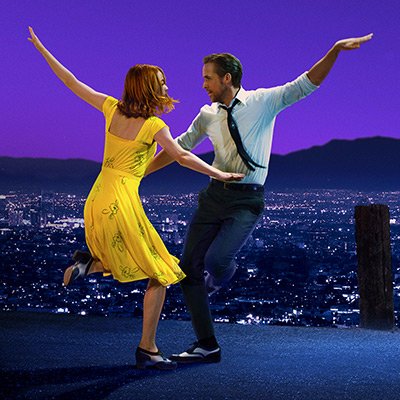
Stone and Gosling, teamed up for the third time, make a lovely believable couple. There’s not a lot of heat, but they generate a warmth and sweetness that makes the relationship worth rooting for. Stone is all wide-eyed optimism, Gosling a smirking cynic in two-tone shoes

But as he croons the film’s one memorable ballad — “City of Stars”– you can see what she’d fall for, aside from his natural handsome dash. And that makes “La La Land” work.

It’s slow to start and patience-testing in stretches, quite uneven and something of an over-reach. But “La La Land”  still manages to conjure up an aspirational city of dreams that to outsiders, really does look like a “City of Stars.” And Stone and Gosling make wonderful singing and dancing tour guides, reminding us of the days when we and Hollywood respected the label “triple threat” (a good actor who can sing and dance) a lot more than we do now.

stars2
MPAA Rating: PG-13 for some language

Cast: Ryan Gosling, Emma Stone, John Legend, J.K. Simmons

Credits:Written and directed by Damien Chazelle. A Summit release.

Running time: 2:08

Posted in Reviews, previews, profiles and movie news | 2 Comments

Movie Review: “The Eagle Huntress” gives girl power talons

eagle1

A Mongolian teen breaks the gender barrier in her native land’s sport of eagle hunting in “The Eagle Huntress,” a striking if predictable and plainly-staged docudrama set in one of the world’s most forbidding landscapes.

In Mongolia, the steppes tribesman who once plundered their way across Asia to the edge of Europe still ride their sturdy, furry ponies. And they still hunt with golden eagles, which they kidnap from the nest and train, like falcons, for sport and competition.

Aisholpan Nurgaiv is 13, and as she comes from a long-line of eagle hunters, she’s hunted with her father for years. She’d like to try her hand at becoming the first female to hunt and compete with an eagle in this patriarchal culture. She isn’t prevented from doing this, but filmmaker Otto Bell found plenty of elders to recite gender roles, Mongolian variations of “This just isn’t done.”

Her father is understanding, and supportive.

“It is not a choice. It is a calling you have in your blood. Maybe it is in her blood as well.”

So he sends up down a cliff face to nab an eaglet, and they commence to training it.

Their attitude towards the birds is not Westernized. She doesn’t name her enormous, dangerous “pet,” and we’re spared the cruelly dull downtime the eagle endures, hooded mostly, in between feedings and sessions. They only keep the eagles for seven years before turning them back into the wild, which is about as humane as this practice gets.

Father and daughter then head off to “train” by siccing the bird on the local foxes, a process that is bloody and brutal — nature at its most natural. Yeah, it’s “for a movie,” but still.

And then there’s the big festival where the girl and her eagle must show their stuff among the menfolk judge trainers by timed chases of prey and command of the bird when it returns to their arm. And they’re judged by their fashion statement.

Sure, the poor and probably sexist patriarchy is a bit cowed by the film crew she has with her, and the international media covering this “event.” One suspects that the whole affair is about as “real” as “Duck Dynasty.” Daisy Ridley, of the recent “Force Awakens” “Star Wars” movie, narrates the story (conversations are subtitled) and took a producing credit on the film.

The capture sequences are fraught and edited for maximum suspense, and Bell has a gift for capturing the home life — Aisholpan goes to a boarding school, with her siblings, during the week, and trains and feeds her bird (gristly goat leg bones, from the looks of it) on weekends. The canvas covered yurts and simple, somewhat primitive lifestyle of her family are compellingly depicted.

But some Western viewers may wince at the whole undertaking, and not just its contrived feeling. Like me, their sympathy’s for the poor fox.


stars2

MPAA Rating: unrated, with animal violence

Cast: Aisholpan Nurgaiv, narrated by Daisy Ridley


Credits:Directed by Otto Bell. A Sony Pictures Classics release.

Running time:1:27

Posted in Reviews, previews, profiles and movie news | Comments Off on Movie Review: “The Eagle Huntress” gives girl power talons

Movie Review: “Mifune” celebrates the icon, the only Toshiro who matters

mifune1

A glaring injustice of the Internet pops up when you Google Image  search”Toshiro.” Your screen fills with a sea of shots of a bleached-blond anime character.

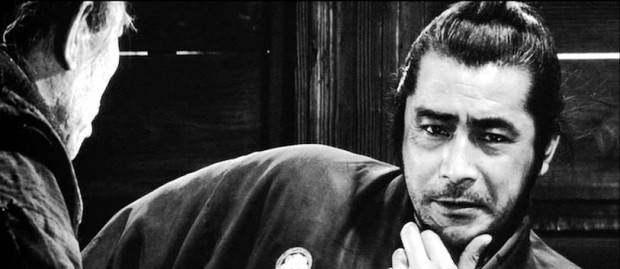
Film fans know there is but one Toshiro, the legendary Japanese film star Toshiro Mifune who “reinvented the modern movie hero” with his strong, silent man of violence in films such as “Yojimbo,” “Sanjuro,” “The Hidden Fortress” and “Seven Samurai.”

The world is ready to be reminded that there’d be no Clint, no Costner, no Denzel or “Star Wars,” not in an iconic sense, without Mifune. Steven Okazaki‘s film “Mifune: The Last Samurai,” rounds up people who worked with him and filmmakers inspired by him for interviews. And even if it is too brief and leaves too much out to be “definitive,” it serves up heaping helpings of Mifune’s film work and bits of home movies and the like to create a fascinating man-behind the stoic face/samurai icon portrait of Mifune, Japan’s biggest movie star from the 1950s to the 80s, Japan’s first international film star thanks to 1950’s “Rashomon.”

That 1950 Akira Kurosawa classic, one of the greatest films ever made, tells the story of a rape and murder in feudal Japan from three points of view. Mifune, as the bandit accused of the crimes, studied caged lions to figure out how to play Tajomaru, a stalking, manic opportunist who animates the screen like few characters in movie history.

Co-stars such as frequent collaborators Kyoko Kagawa and Takeshi Kato may not add much to our understanding of the man or his methods. There’s a circumspect discretion to Japanese culture that makes such interviews stop short of “tell-all” or confessional. That partly explains Okazaki’s failure to include any of the rare Mifune interviews extant (you can find them on Youtube).

He acted almost constantly during his peak years, scores of films back-to-back-to-back. He drank. A lot. He loved sports cars. He cheated on his wife and was scandalized.

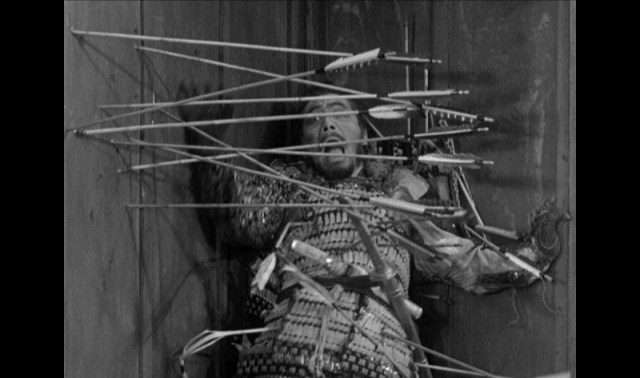
But there’s no revelation of why he and the director who made him famous, Kurasawa (“Throne of Blood,” “Seven Samurai,” sixteen collaborations in all) fell out. If Mifune was loyal enough to stand on set without insurance as under-trained college archers fired real arrows at him for the legendary death scene in Kurosawa’s “Throne of Blood,” why weren’t they there for each other when the hard times hit in the 1970s?

throne.jpg

Details of Mifune’s early life are filled in mostly by his son Shiro Mifune. Born in China to Japanese parents, Toshiro never set foot in Japan until he was drafted in World War II. The son is disingenuous about his father’s service — he was a reconnaissance pilot from 1941 to the end of the war, when he trained green young flyers to be kamikaze pilots.

Steven Spielberg and Martin Scorsese profess admiration for the stillness that Mifune discovered was his great gift to the screen, the “steadfastness, integrity and…samurai spirit” that Mifune came to embody. The sunniest anecdotes in the movie are Spielberg’s memories of working with Mifune and the great British character actor Christopher Lee in the WWII comedy “1941.” Mifune, hilariously earnest and deadpan in samurai comedies like “Yojimbu,” would only break up after Spielberg yelled “Cut!” He got the joke. He was in on it.

But “Mifune” does miss those semi-candid TV interviews that might have revealed more of the man, off camera. “Hidden Fortress” inspired George Lucas to make “Star Wars,” and Lucas offered Mifune the role of Obi Wan Kenobi, and, Mifune’s daughter adds, Darth Vader in that film. A Lucas interview is conspicuous in its absence.

Okazaki gives us a fascinating 20 minute history of Japanese cinema and the samurai swordfighting (“chanbara”) genre to open “Mifune,” some welcome context. You may not know that the U.S. occupation forces in Japan banned samurai pictures for seven years after the war, and that “Seven Samurai” was the doozy Kurosawa dreamed-up and clung to until he and Mifune could make it in 1954, after the ban was lifted.

Still, in an 80 minute film, we need more of the man it’s about. And as appropriate as Keanu Reeves is as the narrator, with his martial arts movie fixation and Mifune-inspired turn in “The Matrix” movies and others, academics and critics were needed to do a better job in summing up the actor’s place in Japan and cinema iconography.

He was John Wayne, Jackie Chan, Clint Eastwood, Burt Lancaster and Bruce Willis, all rolled into one, starring in 182 films and TV shows of many genres, classing up American miniseries like “Shogun” and making even the his lesser ronin/samurai pictures worth watching.

And even though he’s been dead 20 years, he’s certainly more important to world culture than some svelt big-eyed anime character with ’80s pop star hair. If nothing else, “Mifune” is to be celebrated for remedying that.

3stars2

MPAA Rating: Unrated, with samurai swordplay, alcohol consumption

Cast:  Kyoko Kagawa, Takeshi Kato, Haruo Nakajima, Shiro Mifune, Martin Scorsese, Steven Spielberg, narrated by Keanu Reeves

Credits:Directed by Steven Okazaki, script by Stuart Galbraith IV, Steven Okazaki. A Strand release.

Running time: 1:20

Posted in Reviews, previews, profiles and movie news | Comments Off on Movie Review: “Mifune” celebrates the icon, the only Toshiro who matters

Movie Review: Will Michael Shannon finally “get the girl” in “Frank & Lola”?

frank1

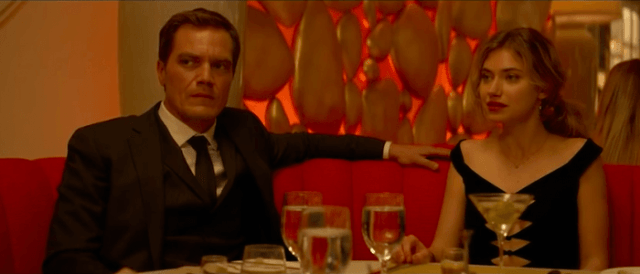
One thing the great Michael Shannon, the best working actor without an Oscar to his name, almost never gets in his movies is “the girl.”

With a scowl that scares, looks that could have been carved by a hatchet and the nasal, sharp-edged voice to match, his “baggage” gets him cast as hit-men, cops and villains more often than not.

So when we see him, naked and in bed with the equally naked Imogen Poots in the opening moments of “Frank & Lola,” we’re a little alarmed — for her. Frank may profess to be over-the-moon for Lola, but lines such as “I never said I was a gentleman” and “I’m not playing games” have menace, even if they’re just supposed to be pillow talk.

That’s when writer-director Matthew Ross hits us with the first surprise. Sure, she’s in love. Yeah, she’s up for sex. But “Maybe you could hold me down” is a bit of a head-snapper.

Ross lured a very good cast for his brooding tale of brittle love, sexual gamesmanship and the consequences of infidelity when you’re dating a guy you just sense has “a history of violence.”

They’re in Vegas. Frank’s a chef in a “theme” restaurant whose theme could be “Sweeney Todd.” Blood-spattered chef’s jackets are the rule, emphasizing that they cook meat there. He moonlights as a personal chef to the local bourgeois. Lola is fresh out of design school. They’re years apart in age, but even though he seems to be out of his league, they kind of make sense. Lola has…issues.

The minute she’s talked into a job by the rich flirt (Justin Long, out of his depth) in a bar, we sense trouble. So does Frank. And the rich guy’s offer to hook him up with a prestige gig don’t defuse the situation.

“You tell him you’re in love iwht a man who owns an extremely sharp set of knives.”

But the jealous rage that we, Frank and Lola see coming is trickier and deeper than it seems. The motivation veers off formula, and Frank’s response may be pointed in the wrong direction, time and again.

Ross, who once directed a short “Inspired by Brett Easton Ellis,” did what first-time feature writer-directors have to do to get their debut off the ground. He created a wonderful, expectations-defying character that lured Shannon in. Solid supporting players (Long seems miscast, but has a little name recognition) followed.

But the movie unravels as its surprises become melodramatic flourishes, undercutting its tension with coincidences, lapses in motivation and head-scratching responses to situations that are pretty conventional — cut and dried — despite the lurid, Vegas/Ellis undertones.

Shannon is a lot of fun as the sort of chef you don’t want to summon to your table after eating his fabulous meal. His reading of “Nobody knows how to eat any more” is both a complaint, and a threat.

And crossing him, sexually? What pretty young thing would ever think that’s not her queue to flee the country?

“Two hours ago I would’ve crawled through glass for you.” Yeah, he means it. No, you and we don’t know what he’s doing next. But we have our suspicions.

Poots makes Lola interesting, even if she doesn’t suggest the femme fatale — capable of saying anything — that the role requires to maintain the movie’s mystery. Rosanna Arquette plays Lola’s jet set journalist mom, a bit of a boozy floozy. Michael “Girl With the Dragon Tattoo” Nyqvist makes a third act appearance that adds a little chill.

But as in “Nocturnal Animals,” it is Shannon who makes it all worth watching. He’s the guy who lifts a self-conscious “psycho-sexual mystery” out of the mundane and keeps us interested, even as the director distractedly wanders off to play with the lurid lighting and the posh settings when he should have been fretting more over the tension and logic of his script, making it more of a mystery.

Shannon may indeed “get the girl.” We need to be more in the dark, though, about whether she’ll still have a pulse when he does.

2stars1


MPAA Rating: unrated, with violence, nudity, sexual situations

Cast: Michael Shannon, Imogen Poots, Rosanna Arquette, Michael Nyqvist, Justin Long

Credits:Written and directed by Matthew Ross. An Archlight/Palladin release.

Running time: 1:28

Posted in Reviews, previews, profiles and movie news | Comments Off on Movie Review: Will Michael Shannon finally “get the girl” in “Frank & Lola”?

Thanksgiving Box Office: “Moana” mows down all in her path

moana1Disney’s “Moana” is threatening the “Frozen” holiday opening weekend record with a blockbusting Tuesday night/Wed. — well over $15 million, just a tad over what “Frozen” did on its opening Wednesday on the way to setting the Thanksgiving weekend box office record.

“Frozen” did over $93 million in a Wed-Sunday opening just a couple of years back. And frankly, “Moana” is a whole lot better, even if there’s no “Let It Go” among its songs.

But “Trolls” and “Fantastic Beasts and Where to Find Them” will suck some of the icing off that cake. Still, don’t be surprised if the Polynesian pixie who matures into a warrior/leader breaks the record and threatens the $100 million mark.

“Allied” cost $85 million. Hey, faking WWII digitally (and on a few exotic locations) and paying Brad Pitt to make out with Marion Cotillard is pricey. Reviews are mixed, at best. Will it break even?

Opening five day weekend numbers look like a solid $18-19 million, suggesting it’ll top out at maybe $50, 55. Pitt’s an older star (made to look a lot younger here) and it’s an old fashioned (corny) story. This won’t do “Fury” numbers, but it will break even and thenm some internationally.

Warren Beatty’s box office days passed him by while he was fretting away about what to do after “Reds.” Thirty-plus years ago, in other words. His limp, misshapen “Rules Don’t Apply” is bombing on 1100 screens. Under $3 million over 5 days. Eighty year olds aren’t a draw at the movies.

“Bad Santa 2” is doing a smidge better on more screens. Billy Bob cussing should rake in another $8-9 million of holiday abusing cheer.


Posted in Reviews, previews, profiles and movie news | Comments Off on Thanksgiving Box Office: “Moana” mows down all in her path

Movie Review: “Allied” is a slick, empty “Casablanca” that flunks chemistry

ally2

As crisp as every crease on Brad Pitt’s perfectly-pressed period picture pants, as slick and shiny as any classic from the Hollywood “Dream Factory,” “Allied” is a World War II romance that lacks the spark — any spark — of romance, lust or life.

The settings are pristine, and feel about as real and lived in as “The Polar Express.” The performances have a stiffness that borders on motion-capture animation.

Director Robert Zemeckis brings us a “Casablanca” without a scrap of heart, an “English Patient” with all of the splendor, and none of the heat.

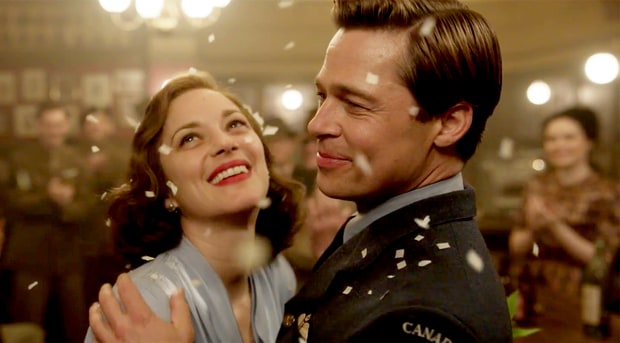
Brad Pitt stars as Max Vatan, a Canadian pilot and spy sent to Casablanca to assassinate a high ranking German. Marion Cotillard is the French Resistance heroine assigned to set up the killing and play his wife in the process.

And from the first scene — Vatan parachuting into the unspoiled vistas of the Moroccan desert — Zemeckis (“Forrest Gump,””Cast Away” and “The Polar Express”) sets out to scrub every hint of realism out of this movie world.

Vatan is spotless, even after dropping into the middle of the desert. The vintage French car that picks him up in the middle of that desert? Almost as spotless. The dirt streets where the over-dressed and well-heeled sit outdoors to take their coffee (“Cream, sugar, sand, sir?”)? The cleanest damned dirty streets you’ll ever see. The dry cleaning in Casablanca must be formidable.

And as Max, renamed “Maurice,” and his “wife” Marianne show off their extensive wardrobes in the swank neon and art deco world Zemeckis envisions mid-war Casablanca to be, Max questions his contact and how far she’s immersed herself in this Vichy French outpost where Rick and Isla rekindled their love over 70 years ago.

“Do they trust you?” Max wants to know.

“I keep the emotions real,” Marianne purrs. “That’s how it works.”

ally1

The Casablanca smart set have no more dolled up for the Big Ball — in dresses, tuxes and the showiest German Army uniforms this side of “Springtime for Hitler” — than Max and Marianne have shot it all to pieces, pulling off their improbable assassination.

And since they’ve had joyless sex in a sandstorm and pretended to be married in all the conspicuous ways — “We’re married, why should we talk?” — he proposes and they escape to Britain. They marry, have a child and the war drags on towards D-Day.

Until the powers that be cast a suspicious eye at the Resistance Heroine and Max finds himself frantically trying to clear her name or at least find out if he’s been duped.

The leads never, for one moment, suggest passion or even attraction. That old Hollywood joke about how to tell when the actors are sleeping together (they have no on-screen chemistry) has inspired all manner of gossip about these two. But then, Zemeckis never gave them a chance.

Zemeckis, working from an airless Steven Knight (“Eastern Promises”) script, is content to riff on classic movie moments, including a famous song and the order to “play it” from “Casablanca.”

Jared Harris is the cliched stiff-upper-lip commanding officer hired to mutter the curse “You’re a bloody fool.” Simon McBurney is the spy-catcher who drips venom as he stares at the incriminating report that is his prop of intimidation, along with a desk lamp that always shows up in interrogation scenes in the movies.

Lizzy Caplan has a glorified cameo as Max’s lesbian sister-in-uniform, adding to the sense that Zemeckis was just trying to modernize yet sanitize the classic WWII romance formula. Cigarettes are omnipresent, and whisky and f-bombs, along with the occasional Brit pip-pipping and muttering “Goodness gracious.” Shoot-outs are almost as bloodless as they were in Bogart’s day.

The early scenes are worth our interest, but the unreality crosses the line into laugh-out-loud melodrama as Max goes to greater and greater lengths to get his proof, to confirm Marianne’s identity.

But truthfully, reality never took hold, from the parachute drop that doesn’t wrinkle Pitt’s perfect pants to the ever-so-tasteful string quartet playing “Deutschland Uber Alles” at the Big Ball (Seriously? Like these Nazis wouldn’t have set down their cocktails and clicked their heels to attention over that?) to the perfectly-executed shoot-outs and perfectly timed get-aways.

“Allied” is a war romance that strips all the romance and much of the blood out of that war, and besides that tells a story that beggars belief.

And Pitt, hair dyed, French accent polished and uniformed to perfection, has never been so stiff. Watching him lean on a desk and cross his legs, as if he’s never attempted such a feat before, is a perfectly uncreased comical agony and emblematic of the movie surrounding him.

1half-star
MPAA Rating:R for violence, some sexuality/nudity, language and brief drug use

Cast: Brad Pitt, Marion Cotillard, Jared Harris, Lizzy Caplan, Simon McBurney

Credits:Directed by Robert Zemeckis, script by Steven Knight. A Paramount release.

Running time: 2:04

Posted in Reviews, previews, profiles and movie news | Comments Off on Movie Review: “Allied” is a slick, empty “Casablanca” that flunks chemistry

Movie Review: “Billy Lynn’s Long Halftime Walk”

billy1.png

You can’t fault “Billy Lynn’s Long Halftime Walk” for its ambition. A sweeping satire of the politics and entertainment value of violence, the commercialization of “heroes” and conservative Christian hypocrisy, it’s got it all — combat, blood, sex, morality and Thanksgiving Day football.

But this blend of old-fashioned American exceptionalism seen through the eyes of a young man questioning it is a dreadful miscalculation in tone and temperament.

The acting is uneven, half the snarky jokes don’t land and the half that do won’t play in Peoria. Ang Lee & Co. set out to slaughter sacred cows, and only manage to wound a few.

The title character is an Iraq War hero, brought home with the rest of his squad to be briefly feted, courted and celebrated the American Way — at halftime in Dallas on Thanksgiving Day.

Billy (Joe Alwyn) collected a Silver Star for racing out under fire to retrieve his wounded Sgt. (Vin Diesel) in the middle of a firefight. The Men of Bravo, his squad, are now, in mid-Bush Administration, part of the halftime show in one of the most-watched football games of the year. Maybe they can gin up a little support for an increasingly unpopular war. That’s the plan, anyway/.

During this long day, as they meet with an agent (Chris Tucker at half speed) trying to sell their story to Hollywood, with the super-rich/super patriot owner of the Dallas football team (Steve Martin), the famed scantily-clad Southern belle cheerleaders, Billy flashes back to the combat, to a meal with his Texas family where his “Save my brother from going back” sister (Kristen Stewart) tried to talk him out of going through with all this.

Billy is troubled for “being honored for the worst day” of his life. His comrades in arms are all, like him, in a bit of shock. The inane and often idiotic questions from the press, from their civilian handlers, from players in the locker room and others make Billy fantasize that they all have the guts to answer them so bluntly as to wake the whole country up to the moral quagmire they find themselves in.

Only surviving Sgt. (Garrett Hedlund, on-point and sharp) is testy enough to actually do this.

“We just built a school there. That’s why all the teenagers keep shooting at us!”

Lee (“Brokeback Mountain”), working from Ben Fountain’s novel, gets at the unseemly marriage of the military and the NFL — which the military pays for all its “To Honor America” patriotic displays. The cynicism drips off every character as the camera tracks through long takes, capturing the spectacle and organized chaos backstage of putting on a big halftime extravaganza.

Billy catches the eye of a fetching cheerleader (Makenzie Leigh) who first wants to know if he’s a Christian before she “honors” him for his service — by servicing him backstage.

The soldiers are treated like cattle by the stage manager, like unwelcome “amateurs” by the burly stage crew.

But get past the satire and sheer absurdity of it all and you’re left with archetypal characters indifferently played by a cast that seems as aware that they’re “types” as we are. Alwyn makes an indifferent leading man, Stewart trots out more hair-fiddling angst, Tucker can’t summon the energy to make his agent arresting and Martin oozes patronizing contempt for the lesser mortals that keep rich guys like him rich. His Texas drawl comes and goes.

billy2The worst of the worst, of course, is Diesel, miscast as a Zen drill (and combat) sergeant, a muscle-packed philosopher with a “Buddhist Thought of the Day” calendar at his disposal — apparently.

“If a bullet’s gonna get you, it’s already been fired.”

His pre-combat ritual with his squad is the damned silliest spin on combat movie cliches since Spike Lee tried his inept hand at making a war movie. Sgt. “Shroom” tells each and every man in his outfit “I love you.”

It’s so offbeat it almost works, but Diesel can’t get a single line to fall off his tongue as if he’s not reading it off a cue card.

Random scenes — all the jocks in the locker room know guns a bit too well, and the awkward questions about “killing” — sting.

But “Billy Lynn’s Long Halftime Walk” plays more like a sermon than cinema, a sermon delivered by uninspired preachers. And everybody knows America gave up sermons and thinking about Big Questions on Sundays for football and mindless entertainment decades ago.

2stars1

MPAA Rating: R for language throughout, some war violence, sexual content, and brief drug use

Cast: Joe Alwyn, Vin Diesel, Garret Hedlund, Kristen Stewart, Chris Tucker, Steve Martin, Tim Blake Nelson

Credits:Directed by Ang Lee, script by Jean-Christophe Castelli, based on the novel by Ben Fountain. A Sony release.

Running time: 1:50

Posted in Reviews, previews, profiles and movie news | Comments Off on Movie Review: “Billy Lynn’s Long Halftime Walk”