Movie Review: Black Teen faces the trials of being a “Mississippi Scholar”

Earnest, preachy and melodramatic to a fault, “Mississippi Scholar” is exactly the sort of movie that the independent cinema was born to create.

Director and co-writer Marcus Bleecker’s film may traffic in tropes and cliches. But it has a vivid sense of place and a clear notion of the message it wants to send, and that message’s relevence.

Set in an unnamed small Mississippi city — it was filmed in Baldwyn, Saltillo and Fulton — the film is “a mind is a terrible thing to waste” in cinematic form. Our “Scholar” was born into a world of substance abuse, the racist legal traps of the country’s remaining marijuana laws and has a baby-mama-in-waiting and a drunken parent whom our teen hero is responsible for as his burdens.

But he has a world of promise that one dedicated teacher, his dead father (whom he still converses with) and even he himself can see if he can just “stay focused” and keep his eyes on this very personal prize — college and a better life beyond Ole Miss.

Shannon Brown is James, a kid with great grades and an ill-tempered mother (Gisla Stringer) who crawled into the bottle a long time ago and has no interest in crawling out.

But he’s got an ad hoc support system helping him through his senior year. His aunt (GiGi Marie Gaines) feeds him and keeps him advised of his mother’s latest tumbles. His dead dad (co-writer Obba Babatundé) passes on wisdom about his mother in fortune cookie-sized bites when father and son chat — at the cemetary or elsewhere.

“Hurt people hurt people.”

His English teacher, Mr. Keating (Sonny Marinelli) has high hopes for him, hopes he’s willing to nag the kid to achieve — “It takes only five seconds to get in trouble, and 25 years to get out of it!”

His school principal (Lance E. Nichols) expects greatness, but has learned to never get his hopes up over any Black boy at his integrated high school.

Even Ray-Ray (Jeremy Isaiah Earl), the ex-con drug dealer, takes a brotherly interest in the kid who is his “best distributor.” That money is what keeps a roof over James’ and his mother’s heads, and pays for his Jordans.

His white boy bestie (Dominic Arvielo) may act “Black,” but will he have James’ back when things get real?

And girlfriend Tammy (Aysa Branch) may be far and away the prettiest girl in school. But she’s taking the easy route, relying on her looks to achieve the limited goals the script sketches out for her.

“We’re gonna have ourselves a baby as soon as we graduate!”

Bleecker’s film covers all of the bases, all of the tropes and most of the cliches as James faces Big Choices with perils to his plan at every turn. Maybe taking him to visit the football-mad University of Mississippi isn’t the deal-maker his teacher hopes it is, as James doesn’t “see anybody who looks like me.”

Only a real civil rights hero (Dr. Donald Cole) can set him straight, relating the story of what James Meredith and generations before him did to give James this chance. Or can he?

“Mississippi Scholar” is well-crafted and an easy film to like, with relatable if “stock” characters and decent performances from all but the most amateurish (James’ classmates) cast members. But it’s entirely too predictable to surprise and too pre-digested to have an edge.

Worthy subject and novel setting aside, we’ve seen this story on the big screen and the small one too many times to count, seen this kid’s hand played out in every variation the cards have to offer.

But it makes a fine calling card for its cinematographer turned director, and let’s hope we see Bleecker’s name and hear his voice in another Deep South indie film, and soon.

Rating: TV-14, violence, profanity

Cast: Shannon Brown, Gisla Stringer, Sonny Marinelli, Jeremy Isiaah Earl, Aysa Branch and
Obba Babatundé

Credits: Directed by Marcus Bleecker, scripted by
Obba Babatundé, Marcus Bleecker and P.J. Leonard. A Narrative Distribution release on Amazon Prime.

Running time: 1:24

Posted in Reviews, previews, profiles and movie news | Tagged , , , , , , , | Comments Off on Movie Review: Black Teen faces the trials of being a “Mississippi Scholar”

Movie Review: Couples Therapy as Comical Cringe Cinema — “The Invite”

On its surface or beneath that surface, “The Invite” is a date movie. So go with your significant other.

But speaking from experience, don’t be surprised if the whispered asides — in between elbows in the ribs — go something like this.

“This is why we never have people over.”

Olivia Wilde’s latest film in a sexy but acrid comedy about coupling and breaking up. And re-coupling, and “mixing it up.” And it’s about those “cool” neighbors you just know are having a better time of it than you.

“See? SEE?”

It’s based on a Spanish comedy titled “Sentimental” in its original iteration, “The People Upstairs” when it was remade in German, Czech or Korean. Wilde grabs a proven, can’t-miss premise, but hunts for something darker in this laugh-out-loud farce about other people’s sex lives and what our reaction to them says about us.

“Just shut up!”

Wilde — who also directed — and Seth Rogen are Angela and Joe, San Franciscans in a comfy, roomy flat they’ve just renovated.

We meet Angela shopping and prepping dinner, selecting meats and cheeses, consulting “The Joy of Cooking.” Joe is distractedly half-listening to a brass ensemble he’s teaching and rehearsing at a lesser Bay Area music conservatory, cursing half-under-his-breath as he takes another exhausting folding bike and bus ride home.

He comes in the door, hits the floor, and they go at it. He “forgot the wine?” They’re having “people over?” Wait, it’s “the people from upSTAIRS?”

Joe has issues with those two. She goes on about how “hip and cool” they are.” And “she’s so PRETTY.”

Joe is irritated by the “chatty” and “inquisitive” man of the couple, who makes “way too much eye contact” as he grills him in their brief encounters in the older building’s elevator.

But their “noisy” renovation created some obligation in their mind, some need to invite them to see what they’ve done with the place because they’ve said “We’ve GOT to have you over when it’s done.”

It’s not “done.” Completely, anyway.

Joe doesn’t remember the dinner date, and he plays every card in the deck to get out of it. And yet here “they” are, standing at the door, probably overhearing how heated Joe and Angela get over making an impression with food and forgotten wine.

The viewer gets her or his cringe-on as we all wait to see if Joe can get through the evening without complaining about the noisy “monster sex” their neighbors have many a night, always in the middle of the night, disturbing their piece and waking their 12 year-old daughter (not seen).

Piña, vamped by the Oscar winner Penélope Cruz at her most voluptuous, and her partner Hawk (Edward Norton) are truth speakers and truth seekers. They know who’s been fighting, and they’d like to “help.” The dears.

The fuming Joe and wild-eyed, manic and craving approval Angela do need help. But from these two?

Psychotherapist Piña marvels at how “mean” they are to each other. Hawk gushes in appreciation at how “speak your mind” “truthful” Joe can be. But Joe is quick to turn the questioning back around on these unconventional — even for San Francisco — and noisy love-birds.

Wilde keeps her camera tight and the takes long(ish), letting her stellar cast banter and riff and glower and grin, leer and lean into this evening-long squirm.

Cruz delights as her fizzy, blunt and unnervingly self-confident bombshell asks questions, tempts and teases them both.

“We would be crazy if we didn’t cry,” she reassures needy Angela. And Joe isn’t as dumpy looking as he thinks, she insists.

Norton’s “Hawk” half fends off Joe’s aggressive “NOBODY is named ‘Hawk'” insults and sets the tone for the self-censoring everybody falls into to try and get through this evening without incident. When Angela badgers Joe to open a valuable gifted bottle of wine they’ve had for years, as Joe admits “We’ve been waiting for the perfect moment to open it,” Hawk scores a direct hit with his reply.

“Are you sure this is it?”

Veteran “heh-heh-heh” comic Rogen kind of holds his own amidst a more formidable cast. Wilde goes at this tried-and-true material — on-camera and off — like her career depends on it, and Cruz and Norton just lean back and let Joe and Angela’s unease become the audience’s unease, picking their spots to put them and us on the spot with them.

Don’t wait to see this one at home. The feeling of being trapped with these four in this situation would be greatly lessened by hitting pause, ducking into the kitchen for a snack or comically arguing over what’s unfolding in front of you and making you fidget in your seat.

The familiar situation — neighbors you don’t know/neighbors you might like but have “issues” with –invites us in. But this cast and the characters they turn into punish each other and us at every turn — judging, goading, tempting and insulting with every breath through an evening that will have you staring at your watch in uneasy empathy.

Hey, we’ve all been there, right? Ok, maybe not “THERE.”

Rating: R, profanity, sexual situations

Cast: Olivia Wilde, Seth Rogen, Penélope Cruz and Edward Norton.

Directed by Olivia Wilde, scripted by Will McCormack and Rashida Jones, based on the Spanish film “Sentimental” by Cesc Gay. An Annapurna/A-24 release.

Running time:1:47

Posted in Reviews, previews, profiles and movie news | Comments Off on Movie Review: Couples Therapy as Comical Cringe Cinema — “The Invite”

Classic Film Review: Coming of Age, Female and Korean — “Take Care of My Cat” (2001)

A Korean classic of the pre K-pop explosion, flip-phone era returns to theaters as subtle, sweet and soulful as ever.

“Take Care of My Cat” is a young women’s coming-of-age tale, set in the 2001 present, a film that, synth-pop score or not — plays like a timeless period piece twenty-five years later.

Five devoted friends finish their vocational school graduation and celebrate on the docks in the port of Incheon. A couple of years later finds them still tight, but straining at the business of growing up and the shrinking dreams and frustrations of the working class young in an economy that doesn’t seem to offer them much.

At 20, Hae-joo (Lee Yo-won) seems to have it figured out and under control. She doesn’t exactly lord it over her mates, what with her office job, nicer clothes and whatnot. But we see her place within that brokerage firm before she does — dress nicely, serve at the boss’s beck and call, fetch a lot of coffee — before she does. Is she a “low wage earner” flunky for life?

Twins Bi-ryru and Ohn jo (Eung-ju Lee, Eung-sil Lee) have family to lean on and street jewelry to hustle on the side.

Ji-young (OK Ji-young) has quit a job and can’t find another, an orphan living with her grandparents in a hovel in abject poverty, something she hides from her former classmates. She stops borrowing money from them as she withdraws from them because she can’t keep up, or so she seems to figure.

And Tae-hee (Bae Doona) is the glue, the one who nags the others to get together, a smart young woman who volunteers as a typist for a disabled poet. Her trap is her family’s “Healing Stones” sauna, run by a boorish father who doesn’t pay her for her labors and who puts all his hope and attention on her student-brother.

Director and co-writer Jae-eun Jeong’s (“Butterly Sleep”) drama follows each 20 year-old through the trials of “just starting out” — the boyfriend who comes whenever you call (for now), the boss who makes you drop whatever you’re doing to run a personal errand, the sense that there’s a better life than handing out fliers for the family sauna, a newspaper-ceilinged dump of a shack to live in, a dead-end job or no job at all.

I love the way the narrative sets up shop in the interior lives of this quintet, the dynamic of clinging to friendships that are starting to bring you down, the battle over “We should get together at least once a month”(in Korean with subtitles) or “The past is the past.”

One character entertains the thought of trying to get in the merchant marine. Another figures working like crazy and meeting her boss’s demands will get her past the new college grads who come in the door, instantly higher status than she will ever be. One we worry about, because she’s given up.

There’s cat in the title and a cat in the movie. A stray that she stumbles over is all poor aspiring fabric designer Ji-young has to offer — in an elaborately hand-decorated box — to Ha- joo on her birthday. The social climber makes it through a day or three before giving it back.

Young-rock Choi’s score charmingly dates this picture the way New Wave/New Romantics pop dated such genre pieces in the ’80s.

The gifted cast lets us into those interior lives — well, most of them, anyway — with just an expression or a gesture capturing all they dream and all they dread about the moment and the future to come.

All involved serve up a sober-minded (not a laugh in it) “growing up/moving away” experience that is both timeless and universal, a classic of a Korean cinema about to emerge and then explode in the years to follow.

Rating: unrated, smoking

Cast:Bae Doona, Lee Yo-Won, Ok Ji-Young, Eung-ju Lee, Eung-sil Lee,

Credits: Directed by Jae-eun Jeong, scripted by Jae-eun Jeong, Kim-hyun Jeong and Lee Eon-hie. A Kani re-release.

Running time: 1:52

Posted in Reviews, previews, profiles and movie news | Comments Off on Classic Film Review: Coming of Age, Female and Korean — “Take Care of My Cat” (2001)

Movie Review: New Year’s Babies Seek Love “This Time Next Year”

Somebody had the good sense to cut half an hour off the London romance “This Time Next Year” for its Amazon streaming release. They just didn’t finish the job.

It’s a sweet-and-scenic “Hallmark Channel” love story (chaste and slow and drawn out) that reaches for cute but never quite overcomes “inert.” Attractive leads, curious “obstacles” to overcome be damned, “Next Year” is where cinematic “Time” stands still.

Sophie Cookson is our lovelorn heroine, struggling in her 30s to make a go of it with her No Hard Fillings pie catering shop. She may make a mean pie, but selling to OAP (old age pensioner) rest homes isn’t going to make anybody solvent. not with inept or indifferent help and a partner (Mandip Gill) keeping the bad news in their books from her.

Our pie baker’s always been “unlucky,” she figures. Back in 1990, she was almost “the first baby born in the New Year” in London, with her embittered mother (Monica Dolan) narrowly missing out on a big cash prize.

The woman sharing her maternity ward (Golda Rosheuvel) somehow gave birth first. And she not only took mum Connie’s coaching and good advice and the prize money, she bloody well stole the name she had planned for her baby girl — Quinn.

“Quinn” Cooper never got over the second choice name that she ended up with — Minnie. Think about it, because that’s the only laugh out loud line in the film.

Minnie runs into birthday mate Quinn (Lucien Laviscount of “Emily in Paris” and “People We Meet on Vacation) on a particularly disastrous day. Quinn is a well-off management consultant who drives his Bentley to her rescue at work, after freeing her from a public restroom where she found herself locked on New Year’s Eve, the day before her birthday.

The two put the coincidences together, but whatever sparks might fly are dampened by her obligations to a “useless” lout of an influencer/”journalist” boyfriend (Will Hislip) and the grudge she and her mother still hold about their shared birthday.

“You stole my name!”

Cookson, of the “Kingsman” movies and “Stockholm Bloodbath,” has presence and a little spark about her. But the script and her too-pretty model/actor co-star give her and this romance nowhere to go.

“Four Weddings and a Funeral” alumnus John Hannah and Dolan make an interesting couple, and Charlie Oscar steals her scenes as Minnie Cooper’s lazy, multi-hued hair delivery driver.

Structurally, this leaden film is a TV movie with obvious points for commercial breaks and pacing designed to fill a two hour+ timeslot, not move us through obstacles — one mother has agoraphobia — on our way to True Love.

A few laughs and a lot more romantic heat might have made this endurable, but not at the one hour and fifty-five minutes the creators had in mind for its release length.

Rating: TV-14

Cast: Sophie Cookson, Lucien Laviscount, Golda Rosheuvel, Mandip Gill, Will Hislip, Charlie Oscar, Monica Dolan and John Hannah.

Credits: Directed by Nick Moore, scripted by Sophie Cousens. A Radical release streaming on Amazon Prime.

Running time: 1:24

Posted in Reviews, previews, profiles and movie news | Comments Off on Movie Review: New Year’s Babies Seek Love “This Time Next Year”

Movie Review: A Jewish Summer Camp comedy with more “Oys” than Laughs — “The Floaters”

The summer camp comedy “The Floaters” makes its way to theaters after spending the past year making the rounds of the Jewish Film Festival circuit, where it probably should have remained.

Foul-mouthed, cliched and inane, it isn’t funny and adds nothing to the “summer camp” movie genre.

One under-developed plot thread is about the “camp experience” it can take decades for adults to shake off.

The film’s teen lead’s “journey,” from privileged, Yale-coveting “self-hating Jew” to one who embraces — if only at ironic arm’s length — the “Medieval crap” traditions and superstitions of “our people,” is barely brushed over.

It’s lost in the squishy side-stories and general vulgarity of an outdoor “safe space” for products of permissive Jewish parenting.

“Is it in the f—–g Bible, or not?”

Jonah (Judah Lewis) is leery of this whole idea of going to Camp Daveed,” the “JEWISH Jewish” camp his dad (Jonathan Silverman) went to, way back when. He’s got orders to kiss up to a kid whose mom runs Yale University’s admissions. Oh, and have fun.

Bullies will be confronted, “kosher” will be tested and mocked, loners like Judah and camp outcast Lindsay (Nina Bloomgarden) will bond and the “dweebs” of many ethnicities and pronouns of Camp Daveed will renew their rivalry with the “douche bros” of nearby Camp Barack.

That camp is run by Daniel (Seth Green who at least remembers what it was like to play something as “funny”). Steve Guttenberg‘s Manny is the figurehead director of Camp Daveed, a character played with an empty earnestness and a smattering of “Oy veys” who confesses to a lifelong obsession with “Fiddler on the Roof.”

Rabbi Rachel (Aya Cash) sets the tone for the teaching that goes on about “our people,” “our history” and “Israel.” She’s always looking for new ways to engage with the kids, “The Torah as fan fiction,” etc.

“Here at Camp Daveed, you leave a piece of you behind!”

Sarah Podemski plays Mara, the alumnus of the camp who has made it her mission — as the “real” director — to keep it afloat. She’s the one who recruits the 40ish former campmate Noni (Jackie Tohn) to join the ranks of her counselors.

Noni’s an over-the-hill “shock effect” rocker just canned from her latest band as they’re about to tour Europe. She’ll take on “The Floaters,” the kids who arrived at camp without signing up for any “activities.” Noni’ll give them a taste of freedom to create “art,” which turns out to be a kid’s juvenile idea of a Jewish identity skit for their big competition against Camp Barack.

One counselor’s suggestion that “We need to start talking about HARD stuff — guns, race, politics, ISRAEL” — is as close as this meandering misshapen mess gets to speaking to its moment, arriving in theaters two years into Israel’s Gaza genocide.

Well, that and the ice cream “historical maps of Israel” contest.

A subtext about the hurtful nicknames that stick and other downsides of camp chasing one into adulthood is promising.

“Camp” is either “the most important experience in your life,” or “It’s just camp.”

“GLOW” alumna Tohn sets the tone for all the performances here — competently unmoving and uninteresting. Rachel Israel’s direction is flat, unemotional and unamusing.

Campfire rap-alongs, “Ishtar” cracks kids won’t get, a little obvious grasping at inclusion (gay, Asian and Black Jews are in the mix of campers and counselors), punny T-shirts (“Ain’t no Challah Back Girl”) and a sentimental cinematic “skit” are all “The Floaters” serves up as “entertainment.”

Thus a “niche audience” movie further shrinks its niche as it becomes as dull as it is unrelateable outside of its specialty film fest run

Cast: Jackie Tohn, Sarah Podemski, Judah Lewis, Aya Cash, Nina Bloomgarden, Thani Brant, Steve Guttenberg, Jonathan Silverman and Seth Green.

Credits: Directed by Rachel Israel, scripted by Amelia Brain, Andra Gordon and Brent Hoff. A Brainstorm Media release.

Running time: 1:40

Posted in Reviews, previews, profiles and movie news | Comments Off on Movie Review: A Jewish Summer Camp comedy with more “Oys” than Laughs — “The Floaters”

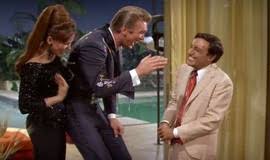
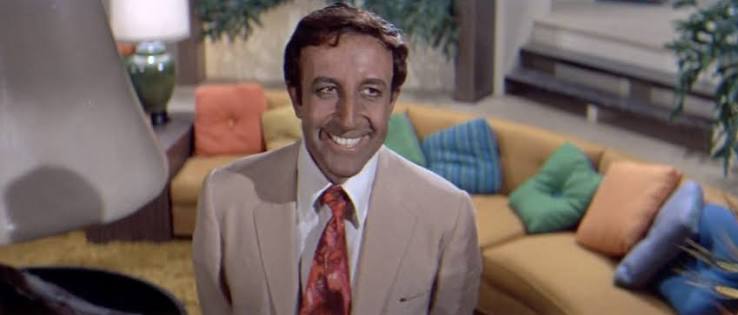
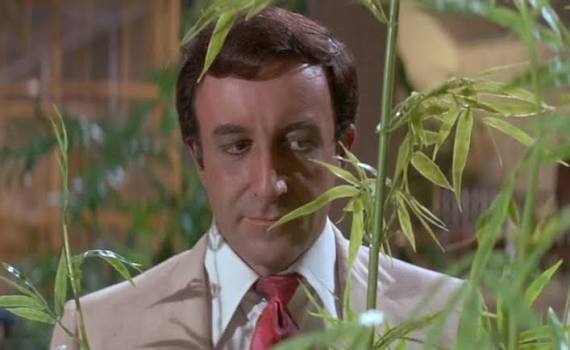
Classic Film Review: Edwards and Sellers crash “The Party” in Hollywood (1968)

A wicked thought crossed my mind midway through re-watching the Blake Edwards/Peter Sellers farce “The Party,” one of three times the great British funnyman donned brownface to play Indian characters.

What would have happened had Sellers, a comic legend and a gifted mimic who loved accents more than anything, had taken a shine to the most musical of accents in English, the patois of Jamaica and “de islands, mon?”

The once-and-always Inspector Clouseau had donned French, German, various American, Welsh, Scots and Cockney voices on screen and radio over the years. How did he resist Jamaican? Could Hollywood have resisted letting him?

Hollywood had given up blackface — reluctantly — during the Civil Rights movement. But old timers like director David Lean and star Alec Guiness thought they could get away with passing an Englishman off as a sage and inscrutably cute Indian in “A Passage to India,” as late as 1984.

In 1960’s “The Millionairess” Sellers played a moral, principled and idealistic Indian doctor who resists the endless overtures of the world’s richest woman (Sophia Loren) as he treats London’s poorest patients. Perhaps he and his “Pink Panther” partner Edwards figured that gave him license to don the makeup and the accent again for “The Party.”

The character is an Indian actor, an innocent new to Hollywood and Hollywood ways, brought over to legitimize a California-shot “Gunga Din” styled tale of a heroic native servant who tries to save his regiment of bagpipers from slaughter at the hands of the Afghans, Sikhs or whoever.

Hrundi Bakshi is a fop, a careless klutz who hams it up, forgets to remove his wristwatch before takes and accidentally sets off a “We’ve got ONE shot at this” special effects explosion destroying an entire set before cameras are rolling. He’s fired, “finished” in this business, one and all declare.

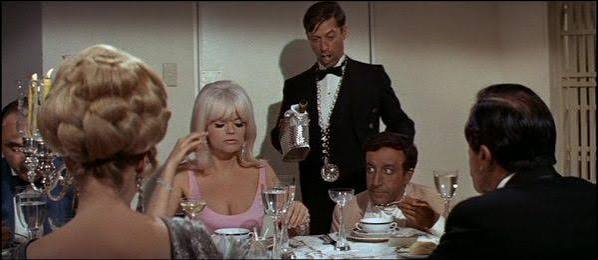
But that doesn’t mean he can’t be accidentally invited to the studio chief’s (J. Edward McKinley) lavish, “Who’s Who” dinner party set at his ultra-modernist mansion high in the Hollywood Hills.

The character is — as the stereotype goes — unfailingly polite. He is also a humble innocent, desperate to fit in and out-of-his-depth. Hrundi is a teetotaler who avoids alcohol and has no clue what those folks rubbing their gums are doing in one bathroom he tries to duck into, or what those others are smoking in another.

Is Hrundi offensive on the page, made moreso by casting an English funnyman in brownface to play him? Possibly. The fact that this widely-acknowledged classic has never been remade, despite efforts to do that (with or without a subcontinental caricature) is telling.

But here’s what makes this peak-Edward/peak-Sellers farce funny. It’s not so much the obsequious, always clueless (confidently so) “foreigner” amongst the social swells of the cinema business. It’s not how “they” treat him — tolerantly indulgent to a fault.

It’s not even the mayhem that we expect and occasionally see erupt all around his naive presence in this alien world.

It’s the anticipation.

Hrundi soils a white shoe getting out of his Morgan three-wheeler as he parks for the party. What will he go through to surreptitiously clean it? Might the pool that flows through rooms and under the floors of the mansion play into that? Or the wait staff?

He walks in on duded-up cowboy star Wyoming Bill Kelso (Denny Miller, comically-costumed and funny) as he’s trying to impress his date at the billiards table. What might Sellers — who had run-ins with pool tables in other films — cook up here?

So much of the house is remote controlled — from gas fireplaces and peeing cherub fountains to the very floors that conceal so much of the pool. What temptations does that control panel offer our innocent?

And what will be the consquences of turning down every drink the dipsomaniacal waiter (Steve Franken) brings him?

Edwards teases and baits us into expecting this and anticipating that as the picture builds towards the merry mayhem almost everyone attending seems to shrug off as the long evening unfolds.

A starlet (Claudine Longet) must be rescued from a boorish producer (Gavin McLeod). The studio chief and home owner has to deadpan his way through every mishap he sees coming and cannot prevent.

One and all — even Hrundi — mutter about finding “good help these days.” The cowboy allows himself many an “Injun” joke around his new “little buddy” from India.

And that “little buddy?” “Pay no attention to me, sir. I am merely spectating!”

Just don’t bother him with your Yiddish, Hollywood “types.”

“You’re MESHUGAH!”

“I am not your sugar!”

No elephants were harmed in the making of this movie, but a baby one is a tad manhandled by hippie kids who crowd around her and lead her all over the soundstage mansion set.

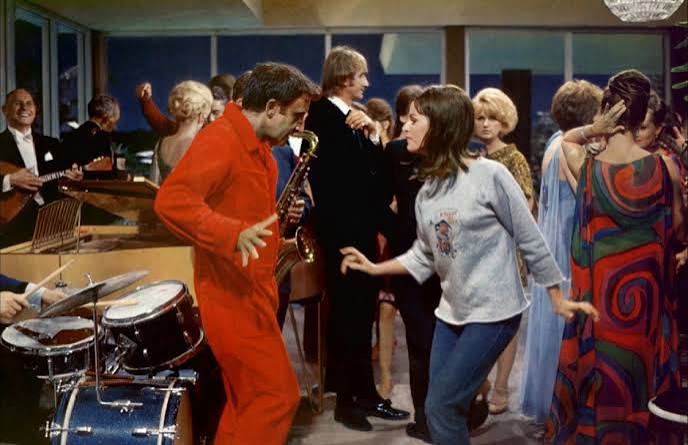
Through it all, a jazz combo plays on, even with a tide of soap suds closing in on them like an iceberg in the path of the Titanic.

The most memorable screening of “The Party” of my experience was a film society showing I caught in grad school, where it played like the comic blockbuster it was back in its day.

Viewed again, it’s laboriously slow in getting up to speed. The opening movie-shoot-goes-wrong sequence is under-edited and the third act feels barely edited at all.

It makes a great snapshot of the ’60s — the fashion, the dancing, the changes in “tolerance” (almost everybody is nice to “the foreigner”) and Henry Mancini’s riff on swing band rock and roll are a hoot.

Watch the Black maid (Frances Taylor) among Hollywood “liberals” take over the dance floor, shocking one and all. And keep an eye peeled for the cowboy actor sight gag/product placement –what he sneaks out of the catered dinner party with — a bucket from “The Colonel.”

Sellers is funny enough in the lead role, but if you ask yourself if the character would have been amusing as merely an Englishman out of his element, you have your answer as to whether or not the performance is a racial caricature.

“The Simpsons” settled that argument some years back.

Think about Inspector Clouseau’s martial artist valet if you want further evidence that Edwards was nothing if not a filmmaker “of his time.” And remember all those “Seinfeld” episodes featuring broad Asian stereotypes for a taste of how long these attitudes and portrayals persisted.

The naive bull in the Hollywood china shop hook of “The Party” still plays and there are enough laughs here to recommend this classic — perhaps worthy of a remake, even a Bollywood one.

The original? It’s not Edwards’ best, nor Sellers’ best or best film work with Edwards. But it makes a decent comic time capsule of a simpler era, when Hollywood could lead the civil rights way, or play catchup once it realized that putting even a gifted mimic in brownface might not be as funny as it once seemed, even to the white folks who decided to do it.

Rating: TV-14, drug abuse, alcohol abuse

Cast: Peter Sellers, Claudine Longet, Gavin McLeod, Denny Miller, Kathe Green, Frances Taylor, Herbert Ellis, J. Edward McKinley and Steve Franken.

Credits: Directed by Blake Edwards, scripted by Blake Edwards, Tom Waldman and Frank Waldman. An MGM release on Tubi, other streamers.

Running time: 1:39

Posted in Reviews, previews, profiles and movie news | Tagged , , , , , , , | Comments Off on Classic Film Review: Edwards and Sellers crash “The Party” in Hollywood (1968)

Movie Review: Cumming and Kin “Drive Back Home” in The Bad Ol’Days for Canada’s Gays

“Drive Back Home” is a road comedy with a queer history subtext and a hard, melodramatic flourish saved for its finale.

It’s about a prodigal son and an estranged family that he fled the moment he was old enough to get away from the provincial New Brunswick town of his unhappy childhood. But in “Stonewall” era Canada, “tolerance” was hard to come by, even in the Big City.

A period piece “inspired by a true story,” it’s a reckoning-with-a-gay relative tale set in the very differernt Canada of 1969-70 (Phillip Forsyth is heard hosting “As It Happens” on the CBC, a job he left in 1969).

The whole village of Stanley turns out for the death of Perley Hinson Sr. But his no-nonsense widow (Clare Colter) unsentnmentally assures the priest that the whole village shows up for “every funeral.” Her sour expression and a cruel anecdote son Moses (Gray Powell) included in his eulogy tell us the old bastard won’t be missed.

Son Weldon (Charlie Creed Miles) is also also in attendance. But Perley Hinson, Jr. is nowhere to be found.

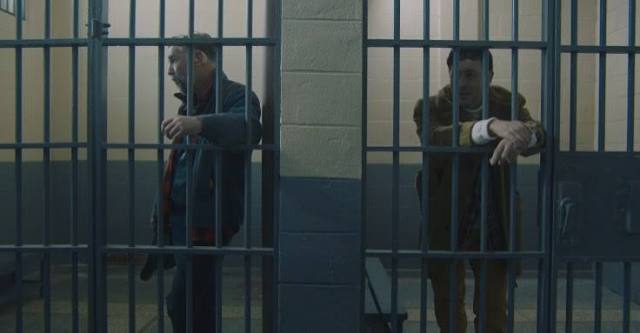
A sneering, abusive phone call from the Toronto police tells Weldon where Junior is. He’s in lock-up for having “sex with a man” in a public park men’s room. Perley Jr.’s looking at “five years” in those days of criminalized homosexuality, unless his brother comes to fetch him. Ontario’s not interested in prosecuting this crime any more, even if its cops don’t agree.

Weldon can’t go. “I’ve got work tomorrow.” He won’t. But his mother won’t hear of that. And after asking if “they speak English in Quebec” and stockpiling gas cans in the worn out F-100 that is his assigned company truck — because he’s told “No, they speak French” and he’s frightened by that — Weldon takes his first-ever long journey away from home to free a brother he doesn’t have much to do with.

Perley (Alan Cumming) is embarrassed that his brother has had to come and furious that the cops lost his nice loafers. He’s a hair-dyed dandy in colorful coat and jacket, ascot around his neck and Russian fur hat. And he’s dealing with a lot.

Not only was he beaten in custody, but his answering machine reveals that he’s lost his advertising job in his absencce. And then he has to explain the cost of a nice Toronto apartment and this newfangled answering machine to his “dumb hick” brother, who thinks he’s an “idiot” for living like this.

But they both do what Ma wants, so off down the road they go — a long haul that turns into a multi-day ordeal thanks to winter weather, a balky truck and misadventures along the way.

Back home, their mother and Weldon’s wife are putting up with less tolerant members of the family and hoping for the best. Because dealing with Perley, who likes drinking and hooking up, in that cultural climate has always been fraught.

And every so often, Weldon’s dreams give us a glimpse of the biggest trauma of their childhood, a violent night fleshed-out, bit by bit, in writer-director Michael Clowalter’s (“Tenant” was his) sentimental, sad with sharp edges screenplay.

“Drive Back Home” dawdles a bit for a road picture. The slow pace is a product of leaving room for DIY car repairs, Canadian roadhouse meals and grace notes like an impromptu “confession” to a non-English-speaking Quebecois (Guy Sprung).

That deliberate pacing makes the melodramatic, violent and yet touching finale more jarring.

But Cumming is always in-the-pocket “real,” first scene to last. Every moment of Perley’s live-for-the-moment behavior is plausible in Cumming’s hands, every hint of “had ENOUGH of this” abuse is an easy sale.

He and his fellow Brit Creed-Miles (“Harry Brown,” the gangster film “Wild Bill”) have great, abrasive chemistry and we believe them as ill-tempered, mismatched siblings who just might recover the tug of “family” when the chips are down.

They make this odyssey a tense and testy ride that turns touching, just as we hoped it would, just when we least expect it.

Rating: R, graphic violence, sex, alcohol abuse, profanity

Cast: Alan Cumming, Charlie Creed-Miles, Clare Colter, Gray Powell, Guy Sprung and Gord Rand.

Credits: Scripted and directed by Michael Clowalter. A Good Deeds Entertainment release on Amazon Prime.

Running time: 1:40

Posted in Reviews, previews, profiles and movie news | Tagged , , , , , , , , | Comments Off on Movie Review: Cumming and Kin “Drive Back Home” in The Bad Ol’Days for Canada’s Gays

Neflixable? “Enola Homes 3” Beats a Dead Horse

The bare minimum you expect from a sleuthing action comedy of the “Anybody Named Holmes” variety is that it hold your interest. Netflix’s “Enola Holmes 3” falls short of even that low bar.

It’s got a wedding and a few kidnappings, suspects chased and caught just in time to be shot, the ugly consequences of British colonialism and the sunwashed sights of scenic, cinematic Malta to recommend it.

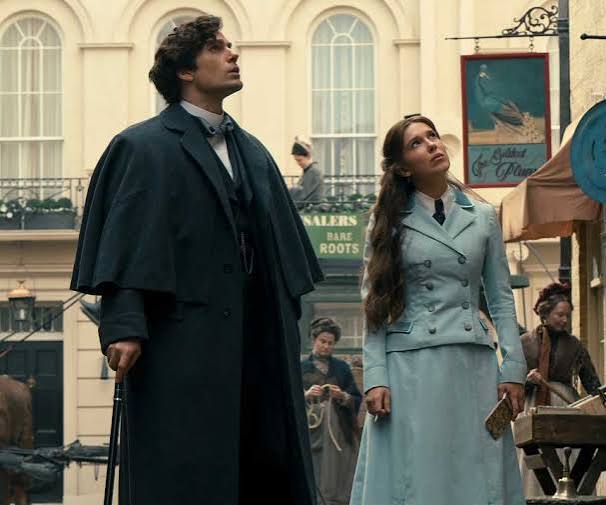
And none of it amounts to much of anything more than Millie Bobby Brown narrating narrating narrating her latest “Enola” tale, and turning to the camera when she hears the words “Ernest Augustus” and quipping, “He has a first name,” about the man she is set to marry. “I was surprised, too!”

It begins messy, with a cryptic prologue that leaps into a wedding to the too-pretty-to-marry rich and idealistic swell Tewkesbury (Louis Partridge) that just isn’t. And as it bounces back and forth between kidnappings — brother Sherlock (Henry Cavill) among them — codes and clues and treasure, “Enola 3” never adds up to anything more than worn out genre tropes, cliches and lazy dialogue anachronisms like “stuck on ‘repeat,” a phrase that best describes this film series at this point.

Even the most interesting Moriarty in ages can’t save it, and even “she” is scripted in flat, superficial strokes.

Young social justice crusader Lord Tewkesbury asks our sleathing younger sister to Sherlock to marry him, and as his parents wed in Malta, they’re off. But once there, Sherlock’s sniffing around gets him snatched and Enola and Dr. Watson (Himesh Patel) dash off to find him.

Advice about looking beyond the surface of things is added to Enola’s grab back of :”advice” and detecting skills.

“Dr. Watson, what would my BROTHER do?”

A comical anti-imperialist Maltese revolutionary (Joe Azzopardi) plays a vaguely Pythonesque/Patinkin in “Princess Bride” role in their exploits, arriving and always introducing himself, his revoliutionary group and their “goals” in ending the rule of the Britsh crown.

But laughs are few and excitement impossible to conjure up in this Philip Barantini film.

When Ms. Brown signed her long-term deal with Netflix, surely she was hoping for more than just a short-term franchise gig to replace “Stranger Things.” She and Netflix have run out the string on this, and all she has to show for it is a shot at working with the director of “Villain” and “Boiling Point.”

Despite her early promise, her window to stardom was always narrow, and now it’s closing.

We’d love to think Helena Bonham Carter, still classing up the joint and bringing a dab of sparkle to the attempts at wit as Enola’s feminist revolutionary mum, would give us the best one-line review of this latest and probably last “Enola” outing.

“This is all a ridiculous merry mess!”

But no. “Merry” never enters into it.

Rating: PG-13, violence

Cast: Millie Bobbie Brown, Louis Partridge, Sharon Duncan-Brewster, Himesh Patel, Joe Azzopardi, Henry Cavill and Helena Bonham Carter.

Credits: Directed by Philip Barantini, scripted by Jack Thorne, basedon the books by Nancy Springer. A Netflix release.

Running time: 1:48

Posted in Reviews, previews, profiles and movie news | Tagged , , , , , , | Comments Off on Neflixable? “Enola Homes 3” Beats a Dead Horse

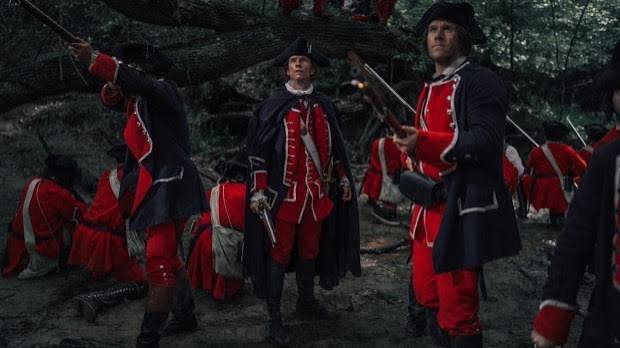
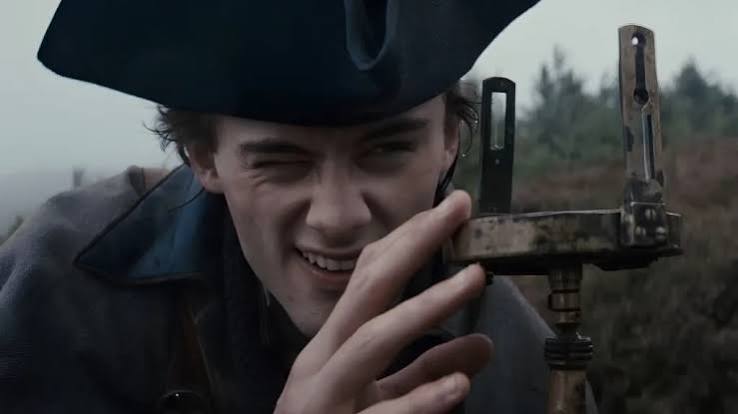
Movie Review: Striving and Social Climbing, “Young Washington” takes the Shape of the Man He Became

Stately, staid and yet somehow still satisfying, “Young Washington” is a (mostly) by-the-book biography of the early life that shaped The Father of Our Country.

It’s well-cast and handsomely mounted, and only falls into hagiography — rather obviously and clumsily — late in the third act.

This is no “Last of the Mohicans” and director and co-writer Jon Erwin (“The Jesus Revolution”) is no Michael Mann, But this action biography about Washington’s steep and stumbling learning curve into his formative years in the French and Indian War paints a revealing if not vivid flesh-and-blood portrait of a class-conscious kid who sought to better himself in the heirarchy of British Colonial America.

And it reminds us that his “big break” was bungling Britain into history’s first “World War,” The Seven Years War between Britain and the France, a globe-spanning conflict triggered by an overreaching young man’s mishandling of a frontier encroachment in the Ohio River Valley.

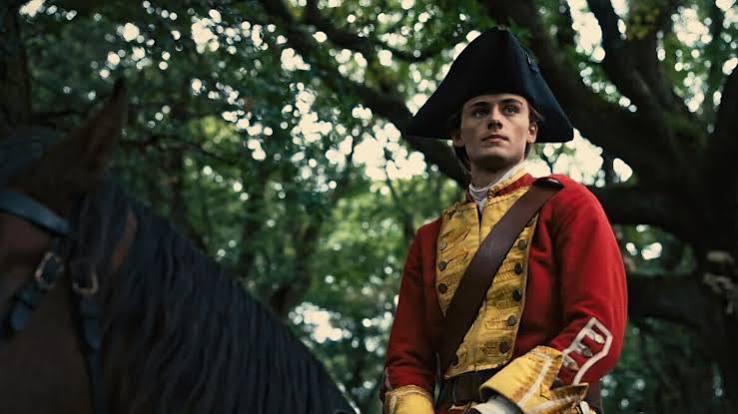
William Franklyn-Miller takes on the daunting task of plaaying Washington, long and lean and barely out of his teens when he talked himself into the orbit of one of the richest men in the Virginia colony, Lord Fairfax (Kelsey Grammer, perfectly cast) which put him in a position to win the ear of Governor Dinwiddie (Ben Kingsley, formidable as ever).

“Is it a sin to seek advancement,” he asks? It might be to people hellbent in ensuring their own place at the top.

Young George has made self-improvement, reading the classics and rehearsing genteel manners in the way he carries himself, his path to self-betterment. The British Army might be his one shot at such advancement.

And that’s how the young fellow whom Fairfax hired to survey his vast holdings in the Ohio wilderness found his way from messenger to militia commander “set-up,” the film implies, to take the fall when his warnings to the French to stop building forts and encroaching on British-claimed land go wrong and the first blood is shed.

“Failure is a great teacher,” he comes to learn in that first year of the French and Indian/Seven Years War.

Washington endures a steady stream of insults from assorted British officers and transplanted aristocrats, making him keenly aware of the class he was born into which his older brother Lawrence (John Foss) married his way out of, but which his widowed mother (Mary-Louise Parker) seems to accept. George remembers every slight.

He cannot hope to win the hand of the fair but self-aware rich girl Sally Clary (Mia Rodgers) unless his makes his fortune or makes his mark in the military. Or so he believes.

“Ambition waits for no man” becomes his guiding credo.

The script by Erwin, Diederick Hoogstraten and Tom Provost seeks to color in the spaces around the Red Letter dates in Washington’s early life, showing him recruiting the more woodlands-wise Christopher Gist (Leo Hanna) to join him on his surveying trip, where they meet Seneca natives and are shown — by the testy and wary Half King (Ryan Begay, quite good) where the French are settling in.

The Native Americans depicted here may take sides, but they’re mainly eager for a “Let’s you and him fight” scenario, setting these two intruder imperialist states against each other.

Slaves are mentioned but kept in the background.

Erwin handles the skirmishes and ambushes with skill, and the climactic battle, with the too-European for his own and his army’s good General Braddock (Andy Serkis at his best) comes off as chaotic and character-forming heroic.

The production design and CGI backdrops of the Virginian and Irish locations are first rate.

But the film’s dutiful “How Washington was shaped into the man he became” narrative plays as bloodless and generally humorless. Few big screen depictions of the man dare to allow him lighter moments.

“Young Washington” informs and illuminates as it passes the time between blasts of action. It’s the life, love and struggle beyond the edges of the screen, events outside of the adventures, social slights and Red Letter Dates that seems lacking.

That can’t help but hamstring this high-minded effort to capture the stumbles, failures and insults that shaped the leader whose learning curve was only completed when his endurance, pluck, experience and luck won the battle for American independence.

Rating: PG-13, violence

Cast: William Franklyn-Miller, Ben Kingsley, Mary-Louise Parker, Mia Rodgers, John Foss, Ryan Begay, Kelsey Grammer and Andy Serkis.

Credits: Directed by Jon Erwin, scripted by Jon Erwin, Diederick Hoogstraten and Tom Provost. An Angel Studios release.

Running time: 2:04

Posted in Reviews, previews, profiles and movie news | Tagged , , , , , , , , | Comments Off on Movie Review: Striving and Social Climbing, “Young Washington” takes the Shape of the Man He Became

Documentary Review: “Chris and Martina: The Final Set” of a Love Match built on Sportsmanship

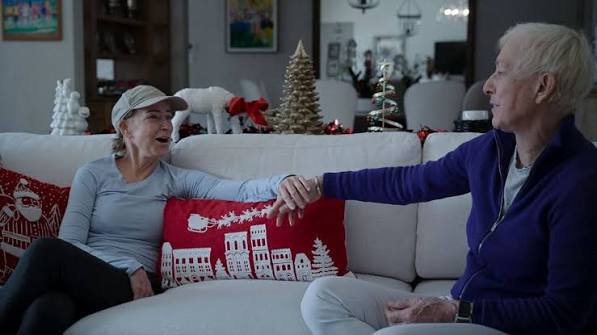
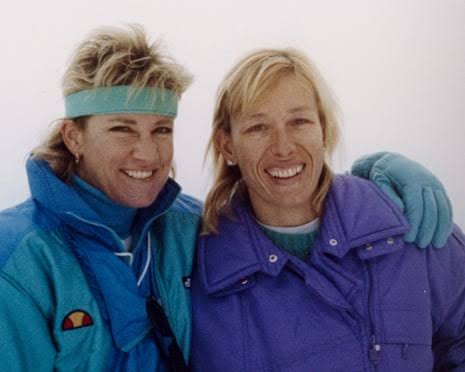
The recent news that former tennis champ Chris Evert’s cancer has returned for the third time adds more real-life poignance to a lovely new documentary about her and her longtime foe and friend, Martina Navratilova.

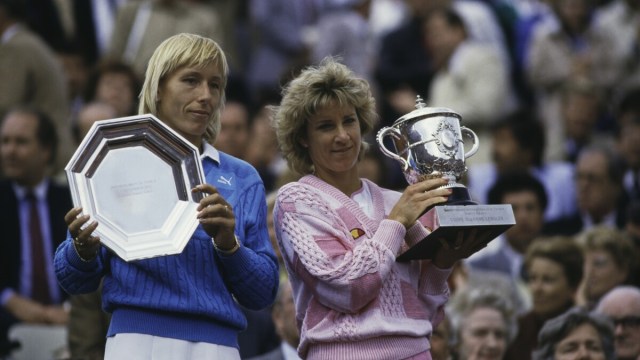
“Chris & Martina: The Final Set” is the story of perhaps the greatest rivalry in tennis, a decades-long duel that started in friendship, descended into winner-take-all bitterness and ended in a form of triumph — an even closer friendship only made possible by the role models of sportsmanship both of them embodied.

Sports fans of a certain age won’t have much trouble tearing-up at this fine recollection of a different era in sports — pre-social media and invasive 24 hour “news,” pre-“Fan Duel” and pre-PEDs.

Filmmaker Rebecca Gitlitz makes her feature-length documentary directing debut a moving and honorable outing for all involved. And she makes her presence felt as she gets close to her subjects and asks obvious but tough follow-up questions from behind the camera when the occasion demands it.

Because as both women and their fellow champions Billie Jean King and John McEnroe remind us here, it’s damned lonely at the top, “number one” in a winner take all business.

“You give up things if you want to be best at something,” Evert acknowledges.

And when you are the best, the number of people who know what you’re really going through, win or lose, is tiny.

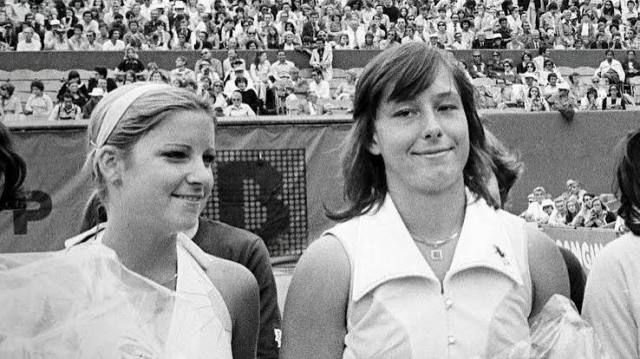
We see them lose their hair and strength, but not their will, during cancer treatment. And we hear how the two who met as teens, with Chris already the “cute” Florida blonde “girl next door” star and Navratilova the insecure, out-of-her-depth player from behind The Iron Curtain.

Evert was sweet and welcomng, Navratilova remembers, “because she wasn’t a threat” others add.

The Netflix film tracks their friendship through Martina’s on-court meltdowns at losses, through the toughening up — emotionally and physically — that the Czech star’s basketball-star girlfriend Nancy Lieberman put her through.

Lieberman’s “You have to HATE her” ethos about the rivarly (she’s not interviewed here) is blamed for the rift that entered the Martina-Chris relationship as Navratilova muscled and served-and-volleyed her way to dominance on the court.

But first Martina had to endure the trauma of defecting from her Eastern Bloc homeland for America, disconnected from her most faithful support group, her family. The press was always trying to “out” her. She developed a lifelong aversion to lifelong commitment, robbing some of the joy of her glory years.

Evert had to change her accomplished, highly-polished and quite mature “baseliner” game just to stay on the court with Navratilova. That cost her relationships and marriages and an early bout with former teen-phenom burnout.

But as their playing days wound down, the friendship was renewed. Retirement turned them into role models all over again, this time for that old-fashioned notion of “sportsmanship.”

It’s adorable seeing the two of them re-watching their most famous matches — Evert’s early dominance, a turning point bout or two, Navratilova’s years of dominance, finishing with grand grace notes for each of them on the court.

Off court, the storms in their personal lives, the monomania it takes to excel at a sport and its psychological and romantic costs, are lightly covered.

They have a laugh suggesting that an old “Saturday Night Live” sketch about them (Chris hosted) which mocked Martina’s lifelong oneupsmanship, be revived. As this documentary was being filmed, Navratilova’s cancers are more widespread and her prognosis seemingly more dire, a grim “I win!” punchline to their rivalry.

No one wants to see either of them lose this “Final Set,” but almost certainly one of them will. And when it happens we’ll mourn not just the deceased, but the survivor. Because that’s how these two paragons of grace, dignity, loyalty and sportsmanship will be remembered — joined at the net, embracing after every battle won and lost.

Rating: TV-MA, profanity

Cast: Chris Evert, Martina Navraitilova, Billie Jean King, John McEnroe, Pam Shriver, Mary Carillo, Sally Jenkins, Bob Kain and Zina Garrison.

Credits: Directed by Rebecca Gitlitz. A Netflix release.

Running time: 1:33

Posted in Reviews, previews, profiles and movie news | Tagged , , , , , , , | Comments Off on Documentary Review: “Chris and Martina: The Final Set” of a Love Match built on Sportsmanship